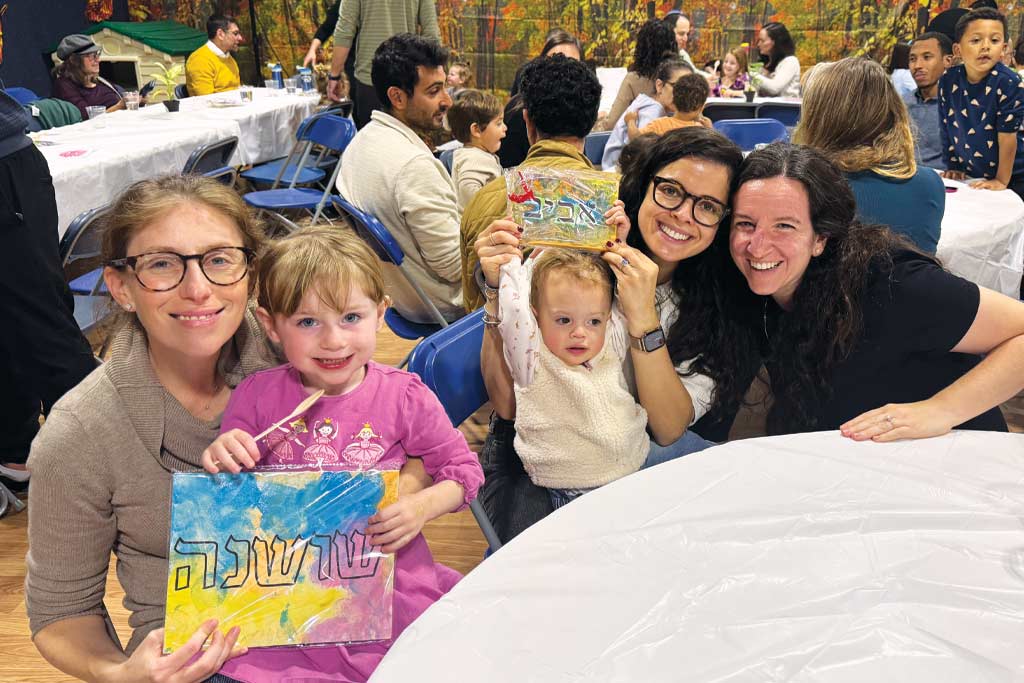
Gan Gani students and their families enjoy a hands-on art project.
There is an Israeli children’s song called “Eretz Yisrael Sheli” (“My Land of Israel.”) Written by Datia Ben-Dor nearly 50 years ago, the song begins simply:
“Israel is beautiful and flowering. Who built it and who planted it? All of us together.” Then, verse by verse, the children build: A house appears, a tree takes root, a road stretches into the distance, and a bridge connects what lies on either side. By the final verse, a picture has emerged—a flourishing Israel, built piece by piece, one generation at a time. And finally at the end, there is a song to carry it forward. It is, in its own wonderfully simple way, a song about m’dor l’dor (from generation to generation): what we inherit, what we build, and what we leave for the next generation.
At Gan Gani in Lincoln Park, Etty Dolgin has spent more than two decades building a bridge of her own. Dolgin is the director of Gan Gani, a Hebrew-immersion preschool. Created in 2000 for young Jewish families, Gan Gani—which means “my garden” in Hebrew—has become what the school calls a “little Israel in Chicago.”
Here, Israel is not a faraway land children are taught to dream about or someday discover. It is something they live and experience every day. Hebrew is the language of the school. Israeli culture is baked into the music, food, and traditions. And every Friday, a classroom full of small voices sings “Hatikvah” (“The Hope”), the Israeli national anthem, in fluent Hebrew.
I see Dolgin and her incredible Israeli educators’ labor of love blossom whenever I come home to visit from Tel Aviv. My niece is a Gan Gani student, and her Hebrew is developing as quickly as her English: when she prances around the house in blue and white on Fridays before Shabbat; when she has entire conversations between her dolls in Hebrew; when she asks me if it’s nighttime in Tel Aviv while it’s daytime in Chicago.
Her experience is part of a much larger story. Gan Gani itself was built from one generation to the next. While the original Moadon Kol Chadash program began 37 years ago as a Hebrew program for older children, young families who saw what their children were gaining began asking a simple question: Why wait until the children are older? Soon after, they started a program for even younger students.
For some parents at Gan Gani, their children sing familiar songs that they themselves learned in school, or their parents and grandparents once sang to them at home. For others, the direction is reversed. A preschooler may be the first one who brings home a new Hebrew word or song, sometimes even to a parent who doesn’t speak the language.
M’dor l’dor is often thought of as a straight delineation, a trickle-down from one generation to the next. But maybe it looks more like Ben-Dor’s song. One generation builds the house. Another plants the trees. Someone else paves the road, and somewhere along the way, someone builds the bridge. And sometimes, the learning crosses the bridge in the other direction, from a later generation to a prior one.
For more than two decades, Dolgin has built this bridge between Israel and Chicago, between students and their families; a vibrant school where some of the city’s youngest children
can inherit a language, a culture, and a deep connection without compromise. Nearly 50 years after Ben-Dor imagined us building Israel together, another generation of young families is adding its own piece, 6,000 miles away in Chicago.
Kayla Kirshenbaum, who currently lives in Tel Aviv, is a freelance writer and strategic communications professional with experience in public affairs at JUF.
In this issue
-
-
-
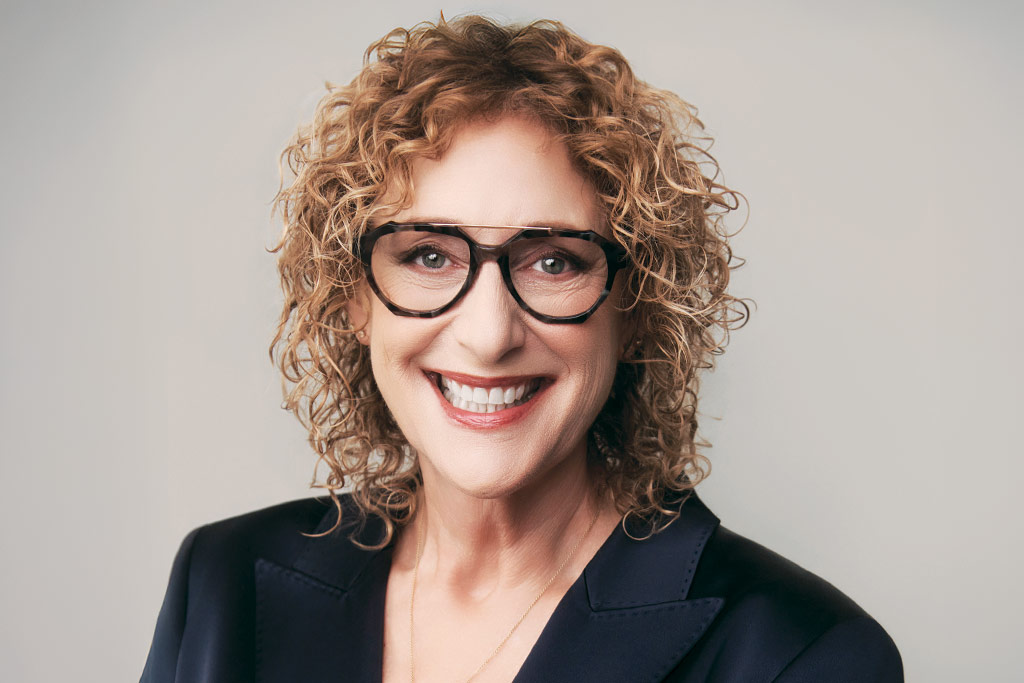
Catching up with Judy Gold
The actor, writer, and comedian is known for her edgy wit and sharp timing
Read more