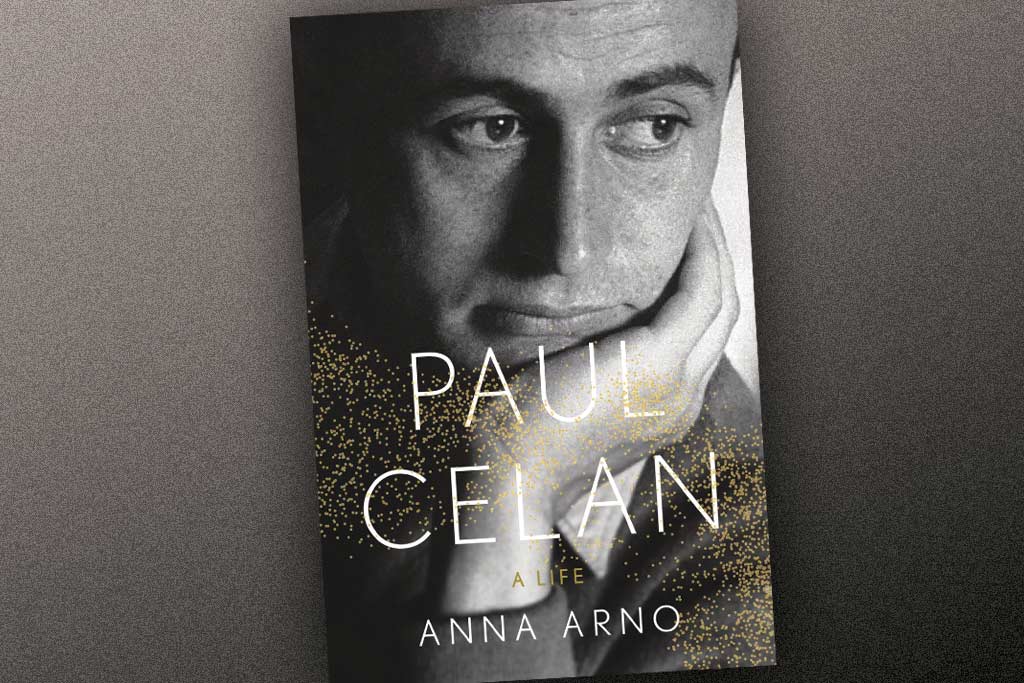
Romanian-born poet Paul Celan once told his wife that if she found his watch, it would mean he was dead.
In April 1970, she found his wristwatch and documents in his apartment, along with a biography of philosopher Friedrich Holderlin; one sentence was underlined in pencil: “Sometimes this genius goes dark and sinks down into the bitter well of his heart.” Her worst fears were confirmed when his body was fished from the Seine.
Considered by some to be the greatest poet of the German language, Celan embodies the maxim that one must sometimes separate the art from the artist. Much that is unflattering about him is revealed in Paul Celan: A Life, a newly translated edition of Anna Arno’s biography, which masterfully takes the full measure of the man and the poet.
Arno quotes French social psychologist Serge Moscovici, who observed, “He divided people into two categories: poets, to whom he ascribed certain traits of divinity, and non-poets, as if he considered himself a higher being.”
Celan considered his poetry to be his autobiography. “I haven’t written a single word that isn’t tied to my existence,” he wrote in a letter. And his existence was inextricably tied to being Jewish. Jewishness, he wrote to the German-born Israeli publisher Gershom Schocken, “is present in each of my volumes, and my poems imply my Judaism.” Without his faith, Arno writes, there was no poetry.
“For what is Judaism,” he asked, “if not a form of the Human, what is Poetry if not a form of this same Human[?]” For Celan, a poem was “not the representation of reality, it is reality itself.”
Arno writes that when he felt persecuted as a Jew and a poet, Celan stressed his Jewish identity.
In his poem “Hutwinder,” Arno explains, Celan stressed the universal dimension of Jewishness: “The eye, dark: as hut window. It gathers what was world, remains world: the Wander-East, the floating one the humans-and-Jews, the people-of-the-clouds, magnetically it pulls, with heartfingers, at you, earth.”
The Holocaust was the defining event of his life and poetry. Celan worked in a slave labor camp, and his parents were killed in the concentration camps. He described his poetry as “an epitaph” and “a grave” for the victims. Arno’s book is prefaced by Todesfuge (Deathfugue), which was published in 1947 and is considered Celan’s masterwork about the Holocaust:
“He calls out play death more sweetly death is a master from Deutschland/ he calls scrape those fiddles more darkly then as smoke you’ll rise in the air/ then you’ll have a grave in the clouds there you’ll lie at ease.”
Arno does a valiant job of opening a window to Celan’s famously opaque poetry. The book proceeds inexorably toward Celan’s descent into depression and paranoid schizophrenia, which cost him friendships, and ultimately his marriage. Arno documents increasingly disturbing incidents of his unbalanced nature, including one in which he “violently tore a yellow scarf from his wife’s neck: “The color upset him; like many others, he associated it with the Jewish star,” she writes.
Celan also had a fear of the left side, which Arno speculates might have had to do with that being the direction to which arrivals to the death camps were directed to the gas chambers.
His friendship with fellow Holocaust survivor and poet Nelly Sachs was heartbreaking. She, too, was plagued by mental illness (her death coincided with Celan’s funeral). At one point, he visited her in a Stockholm hospital, where she hallucinated she was suffering more than the victims of the gas chambers. In his poem, “The Sluice,” he wrote: “I lost—I lost a word that has remained with me: sister.”
Throughout his life, Celan “bristled at every attempt to conceal his background,” Arno writes. Celan himself wrote to a friend, “No one who has read me can ignore the fact that I am a Jew.”
Donald Liebenson is a Chicago writer who writes for VanityFair.com, The Washington Post, and other outlets.
In this issue
-

The remarkable writing life of Talya Jankovits
The Very Unremarkable Life of Mrs. Etty Bloom debuted this June
Read more -

A novel a decade, and a lifetime, in the making
Gerilyn Bass Greenberg’s debut is personal, yet universal
Read more -
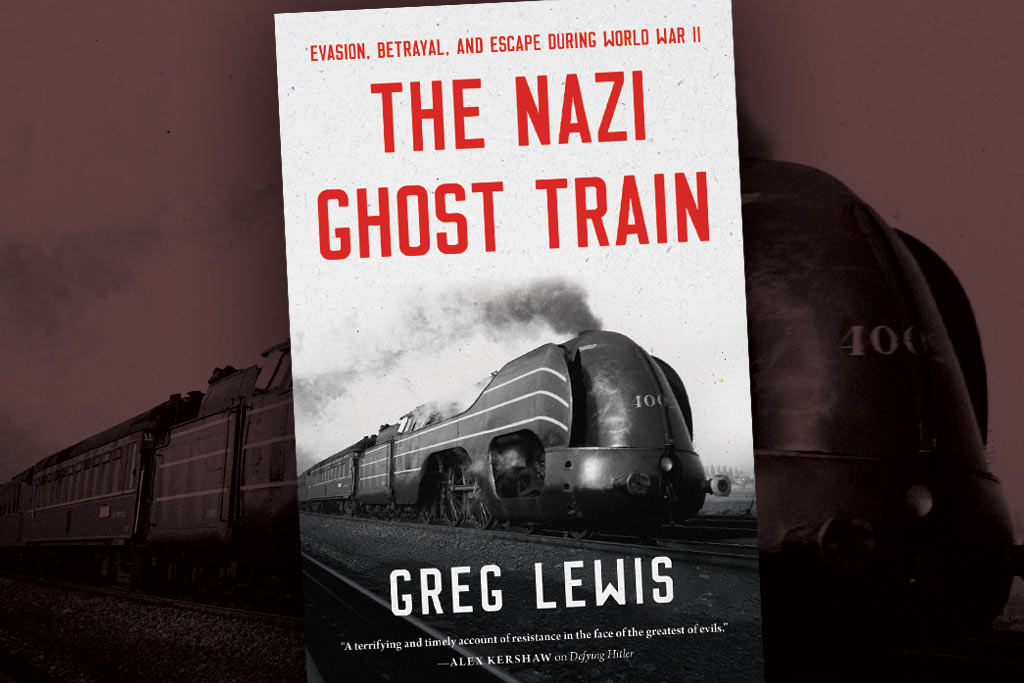
A story of resistance and rescue
Greg Lewis’ new book is a riveting account of an often overlooked true story
Read more