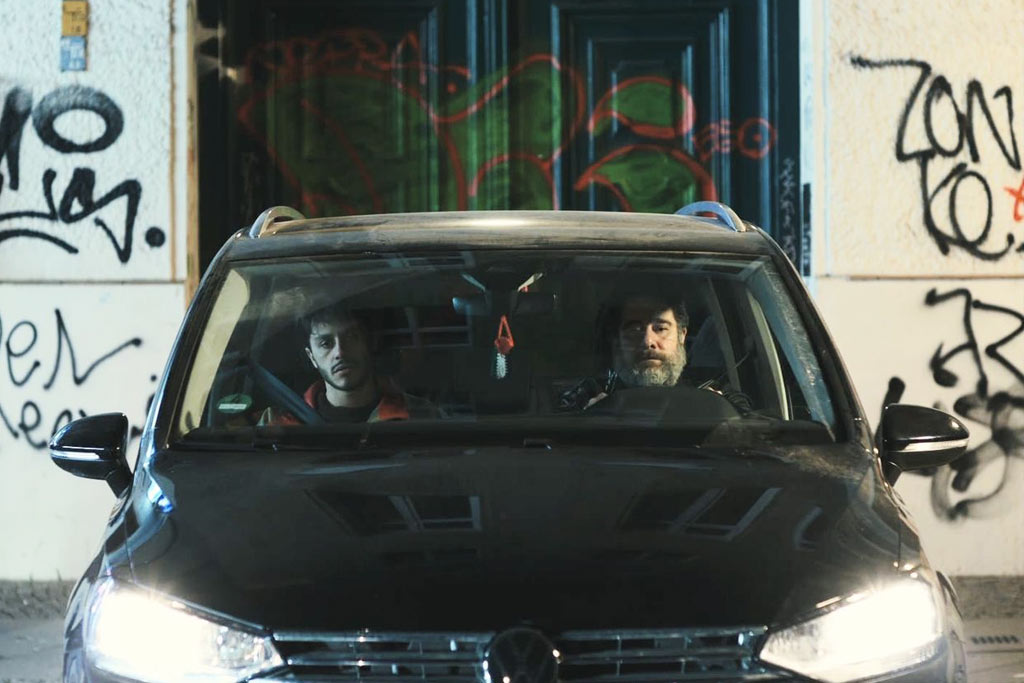
Assaf Machnes’ 2026 debut film Where To? premiered at the Berlinale and received top honors at the Jerusalem Film Festival.
The Chicago Festival of Israeli Cinema will serve as a welcoming beacon to many Israeli filmmakers who have been shunned—by previously friendly countries and film festivals— simply by virtue of their nationality.
The festival, running Oct. 8 to 25, showcases a selection of 15 features and documentaries. International co-productions expand Israel’s storytelling prowess to truly global places and spaces.
The Opening Night audience, on Oct. 8, will be treated to Eran Riklis’ Reading Lolita in Tehran with Riklis—one of Israel’s most esteemed directors—in person at the special reception and Q&A following the screening.
His latest film is based on Azar Nafisi’s 2003 New York Times best-selling memoir. It’s the story of Nafisi’s return to Iran during the Revolution, in which she navigates the strict rules of the Islamic Republic, teaches at two prestigious universities, and secretly shares stories in Western literature with her female students in a book club for nearly 20 years before she emigrated for good.
Then, on Oct. 10, Eran Riklis’s wife Dina Zvi Riklis (Seventh Heaven, Three Mothers) will premiere her latest feature, Blue Marks. The film, starring Lior Ashkenazi (Walk on Water) and Yael Abecassis (Hatufim) depicts a young Israeli woman in Paris who seeks revenge after a chance encounter turns tragic.
Three of this year’s films take place in Berlin. The first, Assaf Machnes’ Where To? is a thoughtful drama about a middle-aged Palestinian Uber driver and a young Israeli man who keeps showing up in his back seat. Over time, the randomness of their encounters turns to the young man specifically requesting the Palestinian driver.
Isri Halpern’s powerful documentary Proud Jewish Boy tells the true story of 17-year-old Berlin-born refugee Herschel Grynszpan fires on German official Ernst von Rath in 1938 Paris. This act gave Nazi propaganda chief Joseph Goebbels the pretext for Kristallnacht, the Night of Broken Glass. Surprisingly, Grynszpan himself survived the Shoah.
Tbilisi, the capital of the former Soviet state of Georgia, is the setting for two films by Israeli directors: Eti Tsicko’s Nandauri, and Academy Award winner Guy Nattiv’s Tatami.
Nandauri chronicles an Israeli lawyer who returns to her country of birth to legally take home the son of a client who emigrated without him.
In the thrilling Tatami, a female Iranian judoka would rather compete against her Israeli opponent and face dire consequences than obey the orders of her government to withdraw from her matches.
Legendary Israeli performer Yehoram Gaon stars in Amichai Geenberg’s comedy Love Statistically Speaking as a widower (and retired actuary) who learns that one cannot always predict death or matters of the heart, as he and his granddaughter attempt to solve a crime at his community pool.
Roy Assaf (God’s Neighbors, Children of Nobody) makes his directorial debut, and also stars in Cabaret Total as a conflicted Israeli reservist, teacher, performing artist, husband, and father in an Israeli border town, where people turn against him for a comment he makes to one of his students.
Moshe Rosenthal’s Tell Me Everything revisits the 1980’s AIDS crisis with its accompanying stigma; a young boy discovers his father played by Assi Cohen (Munich), whom he adores, is gay.
The Beauty Queen of Jerusalem’s Hilla Saada stars in Ruby Doaniass’ Heaven and Earth as an affluent, working mom who learns that her son, whom she dearly loves, was deliberately switched at birth.
Duki Dror’s investigative documentary UNraveling UNRWA explores how the United Nations agency founded to aid Palestinian refugees transformed into a biased institution at the center of international scrutiny.
In Eyal Halfon’s A Burning Man, Shai Avivi (Longing) portrays an anxiety-ridden dad who drives his son back to his base in the Negev and realizes he cannot let go.
Lastly, the Closing Film of the Festival: Shaked Goren’s Esther showcases the oeuvre of Israeli singer Esther Ofarim, who has lived in Germany for over 50 years. The screening will be followed by a traditional Israeli sing-long.
Most live screenings will take place in a new location: the Wayfarer Theaters in Highland Park, Oct. 8-18. Streaming-only dates are Oct. 19-25.
For tickets, LIVE screening schedule, synopses, special guests and much more, go to israelifilmchi.org.
Cindy Stern is Executive Director of the Chicago Festival of Israeli Cinema.