After our first day at Disney World, I peeked into my children’s adjoining hotel room to find them lined up in bed, watching a show together to unwind from the exhilarating, but exhausting day.
“I just want to freeze them right now, in this moment,” I said to my husband.
I knew that desire, much like a Disney vacation, was pure fantasy. At the time, my kids ranged in age from three to nine. Daily chaos still abounded, yet I fell asleep each night satisfied they knew how much I loved them, no matter what challenges we faced.
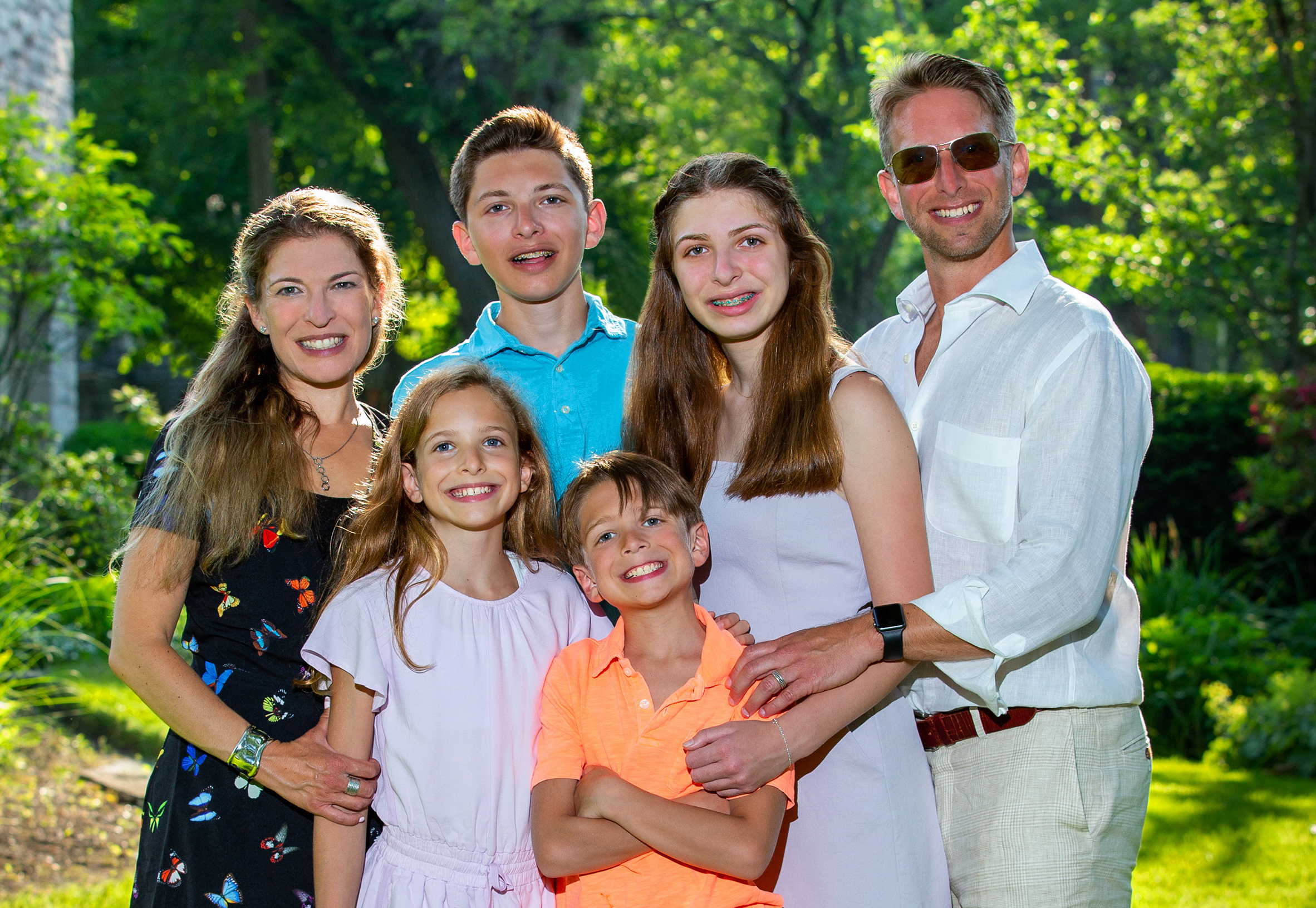
Fast-forward six years, and instead of four little kids, I’m raising two teenagers; a tween; and a fourth grader whose attitude better resembles that of a high schooler. I find myself struggling to make sure I don’t say the wrong thing or provoke tumult with an unwanted suggestion.
Sometimes my teens want to talk non-stop; other times I tell myself it’s not personal when they ask me to leave their rooms. Conversations with my tween get squeezed into car rides to and from gymnastics, where she spends nearly 20 hours per week. My youngest child still asks for snuggles, but then turns around and tells me he only wants to be with his friends, even if it’s just virtually these pandemic days.
When my children were younger and needed me constantly, my love felt palpable. It rested on the tips of my fingers as I held their hands in mine. It flowed through the air as I repeated, “I love you,” countless times a day, much to their delight. These days, they’ve instructed me to use code for that unconditional maternal feeling. The number 143 stands for “I love you,” each numeral equating to the number of letters in each word of that phrase. At least they’re still willing to express love, even if it’s encrypted.
The late Rabbi Lord Jonathan Sacks writes in Morality, his final book published before his recent death, “That love is a flame lit in… the family. Morality is the love between…parent and child – uncommanded because it is assumed to be natural – extended outward to the world.”
Little children reward our affection with cuddles, but we lack a concrete way of evaluating how our love and values resonate within them. Parenting older kids brings the gift of getting to see the outward extension of our love play out in real time. Adolescent offspring would never admit to embracing their parents’ moral compass. CRINGEY! But in an unexpected moment, they can show us their own spin on our imparted love and teachings.
Recently, my fourth grader and I struggled with preparations for his states test, which required identifying them on a map along with their capitals and abbreviations. He began crying, but before I could comfort him, his older siblings stepped in to take over.
“Here’s what helped me when I took the states test,” my 15-year-old said.
As he explained in detail the strategies he used, my daughters made flash cards. Almost instantly, my younger son calmed down, attentive to the wise words and ways of his brother and sisters. Meanwhile, I stepped back to watch my children nurture one another, blazing their own trail of love.
Witnessing my kids interact lovingly together is a gift, but it isn’t always easy to meld into the background. As a mother, I’m used to loving my children actively, to stoking the flames, not just watching the sparks fly. I bear in mind l’dor v’dor , from generation to generation. The fire of love ignited within our home perpetuates the blaze of Jewish endurance.
As Rabbi Sacks further writes in Morality , “Family … is where we first take the risk of giving and receiving love. It is where one generation passes on its values to the next, ensuring the continuity of a civilization.”
Mimi Sager Yoskowitz is a Chicago-area freelance writer, mother of four, and former CNN producer.
Other stories
-

Two local teens win national recognition
Recipients of the annual Diller Teen Tikkun Olam Awards
Read more -

Celebrating six young award winners cultivating the community
Introducing young adult award winners
Read more -