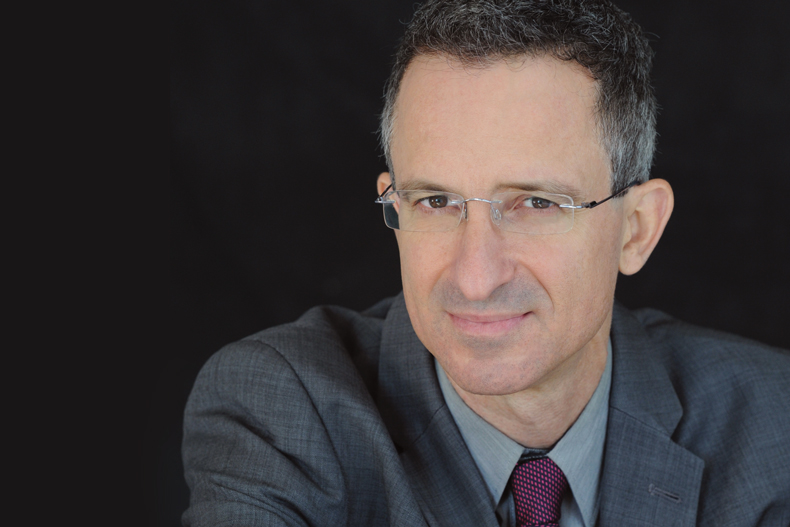
We’re all filled with a lot of emotions at this moment of crisis–sadness, loneliness, anxiety, and fear. With the world a hard place to navigate right now, what can we each do to boost our happiness? For guidance, we turned to Dr. Tal Ben-Shahar, a Jewish author, professor, and one of the leading experts on positive psychology-the science of what makes people feel good.
The co-founder of the Happiness Studies Academy, Ben-Shahar taught a course at Harvard University on positive psychology, considered the most popular class in the school’s history. A native Israeli, Ben-Shahar now lives in New Jersey with his family. In April, JUF News
conducted an interview-via email-with the professor.
A. Why should we care about the science of happiness right now?
Q. The science of happiness matters now, as it always does, regardless of external circumstances. It matters in good times because it can help us increase our levels of well-being when things are going well. It matters even more these days because it makes us more resilient, helping us through tough times. There are numerous evidence-based interventions that, beyond strengthening our psychological immune system, will also bolster our physical immune system.
What is the top indicator of happiness?
Relationships are potentially the number one predictor of both physical and mental health. Francis Bacon, the British philosopher, pointed out 400 years ago that “friendship doubles joys and cuts griefs in half.” Spending quality time with people you care about and who care about you is always important; it is especially important now. If actual get-togethers are not possible, then virtual get-togethers will do.
Is our degree of happiness innate–or can it grow as we grow?
While there is some genetic component to our happiness-some people are born with a happy disposition while others are not-our genes define a range, not a set point. We all can become significantly happier, though some people have it “easier” than others. And most people fall far short of their happiness potential.
Excluding people who are directly affected by the virus, is there a certain profile of a person who can cope best with a crisis like the one we’re in?
Yes, a person who is generally more grateful, who, be it in good times or tough times, is able to appreciate the good things in life.
How much can external factors, like the coronavirus, affect our overall happiness?
In general, external circumstances do not impact our happiness levels that much. Except for when it comes to extreme circumstances. And we’re living through extreme circumstances today. Being locked up in our homes is extreme and difficult for most people to deal with. Economic uncertainty is extreme, and it naturally impacts our happiness.
How do you think Judaism promotes a happy approach to life?
Judaism talks about being realistic. For example, in Pirkei Avot (Ethics of the Fathers), we’re asked: Who is rich? The answer is: One who is content with what they have. The same applies to happiness. This is about appreciating what we have and being humble about our needs. It’s also about lowering expectations, or at least changing our expectations, which is not a bad thing to do-especially these days.
How realistic is it for us to expect to be happy most of the time?
Expecting to be happy all/most of the time is unrealistic and outright harmful. In fact, the key to happiness is to give ourselves the permission to be human , to embrace whatever emotion comes up no matter how unpleasant, rather than suppressing them. How do we do that? We can journal; we can also open up and talk to people we trust; and [we] can cry, rather than holding back the tears. The paradox is that to fulfill our potential for happiness, we must allow in unhappiness.
What are the biggest lessons you’ve learned during this pandemic?
Cooking and cleaning!
Appreciate life rather than taking things for granted, cultivate quality experiences rather than quantities of goods, respect Mother Earth and your co-inhabitants, slow down and simplify, and show kindness and compassion.
Ben-Shahar’s tips for boosting happiness now:
*Be human.
Give yourself permission to be human, appreciating and being grateful for what you have.
*Talk to your people.
Spend time with your loved ones (albeit virtually).
*Get moving.
Exercise does not just make us physically tougher; it significantly contributes to our psychological toughness.
*Seek out distractions.
Constantly thinking about the virus is unhealthy and unhelpful. Watch your favorite TV series, listen to music, spend time on your hobby, or play games with your family and friends-these can all constitute a healthy form of distraction.
Dr. Tal Ben-Shahar is offering a yearlong online certificate program in Happiness Studies. For details, check out happinessstudiesacademy.lpages.co.
Other stories
-

Two local teens win national recognition
Recipients of the annual Diller Teen Tikkun Olam Awards
Read more -

Celebrating six young award winners cultivating the community
Introducing young adult award winners
Read more -