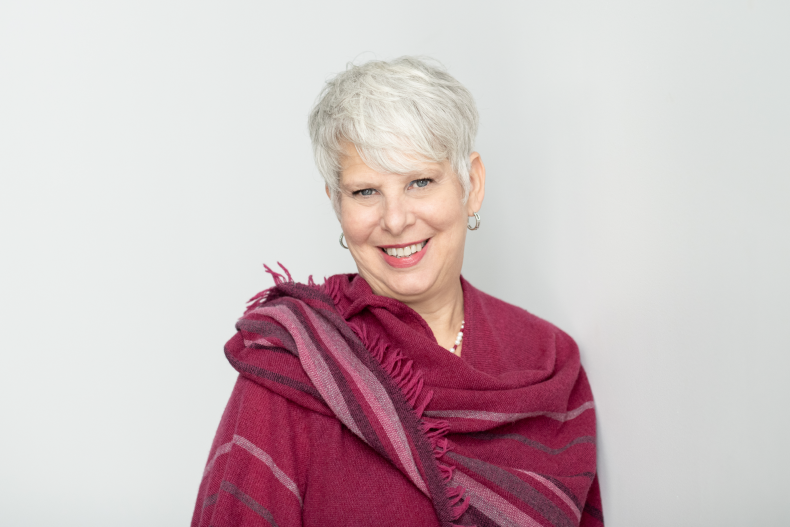
A Psalm is both a prayer and a poem. The stanzas in the new book Amen: Seeking Presence with Prayer, Poetry, and Mindfulness Practice , mirror this merger of veneration and versification.
The book is written by Rabbi Karyn D. Kedar, the senior rabbi at Congregation B’nai Jehoshua Beth Elohim in Deerfield and published by the CCAR (Central Conference of American Rabbis) Press. This is Kedar’s fifth book, but her first book of poetry.
Aside from crafting rituals and ceremonies and the liturgy to accompany them, Kedar is a speaker and teacher who has designed retreats on leadership, engagement, forgiveness, and finding purpose.
With Amen , Kedar’s own purpose is, she explained, “to aid in the search for clarity, for strength beyond what we know, and for an affirmation of holiness, of goodness, of the grandeur of God.” The very word ‘ amen ,’ Kedar continued, “is the punctuation to the perpetual search.”
While the word ” amen ” itself is rooted in the Hebrew word ” emunah ” (faith), for Kedar saying ” amen ” to a prayer is “an affirmation of longing, of an attempt to connect with the transcendent. It means, ‘I hear you- I affirm your prayer.'”
Like any prayer book, Amen is divided into sections. The first is “Awakening the Spiritual Path.” One of the poems there is, itself, called “Amen”; it concludes: “Dear God/ for the mystery/ and for the silence/ teach me to say/ amen.”
The second section in Amen , titled “God’s Tears,” provides prayers for when “a hurricane decimates a city, or a gunman attacks a shul.” Kedar said she felt a need for prayers that were “a modern spiritual response” to massive tragedies.
The final sections are shorter. “Our Common Purpose” is a set of invocations for community gatherings. “Focus Phrases” are maxims on topics including guidance, forgiveness, and positive energy, which can be used as anything from daily affirmations to yoga mantras; one focus phrase, for instance, is “I am the hero of my own life.”
Her poems come from the same impulse as piyyutim , hymns written by Jewish scholars over the centuries. “They were poets trying to access the human spirit,” she feels. Like them, “Spirituality compelled me forward,” she said. “I form these prayers out of impulse.”
Kedar begins writing at sunrise every day. She says that having a schedule or ritual like this can discipline the mind and designate a space for inspiration to enter. She then imagines her muse, “a child holding out her hand, saying ‘Come with me!'”
She hopes parents and teachers will share some of the prayers in the book with their children. She recommends the prayer “Wonder,” which says “Embrace the world with wonder/ Less judgement/ more amazement.”
Today’s Jewish prayers replace the sacrifices and offerings made at the fallen Holy Temple. Of the new prayers in Amen , Kedar says, “This is my offering.”
Other stories
-

Two local teens win national recognition
Recipients of the annual Diller Teen Tikkun Olam Awards
Read more -

Celebrating six young award winners cultivating the community
Introducing young adult award winners
Read more -