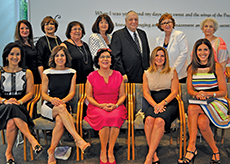
On March 2, 1966, The Dick van Dyke Show aired a remarkable event: Buddy Sorrell’s bar mitzvah. The writers of that episode probably had no idea what was coming. By the 1970s, there were a lot of changes in the Jewish communal world. In 1972, Sally Priesand became the first female rabbi. The first gay and lesbian synagogue Beth Chayim Chadashim was founded in Los Angeles that same year. The Soviet Jewry movement was gaining steam and impact.
A few years after Buddy’s bar mitzvah on national TV, something else was getting started: the adult bar/bat mitzvah. Rabbi Albert Axelrad from Brandeis University is credited with holding the first “belated” bar mitzvah ceremonies. The initial interest in this new ritual came from men, feeling that they missed out on some crucial aspect of their developing Jewish identity. Soon, of course- as women began to take more active roles in the ritual life of the community- they too lined up to take part in something that was denied to them when they were girls.
The motivation hasn’t changed much in the intervening decades. Today’s students come from a variety of backgrounds, they engage in community service projects, they lead some or all of the service, learn to chant Torah and Haftorah… and experience something 13-year-olds may not.
Take Carol Mackoff and Jane Lippow from Anshe Emet Synagogue in Chicago. They began a deep friendship when they each decided to have an adult bat mitzvah. Mackoff’s upbringing was in a culturally Jewish home, but there were no synagogue activities outside the High Holidays. She came from proud socialists who weren’t actively Jewish. And of course, Jewish girls in the middle of the 20th century just didn’t have bat mitzvahs. Lippow said she realized she missed out on something, and although was raised in an identified, Reform Jewish home, the opportunity to learn something new was a powerful lure.
When their grandchildren started their bat mitzvah training, Mackoff and Lippow could no longer resist; they jumped in with both feet, finding community, connection, and each other. Years later, these two women still study together weekly, and are still involved in the social justice cause they began as part of their bat mitzvah experience.
Watching one’s (grand)children become a bar/bat mitzvah is a powerful motivating factor for many. Amy Stein is in her 40s and just completed her bat mitzvah earlier this summer, at B’nai Joshua Beth Elohim, in Deerfield. She was raised in a Reform family, and chose Confirmation over bat mitzvah when her parents gave her the option. She never felt like she was missing something until her children became b’nai mitzvah. As they became more and more involved with their youth groups, trips to Israel, and taking part in services, it was sitting through other adults’ celebrations of their *b’nai mitzvah that sealed the deal. She began attending classes for two hours each week, learning Hebrew, liturgy, and the parasha the entire class would be reading.
Another common motivation is conversion. Tim Jacobs, of Bnai Tikvah, in Deerfield, said that after his conversion to Judaism, he just knew that he had another step to take. The conversion experience was profound, but he wanted more skills in Hebrew, more familiarity with the Shabbat service, and deeper connection to the community he had joined. His son was preparing for his bar mitzvah, so rather than “take his spotlight,” Jacobs delayed his own bar mitzvah. The experience cemented his place in the congregation; he and his family are regular Friday night and Shabbat morning attendees.
Another Jew by Choice, in the Anshe Emet community, will begin her bat mitzvah training this fall. Her maternal great-grandparents were Jewish. She began her conversion journey 18 years ago. After finally finishing that process, she looks forward to becoming more fluent in Hebrew, increasing her familiarity with the liturgy, and becoming more active in the community at large.
A common theme for all of these b’nai mitzvah is how profound the experience is for them. They all felt that 13-year-olds can’t appreciate this life-cycle event the way they do. Kids, they said, tend to go through the motions sometimes, or do it “for the party.” As adults, they have clear visions of their own spiritual paths, the have a very personal and internal commitment, and they bring their adult passions to learning something new. They know more people when they walk into their buildings, and they’re interacting with their clergy in a more meaningful way.
Buddy Sorrell’s bar mitzvah may have been played for laughs, as something he hid from his friends and family until he was ready. For today’s adult b’nai mitzvah “travelers,” this is a meaningful, public acknowledgment of Jewish literacy, identity, and commitment. And some of them even have parties.
Anita Silvert is a freelance teacher and writer, living in Northbrook. You can read more of her weekly Torah musings on her blog, Jewish Gems, at www.anitasilvert.wordpress.com .
*B’nai mitzvah is the plural for bar/bat mitzvah.
Other stories
-
Meet Andrew S. Hochberg, 2021 Julius Rosenwald Memorial Award recipient
Celebrate Andy Hochberg at the virtual Annual Meeting on Sept. 14
Read more -
Two local teens win national recognition
Recipients of the annual Diller Teen Tikkun Olam Awards
Read more -
Celebrating six young award winners cultivating the community
Introducing young adult award winners
Read more