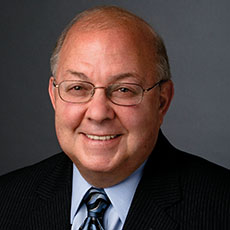
The number of dollars Michael Tarnoff has generated over the years to help the Jewish community may fit on a spreadsheet, but what can never be tabulated is the number of lives his work has impacted.
Tarnoff-now stepping down as executive vice president and chief financial officer of JUF- found new ways to help secure hundreds of millions of dollars. These funds served untold numbers in Chicago, in Israel, and around the world-beyond those dollars brought in by JUF’s fundraising efforts.
And by co-creating JFMC Facilities Corporation, Tarnoff freed dozens of professionals from managing their buildings.
Since 1980, Tarnoff has overseen the accounting, finance, investment real estate, technology, and human resources departments. Many of his innovations have been implemented by other cities’ federations, and by the Federation system nationally.
“Mike provided much of the financial genius that propelled our Federation forward,” JUF President Steven B. Nasatir said. “His initiatives have become the gold standard throughout the Federation system. Equally important was his being a mentor to many, and a friend to many more.”
Bill Silverstein, chairman of the JUF Board of Directors, agreed: “He has been extremely involved in our success. His strategies have been accepted and embraced by all.”
Tarnoff, who earned his MBA at the University of Chicago, began his career as an investment banker. He moved into real-estate development, futures trading, and commercial banking. What he learned at each job and inspired the innovations he would make at JUF.
Tarnoff says that what make Chicago’s JUF special is “the sense of teamwork” he sees in both the organization and in the community itself. “We have also been blessed by a seemingly endless supply of incredible lay leaders,” he added.
When Tarnoff first began working at Federation in 1980, the endowment stood at $39 million. Tarnoff authored a “$100 million challenge plan” to the JUF Board of Directors. That goal, set to be reached in 10 years, was reached in six. Today, the Federation total endowment stands at $1.4 billion-a 36-fold increase in 36 years.
Further, the endowment has been invested, with an average return of 10.8 percent annually. A Guaranteed Earnings Account, another of Tarnoff’s innovations, has resulted in $35 million in gains to the Unrestricted Endowment Fund over 25 years.
Tarnoff help plan the Jewish Federation of Metropolitan Chicago Facilities Corporation in 1985. Now, the JFMC Facilities Corporation saves $2-3 million each year in managing and maintaining offices, schools, JCCs, Hillels, residential facilities, and even summer-camp grounds and ball fields-encompassing some 2 million square feet of real estate.
“There are about 20 buildings that the agencies have programs in that serve people that wouldn’t exist if it weren’t for the Facilities Corporation and the financing with tax exempt bonds and the project endowment fund financing model that we’ve developed.” Tarnoff said. “Both of those things make me feel very proud.”
Tarnoff also created a central bank function for JUF and its affiliate and beneficiary agencies to obtain loans and/or loan guarantees which save the Federation system about $2 million annually.
Tarnoff has also made an impact on the national level. He encouraged Federation to issue bonds, and today Tarnoff said he is pleased to report, “We’re rated AA3 by Moody’s.” The bond initiative has since been adopted by the Federation system nation-wide as its Jewish Federation Bond Program, which can help obtain tax-exempt loans for all Federations across the US. More than $1.5 billion worth of bonds have been issued since the program’s inception in 2002.
Additionally, he spearheaded the idea of federations pooling their endowment portfolio investments. The JFNA’s Jewish Federation Investment Program manages more than $3 billion in endowment portfolio assets for Federations all around the country. “I think the more we do that collectively, the better off the whole Jewish community is,” Tarnoff said. Higher investment returns resulting from greater economies of scale and access to superior opportunities have resulted in an estimated $5-10 million of incremental asset growth.
These funds, Tarnoff emphasizes, are only a means to an end. “Working at JUF has been great for me in what I call ‘psychic income,'” Tarnoff explained. “But doing what I do at JUF, instead of at a for-profit, I have a direct connection with the community. I know that more elderly people get services, more kids go to camp, more families get counseling because I am doing my job. Service to the people is the reason we are in business.”
In addition to JUF, Tarnoff has served on the Nonprofit Advisory Committee of the Financial Accounting and Standards Board. He has served as Chairman of the First Nonprofit Insurance Company, which provided insurance to non-profits. And he continues to serve on many profit and non-profit boards, including Agile HC, the Michael Reese Health Trust, and the Howard Area Community Center.
For his accomplishments, Tarnoff received the Malenkorn Distinguished Service Award in November, 2011, from the Jewish Communal Service Association. He shared it with two of his colleagues, JUF’s Peter Friedman and the late Michael Kotzin. Each of them had served JUF for 25 years or more.
While Tarnoff is no longer CFO himself- he led the worldwide search for his own replacement, Boaz Blumovitz- he will continue to work closely with the new CFO during a transition period. And Tarnoff will continue making an impact at JUF in his own right as Senior Vice President, Project Management. In that capacity, he will lead a variety of existing efforts, focusing on the financing and property development of capital projects, both new and current facilities.
While semi-retired at JUF, Tarnoff will not be spending the rest of his time on the golf course. “I will be consulting, serving on more boards, and travelling,” he said. “But I also plan to set aside some time for doing nothing.”
Time that has been, in so many ways, well-earned.
Other stories
-
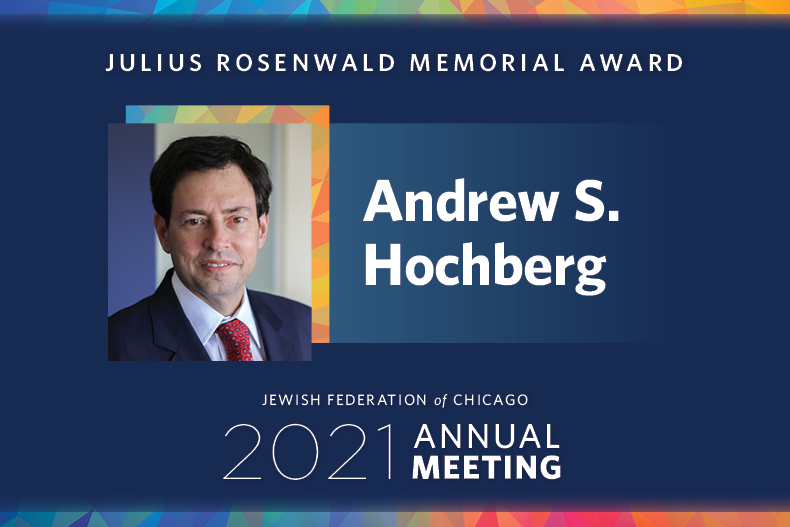
Meet Andrew S. Hochberg, 2021 Julius Rosenwald Memorial Award recipient
Celebrate Andy Hochberg at the virtual Annual Meeting on Sept. 14
Read more -

Two local teens win national recognition
Recipients of the annual Diller Teen Tikkun Olam Awards
Read more -

Celebrating six young award winners cultivating the community
Introducing young adult award winners
Read more