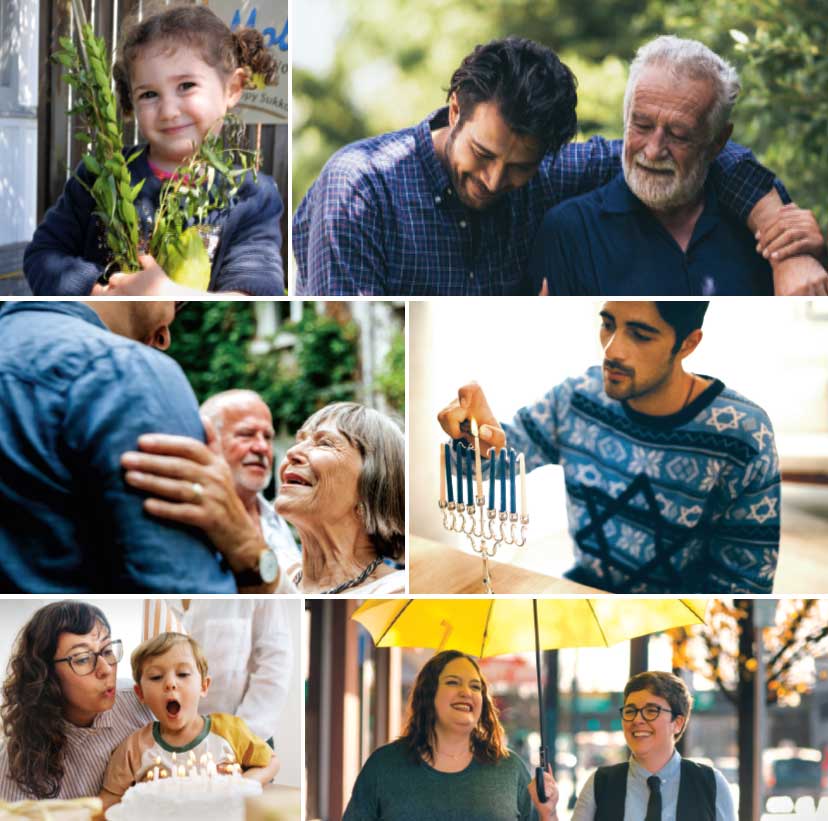
Jewish Chicago: Who We Are
A Population Study
Every 10 years, JUF sponsors a study to understand the unique needs of this Jewish community. Our community—and the world—faced a year unlike any other, and the 2020 Metropolitan Chicago Jewish Population Study offers a snapshot of this critical moment in time.
This year’s study was conducted by NORC at the University of Chicago and Brandeis University’s Cohen Center for Modern Jewish Studies. The study was funded in part by generous grants from the Crown Family Philanthropies, Michael Reese Health Trust, the Walder Foundation, and the Jewish Federations of North America Research Benchmarking Project, with support from the Harry and Jeanette Weinberg Foundation.
Jewish Chicago in focus
- Our community continues to be strong, stable and growing
- The diversity of our community is increasing
- Participation in Jewish life is evolving in rich and broad directions
- Identified needs of individuals and households, in part due to the pandemic, provide an imperative for our continued work
175,800
Jewish Households
Up 19% since 2010
420,300
People in Jewish Households
Up 10% since 2010
319,600
Total Jews
Up 3% since 2010
A 2020 Population Study – Technical Appendix
Special Report on Financially Struggling Households
Special Report on Jews with No Denomination
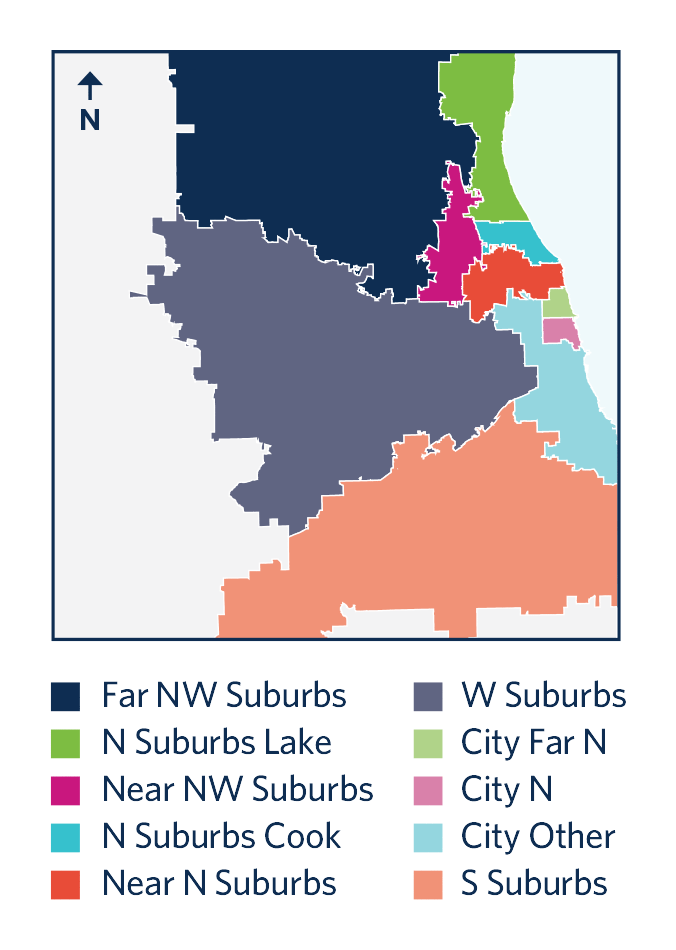
Jewish Chicago on the map
The largest percentage of Jewish households and individuals reside in City North, followed by the Near North Suburbs.
About the Study
Data was collected between Oct. 2020 and Jan. 2021 via web and telephone surveys. Households were selected at random—3,877 completed surveys in the main sample, with an additional 1,755 completed surveys from a supplemental sample contacted by email only.
The high number of completed surveys supports valid estimates for an increased number of geographic areas in the Chicago metro area and improves the quality of estimates for key subgroups within the Jewish community.
Please contact us with any questions about the study.