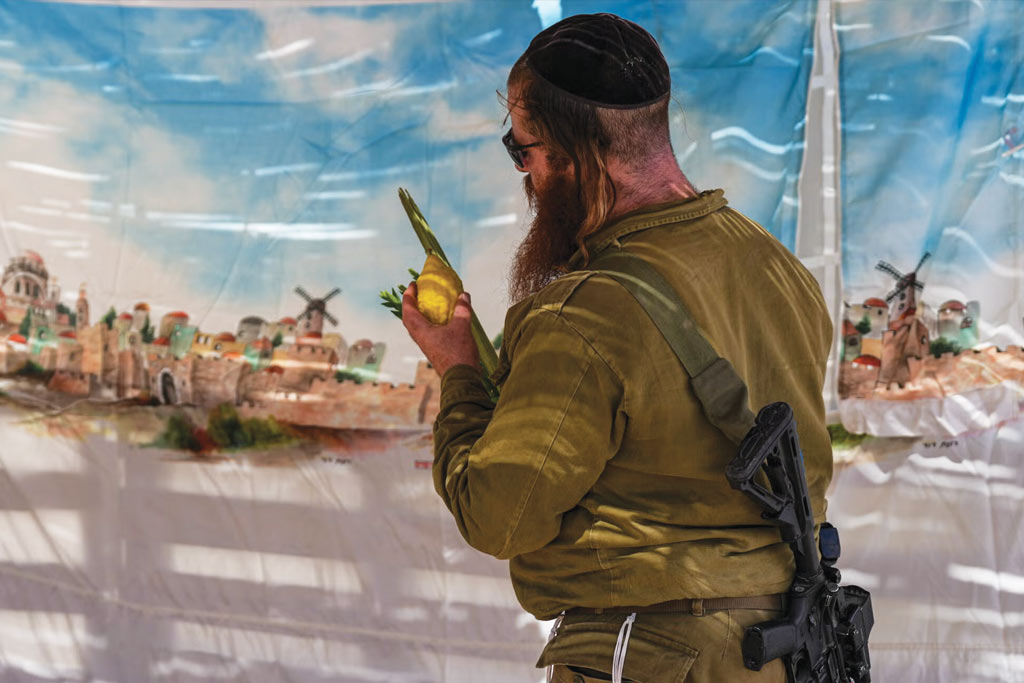
An ultra-Orthodox Israeli soldier from the IDF’s Hasmonean Brigade builds a sukkah and prepares for the holiday of Sukkot at an Israeli military post in Syria on Sept. 24. (Photo credit: Ayal Margolin/Flash90)
Since October 7, American Jews have sharpened our sights on antisemitism. We are hyper-vigilant, ever alert to the arrows shot at us. We recognize the importance of challenging falsehoods and standing up for all targeted Jews.
But there is one myth we have indulged: that “Orthodox Jews do not serve in the Israel Defense Forces” (IDF).
A more specific version claims that Haredi (Ultra-Orthodox) Jews do not serve.
The first version is false; the second is incomplete. Both reflect large blind spots about the diversity among Orthodox Israelis, in observance and in attitudes toward military service.
The broader misconception is most obviously dispelled by looking at Orthodox Zionists (a.k.a. “National Religious”). Though they make up less than 15% of Israeli society, they account for approximately 25% of all infantry officers and serve in the reserves at disproportionately high rates. Their presence in the IDF is unmistakable. And inspiring.
The more specific misperception about Haredi Jews has a basis in fact: Most do not serve.
This unequal distribution of military obligations has generated intense resentment, becoming one of Israel’s most divisive issues. It has spawned bitter political controversies and volatile demonstrations that further inflame emotions.
Many Haredi believe that full-time Torah study is essential to Jewish survival; therefore, it is a form of national service itself. They also assert that military service is incompatible with their religious obligations.
For Orthodox Zionists, their own IDF service demonstrates that military service and traditional Jewish observance are compatible.
Thus, the Haredi service debate involves not only the unequal sharing of military burdens but also different understandings of religious and national responsibilities.
Amid all these political, religious, and military dynamics, an important part of the picture is too often unseen: Thousands of Haredim do serve.
Of the approximately 13,000 Haredi men eligible for military service each year, several thousand serve. They remain a minority, but one that is growing. Since October 7, their enlistment has more than doubled.
That development deserves recognition.
Their service is also uniquely challenging. Haredi soldiers risk ostracism within their own communities and estrangement from family. They are pioneers, finding ways to maintain their religious commitments while answering the call to help defend Israel.
Their contributions are not merely symbolic. Haredi soldiers serve in combat, are wounded, and give their lives defending the country. Their sacrifices began long before October 7 and have continued since. Last year, four Haredi soldiers were killed in a single roadside bombing in Gaza.
These examples of courage and commitment deserve to be heard.
Even as political strife and protests intensify, an important milestone was reached in October. The Hasmonean Brigade, a new IDF unit for Haredi soldiers, graduated its first class of officers. Their training included operational activity in Lebanon and the West Bank.
Military service is not the only area in which Haredi society is evolving. A new political party, Haredi Public, appeared on the ballot in Israel’s recent election. Unlike the two established Haredi parties, it advocates national service and gainful employment for those not studying Torah full time. Women are also included among its top leadership.
Although the party did not reach the electoral threshold for representation in the Knesset, the combination of increased military service and such a political platform signifies that something meaningful is afoot in the Haredi world.
The path these Haredi are charting deserves to be part of a more accurate picture of how we understand the diversity of Orthodox life in Israel.
We American Jews are quick to challenge the many misconceptions non-Jews have about us. We should bring that same diligence and care to our own understanding of Israel.
It is time for a more accurate image of Haredi military service—one that sees these pioneers and their sacrifices.
Jay Tcath is Executive Vice President of JUF.
In this issue
-

-

Catching up with Molly Yeh
Before the Glenview native was beating eggs, she was keeping the beat
Read more -
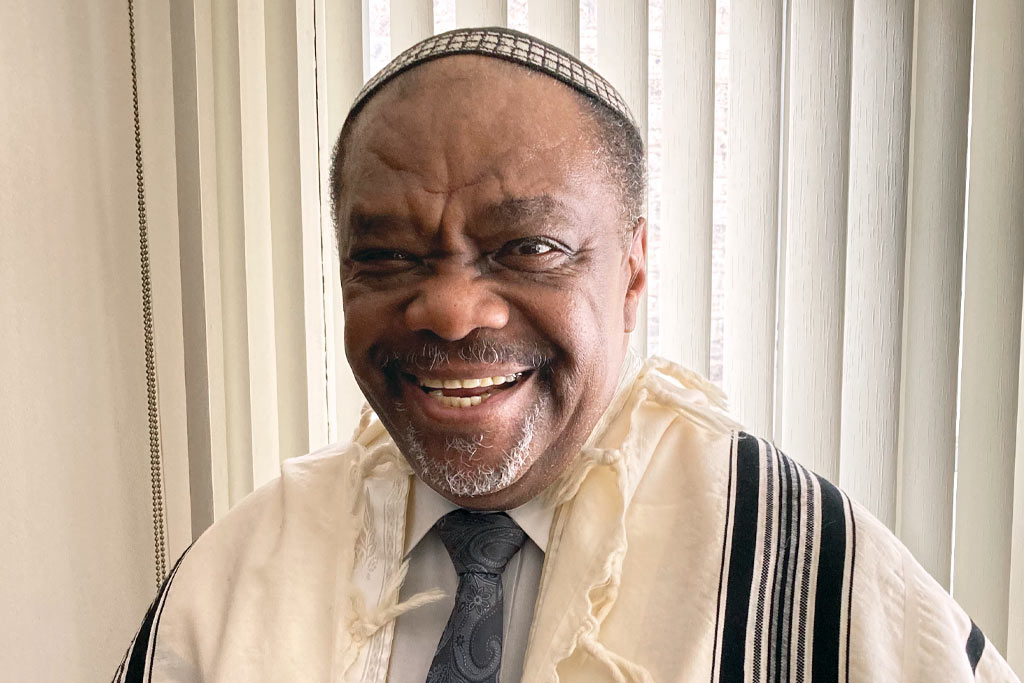
Remembering Rabbi Capers C. Funnye Jr.
Beloved spiritual leader’s legacy of faith, service, and dedication
Read more