Center for Jewish Genetics recommends genetic counseling for anyone considering BRCA testing
In the fall of 2014, studies published in The Journal of the American Medical Association, the Proceedings of the National Academy of Sciences of the United States of America and The Journal of the National Cancer Institute recommended that women over the age of 30 get tested for mutations in the BRCA1 and BRCA2 genes.
Mutations to these two genes increase the risk of contracting female breast and ovarian cancer, as well as other types of cancer. Further, these three studies recommended testing regardless of family history of breast or ovarian cancer.
It is well-documented that Ashkenazi Jews have a much greater risk for carrying mutations in the BRCA1 and BRCA2 genes. In fact, one in 40 individuals of Ashkenazi descent is a carrier of a BRCA mutation compared to one in 400 individuals in the general population.
Whether you have decided to get BRCA testing or are just thinking about it, the first step is to “do your homework.” You should know what to expect and what’s involved in the testing process to make an informed decision about what’s right for you.
The Center for Jewish Genetics, along with other nationally renowned institutions such as the National Society of Genetic Counselors, recommends that you:
- Meet with a genetic counselor, or with a physician or health care provider involved with cancer treatment and prevention.
- Discuss with that professional your family history of breast and ovarian (and other) cancer, what testing results can and cannot reveal, and the health management options that exist in the event you are tested and it reveals you are a carrier of a BRCA mutation.
The Center for Jewish Genetics can help you get started. While the Center has screening and education programs for 19 Ashkenazi Jewish genetic disorders, it does not offer genetic testing for BRCA. However, the Center will help identify centers near you so that you may receive the appropriate testing.
Other stories
-
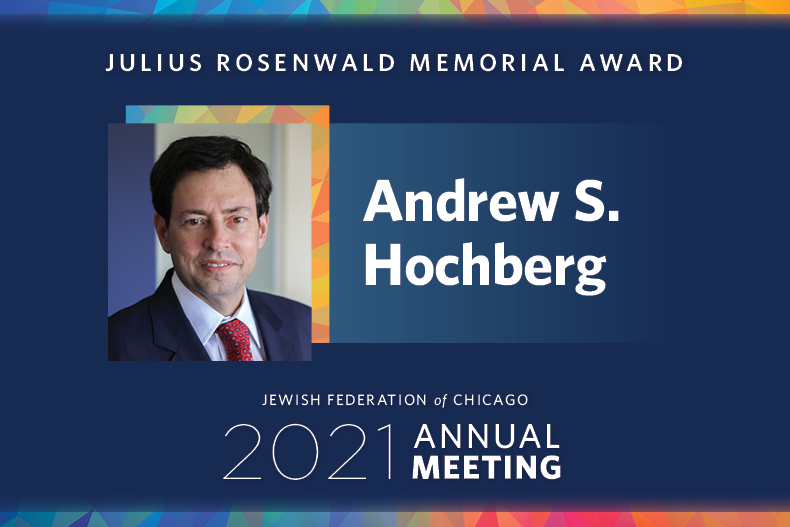
Meet Andrew S. Hochberg, 2021 Julius Rosenwald Memorial Award recipient
Celebrate Andy Hochberg at the virtual Annual Meeting on Sept. 14
Read more -
Two local teens win national recognition
Recipients of the annual Diller Teen Tikkun Olam Awards
Read more -

Celebrating six young award winners cultivating the community
Introducing young adult award winners
Read more