Crain's writer debriefs election results with Federation's Governtment Affairs Committee, JCRC
MARA RUFF
Hinz began by quoting Mayor Richard M. Daley: “It all comes down to why the other guy got more votes.” Focusing on the Illinois state gubernatorial race, Hinz spoke about Governor-elect Bruce Rauner’s strategy and the shift in Chicago voting trends that contributed to Rauner’s victory over Governor Pat Quinn. Quinn’s attempt to reach the populist appeal in order to gain the liberalist vote did not work, he said, and his plan was enough to win in Cook County, but not enough reach voters in nearby suburban counties and gain votes in the rest of the state. Rauner, on the other hand, stayed away from the hot-button issues, such as gun control, and centered his campaign strategy in and around voters’ pocketbooks.
Rauner’s approach proved to be successful, especially amongst the lakefront liberals in the City of Chicago. Although Chicago is known for its long-standing Democratic roots, Hinz highlighted the shift of voting trends in the 41st, 42nd and 43rd Wards from Democratic to Republican. Rauner won in these wards because their residents, Hinz said, are liberal on social policy issues, but conservative about economic issues. Hinz also noted the new 2nd Ward that encompasses parts of downtown, including Jewish Federation headquarters, was not too far off a Republican win.
With a newly elected Republican governor, the first since Jim Edgar, Hinz speculated on what is next, saying it is unclear if Rauner will continue “his tough, new sheriff attitude or wheel and deal with leadership,” which he is very capable of doing. Rauner, however, has not yet said how he will work with a primarily democratic Illinois General Assembly.
On the political agenda this session, Rauner will be faced with tough issues and some decisions will need to be made quickly. In January, the temporary individual income tax is scheduled to sunset, leaving a $4 billion hole in the state budget; government employees are working with a $100 billion underfunded pension system; and attempts to introduce the idea of service tax to supplement for the loss of the temporary income tax.
At risk, Hinz said, Medicaid expansion and social service funding cuts are most likely to be the first on the chopping block.
Other stories
-
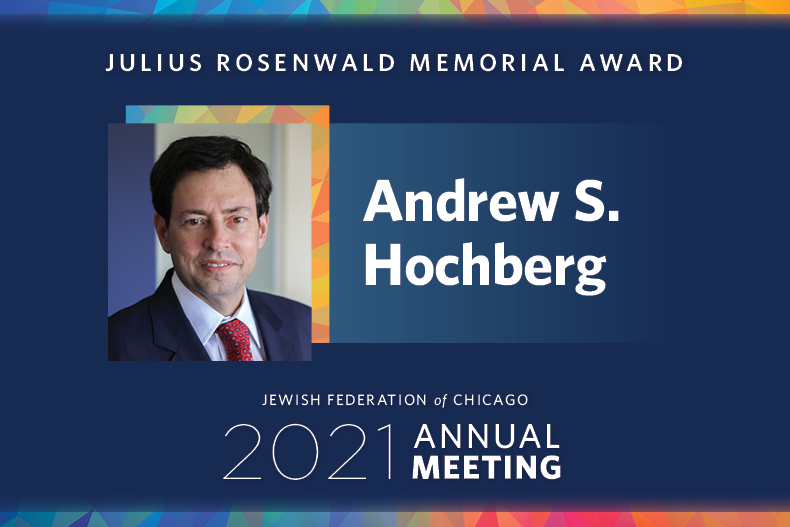
Meet Andrew S. Hochberg, 2021 Julius Rosenwald Memorial Award recipient
Celebrate Andy Hochberg at the virtual Annual Meeting on Sept. 14
Read more -
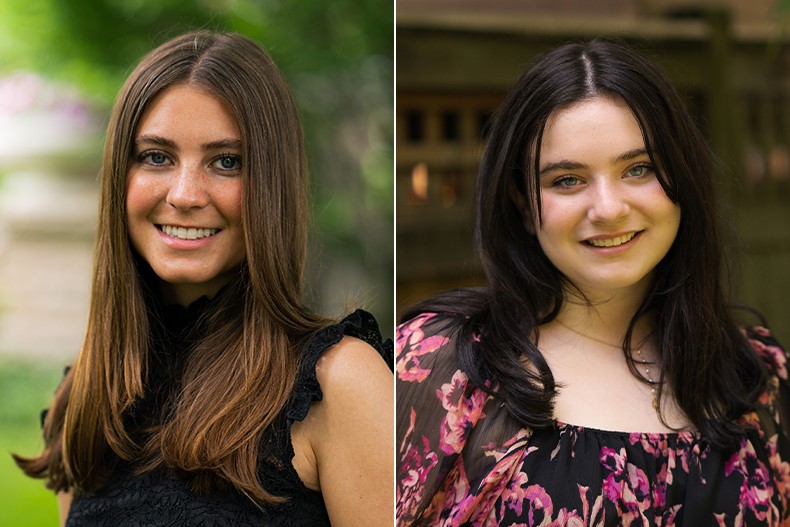
Two local teens win national recognition
Recipients of the annual Diller Teen Tikkun Olam Awards
Read more -
Celebrating six young award winners cultivating the community
Introducing young adult award winners
Read more