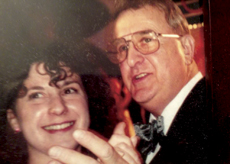
The discussion of young women and breast and ovarian health always reminds me of my senior year at Indiana University. It’s my first week back at school and I sit in the waiting room at Indiana’s health center to see a doctor in the women’s clinic. I missed the chance to see my gynecologist at home and, judging by the hour I’ve spent waiting, I’m not the only one. I sit there itching to get back out into the sun while mindlessly filling out the paper work. Asthma? No. Allergies? Only to these awful gray walls. Family history of cancer? Yup. That check is nice and bold.
Finally, my name is called and I endure a quick exam. After briefly glancing at my paperwork and ignoring the giant check mark I made, the doctor gives me a generic speech reminding me about safe sex, eating my vegetables, and that spending four years of college drinking like a fish can in fact damage my health. Thanks-who knew?
I’m lucky-I didn’t need this doctor to discuss my cancer risk with me. My aunt was diagnosed with breast cancer while my grandfather was well into a cancer battle of his own. These things don’t tend to be coincidental in families. The genes that make us share the same eyes and gave me weirdly tiny ears also unite us in having a high risk for cancer. Genetic testing revealed that my grandfather and all three of his daughters carried the BRCA2 mutation, increasing their lifetime risk for breast and ovarian cancer to more than 50 percent. My grandfather passed away in September of 2012 after an impressive four-year fight. Remarkably, my aunt entered remission after several rounds of chemotherapy and a double mastectomy, only to be killed in an automobile accident several months later in July of 2013.
I didn’t need the Indiana University women’s health clinic doctor to tell me I was high risk-but I am in the minority. Many young women do not receive enough education about their risk for breast and ovarian cancer. When my grandfather passed away he left behind a legacy of love, laughter, and learning. He also left us genetic health information that provides a vital clue to our family health history. Knowing your family history is the first and most important step in becoming self-aware about one’s risk for hereditary cancer. Understanding your risk-and, when appropriate, undergoing genetic testing-gives you resources to live a proactive life and an edge in the fight to remain cancer-free. In our family, we use this knowledge to stay on top of every preventative measure that exists.
Many things in this world you won’t see coming and can’t control. But knowing your risk of hereditary cancer and other genetic illnesses can empower you to take steps to protect yourself and your family. Genetic information can be frightening, so avoid being overwhelmed by taking advantage of educational, counseling, and screening programs offered by the Center for Jewish Genetics. You can also reach out to their amazing partner organizations like Bright Pink, a non-profit focused on educating young women on breast and ovarian health; or Sharsheret, an education and outreach organization focused on breast cancer in the Jewish community. All these organizations work from a common theme: knowledge is power.
As illustrated by my experience at Indiana, doctors are busy and won’t always know exactly what issues to discuss with you. I encourage you to use the Center, its partner organizations, and other resources to prepare for your next doctor appointment. Arrive ready to ask your questions and speak up about your wellness priorities.
And if you don’t know where to start in terms of finding these educational resources, you are in luck! The Associate Board of the Center for Jewish Genetics is bringing back our very popular young leadership event, Jean Therapy; and this year’s Jean Therapy will highlight resources and information related to hereditary cancer awareness.
Jean Therapy is a night to shop for jeans, jewelry and other specialty items, socialize, network and learn more about the hereditary cancer resources in our back pocket here in Chicago. You’ll hear from the Center for Jewish Genetics, as well as have a chance to learn life-saving information while enjoying a beautiful night out in Downtown Chicago.
Register now at www.juf.org/JeanTherapy for this event taking place on Thursday, May 7, from 6:30-9 p.m. at the Conrad Hilton Hotel, and join other young adults in Chicago who believe that knowledge is power.
Eden Faye is the Community Engagement Coordinator at the non-profit organization Bright Pink and serves on the Associate Board for the Center for Jewish Genetics. She hopes to become a genetic counselor one day.
Other stories
-
Meet Andrew S. Hochberg, 2021 Julius Rosenwald Memorial Award recipient
Celebrate Andy Hochberg at the virtual Annual Meeting on Sept. 14
Read more -
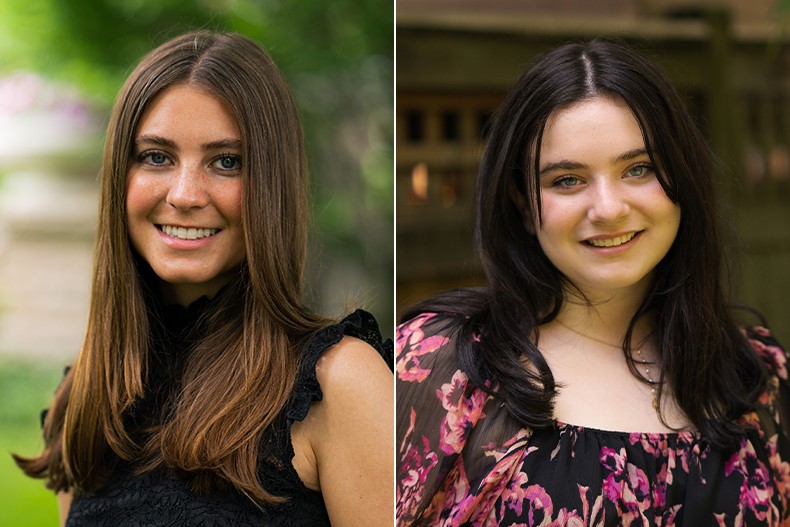
Two local teens win national recognition
Recipients of the annual Diller Teen Tikkun Olam Awards
Read more -
Celebrating six young award winners cultivating the community
Introducing young adult award winners
Read more