On Jan. 27, the Jewish Federation’s Government Affairs Committee met to discuss the new congressional climate, Federation’s federal policy agenda and state budget predictions.
Opening the meeting, David Goldenberg, member of the Government Affairs Committee and Federal vice-chair laid out the Federal agenda, which covers a vast set of issues including funding for health and human services that benefit the elderly, disabled, refugees, and children and families; tax policies regulating charitable giving; Homeland Security grants; Israel, and issues affecting Jews throughout the world.
Next, Laurel Harbridge, assistant Political Science professor at Northwestern University, presented on the history of partisanship in Congress over the last 40 years and concluded with her predictions of which general topics would most likely gain bipartisan support this congressional session: infrastructure improvements, authorization of military force against ISIS, support for Veterans, health care, including minor changes to the Sustainable Growth Rate and initiatives to reduce health care spending, and cyber security.
From the Washington D.C. office, Senior Legislative Associate Eric Goode reported on specific line items that the Federation will be closely watching and advocating for, pending the release of the President’s Budget on Feb. 2. These items include a possible increase to the Non-Profit Security Grant line item; the reauthorization of the Older Americans Act that provides funding to our adult care programs; and the reallocation of funds to Social Security Disability Insurance money, which currently only has enough funds to cover 80 percent of participants as of late 2016. These are important income sources for those served at Federation agencies CJE SeniorLife, Keshet, JCFS, and JVS.
Closing the lunch hour, Associate Vice President of Government and Community Partnerships Suzanne Strassberger brought the conversation back to Illinois, and spoke on the tough realities of the state budget this legislative session.“Regardless of who is in government, Illinois is facing significant, tough issues with no magic solution,” she said.
With the state budget scheduled for release on Feb. 18, state leaders will be considering changes to revenues, mostly through tax reform, and spending reductions. Recipients of state funds can expect 13-15 percent cuts across the board and rate cuts in everything, including Medicaid.
Other stories
-
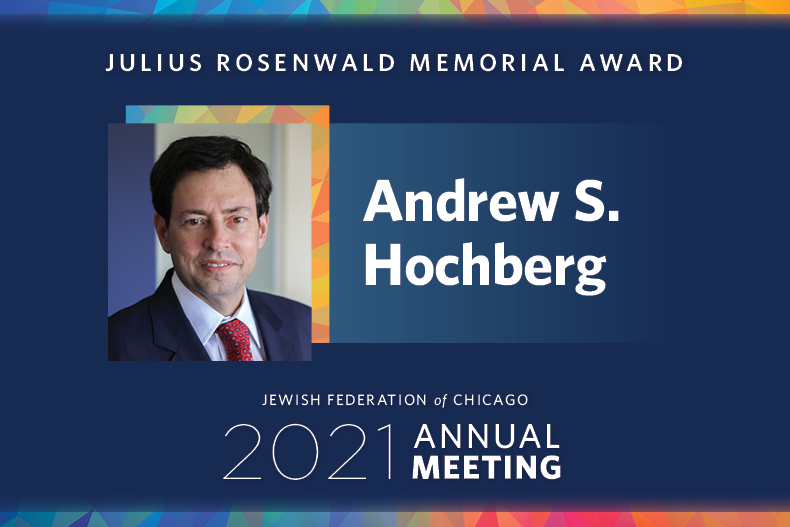
Meet Andrew S. Hochberg, 2021 Julius Rosenwald Memorial Award recipient
Celebrate Andy Hochberg at the virtual Annual Meeting on Sept. 14
Read more -

Two local teens win national recognition
Recipients of the annual Diller Teen Tikkun Olam Awards
Read more -

Celebrating six young award winners cultivating the community
Introducing young adult award winners
Read more