Many Ashkenazic Jews follow the custom of naming their children in memory of those no longer with us. My parents, children of the 60s, decided to forgo that tradition altogether when it came to their first born. They opted instead to name me for one of their favorite opera characters from Puccini’s La Boheme . Though they bucked that tradition, they still wanted their children to have Biblical names. So, my birth certificate reads Miriam Ruth, but from day one they called me Mimi.
Growing up as a Jewish day school student, my teachers periodically assigned namesake projects as a way to explore our own personal histories. “What should I do if I’m not actually named for someone?” I would ask.
Most of my classmates delved into the legacies of the beloved relatives whose names they carried. I was directed to explore the meaning of the name Miriam and the Biblical heroine herself , rescuer of baby Moses, future leader of the Jewish people. I learned Miriam means both “bitter” and “queen of the sea.” I ignored the first definition, homed in on the second, and tried to connect to the Miriam of the Torah by noting we both had two little brothers.
Still, I couldn’t help but wish my parents had chosen to name me for one of the four Jewish matriarchs–Sarah, Rebecca, Leah, or Rachel. Their names were more popular, and I coveted my friends’ trendy personalized pencils and erasers. Plus, those names felt more iconic. In my schoolgirl days, Miriam seemed like a bit of an historical afterthought. Important, but nothing compared to Moses, who guided the Israelites out of Egypt; or even Aaron, who served as the first high priest.
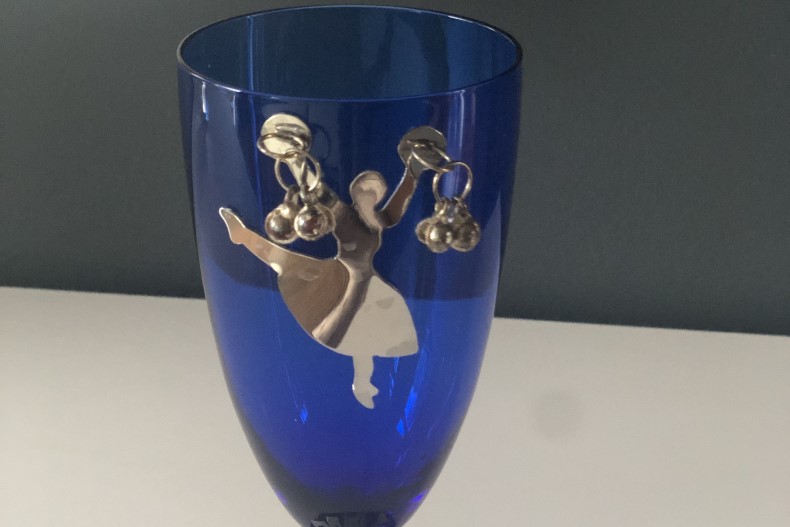
Then, just as I entered early adulthood, Miriam’s Cup entered our family Seder. And that’s when I finally gained a full appreciation for my namesake. Alongside the Cup of Elijah, a steadfast part of Seders everywhere, my mother placed a second cup. She asked me to fill it with water, a symbol connected to Miriam, and focused our Seder discussion on her significance in the Passover story. In doing all of this, my mom enhanced our Seder with a feminist sensibility. She also awakened me to the central role Miriam played in the Exodus, which somehow had eluded me, despite all my years of namesake projects.
The rabbis teach us that God provided the well of water, which sustained the Israelites throughout the desert, “in the merit of Miriam.” Pirkei Avot, The Ethics of our Fathers, goes even further, listing Miriam’s well as one of the 10 things created on the eve of the first Shabbat, and then appearing throughout the Torah.
Following the miraculous Sea of Reeds crossing, Miriam led her fellow Jews in celebration. By the waterside, they sang out loud to mark the end of their bondage and oppression. As it is written in the Torah, “Then Miriam the prophetess, Aaron’s sister, took a timbrel in her hand, and all the women went out after her in dance with timbrels.” (Exodus 15:20)
The Biblical Miriam symbolizes healing, sustenance, and rejoicing. In an effort to circumnavigate Pharaoh’s decree that all Jewish newborn baby boys would be thrown into the Nile, Miriam’s parents separated. Though only a young girl at the time, Miriam convinced them to reunite, and predicted they would bear a child who would lead the Israelites. Her prophecy proved correct, paving the way for God’s redemption of the Jews from Egypt.
This second go-round of a pandemic Passover, we see the proverbial light at the end of a very long dark tunnel. When we pour the cup of water for Miriam at our Seder tables, let us keep in mind the healing and sustenance she provided. Let’s raise up our voices and remember the light and music she brought to our people, teaching us to embrace our newfound freedom.
Mimi Sager Yoskowitz is a Chicago-area freelance writer, mother of four, and former CNN producer. Connect with her at mimisager.com.
Other stories
-
Two local teens win national recognition
Recipients of the annual Diller Teen Tikkun Olam Awards
Read more -

Celebrating six young award winners cultivating the community
Introducing young adult award winners
Read more -