Voices: The Chicago Jewish Teen Foundation, a program of the Jewish United Fund of Metropolitan Chicago, has awarded grants totaling $67,164 to 11 Jewish non-profits in Chicago and in Israel. The grants will help fund projects and initiatives ranging from food and support for local families in need, educational opportunities, vocational services, and victims of domestic abuse, among others.
Over the past year, the Voices 101 Foundation-a group of 25 high school students from around the Chicago metropolitan area-gained practical philanthropic experience by researching community needs, performing due diligence, writing grant guidelines and requests for proposals, and conducting site visits.
“Voices teaches students not only how to give money away, but how to do it strategically,” said Quincy Hirt, 15. “This is the key to philanthropy,”
Stephanie Goldfarb, JUF Director of Youth Philanthropy and Leadership, said, “Our teen board members have set a new bar for what Jewish teen engagement can look like when given the right support and resources to do the work they care about most.”
Almost half of the teens from the Voices 101 Foundation will graduate into the Voices Alumni Foundation next year, where they will use their prior experience to perform more specialized and focused philanthropic work. This year’s cohort of 12 alumni launched a seven-month fundraising campaign, raising $15,000, including a match from an anonymous donor. They also served as peer mentors for Voices 101 participants.
“This accomplishment is not only remarkable for a group of Jewish philanthropists at any age, but it also signifies our community’s increasing commitment to pluralistic teen engagement and investment in our future leaders,” Goldfarb said.
Over the past 11 years, Voices board members have granted a total of $403,907.
“Voices has taught me the importance of caring about the world beyond the bubble I live in. It has shown me the impact anyone, even a group of teenagers, can have on their community,” said Josh Rosenkranz, 18. “Voices has given me the tools to make philanthropy a habit, rather than just an isolated act of kindness.”
Applications for the 2015-2016 Voices program are currently being accepted, and outstanding high school freshman through seniors are invited to apply. Applications are available online athttp://juf.org/teens/Voices_About.aspx
Voices 101 grants totaling $27,760:
EZRA Multiservice Center: Housing Support and Advocacy Program : $5,760 – This program helps individuals and families who are homeless or at risk of homelessness find affordable housing, and helps individuals who are currently housed to maintain their housing and avoid eviction through counseling and a variety of programs.
SHALVA: Project Hope Discretionary Fund: $8,000 – SHALVA offers free confidential domestic abuse counseling services to the Chicago Jewish Community, providing culturally sensitive services in a safe and caring environment and helping over 4,000 Jewish women since 1986. Project Hope allows SHALVA clinicians to provide monetary assistance for clients in emergency situations.
NIRIM: Wilderness Therapy Program: $5,000 – Nirim empowers high-risk Israeli youth with an opportunity to overcome their harsh life circumstances by employing two unique educational-therapeutic settings: The Nirim Youth Village and Nirim in the Neighborhoods – a community outreach.
Hand in Hand: Dialogue Training for Students and Teachers and Hand in Hand High School, Jerusalem: $8,000 – Hand in Hand was founded in 1998 to help build a more inclusive society in Israel through the creation of integrated schools and communities for Jewish and Arab citizens. This dialogue program will help students internalize the message that despite their differences, they must create an inclusive, shared society.
Jewish United Fund Annual Campaign (JUF) : $1,000 – JUF is focused on helping people in need, rescuing people in danger, and keeping Jewish life strong.
Voices Alumni grants totaling $39,404 :
CJE: Home Delivered Meals: $8,000 – CJE’s Home-Delivered Meals program helps to fulfill the agency’s mission by reducing the food insecurity of low-income, homebound seniors. Clients rely on this program because they have difficulty paying for groceries and are physically and/or cognitively unable to shop and cook for themselves.
EZRA Multiservice Center: JUF Uptown Café and Food Pantry: $6,500 – The JUF Uptown Café provides hot, nutritious kosher dinners three nights each week and brunch on Sundays, while the Food Pantry provides nutritionally balanced supplemental food bags filled with items personally selected to best meet a client’s individual needs and diet.
Jewish Vocational Services (JVS): Ready…Set…Work! $7,904 – JVS Chicago’s Ready…Set…Work! Program offers targeted vocational services for youth, ages 18-24, with special healthcare needs, providing opportunities for developing lifelong success, productivity and independence.
JCFS/Response: Center for Sexual Health: $8,000 – Response’s mission is to empower teens to make healthy choices. The Center for Sexual Health will provide more than 200 adolescents with affordable and confidential healthcare services by subsidizing extremely low-income individuals’ services, which include transportation, counseling, medical services and sex education; and launching a mother/daughter sex education and discussion group.
The Lone Soldier Center: Shabbat Meal Program and Job Fairs : $8,000 – The Lone Soldier Center in memory of Michael Levin was founded by former lone soldiers to support, assist, feed, connect and care for lone soldiers in the IDF, before, during and after their Israel army service. This grant will cover the cost of Shabbat meals for approximately 200 soldiers, as well as partial cost of a vocational coach to help soldiers improve their resumes and assist them with their job search.
JUF Annual Campaign: $1,000 – The JUF Annual Campaign focuses on helping people in need, rescuing people in danger, and keeping Jewish life strong.
Other stories
-
Meet Andrew S. Hochberg, 2021 Julius Rosenwald Memorial Award recipient
Celebrate Andy Hochberg at the virtual Annual Meeting on Sept. 14
Read more -
Two local teens win national recognition
Recipients of the annual Diller Teen Tikkun Olam Awards
Read more -
Celebrating six young award winners cultivating the community
Introducing young adult award winners
Read more
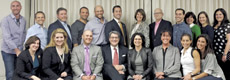
Mazal tov to the recent graduates of the Jewish United Fund/Jewish Federation’s Jewish Leaders Institute (JLI). The second cohort of a successful leadership development program, this group of 22 dedicated individuals spent 18 months learning together, beginning in October 2013. The Jewish Leaders Institute was created to further JUF’s deep dedication and commitment to leadership education. Participants in JLI’s second cohort were chosen based on their demonstrated commitment to the community and to JUF.
The program was chaired by JUF Board member Wendy Berger Shapiro. The instructors were foremost experts in their field, both from Chicago and around the country. Dr. Hal Lewis, President and CEO of Spertus Institute of Jewish Learning and Leadership, served as the program’s scholar-in-residence and taught alongside other renowned professionals including Julie Hamos, Toby Rubin, Dr. Yehuda Kurtzer, and JUF President Steven B. Nasatir.
The curriculum focused on JUF/JF education, Jewish values and community, and organizational leadership training. Participants were exposed to topics ranging from, “How Values Shape our Philanthropic Choices” to “Understanding the Israel and Overseas Agenda” to “10 Things Every (Jewish) Leader Needs to Know.” One of the goals of JLI has been to develop a cohort of leaders who are able to translate and adapt Jewish learning to the realities and needs of the future, and many of the participants are already on the path to transform and tackle today’s complex issues facing Jews locally, nationally, and globally.
A role model for Jewish communal leadership in Chicago, JLI’s program has been replicated as other organizations realize the importance of developing and fostering training programs to guide leadership along their volunteer career path. We look forward to seeing the contributions of this second cohort of Jewish leaders to Chicago’s Jewish community.
Graduates of the second JLI cohort include:
Bluma Broner, Eli Davis, Seth Hanau, Jason Howard, Lisa Jericho, Ari Klein, Jen Leemis, Andy Lucas, Marisa Mandrea, Lindsey Markus, Michael Masters, Jeremy Oberfeld, Brandon Prosansky, Rebecca Richards, Dov Robinson, Sandra Rosenstein, Matthew Seidner, Ben Sher, David L. Solow, Rachel Stein, Robyn Tavel, and Brian Taylor.
Other stories
-
Meet Andrew S. Hochberg, 2021 Julius Rosenwald Memorial Award recipient
Celebrate Andy Hochberg at the virtual Annual Meeting on Sept. 14
Read more -
Two local teens win national recognition
Recipients of the annual Diller Teen Tikkun Olam Awards
Read more -
Celebrating six young award winners cultivating the community
Introducing young adult award winners
Read more
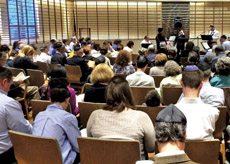
The Pew Research Center’s newly released 2014 U.S. Religious Landscape Study offers a trove of data on American Jews based on interviews with 35,071 American adults, 847 of whom identified their faith as Jewish. Here are some of the more interesting findings about the Jews.
We’re highly educated! There are more American Jews with two or more university degrees than those who have just one-31 percent have a graduate degree and 29 percent have solely a bachelor’s degree. With a college graduation rate of about 59 percent (more than twice the national average of 27 percent), American Jews are the second most-educated religious group in America after Hindus, at 77 percent.
We’re the biggest religious minority! Judaism is the largest faith group in America after Christianity, and its relative size in America has grown slightly since 2007-from 1.7 percent of the U.S. population in 2007 to 1.9 percent in 2014. The denominational breakdown of Jews who identify with the Jewish faith (“Jews by religion”) is 44 percent Reform, 22 percent Conservative, 14 percent Orthodox, 5 percent another movement and 16 percent no denomination.
We’re not as white as we used to be: American Jewish adults are 90 percent white, 2 percent black, 4 percent Latino, 2 percent Asian-American and 2 percent “other non-Hispanic.” That’s a notable change from 2007, when whites comprised 95 percent of American Jews, Latinos comprised 3 percent, blacks comprised 1 percent and the percentage of Asians was negligible.
A quarter of us are losing our religion: When it comes to religious retention rates, American Jews come in third, retaining 75 percent of those raised Jewish. By comparison, Hindus retain 80 percent and Muslims 77 percent. Behind the Jews are Evangelical Christians at 65 percent; Mormons, 64 percent; Catholics, 59 percent; and mainline Protestants, 45 percent. Jehovah’s Witnesses retain only 34 percent.
But 17 percent of us have found Judaism! Seventeen percent of American Jews say they were raised in another religion. Six percent say they were raised unaffiliated, 4 percent as mainline Protestant, 3 percent as Catholic, and 2 percent each as Evangelical and in some other religion.
Who are we marrying? Sixty-five percent of American Jews who are married or living with a partner are with a Jew and 35 percent are with a non-Jew. Nine percent of American Jews are partnered with Catholics, 8 percent with mainline Protestants, 4 percent with peoples of other faiths and 11 percent with unaffiliated Americans.
Nu, when are we going to get married already? The percentage of Jewish adult singles is rising from 19 percent in 2007 to 23 percent in 2014. Fifty-six percent of Jewish adults are married, and another 6 percent are living with a partner. Fifteen percent were married but are now separated, divorced or widowed. The Jewish fertility rate is 2.0 children, compared to 2.1 children for all Americans.
We’re mostly American born and bred: Sixty-six percent of Jewish adults are Americans born to American-born parents. Of the 12 percent of American Jews who are immigrants, 5 percent were born in Europe, 4 percent in the Americas, 2 percent in the Middle East and 1 percent in the Asia-Pacific region.
We still heart New York: Where do America’s Jews live? Forty-two percent in the Northeast, 27 percent in the South, 20 percent in the West, and 11 percent in the Midwest. In the Northeast, where Jews are most numerous, Jews comprise roughly 4 percent of the total population. Eight percent of the New York City area is Jewish.
We’re rich! (but also poor) : American Jews (44 percent) are more than twice as likely as average Americans (19 percent) to have annual household incomes over $100,000. But 16 percent of Jewish adults have annual household incomes of $30,000 or less, and 15 percent live in households that earn between $30,000 and $50,000.
(The Jewish data in the survey has a margin of error of 4.2 percentage points.)
Other stories
-
Meet Andrew S. Hochberg, 2021 Julius Rosenwald Memorial Award recipient
Celebrate Andy Hochberg at the virtual Annual Meeting on Sept. 14
Read more -
Two local teens win national recognition
Recipients of the annual Diller Teen Tikkun Olam Awards
Read more -
Celebrating six young award winners cultivating the community
Introducing young adult award winners
Read more
In 1958, Richard J. Daley was Mayor, Dwight Eisenhower was President, and Sir Edmund Hillary reached the South Pole.
And on the west side of Chicago, Mount Sinai Hospital built a new residence hall, the $1.1 million Leopold and Nannette Kling Residence, to house medical residents, interns, and their families and offer easy access for hospital physicians who were often on call round-the-clock.
At the time, it was a major investment for Mount Sinai, which was originally founded in 1919 to serve Eastern European immigrants and provide medical training for Jewish physicians denied educational opportunities elsewhere. JUF contributed $600,000 toward the capital project.
This spring, Sinai began demolishing the Kling Residence to make way for a healing garden, part of an ambitious $100 million campus improvement plan that will expand and improve health care for thousands of Chicagoans.
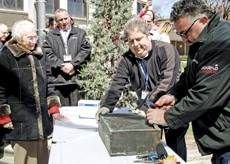
After reviewing historical documents about Kling’s construction archived at the Spertus Institute of Jewish Learning and Leadership, Sinai learned there was a time capsule laid in the building’s cornerstone. Quickly located, the capsule immediately became something of a mystery.
On a sunny day in April, descendents of Sinai founder Morris Kurtzon including current board member Anne Cohn Donnelly joined with CEO Karen Teitelbaum to open the capsule. Tucked inside the sturdy copper box they found a treasure trove of historical documents including medical textbooks, Jewish newspapers and annual reports. There was also a Star of David nursing lapel pin, a testament to the hospital’s Jewish roots.
Mount Sinai Hospital is a partner with the Jewish United Fund in serving our community.
Other stories
-
Meet Andrew S. Hochberg, 2021 Julius Rosenwald Memorial Award recipient
Celebrate Andy Hochberg at the virtual Annual Meeting on Sept. 14
Read more -
Two local teens win national recognition
Recipients of the annual Diller Teen Tikkun Olam Awards
Read more -
Celebrating six young award winners cultivating the community
Introducing young adult award winners
Read more
Through good times and bad, Jewish day schools find help they can count on
JOEL SCHATZ
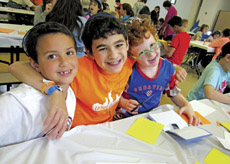
Nearly a decade ago, Chicago’s Jewish United Fund and the local Jewish day school community knew there had to be a better way to meet the schools’ critical funding needs. So they invented one-a breakthrough that has been felt by nearly every day school student and family ever since.
The innovation-a new way of funding a communal endowment that provides a perpetual stream of support for the schools-has generated nearly $14 million since then, a rare and constant source of financial stability that helped them through very unstable times. The recently-announced annual distribution by the Jewish Day School Guaranty Trust Fund totals $1,692,754, to be shared by 16 participating schools.
“Day schools are vital to the continuity of our people and the Jewish community,” said JUF President Steven B. Nasatir. “The beauty of this program is that the community is helping assure the continuity of these schools. The hope we had when this was created has become reality.”
The Trust Fund’s annual distribution to each school is based on enrollment, and is in addition to a wide range of other support JUF provides. That includes more than $3 million in allocations each year, administrative and educational training in best practices, security seminars and planning, legislative and regulatory advocacy, JUF Right Start preschool tuition assistance, and more than $60 million in loan guarantees for expanded facilities at individual schools.
” Pirkei Avot ( Ethics of the Fathers ) teaches us: ‘Without flour (sustenance) there is no Torah and without Torah there is no flour’,” said Judy Finkelstein-Taff, head of school at Chicago Jewish Day School. “No other quotation more beautifully describes the relationship between education and the need for financial support. Thank you to JUF and the visionary leaders who learned from our tradition and established the Jewish Day School Guaranty Trust Fund, which ensures this generation and the next.”
“The Day School Trust Fund is one of several critical ways JUF helps our students, our families, our community,” said Yosef Meystel, board member and parent at Joan Dachs Bais Yaakov/Yeshivas Tiferes Tzvi. “Without JUF’s support, both the scope of the educational program we offer and the number of students we serve would be challenged.”
Schools receiving support from the Jewish Day School Guaranty Trust Fund are Akiba-Schechter Jewish Day School; Arie Crown Hebrew Day School; Bais Yaakov Girls High School; Chicago Jewish Day School; Chicagoland Jewish High School; Fasman Yeshiva High School (HTC); Hannah Sacks Bais Yaakov Girls High School; Hillel Torah North Suburban Day School; Ida Crown Jewish Academy; Jewish Therapeutic Day School of Jewish Child & Family Services; Joan Dachs Bais Yaakov/Yeshivas Tiferes Tzvi; Keshet Day School; Seymour J. Abrams Cheder Lubavitch Hebrew Day School; Lubavitch Girls High School; Solomon Schechter Day School; Telshe Yeshiva High School Program; and Yeshiva Ohr Baruch-The Veitzener Cheder.
Gifts to the Trust Fund, including testamentary gifts, are part of JUF’s Centennial Campaign and are over and above the donors’ annual gifts to the Jewish United Fund Annual Campaign and to the individual schools.
For details on the program, contact JUF’s Legacies and Endowments Department at (312) 357-4853 or [email protected].
Other stories
-
Meet Andrew S. Hochberg, 2021 Julius Rosenwald Memorial Award recipient
Celebrate Andy Hochberg at the virtual Annual Meeting on Sept. 14
Read more -
Two local teens win national recognition
Recipients of the annual Diller Teen Tikkun Olam Awards
Read more -
Celebrating six young award winners cultivating the community
Introducing young adult award winners
Read more
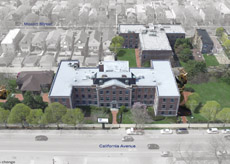
Chicago Jewish Day School has a new future home in the Irving Park neighborhood! Its new 2.6-acre campus will be complete with multiple state-of-the-art buildings, on-site gymnasium, and ample outdoor space for play, learning, and parking-all on a tree-lined street accessible from major thoroughfares. The campus will allow CJDS to continue its mission as a multi-denominational Jewish day school in a space designed to enhance and further its educational programs. Planned highlights include: flexible classroom space; rooms specifically designed for science, library, media, and fine arts; student services; and its own Beit Midrash (“House of Learning”).
As CJDS is a school that attracts and serves families from several Chicago neighborhoods and northern suburbs, it intends to continue to offer busing to remain accessible to all of
its families.
For more information about CJDS’s new campus, please visit www.chicagojewishdayschool.org/new-cjds-campus .
Other stories
-
Meet Andrew S. Hochberg, 2021 Julius Rosenwald Memorial Award recipient
Celebrate Andy Hochberg at the virtual Annual Meeting on Sept. 14
Read more -
Two local teens win national recognition
Recipients of the annual Diller Teen Tikkun Olam Awards
Read more -
Celebrating six young award winners cultivating the community
Introducing young adult award winners
Read more
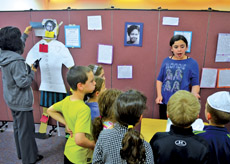
Sixth-grade students at Bernard Zell Anshe Emet Day School (BZAEDS) created a Civil Rights Museum with exhibits on Civil Rights figures like Martin Luther King Jr., Malcolm X, Emmett Till, and Claudette Colvin. They served as docents for parents and fellow students as young as first graders. Among themselves, they discussed themes of tikun olam (repairing the world), the difference between “bystanders” and “upstanders,” and the similarities between the Civil Rights movement and Jewish history. The experience was an outgrowth of BZAEDS’s partnership with Facing History and Ourselves; professionals from that organization visited the student-made museum and reported back to the Crown Family Foundation, which has underwritten Facing History and Ourselves’ school partnerships.
Other stories
-
Meet Andrew S. Hochberg, 2021 Julius Rosenwald Memorial Award recipient
Celebrate Andy Hochberg at the virtual Annual Meeting on Sept. 14
Read more -
Two local teens win national recognition
Recipients of the annual Diller Teen Tikkun Olam Awards
Read more -
Celebrating six young award winners cultivating the community
Introducing young adult award winners
Read more
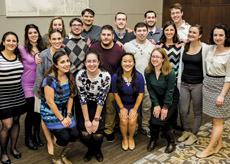
Religion. Never in a million years did I think I would become more connected with my Judaism. I came from a household of Russian/Ukrainian parents where religion was almost non-existent because of the restrictions on Jews in the former Soviet Union. We celebrated Passover and Chanukah once when I was five. I remember celebrating New Year’s as a child, with a tree and the ever-symbolic Grandfather Frost, common non-religious Russian traditions.
I found it hard to explain how I lost the little faith I was exposed to. Recently, during an interview, I was asked, “How did you get interested in becoming more involved with Judaism?” My response usually is, “I am a communal Jew.” However, I found myself blurting out, “I lost Judaism, and now I found it here at Loyola.”
Not many people know about my past. In fact, I refused to talk about it once I got to Loyola. I transferred here in the fall of 2013-was it important to really talk about my story? Now more than ever, I think college is the time to talk about one’s story.
From my birth until the age of 10, I was raised in an abusive home. My father subjected me and my entire family to cruel and traumatizing situations. I recall as a child praying and pleading for all the issues to end. I prayed every single day but nothing ever happened. At such a young age, I questioned why God would let bad things happen to good people. I didn’t hear a response, and I lost my faith. When I was 10, my father kicked my mother and me out of our home. I thought, “Was this a miracle or God’s way of punishing me?”
I reached my adolescence feeling that Judaism was never a part of my identity growing up. I had such a negative perception about religion, and I loathed the sight of any practice. I naively thought to myself, “Why would they do this? Nobody is listening!”
Fast-forward 11 years. I am now the vice president of Hillel at Loyola, the Jewish student organization on campus. How? Honestly, it was all an accident. I walked into Hillel because a friend invited me, and the rest is history. I felt welcomed, and I was able to participate in Jewish holidays and cultural events and communal activities. I felt uncomfortable at first, but once I let my barriers down and encountered each ritual with an open mind, I became more comfortable, and I fell in love with the Jewish community. As I became more involved, I began to really understand the importance of embracing my religious identity.
I began my position in the fall thinking about ways to improve Hillel’s visibility on campus, and I ended up focusing most of my time building a sense of community among the students. They come from all backgrounds. Each student possesses amazing tenacity and spirit toward Jewish life. They have made me nothing but proud. Sitting in Hillel and seeing the soon-to-be leaders and the freshmen having fun makes me hopeful for the future-a future without anti-Semitism, a future where the Jewish population at Loyola will no longer be one percent, and most importantly a future where we become not just classmates, but family.
I am also proud of Loyola’s diversity. Twenty-seven years ago, Loyola reached out to the Hillels of Illinois to begin a permanent collaboration. Wanting to promote a diverse community and encourage a broad understanding of faith, Loyola brought Hillel onto campus. This bold initiative and supporting religious and cultural pluralism is one of the school’s biggest strengths.
Every attempt to diversify the campus comes with it the beauty of differing opinions and beliefs. In a way, it comes as no surprise that the Boycott, Divestment, and Sanctions movement has reemerged on campus.
This time, the resolution brought to the Student Senate requested the university divest from all companies (such as Boeing and Raytheon) that are allegedly militarily complicit in human rights abuses toward Palestinians. Their main target, as usual, was Israel. Not Iran, not Syria, not Lebanon, but Israel, the one and only true democracy in the Middle East. The resolution passed 16-15-2, and a week later the Senate President signed it.
I, along with other anti-divestment advocates, stood up in front of the Senate and told them the ugly truth. With each passage of divestment on college campuses we see a surge of anti-Semitic activity. If the basis of the student government is to promote safety and ensure the well being of the community, how does legislation advancing personal political beliefs accomplish this?
Various student groups have ignored any collaborative efforts to do bridge-building with Hillel. We have been ignored on issues of dialoguing, and some students have had anti-Semitic comments made to them. Even so, we sat through the last two Senate meetings where senators completely disregarded any existence of anti-Semitism on campus.
Students on college campuses find themselves inundated and indoctrinated with one-sided information. It is up to us as Jews to combat this misinformation and educate the community about what Israel does and does not do. In continuing to educate students regardless of the outcome, and standing side by side, I wholeheartedly believe our Jewish community has grown closer because of this experience. I am incredibly proud of my community. We didn’t give up and we fought ’til the end, as we will every single year if we have too.
I am proud of my efforts to bring our small yet strong Jewish community together. Watching students experience their faith reminds me of how I found my faith again at Loyola and gained something that can never be taken away from me-a stronger cohesive identity.
As I reflect on my time at the university, I can only thank Loyola for everything it has already done to foster a Jewish community here, and I am confident that Loyola will focus on its recruitment efforts to insure that Jewish life will continue to thrive here.
Adam Mogilevsky is a senior at Loyola University Chicago where he is the vice-president of Hillel and an interfaith advocate. This spring, he graduated with a B.A in History.
Other stories
-
Local campus administrators convene on hate speech, bias
JUF and ADL brought together 17 student safety, diversity and inclusion and student affairs administrators and Hillel representatives from various Illinois campuses to discusses issues of hate speech and bias.
Read more -
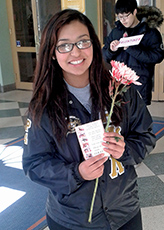
Engaging students about Israel on campus
Too often we hear about difficulties facing Jewish college students on Illinois campus, but to focus solely on the politics gives only one piece of the complex narrative that is Jewish life on campus.
Read more -
Hillel International launches fellowship initiative to train young Jewish professionals
The Springboard Fellowship will train cohorts of young Jewish professionals in highly-valued skillsets and place them at local Hillel campuses for two years.
Read more
A national group of 15 funders-including JUF-committed to investing in community-based Jewish teen education initiatives recently released a case study detailing insights and lessons learned from their first two years working together. The case study, “Finding New Paths for Teen Engagement and Learning: A Funder Collaborative,” is designed to inform other co-funding and shared learning efforts both within and outside of the Jewish philanthropic community.
“The group’s progress to date demonstrates that learning and funding as a collaborative can break through grant makers’ doubts, inertia and uneasy loyalties to programs that get incomplete or mediocre results,” the study concluded.
The Jewish Teen Education and Engagement Funder Collaborative membership is convened by the Jim Joseph Foundation and includes: The Associated: Jewish Community Federation of Baltimore; Combined Jewish Philanthropies of Greater Boston; Jewish Community Foundation, San Diego; Jewish Community Federation & Endowment Fund, San Francisco; Jewish Federation of Greater Atlanta; Jewish Foundation of Cincinnati; Jewish Federation of Greater Los Angeles; Jewish United Fund/Jewish Federation of Metropolitan Chicago; Jewish Federation of San Diego County; Jim Joseph Foundation; Lippman Kanfer Foundation for Living Torah; The Marcus Foundation; Rose Community Foundation; Charles and Lynn Schusterman Family Foundation; and UJA-Federation of New York.
Other stories
-
Meet Andrew S. Hochberg, 2021 Julius Rosenwald Memorial Award recipient
Celebrate Andy Hochberg at the virtual Annual Meeting on Sept. 14
Read more -
Two local teens win national recognition
Recipients of the annual Diller Teen Tikkun Olam Awards
Read more -
Celebrating six young award winners cultivating the community
Introducing young adult award winners
Read more
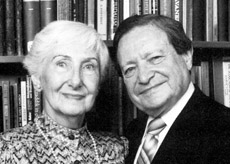
World War II refugee. Reform camping advocate. Interfaith pioneer. Confidante of Cardinal Joseph Bernardin. One of Edgewater’s Living Treasures. Great-grandfather.
From his traditional Jewish upbringing in Munich to his rise as a respected interfaith leader, Rabbi Herman Schaalman’s remarkable life has been punctuated by creativity, integrity, and diplomacy.
On May 31, Emanuel Congregation-where Schaalman served as rabbi from 1956 to 1986-celebrates his 99th birthday and his wife Lotte’s 100th birthday. David N. Saperstein, U.S. Ambassador-at-Large, is expected to deliver opening remarks at the Birthday Gala honoring the Schaalmans’ legacies.
“Rabbi Schaalman is … one of the true shapers of liberal Judaism in America and around the world,” said Michael Zedek, Senior Rabbi of Congregation Emanuel.
One of Schaalman’s major contributions to Reform Judaism is his role in establishing the first camp for Jewish youth. Since the Olin-Sang-Ruby Union Institute opened in Wisconsin in 1952, it has expanded into 18 camp programs across the United States and Canada.
Schaalman was president of the Conference of American Rabbis when it wrestled with major questions of who should be considered a Jew. Ultimately, the Reform Movement accepted a child of a Jewish father, regardless of the mother’s identity.
“That was a major bone of contention with traditional leaders. I was initially against it, but my wife always opposed me,” he said. “There would be hundreds of Jews who would not be Jews today if we had rejected them.”
How did an Orthodox Jewish boy from Munich transform from a rebel against Reform Judaism to being one of its most influential voices?
In 1935, when Schaalman was a seminary student in Berlin, the Holocaust was looming in the background. A Hebrew Union College-Jewish Institute of Religion scholarship opened a door and he walked through it.
For the 19-year-old refugee who spoke no English, his first days in Cincinnati were a culture shock. On his first Shabbat, the rabbi’s wife picked him up in an automobile. “I was thrown into this environment, and it was such an enormous change to how I had lived as a Jew,” he recalled. “We walked on Shabbat. We never traveled.”
Schaalman begged his father Adolf to leave Germany, but Adolf refused. When Adolf ended up in a concentration camp outside Munich, an aunt in Brazil secured emigration papers for Schaalman’s father, mother, and two brothers. In 1938, one week before World War II began, Schaalman’s family arrived safely in Brazil.
On May 24, 1941, he was ordained as a rabbi; the next day he married Lotte. The Schaalmans spent eight years at Temple Judah in Cedar Rapids, Iowa. That period would lay the foundation for his interfaith work. He became Vice President of the Ministerial Association, spoke in churches, and taught at a Methodist college.
In the 1950s, when the horrors of the Holocaust came to light, Schaalman found himself in the dark when it came to God. Influenced by Elie Wiesel and his friend and Jewish philosopher Emil Fackenheim, he eventually came to believe that God suffered in the camps along with his people, and that he escaped the Holocaust to help God create a more peaceful world, according to his biographer Richard Damashek.
In Cardinal Joseph Bernardin, Schaalman found a friend and kindred spirit devoted to the same mission: interfaith dialogue. “In Germany…when my father and I would go on walks, he would never even pass by the door of a Catholic Church,” he recalled. “Here, I became the best friend of the Roman Catholic leader of one of the most important Catholic communities in the World.”
Yet, as remarkable as Schaalman’s life has been, he takes nothing for granted: he and Lotte have been married for 74 years. They have two children, Susan and Michael; three grandchildren, Johanna, Keren, and Jeremy; one great-grandchild and two more on the way, at the time of this interview.
“My wife and I almost talk daily about the miracle that we are still alive and still together,” he said during an interview from his Edgewater home. “She’s become the best rebbetzin that ever was,” he said. “To this day, she is generous, caring, extraordinary-just beautiful.”
When Schaalman reflects on the milestones and blessings, he wonders, “How do all these things happen to one person? It’s simply astounding.”
Jennifer Brody is a former associate editor at JUF News and a freelance writer living in Chicago.
Other stories
-
Meet Andrew S. Hochberg, 2021 Julius Rosenwald Memorial Award recipient
Celebrate Andy Hochberg at the virtual Annual Meeting on Sept. 14
Read more -
Two local teens win national recognition
Recipients of the annual Diller Teen Tikkun Olam Awards
Read more -
Celebrating six young award winners cultivating the community
Introducing young adult award winners
Read more