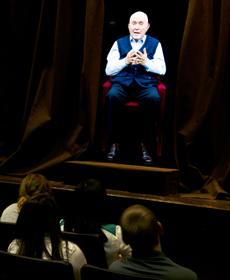
Illinois Holocaust Museum & Education Center is the first world-wide test site for New Dimensions in Testimony (NDT), an interactive educational experience that will allow future generations to “talk” with Holocaust Survivors about their life and experiences. NDT is being pioneered by USC Shoah Foundation, USC Institute for Creative Technologies (ICT) and Conscience Display. Illinois Holocaust Museum will be testing the pilot throughout May and June and will use the learning to inform future recordings of Survivor narratives.
“Illinois Holocaust Museum is committed to providing our Museum visitors and others opportunities to hear directly from Survivors. Currently, we are focused on how we’ll do that for generations to come,” said Museum CEO Susan Abrams. “Our Speakers’ Bureau, among the largest in the world, reached over 80,000 students and adults last year. We are thrilled that initiatives such as New Dimensions in Testimony will help the Museum ensure that stories of Survivors will continue to inspire thousands for generations to come.”
The Museum has begun testing a two dimensional version of New Dimensions in Testimony featuring Pinchas Gutter, a Holocaust Survivor born in Lódz, Poland. Visitors to the Museum can ask Pinchas any question they would like, and “natural language” technology software retrieves an appropriate response, creating an interactive dialogue, as if he was in the room. USC Shoah Foundation and ICT have compiled more than 2,000 answers from Pinchas, covering a vast range of subjects. The Museum pilot will further help the interactive technology adapt to nuances in phrasing and dialect.
“Initial response has been overwhelmingly positive,” said Museum Director of Education Kelley Szany. “Younger audiences in particular, are accustomed to interacting with technology to communicate with people, and accept Pinchas as ‘real.’ It provides a safe environment for kids to ask difficult questions and get answers.”
“New Dimensions in Testimony is about creating a relationship with a Survivor that is relevant for future generations. The experience is not about the technology, it’s about the Survivor interaction, and using technology to provide that interaction in the best way possible,” said Stephen Smith, executive director of USC Shoah Foundation.”
Throughout April and May, school and adult audiences will have the opportunity ask Pinchas questions following a Museum tour and discussion with a local Survivor. The public will have the opportunity to experience question & answer sessions with Pinchas during several Saturdays in May and June: May 2, 9, 16 and 30 and June 6, 13, 20 and 27 from 10:30 a.m. – 2:00 pm.
The Illinois Holocaust Museum & Education Center is dedicated to preserving the legacy of the Holocaust by honoring the memories of those who were lost and by teaching universal lessons that combat hatred, prejudice and indifference. The Museum fulfills its mission through the exhibition, preservation and interpretation of its collections and through education programs and initiatives that foster the promotion of human rights and the elimination of genocide. The Museum is open Monday through Friday from 10:00 a.m. until 5:00 p.m.; Thursday evenings until 8:00 p.m.; and Saturdays and Sundays from 10:00 a.m. until 5:00 p.m. Learn more at www.illinoisholocaustmuseum.org .
Other stories
-
Meet Andrew S. Hochberg, 2021 Julius Rosenwald Memorial Award recipient
Celebrate Andy Hochberg at the virtual Annual Meeting on Sept. 14
Read more -
Two local teens win national recognition
Recipients of the annual Diller Teen Tikkun Olam Awards
Read more -
Celebrating six young award winners cultivating the community
Introducing young adult award winners
Read more
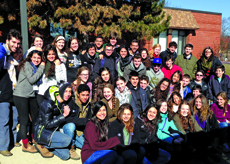
When 20 Israeli teenagers were selected to be Diller Teen Fellows, they knew leadership development and 10 days in Chicago was part of the program, but they probably had no idea that it would snow four inches on the first day of their trip. Or that the snow was just one of their many “firsts” during their adventures in Chicagoland.
Diller Teen Fellows is a prestigious, international leadership program. The program operates in 11 communities in North America and South Africa in partnership with 11 communities in Israel. Each spring, over 200 Israeli teens travel to their partner communities in North America and South Africa as part of the “Jewish Communities Mifgash ” (Encounter). The group from JUF’s Partnership Together region-the city of Kiryat Gat and the surrounding areas called Lachish and Shafir-came to Chicago, where they were hosted by the 18 Chicago Diller Fellows, learned about Jewish life in Chicago, and toured the city.
The teens spent a week and a half in the Chicago area. They visited Jewish and public schools, from pre-K through high school. Guy Eilon, 17, was very impressed with their visit to the multi-denominational Chicago Jewish Day School. Jared Vergotine, 16, who hosted Guy in Oak Park, explained that the American hosts also took the Israeli teens to see their own schools, which are very different from high schools in Israel. Guy was amazed at how big the schools are- even the number of stairs was impressive. Karina Bakalov, 16, noted that math is taught differently and was particularly surprised that students have lockers, “just like in the movies.”
But the Diller teens were not just tourists, as Israeli fellow Dana Hazan, 17, explained: “We are participating in a different learning opportunity or volunteer project every day.” One night, the group split up and volunteered at three different soup kitchens, including the JUF Uptown Café. They learned about activism from the Jewish Council on Urban Affairs, about Israel advocacy on college campuses from Eyal Ben Zeev, JUF’s Israel Campus Fellow at Metro Chicago Hillel, and about the Israeli community in Chicago at the Hebrew immersion preschool, Gan Gani . They even went to a community farm and education center called “Pushing the Envelope,” whose values are based in Jewish agricultural traditions and the modern Jewish environmental movement.
There was also time for just plain fun. They visited Millennium Park, toured Al Capone’s hangouts, played WhirlyBall, and went on a mall scavenger hunt. Like good tourists, they also experienced the city and bonded with their host families as they sampled Chicago classics, like deep dish pizza.
While the seminar in Chicago was about bonding and gaining new experiences, it was also about growing as leaders. Karina said she chose to participate in Diller for its leadership training, which is at the heart of the program. One of the most significant leadership opportunities participants have is the planning of “Community Week.” This summer, when the Chicago group travels to Israel, they will spend a week in the Partnership Region that they plan entirely on their own. The two groups dedicated significant time in Chicago to start the planning process together. They chose themes for each day and drafted schedules. They will also be in charge of logistics, like finding busses and ordering food, and they will create and lead programs for one another.
Melinda Berman, 16, who lives in Flossmoor, summarized all the participants’ experiences; she said she learned that, “Even though we live across an ocean, we are all very similar. And it’s possible to make deep connections with people, even if you only know them for 12 days!”
Other stories
-
Meet Andrew S. Hochberg, 2021 Julius Rosenwald Memorial Award recipient
Celebrate Andy Hochberg at the virtual Annual Meeting on Sept. 14
Read more -
Two local teens win national recognition
Recipients of the annual Diller Teen Tikkun Olam Awards
Read more -
Celebrating six young award winners cultivating the community
Introducing young adult award winners
Read more
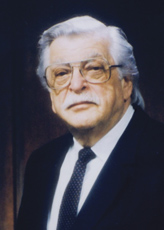
Seymour H. Persky, a real estate developer with a passion for great architecture, has died. He was 92.
Persky was a member of JUF’s Board of Directors from 1992-99 and a Golden Giver member of the Jewish United Fund, having donated for 50 consecutive years or more to JUF’s Annual Campaign. He also served on the Boards of the Ida Crown Jewish Academy, Hillel Torah North Suburban Day School, Arie Crown Day School, Associated Talmud Torahs of Chicago, and the Hillels of Illinois. In 1990, Persky made a $1 million gift to The ARK, which named its building after him.
JUF President Steven B. Nasatir was saddened by Persky’s passing. “He was a renaissance man who cared about many different things,” Nasatir said. “High on that list were Israel and the Jewish people. For that, and so many other things, I will remember him with special fondness.”
In his other Jewish communal leadership, Persky was a past Chairman of the Board of Jewish National Fund and past President of the American Jewish Congress. He also served on the Boards of the Israel Cancer Research Foundation, the Anti-Defamation League, Friends of the IDF, Skokie Valley Synagogue, YIVO, and the National Jewish Theater. Additionally, he had leadership roles in Israel Bonds and the Chicago Loop Synagogue. He also paid for the bust of Saul Bellow on display at the Harold Washington Library Center.
A co-founder of Parliament Enterprises, Ltd. Persky was a lawyer, real estate developer, and ardent architectural preservationist. He was a member of the City of Chicago Commission on Chicago Landmarks, of Landmarks Illinois-and of the Society of Architectural Historians, which remembers him as a “great friend and benefactor,” who bought them their home at the landmark James Charnley House. He was a governing member of the Art Institute of Chicago and served on the Board of Overseers of the ITT School of Architecture. Persky even coined the term “Wrigleyville” for the area surrounding Wrigley Field.
Born in 1922 to Russian-Jewish immigrants, Persky grew up in Chicago and attended Hebrew school in Lawndale during the Great Depression. But, when still a pre-teen, he discovered Modern architecture at the Century of Progress Exposition. In 1942, Persky enlisted in the military; he later used the GI Bill to attend Roosevelt and DePaul Universities simultaneously, earning both a BA and JD in 1952.
Persky practiced criminal defense law, and then began to invest in historic buildings; his firm, Parliament Enterprises, eventually owned more than 30 historic buildings. Persky also collected building fragments and drawings by Adler, Sullivan, Wright, and other Prairie School architects.
Persky was preceded in death by his beloved son Jonathan E. Persky. He was survived by his daughter, Abby Persky (Robert Delforge), his grandchildren Madeleine and Connor Delforge, and many nieces, nephews, and cousins. The devoted companion of Bonnie Gilman, he was a father figure to Paul Gilman and Ralph Gilman and grandfather figure to Howard and Ricki Gilman,
Services were held at Weinstein & Piser Funeral Home with interment at Waldheim Cemetery. Contributions in Persky’s memory may be made to Chicago Community Kollel or the Society of Architectural Historians.
Other stories
-
Meet Andrew S. Hochberg, 2021 Julius Rosenwald Memorial Award recipient
Celebrate Andy Hochberg at the virtual Annual Meeting on Sept. 14
Read more -
Two local teens win national recognition
Recipients of the annual Diller Teen Tikkun Olam Awards
Read more -
Celebrating six young award winners cultivating the community
Introducing young adult award winners
Read more
Their position behind the camera placed them close to Russian society’s elite without actually being in power.
In Russia of the 1920s and 1930s, the Jewish “grandpa photographers” like Moisei Napplebaum, built their careers on portraits of Lenin and other leaders. During the brutal Nazi-Soviet war, the second generation — that includes Evgenii Khaldei, Georgii Zelma, and Dmitrii Baltermants — became acclaimed war photographers. Their images of soldiers marching and fighting bolstered Stalinism; others documented the grief and emptiness of genocide.
More than 60 black and white photographs — spanning June 1941 to May 1945 — from 12 Soviet Jewish photojournalists are featured in the exhibit, titled Through Soviet Jewish Eyes: Photography, War, and the Holocaust, at the Illinois Holocaust Museum & Education Center in Skokie. The exhibit runs through Sept. 7.
“This exhibit is a fantastic way to tell the Soviet Jewish story within the larger story of the 70th anniversary of liberation and end of World War II,” noted Arielle Weininger, the Museum’s Chief Curator of Collections and Exhibitions.
With explanatory texts in both Russian and English, this traveling exhibition offers Russian-speaking Jews a chance to explore their identity, said Michael Polsky, presenting sponsor of the exhibition and Invenergy CEO. The exhibit which includes a section on Partisans gives museum visitors with opportunity to appreciate the bravery of those who fought.
Victory Day, May 9, 1945, the anniversary of the official Soviet victory over Germany is the biggest holiday of the year for the Russian-speaking Jewish community. In Chicago, that community of 40,000 strong includes veterans like Vladimir Evelenko, 89, who witnessed the signing of the surrender in Berlin. “He was 18 then, but remembers he cried after it was signed,” said Maya Gumirov, translator of the exhibit’s texts and Holocaust Community Services case manager at CJE SeniorLife.
Recognition of this history is especially important while these veterans are still around, said Genia Kovelman, Director of JUF’s Russian Jewish Division, a co-community sponsor of the exhibit. “We don’t separate the Holocaust from World War II. This history was in our towns and cities. We had both victims and heroes,” she said.
The Soviet Jewish photographers are among the war’s unsung heroes; they were documenting Nazi atrocity sites three years before better known Western photographers like Lee Miller landed in Germany, according to Curator David Shneer whose award-winning book is the basis for exhibit.
They changed lenses under fire, slept in trenches, and faced obstacles getting their film back to Moscow, but managed to take “arresting photographs of the heat of the battle and war’s terrible aftermath,” he said.
Baltermants masterfully captures that aftermath with his grieving widow in the newly liberated city of Kerch in 1942. A smoke-filled sky tops one photograph while it is absent from the original image to the left. “The final sky was darkened to give it a more ominous feel,” Shneer said. “Baltermants was quoted saying, ‘The camera did not capture what I saw that day.’ This is a brilliant way of responding to what a photograph is supposed to do.”
By altering images or photographing staged scenes, they blurred the line between art and photojournalism. “That’s the tension of the show,” said Shneer.
Shift in focus
Some photographers returned from assignments documenting Nazi war crimes in one liberated city after another only to discover their own families had not escaped death squads. “When they learn that their entire families were murdered, it becomes more personal. It’s their Jewishness that shapes what they photograph,” Shneer said.
This is especially true of Khaldei, whose father and all but one sister were killed by Nazis. Profoundly changed by this tragedy, “His camera is as much a tool of revenge as documentation,” writes Shneer in his book. In January 1945, after crossing into Germany with the Red Army, Khaldei exacts revenge by setting fire to a German house and photographing it while Soviet soldiers destroyed a Nazi flag.
When the Red Army liberates a Budapest ghetto, Khaldei captures images of destruction and survival. Hanging on the exhibit’s victory wall is his beautiful, haunting image of two survivors — still wearing yellow stars — standing on a ruined street. Ghetto photographs like this one were published in Yiddish, but not in any Russian — language publication.
“In a country that today most think of as anti-Semitic, how does Stalin — if he is all powerful — let Jews document atrocities of war?” Shneer questioned. “I am fascinated that these photographers were Jewish and built the profession of Soviet photography. Their story could not have been told in the Soviet Union.”
After the war, many Jewish photographers suffered anti-Semitism. Some were pressured to Russianize their names; others were fired. In one Soviet publication, Khaldei’s photographs were among those published to commemorate Stalin’s 70th birthday — but without his name.
Now, the legacy of these photographers lives on — in Shneer’s book and on the museum’s walls.
Jennifer Brody is a freelance writer living in Chicago.
Other stories
-
Meet Andrew S. Hochberg, 2021 Julius Rosenwald Memorial Award recipient
Celebrate Andy Hochberg at the virtual Annual Meeting on Sept. 14
Read more -
Two local teens win national recognition
Recipients of the annual Diller Teen Tikkun Olam Awards
Read more -
Celebrating six young award winners cultivating the community
Introducing young adult award winners
Read more
The theme of the 14 th annual mental health Chicago-area conference to honor Naomi Ruth Cohen is “Understanding and Overcoming the Stigma of Mental Illness.” The event runs from 9:30 a.m. to 3:30 p.m. on Sunday, June 7 at Beth Emet The Free Synagogue, in Evanston.
The conference for professionals and lay people alike is underwritten by the Naomi Ruth Cohen Institute (NRCI) at the Chicago School of Professional Psychology, and is sponsored in part by the Jewish United Fund of Metropolitan Chicago and its affiliates, CJE SeniorLife, Jewish Child and Family Services, Jewish Vocational Services, and The Ark.
Experts say progress against the stigma has been made, but the road ahead is still long. “We have a responsibility to redirect our conversations and actions toward promoting well-being instead of reinforcing the stigma that prevents so many from seeking the mental health treatment they need and deserve,” said Michele Nealon-Woods, Chicago School of Professional Psychology President. “With raised awareness of mental health issues, we have opened the doors to treatment for a vastly underserved segment of our population.
Larry and Marilyn Cohen, Naomi Ruth Cohen’s parents, founded the institute after their daughter, who suffered from bipolar disorder took her life. The Institute’s goal was to combat the stigma of mental illness which Naomi had frequently experienced.
One of the speakers at the conference is former Bolingbrook Police Commander Chris Prochut-partner of Drew Peterson, imprisoned for killing his third wife, Kathleen Savio, and suspected in the disappearance of his fourth wife-left the Bolingbrook force due to stress. He now lectures on mental health awareness and trains police on suicide prevention.
Dr. Michael Horowitz, President of TCS Education System, will moderate the conference.
The 18 break-outs sessions include: Parenting a Child with Mental Illness; Social Stigma Associated with the LGBT Communities; Promoting Workplace Mental Health; Celebrating Recovery from Stigma of Substance Abuse; Differing Cultural Views of Mental Illness; and Responders and Military Families Dealing with Stigma.
For the first time this year, continuing education credits are offered for psychologists as well as CEU’s and IAODAPCA CEU’s. The cost of the conference is $50 ($55 after May 20) Full scholarships are available. For further information call (312) 467-2552 or visit www.naomicoheninstitute.org
Other stories
-
Meet Andrew S. Hochberg, 2021 Julius Rosenwald Memorial Award recipient
Celebrate Andy Hochberg at the virtual Annual Meeting on Sept. 14
Read more -
Two local teens win national recognition
Recipients of the annual Diller Teen Tikkun Olam Awards
Read more -
Celebrating six young award winners cultivating the community
Introducing young adult award winners
Read more
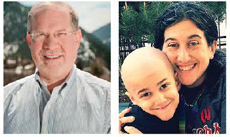
Two Illinois-based rabbis made this year’s list of “America’s Most Inspiring Rabbis,” selected by The Forward: Samuel Gordon, of Congregation Sukkat Shalom in Wilmette, and Phyllis Sommer, of Am Shalom in Glencoe. As Forward editor-in-chief Jane Eisner explains, “We’ve identified 33 of the most inspiring men and women from North America who are defining and redefining what it means to be a rabbi in the 21st century.”
Rabbi Gordon leads Sukkat Shalom after more than 25 years as a rabbi in the Chicago area. Gordon is Vice President of the Central Conference of American Rabbis, a member of the President’s Advisory Council of the Hebrew Union College, and a Senior Rabbinic Fellow of the Hartman Institute of Jerusalem. In 2013, President Barack Obama appointed Rabbi Gordon as a member of the United States Holocaust Memorial Council.
One nominator of Rabbi Gordon wrote: “For many years, Congregation Sukkat Shalom did not have its own building in which to conduct worship services or to gather. Instead, congregants were truly wandering Jews, coming together in various churches and community centers to observe our faith. Rather, Rabbi Gordon was (and is) our home. He makes Judaism a living faith, and the congregation is one of few that is demonstrably inclusive to people of other faith traditions and to non-traditional families and couples.” Today, the congregation does have a permanent structure, in Wilmette.
Rabbi Sommer has served Am Shalom since 2003, becoming Director of Congregational Learning in 2014. A Wisconsin native, she also has served congregations in New Iberia, Louisiana and Billings, Montana. She spends part of every summer on faculty at Olin-Sang-Ruby Union Institute, where she also leads a well-attended spring quilting retreat for adults. Her other blogs have included “Ima on and off the Bima: Real-Life Jewish Parenting and Living.”
Eisner said that Sommer “continues to write about the lessons she learned from her son’s battle with leukemia on her “Superman Sam” blog years close to two years after Sam, age 8, died.” One of her nominators wrote, “Rabbi Phyllis Sommer has created virtual communities of Jews all over the world. Her blog… still raises awareness of, and funding for, pediatric cancer research. She is a brilliant, beautiful writer who can make you laugh and cry in the same post.”
Other stories
-
Meet Andrew S. Hochberg, 2021 Julius Rosenwald Memorial Award recipient
Celebrate Andy Hochberg at the virtual Annual Meeting on Sept. 14
Read more -
Two local teens win national recognition
Recipients of the annual Diller Teen Tikkun Olam Awards
Read more -
Celebrating six young award winners cultivating the community
Introducing young adult award winners
Read more
Building multi-generational relationships, inspiring Jewish connections
CHRISTINE SIEROCKI LUPELLA
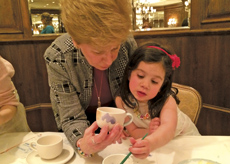
With love and creativity, grandparents can build special relationships with their grandchildren-and leave an extraordinary legacy. The newly established GIFTS (Gratitude, Inspiration, Family, Tzedakah and Service) program provides the tools for grandparents to pass their Jewish values to their grandchildren. A key component of this initiative is the inaugural Jewish Grandparent Symposium, to be held Sunday, May 31. It will offer bubbes and zaydes an opportunity to explore grandparenting ideas and concerns.
H. Steven Moffic, M.D., an award winning ethicist, author and clinician, will provide the keynote address. He will explore the topic, “Cultivating Moral Potential in Our Grandchildren.”
Breakout sessions include Legacy: How to Share Your Family Story; Communication in the Age of Facebook; Embracing Your Special Needs Grandchild; Tears of Joy, Tears of Sorrow: Exploring Life Cycle Events; People of the Book: Using PJ Library to Connect; Walking on Eggshells: Intergenerational Conversations; The GIFT of Doing Good: Ideas to Engage your Grandchildren in Tzedakah; and Applying Our Jewish Tradition to Teach Modern Values.
The symposium is open to all grandparents and will be held at B’nai Jehoshua Beth Elohim, 1201 Lake Cook Road, Deerfield. The formal program is from 9 a.m. to 1:30 p.m. The cost is $18, which includes kosher breakfast and lunch.
GIFTS is supported by a generous grant from the Breakthrough Fund, an innovation of the Jewish Federation of Metropolitan Chicago, in partnership with Grandparents for Social Action and Interfaith Family/Chicago.
For information or to register, visit here , call 312-357-4960 or email [email protected] .
Other stories
-
Meet Andrew S. Hochberg, 2021 Julius Rosenwald Memorial Award recipient
Celebrate Andy Hochberg at the virtual Annual Meeting on Sept. 14
Read more -
Two local teens win national recognition
Recipients of the annual Diller Teen Tikkun Olam Awards
Read more -
Celebrating six young award winners cultivating the community
Introducing young adult award winners
Read more
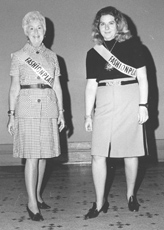
Way back in 1965, when Johnson was in office, the Vietnam War was raging, and the latest craze was this new invention called the “skate board,” Sharon Keller happened upon Chicago’s Jewish United Fund building by accident.
Keller had recently relocated with her husband from her hometown of Milwaukee to Chicago. After a stint working at another company where she says they “hated Jews,” she was taking a break from job hunting to do a little shopping in downtown Chicago. Strolling past the JUF building, she thought, “I’d probably enjoy this.” Keller went in for an interview on the spot and was hired instantly.
That was a Thursday, she started work that Monday, and she worked at JUF every day after that–for a whopping 44 years, until her retirement in 2009. Keller–one of the longest-working employees in JUF’s history–passed away on Monday, April 27, at age 83.
“I don’t mean to sound corny, but I just have always loved coming to work,” said Keller back in 2009, reminiscing about her long career.
First, she worked in JUF’s public relations department. In that capacity, she would get to meet the many celebrities that came through the JUF doors, a more casual and common occurrence back then-some would even make phone calls to raise donations.
“One day, I was sitting at my desk, busy typing, when this man walked in and said he had a meeting with my boss,” she said. “I knew that voice. I looked up and there he was–Jerry Lewis.” Over the years, she hobnobbed with other stars like Alan King, Jackie Mason, Jerry Seinfeld, Larry King, George Stephanopoulos, and even had dinner with Ol’ Blue Eyes–Frank Sinatra.
She also met many Israeli diplomats through the years, including Moshe Dayan, Shimon Peres, Benjamin Netanyahu, and Ariel Sharon. One of her career highlights was presenting flowers to Israeli Prime Minister Golda Meir when she spoke for JUF, where the prime minister greeted Keller with a hug and kiss.
Keller’s love for the Jewish people and for Israel grew stronger every day during her career. The Six-Day War, during the spring of 1967, stood out as an urgent and frenetic time for Keller, when the Chicago community galvanized to help its Israeli brethren. “During the war, we would work nights into the early morning,” she said. “People would just walk into JUF from outside and throw money at the front desk. I would take the train in and people who knew me would walk over to me and hand me cash. It was just unbelievable.”
After three years in public relations, Keller switched departments and joined the Women’s Division on the Campaign floor as a secretary and then an administrative assistant, where she would spend the rest of her JUF tenure.
Steven B. Nasatir, JUF President, worked with Keller for much of her time at JUF. “Sharon loved JUF like a family,” he said.
Other stories
-
Meet Andrew S. Hochberg, 2021 Julius Rosenwald Memorial Award recipient
Celebrate Andy Hochberg at the virtual Annual Meeting on Sept. 14
Read more -
Two local teens win national recognition
Recipients of the annual Diller Teen Tikkun Olam Awards
Read more -
Celebrating six young award winners cultivating the community
Introducing young adult award winners
Read more
When I began college, I didn’t consider being Jewish to be a particularly significant part of my identity. Having grown up with a perception of Judaism as little more than a set of compulsory activities, I was not especially inclined to spend any meaningful amount of time or emotional energy engaging with Judaism in college. But midway through my freshman year at the University of Chicago (U of C), after receiving an invitation to a Shabbat dinner, I finally decided to visit at U of C.s Newberger Hillel Center for the first time.
Almost immediately, I felt a sense of comfort and familiarity wash over me. These were my people. This was my home away from home. And I was there of my own volition. Gone were the days of my parents dragging me to Hebrew School. I had voluntarily taken it upon myself to venture into a decidedly Jewish community, and I was thrilled with what awaited me.
A couple of my friends, unbeknownst to me at the time, were Hillel Campus Engagement interns. They tactfully-yet organically-pulled me into the community through various mechanisms, including coffee meetings, movie nights, and more Shabbat dinners. By the end of my freshman year, I had made dozens of close friends through Hillel, and I had subconsciously begun to embrace my Jewish identity along the way. When I was presented with the opportunity to become a Hillel Campus Engagement Intern-to give back to the community for which I had grown to care so much-I was delighted to step up.
The Campus Engagement Intern position at Newberger Hillel is a multifaceted position, to say the least. In addition to being contractually obligated to “engage” several prospective Jewish students every week and record all interactions in an online database, interns are required to attend a two hour weekly meeting, in which Rabbi Anna Levin Rosen skillfully walks a fine line between imparting Jewish education and exploring engagement strategy. The Jewish education strengthens my affection and appreciation for a Jewish organization and gives me confidence in my ability to appropriately act as an agent for such an organization, both of which help me more effectively engage prospective members of the Hillel community.
As interns, we are encouraged to tap into the campus communities to which we already belong. I consistently bring students into Hillel with whom I am already acquainted through my social fraternity, tennis team, and wind ensemble. Both formal and informal events in these communities contribute to the engagement process; whether I am leading a Seder on my dorm floor or watching football and discussing Birthright with several Jewish fraternity brothers, I am cultivating an environment that advances Jewish culture on the University of Chicago campus. In doing so, I am making it that much more likely that the recruited students will attend the next Hillel event to which I invite them. As I gradually build and expand my network of Jewish engagees, I often find it effective to introduce them to one another, which further strengthens the Jewish community on my campus.
My ultimate motivation for the work I do as a Hillel Campus Engagement Intern lies in my desire to provide the same incredible Jewish experience Newberger has offered me to as many of my fellow students as possible. In just over a year, I’ve gone from uneasiness surrounding my Jewish identity to counting down the days until Birthright. The least I can do is to serve as a guiding force to help other students start their journey to a similar transformation.
The Newberger Hillel at the University of Chicago is a division of The Hillels of Illinois, a partner in serving our community, supported by the Jewish United Fund/Jewish Federation of Metropolitan Chicago and Hillel: The Foundation for Jewish Campus Life.
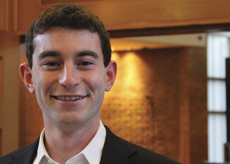
Michael Weller, originally from Wilmette, is a sophomore undergraduate at the University of Chicago majoring in Economics. He is active in the University of Chicago’s Hillel as a Campus Engagement Intern, and he plans to travel with Hillel to Israel through Taglit-Birthright this summer.
Other stories
-
Local campus administrators convene on hate speech, bias
JUF and ADL brought together 17 student safety, diversity and inclusion and student affairs administrators and Hillel representatives from various Illinois campuses to discusses issues of hate speech and bias.
Read more -
Engaging students about Israel on campus
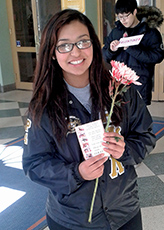
Too often we hear about difficulties facing Jewish college students on Illinois campus, but to focus solely on the politics gives only one piece of the complex narrative that is Jewish life on campus.
Read more -
Hillel International launches fellowship initiative to train young Jewish professionals
The Springboard Fellowship will train cohorts of young Jewish professionals in highly-valued skillsets and place them at local Hillel campuses for two years.
Read more
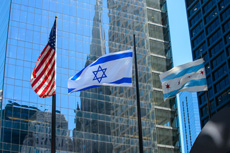
On a crisp, sunny Monday afternoon in downtown Chicago, Daley Plaza, Israel lovers of all ages turned out to celebrate Israel’s 67th birthday.
The event was organized by the Jewish United Fund of Metropolitan Chicago–with support from the city of Chicago’s Department of Cultural Affairs and Special Events, the Consulate General of Israel to the Midwest, and the Fifth House Ensemble.
Skip Schrayer, chairman of JUF’s Jewish Community Relations Council, welcomed the crowd. He announced that JUF is collecting funds to help those affected by the devastating earthquake that struck Nepal and other parts of India on April 25. Schrayer also acknowledged the passing of Chicago Archbishop Cardinal Francis George, who led by example in the realm of Catholic-Jewish relations in Chicago.
Cantor Alberto Mizrahi, of Anshe Emet Synagogue, led the crowd in the singing of the U.S. and Israeli national anthems, as the Israeli flag was raised high and proud to mark 67 years of Israel’s independence.
The afternoon served up a celebration of music, featuring the Israeli folk band Baladino, who performs Sephardic and Ladino melodies, and blended their sounds with Chicago-based chamber music group Fifth House Ensemble.
“This was not an easy summer as you all know,” said Roey Gilad, Consul General of Israel to the Midwest. “One thing we know–when we need the support of the people of Chicago, when we need the support of the Jewish community, when we need support of JUF, support is always there.”
The Consulate Generals of Greece and Spain also attended today’s event.
The party continues this Sunday, May 3, at Israel Solidarity Day , JUF’s annual community celebration of Israel’s birthday. Popular music groups Hadag Nahash and The Maccabeats will headline this year’s festivities.
Dollars raised will benefit Israel’s Children’s Zone, a program offering critical services to Israel’s most vulnerable children located in JUF’s Partnership Region.
~Cindy Sher
Other stories
-
Meet Andrew S. Hochberg, 2021 Julius Rosenwald Memorial Award recipient
Celebrate Andy Hochberg at the virtual Annual Meeting on Sept. 14
Read more -
Two local teens win national recognition
Recipients of the annual Diller Teen Tikkun Olam Awards
Read more -
Celebrating six young award winners cultivating the community
Introducing young adult award winners
Read more