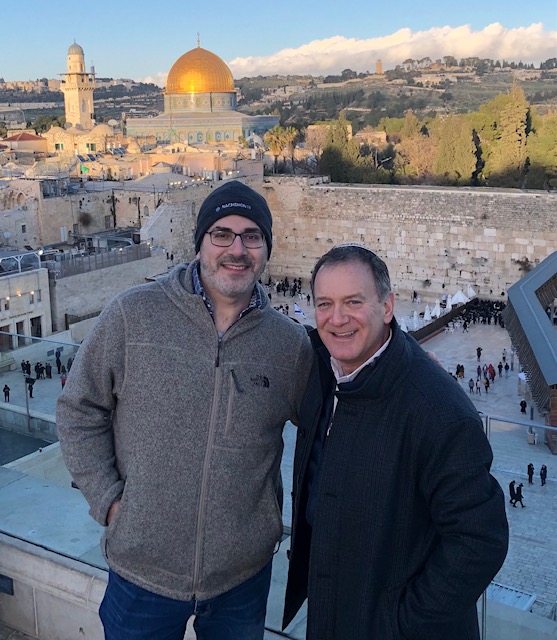
A few months into the COVID-19 pandemic, JUF debuted a series of ads that reminded our community: This is what we were made for . Truer words were never spoken. Responding in times of crisis is JUF’s purpose, and the pandemic put us to the test.
I’d say we passed.
When people were hungry, JUF ramped up support for food pantries and meal programs. When families needed cash to make ends meet, we provided it. When healthcare workers and caregivers of seniors and people with disabilities needed PPE, we supplied it. When our Jewish agencies and schools faced increased costs and decreased revenue, we helped them plug the gaps.
While JUF continued to prioritize raising necessary funds for our community, we understood the world had changed and that moment required a different approach. Now, JUF isn’t known for the subtlety of our fundraising – but this time was different. In the early days of the pandemic, when our community was frightened and hurting, it just felt more appropriate for JUF to provide help to the community first and ask for help from the community second.
So instead of doubling down on fundraising, we focused on how we could help bring the community together.
At first, we didn’t really know what it meant to conduct a meeting via Zoom or to livestream an event. We weren’t sure if any in-person gatherings could be safe. We were forced to think differently – to reimagine some of the ways we operated – and embraced that as an opportunity to deepen relationships, to help people feel a sense of community connection when they needed it most.
I’m so inspired by the creativity that’s come out of this; the events that have evolved, the relationships that have blossomed. I have my extraordinary staff partner, JUF Campaign Vice President David Prystowsky, to thank for much of that. During the pandemic, JUF has grown our capacity to go out into the community to talk and – more importantly – to listen.
However, as the year draws to a close, it’s time for those of us who are able to give to do so. Together, we must make up for the revenue the 2020 Annual Campaign has lost from cancelled events and from donors who are currently unable to give.
While it may feel like some aspects of our daily lives are on pause, our Jewish values don’t pause for the pandemic. One of those values is that we are all responsible for one another. And there are many people in need in our community who are counting on us now.
We are all caught in the same storm, but we are not all in the same kind of boat. Some of us are rowing furiously – and if you or someone you love needs assistance at this time, our agencies stand at the ready to help (call 855-275-5237). But if it’s mostly smooth sailing in your household, now is the time when JUF needs all hands on deck. Please be as generous as you can and make your gift to the 2020 JUF Annual Campaign today.
At JUF, we say we are together for good, and I truly believe that. I trust that those in the community who are able will come through for the 2020 JUF Annual Campaign now.
I thank you, from the bottom of my heart, for your generosity.
Marc Spellman is the 2020 JUF Annual Campaign Chair.
Other stories
-

Mother’s Day, Father’s Day, and the Jewish way
Let us pause and consider what it means for us to truly honor our parents
Read more -
Each time we study Torah, we experience the revelation
The mystical tradition of Judaism that lifts up the number 600,000 from the Exodus
Read more -

“Camp outside around a backyard fire pit with a Wild Rose Root beer float in one hand and marshmallows in the other.”
– Dikla Weitzner, Camp Moshava
“To keep the camp magic alive all year long, you should treat your senses to something “camp” every week (or day). Keep a pinecone around, bake a challah to take in the smells of camp. Call a friend and share funny memories or listen to a camp song to hear the spirit. Make some matzah ball soup or a microwave s’more to remember the tastes. Check out your camp’s website or social media to see the pictures of summer fun. Just hold that pinecone, collect some fall leaves, or take care of some indoor plants to feel that good camp dirt feel. Last, connect with other camp people and do something good for someone else to make your heart feel good and help make the world a better place.”
– Jon Levin, JCC Camp Chi
“When I was younger, my brothers and I used to sing our favorite camp songs and recall the funniest and most memorable moments from the skits and plays from years past. We would try to imitate the counselors and staff members who had acted out those scenes, and enjoyed reliving them, months after camp had ended.”
– Rabbi Daniel Myers, Agudath Israel Camps
“Something special that we like to do each summer at Beber Camp is make our famous Camper Stew. (This involves aluminum foil and your favorite ingredients!) Instead of cooking over a fire, try this in the oven on a chilly winter night while reminiscing about summer campfires with friends.”
– Stacy Greenberg, Beber Camp
“We will be having campers and families participate this winter in Zoom camp reunion, monthly Zoom Shabbats, and virtual eight nights of Chanukah. We want to keep the ruach (spirit) of camp year-round.”
– Beth Miller, Apachi City Camping
“Step 1: Wear camp t-shirt and friendship bracelets.
Step 2: Gather marshmallows, chocolate, and graham crackers.
Step 3: Warm ingredients from step 2 (with a parent’s supervision) and enjoy!
Step 4: Call a camp friend and talk about what you can’t wait to try at camp this summer.
Step 5: Repeat steps 1-4!”
– Solly Kane, OSRUI
“Zooming/FaceTiming with camp friends (until 2am?), z’mirot (hymns) after Shabbat dinner, grilled salami, pretending the cold will go away with a cup of hot chocolate after the polar bear swim, wearing your Ramah apparel, kikar (circle) dancing for exercise, sharing great camp memories snuggled up and snacking on Ramah s’mores kits, and sharing yehi shekets (Be quiet) around the dinner table.”
– Jacob Cytryn, Camp Ramah in Wisconsin
“Camp fun is made by the incredible people at camp – our campers and staff – and so we can absolutely bring that fun into our lives at home. You can wear your camp clothing and dress in goofy camp outfits to bring some spirit and joy to grey winter days. You can teach your family your favorite camp Shabbat songs and games and make them a part of your family’s Shabbat. You can even play fun music in your house in the morning to help everyone wake up and feel excited for the day together! Perhaps most important: you can work to create regular opportunities to stay connected with your camp community and friends through online camp programming, phone calls, or outdoor and appropriately distanced playdates.”
– Amit Weitzer, Habonim Dror Camp Tavor
“1) Set up a fire pit in your backyard with s’mores ingredients and sing your favorite campfire songs.
2) Send letters in the mail back and forth to your camp friends.
3) Mail a letter to your summer camp. It will be waiting for you when you arrive.
4) Invite your camp friends on Zoom to recreate havdallah.
5) Teach your family your favorite Jewish song from camp – and don’t forget the hand motions!”
– Robin Anderson, Camp Young Judaea Midwest
“One word: Marshmallow. A roasted marshmallow is the warmest, gooiest, yummiest food that can be eaten all year long and have you feeling like you’re right back at camp. Just be sure to remember – it always tastes better on a real wooden twig.”
– Ari Strulowitz, Camp Nageela Midwest
We hope these tips will keep the fun going until a (hopefully) in-person camp experience in 2021!
~Compiled by Michelle Cohen
Other stories
-
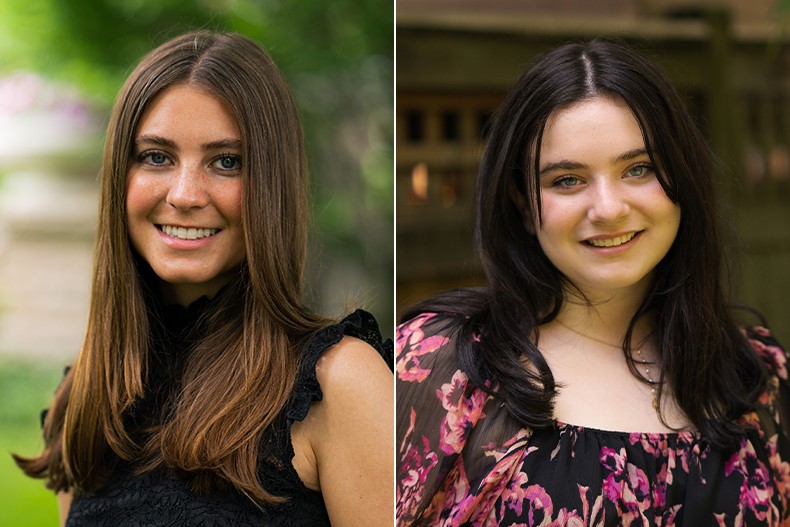
Two local teens win national recognition
Recipients of the annual Diller Teen Tikkun Olam Awards
Read more -
Celebrating six young award winners cultivating the community
Introducing young adult award winners
Read more -
This year, we have been more grateful than ever to come together for good. Through your generosity, JUF–as always–funded local human services, Jewish education, continuity, identity-building, outreach and advocacy programs, assistance to millions of Jews in Israel and 70 countries worldwide, and allocations to charitable ventures.
But 2020–as we all know–has been a year like no other. In the wake of the pandemic, JUF instantly became a lifeline for tens of thousands of people who needed help–and fast.
Here are four of their stories…
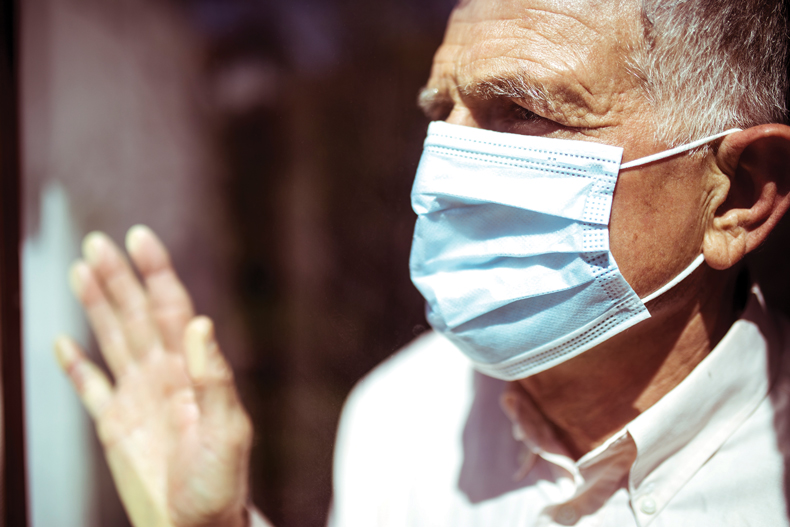
Meet the people behind the masks
Jonathan
Meet Jonathan. He’s a 6-year-old who loves Minecraft, Pokémon, and making challah with his Sunday School class. Before COVID, his mom–who works two jobs to make ends meet–would drop him off at school before class so he could enjoy a free breakfast, in addition to a free lunch at noon.
Then March brought the pandemic–and everything stopped. Jonathan’s school shut its doors, and with it went many of his regular meals.
But Jonathan is not going hungry. Neither is his little brother, David–nor their mom.
JUF has provided additional food assistance to thousands of Chicago families and children, supplying $1.9 million in increased support for local pantries, grocery gift cards, and meal programs. Since the pandemic began, the Food & Chesed Collaborative–a partnership of five agencies in West Rogers Park–has served tens of thousands of meals to families like Jonathan’s. The ARK, Maot Chitim, and other agencies battling hunger have pivoted to providing growing numbers of grocery gift cards to those in need. And the Dina and Eli Field EZRA Multi-Service Center has more than doubled the number of prepared meals and pantry bags it distributes during the pandemic.
“With generous support from the JUF COVID-19 Initiative, EZRA was able to quickly shift our services in response to the increased community demand for meals, fresh groceries, and emergency financial services in our area since the pandemic,” said Heidi Kon, Director of the Dina and Eli Field EZRA Multi-Service Center. “We deeply appreciate JUF’s support, which enabled EZRA to live up to its name and ‘help’ so many additional community members meet their basic needs during these difficult times.”
Sasha
Meet Sasha. She’s a single 26-year-old who was furloughed from her social service agency job over the summer. Sasha’s not only worried about paying her bills; she is also lonely. Always active in the Chicago Jewish community, she misses her jam-packed calendar: Shabbat dinners with friends, volunteering at an after-school program for kids, Tuesday trivia night at her local bar, and, yes, dating.
The isolation of the pandemic is wearing on Sasha and many other Jewish young adults. Research shows that the incidences of anxiety and depression are escalating overall, but that young people ages 18-34 are particularly struggling. That’s why JUF has devoted nearly $2 million additional dollars to expanded social services this year-with special emphasis on mental health care.
Jewish young adults like Sasha are among the many people who are benefiting from mental health programs offered through JCFS Chicago and other JUF-supported agencies. At the same time, they are forging essential connections with each other–especially now–through nearly a dozen JUF partners serving young adults, from OneTable and Moishe House to MASA and Silverstein Base Hillel.
“Since this pandemic started, I have had meetings with 330 individuals who are part of our college student and 22- to 35-year-old young adult community,” said Rabbi Megan GoldMarche, the Rabbi of Silverstein Base Hillel in Lincoln Park. “Time and time again, what I have most heard [about] is loneliness and anxiety; about the unpredictability that is inescapable in this moment.” In addition to offering virtual classes with YLD and opportunities to share Chanukah experiences, “we are already thinking about how we will provide resources, food, and community for a second Passover in pandemic.”
Peter
Meet Peter. He’s a 56-year-old husband and father of two teens who was preparing for his eldest to head off to college next year. His kids aren’t the only ones who depend on him: Peter also has a 93-year-old mother in assisted living he helps to support. But Peter lost his job in May, let go from the accounting firm where he had worked his entire career. He has always saved money in a rainy-day fund, but even that is starting to dry up.
JUF has been there for Peter and others in his shoes, supplying $4.4 million in added emergency financial aid for housing, food, and other essentials for those in need. That aid is being distributed through human service agency partners, schools, and even congregational rabbis’ discretionary funds.
In addition to career counseling and help with financial planning, Peter is getting the emergency cash he needs to bridge the gaps in his household budget, ensuring he doesn’t have to choose between paying his mortgage or covering the family’s healthcare premiums.
Programs like the JCFS Chicago Financial Assistance Counseling Program have helped people through these devastating times. “The pandemic has impacted all of our lives–and for some people this has meant unemployment and an unexpected financial hardship,” said Maureen Gray, JCFS Chicago Financial Social Work Counselor. “The counseling program has been able to provide emergency funds for people who might otherwise lose their home or not be able to buy groceries for their family.”
Estelle
Meet Estelle. She’s an 84-year-old widow who is the mother of three and a grandma of seven. Her family lives scattered across the country and she hasn’t been able to see them in person since last winter, since she is in a high-risk category for COVID. Estelle has always been a very social person, and has played canasta with the same group of friends for 50 years. Sadly, those gatherings stopped in March.
However, Estelle is in good spirits, thanks to her friends at CJE SeniorLife. It’s among the JUF partner agencies that have helped local Jews to create virtual community during this time of physical separation. From virtual hubs like JCC Chicago’s Channel J, to a fun line-up of virtual PJ Library programs for young families, to virtual meet-ups for people with disabilities hosted by Keshet, Jewish Chicago has built a sense of virtual community that keeps people connected and engaged.
Through CJE, Estelle has joined a cyber book club, “Move It Monday” fitness classes, and a virtual walking tour of Jane Addams Hull-House. Plus, she also looks forward to online chats with family and phone calls from a couple of her favorite CJE staff.
“The pandemic has really highlighted for CJE the real impacts of social isolation for older adults,” said Dan Fagin, CJE SeniorLife President and CEO. “Our team responded by developing a wide variety of online programs to engage them, deploying technology to enable virtual visits with loved ones, and making regular phone calls just to let those living alone know that someone cares about them.”
2020 was anything but business as usual. In addition to meeting the perennial needs of the community as we do every year, JUF responded to the COVID crisis–and we will continue to do so as long as it takes. After all, this is what we’re made for.
Donate.juf.org.
One fund. So much impact.
Other stories
-
Two local teens win national recognition
Recipients of the annual Diller Teen Tikkun Olam Awards
Read more -
Celebrating six young award winners cultivating the community
Introducing young adult award winners
Read more -
With most internships and trips canceled due to the pandemic, many Jewish young adults struggled to find something to do over the summer. Then, they began to receive intriguing emails asking, “Are You Ready to Be a Changemaker?”
“Changemakers was created by JFNA for the summer as a way to connect with people who were in their early 20s who might not have had the same opportunities over the summer due to COVID,” said Lauren Silverman, JUF Senior Young Adult Engagement Associate and facilitator of one Chicago cohort. Each week, she helped local participants debrief from large sessions and make friends nearby who also wanted to engage with similar issues.
More than one thousand of these aspiring Jewish leaders became the first-ever group of Changemaker Fellows, joining together for an innovative three-week online leadership development, mentorship, and networking program. Forty Fellows from across Chicago were selected, joining peers from more than 100 communities across North America, as well as Mexico, Brazil, Spain, France, the UK, South Africa, the Czech Republic, and Israel.
One Chicago participant, Cohen Kraus, joined to find like-minded people. Kraus discovered quickly that “these are people who wanted to find a way to be engaged in the community at a time during which community is difficult to find.” In the three weeks-divided into the story of self, us, and now, and including issues from voter mobilization and antisemitism to global Judaism and racial justice-Kraus learned to tell these important stories.
“I thought it would be a really good opportunity to learn how to make a difference in my community and get at that aspect of Judaism as well and bring it all together,” added participant Helen Enda. “The program was a really good way to network and opened my eyes to what resources are out there as a young professional.”
“Something I’ve always liked about being Jewish is the community that comes with it,” she said. “Having shared values was a big part of growing up and something I hold dearly in my young adult life.” She was thrilled to find others with these values, local and far away, in Changemakers.
Since the program, Enda is working full-time, and Kraus has since accepted an internship position at Changemakers and recommends the experience for social interaction and professional development.
Changemakers follow-up activities will take place throughout the year and plans for a third session this winter will be announced soon. Interested prospective Changemakers should email [email protected] .
Other stories
-
Two local teens win national recognition
Recipients of the annual Diller Teen Tikkun Olam Awards
Read more -
Celebrating six young award winners cultivating the community
Introducing young adult award winners
Read more -
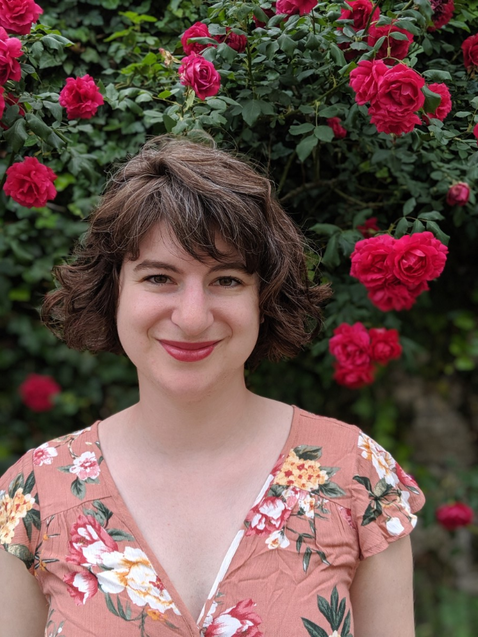
At the beginning of the pandemic, Anna Yankelev was pulled from her role leading strategic planning for the Lake County Health Department and transferred to the newly-created Public Health Emergency Operations Center. As the new Mitigation Chief, she monitored community transmission of the virus and the related consequences, focusing on helping high-risk populations secure access to the resources they need to stay safe and healthy.
She was ready for the challenge. ”The way I got into the work I’m doing today is deeply rooted in my experience and values as a Jewish person,” said Yankelev, who first encountered activism within the Habonim Dror youth movement. “I valued and appreciated the ideas of tikkun olam from a young age. That’s how I found myself in public health, seeing it as a way to realize my potential in working to make the world a healthier and more just place.”
Now with two Master’s degrees and experience as a community organizer, she is lending her expertise to Lake County. Her innovations include purchasing protein-rich meals from an airline food vendor to donate to food banks and hiring a limousine company to transport potentially exposed people to quarantine sites. Her efforts have helped secure over $4 million in federal CARES Act aid for community resources and initiatives.
Much of her work involves supporting Black and Latinx leaders by listening, learning, clearing barriers, and procuring resources. In May, data showed that for every one white community member that tested positive for COVID-19, there were four Black and eight Latinc community members that tested positive, and people of color were twice as likely to die from the virus than white individuals.
In response, the Lake County Health Department convened the African American Community Partnership Group and Asociacion Comunitaria Latina. These groups have worked tirelessly to reduce that disparity; the ratio is now down to 1 to 2.8 to 6.7.
Another initiative she helped launch-Lake County Community Action To Combat Hunger, or CATCH-is an intersectoral coalition to deliver meals free of charge to families in need. Lake County CATCH has helped over 470 families and 1,600 individuals.
Yankelev draws inspiration from her time at the Avodah Justice Fellowship in Chicago, where she found a strong sense of community. ”Being able to participate in a community of like-minded individuals committed to the same values of social justice, who share the same vision for the world we want to build, and who continually support me has been invaluable as we navigate these truly unprecedented times,” she said.
For more information about the organizations Yankelev supports, visit https://bit.ly/2HHxe6V , https://bit.ly/3n0VPDV , and https://bit.ly/3ig3YAy .
Other stories
-
Two local teens win national recognition
Recipients of the annual Diller Teen Tikkun Olam Awards
Read more -
Celebrating six young award winners cultivating the community
Introducing young adult award winners
Read more -
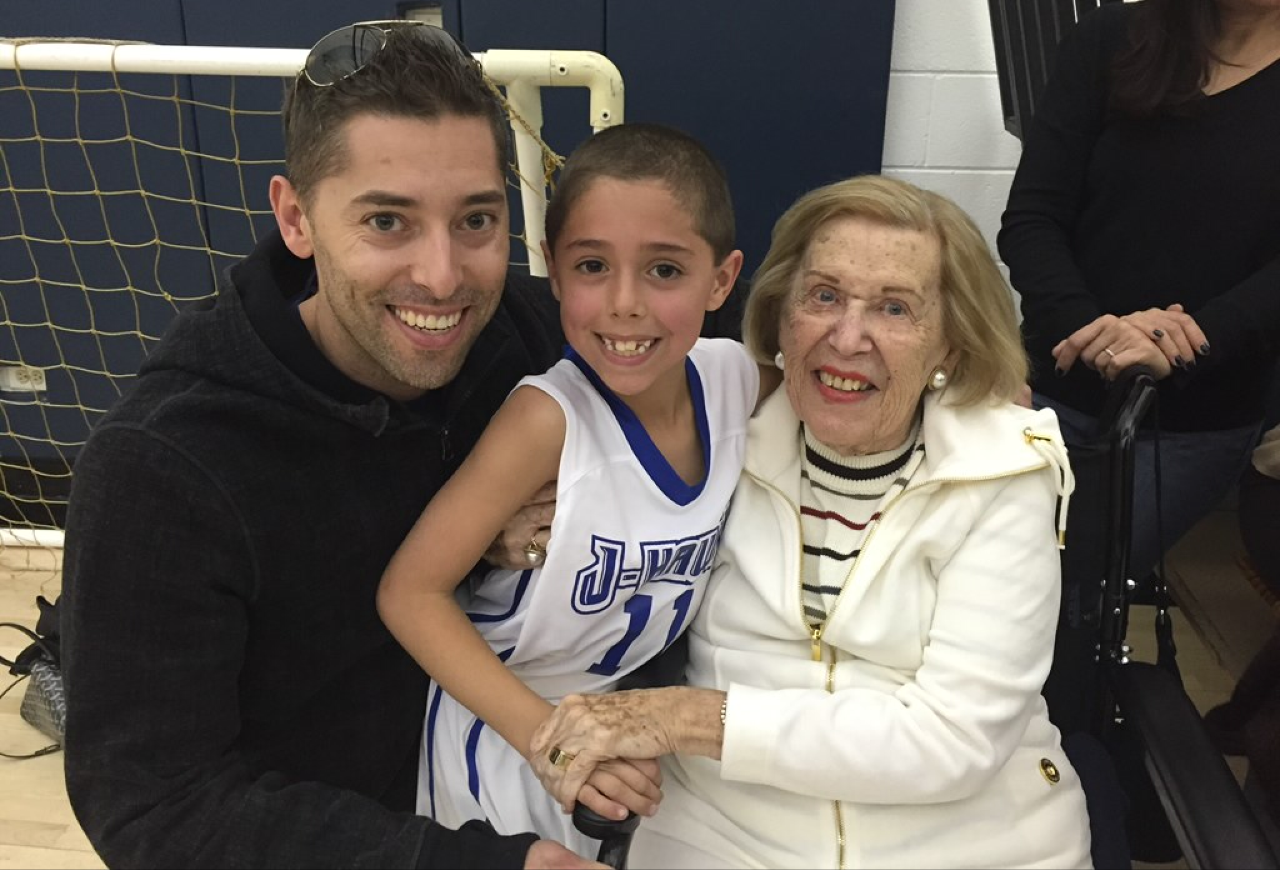
The Helen Weinger Doors to Learning are actual doors; they open to the early childhood wing of the Jewish Community Center she created to honor her late husband, Bernard. His photo is on a nearby wall.
Helen Weinger died Sept. 21, at the age of 101.
“Helen loved having built a community center that is used by all ages,” said JUF President Lonnie Nasatir. “She was very proud to have her husband Bernard’s name on a facility so well-used by our community. She was incredibly dedicated to the Jewish community, and to fostering and enhancing Jewish engagement and continuity.”
Weinger was born in Chicago to Alex and Lena Silverman, who immigrated from Eastern Europe as teenagers. She grew up on the Near West Side. She had two sisters, Annabelle and Arline. After high school, she worked at Goldblatt’s department store.
Her family summered in Michigan. “She met my father, Bernard, in Union Pier; they were married shortly thereafter,” recalled Helen’s daughter, Susie Spector. “She traveled with him for business throughout the country, becoming an important asset in developing business relationships that became friendships. They were a charismatic team.”
They bought their first home in Oak Park, near their families in Austin.
“I joined the family in 1948, my brother Mitchell a few years later,” Spector continued. “My mom loved gardening and entertaining. She was a wonderful cook. Seats at our dinner table often were filled with last-minute guests. Mom could make amazing food containers out of wax paper too. I called them the forerunners of Ziploc bags.”
Outside the home, Weinger volunteered at Gottlieb Memorial Hospital as a buyer for the gift shop, and led a Girl Scout Brownie troop. She also took up bridge and golf and joined Bryn Mawr Country Club with Bernard.
“Jewish philanthropy was very important to both my parents,” she continued. “My father often lamented that there was no JCC on the North Shore for his grandchildren. When my mom learned that JCC was looking for a donor to help build one, she knew it was the perfect way to honor the memory of her beloved Bernie.”
The Bernard Weinger JCC became a favorite place for Weinger, said Spector. She loved to drop by and visit the center. She especially loved the early childhood wing and visiting the babies in the nursery. Afterward, she loved to take some of the staff out to lunch.
Addie Goodman, President and CEO of JCC Chicago, recognizes Weinger’s personal involvement. “She saw a need and was moved to fill it,” Goodman said. “It’s very special to be able to celebrate someone’s support as well as their continued commitment.” The family most recently helped upgrade the early childhood wing and enhance security measures for the building.
And creating the Bernard Weinger JCC had its intended effect. “I was privileged to meet her a few times, mostly when Helen attended J-Hawks basketball games to see her great-grandson play,” Goodman said.
Spector herself served on JCC Women’s Board for 40 years, and on its Board of Directors for 25. Her husband, Laurence “Lory” Spector, served on the JUF Board as well.
“For me, it’s personal,” Susie said. “Supporting our JCC allows us to set an example for our children and grandchildren and make a true impact on their lives.”
Helen Weinger was a Golden Giver to the JUF Annual Campaign. A private service and interment have taken place. Memorials may be made to the Bernard Weinger JCC.
Helen Weinger (nee Silverman). 101. Beloved wife of the late Bernard Weinger. Loving mother of Susan (Lory) Spector and the late Mitchell (Mary-Lynn) Weinger. Proud grandmother of Chad and Judd (Jillian) Spector and Lindsey (Max Volfson) and Ross (Debora Pollack) Weinger. Loving great-grandmother of Ryder, Cooper, Mackenzie, Jacob, Harley and Wyatt. Dear sister of the late Annabelle (the late Nathan) Hoff and the late Arline Silverman. Chicago Jewish Funerals.
Other stories
-
Two local teens win national recognition
Recipients of the annual Diller Teen Tikkun Olam Awards
Read more -
Celebrating six young award winners cultivating the community
Introducing young adult award winners
Read more -
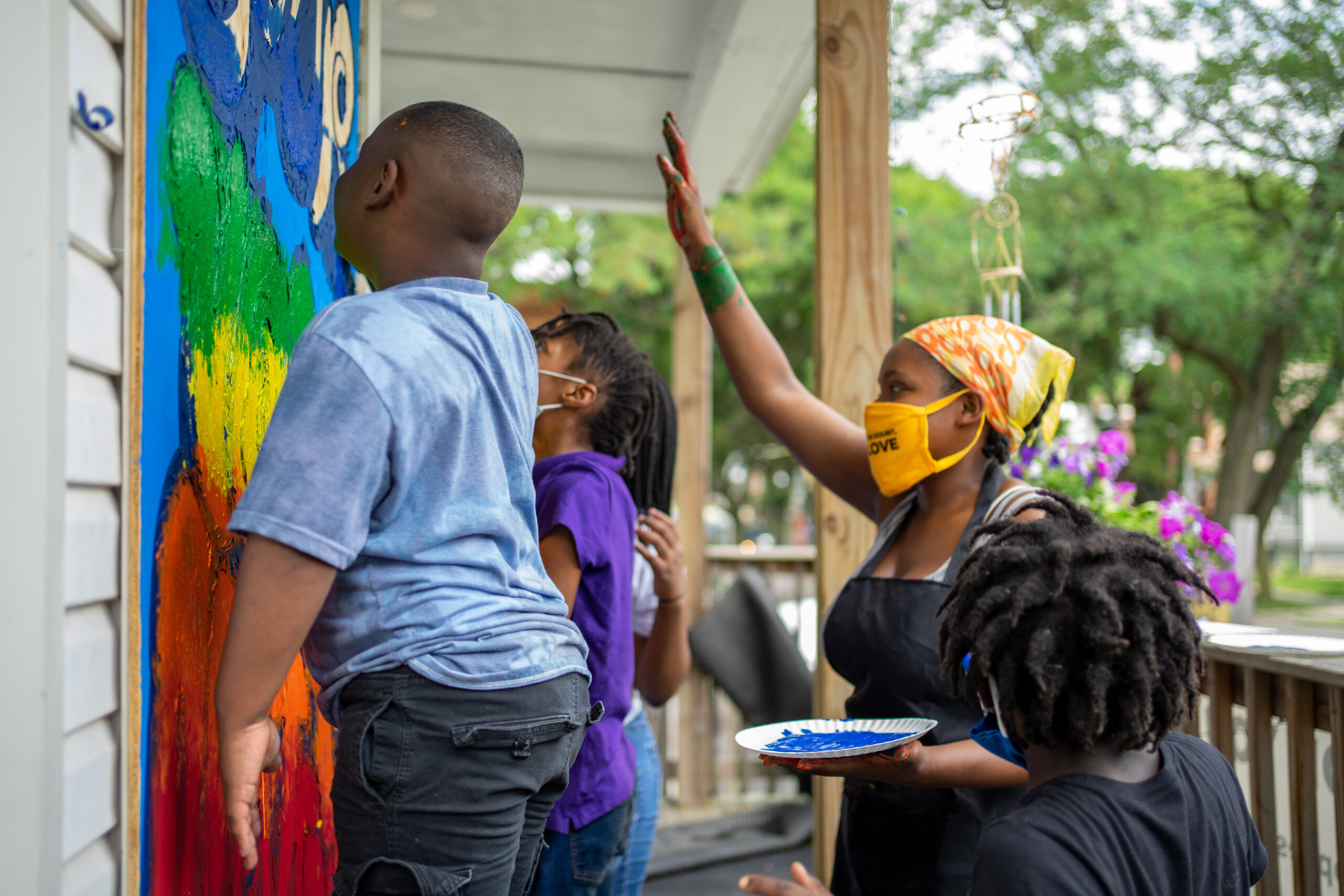
As the pain of the pandemic continues to impact communities nationwide, early on the Ellie Fund at the Jewish Women’s Foundation of Metropolitan Chicago (JWF) acted quickly to focus its attention on the unprecedented emergency needs being shouldered by women and girls here at home. Targeting the Chicago communities most under threat, the Ellie Fund identified six leading organizations, primarily led by women of color, that responded with great speed and creativity to mobilize new resources and deliver essential services to meet the escalating needs of girls, women, and families in crisis. Forging new and strengthening existing partnerships, the Ellie Fund provided each organization a $10,000 emergency grant to help them deliver relief in the communities they serve.
Ellen H. Block is a founding lifetime trustee of JWF. As JWF’s first “Women Moving Millions” member, in 2013, Block established the Ellie Fund with the mission to support innovative and pilot projects that promote safety, security, equal rights, equal voice, and equal opportunities for girls and women. Together with a committee of four JWF trustees and two advisors, the Ellie Fund works to address long term inequities, ultimately paving a better path forward for all women and girls, those in our community and beyond.
“We knew that something had to be done now to rush needed funds to the communities hurting most. We also know that women-led organizations receive significantly less funding than others,” Block said. “So, we identified six incredible organizations, run by smart, fierce, passionate, and compassionate women. Their leadership, their capacity to listen, respond, adapt, innovate, and deliver critical need, is inspiring. They are true gifts to our greater Chicago community.”
The Ellie Fund at JWF is proud of its first cohort of six Chicago women leaders who are building, empowering, and strengthening communities:
Bright Star Community Outreach/The Urban Resilience Network Center: A $10,000 grant in recognition of CJ Jones, Chief Program Officer
Bright Star Community Outreach empowers residents to share in the responsibility of building Chicago’s south side community through programming in violence prevention, community engagement, economic development, education, and healthy living. The TURN Center, the organization’s major initiative, is based on a trauma-informed model used by NATAL in Israel.
I Grow Chicago: A $10,000 grant in recognition of Robbin Carroll, Founder and Board Co-Chair
I Grow Chicago seeks to grow Englewood from surviving to thriving by addressing the traumatic effects of violence and poverty through community connection, skill building, and opportunity. I Grow Chicago acquires abandoned homes and lots and, with the help of neighbors, transforms them into community spaces that are then used for programs that serve community members.
Ladies of Virtue: a $10,000 grant in recognition of Jamila Trimuel, Founder and CEO
Ladies of Virtue instills purpose, passion, and perseverance in girls, ages 9 to 18, while preparing them for college, careers, and to become change agents in their communities. The mentoring and leadership program provides culturally relevant programming that exposes participants to prominent women who share similar backgrounds to the participants.
Mothers Against Senseless Killings: a $10,000 grant in recognition of Tamar Manasseh, Founder
MASK is a collaboration of community stakeholders working together in the fight to end gun and gang violence in Chicago’s affected neighborhoods. MASK seeks to build stronger communities by focusing on violence prevention, food insecurity, housing, and access to critical services.
Mujeres Latinas en Acción: a $10,000 grant in recognition of Linda Xóchitl Tortolero, President/CEO
Mujeres is a bilingual/bicultural agency seeking to empower Latinas, their families, and youth to become self-reliant, take full advantage of available opportunities, and create new opportunities to improve the quality of their lives. Mujeres promotes non-violence, reproductive health, and leadership development.
The Network: a $10,000 grant in recognition of Amanda Pyron, Executive Director
The Network is dedicated to improving the lives of those impacted by domestic violence through education, public policy, and advocacy, and connecting community members to direct service providers. The Network is a collaborative membership organization of 40 diverse social service and domestic violence agencies, including SHALVA, which is supported by JUF.
The Jewish Women’s Foundation is an independent project of the Jewish United Fund of Chicago.
Other stories
-
Two local teens win national recognition
Recipients of the annual Diller Teen Tikkun Olam Awards
Read more -
Celebrating six young award winners cultivating the community
Introducing young adult award winners
Read more -
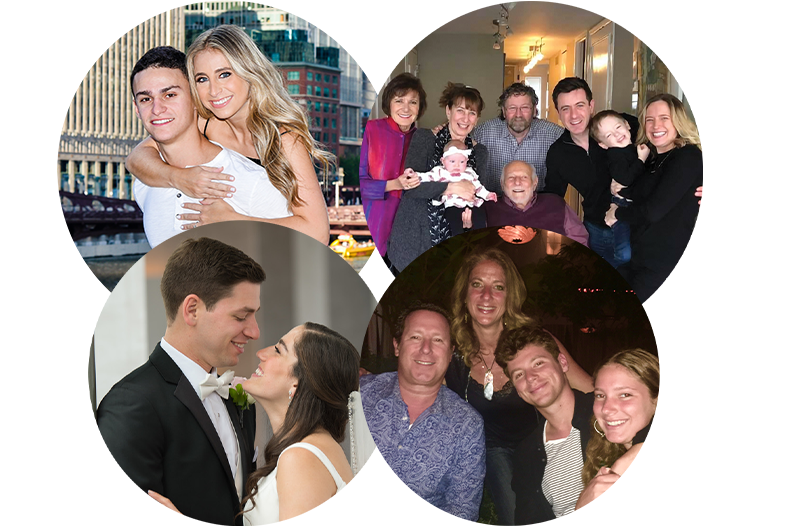
Summer 2021 is JCC Camp Chi’s 100th birthday. As we mark this special centennial milestone, we celebrate not just when Chi began, but all the stories that began at- and are- because of Camp Chi.
Camp Chi has been the beloved home away from home for tens of thousands of campers for generations- unplugging kids from the rigors and stress of the school year and connecting them to life-changing moments. Ask anyone who loves Camp Chi and they will tell you Camp Chi magic is real, lasting, impossible to explain, and treasured for a lifetime.
“The true magic of Camp Chi is found in the relationships built at camp,” said Jon Levin, Director of Camp Chi. “It’s the friendships made at camp and grounded in shared experiences. It’s the bonds between counselors and campers, the connection between the staff. And, for some, Camp Chi is truly the place where stories begin.”
Here are some love stories that began at Camp Chi:
Melanie and Josh Mintzer’s story…
“Josh and I met in 2011. It was my second year as a counselor and Josh was visiting his sister, Lauren. Lauren wanted to show Josh around and introduce him to her friends. Lauren saw me in the food line, and she came up and introduced us. Before we knew it, Josh was offered a job as a counselor. We became fast friends and spent a day off together in Madison. The rest is history. We got engaged eight summers after meeting!”
Laurie Greiman and Peter Walton’s story…
“Peter and I took out a Habonim canoe trip and fell in love on a tree branch while collecting campers and gear that had tipped over due to an unforeseen river swell. Our group of friends all have either met their spouses at camp or have stayed close over the years. Our children went to Chi and now it’s time for the grandchildren. This past summer, the 99th summer when camp was cancelled due to COVID-19, we took our whole family to family camp so we could be at together at Chi. Now the grandkids are hooked!”
Alexa and Aaron Appelbaum’s story…
“We first met on the Noar Deck during the first few days of camp in 2009, when we were 15. We became friends and, soon after, we shared our first kiss at camp. We’ve traveled the world together from Israel to Ireland, Prague to Hawaii, and many, many more adventures. Aaron proposed to me in 2018. A year later, we got married. Camp Chi has played an important and integral role in both of our lives. Our siblings all attended Camp Chi and we still have very strong friendships with many of our camp friends. We hope to send our future children to Camp Chi one day, so they can experience the same ‘Camp Chi magic’ we did.”
Julie and Sheldon Silverman’s story…
“We met at camp when we were 8 years old and immediately liked each other! We were both spending some time over winter break at Camp Chi-at Winter Wonderland. We were friends but lost touch. Sheldon went to camp second session and I always went first. Finally, during the summer of 1986, we found ourselves together at Camp Chi for the first time since that winter back in 1973. This time we were both on staff and spent the entire summer together. Fast forward just a few years… we will soon be celebrating our 30 th wedding anniversary!”
***
These treasured Camp Chi stories of friendship and love will continue to burn bright. And, the newest generation of campers will be ready to write their stories starting, of course, with this very special centennial summer. The countdown is officially on!
To learn more about Camp Chi and all that awaits in Summer 2021, visit campchi.org.
JCC Chicago is a partner with the Jewish United Fund of Chicago in serving our community.
Other stories
-
Two local teens win national recognition
Recipients of the annual Diller Teen Tikkun Olam Awards
Read more -
Celebrating six young award winners cultivating the community
Introducing young adult award winners
Read more -
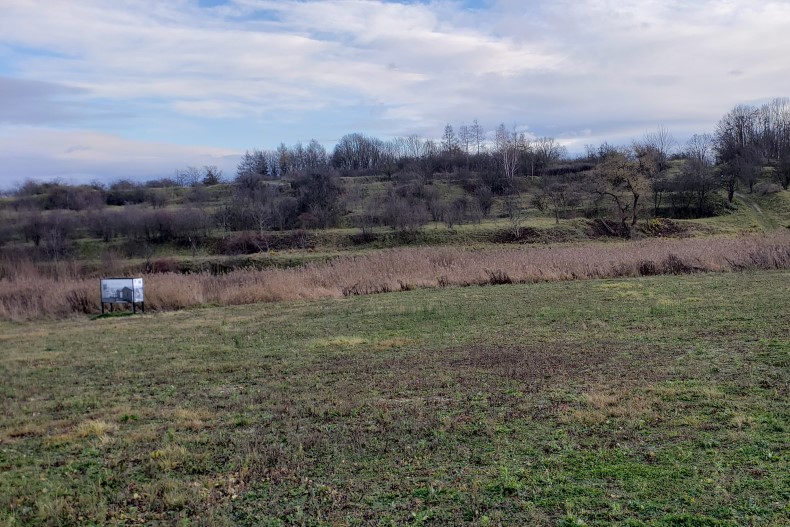
Standing at the entrance to Plaszow Concentration Camp was weird. There was no entrance. I was standing at the edge of a field–more like an overgrown park. The road and buildings of a middle class Krakowian neighborhood were right behind me. I heard a dog barking and kids playing somewhere near.
There were no wired fences, no big threatening gates, and no barracks to look at. Just green plants and grass and some hilly terrain. For a minute, as my guides were running late, I started second guessing whether I was in the right place. Could this really be the place where my great-great-grandfather, Rabbi Scheim Klingberg, was murdered with thousands of others?
But then Karolina and Kamil joined me. Karolina and Kamil work for Muzeum Krakowa, the cultural heritage museum that manages the historical sites of Krakow, Poland. These include the Old Synagogue in the Jewish quarter, as well as Holocaust sites such as Oskar Schindler’s Enamel Factory. While Schindler’s story is known thanks to a Steven Spielberg movie, fewer people are familiar with the camp in which the Jews he saved came from–Plaszow.
My great-great-grandfather was a well-known Hassidic rabbi in Krakow. When the war began and Krakow was captured by the Nazis, he evacuated and hid with many of his followers in a nearby town. He decided to return. He hid in the basement of another Jewish family who was considered “essential.” In that basement, Rabbi Klingberg held High Holiday services in 1940. Hundreds of Jews participated in this act of defiance against Nazi rule.
Eventually, the Nazis deported him along with thousands of others to Plaszow Concentration Camp. The camp was south of the city. The hill there was a historic fortification. Next to it was the Jewish cemetery. Jews deported from the Ghetto to Plaszow had to walk several miles to the hill and then were forced to build their barracks on top of the demolished Jewish cemetery. In the camp, Rabbi Klingberg and 39 other Jewish communal leaders were hand-picked to be executed as part of a communal punishment–because some of the inmates stole bread from the SS kitchens.
Karolina and Kamil learned about my visit and my connection to Rabbi Klingberg from a mutual friend. They were kind enough to invite me on a tour of the camp, or what’s left of it. As we greeted each other, Kamil told me more about why we were standing in an empty field:
“Towards the end of the war, when the Russian troops were approaching, the Nazis destroyed the camp and left nothing behind. They burnt down the barracks and transported Jews who could still work to camps in the west. The Jews who were too weak to survive were shipped to Auschwitz or killed in the trenches of the old fortification. Their bodies were burnt as well.”
Kamil’s work in the museum is to excavate different parts of the camp and try to uncover personal belongings of the inmates as a way of telling their story. He works closely with the local Jewish community and descendants of survivors like myself.
As we were walking between the mounds, Kamil and Karolina brought me to a small memorial. There, he explained, Rabbi Klingberg was shot. As I read the Mourner’s Kaddish from my phone, I realized this was the first time since the end of the war that someone in my family was standing by his ‘grave.’
I made the trip in November 2019. This year, on Nov. 10th–in commemoration of the Kristallnacht anniversary–Kamil and Karolina will present the story of Plaszow in a virtual event sponsored by Hillel at the University of Illinois at Urbana-Champaign, Illinois Jewish Studies, JUF, the Illinois Holocaust Museum and Education Center, and more.
If you want to learn more about Plaszow–the forgotten camp, register at illinihillel.org/plaszow.
Erez Cohen is the Executive Director of Hillel at the University of Illinois at Urbana-Champaign.
Other stories
-
Two local teens win national recognition
Recipients of the annual Diller Teen Tikkun Olam Awards
Read more -
Celebrating six young award winners cultivating the community
Introducing young adult award winners
Read more -
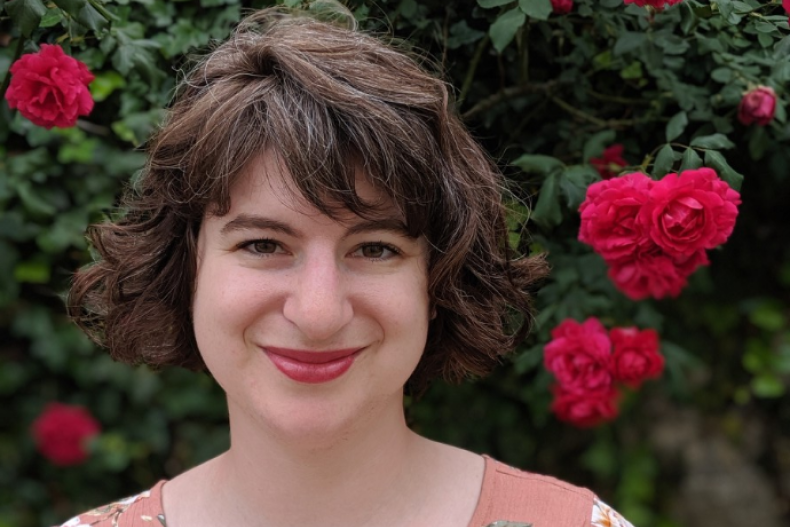
At the beginning of the pandemic, Anna Yankelev was pulled from her role leading strategic planning for the Lake County Health Department and transferred to the newly-created Public Health Emergency Operations Center. As the new Mitigation Chief, she monitored community transmission of the virus and the related consequences, focusing on helping high-risk populations secure access to the resources they need to stay safe and healthy.
She was ready for the challenge. “The way I got into the work I’m doing today is deeply rooted in my experience and values as a Jewish person,” said Yankelev, who first encountered activism within the Habonim Dror youth movement. “I valued and appreciated the ideas of tikkun olam from a young age. That’s how I found myself in public health, seeing it as a way to realize my potential in working to make the world a healthier and more just place.”
Now with two Master’s degrees and experience as a community organizer, she is lending her expertise to Lake County. Her innovations include purchasing protein-rich meals from an airline food vendor to donate to food banks and hiring a limousine company to transport potentially exposed people to quarantine sites. Her efforts have helped secure over $4 million in federal CARES Act aid for community resources and initiatives.
Much of her work involves supporting Black and Latinx leaders by listening, learning, clearing barriers, and procuring resources. In May, data showed that for every one white community member that tested positive for COVID-19, there were four Black and eight Latinx community members that tested positive, and people of color were twice as likely to die from the virus than white individuals.
In response, the Lake County Health Department convened the African American Community Partnership Group and Asociacion Comunitaria Latina.
Another initiative she helped launch–Lake County Community Action To Combat Hunger, or CATCH–is an intersectoral coalition to deliver meals free of charge to families in need. Lake County CATCH has helped over 470 families and 1,600 individuals.
Yankelev draws inspiration from her time at the Avodah Justice Fellowship in Chicago, where she found a strong sense of community. “Being able to participate in a community of like-minded individuals committed to the same values of social justice, who share the same vision for the world we want to build, and who continually support me has been invaluable as we navigate these truly unprecedented times,” she said.
For more information about the organizations Yankelev supports, visit https://bit.ly/2HHxe6V , https://bit.ly/3n0VPDV , and https://bit.ly/3ig3YAy .
Other stories
-
Two local teens win national recognition
Recipients of the annual Diller Teen Tikkun Olam Awards
Read more -
Celebrating six young award winners cultivating the community
Introducing young adult award winners
Read more -