The United States Holocaust Memorial Museum will host Pulitzer Prize-winning author and world-renowned presidential historian Doris Kearns Goodwin at its 2014 “What You Do Matters” Risa K. Lambert Chicago Luncheon to be held at noon on Tuesday, Sept. 9, at the Sheraton Chicago Hotel & Towers. She will be the featured speaker for the event. An expert on the United States presidency, Goodwin has published six critically acclaimed New York Times best-selling books. Her most recent is The Bully Pulpit: Theodore Roosevelt, William Howard Taft, and the Golden Age of Journalism. She received the Pulitzer Prize in 1995 for No Ordinary Time: Franklin and Eleanor Roosevelt: The Home Front in World War II.
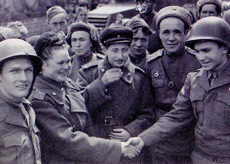
The Museum will honor Fern and Manny Steinfeld, leaders in the JUF community, at the luncheon with the United States Holocaust Memorial Museum’s National Leadership Award for their decades of dedication and support. After leaving Germany just before World War II, Manny Steinfeld enlisted in the U.S. Army and fought to free his home country from Nazi tyranny-learning later that his mother and sister died during the Holocaust.
“The Museum slogan ‘Never Again'” is a call to action,” he said. “In light of what is happening in many parts of the globe now, it is difficult to believe that only 70 years after the end of the war, chants and protests today are identical to the Nazi chants. The Museum is the voice that will not be stilled and requires your support to continue in its vital mission to remember those that perished and to ensure that future generations will ‘Never Again’ face human degradation and the loss of freedoms that are the basic rights of all mankind.”
“Service has always defined the Steinfelds,” said Jill Weinberg, director of the Museum’s Midwest Regional Office. “Manny served the country that harbored him from Nazi persecution during World War II and in Korea. Since then, he and Fern have unwaveringly served the Chicago community and numerous other charitable organizations throughout the country and around the world.
Other stories
-
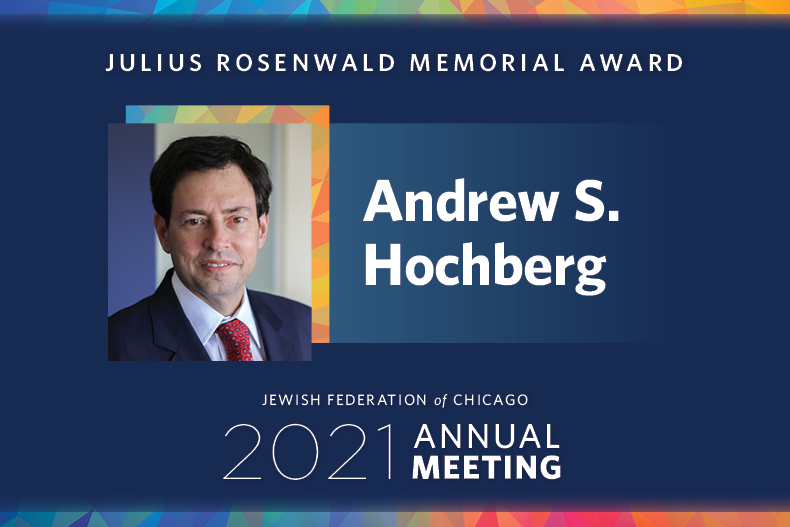
Meet Andrew S. Hochberg, 2021 Julius Rosenwald Memorial Award recipient
Celebrate Andy Hochberg at the virtual Annual Meeting on Sept. 14
Read more -
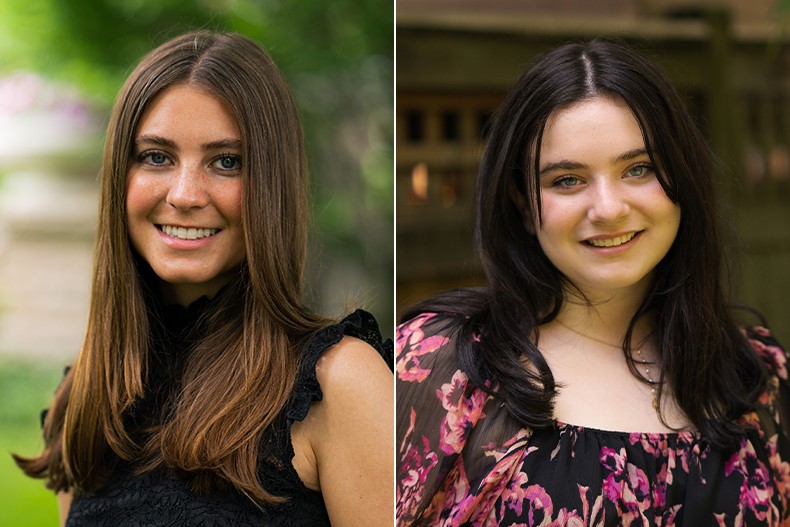
Two local teens win national recognition
Recipients of the annual Diller Teen Tikkun Olam Awards
Read more -
Celebrating six young award winners cultivating the community
Introducing young adult award winners
Read more
In light of recent events that highlight those who face mental health challenges, we may be wondering if there is a “Jewish spin” to this tragedy. What does the Torah teach us about sadness and depression?
One could begin by asking: Must faith come from a “down” feeling? Is Judaism supposed to be a depressing and negative religion, making us feel guilty? Here are three sources that teach us Judaism’s approach:
- Rabbeinu Yonah of Gerona (Spain, 1200-1263): “Although there is a beneficial aspect to sadness it prevents people from becoming overly joyous over the pleasures of this world nevertheless one should not pursue the state of sadness, since it is a physical disease. When a person is despondent, he is not able to serve his Creator properly.”
- Rabbi Yehudah HaLevi (Spain, 1075-1141) in the Kuzari: “It is not in accordance with the spirit of the Torah to worry and feel anguish throughout one’s life; one who does so transgresses the Almighty’s commandment to be content with what he has been given, as it says you shall rejoice with every good thing which the Lord your God has given you (Deut. 26:11).”
- Rabbi Samson Raphael Hirsh (Germany, 1808-1888) cites a Talmudic objection to depression: “Judaism never considered pain, sorrow, self-affliction, or sadness to be valid goals. The opposite is true; one should pursue happiness, bliss, cheer, joy, and delight. For the Shechina (Divine Presence) does not dwell in a place of sadness; it dwells only in a place where happiness reigns.”
Clearly, Judaism does not see sorrow and spiritual suffering as a desired state. But sometimes it happens, going back to Biblical times. In I Samuel chapter 16, King Saul felt depressed when the spirit of God departed from him. Saul called David (future son in law, and eventual successor as King) to play music to help restore his spirit and dispel his sadness.
Ethics of the Fathers (4:1) teaches, “Who is wealthy? One who is content with their own portion.” This indicates that, according to Judaism, learning to be happy with what we have, finding meaning in life can be helpful. Rebbe Nachman of Breslav, one of the great Chasidic masters, taught, “It is a great mitzvah to be in happiness (b’simcha) and to overcome and reject feelings of sorrow and melancholy.”
Some scholars (see, for example, Professor Arthur Green’s book, Tormented Master suggest that Reb Nachman was a very depressed person. Note that his dictum did not teach that it was a mitzvah to be happy (sameach) but to be in happiness, a happy environment, happy behavior. Further, Israela Meyerstein (in the winter 2004 issue of the Journal of Religion and Health) has suggested that ritual, prayer, music, and a like-minded supportive group can be extremely beneficial in such circumstances.
In Judaism, it is a mitzvah to treat illness and take care of ourselves. “And you shall greatly guard your lives,” (Deuteronomy 4:15) is a commandment of the Torah. Thus, it is a mitzvah to go to the doctor to attend to ailments. This is not only true of physical illness, but also of mental illness. Unfortunately, programs to help those with mental illness are often the first to be cut when funding (government or otherwise) is short. But we do ourselves no favors when making such cuts.
Serious depression and mental illness are not moral failures. They should not be stigmatized. These are illnesses and can be dangerous if not treated. Seeking out a skilled clinician such as those at Jewish Child & Family Services can truly be life-saving.
Rabbi Dr. Joseph S. Ozarowski, BCC, is Rabbinic Counselor and Chaplain at Jewish Child & Family Services, and author of To Walk in God’s Ways: Jewish Pastoral Perspectives on Illness and Bereavement.
Other stories
-
Meet Andrew S. Hochberg, 2021 Julius Rosenwald Memorial Award recipient
Celebrate Andy Hochberg at the virtual Annual Meeting on Sept. 14
Read more -
Two local teens win national recognition
Recipients of the annual Diller Teen Tikkun Olam Awards
Read more -
Celebrating six young award winners cultivating the community
Introducing young adult award winners
Read more
Harold T. Berc served the military, his clients, and the community. During World War II, Harold served in the South Pacific. He earned a Bronze Star and 10 Battle Stars while in the military. From 1959-1960, Harold was the national commander of AMVETS, where he helped secure funding to complete the USS Arizona Memorial at Pearl Harbor and met President Dwight Eisenhower.
After his military service, Harold returned to Chicago and went back to working in law. He received his law degree in 1937 from DePaul University and worked in the field for more than 60 years. He specialized in business litigation, wills and trusts, and real estate.
Being a lifelong Chicagoan, Harold was very knowledgeable about Chicago history. He was a past president of the City Club of Chicago and a charter member of the Chicago Press Club. Harold was a devoted fan of the Chicago Symphony, as well as a pianist.
Harold was a member of Temple Sholom of Chicago and The Standard Club. Harold attended JUF Lawyers Division events and was on the Legacy and Endowments Committee. He donated to the JUF Annual Campaign for over 25 years, and left a generous gift to the Centennial Campaign.
Harold will be remembered as a brilliant and friendly man.
Like Harold, you can create your Jewish legacy by including a bequest to the Jewish Federation in your will or estate plan. Bequests are a simple way to create your Jewish Legacy. For more information, contact Legacies and Endowments at (312) 357 -4975 or email: [email protected].
Ron Krit is the manager of Endowment Development for the Jewish United Fund of Metropolitan Chicago.
Other stories
-
Meet Andrew S. Hochberg, 2021 Julius Rosenwald Memorial Award recipient
Celebrate Andy Hochberg at the virtual Annual Meeting on Sept. 14
Read more -
Two local teens win national recognition
Recipients of the annual Diller Teen Tikkun Olam Awards
Read more -
Celebrating six young award winners cultivating the community
Introducing young adult award winners
Read more
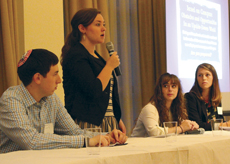
As the 36 interns wrapped up their work at various JUF agencies and departments this August, The Harriet & Maurice Lewis Summer Intern Program (LSIP)-an eight-week work/study internship program created by The Hillels of Illinois and funded by the Harriet and Maurice Lewis Family-proved once again how it is unlike any other summer internship program.
“This summer was such a unique experience. Interning can be tough, but with the LSIP program it’s amazing that you can develop and grow with young professionals such as yourself,” said intern Mia Kavinsky.
This cohort of interns had a particularly unique experience given the escalation of the conflict in Israel. Not only were the interns able to see how the organization functioned to unite the Chicago—area community in support of Israel-through rallies, the JUF Israel Emergency campaign, and so forth—but they also were able to contribute directly in some cases, helping organize the vigil for the three kidnapped teens earlier in the summer.
“Instead of just learning how the community operates, all the interns got to experience it,” said John Lowenstein, JUF Vice President of Campus Affairs and Executive Director of the Hillels of Illinois. “They were involved from the very beginning in planning the “Bring Back Our Boys” rally, and they got to see the progression of how the Federation has responded to the whole series of events relating to the conflict in Gaza.”
Discussions surrounding Operation Protective Edge and the Israeli-Palestinian conflict frequented Wednesday seminars. The seminars also covered a range of topics from networking to resume writing, as well as Jewish community-building, each week. Through the program’s weekly seminars, interns gained an understanding of professional skills from a plethora of speakers, including JVS staff, lay leaders, and JUF department execs. The interns also presented to one another in groups on topics they chose to explore in the context of their “Jewish generation.” The topics presented varied from anti-Semitism on college campuses to Jewish stereotypes in television and film.
The interns dug deeper into the topic of their ‘Jewish generation’ and into their Jewish identities on the Shabbat retreat at Fiedler Hillel at Northwestern University. After Shabbat services and dinner, they divided up into groups and shared their ‘Jewish journeys’ with one another. As the interns got to know more about one another and their Jewish backgrounds, the sense of community grew and they dove into more complex subjects, such as their relationships with God. After havdallah, the interns went their separate ways, more than just colleagues-a united Jewish network, one that they can all count on as they continue to move forward in their professional lives.
Many of the interns also developed strong ties to their agencies and departments. “Through my internship at the Illinois Holocaust Museum, I gained invaluable professional experience and feel prepared to make a difference when I graduate in two years,” said LSIP intern Mitchell Caminer.
Mara Flack, the Young Adult Engagement intern, also spoke enthusiastically about her experience: “My internship was dynamic and engaging,” she said. “From the beginning of my internship, I was included in department meetings and was encouraged by my supervisor to contribute.”
This sentiment was shared by the rest of the cohort, now equipped to take on the professional world and make names for themselves in the Jewish community thanks to their experience this summer.
Other stories
-
Local campus administrators convene on hate speech, bias
JUF and ADL brought together 17 student safety, diversity and inclusion and student affairs administrators and Hillel representatives from various Illinois campuses to discusses issues of hate speech and bias.
Read more -
Engaging students about Israel on campus
Too often we hear about difficulties facing Jewish college students on Illinois campus, but to focus solely on the politics gives only one piece of the complex narrative that is Jewish life on campus.
Read more -
Hillel International launches fellowship initiative to train young Jewish professionals
The Springboard Fellowship will train cohorts of young Jewish professionals in highly-valued skillsets and place them at local Hillel campuses for two years.
Read more
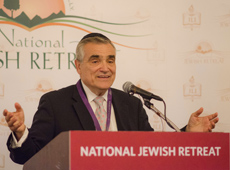
National Conference of Jewish Lawyers brings together top legal professionals for comparative study
“The program was planned months ago, but sessions about Israel and terrorism took on special poignancy in the wake of recent events,” said its organizer, Rabbi Meir Hecht referring to the kidnapping and murder of Israeli students Eyal Yifrach, Gil-Ad Shaer, and Naftali Fraenkel and Israel’s subsequent fight to defend itself from Hamas terrorists in Operation Protective Shield.
Rabbi Hecht is Chicago Director of The Rohr Jewish Learning Institute (JLI), the sponsor of the conference that was held during the organization’s ninth annual National Jewish Retreat. The conference took place on Aug. 6, the first of the five days of the retreat, at the historic Palmer House Hilton Hotel that brought together over 1,000 Jews from communities across the U.S. and around the world. Co-sponsoring organizations of the lawyer’s conference include the National Association of Jewish Lawyers and Jurists, Lubavitch Chabad of Illinois and Jewish National Fund Lawyers for Israel.
The conference was chaired by prominent Chicago attorneys who are leaders in the Chicago Jewish community and strong supporters of Israel. David T. Brown of Much Shelist and JUF/Jewish Federation of Metropolitan Chicago’s board chairman, Daniel I. Schlessinger of Locke Lord and the National President of American Friends of Hebrew Uiversity, James H.M. Sprayregen of Kirkland & Ellis and Keith J. Shapiro of Greenberg Traurig and a member of the JUF board of directors.
JUF/Jewish Federation President Dr. Steven B. Nasatir addressed the lawyers conference and the guests from around the country. He welcomed them to Chicago and offered thoughtful insights on the importance of Jewish education for all ages, especially at these trying times for our people all throughout the world.
Alyza Lewin, President of the NAJLJ opened the conference with an overview of her ongoing ten-year legal battle to have “Israel” stamped as country of birth on the passport of Menachem Zivotofsky, a Jerusalem-born, American citizen. The keynote panel addressed the war on terror in U.S. courts and featured former U.S. Attorney General Michael B. Mukasey.
The theme of the conference was Talmudic Ethics with multiple sessions throughout the day offering comparative studies of the Jewish and American legal perspectives on a wide range of topics. Talmudic Scholar from Israel Rabbi Adin Steinsaltz, shared his wisdom on the application of Talmudic law to today’s legal world. Judge Grace G. Dickler, Presiding Judge of the Cook County Domestic Relations Division presented a comparative look at child custody laws alongside the Chicago Rabbinical Council’s new chief Justice, Rabbi Yona Reiss. An elite panel of bankruptcy and restructuring experts included Harvey Miller of New York City’s Weil, Gotshal and Manges, James H.M. Sprayregen, Professor Steven Resnicoff and was moderated by Judge Jack B. Schmetterer.
In an intriguing debate between Professor Sheldon Nahmod and Nathan Lewin on the recent Supreme Court decision, Town of Greece v. Galloway, the two leading experts in civil liberties argued whether the decision was a boon or setback for Jewish interests.
Other stories
-
Meet Andrew S. Hochberg, 2021 Julius Rosenwald Memorial Award recipient
Celebrate Andy Hochberg at the virtual Annual Meeting on Sept. 14
Read more -
Two local teens win national recognition
Recipients of the annual Diller Teen Tikkun Olam Awards
Read more -
Celebrating six young award winners cultivating the community
Introducing young adult award winners
Read more
In a world awash in ideas and opinions, there seems to be a uniquely Jewish perspective on just about everything. And now there is a uniquely Jewish forum to explore those insights: ELI Talks.
The next episode of the public-affairs program “Sanctuary” – which airs at 12:30 p.m. Sunday, Aug. 17, on ABC7-Channel 7 – offers just a taste of the work of ELI Talks, a video home for short talks on just about anything Jewish, or the Jewish perspective on just about anything.
Featured will be highlights from three talks recently taped in Chicago in cooperation with JUF News.
Rabbi Danya Ruttenberg cuts through the chaos of raising children to reveal the unending spiritual treasures awaiting any parent open to embracing them.
Rabbi Daniel Bronstein says it’s time to take Jewish comedy, and the important role it plays in the Jewish community, more seriously.
And Rabbi Jeremy Fine contends that the keys to creating a vibrant, vital synagogue can be found in the NFL draft.
This episode is hosted by Cindy Sher.
Starting Monday, Aug. 18, the program will be available for viewing on the Jewish United Fund website, www.juf.org/interactive.
ELI Talks is a project of the AVI CHAI Foundation, produced by the team at See3 Communications. “Sanctuary” is a joint production of the Jewish Federation of Metropolitan Chicago and the Chicago Board of Rabbis, in cooperation with ABC7-Channel 7.
Other stories
-
Meet Andrew S. Hochberg, 2021 Julius Rosenwald Memorial Award recipient
Celebrate Andy Hochberg at the virtual Annual Meeting on Sept. 14
Read more -
Two local teens win national recognition
Recipients of the annual Diller Teen Tikkun Olam Awards
Read more -
Celebrating six young award winners cultivating the community
Introducing young adult award winners
Read more
Archbishop Francis Cardinal George to keynote Jewish Federation's 114th Annual Meeting
Chicago Archbishop Francis Cardinal George, OMI, will keynote this year’s Jewish Federation of Metropolitan Chicago Annual Meeting, set for Thursday, Sept. 11, at the Hyatt Regency Chicago, 151 E. Wacker Drive.
The cardinal, who has served as the city’s archbishop since 1997, has dedicated himself to the enrichment of the Catholic-Jewish relationship in the Chicago area, and is an ardent supporter of the Catholic-Jewish Scholars Dialogue.
The Federation’s 114th Annual Meeting also will feature the State of the Federation address by President Dr. Steven B. Nasatir, and the presentation of several major leadership awards.
Foremost among them will be the organization’s highest honor, the Julius Rosenwald Memorial Award, which this year goes to Max “Skip” R. Schrayer. The award, named for the iconic Chicago business leader and philanthropist of the early 1900s, is presented each year to an individual who has demonstrated a lifetime of outstanding dedication and service to the Jewish community.
Schrayer, who has been a Federation leader for more than three decades, has served in a wide range of roles, including chairman of the board, chairman of the 2006 Annual Campaign, and chairman of the Jewish Community Relations Council, as well as key posts with national and international Jewish humanitarian and communal organizations. The 51st recipient of the Rosenwald Award, Schrayer is the first third-generation honoree, following in the philanthropic and leadership footsteps of his grandfather, Max, and father, Robert.
David Goldenberg and James B. Sarnoff will receive the 50th annual Davis, Gidwitz & Glasser Young Leadership Award, presented to volunteers who have demonstrated exemplary dedication and have made significant contributions to Chicago’s Jewish community.
Goldenberg, 35, is on the board of the Jewish United Fund’s Young Leadership Division, as well as on the JUF’s Communications & Marketing and Contributor Account Relations committees. He was YLD’s 2013 Campaign Chair and is a former participant in the group’s Gesher leadership program. Goldenberg also is a member of the Jewish Federations of North America’s National Young Leadership Cabinet. He has worked with many other Jewish organizations and, in 2012, was named to the YLD/Oy!Chicago annual “36 Under 36” list.
Sarnoff, 36, joined the YLD board in 2009, served as YLD Campaign Chair in 2012 and later as YLD Division President. He also chaired YLD’s largest Big Event Fundraiser to date, featuring comedian Jimmy Fallon, and founded the now-annual YLD Golf Tournament. Sarnoff is a former participant in YLD’s Gesher leadership program, and was chosen to be part of the inaugural Jewish Leaders Institute cohort. He has traveled with several JUF missions abroad, and serves on JUF’s Contributor Account Relations Committee. In 2012, he too was named to the annual “36 Under 36” list.
As part of the Davis, Gidwitz & Glasser award, the honorees are given the opportunity to attend the annual General Assembly of the Jewish Federations of North America, which this year takes place in National Harbor, Maryland, in November.
Two exceptional young professionals who have shown outstanding performance in their work at a Jewish agency in the Chicago area will receive the Samuel A. Goldsmith Award, now in its 27th year. This year’s award will be presented to Jessica Schaffer and Ariel Zipkin Weiss.
Schaffer, 29, is the Safer Communities Project Coordinator at Jewish Child & Family Services, where she works to prevent and combat abuse in Chicago’s Jewish community. In that role, she has developed training curricula that have been critical in helping schools and synagogues implement new safety protocols. Under her leadership, the Safer Communities Initiative has become one of the most comprehensive programs of its kind in the country.
Zipkin Weiss, 30, recently was promoted to Director of Donor Engagement at JUF, where she formerly served as Director of YLD. During her tenure, she launched dozens of new programs and initiatives. A recent YLD event Weiss organized, the Blue and White Bar Night, attracted over 800 people last spring – an 80 percent increase over the previous year. She also has served as lead professional for the past three Big Event Fundraisers, which were enormously successful and broke both fundraising and attendance records.
The Federation’s Annual Meeting is held in two sessions, beginning with a business meeting at 10 a.m., followed by a noon luncheon.
The business meeting, open to all Federation members, will feature the election of directors, and presentations to outgoing board members and the recipients of the young leadership awards.
The lunch session will feature Cardinal George’s speech, the annual State of the Federation report by President Dr. Steven B. Nasatir, and presentation of the Rosenwald Award to Schrayer.
Other stories
-
Meet Andrew S. Hochberg, 2021 Julius Rosenwald Memorial Award recipient
Celebrate Andy Hochberg at the virtual Annual Meeting on Sept. 14
Read more -
Two local teens win national recognition
Recipients of the annual Diller Teen Tikkun Olam Awards
Read more -
Celebrating six young award winners cultivating the community
Introducing young adult award winners
Read more
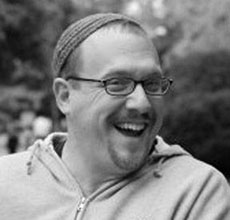
Rabbi Doctor Scott Aaron will become Executive Director of the Community Foundation for Jewish Education beginning in September, the Jewish United Fund has announced.
“Aaron will work with the entire Jewish community to provide the vision, strategy development and leadership necessary to achieve the community’s broad Jewish education agenda from early childhood to adults,” said David Rubovits, JUF senior vice president, Planning & Allocations.
Under Aaron’s direction, CFJE will collaborate with congregations, schools, community organizations, rabbis, educators and administrators to advance JUF’s communal goals in the field of Jewish education.
Aaron is an educator and scholar with broad expertise and experience in Jewish identity development, experiential education, professional development for Jewish educators and communal professionals, educational evaluation, and other areas. He holds adjunct faculty appointments at the Jewish Theological Seminary’s Davidson School of Education, the Rhea Hirsch School of Education of the Hebrew Union College-Jewish Institute of Religion, and the Spertus Institute for Jewish Life and Learning.
Rabbi Aaron received his Ph.D. in the philosophy of education from Loyola University Chicago, rabbinic ordination and a Masters of Arts in Hebrew Letters from the Hebrew Union College-Jewish Institute of Religion, Juris Doctor from the University Of Toledo College Of Law, and a Bachelor of Arts degree from the University of Cincinnati. He is a published author of books and academic journal articles and has been a consultant to foundations and agencies in the Jewish community across the United States and in Israel.
As CFJE welcomes Aaron, it also thanks Associate Director Sid Singer for eight years of service and leadership. Singer is assuming the post of Chief Operating Officer at Jewish Council for Youth Services, which offers educational, recreational and leadership experiences to members of the Jewish community.
Singer helped restructure CFJE into the Jewish Federation of Metropolitan Chicago, led the agency’s strategic planning effort while serving as acting director, and helped grow the Ta’am Yisrael (Taste of Israel) program.
Other stories
-
Meet Andrew S. Hochberg, 2021 Julius Rosenwald Memorial Award recipient
Celebrate Andy Hochberg at the virtual Annual Meeting on Sept. 14
Read more -
Two local teens win national recognition
Recipients of the annual Diller Teen Tikkun Olam Awards
Read more -
Celebrating six young award winners cultivating the community
Introducing young adult award winners
Read more
A Jewish Chicago police officer was awarded a $540,000 judgment against a former superior who allegedly taunted him for years with anti-Semitic and racist remarks.
On July 28, a federal jury found in favor of Detlef Sommerfield, a German-Jewish immigrant who had accused retired Chicago Police Sgt. Lawrence Knasiak of calling him a “f*cking Jew boy,” waving a swastika at him, and engaging in other harassing behavior while Knasiak was Sommerfield’s superior between 2000 and 2007, according to a report by the Chicago Sun-Times.
A spokesman for Chicago’s legal department told the Sun-Times that the city had been dismissed from the suit in 2009. That would leave Knasiak solely responsible for the judgment.
Previously, in 2012, a separate federal jury had awarded Sommerfield $30,000 in a discrimination case against the city of Chicago over the same incidents. According to a report by the Chicago Tribune, Sommerfield first complained about the harassment in 2004, but the Chicago Police Department did not investigate his claim until 2007. Sommerfield filed his lawsuits against Knasiak and the city in 2008, according to the Sun-Times.
Sommerfield was born in Germany in 1961, according to the Tribune, and one of his aunts was killed during the Holocaust.
Sommerfield’s lawyer, Joseph Longo, told the Sun-Times that Knasiak “was able to yell these remarks out in roll call with other sergeants and lieutenants and captains standing next to him.” He added, “Not just once or twice, but regularly, and nobody tells him to stop. I don’t understand that. It’s baffling.”
The Jewish Community Relations Council of the Jewish United Fund/Jewish Federation of Metropolitan Chicago has spoken with the Chicago Police Department about this case.
“We are gratified by this judgment, and hope the plaintiff is indeed able to secure his award,” said JUF Executive Vice President Jay Tcath. “The behavior of this one CPD officer was unconscionable and intolerable. We shared these sentiments with both the plaintiff’s attorney and senior CPD leaders, urging that they do what they can to help ensure that ‘the right thing’ would be done.
“Such anti-Semitism, indeed bigotry of any type, has no place in our society, and especially among those who take an oath to serve and protect on behalf of all people. CPD is now under new leadership than when this extended ordeal occurred, and we are confident and hopeful that this leadership would act more swiftly and forcefully in the face of such intolerance.”
Other stories
-
Meet Andrew S. Hochberg, 2021 Julius Rosenwald Memorial Award recipient
Celebrate Andy Hochberg at the virtual Annual Meeting on Sept. 14
Read more -
Two local teens win national recognition
Recipients of the annual Diller Teen Tikkun Olam Awards
Read more -
Celebrating six young award winners cultivating the community
Introducing young adult award winners
Read more
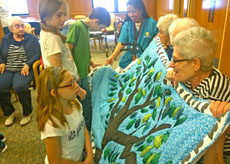
Recently, residents of The Selfhelp Home and the entire fifth-grade class at Bernard Zell Anshe Emet Day School (BZAEDS) gathered in a special ceremony dedicated to peace and conflict resolution. The gathering commemorated the end of a yearlong intergenerational project with the residents at Selfhelp and fifth-grade students at the school. This year marks the third year the fifth-grade students at BZAEDS have formed this special relationship
with the residents of The Selfhelp Home.
During the year, students and residents met several times and discussed peace and conflict resolution. The subject was especially relevant to this particular group of elders, some of whom are Holocaust survivors, making the experience that much more personal and important.
“The project is always very meaningful to our fifth-grade students,” said Barbara Applebaum, fifth-grade team leader, and leader of the project from BZAEDS. “It allows these two groups to enrich one another and it has been incredible watching them grow from this experience and learn from each other.”
“This program always brings out the best in the students and the residents as we work towards a common goal,” said Fern Shaffer, director of Programing
at Selfhelp.
The program was facilitated by Fabiana Glazer, founder of GoldMind Arts, who met with students at The Selfhelp Home throughout the year. The goal was to create a work of art through meaningful discussions about conflict resolution. “We brought these two generations together and put them to work towards a meaningful work of art that facilitated conversation-and in the end we have a piece of art we can all feel proud of,” Glazer said.
Together, residents and students produced two quilts, one that will be displayed at BZAEDS for the community, and one in The Selfhelp Home. Residents and students wrote special messages about resolving conflict and secured it inside fabric leafs that were sewn to branches of a tree at the center of the quilt. Around the edge of the quilt, a small silhouette of each resident and student is attached, symbolizing that we all need to work together to resolve conflict.
“Working together and sewing the quilt with the students gave us an opportunity to have meaningful and constructive conversations with the kids; the children are just so full of life,” said Dorothy Urman, resident of The Selfhelp Home.
Through conversations about peace and how to obtain it, the group also composed a poem symbolizing their thoughts on conflict resolution. The workshops between students and residents concentrated on what has worked, what one can do in a conflict as well as how to avoid conflict altogether.
Constant Conflicts
~ By BZAEDS fifth grade students & residents of The Selfhelp Home
Food, Power, Land,
Abuse, Hate and Greed.
Some of us got out
and started screaming.
Some don’t realize,
she lost her son.
Most people were hungry.
Because he was scared
She tries to think by listening.
We take turns and
I stood up for myself.
When you have a chance
Stop it.
Kindly, combine forces
Knuckle sandwich vs.
fruit punch.
Don’t show a reaction.
Put yourself in their shoes.
Listen.
Ask.
Forgive.
Forget.
Able to leave,
I know I did the right thing….
The Selfhelp Home in Chicago provides older adults quality of care in a culturally rich Jewish environment. Founded in 1938 as a refuge for Holocaust survivors, today Selfhelp offers a continuum of services from residential living to skilled nursing.
For more information about Bernard Zell Anshe Emet Day School, visit www.bzaeds.org or call Erica Mutschler at (773) 572-1261. Efrat Stein is the outreach and marketing manager for The Selfhelp Home in Chicago.
Other stories
-
Meet Andrew S. Hochberg, 2021 Julius Rosenwald Memorial Award recipient
Celebrate Andy Hochberg at the virtual Annual Meeting on Sept. 14
Read more -
Two local teens win national recognition
Recipients of the annual Diller Teen Tikkun Olam Awards
Read more -
Celebrating six young award winners cultivating the community
Introducing young adult award winners
Read more