Endowments keep giving forever. And starting this month, 15 Chicago-area Jewish organizations will get the help they need building endowments that will help sustain them for years to come, thanks to the newly launched Create a Jewish Legacy-Chicago.
The Chicago program, which joins similar efforts in cities around the country, is fully funded by the Harold Grinspoon Foundation and an anonymous donor, and is managed by the Jewish Federation of Metropolitan Chicago.
Through the program, leaders and staff from a cross-section of schools, synagogues, social service agencies and a museum will learn the ins and outs of structuring, operating and securing gifts for endowments that will provide a steady and potentially growing stream of funding.
“Create a Jewish Legacy is designed to assist a variety of Jewish organizations throughout the Chicago area in developing or enhancing endowment-based support,” Chair Jane Cadden Lederman said. “As we have seen in the wake of the recent economic downturn, the ability to maintain the scope of services in our schools, synagogues, organizations and agencies has become that much more challenging. Building strong endowments creates an ongoing, reliable source of funds to sustain our Jewish community for future generations.”
Interest in the effort has been strong. Some 70 representatives from 40 organizations joined the kick-off informational session. Thirty groups applied to participate, and 15 of them, representing the diversity of Chicago’s Jewish community, were selected by a panel of lay leaders. The Federation also will work with the groups that were not selected.
The groups chosen are Am Yisrael, Chicago Jewish Day School, Chicago Sinai Congregation, CJE SeniorLife, Hebrew Theological College, Hillel Torah North Suburban Day School, Illinois Holocaust Museum and Education Center, Jewish Child & Family Services, Keshet, North Shore Congregation Israel, North Suburban Synagogue Beth El, Oak Park Temple, Solomon Schechter Day School, Temple Jeremiah and The ARK.
To learn more about Create a Jewish Legacy, contact Naomi Shapiro at (312) 357-4963 or [email protected].
Other stories
-
Meet Andrew S. Hochberg, 2021 Julius Rosenwald Memorial Award recipient
Celebrate Andy Hochberg at the virtual Annual Meeting on Sept. 14
Read more -

Two local teens win national recognition
Recipients of the annual Diller Teen Tikkun Olam Awards
Read more -

Celebrating six young award winners cultivating the community
Introducing young adult award winners
Read more
The Illinois Firearms Concealed Carry Act, which became effective earlier this year, has ramifications for institutions as well as individual gun owners. And Jewish institutions, which have unique security issues, are especially impacted. Although individuals in Illinois now have expanded conceal and carry rights, individual institutions have their own rights and obligations as well to protect their premises, staff and visitors.
To learn more on this topic, 50 Jewish institutional leaders (representing day schools, synagogues and agencies) attended a special security conference convened yesterday by JUF’s Facilities Corporation at the Bernard Horwich JCC.
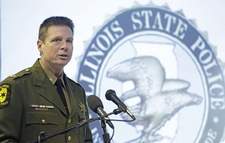
Illinois State Police Col. Mark Maton explained the statute, its implementation, how it affects organizations, and other law enforcement-related issues in his presentation.
Larry Moss, an attorney with Seyfarth/Shaw LLP, discussed liability issues, posting of notice for owners and leased property, and other real estate and legal matters, and Peter Kim, assistant vice president of Philadelphia Insurance Company, discussed risk management and insurance coverage, including necessary riders to current policies, and coverage of armed security personnel.
JUF Executive Vice President Jay Tcath said, “Leveraging the security relationships, experience and expertise of our Facilities Corporation to benefit the entire Jewish community is a JUF priority. Remaining ever vigilant, not just in the immediate aftermath of a high profile security incident, is a challenging but vital. We’re grateful for the partnership of the Illinois State Police, and our law enforcement partners at the federal, county and local level, who do so much to help us keep our community facilities secure and welcoming.”
Other stories
-
Meet Andrew S. Hochberg, 2021 Julius Rosenwald Memorial Award recipient
Celebrate Andy Hochberg at the virtual Annual Meeting on Sept. 14
Read more -
Two local teens win national recognition
Recipients of the annual Diller Teen Tikkun Olam Awards
Read more -
Celebrating six young award winners cultivating the community
Introducing young adult award winners
Read more
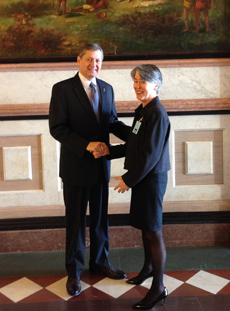
An Illinois House resolution calling on the U.S. Department of State to reconsider returning Iraqi Jewish archives to Iraq passed unanimously out of the Illinois House Interational Trades & Commerce Committee on Thursday. Suzanne Strassberger, the Jewish Federation of Metropolitan Chicago’s Associate Vice President of Government & Community Partnerships and registered lobbyist, signed on in support of House Joint Resolution 68, which was filed by State Representative David Harris in January.
Harris filed the Resolution in an attempt “to urge the United States Department of State to renegotiate with the Government of Iraq … to ensure that the Iraqi Jewish Archive collection be kept in a place where its long-term preservation … can be guaranteed.”
The State Department recently announced its plan to return the Iraqi Jewish Archive collection, currently on display at the U.S. National Archives in Washington, D.C., to the Iraqi government this summer, stating the Iraqi people are the rightful owners.
Under the George W. Bush Administration, shortly after Saddam Hussein’s fall in 2003, the Pentagon assigned Middle East expert and 27-year Pentagon official Harold Rhode, an Orthodox Jew, to work for the U.S. occupation authority through Operation Iraqi Freedom. When Rhode arrived in Bagdad that April, he learned through on-site intelligence officers that thousands of centuries-old Iraqi Jewish archives were discovered in the basement of Hussein’s intelligence service headquarters. For years, during Hussein’s rule, his intelligence operatives improperly seized papers from synagogues and Jewish families, mostly during random searches or shortly before Jewish families emigrated, in an attempt to marginalize the Jewish people and Jewish culture in Iraq.
During his visit in 2003, Rhode personally arranged for the artifacts to be shipped directly to the U.S. National Archives to be cleaned, preserved, and properly stored. A portion of these artifacts recently went on display at the Archives, which includes 2,700 books and 10,000 documents.
Among these documents are a 200-year-old Talmud from Vienna, a 19th century Passover Haggadah published in Bagdad, a copy of “Ethics of the Father,” published in 1928 in Livorno, Italy with handwritten notes in Hebrew, and a collection of rabbinical sermons made in Germany in 1962. When Rhode learned that these Jewish archives could be shipped back to Iraq, he equated the return to “the giving of the personal effects of Jews killed in the Holocaust back to Germany.”
Although part of an original agreement between the State Department and the Iraqi Government, U.S. Congress is pushing back and trying to stop the return of these archives to Iraq by strongly encouraging the State Department to reconsider through resolution. The U.S. Senate unanimously passed Resolution 333, calling for the State Department to re-negotiate its original agreement, and a similar resolution is awaiting a vote in the House.
Rep. Harris feels strongly on this issue, both on a personal and professional level.
“Having served in Iraq for 14 months, I was concerned about what would happen to the artifacts if they were returned to the Iraqi government,” he said. “The decision to return them should be renegotiated so that the artifacts are returned to the original Jewish owners, if possible, and if that is not possible, then returned to the Jewish community where they would be respected and preserved.”
With this resolution, Harris hopes the Illinois General Assembly’s support will help influence the appropriate government authorities to reconsider and keep the Iraqi Jewish Archives in a location that is accessible to scholars and Iraqi Jews around the world.
Since its filing on Jan. 20, Joint House Resolution 68 has received bipartisan support, with Deputy Majority Leader Rep. Lou Lang, Rep. Michael Bost, Rep. Scott Drury and Rep. Jack Franks as co-sponsors. Harris will now read it and attempt to have it passed on the floor of the Illinois General Assembly. The Jewish Federation will continue to work closely with Harris to pass the resolution.
Other stories
-
Meet Andrew S. Hochberg, 2021 Julius Rosenwald Memorial Award recipient
Celebrate Andy Hochberg at the virtual Annual Meeting on Sept. 14
Read more -
Two local teens win national recognition
Recipients of the annual Diller Teen Tikkun Olam Awards
Read more -
Celebrating six young award winners cultivating the community
Introducing young adult award winners
Read more
Prize-winning author of 15 books and Emmy Award-winner Simon Schama brings to life Jewish history and experience in a new five-part documentary series, The Story of the Jews with Simon Schama, which will air Tuesday, March 25, from 7-9 p.m. (episodes 1 and 2) and April 1 from 7-10 p.m. (episodes 3, 4 and 5) on PBS.
The five-hour series follows Schama – who has written and presented 50 documentaries on art, literature and history and is a contributing editor of the Financial Times, as he travels from Russia and the Ukraine to Egypt, Israel and Spain, exploring the imprint that Jewish culture has made on the world and the drama of suffering, resilience and rebirth that has gone with it.
The series is also a personal journey for Schama, who has been immersed in Jewish history since his postwar childhood as well as a meditation on its dramatic trajectory. It is also a macro-history of a people whose mark on the world has been out of all proportion to its modest numbers.
“If you were to remove from our collective history the contribution Jews have made to human culture, our world would be almost unrecognizable,” Schama said. “There would be no monotheism, no written Bible, and our sense of modernity would be completely different. So the history of the Jews is everyone’s history too and what I hope people will take away from the series is that sense of connection: a weave of cultural strands over the millennia, some brilliant, some dark, but resolving into a fabric of thrilling, sometimes tragic, often exalted creativity.”
The Story of the Jews draws on primary sources that include the Elephantine papyri, a collection of 5th-century BC manuscripts illuminating the life of a town of Jewish soldiers and their families in ancient Egypt; the astonishing trove of documents — the Cairo Geniza — recording the world of the medieval Jews of the Mediterranean and Near East; the records of disputations between Christians and Jews in Spain; correspondence between the leader of the Arab revolt during World War I, Emir Feisal, and the leader of the Zionist movement, Chaim Weizmann.
Schama talks about the turning points of the drama with living witnesses such as Aviva Rahamim, who, as a 14-year-old, walked across the Sudanese desert to try and reach Israel; Yakub Odeh, the Palestinian whose village was destroyed in the war of 1948; and Levana Shamir, whose family members were imprisoned in Egypt at the same time. He debates the meaning of new archaeological discoveries of the Biblical period with Yosef Garfinkel of the Hebrew University; the Dead Sea Scrolls with their chief curator Pnina Shor; the character of the Talmud with Leon Wieseltier, literary editor of the New Republic; the photographic record of Israel’s history with Micha Bar Am; German cultural treasures from Enlightenment Germany and the music of Felix Mendelssohn with the critic Norman Lebrecht.
The series, first broadcast in the United Kingdom on BBC last fall, was acclaimed in the British press as “an astonishing achievement, a TV landmark, idiosyncratic, accessible but always authoritative.” It includes new archaeological research that is transforming our understanding of the earliest world of the Jews, and highlights evidence from the visual arts: synagogue mosaics, spectacularly illustrated Bibles, the brilliantly colorful decoration of synagogues (contrary to impressions of a monochrome religion), as well as the glorious music that carried Jewish traditions through the centuries.
Whether he’s amid the stones of 11th century Judea, the exuberantly decorated cemeteries of Ukrainian hasidic rabbis, the parlors of Moses Mendelssohn’s Berlin or the streets of immigrant New York, Schama brings together memory and actuality, past and present, sorrows and celebrations, vindications and challenges and makes felt the beating pulse of an epic of endurance that has been like no other — a story that belongs to everyone.
Other stories
-
Meet Andrew S. Hochberg, 2021 Julius Rosenwald Memorial Award recipient
Celebrate Andy Hochberg at the virtual Annual Meeting on Sept. 14
Read more -
Two local teens win national recognition
Recipients of the annual Diller Teen Tikkun Olam Awards
Read more -
Celebrating six young award winners cultivating the community
Introducing young adult award winners
Read more
Alan H. Channing, President and CEO of Sinai Health System, has announced his retirement effective July 1, to the health system Board of Directors. Channing began his tenure at Sinai in 2004, providing 10 years of leadership and change management that ranged from financial and operations turnaround to the addition of Holy Cross Hospital to the system in January 2013.
“During his tenure as CEO, Alan helped transform the organization into one that enabled the mission of Sinai to come alive by providing quality healthcare to some of the neediest individuals in our city,” said Gary Niederpruem, Chairperson of the Sinai Health System Board of Directors. “Under Alan’s leadership Sinai won numerous awards for quality and safety plus achieved top scores by accrediting agencies. Alan also represented Sinai with many community based agencies as he entrenched himself in the community, all for the betterment of our patients and caregivers.”
Niederpruem added, “The Board is currently engaged in a thorough succession planning process to name Channing’s replacement and allow for a smooth transition from one CEO to another.” An announcement about that decision is expected during May 2014.
Said Channing, “It has been an honor and privilege to serve patients and the community. Sinai has a strong leadership team and dedicated caregivers who will carry on our mission and vision. I am proud of what we have accomplished together in my time here and I know that Sinai is well positioned to be successful in the future.”
Channing indicated he will “play with the grandkids, annoy my spouse, re-discover my hobbies and be supportive of Sinai while exploring other options.”
Under Channing’s guidance, Sinai Health System has increased in size and experienced some of the most profitable years in its history. Sinai has been recognized as one of the nation’s most creative community-oriented hospitals, receiving the NOVA award by the American Hospital Association and several clinical quality awards by the Illinois Hospital Association.
Channing will complete his term as a member of the board of directors of the Illinois Hospital Association, having served previously as chairman. Mr. Channing was named to the 2011 Becker’s Hospital Review “Hospital and Health System Leaders to Know” list. In 2013 he was a recipient of the inaugural Becker’s Healthcare 2013 Leadership Awards. He will continue to hold an assistant professorship at Ohio State University and is a past board member of the Metropolitan Chicago Healthcare Council, and a former member of the American Hospital Association Regional Policy Board, Region 5 for which he continues to serve as an Alternate Delegate for 2013-2016.
Accomplishments Channing is most proud of in his career are: a 40-year career in private, not-for-profit safety net hospitals where he created an environment that had quality of care at its core; helping to give voice to those who cannot speak for themselves; influencing the national healthcare dialog to focus on community health; coining the term “pre-primary care” to describe Sinai’s unique role in the healthcare delivery system; and being part of what a Crain’s Chicago Business’ editor referred to as “Sinai’s secret sauce.”
Other stories
-
Meet Andrew S. Hochberg, 2021 Julius Rosenwald Memorial Award recipient
Celebrate Andy Hochberg at the virtual Annual Meeting on Sept. 14
Read more -
Two local teens win national recognition
Recipients of the annual Diller Teen Tikkun Olam Awards
Read more -
Celebrating six young award winners cultivating the community
Introducing young adult award winners
Read more
The Illinois Holocaust Museum & Education Center announced today the appointment of Susan L. Abrams as Chief Executive Officer. Abrams brings more than 25 years of nonprofit, museum and financial management experience to her new role.
“Susan’s breadth of professional experience and passion for education make her the right person to lead the Illinois Holocaust Museum & Education Center into its next decade of growth,” said J.B. Pritzker, Chair of the Museum’s Board of Trustees. “We looked for someone with experience leading large nonprofits, with development and financial expertise. Susan is a blend of those characteristics mixed with compassion for the survivors. She is a proven strong manager and administrator, and she shares the Museum’s mission and vision. We are thrilled to welcome her aboard, and we look forward to her leadership over the coming years.”
Abrams, 49, comes to the Museum from JCC Chicago where she has served as Chief Operating Officer since 2011, overseeing all of the $34-million organization’s businesses executed at over 30 locations throughout Chicagoland and revitalizing its position as a community resource. In her previous role as Vice President of the Chicago Children’s Museum, Abrams created the strategic business and marketing plans to guide the Museum’s move to Navy Pier and helped lead its capital campaign. Previously, Abrams worked for McKinsey & Company and Goldman Sachs. She is also a published author.
“I am pleased and honored to lead the Illinois Holocaust Museum & Education Center at this time of significant opportunity to help fulfill its mission to honor the legacy of the Holocaust and teach universal lessons that combat hatred, prejudice and indifference,” said Abrams. “I am excited to build on the success that this world-class institution has achieved since its grand opening nearly five years ago and to work side by side with the board, staff, supporters, volunteers and most importantly, the survivors.”
Abrams earned bachelor’s degrees in Finance and History from the University of Pennsylvania and a Master of Management degree from Northwestern University’s Kellogg Graduate School of Management. She currently serves on the board of advisors for Kellogg’s Women’s Business Association.
Fritzie Fritzshall, Holocaust survivor and President of the Museum, added, “On behalf of my fellow survivors, we extend an enthusiastic welcome to Susan and look forward to working with her to further our legacy and ensure that ‘Never Again’ becomes a reality.”
Abrams will officially begin her new role with the Museum at the end of April.
Other stories
-
Meet Andrew S. Hochberg, 2021 Julius Rosenwald Memorial Award recipient
Celebrate Andy Hochberg at the virtual Annual Meeting on Sept. 14
Read more -
Two local teens win national recognition
Recipients of the annual Diller Teen Tikkun Olam Awards
Read more -
Celebrating six young award winners cultivating the community
Introducing young adult award winners
Read more
The Emmy Award-winning documentary Skokie: Invaded But Not Conquered will air Thursday, April 24 at 9 p.m. on WTTW. Produced by the Illinois Holocaust Museum & Education Center, the film examines the personalities and issues connected to the attempted neo-Nazi March in Skokie in the late 1970s.
Skokie: Invaded But Not Conquered makes extensive use of archival footage and contemporary interviews to reveal how a debate over First Amendment rights inspired Holocaust survivors to become activists, ultimately leading them to share their collective and individual histories and work to create the Illinois Holocaust Museum & Education Center.
Additionally, the film will screen on Sunday, March 30 at 1:30 p.m. at the Illinois Holocaust Museum & Education Center, 9603 Woods Dr. in Skokie. Make a reservation.
Other stories
-
Meet Andrew S. Hochberg, 2021 Julius Rosenwald Memorial Award recipient
Celebrate Andy Hochberg at the virtual Annual Meeting on Sept. 14
Read more -
Two local teens win national recognition
Recipients of the annual Diller Teen Tikkun Olam Awards
Read more -
Celebrating six young award winners cultivating the community
Introducing young adult award winners
Read more
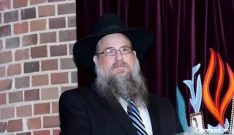
Rabbi Daniel Moscowitz, Regional Director, Chabad-Lubavitch of Illinois, dies
Reporting by JNS.org, COLive, and Chabad.org
Rabbi Daniel Moscowitz, regional director of Chabad-Lubavitch of Illinois, died in Chicago on March 4 at age 59, after a routine surgical procedure.
Rabbi Moscowitz was Chabad’s head shliach (emissary) in Illinois. He had also served as President of the Chicago Rabbinical Council (CRC), senior Rabbi at Lubavitch Chabad of Northbrook, and as an international leader of Chabad’s network of emissaries.
A native of Chicago’s North Side, Moscowitz and his younger brothers attended Bais Yaakov. He then attended Telshe Yeshiva in Chicago, followed by study at Chabad yeshivahs in Montreal and Brooklyn. He was selected to serve as a senior student at the Chabad yeshivah in Brunoy, France. After marrying Esther Rochel Aronow, the newly ordained Rabbi Moscowitz returned to Chicago. Here, he joined Chabad representative Rabbi Shlomo Zalman Hecht of Congregation Anshei Lubavitch, the Head Shliach of the state, succeeding him upon his passing.
Under Moscowitz’s leadership, Chabad of Illinois established some 37 new institutions in 21 Illinois cities, including the Tannenbaum Chabad House that serves Jewish students at Northwestern University. The Chabad community of Illinois now boasts full kindergarten- through-12th-grade educational institutions for boys and girls, as well as services for seniors and children with special needs. In 1995, Moscowitz opened a new synagogue on Chicago’s far North Side, named Bais Menachem Nusach Ari, in honor of Rabbi Menachem M. Schneerson.
Upon Moscowitz’s passing, U.S. Senator Mark Kirk tweeted: “Saddened to learn of the passing of my good friend and Illinois leader Rabbi Daniel Moscowitz. May his memory be for a blessing.”
Rabbi Yitzchok Wolf, the director of Seymour J, Abrams Cheder Lubavich Hebrew Day School, called Moscowitz “a towering figure, not only in Cheder Lubavich of Illinois, but in the global work of Chabad. He was prominent in leading 4,000 shlichim (emissaries)… in every state, and in 84 countries. Has done so much for Judaism; the roots that he planted decades ago resulted in the beautiful trees that we see now.”
Rabbi Moscowitz is survived by his wife, Mrs. Esther Rochel Moscowitz, and their children: Mrs. Sterna Sarah Newman, Rabbi Meir Shimon Moscowitz, Rabbi Yosef Shmuel Moscowitz, Rabbi Yehoshua Zelik Moscowitz, Mrs. Chana Teldon, Mrs. Rivka Sternberg, Mrs. Chava Kagen, Rabbi Leibel Moscowitz, and Mrs. Chaya Mushka Hecht.
Rabbi Moscowitz’s children live in New York, Illinois, and Canada. He also is survived by many grandchildren, by his parents, Chicago residents Rabbi Efraim and Tzivia Moscowitz, and by his brothers, Rabbi Moshe Moscowitz and Rabbi Mendel Moscowitz, both of Chicago, and Eli Moscowitz, who resides in Brussels, Belgium.
The levaya (funeral) took place at Congregation Bnai Ruven in Chicago on March 5, with interment at the Lubavitch section of the Silverman and Weiss Cemetery in Forest Park, Ill. To write directly to the family, email [email protected]. In lieu of flowers, memorials can be made to Lubavitch Chabad of Illinois, 2833 West Howard Street, Chicago, Illinois 60645, or at www.chabadillinois.com.
Other stories
-
Meet Andrew S. Hochberg, 2021 Julius Rosenwald Memorial Award recipient
Celebrate Andy Hochberg at the virtual Annual Meeting on Sept. 14
Read more -
Two local teens win national recognition
Recipients of the annual Diller Teen Tikkun Olam Awards
Read more -
Celebrating six young award winners cultivating the community
Introducing young adult award winners
Read more
The Associated Talmud Torahs of Chicago’s Annual Teachers’ Educational Conference took place Feb. 17 at the ATT. The Conference featured many workshops for all 500 ATT day school and high school teachers, from pre-nursery through 12th grade.
Pre-Nursery, Nursery, and Kindergarten teachers attended “Exploring and Applying Executive Function in the Preschool Classroom: What You Need to Know,” presented by Jacy Costa Herman, and “Does This Student Really Need Intervention?” and “Waiting for Assessment Results: What Do I Do in the Meantime?” presented by Sheryl Katz.
Teachers of Judaic studies attended workshops from the following: “ Teaching to the Edges Instead of the Middle: Seeing Students as Individuals ” and “We All Have the Answers, What Are the Questions? In a World of Information Overload, is There Still Such a Thing as Creating?” presented by Karen Robins; “ Formative and Authentic Assessments: Differentiating the Testing Process” and “Strategies for Promoting Student Success” presented by Rabbi Naphtali Hoff; “Executive Functioning and School Success” presented by Michael Gladstein; “Empowering Students to Become Independent חומש Learners” presented by Elana Katz; “The Role of the Jewish Teacher: Perspectives from HoRav Yosef Dov Soloveitchik, z”l” presented by Rabbi Reuven Ziegler; “Methods in How to Teach Neviyim and Ketuvim ” presented by Naomi Sutton and ” The Gemorah Marking System” presented by Rabbi Dov Bauman.
General studies teachers attended workshops on “ Learning Styles and their Impact on Teaching and Learning” presented by Dr. Jim Polzin“; “Teaching Students to Ask their Own Questions” presented by Matt Parrilli of the Right Question Institute; and “Construction of Knowledge” and The 4 C’s of Classroom Management: Communication, Community, Conduct and Content” presented by Dr. Rochelle Green.
There were special workshops for: special education/resource teachers and Gesher Hatorah teachers and a librarian/media specialist networking session facilitated by Debbie Feder. An administrative workshop entitled, “Promoting a Child-Centered Approach in our Schools” was presented by Karen Robins for principals, assistant principals, and program coordinators.
A special session for all teachers on “Understanding the Affordable Care Act and Your Options” was presented by Tracey Lipsig Kite of the Healthcare Initiative, a partner project administered by JCFS, with JVS, EZRA, the ARK, CJS SeniorLife, JCC, ATT and Jewish Federation of Metropolitan Chicago.
Co-chairpersons of the conference were Rabbi Avrohom Shimon Moller, Mrs. Chani Friedman, and Mrs. Elizabeth Shapiro.
Other stories
-
Meet Andrew S. Hochberg, 2021 Julius Rosenwald Memorial Award recipient
Celebrate Andy Hochberg at the virtual Annual Meeting on Sept. 14
Read more -
Two local teens win national recognition
Recipients of the annual Diller Teen Tikkun Olam Awards
Read more -
Celebrating six young award winners cultivating the community
Introducing young adult award winners
Read more

JUF News is excited to announce ELI Talks: Chicago, an exclusive production of the “Jewish Ted Talks,” on Thursday March 27, 2014 at 6:30 pm.
ELI Talks are compelling live presentations that explore inspired Jewish ideas about religious engagement (E), Jewish literacy (L), and identity (I).
The following is the list of speakers and topics:*
· Aliza Kline: Wisdom 1.0
· Rabbi Danya Ruttenberg: Divine Love: How Parents Can Help Us Rethink Judaism
· Dr. Hal Lewis: It Ain’t The Heat, It’s The Humility; Jewish Leadership for the 21st Century
· Rabbi Dan Bronstein: Taking Jewish Humor Seriously
· Rabbi Shai Held: Compassion and the Heart of Jewish Spirituality
A private reception will take place prior to the Talks, which will be recorded at WTTW, Chicago. To learn more about ELI Talks and watch past presentations, please visit www.ELITalks.com.
To reserve your place as part of the live studio audience or for more information, visit www.juf.org/ELITalks.
* Speakers and topics subject to change without notice
Other stories
-
Meet Andrew S. Hochberg, 2021 Julius Rosenwald Memorial Award recipient
Celebrate Andy Hochberg at the virtual Annual Meeting on Sept. 14
Read more -
Two local teens win national recognition
Recipients of the annual Diller Teen Tikkun Olam Awards
Read more -
Celebrating six young award winners cultivating the community
Introducing young adult award winners
Read more