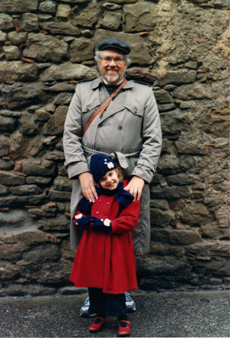
“Well,” my father said that Friday night in August, “it’s all over.”
He was calling to tell me my mother had just died. Ignatz, as she’d named her brain tumor, had finally taken her from us. We’d known this day was coming all year, but I’d always imagined it going differently—less blunt and simple, maybe. We were resigned that evening; we didn’t cry until much later.
When I was little, I thought my parents were a perfect matched set for my needs. My mom would talk me through long tearful jags and ask how my novel writing was going. My dad would help with homework and talk about ideas with me like I was a grownup. This kind of oversimplification breaks down with any kind of consideration, but I held onto it for a very long time.
My dad was my mom’s primary caregiver when she was sick. He did everything for her, as “everything” got harder and harder and harder. This isn’t the essay about the kind of selflessness and love that takes, but I want to recognize and honor it.
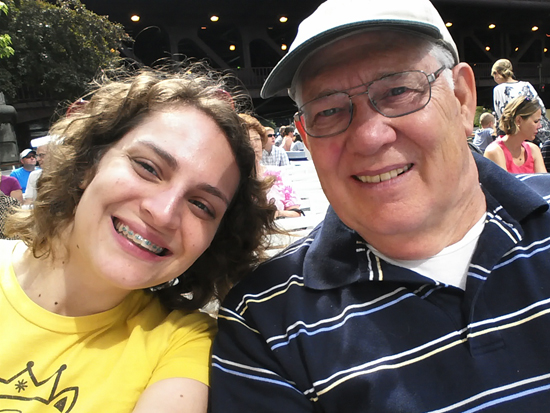
On a boat tour last summer with dad.
Both of us spent most of our energies on keeping Mom as happy and comfortable as she could be, which left very little for anything else. After my mom died, though, and after we’d cleaned out closets and put away jewelry and cleared all the cancer accessories, my dad and I had to find a new way to relate to each other. We didn’t share this big task anymore, unless you counted the ongoing work of grieving and getting on with our lives. We had to figure out a new way to be.
The part of me that pigeonholed my dad as cerebral and little else forgot some of the best parts of my childhood. Dad making me breakfast—Texas toast, hash browns, dollar pancakes—over stories of his days as a short-order cook. Dad helping me walk on walls when I visited his office. Dad singing hilarious and embarrassing dad-lyrics songs, parodying pop and opera. Most of us think of our parents in the context of our families, but every Friday that I wasn’t in school, I tagged along to “lunch with the guys,” my dad’s friends from work. It’s a gift to see your parents as people, in their element. You can meet this whole person that somehow you’ve overlooked at home.
My mom was vibrant about her emotions: I can’t think of a single thing she was truly shy about. Dad has always been more low-key, but now I see him opening up more. We have actual conversations about feelings sometimes, when we’re not watching movies together. But his style is action, and always has been. When he talks to you about a book he’s reading, when he makes you your favorite dinner, when he emails good links throughout the day, every day, that’s him saying I love you.
We both lean on each other. We talk on the phone—not enough, you always feel, but for nearly an hour at a stretch when we do. I free him from dog-walking whenever I’m back in Ohio. My dad isn’t Jewish, and he’ll grumble that even after 30-plus years of attending services, he still can’t remember all the words for the prayers. When I’m home, we’ll light the candles and drink the wine and break the bread. When I sing, he sings along. When he needed the Mourner’s Kaddish, we said it together.
For my mother’s stone-setting last summer, he put together a beautiful service. Everyone in my family came back to my hometown, two hours from anywhere. I’d spent a long time bearing up and helping out, but one evening, as we walked around uptown, whatever had held up my heart for so long gave out. I started crying, like I hadn’t at Mom’s funeral, like I hadn’t in the year since she’d died.
My dad found me sitting on the grass near the library, where I’d fled my siblings and nephews. “What’s the matter?” he asked, and I shook my head.
“Will you please sit down with me?” I said, and my dad settled in to hold me until I was done.
Other stories
-
Meet Andrew S. Hochberg, 2021 Julius Rosenwald Memorial Award recipient
Celebrate Andy Hochberg at the virtual Annual Meeting on Sept. 14
Read more -
Two local teens win national recognition
Recipients of the annual Diller Teen Tikkun Olam Awards
Read more -

Celebrating six young award winners cultivating the community
Introducing young adult award winners
Read more
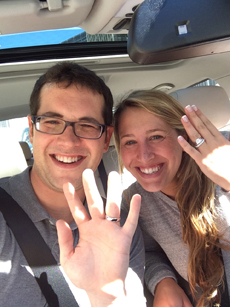
I am so happy, I cannot begin to describe how in words. Jewish weddings are indeed a wondrous occasion, filled with lots of joy, happiness, and really good food like everyone says. And for a fact, I would not have attended my own wedding if the food did not meet our collective standards; both my wife Ashley and I are well-known Chicago foodies.
Now that I have been through my own Jewish wedding, I thought I’d share just a few select words of wisdom and guidance to anyone that has not experienced a Jewish wedding, or is about to experience one of their own for the first time.
Tip: When invited to a Jewish wedding, get excited!
Next to a world championship, a Jewish wedding is one of the most hyped-up events of a Jewish person’s life, and rightfully so. Did you know that tradition dictates the bride and groom trump the bar or bat mitzvah on the day of their aufruf (celebration of the bride and groom on the Shabbat before the wedding)? This holy union is so important and so holy, it literally steals the limelight from anything else going on at that time. It’s not meant to be for selfish reasons, only to recognize and validate God and the spiritual union of two souls into one. As you will see in the beautiful wedding ceremony, the couple establishes a house of their own and joins their souls together, linking themselves to thousands of years of tradition. Pretty big deal for anyone who’s witnessing or part of it. As an observer, you need not worry about doing anything except smile, say “mazel tov,” and celebrate!
Tip: Thoughtfulness goes a long way.
Yes, the couple will probably get a chance to hear you thank them in person for being invited to the wedding—if they ever get a moment from the hullabaloo. Even so, a thoughtful written note in your wedding card will mean a lot, and will be cherished long after the wedding has come and gone. Also, be sure to find your way to the couple at some point during the event. They may make their rounds, but keep in mind that they are overwhelmed with joy and happiness. Dance with them during the horah (celebratory Jewish dance), toast them when they walk by, and sign the guestbook.
Tip: Compliment and thank parents from both sides.
You may or may not know that Jewish weddings are typically hosted by the parents of the bride, while traditionally the parents of the groom host the brunch the morning after. Lately, Jewish weddings have been accompanied by a rehearsal dinner, typically hosted by the parents of the groom, where they are able to welcome family and out-of-town guests and share in the wedding celebration. They choose the place, food, entertainment, and speeches. It’s now a very important part of the wedding experience, even though not everyone invited gets to attend. But whether or not you are invited to the rehearsal dinner, make sure to pay homage to the groom’s family. They will appreciate it greatly and will add to their already overflowing nachas (pride and joy).
Tip: Celebrate and par-tay!
This is the most important tip I can give you. For the wedding couple and family, it’s tough to deal with all the pressure that comes with planning and organizing the wedding, but once the ceremony is done, it’s time to let off that steam! For the wedding attendees, it is a mitzvah (good deed) to partake in the celebration of a Jewish wedding. If you’re not a drinker, don’t worry—you can get buzzed on all the sugar from the sweet table or dance until you’re dizzy. Enjoy the ceremony, give the bride lots of attention and compliments during the reception, and have a good time. It’s mandatory.
And grooms—don’t forget to kiss the bride, and don’t lose the ring!
To married life! L’chaim!
Ari Moffic Silver, who lives in Chicago, is a Jewish educator, bar/bat mitzvah tutor, and a freelance writer for Oy!Chicago and The Jewish Daily Forward.
I’ve done nothing for 30 years in a row. That’s because I’m only 26 and a half years old. So this past year when my parents celebrated their 30th wedding anniversary, this called for more than just a simple, yet always thoughtful, anniversary card. Hence, I personally wrote them a thoughtful, yet very heartfelt, anniversary letter because I am an amazing son. I had intended to write the letter saying how much I loved them and how great of parents they are. It is the truth after all, but it turned out to be much more about how I love the family they have created and how incredibly fortunate I am to be the loving, caring person I am based on my upbringing. Not to mention that in my young adult life, I’m truly closer to them every day. Yes, I’m using JUF News to publicly display how much I love and care about my family.
The older I get, the more I realize just how perfect my parents are. For each other. For me. For our family. A lot of people say that a marriage takes work, and to that, my mother always says that she’s still waiting for the work. I love that. My parents are such an anomaly in all the best ways possible. I’m amazed at how they never seem to have any real problems, especially considering how much my Dad snores. They’ve created something remarkable with us. Be around us for ten minutes and see how we all understand and get each other. Even though it looks like we’re yelling, we’re just loud talkers.
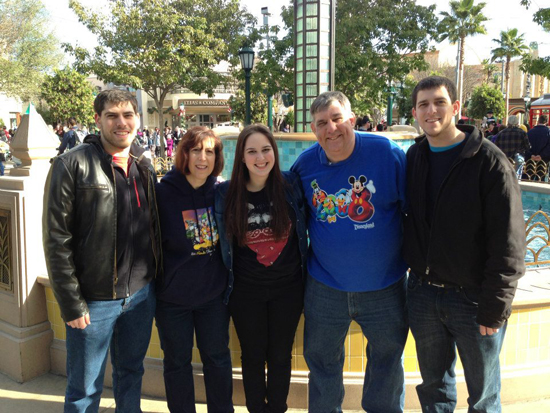
From left: Me, Mom (Sandy), Sister (Trudy), Dad (Robb), Brother (Michael). My S.M.A.R.T. Family. Get it?
I always like to say that my parents raised me perfectly. My siblings will have to account for themselves, but I think they’re pretty good too. I love who I am and I often cite the reason I am so caring and true (other people’s words, not mine) is that I learned it all from my parents. I’ve never, for a moment, had to question their love for me. I can see in my young years of adulthood how much closer I am with the both of them and my siblings. It’s inconceivable I could ever be any closer to my family than I am now, yet somehow, every single day that ends up being the case.
I moved out of my parents’ house a little over a year and a half ago, but as much as I love being out on my own, I miss them every day. Don’t get me wrong: I don’t want to be roommates with my parents ever again. However, the relationship I have with my parents is one that could only be rivaled by my younger brother and sister. Luckily, I’ll always have more years on them and have the peace of mind that I was, in fact, the favorite child for a little over three years. But honestly, if there’s one thing that can get me to any event ever, it’s that my brother and sister will be there.
But it’s in the way my parents care. The way they both show their love that is an ideal I hold close to me. I often brag about the consistency in which I call my mom, legitimately just to say hello. Or how much my dad cares about his kids more than most people care about virtually anything. Yes, I brag about my parents. Maybe I’m brainwashed. Or maybe I’m just—family-washed. Heh heh. I’m so cute.
The passion my parents show for my family and for the love that holds it together is beautiful. I know that any one of us would literally drop everything for one another. I’ve seen it happen. For my siblings especially, I’d drop my entire life to help them if they needed it. It’s a level of appreciation for one another that doesn’t just happen. That’s not simply built overnight. It’s something that we have created over decades. Over three decades in fact. And what I truly love is that I have learned to not only show this compassion within our family but outside of it too.
So I want to thank my mom, my dad, my brother and my sister for loving me so much, for loving each other so much, for being exactly who all of you are and for making me exactly who I am. Now enjoy another picture of my family as we enjoy being in Disneyland, because most of our family vacations revolve around us going to Disney theme parks, because we are all adults and do adult things.
Adam Daniel Miller is a writer and Oy!Chicago blogger living in Chicago. Follow him on Twitter @TheMindOfADM.
Other stories
-
Meet Andrew S. Hochberg, 2021 Julius Rosenwald Memorial Award recipient
Celebrate Andy Hochberg at the virtual Annual Meeting on Sept. 14
Read more -
Two local teens win national recognition
Recipients of the annual Diller Teen Tikkun Olam Awards
Read more -
Celebrating six young award winners cultivating the community
Introducing young adult award winners
Read more
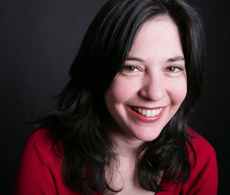
“Do you want me to make you a sandwich?” I heard my boyfriend say calmly to his young son, as if there weren’t an adult woman hiding a foot away in his tiny Israeli bathroom.
It was early in the morning and Yoav’s children had shown up unexpectedly on their way to school. Hearing the key in the door, Yoav called out: “Quick! The children are here!” and without even thinking, I ran to hide in the only place in his small apartment where I would be out of sight. That’s because right from the start, Yoav had made it clear to me that unless we were very serious, his children were not to know about me.
While the bathroom incident only happened once, there were countless other reminders during our short but intense relationship that his life as a family man and his life with me were separate and distinct universes. This meant I had to be extra vigilant not to forget any of my things at his house, lest his children stumble upon them. And while we spent romantic weekends together with much intimacy and laughter, when Yoav had his kids — it was often since he had joint custody — he was off limits to me, even to talk on the phone.
That, however, was the least of our problems.
“Do you want more children?” I had asked on our very first date.
“No,” he said vehemently. Perhaps sensing my distress, he softened it with, “but if I loved someone, maybe.”
I was 39 and desperately wanted to be a mother, which should have been reason enough to say goodbye to Yoav after the first date. Instead, I believed that if he really loved me, he would change his mind.
Looking back, I’m surprised we even lasted three months.
“What are you doing with me?” he even asked me once. “I can’t give you a child and I’m not going to change my mind.”
Two months after parting, we both fulfilled our dreams, almost as if we had been standing in each other’s way. His was to take a romantic trip for one to Europe. Mine was to become a mother. At the age of 40, I decided I couldn’t wait any longer for a man to give me a child, and just short of a year after Yoav and I ended, I gave birth on my own to a son.
But for a long time I was still angry with Yoav. I felt betrayed. I felt like he was selfish for not giving me a child.
It wasn’t until I drove from Jerusalem to the Galilee one warm winter day to visit my relatives that I suddenly remembered the words of Rebbe Nachman of Breslov. With the mountains rising above me like a promise and the baby tucked safely in his car seat, I understood for the first time what “To be whole, you first must be broken” really meant.
Someone had shared that sentiment with me soon after my divorce 10 years earlier. It had comforted me then to know that because of my pain, I’d be better in the long run. It gave me strength to search for someone new.
But driving that day in the Galilee a decade later, something clicked. Maybe it took becoming a mother and feeling at peace about it to finally recognize that a person doesn’t suddenly become whole, that in order to heal, we must glue our broken pieces back together, one by one.
Yoav, I realized, broke up with me because he cared about me, not because he didn’t. But he was also broken. So were a host of other men who had crossed my path over years and years of dating. And I was broken, too. Why else would I choose to be with so many men who could give me so little and who inevitably disappointed me?
Not long afterward I moved back to Chicago and started dating a handsome and slender man I had met at a Passover seder when I was pregnant. That he was also the father of the same number of children as Yoav is, I like to think, a sort of tikkun, a corrective.
Soon after we became a couple, he introduced me to his children as his “girlfriend.” Being with him is like one of Oprah’s “aha” moments: After years and years of knocking on the wrong doors, I have finally found the right door, answered by a man who could let me in.
Five months into this relationship with this nurturing and kind man, I still feel like a doe taking its first tentative steps. Will he bolt like all the others? Will I run away first, like I often have before?
I see now that finding the “right” person is about being open to someone who can give you what you need. It’s about saying yes to the person who makes you feel good and who gives you the strength to start, slowly but surely, mending the brokenness to finally feel whole.
Abigail Pickus is a writer and editor living in Chicago.
Other stories
-
Meet Andrew S. Hochberg, 2021 Julius Rosenwald Memorial Award recipient
Celebrate Andy Hochberg at the virtual Annual Meeting on Sept. 14
Read more -
Two local teens win national recognition
Recipients of the annual Diller Teen Tikkun Olam Awards
Read more -
Celebrating six young award winners cultivating the community
Introducing young adult award winners
Read more
Twin brothers Alex and Nik Turik are sponsoring this year’s Shabbaton— Shabbat weekend retreat— for JUF’s Russian Jewish Division (RJD). The Shabbaton will be held from March 7-9, at the Hilton Indian Lake Resort in Bloomingdale, Ill.
This year’s event, which might not have gone forward had the Turik brothers not stepped up, will be the 10th year Chicago’s Russian-speaking Jewish young adult community has had a weekend of its own. More than 100 participants from the U.S. and Canada will connect with those of a similar background, celebrate their identity, and discuss their role in the Jewish world. Speakers will include Refuseniks and those active in the Soviet Jewry movement. For many, this will be their first Shabbaton— for others, their first Shabbat ever. Over the years, dozens of couples have met at the event, and now they bring their children.
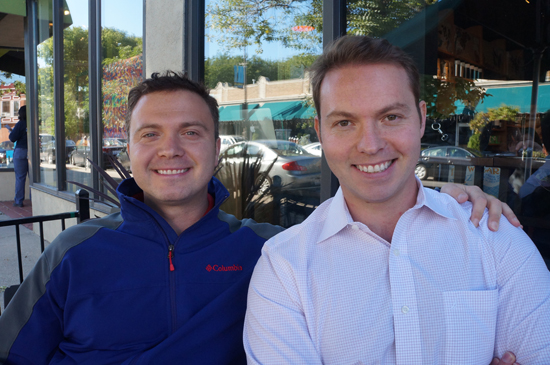
Twins Alex (left) and Nik Turik are sponsoring a Shabbaton for JUF’s Russian Jewish Division in March.
The Turik twins, now 35, were born in St. Petersburg, Russia, then moved to Israel and served in the Israel Defense Forces. In their early 20s, they came to America.
Their involvement in Chicago’s Jewish community began with a free membership to the JCC provided to new immigrants. While attending DePaul University, they made friends through Hillel, and attended a JUF Walk with Israel. Philanthropist Harold Eisenberg mentored them, took them to JUF events, and “eventually became a father figure,” Alex said. “He showed us that [to be] Jewish in America is to be part of community. He helped us with everything.”
The brothers also helped form a community of their own, “organizing dinners with business leaders,” Alex said. “Then we bumped into JUF/Jewish Federation Board Member Harvey Barnett (a member of the JUF/JF Board of Directors) and invited him to talk. He came on Purim [and] told us about his involvement with Soviet Jewry. We read the Megillah (Scroll of Esther) together. It was moving for all of us; he was moved to see the young Russian Jewish people interested in Judaism and Jewish community.”
Alex also mentioned several and professional lay leaders as “people who inspired us and helped us professionally”: Wendy Berger Shapiro, vice chairman of the JUF/JF Board of Directors; David Schwalb, president of Schwalb Realty Group and committee member of JUF’s Real Estate Division; Charles & Harry Huzenis, principals of JRG Capital Partners, a corporate partner of JUF; Paula Kaplan-Berger, the principal of Berger Law, P.C. and member of the Hillels of Illinois Governing Commission; Peter Friedman, senior planning advisor for JUF; and Michelle Maer, director of Giving for Solomon Schechter Day School.
“These leaders showed us that it is our responsibility to help others, immigrants or those less fortunate, and that it is really a Jewish responsibility,” Alex said. The brothers became active in RJD; Alex now sits on its Advisory Board.
“Sometimes people get lost—Russian young people,” Nik said. Through RJD, he said, “it is easy [for them to] connect to young people of Russian background right away.”
“I think the Russians came without any sense of a community,” Alex said. “To realize we can be part of something larger is incredible. We began to realize RJD is keeping us together. I have been involved for a very long time, to see us grow.”
They are quick to emphasize that RJD is for all ages, however. “I volunteer with World War II veterans and Holocaust survivors, people who often get forgotten… I see how they are touched by our attention. They did a huge sacrifice— not only in WWII, but to stay Jewish!” Alex said. “What they had to endure, it is really moving. Every time I visit their homes, I think of my own grandparents, and I am moved to tears, and have the feeling of awe.”
With their real estate company now in its fifth year, they felt it was their turn to give of themselves. As Alex put it, “When you realize how hard it is to have a new beginning, you appreciate help. Now, it is the point to give back.” For the brothers, involvement in RJD “is part of being Jewish, part of belonging to the Jewish community. It means to help less fortunate, people who need help, or to sponsor a Shabbaton like this. We are working to help RJD move, grow, and expand,” Alex said. “To make people involved with us, and as a result, build a larger community as a whole, meaning JUF.”
“People think that charity… is what old people to do, with lots of money,” Alex said, “I think it can be done— it should be done— much earlier. It can be with your time, and it can be done with what little you have. Just get involved and give something of yourself.”
“Your life becomes much richer when you give,” Nik agreed, “in all kinds of ways.”
To learn more about the Russian Jewish Division or Russian Shabbaton, contact Evgenia Kovelman, RJD’s director, at www.juf.org/RJD.
Other stories
-
Meet Andrew S. Hochberg, 2021 Julius Rosenwald Memorial Award recipient
Celebrate Andy Hochberg at the virtual Annual Meeting on Sept. 14
Read more -
Two local teens win national recognition
Recipients of the annual Diller Teen Tikkun Olam Awards
Read more -
Celebrating six young award winners cultivating the community
Introducing young adult award winners
Read more
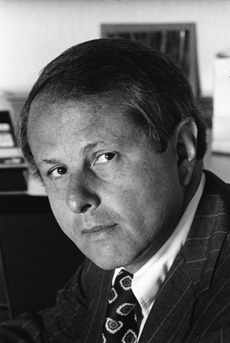
Michael M. Mitchel, former JUF-JF Board member and Vice President, passed away Jan. 21. Mitchel served on the JUF Board of Directors from 1979-88. Actively engaged in JUF’s Annual Campaign, he achieved the status of Golden Giver, for his 50 or more consecutive years of supporting JUF.
“He was deeply committed to the Jewish community,” said JUF Chairman David T. Brown. “Mike was a leader who cared passionately about our Chicago Jewish community and will be missed.”
As chair of JUF’s Social Welfare Committee, he spearheaded the creation of Project EZRA to help those living at or below the poverty line. Mitchel also chaired JUF’s Government Affairs Committee, and served on the Board’s Executive Committee, as well as Federation’s Finance and Medical Care committees.
Mitchel was profoundly dedicated to the issue of healthcare. He was a sought-after speaker on healthcare, and even served on the Senate’s Select Panel on Health Cost Containment in from 1983-84.
He was a former Chairman, and Life Member, of Mount Sinai Hospital Medical Center Board of Directors, and past president of the Medical Center itself. And he was the first non-hospital executive to serve as Chair of the Illinois Hospital and Health System Association, which named him their Trustee of the Year in 1983.
Mitchel served as Vice President of Council for Jewish Elderly, now CJE SeniorLife, where he chaired the campaign to build the Marcella & Jacob Lieberman Long-Term Care Residence. He was a member of JUF’s Fund for Innovation in Health, and was an Emeritus Trustee of the Michael Reese Health Trust.
Mitchel earned his bachelor’s degree from Northwestern University in 1951 and— just two years later— his JD degree at the same institution. He was the owner of Economy Folding Box Corp, which manufactured cartons, and served as co-chairman of JUF’s Paper and Paper Packaging Division. Mitchel, a member of the Standard and Birchwood Clubs, also was chairman of ELTSAM Corp, an investment firm.
Mitchel is survived by Carol (nee Bailey), his wife 59 years, and his children— Marci (Scott) Levenfeld, Steve (Nancy Marks) Mitchel, and Leslie (Rob) Bond. He also will be missed by his grandchildren, Andrew (Melissa) and Elliot Greenberg, Sydney and Eli Levenfeld, Alyssa and Olivia Mitchel, and Zoey, Asher and Avigail Bond. He also leaves behind his sister and brother-in-law of Diane and Ira Gilber, many nieces, nephews and friends.
The funeral was held on Friday, Jan. 24, at Temple Jeremiah in Northfield, with interment at Westlawn Cemetery & Mausoleum in Norridge. Arrangements were made by Chicago Jewish Funerals— Skokie Chapel.
In lieu of flowers, memorials may be made to Mt. Sinai Hospital, Office of Development, F-125, California Ave. at 15th St, Chicago, IL 60608 or to the University of Chicago, Hematology and Oncology Departments, 5841 S. Maryland Ave., Chicago, IL 60637.
Other stories
-
Meet Andrew S. Hochberg, 2021 Julius Rosenwald Memorial Award recipient
Celebrate Andy Hochberg at the virtual Annual Meeting on Sept. 14
Read more -
Two local teens win national recognition
Recipients of the annual Diller Teen Tikkun Olam Awards
Read more -
Celebrating six young award winners cultivating the community
Introducing young adult award winners
Read more
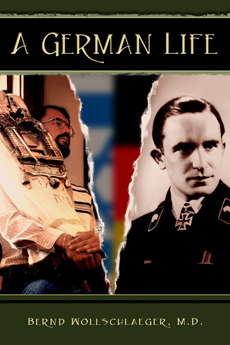
His father was a Nazi. He is a Jew.
This paradox summarizes the life story of Dr. Bernd Wollschlaeger, today a family physician in the Miami area. He will relate his story on the morning of March 2 at West Suburban Temple Har Zion in River Forest. Wollschlaeger has also committed his story to print, in his book, A German Life: Against All Odds, Change is Possible.
Wollschlaeger was born in Bavaria in 1958, more than a decade after WWII had ended. His own awareness of the Holocaust grew slowly. His father, Arthur, a tank commander in Hitler’s army, denied it. His school omitted it. Only his mother was willing to admit there was a “dark side” to the war, he said.
Wollschlaeger learned more as a preteen, from a landlady whose husband, a German officer like his father, was executed for participating in the Operation Valkyrie assassination attempt on Hitler.
Then, in 1972, the national dam of silence burst. Israeli athletes were killed by terrorists at the Munich Olympics. Once again, the world saw “the murder of Jews on German soil,” Wollschlaeger said. Germany’s Chancellor, Willy Brant, used the massacre as a “catalyst” for his nation to “radically discuss everything, and deal with the past,” Wollschlaeger said.
Finally, Wollschlaeger confronted his father, who at first continued his denials, then admitted: “I couldn’t stop it, and it needed to be done.” His father had “condoned the murder of millions.” While he never worked in a death camp, Arthur was a leader in the Wehrmacht, did attack civilians, and did murder Jews. He had served under Heinz Guderian (the man who developed the “blitzkrieg”), had been photographed with Heinrich Himmler (the head of the SS), and had been decorated with the Knight’s Cross by Hitler himself.
“My father,” Wollschlaeger concluded, “was not an innocent man.” Moreover, despite his father’s insistence that he was doing his job and being a good soldier, Wollschlaeger realized, Arthur also knew that he had a choice. And chose to follow, not resist, the Nazis. “This shocked and disgusted me,” Wollschlaeger remembers.
His desire to learn more about the Jews and their suffering in the Holocaust led him on a lifelong journey. It took him to Israel in 1978, where he found Jews who did not hate Germans. It took him to the Jewish community in Germany, where he learned about Judaism and the Jewish community. It took him to Switzerland for his bris (circumcision), to France for his mikvah (ritual bath) immersion. And in 1986, at age 28, he became a Jew, and received his medical degree.
Next, his journey took him back to Israel. Wollschlaeger joined a kibbutz, worked in a Tel Aviv hospital—and served in the Israel Defense Forces as a medic in the West Bank during the first intifada. He was also in Israel during the first Gulf War.
By 1991, he was 33 and had married an American-Israeli woman and had two children. Then she decided to move the family to Florida. Later, he and his wife divorced; he is now re-married and has another child.
It was his children who helped him deal with his past, according to Wollschlaeger. “When my children started asking questions about my parents, I decided to break the wall of silence and tell them the truth about me,” he said. “I needed to express what compelled me to dramatically change my life. I finally had to explore the relationship with my father. Our unresolved conflict and his denial motivated me to search for answers, and I found them within me and my acquired faith.”
It was his youngest, a teen at the time, who encouraged Wollschlaeger to write his 2007 memoir. He also spoke at his children’s school; a teacher there knew a journalist, which is how Wollschlaeger landed on the front page of The Miami Herald. This led to speaking engagements locally, then nationally, then overseas— in England, Switzerland, South Africa and Australia.
Wollschlaeger returns to Israel annually, sometimes with his children; his daughter is studying in Israel now. He also has served on the regional boards of the Anti-Defamation League and the American Jewish Committee.
He returned to Germany as well, 20 years after he left. Arthur had died six month after he left, having disowned him due to his conversion. He did reconcile with his mother, who later developed Alzheimer’s disease.
And he has discovered that, on his maternal side, his family fled to France from the Inquisition. He had unwittingly reclaimed his own Jewish heritage.
Wollschlaeger changed his citizenship, his faith, and his life, but through it all kept his name. He wanted, he said, to “hang on to something to remind me of my past. I have changed how I think and feel and belong in the world. But I’m the same person. It’s still me.”
Other stories
-
Meet Andrew S. Hochberg, 2021 Julius Rosenwald Memorial Award recipient
Celebrate Andy Hochberg at the virtual Annual Meeting on Sept. 14
Read more -
Two local teens win national recognition
Recipients of the annual Diller Teen Tikkun Olam Awards
Read more -
Celebrating six young award winners cultivating the community
Introducing young adult award winners
Read more
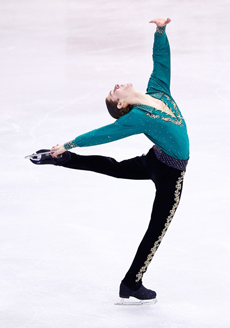
Nineteen-year-old Highland Park native Jason Brown is an Olympian. Brown earned a spot with a second-place finish at the U.S. Figure Skating Championships in Boston on Jan. 12. His “Riverdance” program won the crowd over, dazzled the judges, and has garnered more than 3.4 million views on YouTube.
Although he’s been skating since he was about 4 years old, Brown, with help from his parents, Steve and Marla, also set aside time growing up for connecting with Judaism and the Jewish community. He attended Hebrew and religious school at Congregation Solel in Highland Park through his Confirmation year and went to Jewish summer camp at Olin Sang Ruby Union Institute (OSRUI) for five summers.
Brown spoke with JUF News about his viral success, balancing his commitment to Judaism with his skating ambitions, and what he’s looking forward to at the Sochi games this month.
JUF News: Now that you’ve had some time for it to sink in, what has been your feeling and reaction so far to all this excitement?
Jason Brown: I went to Nationals really well-trained and ready to put out two clean skates and that’s what I’ve been working so hard this whole year to do, so it was not surprising to me that I was able to do it. What I think has been out of this world is the reaction afterwards … the magnitude of what happened I did not ever expect. I cannot express how fortunate, and lucky and blessed I feel. I can’t even express the amount of people that have reached out to me, I can’t even put to words – I really can’t.
Have you received any funny or crazy reactions since you “went viral”?
So many people are Tweeting at me or writing about me that they’re not into skating and I got their attention, and I think that’s something that is a skater’s dream because you want to expand the sport, you want non-skating fans to become skating fans and that definitely took me by surprise and means so much to me. The Riverdance cast wrote me, which is just the most insane thing in my life. They’re such inspirations to me … Today I got a Tweet from Bill Whelan who composed the music of Riverdance. I don’t even know how to respond. It’s so beyond anything I ever thought would happen. It’s beyond even if I skated my best, it’s not what I thought would happen.
A lot of people have praised you for being a great performer. Is that what you think is really drawing people in and causing this reaction?
For me, I love to perform and I love to perform for the audience, to the audience, at the audience. I think that’s something I’ve always loved to do since I was little. I think because I don’t have the biggest technical marks, I work so extremely hard in every other aspect in skating and I love it so much … Nothing makes me happier than to know that the audience enjoyed it and had a good time watching it.
When did you know that skating was more than just an activity for you?
I went through a two-year period where I told [his coach, Kori Ade] I didn’t want to compete again; I got so nervous being in front of a crowd. My coach, I love her to death – she’s literally my second mom – somehow turned me around mentally and showed me the joy that competing and performing brings. From there she started to take me to different training sites all over the country and that was really inspiring … It was about 2006 in those Olympics when I first was like, “this could be something I really want to do.” When I was 11, I won the juvenile title and that is when I started to believe, “let’s see where I’ll go,” that’s when I became a bit more serious. As the years went on, that drive to train and become more dedicated kept growing.
What Jewish experiences do you feel have influenced you?
I went to OSRUI for five years and I think their support through it all—they allowed me to go for three weeks or two weeks [of a four-week session] and leave, they even let me come back for the last couple of days. I wasn’t able to take that much time off [of skating]. Just the family atmosphere … I have so many memories at that camp. Growing up, I went to Hebrew school until I was a sophomore and I read Torah at confirmation. Being part of that community and having their support means so much to me … The Jewish community and that feeling is something that I can’t be more grateful for.
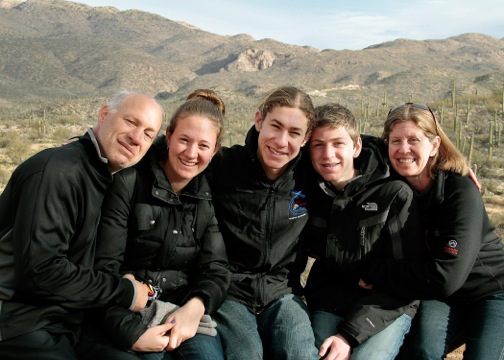
The Brown family: (left to right) Steve, Jordan, Jason, Dylan and Marla.
What was it like trying to balance skating with a commitment to Judaism?
There are times when you have to start to give up things because you can’t do it all. I think what was so great was having the balance made me so much more of a well-rounded person. I was able to have a life outside of the rink. Skating never defined who I was, and it still doesn’t to this day and I can’t thank my parents enough for that. I wasn’t always forced to be at the rink, and having that balance made me a more balanced person and athlete.
What is your mindset heading into the Olympics?
I’m just taking it like I’d approach any competition. I’m going to do the best that I can and just train really hard and take it day by day. That was my mentality for Nationals and that’s a mentality I’m going to keep for the Olympics. That’s where [my and Kori’s] focus is – training very consistently and keeping it very schedule-oriented, just do your job every single day.
Any athletes you’re looking forward to meeting?
I think it’s going to be so incredible to be around so many athletes of so many different sports. People like Shaun White, to actually see them in person, or Bode Miller. I think that’s going to be insane. It’s crazy that I’ll be there when the U.S. hockey team is playing and the speed skaters – Shani Davis – those are the type of experiences that I’m so excited to have because I’ve seen them on TV for so many years and it’s like, wait, I’m going to be there? It doesn’t register yet. I don’t know when it will, if it ever will.
You have such a big support network of family and friends who saw you perform at Nationals and have reached out to you since. What has that meant to you?
There’s nothing more important to me than family and family friends, the people you surround yourself with. I couldn’t have asked for a better support system. They’ve all been there at my lowest lows; they’ve been there at the moment with the highest highs and they’ve never stopped believing in me … Sometimes it’s hard as an athlete; in any sport there are times when you fail, there are times when you don’t succeed. I know there are some athletes if you don’t succeed your family and friends say that wasn’t good enough. I never ever get that. It’s learn from it, grow from it and keep going. They’ve never stopped being proud of me and it means the world to me.
Other stories
-
Meet Andrew S. Hochberg, 2021 Julius Rosenwald Memorial Award recipient
Celebrate Andy Hochberg at the virtual Annual Meeting on Sept. 14
Read more -
Two local teens win national recognition
Recipients of the annual Diller Teen Tikkun Olam Awards
Read more -
Celebrating six young award winners cultivating the community
Introducing young adult award winners
Read more

Metro Chicago Hillel (MCH) serves eight campuses in Chicago. Metro enriches and enhances the Jewish student experience on each of these campuses and across the campuses. As Metro staff and students have worked to stitch these eight individual Hillels into one cohesive community, the richest outcomes have been the relationships our students are building with each other.
Metro’s first task was to find a regular forum to connect all of our students. Once a month, we hold a cross-campus Shabbat at the Levine Hillel Center at UIC. Students file in, shmooze, and as the building fills, the energy of the evening begins to activate. Many students engage in worship, singing, discussion and learning with each other, while others take a free moment before dinner to reconnect with friends and shake off the week.
Students are taking notice, and the value of connection to their fellow Jews from beyond their campus is clear. “Even with a strong on-campus community, I feel that some college groups can feel insular and limited to their own campus.” said Amitai Loew, a student leader at UIC. “The cross-campus aspect of Metro helps break down those barriers and connects these already strong communities that might otherwise never mix. Including students from across the metro campuses in our Shabbat celebrations has brought excitement and new energy to our Hillel community.”
Chaya Moskovits, a MCH engagement intern, shares that, “The MCH structure allows events to be open to all students, whether they go to a science-focused school or an arts school and helps create profound relationships that would not normally be achieved in the typical Hillel setting.”
But it doesn’t end with Shabbat. MCH provides opportunities for service work and immersion trips. “On a Hurricane Sandy Relief trip to NYC, arranged through JUF’s TOV Volunteer Network and the relief organization Nechama, Chicago students from universities and community colleges worked together to help rebuild the lives of Sandy victims. Without these opportunities, there is no one way for me, as a Jewish student, to meet the large and diverse groups of Jewish students in the Chicagoland area.”
Connecting students with each other can also help broaden their connection to other Jewish institutions. Students at Columbia College Chicago do not have an active AEPi chapter. Before Metro, there was little that could be done, and a Columbia student who wished to join the Jewish fraternity was simply out of luck. Columbia student Danny Lipsky told us, “I owe a lot to MCH because if it weren’t for them I wouldn’t be part of a fraternity or have the friends I made through MCH cross-campus programs. I also wouldn’t have as strong of a connection to Judaism as I do now. Coming from Michigan, I didn’t think it would be possible to stay involved in the Jewish community and I certainly didn’t think I would be able to join a fraternity, but thanks to Hillel I was able to make the connections that made these things possible and it has done more for me than I could have possibly imagined.”
These are only a few examples of how Metro can help enrich the lives of Jewish students and inspire them to make an enduring commitment to the Jewish people, Israel, and the world around them. Our staff, lay leaders, and most importantly our students are working every day to weave and fashion a vibrant and enduring community of Jewish college students in Chicago. n
Metro Chicago Hillel is part of the department of Campus Affairs and Student Engagement at Jewish Federation of Metropolitan Chicago/Jewish United Fund and a partner of Hillel: The Foundation for Jewish Campus Life.
Nicholas Liebman is senior Jewish educator at Metro Chicago Hillel.
Other stories
-
Local campus administrators convene on hate speech, bias
JUF and ADL brought together 17 student safety, diversity and inclusion and student affairs administrators and Hillel representatives from various Illinois campuses to discusses issues of hate speech and bias.
Read more -
Engaging students about Israel on campus
Too often we hear about difficulties facing Jewish college students on Illinois campus, but to focus solely on the politics gives only one piece of the complex narrative that is Jewish life on campus.
Read more -
Hillel International launches fellowship initiative to train young Jewish professionals
The Springboard Fellowship will train cohorts of young Jewish professionals in highly-valued skillsets and place them at local Hillel campuses for two years.
Read more
The Obama administration named a special envoy to the Holocaust survivor community.
Aviva Sufian, a staff member at the Health Department’s Administration for Community Living, will be the special envoy for U.S. Holocaust survivor services, a White House announcement said Friday.
“Her work as Special Envoy will focus on those survivors currently living in poverty, as well as those who may not be receiving services for which they are currently eligible,” according to the statement.
The appointment arises from a pledge last month by Vice President Joe Biden to address the needs of aging survivors and as Congress considers legislation for that purpose.
It stems in part from a growing consensus among experts that Holocaust survivors should age in place and avoid the institutional care that health providers and government services generally recommend for the infirm.
Institutionalization can trigger traumatic memories for survivors.
The White House statement said that 25 percent of the estimated 150,000 Holocaust survivors in the United States live below the poverty line, as opposed to 9 percent among the general over-65 population.
Sufian previously worked for the New York City Department for the Aging and at a “large nonprofit organization that provided support for Holocaust survivors living in the New York metropolitan area,” the White House statement said.
Also on Friday, parallel to the White House announcement, the Jewish Federations of North America unveiled a new initiative “to assess and communicate the needs of the Holocaust survivor programs,” the umbrella group said in a statement. Mark Wilf, a major federations donor and an owner of the NFL’s Minnesota Vikings, will chair the initiative.
Other stories
-
Meet Andrew S. Hochberg, 2021 Julius Rosenwald Memorial Award recipient
Celebrate Andy Hochberg at the virtual Annual Meeting on Sept. 14
Read more -
Two local teens win national recognition
Recipients of the annual Diller Teen Tikkun Olam Awards
Read more -
Celebrating six young award winners cultivating the community
Introducing young adult award winners
Read more