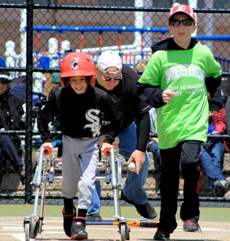
Jewish Disability Awareness Month (JDAM) is a national movement held each February to raise awareness and promote meaningful inclusion of people with disabilities and their families in all aspects of Jewish life. The need for education about individuals living with disabilities is a growing issue in society. Whether we know someone personally who has special needs or meet them at the grocery store, it is a certainty that at some point in our lives we will intersect and may not always be prepared to be as kind, respectful, and supportive as we should.
Keshet is taking the lead on this issue to the benefit of the entire Chicago Jewish Community by offering a wide variety of educational, vocational, and recreational programs for children and young adults with special needs. Keshet is a non-profit organization working within the framework of Jewish values. This February we are offering tools and resources for the community to participate in Jewish Disabilities Month through The Leventhal Keshet Professional Development Center—an extension of Keshet’s commitment to serving individuals with developmental disabilities.
Through on-site assistance and consultation, the Leventhal Keshet Professional Development Center provides tools that cater to individuals with developmental and intellectual disabilities as well as provides their caretakers with an array of support. The Leventhal Keshet Professional Development Center has received prominence and distinction for its staff training and professional development, offering workshops, and speaking engagements both locally and nationally. In 2011, Abbie Weisberg, CEO/Executive Director spoke at the Global Autism Conference in Jerusalem leading to Keshet’s role in creating programs and offering hope for individuals with special needs around the world.
In response to the growing demand for educational materials on the subject of special needs, The Leventhal Keshet Professional Development Center has created a resource guide specifically targeted for Jewish Disabilities Awareness Month that includes Abilities Awareness activities for many age levels, respectful language examples, parent testimonials, samples of sermons for clergy, and more.
Through the center, the Keshet staff created a multi-tiered plan to address a wide population throughout the month of February. Reaching out across all streams of Judaism, places of worship have been asked to participate by:
- Sharing a personal story about an individual with special needs with the congregation
- Offering sermons about Abilities Awareness on one Shabbat during February
- Leading an Abilities Awareness activity at their place of worship
- Advertising information to their fellow congregants about abilities awareness and “people first” language
- Scheduling a Keshet Leventhal Professional Development Center speaker to address their membership on Abilities Awareness
Moishe House, (home-based communities that provide a meaningful Jewish experience) will partner with Keshet by hosting an event that will be cross promoted with Mishkan (a movement based on Jewish inclusion connecting people through prayer, study, and community building) on Feb. 11 from 6:30 p.m.-8:30 p,m. The program compliments Moishe House’s current series, “Privilege, Oppression, and Judaism.” By inviting representatives from Keshet, Moishe House will have an opportunity to start the conversation about disabilities within the Jewish community.
The Leventhal Keshet Professional Center has also scheduled speaking engagements with youth groups like BBYO where more than100 teens are expected to attend and NFTY, which will be doing their part by following Keshet’s Jewish Disabilities Awareness Month social media campaign.
Keshet is honored to lead the charge for Jewish Disabilities Awareness Month by reaching out across the breadth of the Jewish community in Chicago, serving as the central address for individuals with special needs. At Keshet, we see abilities in those with disabilities. We hope that you will too.
Susan Levin-Abir is the vice president of Strategic Development at Keshet, a partner in serving our community, supported by the JUF/Jewish Federation of Metropolitan Chicago.
Other stories
-
Meet Andrew S. Hochberg, 2021 Julius Rosenwald Memorial Award recipient
Celebrate Andy Hochberg at the virtual Annual Meeting on Sept. 14
Read more -
Two local teens win national recognition
Recipients of the annual Diller Teen Tikkun Olam Awards
Read more -

Celebrating six young award winners cultivating the community
Introducing young adult award winners
Read more
Illinois House Republican Leader talks state agenda with JUF Government Affairs Committee
MARA RUFF
Despite the polar vortex weather conditions, Illinois Representative Jim Durkin (R-82) arrived at JUF on Jan. 27 prepared to talk shop with members.
Last August, Durkin’s Republican colleagues elected him as Minority Leader by a unanimous, 47-member vote. With votes on marriage equality and pension reform just two months after he was sworn in, Durkin had a very short honeymoon period before being called upon to lead the carving out process of the Republican House and approach these two controversial issues.
Pension reform topped the list. In the final hours of negotiations, Durkin recalls scrambling at the eleventh hour for support. “It was tough to find caucus members the day before Thanksgiving, but doing nothing was not an option.”
Durkin noted that, as Leader, his first priority is to field strong Republican candidates to take back some seats lost in 2012 when the House Democrats secured a veto-proof majority with a 41-vote advantage. After that, he looks to develop Republican positions in the General Assembly around a minimum wage increase, Medicaid reform, the Chicago Public School debt problem and the ongoing debate surrounding the City of Chicago’s underfunded pension system, the temporary income tax extension, and resolving the $8 million in unpaid state bills as well as the 2015 state budget.
Durkin spoke of his recent meeting with Mayor Rahm Emmanuel and told the Government Affairs Committee that he promised to help the mayor. “We cannot ignore the educational debt problem in Chicago,” he said.
Regarding a proposed increase in minimum wage, Durkin said he is open for discussion, but will not walk away without a reasonable compromise. However, he said it is highly unlikely his members will support an income tax extension when the current temporary income tax expires on Dec. 21 of this year.
Durkin was born and raised as one of eight boys from Westchester, Ill., and currently raises four children in Illinois with his wife. Consequently, he is concerned about the fiscal health of the state with regards to the future. “I have seen young families question whether or not to raise their families in this state because of its fiscal problems,” he said.
Durkin calls for a wholesale change on how Illinois does business before state agencies spend more money.
Andy Hochberg, chair of the Government Affairs Committee, thanked Leader Durkin for his comments and said he looks forward to meeting with him again on the JUF Springfield Mission, which begins Apr. 30.
Other stories
-
Meet Andrew S. Hochberg, 2021 Julius Rosenwald Memorial Award recipient
Celebrate Andy Hochberg at the virtual Annual Meeting on Sept. 14
Read more -
Two local teens win national recognition
Recipients of the annual Diller Teen Tikkun Olam Awards
Read more -
Celebrating six young award winners cultivating the community
Introducing young adult award winners
Read more
I have always been motivated by a strong sense of justice. To me, there is no graver violation against humanity than human trafficking, and sex trafficking, in particular. Taking an innocent child or young adult, beating, raping, abusing her, and coercing her into performing sex acts for monetary gain is unfathomable to me, abhorrent.
And yet, sex trafficking occurs right here in Chicago. According to the Center for Impact Research, on any given day, an estimated 16,000 to 24,000 women and girls are engaged in prostitution-related activities in the Chicago metropolitan area. Most have been beaten, drugged, raped, intimidated, and abused into submission. The average life span of a trafficked child is a meager seven years.
Sex trafficking involves the denial of the most basic of human rights. It is our obligation as a society to protect women and children from harm, assault, rape, and abuse, and their right to choose who, how, where, when and with whom to engage in sexual activity.
I amoutraged by what I have learned though my work with local groups doing anti-trafficking work. My sense of justice is ignited in full force.
My organization, National Council of Jewish Women, is a progressive social justice organization dedicated to preserving human dignity and safeguarding individual freedoms. Combating sex trafficking is a national priority for us, as nothing poses a greater threat to basic freedom and human dignity. We can come together now, as a community, to combat sex trafficking, to protect those being violated.
It starts with holding traffickers, pimps, and the people who buy commercial sex accountable for their crimes and deterring them from future trafficking and prostitution offenses. According to the Illinois Criminal Justice Information Authority, in 2011 there were 1,871 arrests for prostitution reported in Illinois, but only 146 men were charged with engaging the services of a prostitute, and only 23 pimps were arrested for promoting prostitution. Research shows that stronger accountability is, in fact, a deterrent. We prevail upon Mayor Emanuel to make the curtailment of sex trafficking a priority for Chicagoans by pressuring the Chicago Police Department to crack down on sex trafficking and in particular, arresting the traffickers and johns, instead of those being prostituted.
The best way to proactively address sexual exploitation is to prevent it from happening in the first place. Young men are exposed to a culture that stigmatizes women in prostitution, yet glamorizes pimping and patronizing the sex trade. High school curricula is available that is specifically designed to educate young men about the harms of prostitution and to enlist them as allies in the movement to end violence against women and girls. NCJW supports the curricula and will work to make sure schools are using it.
We must also educate Illinois residents, elected officials, policy makers, and opinion leaders about the realities of prostitution and trafficking so they are moved to take action against demand. As responsible citizens, we can heighten our awareness of potential harmful situations, and report them to the National Human Trafficking Resource Center hotline.
Later this year, NCJW plans to host the suburban premiereof the sequel to Shadow Town, a recent stage play about sex trafficking in Chicagoland, which received ravereviews and played to sold-out houses. Shadow Town 2: The Johns, will showcase the men that enable sex trafficking to thrive.
There is a lot we can do to achieve justice for our trafficked women and children. I hope you will join me.
Donna Fishman is Co-President of the National Council of Jewish Women Chicago North Shore Section. She is a public health consultant specializing in adolescent health and non-profit management. She lives in Northbrook with her husband and two teenage children.
Other stories
-
Meet Andrew S. Hochberg, 2021 Julius Rosenwald Memorial Award recipient
Celebrate Andy Hochberg at the virtual Annual Meeting on Sept. 14
Read more -
Two local teens win national recognition
Recipients of the annual Diller Teen Tikkun Olam Awards
Read more -
Celebrating six young award winners cultivating the community
Introducing young adult award winners
Read more
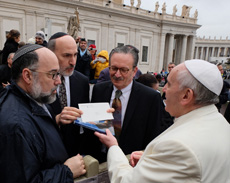
Chicago area rabbis on the Jewish United Fund Rabbinic Action Committee Mission met with Pope Francis in Vatican City on Wednesday during the weekly papal assembly in St. Peter’s Square. In pouring rain, the 19 rabbis were escorted to a special seating section next to the dais of the Pope, who welcomed the delegation at the beginning of his homily.
Afterward, three rabbis had the opportunity to greet the Pope: Rabbi Leonard Matanky, President of the Rabbinical Council of America and Dean at Ida Crown Jewish Academy, Rabbi Michael Weinberg, Senior Rabbi at Temple Beth Israel in Skokie, and Rabbi Carl Wolkin, Senior Rabbi at Congregation Beth Shalom in Northbrook.
“I greeted the Pope with a handshake and with the word ‘shalom,’ to which he responded, ‘shalom’ with a big smile,” Weinberg said.
Weinberg presented the Pope with a letter from Cardinal George in Chicago as well as a book, A Legacy of Catholic-Jewish Dialogue: The Joseph Cardinal Bernardin Jerusalem Lectures (Liturgy Training Publications, 2012), which chronicles the Catholic-Jewish lecture series that occurs annually in Chicago, symbolic of the relationship between Chicago’s Jewish community and the Archdiocese of Chicago.
Matanky gave the Pope an Ida Crown Jewish Academy yarmulke on behalf of the school and its students along with another book, a collection of essays from Rabbi Aaron Lichtenstein dedicated in memory of his son. Wolkin offered the Pope a blessing.
“When [the Pope] said, ‘Pray for me,’ that was my cue,” Wolkin said. “I said how honored we were to have this time with him, and then I prayed for him and said, “Y’varech’cha HaShem v’yishm’recha” – may God bless you and protect you.”
The JUF Rabbinic Action Committee has organized a mission to a European country and Israel every year since 2003. This year, the trip included relevant Jewish sites in Italy, such as the Ancient Synagogue in Ostia Antica.
Other rabbis on the mission: Alan Abramson, Michael Balinsky, Steven Bob, Paul Caplan, Alejandro Felch, Seth Gelman, Sam Gordon, Sidney Helbraun, Andrea London, Debra Newman Kamin, Yehiel Poupko, Marc Rudolph, Isaac Serotta, Michael Siegel, Anthony Stoller and Eitan Weiner-Kaplow.
Other stories
-
Meet Andrew S. Hochberg, 2021 Julius Rosenwald Memorial Award recipient
Celebrate Andy Hochberg at the virtual Annual Meeting on Sept. 14
Read more -
Two local teens win national recognition
Recipients of the annual Diller Teen Tikkun Olam Awards
Read more -
Celebrating six young award winners cultivating the community
Introducing young adult award winners
Read more
In a West Side Baptist church, housed in what once was a synagogue in the heart of an Eastern European Jewish neighborhood, close to 150 members of the city’s Jewish and African-American communities came together Monday morning for a unique tribute to the legacy of Dr. Martin Luther King Jr.
The event, titled Where Do We Go from Here? Strengthening the Bonds between the African-American and Jewish Communities, was co-sponsored by the Jewish United Fund/Jewish Federation of Metropolitan Chicago, the Lawndale community’s Stone Temple Baptist Church, The Firehouse Community Arts Center and the North Lawndale Historical and Cultural Society. The program included reflections on Dr. King’s legacy and on the relationship between the Jewish and African-American communities, and the singing of songs and spirituals.
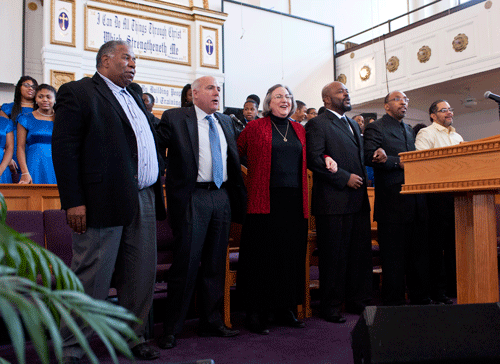
Leaders from Chicago’s Jewish and African-American communities gather for a tribute to Dr. King. (Left to right: Charles Leeks, Director of Neighborhood Housing Services of Chicago; Skip Schrayer, Chairman of the Jewish Community Relations Council; Rabbi Ellen Weinberg Dreyfus of Homewood; John Fountain, columnist for the Chicago Sun-Times; Bishop Derrick M. Fitzpatrick and Pastor Phil Jackson of Stone Temple Baptist Church.)
“The Jewish community has long admired the extraordinary work and legacy of Dr. King, and we marched side-by-side in pursuit of full equality and justice for all humankind,” said Skip Schrayer, Chairman of JUF’s Jewish Community Relations Council. “Today’s program is a continuation of the Jewish and African-American communities coming together to celebrate social justice, and we look forward to more opportunities for collaboration in the years to come.”
Speakers at the event included author and Chicago Sun-Times columnist John Fountain, and Rabbi Ellen Weinberg Dreyfus of B’nai Yehuda Beth Sholom synagogue in Homewood, the first female rabbi to be ordained in Illinois and a past president of the Central Conference of American Rabbis. Both spoke of the shared history of Jews and African-Americans in the civil rights movement, and urged the two communities to honor that heritage by once again coming together to fight for ongoing social change in Chicago’s struggling neighborhoods.
“We are called to revitalize those partnerships that brought our communities together in common cause. We need to build on our successes and strengthen our coalitions,” Dreyfus said in her remarks. “Dr. King taught us: ‘If you can’t fly, then run. If you can’t run, then walk. If you can’t walk, then crawl. But whatever you do, you have to keep moving forward’.”
Fountain, too, spoke about the importance of keeping up the forward momentum.
“We stand today as tangible fruit of [Dr. Martin Luther King Jr.’s] dream, as heirs of the promise,” he said. “Still, I hear the question begging: Where do we go from here? The answer is simple. In the prophetic words of Dr. King – ‘toward chaos, or toward community?’ – I say we must choose community. For our survival as one nation, indivisible, under God, is tied irrevocably to the survival and redemption of us all.”
The program also included a performance by the Kenwood Academy Choir, and a speech from Cherenity Person, an eighth grade student at the Herzl School of Excellence who highlighted the legacies of both Theodore Herzl and Dr. Martin Luther King Jr. in the North Lawndale community.
“The spirit of freedom resides in my school and in my neighborhood,” Person said. “I see it in the quality of my education and in the way my teachers prepare me daily for success in college and beyond. As I walk down Hamlin just past 15th Street, I am reminded that the soles of Dr. King’s shoes once walked these streets, too. The same freedom and justice that he pursued, we still pursue today. I truly believe that myself and my peers will indeed make it to the mountaintop.”
Prior to the event, volunteers from both communities took part in a special service program as part of the JUF Hunger Awareness Project, preparing and serving a hot breakfast to more than 100 people in the Lawndale neighborhood.
“Every year, we look for an opportunity to volunteer on Martin Luther King Day,” said Edie Canter, who volunteered through JUF’s TOV Volunteer Network. “It’s very nice to be here. People have been very welcoming.”
Event organizers chose Stone Temple Baptist Church to host the day’s festivities because of the unique history of the North Lawndale community, and the Stone Temple building itself. Stars of David still adorn the architecture of the church, heralding back to the generations when North Lawndale was home to so many Jews that it was known as “Chicago Jerusalem,” and was the early stomping ground of Jewish leaders such as former Israeli Prime Minister Golda Meir, and musician Benny Goodman. The neighborhood also served as a base for Dr. Martin Luther King Jr.’s affordable housing campaign in the late 1960s.
Though few Jews live in the neighborhood today, many of the community’s African-American residents say they look back fondly on their childhood memories of growing up in an integrated black and Jewish neighborhood.
Blanche Killingsworth, chair of the North Lawndale Historical and Cultural Society, and her husband Eric, an engineer for Chicago Public Schools, both grew up in North Lawndale in the 1960s, and said they recall Jewish neighbors inviting their families to dinner and teaching their parents to make Jewish staples such as gefilte fish and kishke.
“This is a day, not only are we representing Reverend Dr. Martin Luther King Jr., we are coming together, we are all coming back home together, reuniting,” Blanche said. “Because the misconceptions that a lot of people have about blacks and Jews are simply not true. We lived here in the community together. A lot of the Jewish people slowly disappeared, and a lot of them we miss, just like I’m pretty sure they miss us. This is a day of unity, and it’s a good thing.”
Members of the JUF community agreed, and said they were proud to be a part of the event.
“This morning was as inspiring as it was heartwarming,” said attorney Michael H. Traison. “If JUF only supported Israel’s welfare and security, dayenu [it would be enough]. If JUF only cared for the needs of our local community, dayenu. If JUF only provided much needed support to Jewish communities around the globe, dayenu. But that JUF does this, and fights for social justice for all mankind and so much more, is a miracle of our time.”
View additional photos from the event here.
Other stories
-
Meet Andrew S. Hochberg, 2021 Julius Rosenwald Memorial Award recipient
Celebrate Andy Hochberg at the virtual Annual Meeting on Sept. 14
Read more -
Two local teens win national recognition
Recipients of the annual Diller Teen Tikkun Olam Awards
Read more -
Celebrating six young award winners cultivating the community
Introducing young adult award winners
Read more
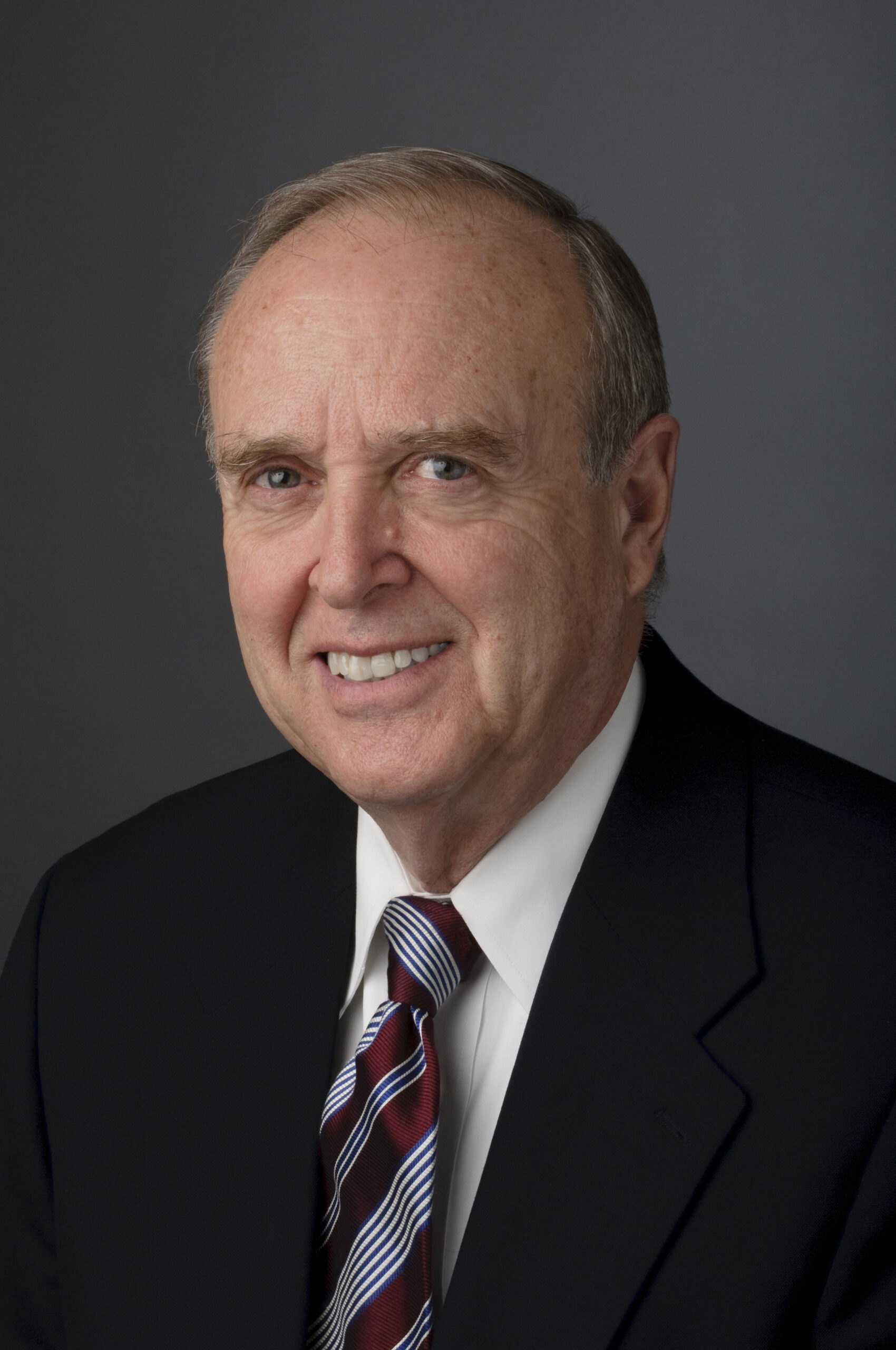
On Jan. 11, the Delegate Assembly of the Modern Language Association (MLA) meeting in Chicago voted 60 to 53 to support a resolution which urged the U.S. State Department “to contest Israel’s denial of entry to the West Bank by U.S. academics who have been invited to teach, confer, or do research at Palestinian universities.” To become adopted by the organization as a whole, the resolution will next have to be approved by the MLA’s Executive Council, scheduled to meet in late February, and if it passes it would face a vote of the total membership.
While the resolution passed by the MLA’s Delegate Assembly thus has yet to be adopted, it still is a matter of concern and merits scrutiny. A useful way to approach it would be to apply a variation on the analytic terms first developed by medieval Kabbalists for reading the Torah – starkly different though the nature of these texts may be.
This approach proceeds by considering four levels of meaning, the first of which deals with the literal meaning of the text. Looked at on its face, the resolution thus is simply calling for certain State Department action. This reading is in tune with the claim made by one of the drafters of the resolution in opening the discussion at the MLA session where it was voted on, who asserted that the resolution should be taken only in the narrow sense of coming to the support of fellow academics.
But looked at only in this way, the resolution has hardly any value. It is hard to imagine the State Department truly “contesting” Israel’s application of its security policies regarding academic visitors – especially because, as research done by a newly formed group called MLA Members for Scholars’ Rights showed, the proponents of the resolution could identify only one person who might have faced the problem, which is cited as the purported basis of the resolution.
Looking then for other meanings to this resolution, we can next see it as a symbolic statement of solidarity with the Palestinian people, whom the drafters and supporters of the resolution clearly regard as an oppressed people. If the resolution is seen this way, what matters is not what it calls for directly but how it could be taken by the Palestinians. Their sense of grievance and victimhood was validated by the language of the resolution’s backers, who repeatedly spoke about Israel’s “racist” system and “apartheid” regime when they took the floor at the MLA meeting. Given that approach, this resolution and other statements like it can be seen as perpetuating the situation the Palestinians currently face, ultimately hardening both sides of the Israel-Palestinian conflict instead of advancing reconciliation and hastening the coming of the day when the Palestinians could have self-determination in a state of their own next to the state of Israel.
Moving on to the third level of meaning, the resolution can be seen as advancing a narrative which, as supporters of the resolution demonstrated, sees Israel as being a racist country practicing apartheid and using chemical weapons. As we dig deeper and get closer to the true meaning behind a resolution like this, we recognize that the rhetoric of its supporters is the rhetoric of the delegitimizers of Israel, of those who would marginalize the state for what they portray as its gross violations of human rights. This resolution may not go as far as the one passed by the members of the American Studies Association, whose right to call for an academic boycott was defended in an “emergency resolution” that failed to achieve consideration by the MLA. But the resolution’s defenders talked about Israel with the same animosity as do the boycotters. The hostility of one speaker after another at the MLA session was tangible.
And this brings us to the resolution’s deepest, fourth level of meaning, to what Cary Nelson, Professor of English at the University of Illinois at Urbana-Champaign, calls “the elephant in the room.” That is anti-Semitism.
Those of us who talk about these matters need to use the anti-Semitism charge with care – both because its seriousness needs to be respected and also because, in attempting to pre-empt consideration of this issue, Israel’s enemies are always quick to claim that Israel’s friends use the term indiscriminately when talking about any critic of any of Israel’s polices or actions. Though one of the supporters of the resolution at the MLA meeting attacked what he called the “rhetorical ploys” and “suppressive rhetoric” of Israel’s supporters, it is in fact the enemies of Israel who try to suppress exposure of the anti-Semitism that often suffuses their own rhetoric and approach.
Thus, though we should be careful about using the term anti-Semitism, when anti-Semitic concepts can be identified within the verbal attacks on Israel, it is far from improper to point that out. So when one of the supporters of the resolution who took the floor during the Delegate Assembly meeting talked about financial contributions to political candidates in America by a “pro-Israel lobby,” which, he implied, corrupt American foreign policy, the anti-Semitic reverberations were surely there.
That speaker, along with several others, was opposing the charge that there is something wrong with “singling out” Israel as does this resolution. In fact, the pattern of singling out at the least raises the possibility that there is something off-kilter in such treatment of Israel, and those who do the singling out don’t like to be put on the spot about that. They talk about the amount of financial aid that Israel has received from the U.S. through the years and things like that as justifying particularist criticism of it. But with the proponents of a resolution that singles out Israel rejecting the replacement of it with a resolution that calls for freedom of movement for all academics, as was the case at the MLA meeting, it’s hard not to suggest that the secret is out and that something is at play that is not just about the rights of traveling academics.
The introducer of this resolution, who spoke first at the meeting and who two days before had been a panelist on a discussion session that supported academic boycotts of Israel, said he was insulted by the claim that this resolution was seen by some as laying the groundwork for a boycott resolution in the future. Whether or not that was the intent, there clearly is an affinity between the backers of this resolution and the supporters of such a boycott. Their shared methods, it has increasingly been recognized, marginalize Israel through a strategy of demonization and delegitimization which ultimately, it can be suggested, is intended to lead to Israel’s elimination as a Jewish state, just as apartheid-ruled South Africa was brought down. And as much as the proponents of the boycott and other such measures may not like to have it said, the denial to the Jewish people of the right of national self-determination in their ancient homeland is an act of discrimination equivalent to the kinds of bigotry-driven acts carried out against Jewish individuals and Jewish communities in past eras.
So as much as it would be wrong in many ways to reduce everything to anti-Semitism, neither should we fail to identify what much of all of this is about. What we are witness to within the MLA and one academic association after another is the application of an anti-colonial ideology which in the name of helping the Palestinians does quite the opposite and which unfairly vilifies Israel as a racist violator of human rights that does not deserve to exist. Given the rhetoric with which these concepts are advanced, this ideology has become a key transmitter of the anti-Semitic virus in our time. That needs to be seen, and that needs to be called attention to.
Michael Kotzin is Senior Counselor to the President of the Federation. He is an Emeritus Member of the MLA who attended their recent convention in Chicago.
Other stories
-
Meet Andrew S. Hochberg, 2021 Julius Rosenwald Memorial Award recipient
Celebrate Andy Hochberg at the virtual Annual Meeting on Sept. 14
Read more -
Two local teens win national recognition
Recipients of the annual Diller Teen Tikkun Olam Awards
Read more -
Celebrating six young award winners cultivating the community
Introducing young adult award winners
Read more

After a long and stressful semester, taking as long a break as possible seems like the best possible option, right? It’s not. I, along with 18 other students and two staff members of Illini Hillel at the University of Illinois at Urbana-Champaign, decided to come together a week before the end of our Winter Break to volunteer and use our time to help others. The Alternative Winter Break (AWB), as it’s called, is still in full swing, but I have already decided that taking this opportunity to help others has been a much better use of my time than taking that time solely for myself.
Others on the trip feel the same way. This seems a little counterintuitive, as I’d just had a rough semester and I figured that I deserved to take time just for myself, not having to worry about classes and the coming and going stresses of college life. While caring for oneself is certainly important, I feel with renewed vigor that using my time to help others, at least for a significant portion of a given day, is ultimately better for both others and myself than taking most of that time just for myself.
AWB projects often go out to other states or even other countries to volunteer, but for this AWB we decided to volunteer locally, in the towns containing our university, along with areas in Illinois affected by tornadoes. Some of the support for a local trip comes from the idea that though there are problems, many severe, all throughout the world there are so many people who could benefit in our own communities and shouldn’t be ignored. Additionally, we wanted to step outside of the college campus that consumes so much of our time and attention in order to make connections with some amazing gems in the surrounding community that are normally hidden only because we don’t pay attention to them.
So far we have volunteered at five different organizations in Urbana-Champaign: a nursery for infants, toddlers, and small children whose parents are facing significant difficulties; a retirement home; a church; a soup kitchen; and an organization that builds homes for those in need. We have also performed both random and planned acts of kindness for ordinary people, people who we had never met before and didn’t need to meet before. Outside of Urbana-Champaign, we helped organize and clean debris for a woman whose houses and barn were damaged by a tornado.
Still planned is helping the relief effort in a town devastated by another tornado, as well as volunteering at a local elementary school, and more random/planned acts of kindness. But besides the actual work being done, it’s been amazing having such uplifting social interactions throughout the week, with both members of the community that I’d never met before as well as the absolutely amazing people on the trip with me.
It all really comes down to the people in the end; I’ve had a positive impact on people’s lives and positive experiences with my peers, both of which bring me a very certain joy and happiness. It’s also a feeling of really being productive with my time, because deep down being productive to me means enjoying my life and also improving the lives of others. If I can do both simultaneously, that to me is the best way to live. And if cutting my winter break short means living the best way possible, I’m willing to do that.
Other stories
-
Meet Andrew S. Hochberg, 2021 Julius Rosenwald Memorial Award recipient
Celebrate Andy Hochberg at the virtual Annual Meeting on Sept. 14
Read more -
Two local teens win national recognition
Recipients of the annual Diller Teen Tikkun Olam Awards
Read more -
Celebrating six young award winners cultivating the community
Introducing young adult award winners
Read more
JCC Chicago will present its annual benefit, “Give to Receive,” at Primitive Gallery on Saturday, Feb. 1. Designed to enrich, inspire and build deeper connections across the vibrant community JCC serves, the evening will support the life-enriching programs and services JCC Chicago provides.
Guests will be surrounded by Primitive’s colorful mosaic of authentic artifacts representing over 100 cultures worldwide while enjoying food, cocktails and a live and silent auction. Items from the gallery will be on sale all evening, with 20 percent of the proceeds going to support JCC Chicago.
“Creating opportunities to enrich lives and build community through connection and engagement is what JCC is all about. If in doing so we are also able to help those who could benefit from some additional assistance, than we are all better served as one community,” said Alan Sataloff, CEO and General Director of JCC Chicago.
Proceeds from the annual benefit event are critical for JCC to respond to record numbers of requests for scholarship assistance, especially in the areas of Jewish camp and early childhood programs.
“Children with pivotal Jewish experiences are more likely to become adults who value their heritage, support Jewish causes, and take on leadership roles in their communities, but many families are challenged to make this a financial priority,” said Kim Levy, JCC Director, Financial Resource Development. “Our hope is for JCC programs and services to be available to anyone in the community, regardless of financial need.”
The JCC Chicago general scholarship fund provides accessibility to families who would otherwise not be in a position to participate in the life-enriching programs and services JCC offers throughout the Chicagoland area, deepening JCC’s connection into the community.
Co-chairing the event are distinguished leaders and supporters of the Jewish community, Lee Tresley and Lauri Konik Zessar of Highland Park. As a volunteer for several local organizations, Tresley works to raise funds and develop resources that directly affect areas of critical need, especially for children. She joined the JCC Chicago Board in 2009 and serves on the Financial Resource Development Committee and JCC Women’s Auxiliary. Zessar works as a community leader and philanthropist in Chicago. She has served on the JCC Chicago Board of Directors since 2008, currently as Vice-President and Financial Resource Development Committee Chair. Zessar is also president of Bienali Promotions, LLC. She is the originator and a supplier of two certified Women’s Owned Businesses: Handbags by Lauri Kay TM and Bienali TM.
Primitive Gallery is located at 130 N. Jefferson St, Chicago, and parking is available. Tickets can be purchased by calling 312.775.1831 or at www.gojcc.org/benefit.
Other stories
-
Meet Andrew S. Hochberg, 2021 Julius Rosenwald Memorial Award recipient
Celebrate Andy Hochberg at the virtual Annual Meeting on Sept. 14
Read more -
Two local teens win national recognition
Recipients of the annual Diller Teen Tikkun Olam Awards
Read more -
Celebrating six young award winners cultivating the community
Introducing young adult award winners
Read more
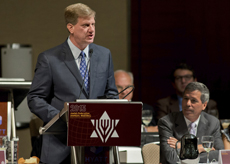
The Jewish United Fund of Metropolitan Chicago today closed its 2013 Annual Campaign at $81.54 million, $2.2 million more than the 2012 Campaign total. This is the largest one-year increase since the economic downturn in 2008. The Campaign secured 4,790 new gifts in 2013 and the total number of gifts was close to 1,000 more than in 2012.
The Annual Campaign is the largest piece of a multi-pronged fundraising effort that last year yielded $198,386,439 to support JUF’s vital network of social service agencies.
In addition to the Annual Campaign, JUF/Jewish Federation of Metropolitan Chicago raises funds through bequests, the Centennial Campaign, corporate partnerships, donations to emergency relief efforts, donor advised funds, support foundations, and other sources. As a major funder of social welfare endeavors aimed at serving the needs of the most vulnerable populations in Illinois, the Federation also is a recipient of significant grants – totaling nearly $11.5 million in 2013 – from government and foundations. In addition, the Federation is a major beneficiary of the United Way of Metropolitan Chicago.
“It is humbling to witness how our donors have responded to an uptick in the economy with an equal, if not greater, uptick in charitable giving. They are turning right around and using their improving situations to help others who remain in need,” said Michael Zaransky, 2013 Campaign Chair.
The Annual Campaign is JUF’s largest fundraising vehicle, aimed at underwriting more than 70 humanitarian agencies and programs that feed, clothe, shelter, educate, and provide healthcare, rescue and respite to 300,000 Chicagoans of all faiths and 2 million Jews in Israel and around the world.
“This is a tremendous testament to the resilience and generosity of our community, and the incredible work of our lay leadership and professional staff,” said JUF Chairman David T. Brown.
The 2013 Campaign sets a strong foundation for the organization to meet its budgetary obligations and address challenges that lie ahead following J-HELP, the recently-concluded initiative launched at the start of the recession. The initiative was launched to help needy Chicago-area Jews weather the economic storm, including many who had previously been JUF donors, but found themselves newly in need of support in the wake of job cuts and major financial losses. J-HELP brought in nearly $6 million of JUF revenue last year alone.
“J-HELP increased our agencies’ capacity to provide basic human services when the bottom fell out of the economy, helping people feed their children, pay their rent, and find jobs,” Zaransky said. In lieu of J-HELP, new initiatives such as the 2014 JUF Match Fund and the Breakthrough Fund aim to help JUF continue to nimbly and effectively meet crucial community needs moving forward.
“Though our nation may be on the road to recovery, many of the most vulnerable people we serve continue to struggle,” said Brown. “We are fortunate to have such a robust engine for resource development that ensures we can continue to be there for those who need us most.”
Numbers tell the story
In 2013, through JUF-supported agencies and programs, Chicago’s Jewish community provided 469,288 meals, food bags and grocery gift cards to those in need; gave more than $4.7 million in emergency cash grants to help nearly 4,000 families with housing, medicine and other critical needs; helped over 1,000 unemployed professionals find jobs; made sure that 22,947 people got free or highly subsidized mental or physical healthcare; and provided support services that helped 5,802 seniors stay in their homes rather than having to move to institutionalized care. The JUF Hunger Awareness Project, a call to action on hunger issues in the Chicago community, was also launched last year.
Compared to 2008, food assistance last year went to almost three times as many people in need; four times as many cash grants were given; 30% more workers received employment services; scholarships to Jewish camps rose 182% and those for Jewish preschools were up 268% – and that was just in the Chicago area. Generous JUF donors also responded immediately to disasters throughout the country, sending critical aid in the aftermath of last year’s deadly flooding in Colorado and destructive tornadoes in central Illinois.
Internationally, JUF’s overseas programs helped almost 18,000 Jews from across the globe to begin new lives of freedom in Israel, providing assistance with housing, Hebrew language acquisition skills, and employment assistance. Seventeen thousand at-risk Israeli youth received scholastic and emotional support and an aggregate $10 million in direct aid has been provided to Israeli victims of terror.
JUF agencies also were there to provide food, medicine, home care, winter heating supplies and other necessities to 149,901 Jewish seniors and 27,722 impoverished children in the former Soviet Union, and Central and Eastern Europe.
A team effort
“Of course, success doesn’t happen in a bubble, and we thank and acknowledge the many, many individuals who make what we do possible,” said JUF President Steven B. Nasatir, who praised the work of Zaransky and the Campaign End-of-Year Co-Chairs Adam and Debbie Winick. “Our devoted volunteers worked tirelessly throughout the year to fulfill our mission, and we are deeply grateful to them, as well as to each of our JUF divisions and the countless congregations that spread the message and garnered support.”
“The lay leadership and professional staff in Chicago are second to none,” added Zaransky. “The Campaign is a collective effort.”
JUF’s Annual Campaign is driven in large part by the many divisions that make up the Jewish United Fund. Below is a breakdown of several key components that helped make this year’s Campaign a success.
VANGUARD
More than 500 donors attended the 2013 Vanguard Dinner, which featured veteran stand-up comedians and stars of Curb Your Enthusiasm, Susie Essman and Richard Lewis. The event raised close to $3 million from over 300 gifts for the 2013 Campaign – a 6% gift for gift increase.
ADVANCE & MAJOR GIFTS
JUF’s 2013 Advance & Major Gifts Dinner, the single largest fundraising night of the JUF Campaign year, was held at the home of Lester and Renee Crown and featured former British Prime Minister Gordon Brown. More than 200 people attended the dinner, which raised upwards of $24 million for the 2013 Campaign.
COUNTRY CLUB DAY
Country Club Day is one of the largest fundraising days of the year for JUF. In 2013, over 1,500 members attended JUF Country Club Day, spread across nine country clubs in the Chicagoland area, raising over $6 million for the 2013 Campaign – $1 million more than in 2012 – as well as raising critical awareness of JUF/Federation’s work.
TRADES, INDUSTRIES & PROFESSIONS
In just three nights, at three dinners, the Trades, Industries & Professionals Divisions raised more than $1.9 million for the 2013 JUF Annual Campaign, through the generous support of more than 3,000 attendees. Of the 1,500 gifts made at the dinners, more than 300 were from first-time givers to JUF. In addition, the Trade Dinners brought in over $1.1 million in corporate sponsorship, exceeding totals from 2012.
“Thank you to the thousands of people who attended the 2013 TIP Dinners, as well as to our corporate sponsors who stepped up to help subsidize the dinners and support the community,” said Jason L. Peltz, TIP Vice-Chair. “Together, we provided invaluable support to the 2013 campaign and reinforced TIP’s leadership role in and responsibility to the community.”
Guest speakers at 2013 TIP events included Ambassador Yehuda Avner, Author of The Prime Ministers: An Intimate Narrative of Israeli Leadership; Co-Founder & CEO of Whole Foods, John Mackey; and the Honorable Cory Booker, Mayor of Newark, New Jersey.
WOMEN’S DIVISION
JUF Women’s Division had another spectacular year of fundraising and programming throughout Chicago and the suburbs. The commitment, drive and generosity of the Women’s Board, Young Women’s Board, Young Women’s City Council, and Women’s City Council raised more than $12.8 million from more than 7,000 donors for the 2013 Annual Campaign. Successful events focused on matters such as Jewish identity, entrepreneurship and world politics. The Spring Event, the Women’s Division’s largest Campaign event of the year, brought a record-breaking 1,000 women together to hear guest speaker Chelsea Clinton. Other notable speakers at events throughout the year included mountain climber Alison Levine; Alexandra Wilkis Wilson, co-founder of Gilt Groupe and New York Times bestselling co-author of By Invitation Only: How We Built Gilt and Changed the Way Millions Shop; and Master Sommelier, Boarding House Keeper and former host of the hit PBS show Check Please!, Alpana Singh.
“I am very proud of the success achieved in total dollars raised, the quality of all our signature events and the stellar support from the Women’s Division members,” said 2013 Women’s Board Campaign Chair Hilary Greenberg. “Building on a strong foundation, I am so pleased that we have helped raise the Campaign bar to a new level.”
YOUNG LEADERSHIP DIVISION
In 2013, JUF’s Young Leadership Division (YLD) connected thousands of young Jewish people to JUF through a wide variety of social and educational programming. YLD raised more than $2.4 million from more than 4,500 gifts. YLD kicked off the 2013 Campaign with the fifth annual Big Event featuring comedian Aziz Ansari, which attracted more than 2,400 attendees, including hundreds of first-time donors, and raised more than $300,000 for the community. Committed to building a strong next generation, YLD integrates a JUF educational component into most of their programming. In 2013, these programs included a summer trip to Israel, volunteer opportunities at JUF-supported agencies, sports leagues for a cause and leadership training.
“The success of YLD’s 2013 campaign says a great deal about the priorities and commitment to tzedakah (righteous giving) and tikkun olam (repair of the world) of younger Jews living in and around Chicago,” said 2013 YLD Campaign Chair David Goldenberg. “I’m very proud that my generation has again stepped up to the plate and done our part to build a strong Jewish community and provide for those in need.”
CONGREGATIONS & COMMUNITY CAMPAIGN
In 2013, 36 congregations participated in 30 congregational events, raising more than $1.6 million through The Congregations & Community Campaign.
“Our congregations are the backbone of the Chicago Jewish community,” said Jane Cadden Lederman, 2013 Chair. “Their partnership with JUF enables both to combine their energy and resources to provide the needed help locally and to Jewish communities around the world.”
Over 2,800 people attended the events, which hosted prominent journalists, authors and other public figures. Overall, the Congregations & Community Campaign raised $6.3 million from more than 5500 donors.
PHONOTHONS
JUF’s Phonothon volunteers were an integral part of the success of the 2013 Campaign, raising $5.1 million at four community-wide events and surpassing the 2012 phonothon totals by more than $1 million. Throughout Chicago and the suburbs, more than 950 volunteers reached more than 3,500 donors.
MISSIONS
Missions show JUF donors, first-hand, how their dollars are making an impact on Jewish communities abroad. Last year, close to 700 people traveled to Israel on JUF community, family and VIP missions. The trips raised more than $1 million for the 2013 Campaign.
“As my family and I experienced firsthand when we traveled to Israel for my daughter’s bat mitzvah, the JUF Missions Department provides an unparalleled opportunity for members of our community to see up close the positive, life-changing impact JUF has on vulnerable population groups in Israel, and to gain a better understanding of why our support of JUF is so critical,” said Sandy Perl, 2013 Missions Chair.
The 2013 calendar included three new missions. JUF partnered with the Birthright Foundation to target parents of Birthright alumni, with the goal of providing a similar Birthright type of experience to the parents. In addition, JUF sent 20 participants to Cuba in March for the first time in more than 10 years. JUF’s Mission Israel 65 was a community mission, celebrating Israel’s 65th anniversary in April.
ISRAEL SOLIDARITY DAY
For more than 30 years, JUF has hosted Israel Solidarity Day, Chicago’s largest community-wide event celebrating Yom Ha’atzmaut, Israel’s Independence Day. Last year, more than 8,000 people from all parts of the community gathered at Highland Park’s Ravinia Festival for the 2013 event, which also featured the Walk with Israel, in honor of Israel’s 65th birthday, and J-Serve, a hands-on community service project for Jewish teens.
“To see thousands of people gathered for Israel Solidarity Day, not because of a specific crisis in Israel but only because of their love and whole-hearted support for Israel, was truly inspiring,” said Rabbi Carl Wolkin, event co-chair.
The 2013 event brought in more than 600 more JUF gifts than 2012, and the money raised provided Israeli children with supplies to enrich learning and literacy.
CHICAGO MARATHON
Thirty-two Chicagoans ran the 2013 Bank of America Chicago Marathon as part of the inaugural “TeamJUF”. Runners included JUF Chairman David T. Brown, Consul General of Israel to the Midwest Roey Gilad, as well as a former JUF client who is now a donor. The team raised more than $77,000 to support JUF.
‘Continuing to build momentum’
“Being part of JUF is a way to be a part of the greater Jewish people, and express our Jewishness in the 21st century,” Zaransky said, reflecting on his term as Campaign Chairman. “It’s belonging to something bigger than the individual self. I think that feeling really resonated with the Jewish community this year.”
Nasatir said the organization is looking forward to the new opportunities 2014 will bring. “We are constantly evolving and improving our ability to serve our changing community, and we look forward to continuing to build momentum as we move into the new year.”
Please contribute to JUF today.
Other stories
-
Meet Andrew S. Hochberg, 2021 Julius Rosenwald Memorial Award recipient
Celebrate Andy Hochberg at the virtual Annual Meeting on Sept. 14
Read more -
Two local teens win national recognition
Recipients of the annual Diller Teen Tikkun Olam Awards
Read more -
Celebrating six young award winners cultivating the community
Introducing young adult award winners
Read more
Small U.S. businesses are beginning to discover that they can export.
“Small business owners have thought for so long that that exports are only for the big businesses. What we’re saying is that’s not necessarily true anymore,” Small Business Administration District Director Terri Denison told the Atlanta Journal-Constitution.
Rising standards of living in other countries, easing of trade restrictions, online marketing strategies and government assistance are contributing to a rise in U.S. small business exporting. U.S. exports have risen 40 percent since 2010 and were worth $2.2 trillion in 2012, according to U.S. government figures.
“It’s a new frontier for most businesses,” said Donna Rockin, Director of the Illinois SBDC/Duman Entrepreneurship Center. “Less than one percent of U.S. businesses export, the smallest percentage of any industrialized country – but it’s such a huge market, that means that close to 300,000 U.S. businesses are exporting, most of them small or medium size. Many more small businesses should be exporting.”
U.S. food exports are especially attractive in other countries, where families have to spend a much higher percentage of their income on food than in the U.S. According to UN figures, the French and Italians spend twice the U.S. percentage of income on food, the Chinese triple, and the Russians spend five times as much.
Free trade treaties signed in recent years have opened up foreign markets, which used to be protected by notoriously high tariffs, and the Internet has given small businesses a new pipeline into other cultures eager to spend their new affluence on more convenient products.
A beauty of exporting, according to Rockin, is that it creates a place to sell products when the U.S. market is saturated.
An array of government programs help the small business owner begin to export with minimized risk. The federal Export-Import bank offers loans and trade insurance. The SBA offers loan guarantees for private banks’ loans to small businesses that are exporting, including funding to cover working capital while shipments are headed for distant ports.
Federal Export Assistance Centers are being operated by the U.S. Department of Commerce in conjunction with the SBA and Export-Import Bank. The Illinois center is located at 200 W. Adams Street.
However, the trick to exporting is getting started the right way.
The “Riddle of the Exporter” workshop offered by JVS Chicago debuts in January and offers local small businesses a clear path to successful exporting, Rockin said. An intensive, all-day seminar, the “Riddle of the Exporter” takes an eight-step approach to exporting and covers market research, the legal and regulatory requirements, shipping, financing and marketing.
“Attendees will come away with a workbook full of practical concepts specific to their business and a clear path to exporting,” Rockin said.
“Riddle of the Exporter” is a one-day, all-day seminar on Jan. 30. Early bird registration discount is available through Jan. 17. To learn more or to register, visit here.
Other stories
-
Meet Andrew S. Hochberg, 2021 Julius Rosenwald Memorial Award recipient
Celebrate Andy Hochberg at the virtual Annual Meeting on Sept. 14
Read more -
Two local teens win national recognition
Recipients of the annual Diller Teen Tikkun Olam Awards
Read more -
Celebrating six young award winners cultivating the community
Introducing young adult award winners
Read more