What good can a teenager do, sitting in their room? Plenty, it turns out.
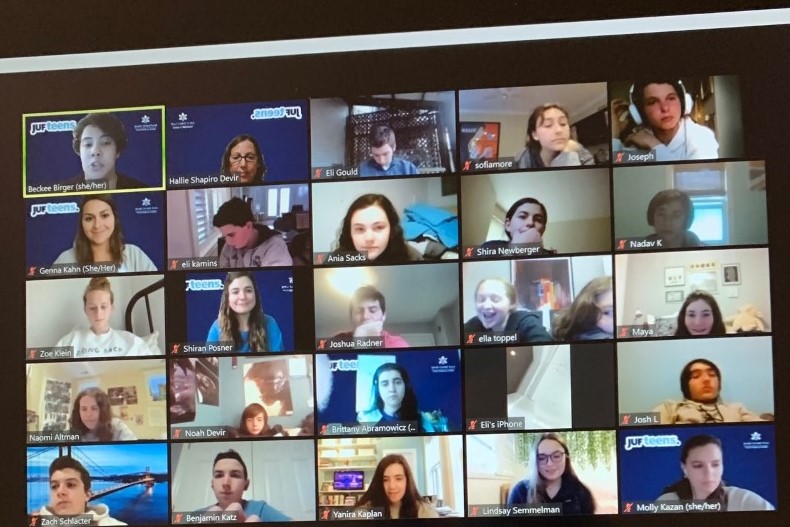
This spring, two dozen teens gathered online for two hours, and, by the end of their meeting, had disbursed more than $2,500 to local organizations engaged in COVID-19 relief efforts.
They were brought together by JUF’s Voices: The Chicago Jewish Teen Foundation program, which teaches teens how to manage a foundation and use philanthropy to address community needs.
Before the coronavirus crisis, JUF lay leaders David and Susan Sherman gave a generous donation to expand Voices as well as other JUF teen programming.
When the pandemic hit, the Voices staff knew they had to pivot to a new socially distancing reality, and address the new needs generated by the crisis.
“We started looking for ways to put good into the world, when there are not a lot of ways to do that,” said Genna Kahn, JUF’s Program Director for Teen Volunteering and Engagement.
They landed on the idea of a giving circle, for teens to decide how to disperse funds to those addressing the crisis. Voices had previously run synagogue-based giving circles, so they adapted their curriculum for socially distant communication.
Some 25 teens–ranging from grades 7 to 12–signed up, and, in April, the teens joined a Zoom call, where they were tasked with a mission: From a pool of 15 organizations being considered to receive funds for their COVID-19 relief efforts, they must narrow the field down to four.
In the end, the giving circle disbursed grants totaling $2,630. Two recipients–JCFS Chicago and SHALVA, both supported by JUF–received funds from the Shure Charitable Trust. Two other recipients -The Night Ministry and Chicago HOPES for Kids–received funds from the Sherman contribution.
The students rose to the challenge of making some difficult and sophisticated decisions. “We are so proud of the work the teens all did, many after a long day of schoolwork,” said Beckee Birger, JUF’s Program Director for Teen Leadership and Philanthropy. “Everyone worked hard to make some tough funding choices, using Jewish values as a guide, deciding between ‘important work’– done by all the organizations they reviewed– and ‘urgent need,’ which our community is facing because of the COVID-19 crisis.”
“The teens’ decisions were quick, but thoughtful,” noted Kahn. “They focused on those organizations addressing immediate needs or providing direct services.”
Voices staff hopes to recreate another COVID-19 giving circle in the future.
The teens reported feeling grateful and proud to be a part of the giving circle. “This was an amazing experience because everyone took something different away,” said Shira Newberger, a rising junior at Evanston’s Beacon Academy. “I’m so appreciative that I was able to participate and make a difference.”
As another teen put it, “I felt like I finally did something during the pandemic.”
To learn more about Voices, or to apply, visit juf.org/teens/Voices_About.aspx .
Other stories
-
Two local teens win national recognition
Recipients of the annual Diller Teen Tikkun Olam Awards
Read more -

Celebrating six young award winners cultivating the community
Introducing young adult award winners
Read more -
The heads of five major Jewish Federation partner agencies came together, virtually, May 15 to detail the impact the pandemic has had on their operations and on the thousands of Chicagoans in need they serve.
At the session, hosted by the Federation’s Government Affairs Committee, some 130 online guests heard from JCFS Chicago President & CEO Howard Sitron; CJE SeniorLife President & CEO Dan Fagin; Sinai Health System President & CEO Karen Teitelbaum; JCC Chicago President & CEO Addie Goodman; and The ARK’s Executive Director, Marc Swatez.
Each outlined their agency’s response to the COVID-19 crisis and the continuing frontline efforts to provide essential services to those in need. The Federation’s Washington, D.C., staff also reported on Congress’ and the administration’s response to the crisis.
Sitron noted how JCFS Chicago quickly transitioned to telehealth while still maintaining in-person check-ins. All four JCFS resident support facilities continue to function, but Sitron said the agency is feeling the higher demand for services. As JCFS moves forward to fully reopen, Sitron anticipates a tidal wave of mental and psychological health issues.
CJE SeniorLife continues to serve the approximately 800 residents of its assisted living and skilled care facilities, but is struggling to engage the hundreds of non-residents who normally enjoy day programming. Fagin stressed that staff in the residential facilities are doing heroic work as much as any other frontline worker and should be recognized for their efforts.
Teitelbaum addressed racial health disparities and social determinants of health, noting that this healthcare crisis has put a national spotlight on this problem. However, this is not new for Sinai, and Teitelbaum is hoping this widespread attention will give Sinai a platform from which to lead earnest discussions on improving the current systems. She also spoke about a task force of Illinois health care leaders, for which she has coordinated a response, collected data, and shared best practices with CEOs from several other hospital systems.
Goodman commented that JCC Chicago has had to quickly adjust and now offers vastly improved online programming and engagement. Once the crisis has passed, she plans to look at ways to expand in the social services realm and coordinate such work with other Jewish nonprofits in the area.
The ARK has added more than 150 new clients since the COVID-19 crisis began, Swatez said, and has seen a massive number of returning clients who either need more extensive support now, or had not relied upon the agency in years. The ARK’s financial assistance program is up 300%, and 75% of the clients it had helped secure employment have been furloughed. Swatez expects the eventual recovery to look a lot like the 2008 financial crisis, which left many families in dire financial situations for years to come.
“Our affiliated agencies are facing unprecedented challenges to make sure that people throughout the community continue to have access to critical services,” said Lee Miller, Government Affairs Committee chair. “We are fortunate to have such committed agency leaders who press on despite so many obstacles.”
Other stories
-
Two local teens win national recognition
Recipients of the annual Diller Teen Tikkun Olam Awards
Read more -
Celebrating six young award winners cultivating the community
Introducing young adult award winners
Read more -
Children, especially emotionally fragile ones, need close relationships and stable routines. Sadly, both are in short supply during a pandemic, especially one that requires “social distancing” and closes schools and playgrounds.
At times like these, we turn to the experts for guidance. Dr. Greg Staszko, Psy.D., is the program director of Under the Rainbow, the outpatient therapy and psychiatry program at the Sinai Health System for those 18 and under, and their families.
Children benefit from the structure of attending school all day, and the interruption of normalcy has challenged everyone-but is particularly hard on children, who are creatures of habit. Helping children get through this strange time is a delicate balancing act.
“Routines and predictability are soothing for children. So, maintaining some consistency and structure during the day helps children to regulate themselves,” Staszko said. “However, we have to also acknowledge the difficulty of the uncertain times we are living in, so being flexible and adaptive to our children’s needs is also essential.”
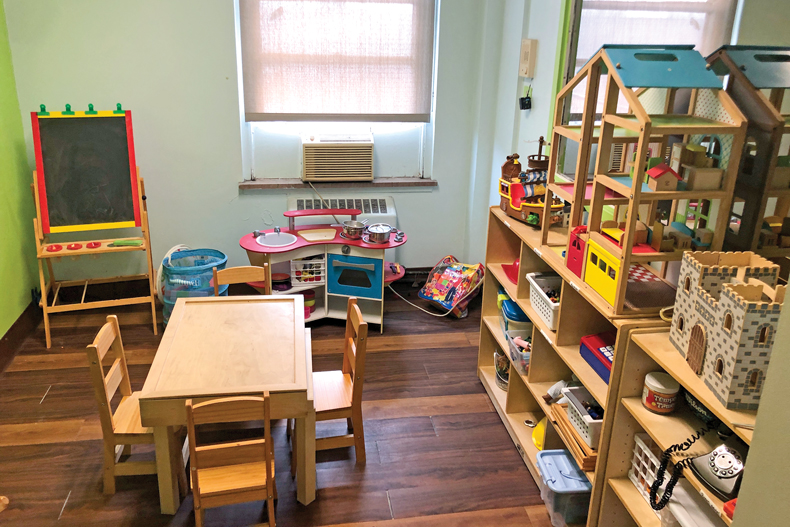
Despite not being able to be in the same room with their patients during the current crisis, Under the Rainbow staff are determined to help their patients through this, by any means possible. The program’s physical offices are closed during the outbreak, but its therapists-working from home-are still providing audio and video therapy sessions by phone and online, and still helping families connect to available services.
For parents of children stuck at home during the pandemic, Staszko offers the following advice:
-
Discuss the situation. Having a “Let’s just not talk about this” attitude can backfire. Ask children what they are thinking, honor their thoughts and feelings, and answer in age-appropriate ways.
-
Follow a routine. Structure and predictability can counter feelings of uncertainty. Keeping bedtime routines from before the crisis is especially reassuring.
-
Stay flexible. Even within a structured framework, go with the flow and don’t expect perfection.
-
Look for the positives. Families often don’t spend as much time with each other as they are now- but that can be a good thing. Relax and enjoy it.
-
Monitor news exposure. “We have a real problem with information now, in that it’s not all good information,” both in the professional and social media realms, Staszko notes. Sorting out what’s reputable is hard for adults, he adds, and doubly hard for children; they also cannot always tell news from satire.
-
Take care of yourself. Children can pick up on parental anxieties and mindsets. Practicing self-care is calming and sets an example for children.
-
Enjoy the extra free time. Go outside. Be aware of small, overlooked things, like the ways nature changes with the seasons. “Notice what’s close,” Staszko encourages, “and pursue creative outlets” like music and cooking.
-
Be forgiving. Acknowledge that this situation is unprecedented, and forgive yourself and others as you go. As Staszko puts it, “Have grace-no one is good at this!”
Under the Rainbow’s direct line is (773) 257-4750. Sinai also offers a COVID-19 hotline, 7 a.m.-7p.m., Monday through Friday: (773) 257-COV2 (2682). Messages left during off hours will be returned within 24 hours.
Sinai Health System is a partner with JUF in serving our community.
Other stories
-
Two local teens win national recognition
Recipients of the annual Diller Teen Tikkun Olam Awards
Read more -
Celebrating six young award winners cultivating the community
Introducing young adult award winners
Read more -
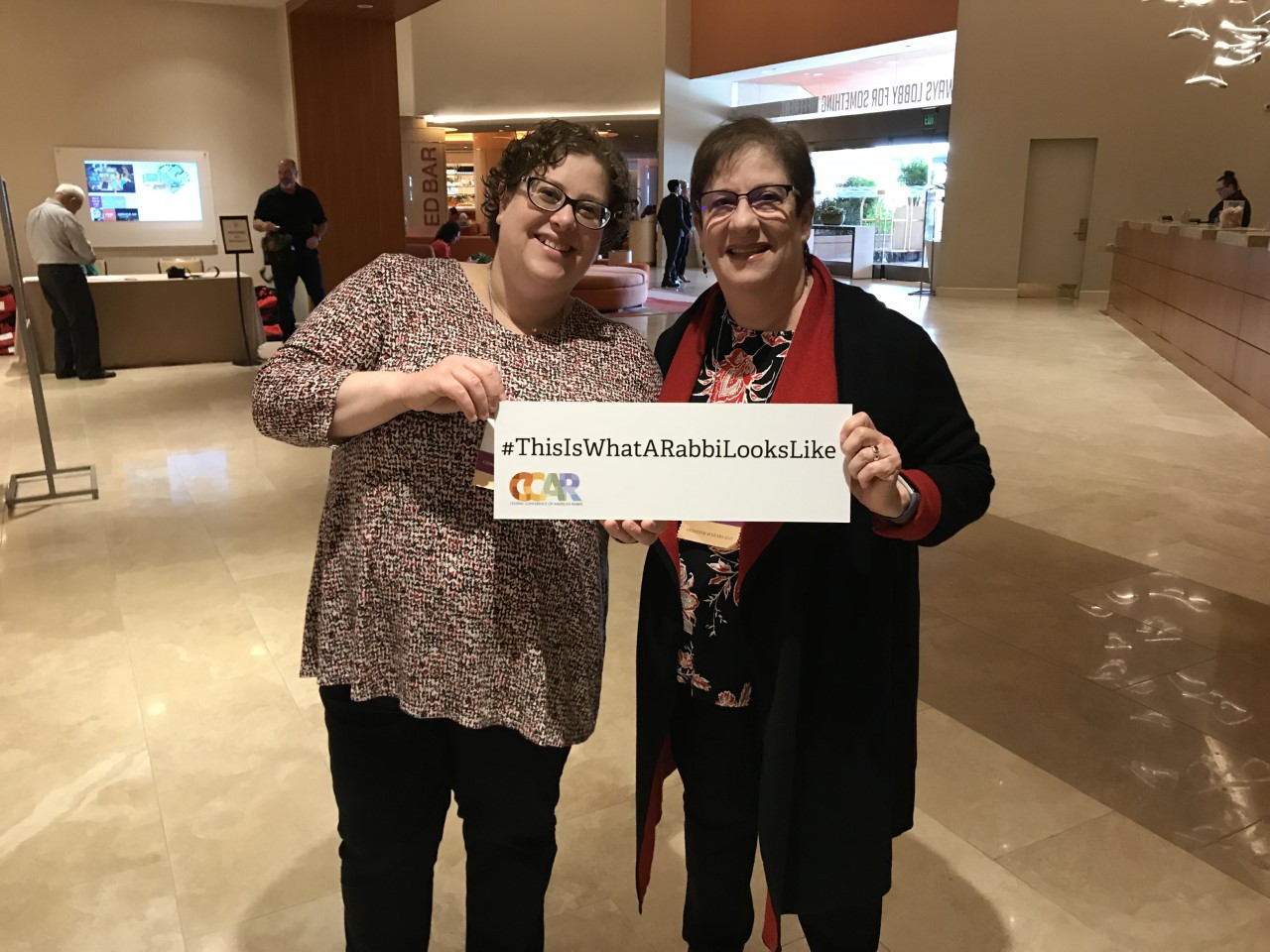
Rabbi Carmit Harari used to call her mom once a week, but now, in the age of COVID-19, she calls her several times a day.
While they share a strong mother-daughter bond, they also share something else- the title of rabbi.
Carmit and her mother, Rabbi Laura Harari, were both ordained in 2008 from the Hebrew Union College – Jewish Institute of Religion, Carmit at the Cincinnati campus and Laura at the Los Angeles one. Rabbi Ze’ev Harari, Laura’s husband and Carmit’s father, was ordained at the school’s Jerusalem campus.
Carmit, an only child, holds a couple “firsts” in the rabbinical world. She is known to be the first rabbi who is the child of two rabbis, and she is the first rabbi ordained in the same year as her mother. She has been the rabbi at Shir Tikvah in Homewood since 2013.
While she was born in Haifa, Carmit’s midwestern roots run deep. She moved to Chicago when she was 12, and attended Solomon Schechter Day School and URJ Camp Olin Sang Ruby Union Institute (OSRUI)- where she later served as a faculty member. She was active in the Hillel at the University of Minnesota, graduating in 1999.
A few years after college, Carmit found herself back in Israel, where HUC students spend their freshman year. While she was there, her mother enrolled in the Los Angeles branch of HUC.
Carmit held her first pulpit in Alberta, Canada. She stands on the shoulders of the women rabbis who came before her. “I did not face many challenges as a woman,” she said, crediting the activism of previous generations. As a Generation Xer, she said, “I never knew a world without female rabbis. It was a field for women to enter.”
Her mother Laura grew up in Highland Park, where her parents raised her-“a child of the ’60s, of social justice,” she said. Her family joined Congregation Solel, where their rabbi, the late Rabbi Arnold Jacob Wolf, ignited, she says, her “passion for learning.”
After graduating Barnard College, she earned her master’s degrees in Judaica and Hebrew Letters from Spertus Institute for Jewish Learning and Leadership.
She then entered the field of Jewish education, teaching at schools and congregations from San Diego to Jerusalem. She started a Jewish high school in Evanston, and served as the principal of another in Orange County, Calif. In Haifa, while on another teaching job, she married Ze’ev.
After many years of teaching, Laura wanted to take her Jewish communal career to the next level. “I was already doing many things that rabbis did,” she said, “but not everything.”
She enrolled in rabbinical school, where she was exposed to more intense philosophers, and studied the Talmud. “For many years, I said, ‘If I were a rabbi…’ but now I am one,” Laura said.
Since her ordination, she has served as a chaplain in a hospital, led congregations, and officiated at lifecycle events. While semi-retired, Laura now teaches adult Jewish education.
Laura kvells over her daughter’s success. “I couldn’t be prouder of her,” said Laura, who now resides in Laguna Hills, Calif. “The decision to become a rabbi had to be hers; I wanted her to feel like she owns it. Each of us has to be authentic to who we are.”
For her part, Carmit had some initial apprehensions- she and her mother took similar classes, wrote their theses, and job-hunted at the same time. But she is now thrilled that everyone is part of “the family business.” In the end, she said, “It turned out to be a wonderful thing.”
Other stories
-
Two local teens win national recognition
Recipients of the annual Diller Teen Tikkun Olam Awards
Read more -
Celebrating six young award winners cultivating the community
Introducing young adult award winners
Read more -
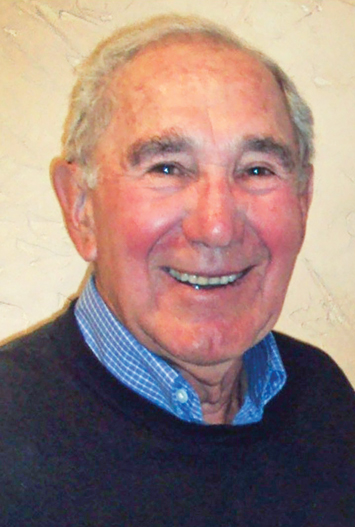
“From your experiences,” Jules Knapp once said, “you can discover an ethical way to run a successful business.” Knapp had many experiences running, and starting, ethical businesses, while caring for his community. He died on April 8 at the age of 91.
“Jules Knapp was one of the most optimistic, forward-looking persons I have ever been privileged to know,” recalled Dr. Steven B. Nasatir, JUF’s Executive Vice Chairman. “He possessed a tremendous business intellect, and with his dear wife Gwen became, for decades, a major philanthropic force for good in both the general and Jewish communities.”
From the age of 10, Knapp worked. He delivered newspapers and groceries; he stocked shelves; he sold shoes. After attending the University of Illinois, he served in the Army during the Korean War. His post-Army job selling paintbrushes, however, became a turning point.
In 1962, Jules and his brother Fred founded United Coatings Inc., a paint company. It became the largest private-label paint manufacturer in the U.S. After a merger, their company was purchased in 1996 by Sherwin Williams. Next, he purchased steel-door maker Grisham Manufacturing, in 2000, selling it in 2014.
“Each of these jobs taught me something valuable,” Knapp said, “the importance of teamwork, communication, honesty, hard work, and luck. The harder you work, the luckier you get.”
Jules married Gwen in 1956. They were married for 63 years and had four daughters. Elyse Sollender and Susan Schulman survived him, but sadly, two- Chari and Joy- passed away.
“He endured so much loss, and knew so much tragedy in his life,” recalled Susan, “but he remained positive and full of energy. He always saw life as a gift.”
In response, the family funded medical research. At the University of Chicago, they founded the Gwen Knapp Center for Lupus and Immunology Research (Joy had succumbed to lupus), The Jules F. Knapp Medical Research Center, and the Gwen and Jules Knapp Center for Biomedical Discovery. Then, in 2018, the family committed to help Cleveland Clinic Martin North Hospital renovate its emergency department.
Also, in memory of Joy, the family sponsored the Joy Faith Knapp Music Center at the Merit School of Music in the West Loop, and the Joy Faith Knapp Children’s Center of JUF’s JCFS Chicago.
One of two buildings on the Esther Knapp Campus, named for Jules’ mother, in West Rogers Park, the Joy Faith Knapp Children’s Center houses the Knapp School and Yeshiva, a therapeutic school for grades K-12+, counseling services, and administration offices.
The Knapp family also supported the Jewish Federation of San Diego County and synagogues throughout the country, as well as the Hebrew University of Jerusalem.
To foster his entrepreneurial spirit, in 2004, he founded the Jules F. Knapp Entrepreneurship Center, which offers supportive services for startups and existing small businesses around the Illinois Institute of Technology. In 2006, Jules and Gwen established a scholarship for Enactus, which has provided over 50 scholarships to college students helping them achieve their business aspirations. He created still more such scholarships at Northwestern University.
“My father will be remembered for his endearing smile, zest for life, positive attitude, and infinite amount of energy,” said Schulman. “He is famous for wearing his grandchildren out after a day of activities.”
Knapp is survived by his wife Gwen, by his daughters Elyse Sollender (Jeffrey z”l; Mark Lohkemper) and Susan Schulman (Bradley), and grandchildren Shane, Griffin (Kylie Ford), Jonah, and DJ.
Interment was private; a celebration of his life will be planned for a future date. Memorials may be made to the University of Chicago, Gwen Knapp Center for Lupus and Immunology Research, or Cleveland Clinic Martin Health Foundation.
Other stories
-
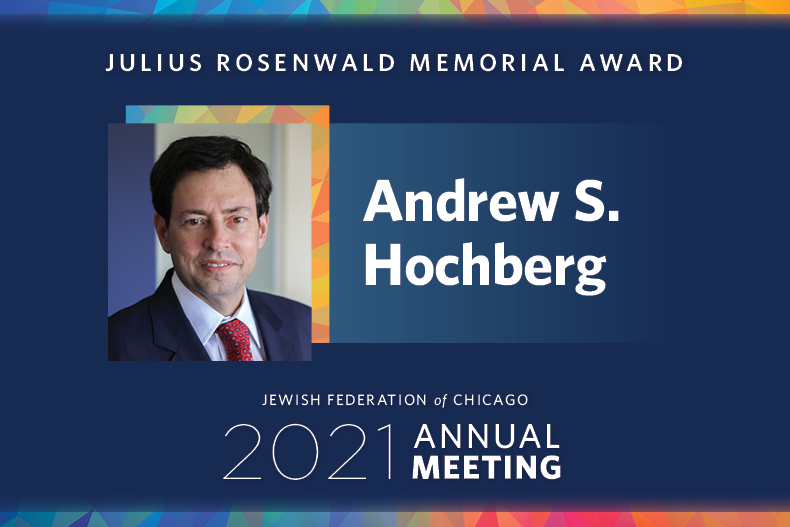
Meet Andrew S. Hochberg, 2021 Julius Rosenwald Memorial Award recipient
Celebrate Andy Hochberg at the virtual Annual Meeting on Sept. 14
Read more -
Two local teens win national recognition
Recipients of the annual Diller Teen Tikkun Olam Awards
Read more -
Celebrating six young award winners cultivating the community
Introducing young adult award winners
Read more
Most of us are feeling anxious these days. My anxiety level is well over its normal limit, due to fear and uncertainty. After having a meltdown, I decided to look at what I can do-in addition to traditional exercise and within the confines of this strange time-to alleviate some stress. I hope these ideas will work for you, too.
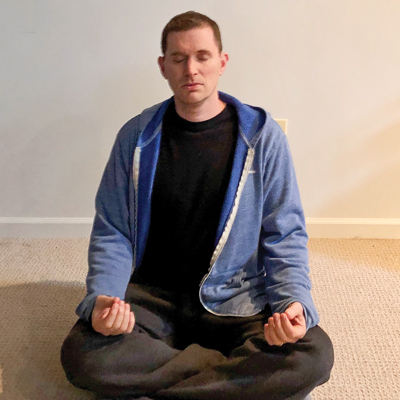
Meditate
I love meditating-well, for 5-10 minutes; that’s about all my attention span will allow most days. Numerous studies have shown the benefits of meditation, such as reducing stress, increasing focus, and improving sleep quality.
With the proliferation of meditation apps, it’s easy to get started. Many of the apps are free, and there are also guided meditations on YouTube. I’ve been using the app, “Balance,” recently and I picked the 5-minute option to start. Who doesn’t have 5 minutes? When I finish a session, I feel much more relaxed.
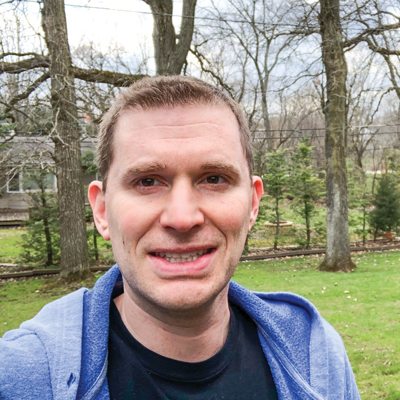
Go outside
We all know getting outside is good for us. Studies show that venturing out helps improve mood, increase vitamin D intake, and lower inflammation.
I try and take a walk first thing in the morning, and then again later in the day with the family. Walking is not only a great stress reliever, but a low-impact way to burn calories.
While we’re on the topic of the great outdoors, some alternative medicine practitioners are touting a therapeutic trend called “grounding,” also called “earthing.” The concept behind the practice is to do activities-barefoot if possible-that “ground” you, or electrically reconnect you, to the earth. Though there is not much research yet on grounding, limited studies have shown that electrical charges from the earth can benefit your body in various ways.
Whether you call it “grounding” or just taking a walk, remember to stay socially distant while you’re outside.
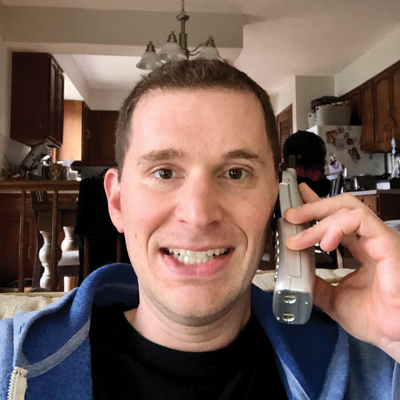
Talk to your people
Whether you live alone or not, interacting with people outside your home is important. Whether it’s just a call over the phone or by Zoom video, it’s healthy to connect with people. I’ve been missing my extended family and friends so I’ve started to reach out to them more often.
Bonus points: You can combine two of my tips into one by calling a friend while you walk.
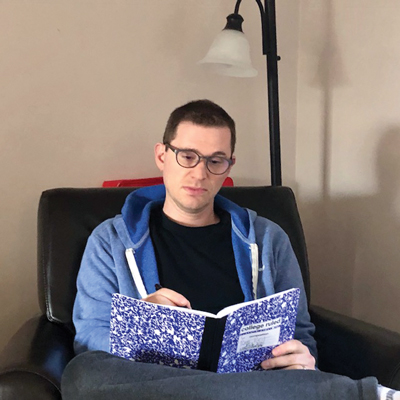
Journaling
I love to journal, especially now that I’m a father. I like to capture things my kids say, jot down random ideas-and a journal is a safe place to complain about anything and everything. As the quarantine goes on, now more than ever, we need a place to vent. I’ve noticed that once I get my frustrations and fears down on paper, relief comes almost instantaneously. While journaling does not replace a good therapist, it can be very therapeutic.

Seize the day
There’s no time like the present quarantine to start a project. One of my biggest life goals is to write novels, so I try and spend at least 30 minutes each night writing. My creative juices start to flow, I stop worrying about what I cannot control, and I feel productive. Now is a great time to start a hobby, tackle a big hairy goal, or just organize your house one pile at a time.
Ron Krit is the Senior Director of Endowment Development for JUF and a Wellness Consultant.
Other stories
-
Two local teens win national recognition
Recipients of the annual Diller Teen Tikkun Olam Awards
Read more -
Celebrating six young award winners cultivating the community
Introducing young adult award winners
Read more -
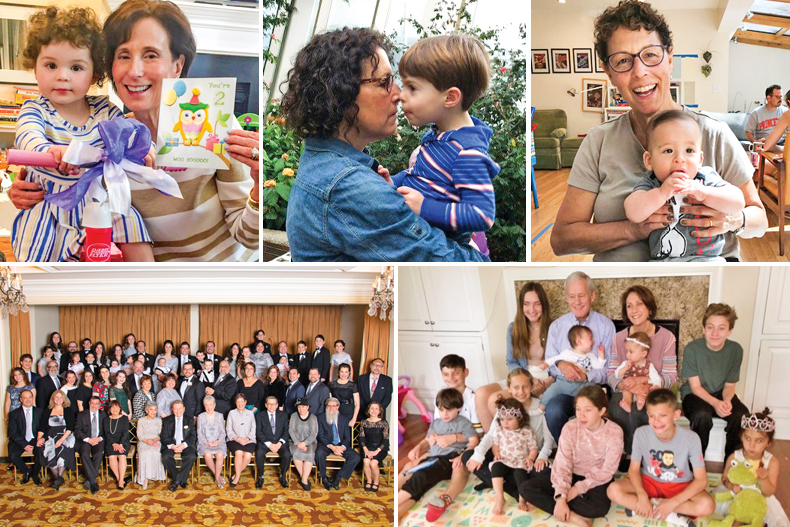
One of my most cherished childhood memories is the time when, on my usual Saturday night babysitting “date” with my Nana, I Scotch-taped the door shut to prevent my parents from coming in and stopping our fun. She retreated to another room, called, and told them, and they pulled and tugged on the door pretending as if my tape stopped them from opening it, making Nana and me laugh for what felt like forever.
On Mother’s Day, it’s important to consider the grandmothers who play a pivotal role in their grandchildren’s lives. It’s a “delicious” relationship, said Hilary Greenberg, a grandmother of two girls who is proud to be an active grandparent.
“Grandchildren bring a lot of joy to your life,” said Greenberg, who enjoys taking her 3-year-old granddaughter to the park, teaching her how to swim, and spending Friday nights together. “She loves Shabbat, and it’s a real standout moment when she says the prayers!”
Shabbat is also a special time for Trude Matanky and her family, which includes 18 grandchildren and 31 great-grandchildren. “When the grandchildren were younger, they would all move into our home for Shabbat. Today, all the cousins remain close, and now, the great-grandchildren are becoming friends” through various activities at her house, she said.
Matanky said her house is the gathering place for holidays. “That’s why I’m still living here,” she said. “Everyone can fit and is welcome even when it’s 60 people or more.”
Jewish educator and proud bubbe Jane Shapiro sets aside what she calls “Wednesdays With Bubbe” to spend with her four grandsons. It’s on that day that every available grandchild heads to Shapiro’s home for playtime, family stories, birdwatching, cooking, and fieldtrips to museums and gardens.
Shapiro fondly recalls how her oldest grandson described their time together as “magical” in a recent conversation. “Inside the fun you’re having with your grandchildren, there are all these moments when you’re helping them figure out who they are. Grandparents get to fill in the pieces,” she said.
Ilene Novack, a grandmother of 11, also reserves a day each week to spend with one of her younger granddaughters, while her parents work. Novack and her 4-year-old granddaughter enjoy tea parties, puzzles, baking, and other activities after ballet practice. Novack also babysits her other grandchildren at least one night a week, and whenever she’s needed.
“There’s a lot of doing ordinary things just so I can spend time with them,” she said. These little moments, including going to the kids’ sports games, picking up her grandkids from school, and exchanging letters, are important parts of her routine. Her family gathers for holidays, for Sunday night dinners, and they recently traveled to Mexico together.
One of Novack’s favorite traditions is dubbed the “Novak Family Philanthropic Fund,” where she and her grandchildren allocate the money she earmarks for them every birthday and Chanukah for donating to charity. “I feel very strongly that everyone has an obligation to take care of others, and to be part of a community, and you’re never too young to learn that,” she said.
No matter how involved, grandparents play a role distinct from that of parents. “When I was the parent, I was the first in line to soothe them or make decisions, but when you’re the grandparent, you’re not necessarily in charge,” Greenberg said. “You get all the good stuff, but you have to give your kids the respect that it’s their child and you’re not the ultimate authority.”
In her ELI Talk called “The Torah of Bubbiehood,” Shapiro describes the process of tzimtzum , meaning to “contract” or withdraw from primary parenting responsibilities. “The parents are like the manuscript, writing the Torah of how the kids’ lives are going to be,” she said, “but grandparents are the embellishment.”
Other stories
-
Two local teens win national recognition
Recipients of the annual Diller Teen Tikkun Olam Awards
Read more -
Celebrating six young award winners cultivating the community
Introducing young adult award winners
Read more -
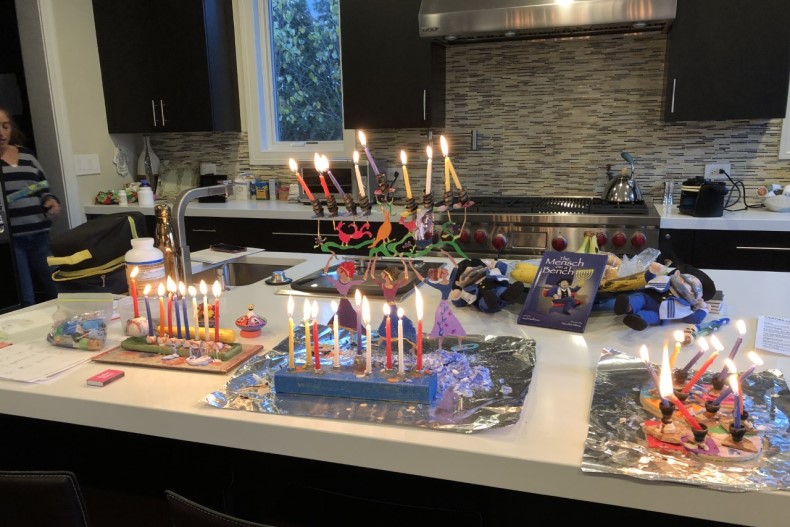
When I was growing up, for Chanukah, each member of my family would get to light their own menorah, many of which we made ourselves in Jewish preschool. With my family now, we do the same thing. Each year, everyone picks the menorah they are going to light that season as a way to illustrate each of us bringing our own light and individuality into the world.
Wendy Freimuth
I bake for all the holidays with the kids, as my mom did with me, including cinnamon rolls the first day it snows each year. And, sending out holiday cards was a big tradition in my family.
Jennifer Stoller
Celebrating the Jewish holidays with our family has always been a priority for both my parents. We helped my mom cook, we always dressed up for the holiday, and our primary focus was sitting together either at a meal or in temple, with no distractions of television or telephones. My children, especially my three-year-old, Harrison, now know the importance of the Jewish holidays, and know it is important to dress up, eat together, and just be as a family.
Jacqueline Lotzof
Some traditions we did as a family were delivering meals with Maot Chitim. I have really enjoyed continuing this tradition with my family. They look forward to each visit and we have many discussions about what it means to give.
Robyn Tavel
On Mother’s Day, my husband and daughters serve me breakfast in bedwith cards and a flower-and I love it! I remember doing the same for my mom when I was younger and her excitement gave me such pride!
Elisheva Beller
When I was little, I loved cooking with my mom, Corinne. Now that she’s gone, making her recipes with my son, Joe, is a great way to pass on what she taught me, while sharing stories about her with him.
Shari Weiss
As a child, I was always expected to be home Friday night for Shabbat dinner. My mom would make a wonderful meal and we would light the Shabbat candles together and say our prayers. Now as an adult, I try to continue the tradition. When my mom visits from Florida, it is always a special Shabbat full of love, laughter, and lighting the Shabbat candles. It’s so meaningful to be able to follow the traditions my mom set when I was younger.
Brooke Herszage
One of the many special things I learned from my mom that I carry on with my girls is writing little surprise notes. When I leave a silly, thoughtful love note for them in their lunchbox, camp bag, or sock drawer, it lets them know I am thinking of just them. Hopefully this will remain a lasting memory like the ones my mom left for me!
Michelle Farra
When I was a kid, my mom would decorate our bedrooms with balloons and streamers the night before our birthdays so that we would wake up the next day in a celebration room. I now do this for my own children, and they love it just as much as I did!
~Compiled by Michelle Cohen
Other stories
-
Two local teens win national recognition
Recipients of the annual Diller Teen Tikkun Olam Awards
Read more -
Celebrating six young award winners cultivating the community
Introducing young adult award winners
Read more -

My mother passed away when I was just 20. I am fortunate that she was alive long enough to transmit to me so many of the Jewish life lessons-the morals, the values, the importance of family-that I would need to walk through life.
It was her voice that I heard when I chose a post-college path that led me first to Israel and then to work for a time in JUF’s Women’s Division, where the Jewish mothers were plentiful. There, I could model my Jewish adulthood after the most upstanding women in our community who exemplify the best of what it means to live a life with purpose.
While I have a supportive network of family, friends, and colleagues, there are days of the year when the pain of her absence is especially deep: Mother’s Day, her birthday, and her yahrzeit
On those difficult days, my grandmother, the matriarch of our family, reminds me to remember my blessings and forget my misfortunes. Self-pity is not a word in her vocabulary. Now 95, she endured the Great Depression, a young husband off fighting in World War II, and sudden widowhood at 39 with three young children. She speaks from experience and I listen.
I found out that I was pregnant on the 11th anniversary of my mother’s passing, a light on a dark day.
With the most supportive partner by my side, I have navigated this new role. As I have watched my son grow from a helpless newborn to a happy, curious, energetic, and sweet toddler, motherhood has been a fulfilling journey.
I have a deep sense of appreciation for all the selfless sacrifices that my mother made for me, some that I’m now discovering, and many that I’m sure I’ll never even know. I think about this when I put my son to bed at night, and rock him to sleep. I run my fingers through his soft hair, and gently lean down to take in his sweet baby scent. I wonder how many times my mother must have done this to me. I know he won’t remember, just as I don’t, but somehow in those moments, I feel more connected to her than ever.
Of late, parenthood has been particularly unusual as we do things like move our son’s 1st birthday party to a “virtual” one. We are trying to avoid forming bad “screen habits” as we FaceTime with family and friends to stay connected during quarantine.
As the seasons pass, and as I have new life experiences, I gain perspective. I focus on the blessings (as my grandmother still reminds me to do) and accept that it isn’t the quantity of years I had with my mother, but rather the quality of those years.
While it hurts that my mother is not here to consult with or to administer her love, I talk about her and keep her memory alive so that my son understands the larger-than-life legacy he inherited from her, for whom he is named.
Happy Mother’s Day to all of the mothers, grandmothers, aunts, sisters, and caretakers as we learn together how to be a parent during a pandemic. Watching our community come together to support each other reminds me of my grandmother’s sage advice: in the face of darkness, we must hold onto our blessings and look to the light.
Fara Alexander is Fara Alexander is the SVP of branding and marketing for reverse supply chain and returns management company, goTRG, based in Miami, FL. She is a member of the Young Professional Committee at the Illinois Holocaust Memorial Museum and an
Fara Alexander works in retail branding and marketing, is an incoming member of JUF’s Young Women’s City Council, and lives in Chicago with her husband and son.
Other stories
-
Two local teens win national recognition
Recipients of the annual Diller Teen Tikkun Olam Awards
Read more -
Celebrating six young award winners cultivating the community
Introducing young adult award winners
Read more -
This spring, patients and health care providers canceled doctor’s appointments, dental cleanings, and even surgeries to support physical distancing efforts to slow the spread of COVID-19. But increasingly, organizations and providers embrace telemedicine and other types of remote access to continue serving patients even when their offices are closed to non-emergency visits.
COVID-19 or not, life goes on, and for many young adults in our community, that means planning for their future healthy families. And for Jewish and interfaith couples, genetic disorder carrier screening is an important part of that planning process.
The screening program offered by the Norton & Elaine Sarnoff Center for Jewish Genetics uses an on-demand model that participants complete from home, which in virtually all cases, eliminates the need for an in-person appointment.
“When we switched to an on-demand model in 2015, we weren’t planning for a pandemic,” explains Jason Rothstein, executive director of the Sarnoff Center. “But we feel fortunate that our service provides some stability and security for people who need it during this difficult time.”
Carrier screening is a type of genetic test to evaluate a person’s risk of passing genetic disorders to children. Many couples seek this screening before conception or during pregnancy. Individuals of Jewish ancestry have an increased risk of passing on certain disorders. The American College of Obstetricians and Gynecologists encourages all parents-to-be to consider carrier screening for a few conditions and recommends additional screening for individuals of Jewish ancestry.
Individuals and couples typically have a few options to seek out screening. They can ask their primary care provider about carrier screening when they are planning for a family, they can make an appointment with a genetic counselor, or in many cases they can seek out a community-based carrier screening program. These programs are designed to encourage carrier screening before pregnancy by simplifying the process and subsidizing the cost.
Carrier screening has been available for almost 50 years, but has changed dramatically over that period. Many individuals who went through carrier screening for Jewish genetic conditions in past decades attended in-person educational programs, had their blood drawn, and learned about their risk for only a handful of conditions. Now, many carrier screening panels can be administered remotely and include 200+ conditions, including several dozen more common in people of Jewish descent.
Even though individuals of Jewish ancestry are more likely to pass on certain disorders, anyone can be at risk to pass on any disorder. Carrier screening can be an important part of family planning for interfaith couples and couples with just some Jewish ancestry.
The Sarnoff Center program is available to individuals of Jewish ancestry living in Illinois and their partners, whether Jewish or not. It is affordable, accessible, and can be completed from home.
- The Sarnoff Center’s carrier screening process is straightforward:
- Register online and pay a small program fee. (Waivers may be granted in the case of financial hardship).
- Fill out and return an intake form to Insight Medical Genetics to register for the test itself.
- Insight Medical Genetics will contact participants if they require any additional information. Once their information is complete, they will send a sample collection kit.
- Provide a saliva sample using the instructions included in the kit and return it to Insight Medical Genetics.
- In 2-3 weeks, a genetic counselor from Insight Medical Genetics will call with test results and provide additional follow-up counseling if needed.
The Sarnoff Center offers an opt-in payment assistance program for the cost of the test.
For more information, visit jewishgenetics.org.
Becca Bakal, MPH is the program manager of health education at the Norton & Elaine Sarnoff Center for Jewish Genetics.
The Sarnoff Center is a supporting foundation of the Jewish United Fund, and is supported in part by the Michael Reese Health Trust.
Other stories
-
Two local teens win national recognition
Recipients of the annual Diller Teen Tikkun Olam Awards
Read more -
Celebrating six young award winners cultivating the community
Introducing young adult award winners
Read more -