
The former JUF Board Chair and Chair of the JUF Annual Campaign, Wander died May 23 at age 86.
In 1993, Wander chaired the JUF Annual Campaign, raising $53.7 million – and another $17 million for Operation Exodus II, aimed at the continued rescue and resettlement of Jews from behind the fallen Iron Curtain.
Prior to chairing the JUF Annual Campaign, Wander chaired the JUF board of directors from 1981-1983 and the Jewish Community Relations Council from 1984-1986. Over the decades, he served on multiple committees, working on issues from youth services to city-wide budgeting.
“Herb Wander was a dear friend and role model to many,” said Dr. Steven B. Nasatir, JUF Executive Vice Chairman. “His wise leadership and direct involvement in the great events and issues of Jewish life set a high standard. He will be remembered always with great fondness and respect.”
Wander was a leader in the national Jewish community as well. In 1970, he was tapped to be the Regional Chair of the National Young Leadership Cabinet of what is now the Jewish Federations of North America. In 1985, he joined the Executive Committee of the National Jewish Community Relations Advisory Council and became Chair of its Anti-Apartheid Committee in 1987, leading a mission to South Africa during the years when Nelson Mandela was imprisoned.
Caring for the people of Israel was a major focus for Wander, as early as his high-school years. “I can remember everyone meeting at the JCC, seeing some pictures of displaced persons living in tents in terrible conditions in Israel; the community was alerted that they were going to be personally solicited for UJA at that time,” he said in an interview for JUF’s Oral History Project. “That’s my earliest awareness of Israel-it had an indelible effect on me.”
He led many missions to Israel over the years-including a trip with Senator Mark Kirk-but said his proudest trip was taking his grandchildren there.
Passionate about meeting the healthcare needs of underserved people of all faiths, in 1991, Wander became a trustee and Vice Chair of the Michael Reese Health Trust. He also served as the Vice President of the Board of Jewish Education.
His outstanding service to the community was recognized throughout the years, from receiving JUF’s Young Leadership Award in 1973 to the Shofar Award in 1993 to JUF’s highest honor, the Julius Rosenwald Award, in 1996.
“Herb may have been small in stature, but he was a giant of a man,” said JUF President Lonnie Nasatir.
A partner in the Corporate Law Department of Katten Muchin Rosenman LLP, Wander was very active in the American Bar Association, chairing its Business Law Section and serving on its Corporate Laws Committee; its task force regarding attorney-client privilege; and its Task Force Committee, which wrote the influential third and fourth editions of the Corporate Director’s Guidebook.
Wander’s work had a national impact. In 2001, he was one of two lawyers to make a presentation at the SEC’s Regulation FD Roundtable. And in 2004, he served on the SEC’s Government Business Forum on Small Business Capital Formation and was appointed co-chair of the Advisory Committee to the SEC examining the impact of the anti-fraud Sarbanes-Oxley Act on smaller public companies.
Born in Cincinnati, Wander graduated from the University of Michigan. He earned his law degree at Yale Law School and, from 1982-1986, served on the executive committee of the Yale Law School Association.
Wander is survived by his wife, Karen H. Wander (nee Kart), and predeceased by wife Ruth Wander (nee Fell). He also leaves behind his children, Daniel (Ruth Freedman) Wander, Susan (Richard) Sorkin and Lois Wander, step-children Brian Aronson and Julie (Darin) Muehling, and eight grandchildren. He was the dear brother of Arden (Irene) Wander.
Herb Wander was a Golden Giver to the JUF Annual Campaign. Memorials may be made to The Herbert S. Wander Fund at the Michael Reese Health Trust, or to JUF. Arrangements were made by Chicago Jewish Funerals.
Other stories
-
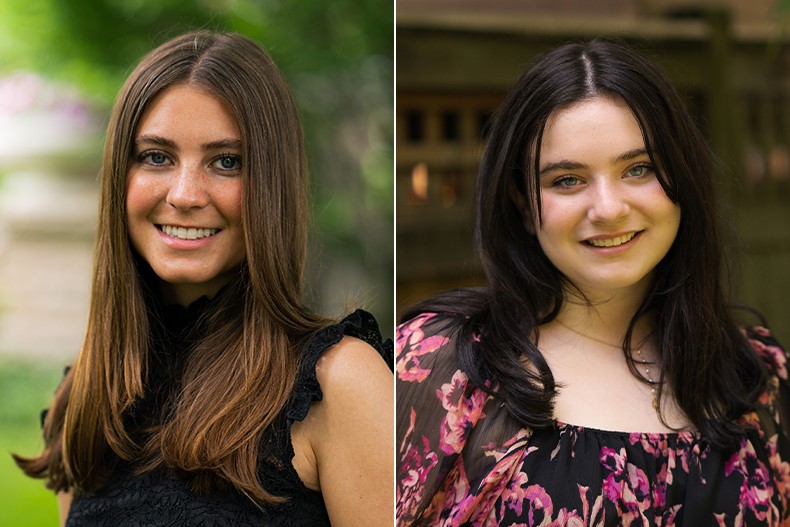
Two local teens win national recognition
Recipients of the annual Diller Teen Tikkun Olam Awards
Read more -
Celebrating six young award winners cultivating the community
Introducing young adult award winners
Read more -
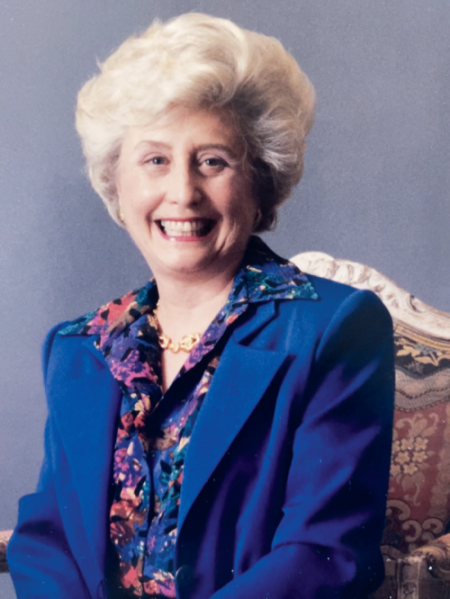
Gwen R. Knapp, known for her financial acumen and generous support of numerous causes, died on June 6. She was 86.
Renowned for her mastery of both the stock market and the bridge table- she was a Bronze Life Master of the game-Knapp was president of both the family office and the Jules and Gwen Knapp Charitable Foundation, through which she supported medical research, education, the arts, and Jewish organizations.
“Gwen Knapp was a very smart and capable woman,” recalled Dr. Steven B. Nasatir, JUF’s executive vice chairman. “[The Knapps] were a greatly admired couple who achieved much success in business and in life, and together made their community stronger and better.”
Synagogues across the U.S., Hebrew University of Jerusalem, ORT America, JCFS Chicago and JUF were among the beneficiaries of her generosity.
Through JUF’s Centennial Campaign, the Knapps established The Joy Faith Knapp Children’s Center of JCFS Chicago, named after their late daughter. The Center is part of its Esther Knapp Campus, named for Jules’ mother.
“Gwen Knapp was a remarkable philanthropist and matriarch who has left a lasting impact on our community, and JCFS specifically,” said JCFS Chicago’ president and CEO Stacey Shor. “Perhaps the greatest testament to her values is that her daughters Sue and Elyse are equally committed to doing all they can to repair the world.”
As Joy had succumbed to lupus, her mother founded and served as president of The Lupus Foundation of Illinois. She also founded the Gwen Knapp Center for Lupus and Immunology Research at The University of Chicago, where they made a landmark gift for its Jules and Gwen Knapp Center for Biomedical Discovery.
Education was another priority. Knapp served on the Board of The Martin County Education Foundation and in the 1990s established a scholarship at her alma mater, Northwestern University. In 2006, the Knapps established a scholarship for Enactus, helping more than 50 college students achieve their business aspirations.
Gwen met and married the late Jules Knapp, in 1956; he predeceased her in 2020. Together they had four daughters- the late Chari (z”l), Elyse Sollender (the late Jeffrey z”l, Mark Lohkemper), Joy (z”l), and Susan Schulman (Bradley). She had four grandchildren, Shane, DJ, Griffin (Kylie Ford) and Jonah. Memorials may be made to The Gwen Knapp Center for Lupus and Immunology Research at the University of Chicago, or to JUF. Internet was at Shalom Memorial Park. Arrangements were made by Shalom Memorial Funeral Home.
Other stories
-
Two local teens win national recognition
Recipients of the annual Diller Teen Tikkun Olam Awards
Read more -
Celebrating six young award winners cultivating the community
Introducing young adult award winners
Read more -
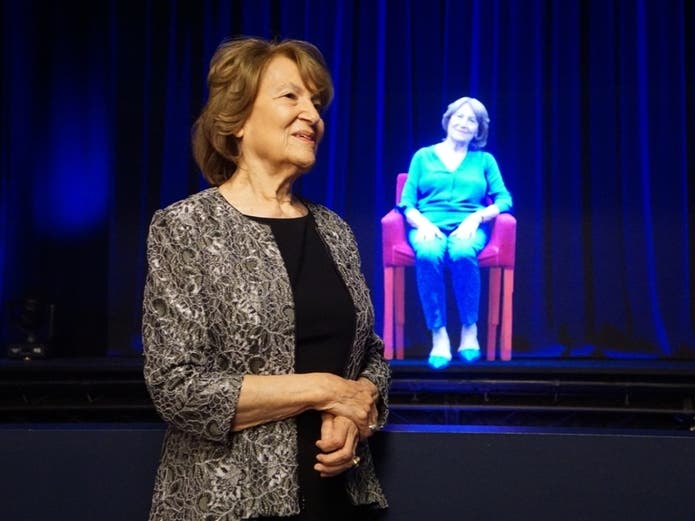
While in Auschwitz, a teenage Frieda Weiss was kept alive by 599 fellow prisoners, all women. They fed her crumbs of their rations, in exchange for her promise to tell their story if she survived.
Her face and voice will be part of a virtual reality experience about the Shoah, recorded at Auschwitz, opening at the Illinois Holocaust Museum & Education Center later this year. The exhibit’s name: “A Promise Kept.”
But she kept her promise long before now. As president of the Museum since 2010, Frieda “Fritzie” Fritzshall shared the story of the Holocaust and its survivors with tens of thousands. She passed away on June 18, at 91.
“Fritzie was asked by her fellow prisoners to be their messenger,” said John Rowe, past chair of the Museum’s board of trustees. “She fulfilled that hope in the ultimate way through this museum.”
One of her oft-told stories was how, when her train arrived at Auschwitz, one of the prisoners charged with emptying the railcar took a risk by whispering to her in Yiddish: “You’re fifteen, remember you’re fifteen.” When ordered to line up by age, Fritzshall queued up with the 15-year-olds-a move she credited with saving her life.
“Fritzie wanted us to know that there are good people everywhere. She spent much of her life teaching that we all need to be like the stranger who saved her life on the train at Auschwitz,” recalled Illinois Governor J.B. Pritzker, the first chair of the Museum’s board of trustees. “Fritzie embodied the decency and kindness she implored from others.”
When she was still a teen in Czechoslovakia, her family was captured by the Nazis. She endured a year in Auschwitz and a slave-labor factory. In 1945, she was liberated by the Soviet Army after escaping into a forest during a death march. Aside from her father, who had come to the U.S. before the war, she was the only one in her family to survive.
The following year, Fritzie came to Skokie and reunited with him. She worked as a hairdresser and married Norman Fritzshall, an American WWII vet who had been a P.O.W.
She became activist when neo-Nazis threatened to march through Skokie in 1977. She was among the community members who responded; they established the Holocaust Memorial Foundation of Illinois in 1981.
Fritzshall recalled, “We said, ‘We came to a free country, and we don’t need to be afraid to say we are Jews. We are not wearing the yellow armbands any longer.'”
In 1990, Fritzshall and other survivors convinced Governor James Thompson to sign the Holocaust Education Mandate into law, making Illinois the first state to require teaching the Holocaust in all public schools.
Then, in 2009, the Illinois Holocaust Museum & Education Center opened. Fritzshall became president the next year. It grew to be the third-largest Holocaust museum in the world. Today, the Museum inspires more than a quarter-million individuals annually through its exhibitions and educational efforts.
“Fritzie was the heart and soul of our Museum,” said Susan Abrams, its CEO. “She played an important role in transforming it from regional player to global leader, sharing her story of survival and its lessons through cutting-edge technology. I regularly watched in awe as Fritzie mesmerized audiences with her story and its lessons.”
Even before the virtual reality exhibit, Fritzshall oversaw the Museum’s interactive holographic installation, The Abe & Ida Cooper Survivor Stories Experience. She has “become” one of the holograms herself, able to answer viewers’ questions as if conversing.
“To know Fritzie is to know a true humanitarian,” said Jordan Lamm, Chair of the Museum’s Board of Directors. “She was a true hero in so many ways, filled with humility, compassion, and desire for a better world.”
In 2019, Fritzshall told an interviewer: “I want the world to remember- to never, ever, ever, ever forget the Holocaust. ‘Never again’ must be never again.”
Fritzshall, nee Weiss, was the beloved wife of the late Norman, the devoted mother of Steven (Hinda Meadow) Fritzshall, and the proud grandmother two. The caring sister of two late brothers, she was the loving daughter of the late Herman and Sarah, and a cherished aunt and cousin of many. Arrangements were made by Weinstein & Piser Funeral Home. Interment was at Westlawn Cemetery. Memorials may be made to the Illinois Holocaust Museum and Education Center.
Other stories
-
Two local teens win national recognition
Recipients of the annual Diller Teen Tikkun Olam Awards
Read more -
Celebrating six young award winners cultivating the community
Introducing young adult award winners
Read more -
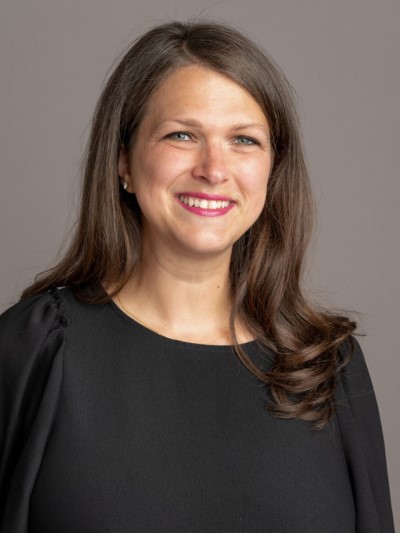
Anna Hartman receives the Covenant Award for excellence in Jewish education
ELIZABETH ABRAMS
Anna Hartman, Director of Early Childhood Excellence at JUF and of The Paradigm Project, is a recipient of the prestigious 2021 Covenant Award. Presented by the Covenant Foundation, the award honors excellence and innovation in Jewish education across the country, and is one of the highest honors in the field.
Hartman joins two other celebrated Jewish educators in receiving this award, both located in New York: Helene Drobenare-Horwitz, Executive Director, Young Judaea Sprout Camps; and Judith Turner, Senior Program Officer for Volunteer Services and Intergenerational Program Engagement at DOROT, a Jewish non-profit that provides services to the aged and volunteer opportunities.
“I feel deeply honored to receive this award from The Covenant Foundation,” said Hartman. “I am grateful for the opportunity the award affords me, to honor the educators working tirelessly and skillfully to support the learning and development of our community’s children. Jewish early childhood education, with its sacred partnership with families, is my beloved field, and I am humbled to be among its ranks.”
During her tenure at JUF, Hartman has developed a variety of programs. These include the Chicago Teachers Project, a laboratory for Jewish early childhood education, and the Early Childhood Collaborative, which strategically addresses issues facing the field, including tackling immediate needs that resulted from the COVID-19 pandemic. Hartman also established a fully funded cohort of master’s students in early childhood education for current teachers in local Jewish preschools, and created a robust menu of professional development opportunities that engage 200+ educators per year.
In 2011, Hartman co-founded, and has since directed, The Paradigm Project, a national organization that empowers educators with vision, tools, and a vital network of 250 + colleagues from across the country.
Elizabeth Abrams is Assistant Vice President of Marketing Communications at JUF.
Other stories
-
Two local teens win national recognition
Recipients of the annual Diller Teen Tikkun Olam Awards
Read more -
Celebrating six young award winners cultivating the community
Introducing young adult award winners
Read more -
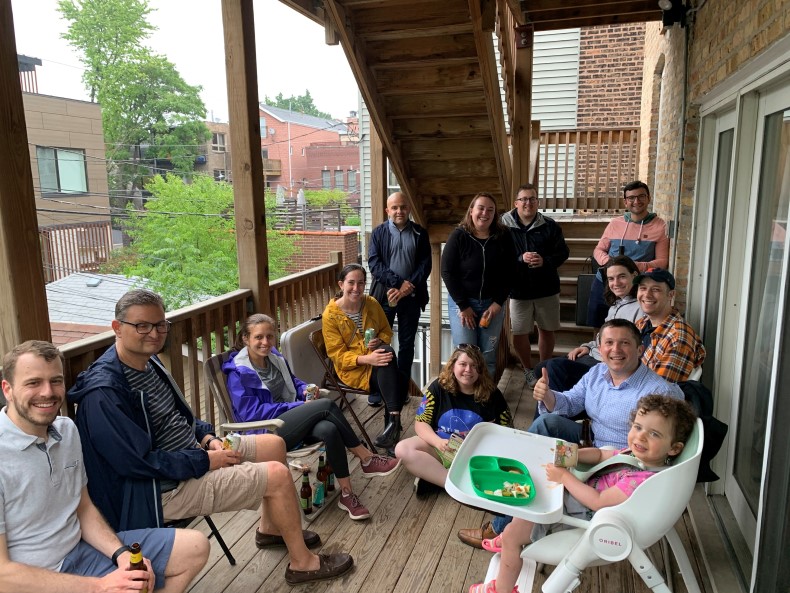
This summer, Base in Chicago is expanding from its current two locations to four, serving students and young adults with resonant, meaningful and enriching programs and experiences across the city. With the goal of building community and continuity for a diverse mix of participants, the additional locations mean that more people will be able to access the deep connections they are seeking, especially important following months of isolation during the pandemic.
The unique Base model is a home away from home for young people across the city and the actual home of four Rabbis and their families who open their doors to provide a welcoming, inspirational space for people to gather and experience Judaism together.
“The relationships the Rabbis have built with individuals is what makes Base so special,” said Charles, Cohen, Executive Director of Metro Chicago Hillel. “They are modeling authentic and accessible Jewish living in their homes, while offering thoughtful programming, services, learning cohorts, volunteer opportunities, explorations of social justice issues and more.”
Chicago was previously home to two Base locations: Silverstein Base in Lincoln Park, and a Base in the West Loop. Beginning in August, two additional Base locations will open: Doppelt Base in Andersonville for young adults and a Base in Logan Square to serve students.
Base Andersonville will be run by Rabbi Megan GoldMarche and Paige GoldMarche, while Rabbi Ezra Balser and Laura Elkayam will staff Base West Loop. Meanwhile, Base Lincoln Park will be welcoming Rabbi Sarah Mulhern and Rabbi Will Friedman; Rabbi Jonathan Posner and Hannah Swirnow will open the new Base Logan Square.
“There is something really magical about these inspiring, empathetic, pluralistic, welcoming Rabbis,” Cohen said. “They are comforting, supportive and extraordinarily giving of their time and personal space which offers a powerful transformation for our young adult community. For thousands of years, Jewish life was like this, with the rabbi as the heart and foundation of the community.”
Rabbi Megan said she has felt the backing of the community from the beginning of the Base movement, with phenomenal support from donors and participants. “At this age, people want a sense of home and rootedness,” she said. “People are looking for community and friends. Many are also looking for a source of meaning and feel that Judaism can be that for them.”
Rabbi Ezra agreed: “Our work is to give people the confidence and support to feel comfortable in their Jewish skin,” he said. “Being in our home brings a level of intimacy and vulnerability. My wife, daughter and I are inviting people into our lives. They see how our home works and how we interact with each other. It’s a place where everyone is welcome.”
Chicago’s four Base locations have an exciting array of programming planned for late summer and early fall that includes spiritual preparation for the High Holidays, exploring the intersection of feminism and anti-racism, multi-week cohorts on Jewish adulting, tacos and Torah, a Yom Kippur retreat-and, of course, weekly Shabbat dinners.
Base in Chicago is made possible by the generous support of the Silverstein Family, Judy and Abel Friedman, The Crown Family and an anonymous donor.
Established in New York in 2016, Base has locations in cities worldwide, including New York, Ithaca, Miami and Berlin.
For more information, to join an event or to get involved visit: metrochicagohillel.org/base .
Other stories
-
Two local teens win national recognition
Recipients of the annual Diller Teen Tikkun Olam Awards
Read more -
Celebrating six young award winners cultivating the community
Introducing young adult award winners
Read more -

A sense of belonging is an essential part of any community, and 18 Doors is dedicated to providing that feeling of inclusion for those seeking their place in the Jewish community.
The organization recently changed its name, from Interfaith Family. Its core mission of fostering the inclusion of such families in the larger Jewish community remains unchanged, but the new name recognizes that interfaith families are, themselves, diverse.
“We’re here to uplift the diversity of the Jewish community, to make inclusion an interwoven part of Jewish life,” explained Tani Prell, the new director of 18 Doors’ Chicago office. “The growing diversity of the Jewish community includes that of the interfaith Jewish community,” along every aspect of identity – diversity that 18 Doors recognizes as “as part of our larger web of inclusion.”
While it has offices in cities across the U.S., Chicago’s office is considered one of 18 Doors’ “innovation hubs,” along with those in Boston and Atlanta.
18 Doors works with individuals and couples from diverse backgrounds, helping them find their place in the Jewish community, and simultaneously works with community organizations to help them become more welcoming to people who have historically been marginalized.
Prell considers herself “a matchmaker” between couples and community organizations.
“We want to give people a space for belonging, and to see the thriving that happens when doors are open,” she said. “We are open to partnering with anyone with whom we can foster Jewish inclusion, in ways that are meaningful to them,” Prell said. “If you are a Jewish professional, I want to be talking to you.”
18 Doors’ partners range from OneTable, Honeymoon Israel and JCC Chicago to congregations nationwide. Others include Be’chol Lashon, which raises awareness about the ethnic, racial and cultural diversity of Jewish identity, and Keshet, which equips Jewish organizations to make LGBTQ Jews feel welcome.
Additionally, 18 Doors runs Couples and Conversation, small-group sessions led by rabbis for interfaith couples at various stages in their relationships.
Prell is a veteran of the inclusion movement. While her immediate past position was with the Art Institute, she earlier served as director of Jewish Learning and Engagement at Emanuel Congregation in Edgewater. For that work, she was honored as one of JUF’s 36 Under 36 in 2019.
Additionally, Prell is a National Board Trustee for the Union for Reform Judaism, and serves on their DEI (Diversity, Equity, and Inclusion) lay taskforce. She has worked for inclusion in the arts community, the justice system, and Jewish summer camps.
Prell was raised in a Lutheran home. But, she said, “I knew for a long time that I was going to convert” to Judaism – which she did as an adult, at Anshe Emet Synagogue. She is also the child of an interracial marriage, and describes herself as a “black, Italian, German, Jewish woman.”
One of her own first experiences with the wider world of diversity was at a Kabbalat Shabbat service, part of a conference on Loving Day, which celebrates the Supreme Court’s Loving v. Virginia case legalizing interracial marriage.
“Now, I have a job that helps create such experiences for others,” she said. “It’s what I would be doing anyway, and that it’s for the Jewish community is the cherry on top.”
Find more information on 18 Doors at 18doors.org/chicago-local.
Other stories
-
Two local teens win national recognition
Recipients of the annual Diller Teen Tikkun Olam Awards
Read more -
Celebrating six young award winners cultivating the community
Introducing young adult award winners
Read more -
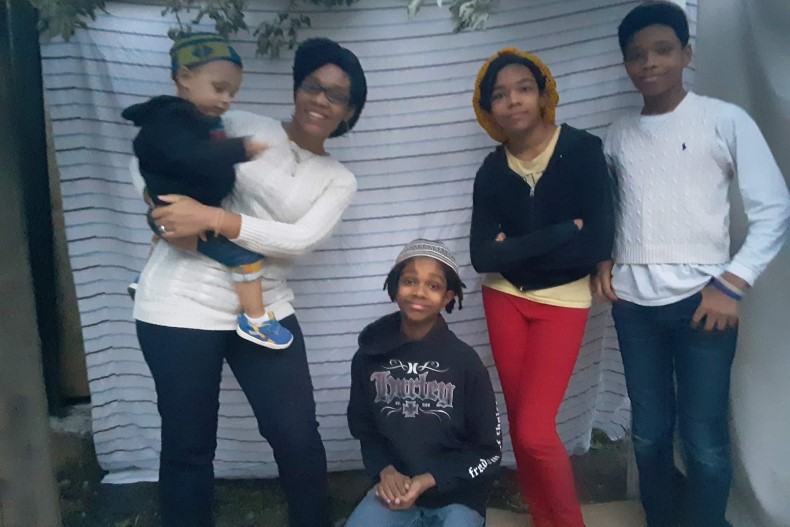
“Sh’mi Siddurah,” Cydney Wallace proudly declares her Hebrew name during a Zoom call discussion about what she’s been up to since being named to the 36 under 36 list last summer. She proudly wears her nameplate necklace on which both names shine bright: Cydney and Siddurah.
“I am trying to get more comfortable in using my Hebrew name. I think a lot of people have impostor syndrome,” she said. “I think it’s especially true in the Black and Brown communities, and I think it’s especially true in the Jewish communities. And so you can only imagine how I feel. But I want to own it. And I wear my necklace all the time.”
Wallace received her Hebrew name from Chief Rabbi Capers Funnye at Beth Shalom B’nai Zaken Ethiopian Hebrew Congregation when she became a bat mitzvah right before her 30th birthday. Now 36, Wallace remains an active member of the synagogue, along with her husband and four children.
She’s also a co-founding member of Kol Or, the Jews of Color Caucus for the Jewish Council on Urban Affairs. On June 19th, they held their biggest annual event, the Juneteenth Havdalah. Even in the midst of the pandemic last summer, they kept it going virtually.
“We’ve been making all kinds of connections and doing all kinds of fun things. We don’t plan on stopping just because the world is on fire,” Wallace said.
While the Juneteenth Havdalah is what Wallace calls “largely a Black celebration,” she says Kol Or is working on creating events for other members of the caucus as well.
“We [want] it to be a place where Jews of Color can be their full authentic selves. You don’t have to be the Japanese Jew, the Chinese Jew, the Black Jew, or the Mexican Jew. You’re just a Jew, and we’re all here sharing food and music, and what’s better than food and music?” Wallace said.
She eventually wants to bring Kol Or participants into her other work with JCUA, where she sits on the board. She stresses the importance of creating a space where Jews of Color feel comfortable, especially after experiencing exclusionary behavior from other members of the Jewish community.
Wallace’s activism and leadership places her in the national spotlight, too. Last October, she joined Rabbi Michael Siegel and Pastor Chris Harris, as featured guests on a virtual talk moderated by The Forward, discussing Black and Jewish relations locally and across the country.
Wallace wants to serve as a bridge between the two communities. But she says both communities need to take a look “inward first.”
“Until both sides reconcile with their past and what they’ve been doing and why, and just stop pointing the finger at the other side, no amount of people that look like me are going to be able to help,” she said.
Meanwhile, Wallace continues her work on the Police Accountability Campaign of JCUA, while also seeking out other causes important to her. At her synagogue last December, Kol Or hosted a screening of the documentary film, 13th , followed by a rabbinic led discussion on the 13th Amendment.
“Right now [the 13 th Amendment] says there should be no slavery unless you’ve been duly convicted of a crime. There’s currently a bill proposed to remove that (clause),” Wallace explained.
She plans to propose a campaign through JCUA to help get the bill passed. While she acknowledges this cause is a personal passion, she’s confident she can organize her fellow JCUA members to get the job done.
“I’m kind of loud. People listen to me,” she said with a smile.
Mimi Sager Yoskowitz is a Chicago-area freelance writer, mother of four, and former CNN producer.
Other stories
-
Two local teens win national recognition
Recipients of the annual Diller Teen Tikkun Olam Awards
Read more -
Celebrating six young award winners cultivating the community
Introducing young adult award winners
Read more -
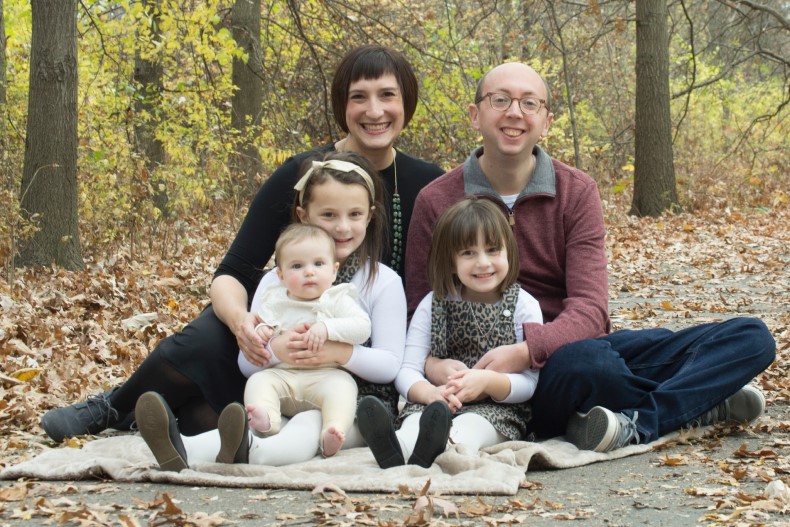
Since being featured in Oy Chicago’s 36 Under 36 two years ago, Eve Reingold Kleinerman has been busy changing the lives of Chicago-area Jewish women.
In 2019, Kleinerman left her role as an attorney at a legal aid clinic to become the first Illinois Regional Director of Shasheret.
Kleinerman made the observation that her colleagues who were most invested in and passionate about their careers in public aid had some type of personal connection to the criminal justice system. While Kleinerman believed strongly in her work, she didn’t have a personal connection to it.
She did, however, have a personal connection to Shasheret, the Jewish non-profit supporting breast and ovarian cancer survivors, promoting outreach, education, and support.
Unfortunately, Kleinerman was familiar with Shasheret because her mother was involved with the organization when she was diagnosed with breast cancer in 2007. At that point she connected with them through the New York office and “found them to be really supportive.” Sadly, Kleinerman’s mother died from a brain tumor in 2016.
“When Shasheret was considering opening an office in the Midwest, I felt like that was actually the perfect transition for me. I didn’t feel like a person whose calling was the law necessarily. It was always about giving back to the world and society for me. Working at Shasheret was going to be a way to do not only that, the giving back piece, but also embracing those two pieces, Jewish community and cancer support, which were super important for me personally.”
Since opening the Illinois office, only the third to open nationally, Kleinerman has been busy “increasing our on-the-ground presence. We have already seen significant growth in our caller-ship, deepening the impact of our services across the state. We are continuing to heighten awareness about the increased risk for hereditary breast, ovarian, and related cancers, ultimately seeking to improve and save lives.”
Their goal is to spread the word, so the Chicago community knows that we’re here for them; anybody who is facing breast or ovarian cancer, but also those who are at risk or are concerned about their risk of breast or ovarian cancer,” Kleinerman said.
“As a support to the community, we can offer guidance. All of our services, of course, are free and confidential. Nationally, we have 11 clinical staff, 10 social workers, and one genetic counselor who all work to support anybody who calls us. Although we are focused on the Jewish community and that’s our expertise and that’s our niche, we help anybody.”
Like almost everything else during the pandemic, fulfilling their mission has been a challenge. But Kleinerman and her team have been able to pivot and do much of their outreach virtually.
“Much of the work that I do, aside from spreading the word about our programming, is outreach and education, making sure that in our community, whether that is in the Chicago area locally or statewide in Illinois, that women, that men, that everybody in the community knows what they should know to take their safest steps in terms of cancer risk. So often times, that’s programming in synagogues, high schools, college campuses, to make sure that anybody who needs to hear about Shasheret has that knowledge and awareness and then can take those steps.
“When I think back on my last two years at Shasheret, I actually embody what I described with my former colleagues in the legal aid world, which is that I am extremely passionate about my work because it resonates with me personally rather than just being a job.”
Outside of her robust professional life, Eve is active at her children’s school, Arie Crown Hebrew Day School; and is a member of the JUF Young Women’s Board.
Rochelle Newman Rubinoff is a freelance writer living in the northern suburbs of Chicago.
Other stories
-
Two local teens win national recognition
Recipients of the annual Diller Teen Tikkun Olam Awards
Read more -
Celebrating six young award winners cultivating the community
Introducing young adult award winners
Read more -
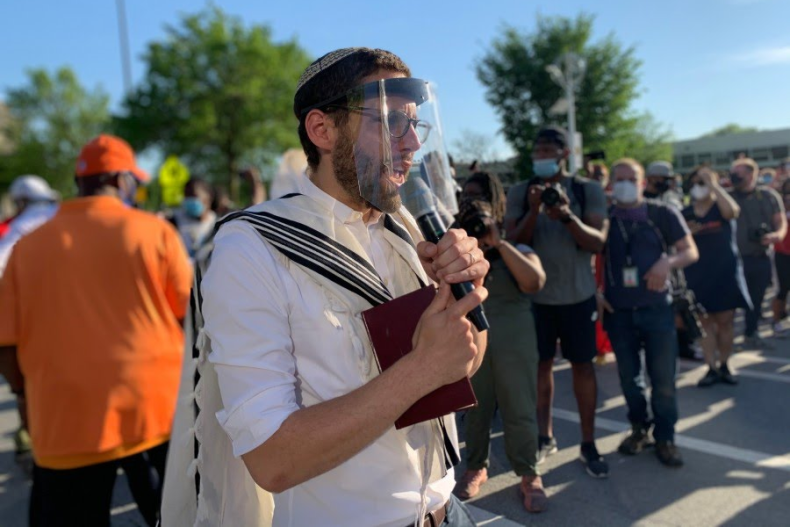
Since he was first featured in 36 Under 36 in 2018, Rabbi Ari Hart has expanded the many innovations and outreach that marked his first year at Skokie Valley Agudath Jacob Synagogue, a vibrant modern Orthodox congregation located near the Skokie-Evanston border.
Under his leadership, Skokie Valley partnered with other community groups, offering Chicago Jews the chance to combine Jewish worship with chesed –outreach to others. Members conducted food drives, protested gun violence, aided refugees, and delivered cholent to homeless Chicagoans. Each Passover, Skokie Valley hosts an “Open Seder” where all are welcome to celebrate and eat together at no cost.
This blend of spiritual uplift and inspirational leadership has seen Skokie Valley’s membership increase dramatically. “The success of each of these initiatives is due to the community and its passionate, innovative, and hard-working leaders, staff, and volunteers,” said Hart, 38.
When the coronavirus pandemic shut down much of communal life, Hart and Skokie Valley stepped up to help local Jews find new ways to connect. They organized wellness checks on synagogue members, delivered supplies to families who were sick or in quarantine, and organized daytime exercise classes and social spaces over Zoom to help keep seniors connected.
Instead of hosting their usual Open Seder during the pandemic, Skokie Valley delivered over 50 free Seders-in-a-Box across Chicagoland. Hart helped launch “Food For First Responders” with a dual mission: supporting Kosher restaurants under financial pressure and nourishing first responders.
With so many people suffering from loneliness during the pandemic–including himself–Hart came up with a novel way to help. “Rav Ari is lonely!” he announced to congregants. Synagogue members–and anyone else who wished–could book a date to visit with Hart out of doors. Within the next few months, he spent hundreds of hours with congregants and neighbors, listening, talking, and providing a much-needed personal connection.
Amid the pandemic, Hart also encouraged the Jewish community to think “beyond our borders.” When looting in May and June 2020 left some South Side neighborhoods without functioning grocery stores, Skokie Valley sent two refrigerated trucks to the Bronzeville neighborhood to help distribute fresh food to local residents. When a fire ripped through an apartment building housing Rohingya refugees last December, Skokie Valley members stepped in to replace kitchen supplies for two families.
Hart’s latest venture is launching Solu, an independent community-wide social action and education program. Solu –“path”–is the first word of Yom Kippur Haftarah, in which the prophet Isaiah explains that God desires us to “open the bonds of wickedness, dissolve the groups that pervert (justice, and) let the oppressed go free.” True to this vision, Solu will provide programs for individuals and families to combine Jewish learning with hands-on social action.
Programs will include building a Family Literacy Center in partnership with a church on the South Side of Chicago, aiding refugees, helping the homeless, and partnering with local organizations to tutor and aid at-risk students. Hart noted that many local Jews, especially those with young children, have a strong desire to reach out and help, but “there are so many obstacles” to doing so. With Solu, “We’re going to clear the way–we’re going to make a path.”
With his track record of energizing Jews to deepen their spiritual connections and do good in the world, the path Hart is forging is sure to make a difference in the Chicago Jewish community and beyond.
Yvette Alt Miller, Ph.D. lives with her family in the northern suburbs of Chicago.
Other stories
-
Two local teens win national recognition
Recipients of the annual Diller Teen Tikkun Olam Awards
Read more -
Celebrating six young award winners cultivating the community
Introducing young adult award winners
Read more -
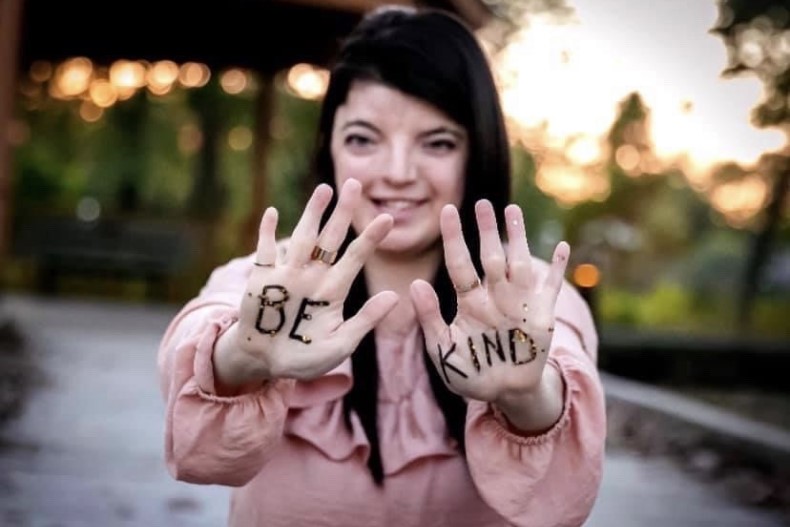
Rena Rosen says she has made it her mission “to make the world a little bit kinder.” As a teacher, author, advocate, and speaker, she works tirelessly to spread her message of kindness and inclusivity for people with differences. And, she recently added the title of Inclusion Coordinator at JCC Chicago to her lengthy list of jobs.
“Taking on the role of Inclusion Coordinator for JCC Chicago was a natural next step for Rena; JCC Chicago is in her blood,” said Rachel Schwartz, LCSW, Director of Social Services and Early Childhood at the organization. Rosen’s grandparents attended JCC classes when she was younger, and as a child, Rosen attended day camp and became a bat mitzvah at the Bernard Horwich JCC.
In addition to her lifelong connection to the JCC, Rosen, born with craniofacial differences, draws on the challenges she has faced in her own life to inform her inclusion work and inspire others.
Growing up in Skokie, Rosen, now 32, says she didn’t have the easiest childhood. “I had a lot of surgeries, and there were a lot of social challenges that I had to go through,” she said. Through it all, she leaned on her mother, with whom she remains extremely close, and developed her remarkably resilient and positive perspective.
Rosen, a 2017 36 Under 36 winner, explained how she derives strength and courage to share her story and inspire others from the obstacles she’s overcome. “I’ve taken my experience as an opportunity to make the world a little bit better for other people and myself,” she said.
Rosen demonstrates her drive daily at JCC Chicago, where she now divides her time between two roles. In the mornings, she wears her Inclusion Coordinator hat, planning and implementing new and continuing inclusion initiatives and programs, ensuring accessibility for all. In the afternoons, she serves as a teacher in a preschool classroom at Bernard Weinger JCC in Northbrook.
Though the context of her work changes from morning to afternoon, Rosen says her message does not. Working with adults and children, “the language might differ, but the basis of the conversation is the same,” she said.
In all she does, Rosen subscribes to the same philosophy: be kind. “When you see someone who looks different, staring is never okay. The best option is just to smile and say hello,” she said. One kind gesture can open the door to a deeper connection. “Once you make that initial hello and smile, the stories start flowing, and then, you learn about each other,” she said.
Rosen’s empathy and positive energy reach well beyond the JCC community. Lauren Schrero Levy, Co-Founder and Executive Director of The Nora Project, first met Rosen online through their shared work around disability awareness. Levy says her friendship with Rosen quickly grew. “Her energy and her commitment to equality for all kids and all people is just exciting and comforting to be around,” Levy said.
Rosen continues to use social media to build valuable connections. “Six years ago, I didn’t even know a soul who had a craniofacial anomaly other than myself,” she said. But, thanks to the internet, she has now connected with many adults, children, and families across the world who share similar experiences.
Most recently, Rosen created a Facebook group called “Knit for a unique fit,” garnering over 400 members in a matter of weeks. The group connects people who knit and crochet to make gloves for kids who have uniquely shaped hands due to syndromic or limb differences, often associated with craniofacial anomalies.
“I don’t know how to knit. I don’t know how to sew. But I know how to connect people,” Rosen said.
Leslie Hill Hirschfeld is a freelance writer living in the northern suburbs of Chicago.
Other stories
-
Two local teens win national recognition
Recipients of the annual Diller Teen Tikkun Olam Awards
Read more -
Celebrating six young award winners cultivating the community
Introducing young adult award winners
Read more -