Starting in the fall, juniors and seniors at Oak Park and River Forest High School (OPRF) will have the opportunity to study the Holocaust in the context of preventing current and future antisemitism in the Chicago area and beyond.
“After the Holocaust, the world made a promise-‘Never Again.’ The aim of this course is to help ensure that promise starts to come to fruition,” begins the syllabus written by history teacher Michael Soffer.
The course found its origin the week after the shooting at the Tree of Life*Or L’Simcha synagogue in Pittsburgh last year. “We were sitting with some friends at shul and they asked what we were doing at school to combat the rise of antisemitism, and the answer was we weren’t doing enough,” Soffer said. “So, I started toying around with the idea of what a class might look like as a response to the increased manifestation, locally and nationally, of antisemitism.”
Students at OPRF have encountered antisemitism in the form of spray-painted swastikas on campus in the last several years, but many have not studied the Holocaust before. “A lot of secondary scholarship suggested that the Holocaust is uniquely effective in reducing antipathy towards the ‘other,’ partially because it’s so black and white morally and, also, it happened elsewhere so there’s no defensiveness. That makes it a more effective learning mechanism,” Soffer said.
In addition to scholarly sources, Soffer sought advice from local rabbis like Rabbi Max Weiss of Oak Park Temple. “Living in a suburb with a substantial but not large Jewish presence, there is antisemitism; there’s also, like in every community, racism and ‘othering’ of people who aren’t like us,” Weiss said. “Having a class on the Holocaust can help people understand what these sorts of thoughts can do, taken to an extreme, and what antisemitism and racism can lead to.”
The curriculum will begin with the history of antisemitism progressing into the Holocaust. It will also focus on the psychology of genocide and the roles of others in the conflict, including bystanders, rescuers, resisters, and perpetrators. Towards the end of the semester, students will learn how to fight back against Holocaust denial and antisemitism today by becoming “upstanders,” a phenomenon where a person learns how to advocate for others instead of being a bystander to oppression.
An integral part of the class will be learning the individual stories of the Holocaust, including victims, survivors, and even perpetrators. For one modern example, Soffer will use the case of Reinhold Kulle, a former SS guard who worked in the OPRF’s district for 24 years. He even served as the head custodian of the school. The revelation shocked the community, Soffer said, because the public had always thought him to be “so polite.”
Weiss, who teaches a 10th grade class at his synagogue, has heard “many of the kids are excited to take the class. They want to deepen their understanding of the Holocaust and support the idea that this class is being taught in their high school.
“It’s really connected to lived experience,” Weiss said. “This isn’t just a straight history class; it’s how the lessons of history can guide us in how we live our lives today.”
Other stories
-
Two local teens win national recognition
Recipients of the annual Diller Teen Tikkun Olam Awards
Read more -

Celebrating six young award winners cultivating the community
Introducing young adult award winners
Read more -
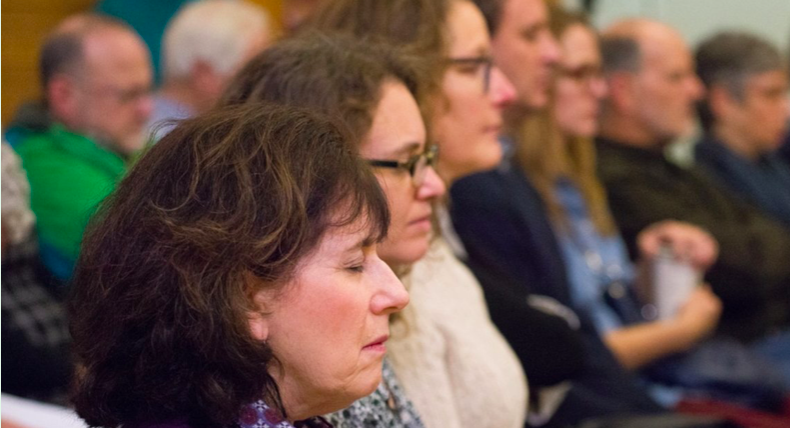
Mindfulness-the practice of living in the moment-has become a buzzword in society in the last decade. Mainly used to help people decrease stress, mindfulness is offered through classes, apps, yoga, and more. But what’s the Jewish angle on mindfulness?
Although many people, including Jews, seek mindfulness resources in Buddhism, you need not look outside the Jewish tradition to delve into the subject.
The Institute for Jewish Spirituality has helped 10,000 people and counting-including rabbis and other Jewish communal leaders-learn about the intersection between Judaism and mindfulness.
“We have resources within our own tradition,” said Rabbi Josh Feigelson, executive director of the institute. “In the Hasidic tradition, we have deep roots of Jewish mindfulness practices.”
Judaism explores the idea of finding inner peace from all the external noise. “We use the term ‘ pizzur hanefesh ,’ which describes the quality of feeling scattered in your soul,” said Rebecca Minkus-Lieberman, co-founder of Orot Center for New Jewish Learning, a JUF Breakthrough Fund grant recipient. “That’s how we often live today. In contemporary society, there are a million things to do. What we use mindfulness for at Orot is menuchat hanefesh , [to give] rest to the soul.”
Minkus-Lieberman’s classes and programs draw heavily from the Hasidic tradition. “Those texts and teachings have so much wisdom about how to tune into the inner landscape of our lives, and that’s what mindfulness is really about,” she said. “Living a righteous, holy Jewish life is not only about the rituals and mitzvot and external things. If we pay attention to what’s underneath the surface, we can move into rituals and observances differently, and they’ll have greater meaning, richness, and depth.”
For Feigelson, the essence of Judaism in mindfulness starts with tikkun middot -“being aware of character habits and living with greater intention and sense of sacred purpose,” he said.
One way to tap into tis intention is through breathing exercises inspired by the Baal Shem Tov’s mystical teachings. “We talk about God renewing us with every breath, but what does it feel like to experience that?” After tapping into this feeling for oneself, the next step is interpersonal relations, and the ability to “show up in the world with greater compassion and love.”
By using exercises like these, “we use Jewish wisdom and tools to change the world by changing ourselves first,” Minkus-Lieberman said.
Mindfulness can be integrated into all parts of Jewish life, from prayer and religious observances to cooking Jewish foods and doing charity work. For people who enjoy meditation, Feigelson recommends focusing on Jewish imagery like Jacob’s ladder. During prayer, slowing the breath and focusing on the ideas behind the words instead of speeding through large sections of text can help people feel more connected to their faith.
“For so many of us, Judaism is a lot of knowledge; it’s a lot of ideas, words, and rituals,” Feigelson said. “A lot of these more embodied practices were put aside and forgotten about. [Mindfulness] is an invitation to meaningful Judaism.”
For more information about the Orot Center for New Jewish Learning, visit orotcenter.org/
For more information about the Institute for Jewish Spirituality, visitjewishspirituality.org
Other stories
-
Two local teens win national recognition
Recipients of the annual Diller Teen Tikkun Olam Awards
Read more -
Celebrating six young award winners cultivating the community
Introducing young adult award winners
Read more -
Susan* came to the Jewish meditation group because of difficulty sleeping in the year since her spouse died. Neil came to group while struggling to maintain his sobriety after being laid off from his job. Stephen was looking for a way to find peace while dealing with a long-term illness.
Each had experienced a traumatic change in life circumstances and was asking what their purpose might be moving forward. Each sought help through meditation within the Jewish context, hoping Jewish meditation practice might offer support and direction.
In meditation, the mind or consciousness is intentionally developed for a particular purpose. There are many types of meditation that have been shown to have a wide variety of positive effects. Jewish meditation, which is as ancient as Isaac going out into the field to meditate (Genesis 24:63), was deeply developed in the Kabbalistic and Hasidic traditions, and has found a resurgence of interest in modern times.
Jewish meditation’s traditional focus has been on recognizing the sacred in everything and understanding God’s will for us. Moses’ initial encounter with the burning bush demonstrates how being curious and noticing miracles in our lives can lead to understanding our divine purpose (Exodus 3:2-5):
“And the Angel of the Lord appeared unto him in a flame of fire out of the midst of the bush; and he looked, and, behold, the bush burned with fire, and the bush was not consumed. And Moses said: “I will turn aside now, and see this great sight, why the bush is not burnt.” And when the Lord saw that he turned aside to see, God called unto him out of the midst of the bush, and said: “Moses, Moses.” And he said, “Here am I.” And He said: “Draw not nigh hither; put off thy shoes from off thy feet, for the place whereon thou standest is holy ground.”
By noticing and stopping with the kavvanah (intention) to examine a “great sight,” Moses demonstrated readiness for divine revelation and receiving his life’s sacred purpose . Some Torah commentators note that Moses was chosen for the holy duty of returning to Egypt to free the Hebrew slaves because he was the only person who noticed and stopped to examine the mystery of the burning bush.
We also can choose to stop and notice with the intention to look deeply at any moment or object in our lives, curious to understand a miracle that others may not see. And in that stopping and looking, we may become ready to receive our own divine purpose. We can hear and choose to take up the mantle God has intended for us.
If we allow it, we can look deeply into each moment to uncover the sacred core. We sit quietly with an open curiosity, observing “where is the sacred in this?” We may miss our lives and our callings if we carry on with life-as-usual. Sit with the intention of finding holiness in everything; make this a formal practice each day so that it becomes the default setting in your life.
In quiet moments, silently repeat ” Shivti b’veit Adonai kol yemei chayai /I shall dwell in the house of the Lord all the days of my life” or ” Shiviti Adonai l’negdi Tamid /I place God before me always” or “Y ehi Ratzon Milfanecha /May it be Your Will.”
When the mind wanders, as minds inevitably do, gently escort your awareness back to the desire to find the holiness in the moment: “S hivti b’veit Adonai kol yemei chayai ” and watch your life unfold in the light of the Sacred.
*names changed for confidentiality
Beth Fishman, Ph.D. is Program Manager of Addiction Services for JCFS Chicago.
Other stories
-
Two local teens win national recognition
Recipients of the annual Diller Teen Tikkun Olam Awards
Read more -
Celebrating six young award winners cultivating the community
Introducing young adult award winners
Read more -
A Psalm is both a prayer and a poem. The stanzas in the new book Amen: Seeking Presence with Prayer, Poetry, and Mindfulness Practice , mirror this merger of veneration and versification.
The book is written by Rabbi Karyn D. Kedar, the senior rabbi at Congregation B’nai Jehoshua Beth Elohim in Deerfield and published by the CCAR (Central Conference of American Rabbis) Press. This is Kedar’s fifth book, but her first book of poetry.
Aside from crafting rituals and ceremonies and the liturgy to accompany them, Kedar is a speaker and teacher who has designed retreats on leadership, engagement, forgiveness, and finding purpose.
With Amen , Kedar’s own purpose is, she explained, “to aid in the search for clarity, for strength beyond what we know, and for an affirmation of holiness, of goodness, of the grandeur of God.” The very word ‘ amen ,’ Kedar continued, “is the punctuation to the perpetual search.”
While the word ” amen ” itself is rooted in the Hebrew word ” emunah ” (faith), for Kedar saying ” amen ” to a prayer is “an affirmation of longing, of an attempt to connect with the transcendent. It means, ‘I hear you- I affirm your prayer.'”
Like any prayer book, Amen is divided into sections. The first is “Awakening the Spiritual Path.” One of the poems there is, itself, called “Amen”; it concludes: “Dear God/ for the mystery/ and for the silence/ teach me to say/ amen.”
The second section in Amen , titled “God’s Tears,” provides prayers for when “a hurricane decimates a city, or a gunman attacks a shul.” Kedar said she felt a need for prayers that were “a modern spiritual response” to massive tragedies.
The final sections are shorter. “Our Common Purpose” is a set of invocations for community gatherings. “Focus Phrases” are maxims on topics including guidance, forgiveness, and positive energy, which can be used as anything from daily affirmations to yoga mantras; one focus phrase, for instance, is “I am the hero of my own life.”
Her poems come from the same impulse as piyyutim , hymns written by Jewish scholars over the centuries. “They were poets trying to access the human spirit,” she feels. Like them, “Spirituality compelled me forward,” she said. “I form these prayers out of impulse.”
Kedar begins writing at sunrise every day. She says that having a schedule or ritual like this can discipline the mind and designate a space for inspiration to enter. She then imagines her muse, “a child holding out her hand, saying ‘Come with me!'”
She hopes parents and teachers will share some of the prayers in the book with their children. She recommends the prayer “Wonder,” which says “Embrace the world with wonder/ Less judgement/ more amazement.”
Today’s Jewish prayers replace the sacrifices and offerings made at the fallen Holy Temple. Of the new prayers in Amen , Kedar says, “This is my offering.”
Other stories
-
Two local teens win national recognition
Recipients of the annual Diller Teen Tikkun Olam Awards
Read more -
Celebrating six young award winners cultivating the community
Introducing young adult award winners
Read more -
You can’t find anyone today who knows that they’re a child of ancient Athens. What a pity! Athens gave us democracy. We are about to begin Pesach. We will celebrate Pesach the way it was celebrated more than 3,000 years ago when our grandparents were about to leave slavery in Mitzrayim (Egypt). They sat down to a Seder meal of matzoh and maror (bitter vegetables).
The first supper ensured that more than 3,000 years later we, their grandchildren, would be doing the same thing on the same night. What guaranteed that? We celebrated the Seder despite having been exiled in 586 BCE by the Babylonians and by the Romans in 70 CE. The Jewish people were the only landless people–in the worlds of Christendom for 2,000 years and Islam for about 1,400 years–who thrived.
How did that happen? The first supper, the Seder in Egypt, established the family as the foundation of Jewish civilization. At the first supper, on the night of liberation from slavery, nobody marched through the streets of ancient Egypt celebrating victory over the slave masters. On that first night of freedom, everyone stayed home, sat down at the dinner table, and had a family meal. There was nothing public or communal that night for the Jewish people. At the first supper, the foundation of Jewish civilization became the family. The first supper continues today as the world’s oldest enduring religious ritual.
When the central institution in Jewish life, the Temple in Jerusalem, was destroyed, the first supper had already taught us how to continue. The ultimate custodian of Jewish life would be the family, not an institution. The variety of institutions that the Jewish people established, the Temple in Jerusalem, the synagogue, the house of study, the school, and the kehillah –central communal organization–and the variety of Jewish leaders–prophets, priests, kings, rabbis, scholars, teachers, and communal professionals–serve the family. The first supper established that Jewish life is led and lived in family.
Unconditional love made the family the single most successful institution in thousands of years of Jewish history. The vehicle for the transmission of all-that-is-Jewishness is the unconditional love of fathers and mothers for children, and of grandfathers and grandmothers for grandchildren. The packaging of all-that-is-the-Jewish-tradition in the unconditional love of a parent and a grandchild ensures that the greatest influence on a child’s Jewishness–the radiance of a loving parent’s smile, the soft caress of a grandparent– is what serves up the Torah and the Jewish tradition.
The first supper is the birthday meal of the Jewish people. It is the most enchanted evening in the year, and the single most important Jewish meal of the year. It is the meal that answers the questions “who am I?” and “from where did I come?” This ancient first supper, in our present-day Seder, is set upon the most sacred and beautiful piece of household furniture–the family dinner table. This is the place where the family gathers day in and day out. This is where parents teach and raise children by modeling love. The normalcy of unconditional love is the secret of the Passover Seder. It is time to celebrate this unconditional love.
Go out and buy a photograph album. Take a picture this year of the family around the Seder table. Do this year in and year out, first for a decade or two, and then for a generation or two. Deposit the album with the family’s Haggadot so from generation to generation two books will sit at your Seder table, the ancient Haggadah and the portrait of your family’s unconditional love.
Rabbi Yehiel E. Poupko is Rabbinic Scholar of the Jewish United Fund.
Other stories
-
Two local teens win national recognition
Recipients of the annual Diller Teen Tikkun Olam Awards
Read more -
Celebrating six young award winners cultivating the community
Introducing young adult award winners
Read more -
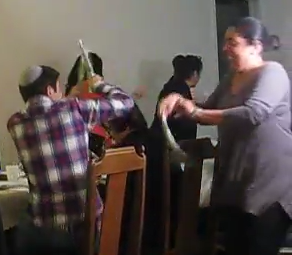
Shaily Hakimian
The minute we start Dayenu , we grab green onions and start beating each other like the slaves in Egypt. It becomes a five-minute food fight of your dreams! It’s been in Persian Jewish culture for a long time. Everyone loves it and it keeps people engaged.
Larry Liebman
What makes ours unique? We keep going until someone says, “Enough already.”
Shana Silver
My family adds kosher for Passover potato chips to our Seder. We think they’re the best!
Stevi Silverman Marks
We currently have a tradition with Miriam’s Cup where we talk about Miriam, and each woman honors another woman (our mom, Aunt Bernice, etc.) or relates a brief anecdote about them and pours water into our Miriam’s Cup.
We used to do awards called the “Afikomen Awards,” noting achievements and funny happenings… in categories like best costuming, best performance (usually a bat/bar mitzvah, baby, or wedding). We gave out the grand ‘afi,’ a [Oscar-like trophy] holding a piece of matzoh. One year, all the guys were nominated as “leading actors for snoring”: Avi for Sleepless in Northbrook , Jeff for Sleepless in Deerfield … My mom would usually win “best set decorator” for the holiday tables.
Andrea Hoffman
My family used boiled potato for karpas . That was the tradition in the part of Russia [our family is from] and I’ve come across a few other people who have the same custom.
Elana Dermer
In my family we put an orange on the Seder plate as a symbol that all Jews belong both on the pulpit and as participating members of the Jewish community. My grandmother started this tradition in support of marginalized members of the Jewish community and we continue do to so each year.
At the end of the Seder, we sing songs. It’s became a family tradition and competition of who can sing each song the fastest. Being a former teacher, I incorporated hand motions to a lot of the songs so even people who don’t know Hebrew can participate.
Daniel Goldwin
For a number of years, we’ve hosted a Seder on the second night of Passover. In the beginning we ran it as a traditional seder, but soon learned it would be more meaningful, memorable, and impactful for the kids–who far outnumbered the adults–if they played a more central role in the Seder. So, in the past few years, instead of a full-blown second Seder, all of the kids would write, build sets and props, and act out a Passover-themed play that they would put on after dinner.
Other stories
-
Two local teens win national recognition
Recipients of the annual Diller Teen Tikkun Olam Awards
Read more -
Celebrating six young award winners cultivating the community
Introducing young adult award winners
Read more -
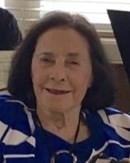
An extraordinarily generous legacy gift from Evelyn Ross Greene to the Jewish Federation of Chicago will strengthen the lives of people in need and Jewish women and girls.
Through her estate, Greene created two endowment funds to benefit JUF’s Community Legal Services and the Jewish Women’s Foundation of Metropolitan Chicago.
The gift to benefit JUF Community Legal Services–which will be renamed JUF Evelyn R. Greene Legal Services, effective April 1, 2020–will expand the general operation of the legal clinic. The program provides people in need with free legal assistance in civil cases, from bankruptcy, housing, and family law to wills, powers of attorney, and estates/probate guardianship.
“We see the incredible difference it makes to provide families in crisis with access to free and much-needed legal representation,” said Selwyn Skevin, Chair of JUF Evelyn R. Greene Legal Services. “This program provides a critical safety net for our community.”
SHALVA’s legal services also will be expanded. In fiscal year 2020, SHALVA received a one-year JUF Poverty Grant to pilot Legal Services program enhancements, which successfully expanded the role of SHALVA’s Legal Liaison to include legal representation and direct client advocacy. This new funding will enable these services to continue going forward.
“SHALVA clients face incredibly complex legal issues that intertwine with their abuse history, and often need multi-faceted legal services,” Skevin said. “Evelyn Greene’s generous gift will enable us to provide these critical services for an additional five to 15 cases per year. This will make a pivotal difference in the lives of survivors of domestic violence.”
In more wide-ranging ways, the Jewish Women’s Foundation also is dedicated to benefiting the lives of Jewish women and girls.
“JWF is building a future where all Jewish women and girls are equally valued partners in every aspect of the Jewish community and around the world,” said Sheri Hokin, Chair of the JWF Board of Trustees. “The Executive Director of the Jewish Women’s Foundation of Metropolitan Chicago works with trustees, grantees, community partners, and other stakeholders to advance these objectives through strategic grantmaking and advocacy.
“In recognition of Evelyn’s generous gift, the position of the Executive Director of the Jewish Women’s Foundation will be named the Evelyn R. Greene Office of the Executive Director, Jewish Women’s Foundation,” Hokin said.
Greene was a world traveler who traversed the globe, from Antarctica to the North Pole to the Himalayas; an adventurer who crossed the Sahara Desert on camelback and stayed in an Ashram in India for a month. She was particularly inspired by a transformative year spent living in Israel.
Jewish Women’s Foundation trustees and staff travel to Israel once every three years on a trip that views Israel through a gender lens, focusing on key issues facing women and girls, visiting grantees, and meeting with feminist leaders and change-makers.
“To honor both Evelyn’s lifelong passion for travel and her commitment to advancing opportunities for Jewish women and girls, the JWF Mission will now be known as the Evelyn R. Greene Women’s Study Tour of Israel,” Hokin said. “This will add special meaning to our next trip in February 2021.”
Greene, a lifelong Chicagoan, died in 2018 at age 96. In addition to her dedication to the Jewish community and love for travel, Greene was devoted to the arts. A gifted musician, she attended Belmont School of Music in Nashville and taught piano and music. Greene earned her Ph.D. in the harpsichord at 79.
“She was an extraordinary woman, on so many levels,” said Jewish Federation President Lonnie Nasatir.
Other stories
-
Two local teens win national recognition
Recipients of the annual Diller Teen Tikkun Olam Awards
Read more -
Celebrating six young award winners cultivating the community
Introducing young adult award winners
Read more -
Innovation.
It’s the spark that can ignite new discoveries, new industries and, when it comes to schools, new and exciting ways to connect with student minds and imagination.
It’s also the reason JUF has launched the Day School Innovation Fund, a program to kickstart creative new programs and techniques at Chicago-area Jewish day schools. Up to $90,000 will be awarded each year to advance school priorities, enhance education, support teacher development and strengthen student and family experiences.
“The real magic of this effort isn’t just that it bolsters new ideas at the schools receiving the grants,” said Jane Cadden Lederman, co-chair of JUF’s Community Building & Jewish Continuity Commission. “It also spurs innovative thinking and approaches throughout Chicago’s vibrant day school community.”
This year’s just-announced inaugural grants will help energize creative efforts at four schools and, in the process, help build and refine model efforts that can be adapted at other schools, as well.
One grant will help Ida Crown Jewish Academy expand its “Student to Student” program, a project piloted last year in which Ida Crown students introduce their peers at predominantly non-Jewish schools to the basics of Judaism, breaking down stereotypes and combating antisemitism in the process.
Bais Yaakov Girls High School will use its grant to align the 7th and 8th grade general studies curriculum at Joan Dachs Bais Yaakov with the high school’s 9th and 10th grade curriculum, ensuring a smooth and successful transition from middle school.
Chicago Jewish Day School will provide intensive professional development to help staff introduce inquiry learning, a teaching approach that helps students with a variety of learning styles and needs.
And Solomon Schechter Day School will use its grant to research innovative middle-school learning.
Other stories
-
Two local teens win national recognition
Recipients of the annual Diller Teen Tikkun Olam Awards
Read more -
Celebrating six young award winners cultivating the community
Introducing young adult award winners
Read more -
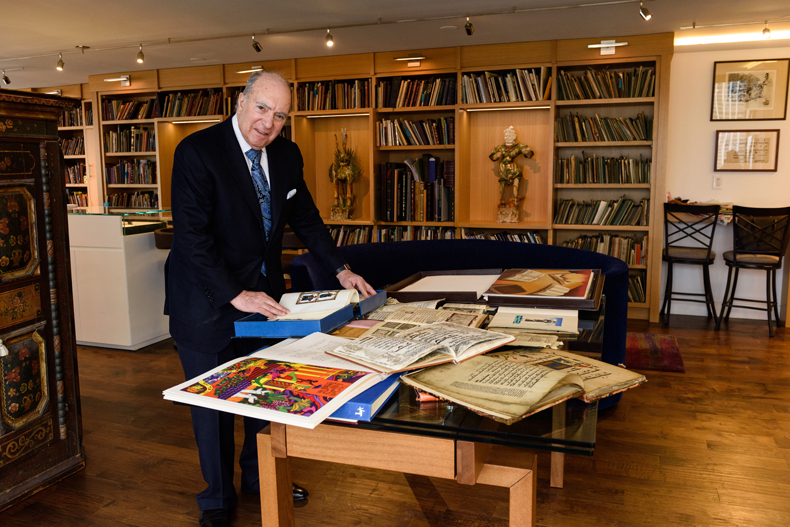
It all started with a chance encounter at a Manhattan Jewish bookstore.
Back in 1984, Chicago Jewish attorney Stephen Durchslag happened upon an antique Haggadah for sale. It was written in the medieval Judeo-Spanish language of Ladino. Intrigued, he bought it.
Four decades later, Durchslag has amassed more than 3,500 Haggadot *, the largest private collection in the world.
He has always cherished Passover, even as a boy, despite being tasked every year with lugging the Passover dishes and cookware up from the basement to his family’s apartment. “It was a fairly husky activity, and not a particularly pleasant one,” he said. “But, certainly, the [holiday’s] concept of family and belonging to a larger community was always very important to me.”
A lifelong scholar in Jewish studies, he says “the Haggadah is a capsule of what Judaism is all about”–history, freedom, and family.
His Haggadot –lining the massive wall of bookshelves in his northside Chicago condo–hail from around the world, are penned in 31 different languages, and span from 1485 to present day. He buys them at auction, through private sellers, and from his world travels.
He opens his home for tours, particularly for students, because “I see this collection as a message to the future.”
Now retired from intellectual property law, he is pursuing a doctorate in Jewish studies at the University of Chicago, focusing his research on how Haggadot reflect the issues of their day.
Every Haggadah , he explains, sheds light on the time and place where it comes from. “The Haggadah is a mirror of where we’ve been and where we’re going,” he said. “As we get into the modern period, it adopts issues like gay rights, feminism, and vegetarianism.”
As was the fate with so many Jewish books throughout history, many Haggadot were destroyed during the Catholic Reformation, pogroms, and the Holocaust.
Others, in less dramatic fashion, were ruined just because they were used during a meal. But a multitude have made the journey to Durchslag’s shelves. Some in his collection are in pristine condition, while others contain tattered, wine-soaked pages.
A Haggadah means to “tell” the story, and each one in his collection has its own story to tell. In the reciting of the original Jewish liberation story-the exodus from Egypt-many of his Haggadot incorporate subsequent examples in history of Jewish oppression and struggles for freedom.
One, for instance, published in Amsterdam in 1687, was used by Jews who survived the Spanish Inquisition to reintroduce themselves to Judaism, and includes a prayer to say in memory of people burned at the stake.
Another dates to the Reformation. The pages are sprinkled with redacted text, where any reference to the Talmud–thought to be anti-Christian–was blackened out to avoid censorship.
He also owns a World War I army manual for German Jewish soldiers that contains a Haggadah within its pages.
And a 1943 parody Haggadah used during the time of the Allied invasion of North Africa. The “Four Sons” are represented by Churchill as the wise son, Hitler as the evil one, the Americans as the simple son, and Mussolini as the son who “is not worth asking.”
Durchslag hosts an annual Seder in his home. The multi-generational gathering, among them his two grown daughters, celebrate at times with costumes and a rousing reenactment of the 10 Plagues.
Instead of using just one Haggadah at his Seder, he blends excerpts from several to offer a richer retelling of the story, including the Moss Haggadah, considered one of the most artistically significant Haggadot of the modern era, and the Santa Cruz Haggadah , which emphasizes spiritual cleansing.
But Durchslag’s favorite Haggadah is none of the above. Rather, the one he loves most is the one his artist girlfriend wrote. The meet-cute story goes that someone fixed them up over their shared love of Passover literature.
So which Haggadah will he acquire next? That’s easy, he says. “The one I don’t have.”
*Plural of Haggadah
Other stories
-
Two local teens win national recognition
Recipients of the annual Diller Teen Tikkun Olam Awards
Read more -
Celebrating six young award winners cultivating the community
Introducing young adult award winners
Read more -

Stay home. This is the advice that, more than any other measure, is supposed to keep us safe as a global pandemic works its way through our communities. Home should be our place of refuge.
For most of us, staying home means reducing our risk.
For those experiencing domestic abuse, it means becoming more vulnerable.
One in four women will experience domestic abuse in their lives. Twenty people every minute are experiencing some kind of intimate partner violence in the United States alone. And the sad reality is, those numbers reflect the Jewish community as much as any other.
Now factor in the added stresses–physical, emotional, financial, spiritual–that COVID-19 is wreaking, and will continue to wreak on our lives. “Incidents of intimate partner violence often increase during emergency situations,” said Barbara Siegel, SHALVA clinical director. “Perpetrators have more time with their families and support systems break down.
As we collectively take the necessary precautions to distance ourselves from one another, some women in our community find themselves trapped with their abuser.
But there is hope. You can help.
We are distant, but not disconnected. Every one of us can make a difference. Rabbis, cantors, educators, Jewish professionals, parents, neighbors, and friends–we can all step up and ensure that women are safe in their homes.
Today, in the face of this unprecedented challenge, we at SHALVA ask every one of us to make this commitment.
Here are a few things you can do if you are concerned that someone you care about may not be safe in their relationship:
- Reach out. Get in touch, regularly, using whatever means is safest and most reliable to reach your friend.
- While speaking with someone experiencing abuse, use empowering, not judgmental or accusatory, language. Abuse is fundamentally about power and control, and now more than ever it’s important that the victim maintains a sense of agency over her own life.
- Come up with a code word that you can use with your friend if they ever feel they are in danger.
- Help your friend plan for safety.
- Let them know that SHALVA is here for them, with free and confidential counseling services via telephone.
We ask that every one of us agree to check in on at least one other person. Sometimes that’s all it takes to change–and even save–a life.
If you are ready and willing to take this challenge, in this time of deep uncertainty, SHALVA is here to support you. Visit here to commit to this action by adding your email and SHALVA will send you resources and tactics for having these important conversations in a healthy, helpful way.
And know that SHALVA is here for you, too. Knowing, or suspecting, that a friend is experiencing abuse is its own kind of trauma. Our phone lines are not only open to those experiencing domestic abuse, but to those affected by it secondhand.
This pandemic has forced us all into a massive social experiment. It will test our mettle as individuals, and as a country. Now is the time to prove that the Jewish community will continue to do what it does best. Love our neighbors. Be responsible for one another. We will show that even six feet apart, we will not stand idly by.
Carol Ruderman is the Executive Director of SHALVA.
SHALVA supports Jewish women experiencing and healing from domestic abuse, through counseling, supportive services, and community education. Our phone is open 24/7 at (773) 583-HOPE (4673). Or visit shalvaonline.org .
SHALVA is a partner in serving our community with–and a special grant recipient of–the Jewish United Fund of Chicago.
Other stories
-
Two local teens win national recognition
Recipients of the annual Diller Teen Tikkun Olam Awards
Read more -
Celebrating six young award winners cultivating the community
Introducing young adult award winners
Read more -