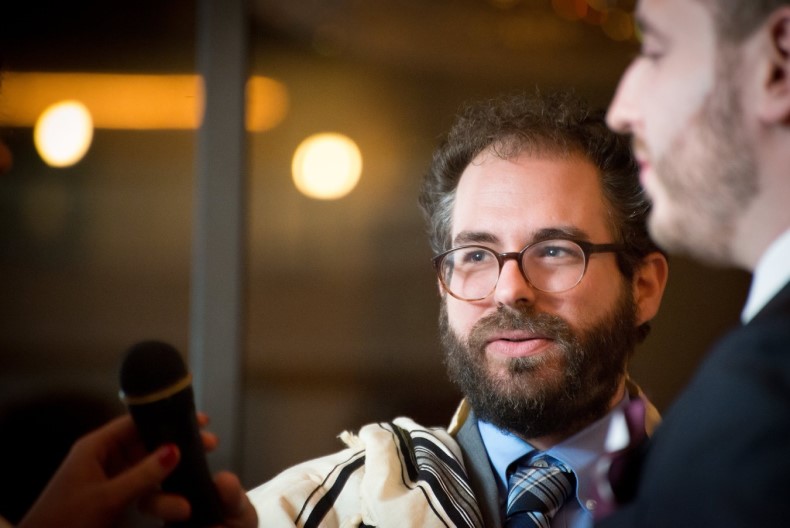
During a pandemic that has separated us, Rabbi D’ror Chankin-Gould has been focused on bringing his Lakeview-based Anshe Emet Synagogue congregation together and keeping them connected and engaged.
“It has been a trying time,” said Chankin-Gould, 37, Rabbi and Interim Grodzin Director of Educational Innovation at Anshe Emet. “It has required a lot of ingenuity to stay connected to the people to whom we’ve been so close and providing support, services, and education in new ways.”
Chankin-Gould, a member of the 36 Under 36 Class of 2016, embraced the honor as a foundation on which to expand outreach initiatives and “continue to have impact,” he said. “The year has challenged us to re-think things we’ve taken for granted. Everyone’s preference is to be together in person, but for the first time we have been providing virtual services. We are learning how to be more flexible and in doing so, we’re touching people who we haven’t touched in the past.”
From bar and bat mitzvahs to baby namings, there is little that the pandemic has not impacted in the services and programs Anshe Emet offers its congregation and the outlying community. “We’ve tailored our offerings depending on what the best medical advice is in the moment,” he said. “I’ve worked very closely with our health and safety committee so depending on the moment in the pandemic, some folks have had small in-person gatherings with a handful of friends and family while others held outdoor celebrations with masks. Some have gone entirely virtual and found ways to connect with family that cannot travel.”
While Chankin-Gould feels “such sadness” that family celebrations have had to be curtailed or canceled outright, he has seen that “people are finding out what matters most. This moment calls on us to figure out how can we be creative in connecting with our deepest values and with cherishing those above all else.”
Among the out-of-the-box programs Chankin-Gould instituted during the pandemic is reaching out to older immigrant congregants for whom English is not a first language and who are disconnected from technology.
Another challenge Chankin-Gould has found “exciting to oversee” is navigating what religious school looks like in a virtual world. “We’ve pivoted to a system of simultaneous tracks that I’m very proud of,” he said. “We offer an in-person option with social distancing and masks which a third of our students took up. The rest are involved with virtual learning.”
The synagogue has “gotten more flexible in meeting families where they are and tailoring our resources to them,” he explained. “If that means sending materials home so kids are better supported, then we’re doing that. If it means finding a tutor to work one-on-one with virtually or at home, then we’re doing that. We’re opening up a wide box of opportunities to make sure every kid is getting their needs met.”
In his seven years at Anshe Emet, Chankin-Gould, a Jewish leader in the LGBTQ community, said he has seen “great strides in LGBTQ outreach and inclusion.”
The pandemic has also not slowed his efforts to work with Keshet to “develop the training and resources dedicated to helping people be their best selves,” he said.
Anshe Emet’s tagline–“We are more than a building”–has served as a signpost for Chankin-Gould and his congregation during this health crisis. “That insight in and of itself is so profound,” he said. “We’re a family and we’re a community that supports each other, learns together, works together, and cares for each other. There is also something very heartening in realizing that the value of our community transcends the physical space.”
Donald Liebenson is a Chicago writer who writes for VanityFair.com , LA Times , Chicago Tribune , and other outlets.
Other stories
-
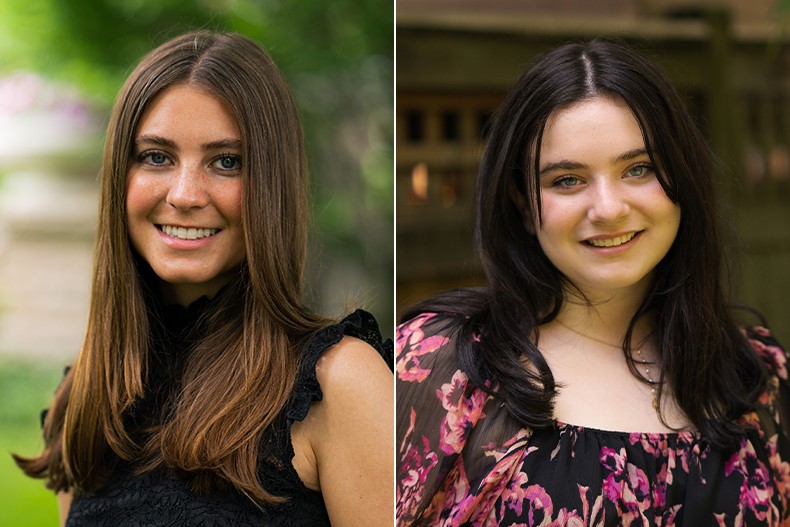
Two local teens win national recognition
Recipients of the annual Diller Teen Tikkun Olam Awards
Read more -
Celebrating six young award winners cultivating the community
Introducing young adult award winners
Read more -
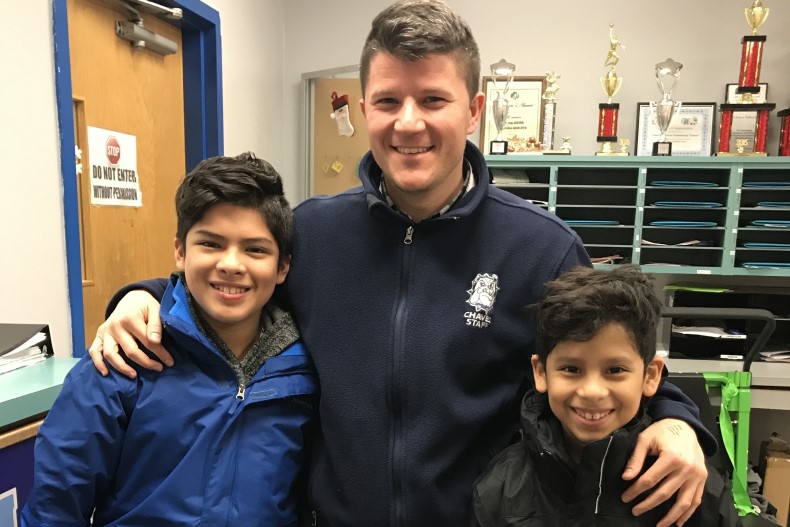
It’s no secret that early education helps children achieve greater long-term success. “I’m a firm believer in a strong foundation in education,” said Joe Rosen, a 2015 36 Under 36 honoree.
Rosen, Assistant Principal at Cesar E. Chávez Multicultural Academic Center in Chicago, dedicates himself daily to making this building block accessible to all children, especially those in the low-income community he serves.
A passionate teacher and leader who earned his doctorate in education, Rosen credits his Jewish values, instilled from an early age at home and at Jewish day school, for the inspiration to choose a profession helping others. “Everything I do is rooted in my Jewish values of compassion, of community, and of equity,” Rosen said. “I hope, through my work, that I am passing these values to the students and community that I serve, so that they can in turn do the same with their lives.”
Rosen, 36, grew up in Skokie, attending Solomon Schechter Day School and Ida Crown Jewish Academy. He went to the University of Illinois at Urbana-Champaign with the intention of studying medicine; however, Rosen found his true calling when a cousin suggested he apply for Teach for America. Being accepted to the program changed the course of his life, and he has since dedicated himself to confronting educational inequity.
“After the first few months, I loved teaching,” he said. “I loved everything about it. It was super rewarding.”
He transitioned from classroom teacher to his current role as assistant principal seven years ago, and immediately made an impact at his new school.
“Hiring Joe was one of the best professional decisions that I have ever made. He is an inspiration to everyone at our school,” said Barton Dassinger, Principal at Chávez.
In addition to his responsibilities overseeing the preschool and primary grade buildings at Chávez, Rosen works closely with teachers, students, and their families. He says he makes developing relationships a priority, and the community has responded in kind.
“Mr. Rosen is so involved that students, parents, and teachers know that from the moment you arrive at school in the morning, he is waiting with a big smile, welcoming the students and calling them by name,” said Chávez parent Jhoana Medina. “Students see school as if it were their home.”
As assistant principal, Rosen has helped lead Chávez to make great academic strides, according to metrics used by the Chicago Public Schools system. After Rosen’s first three years at Chávez, the school was recognized as one of the top performing K-2 elementary programs in the country, and students’ academic growth has consistently continued to improve in subsequent years.
Rosen works seven days a week, 51 weeks a year, spurred on by his unwavering commitment to his students. “Seeing our kids and just how happy they are and how successful they are with our teachers–that’s what keeps me going,” he said.
He gives his heart, as well as most of his time, to Chávez. He has helped build and maintain valuable community partnerships with organizations like the Greater Chicago Food Depository and Hyatt Hotel Corporation to provide essential food and school supplies for students.
On top of it all, he still finds time to have fun with students at Chávez. Recognizing the value of sports and arts programming, Rosen started a golf team consisting of preschool through 8th graders. “We are the only pretty comprehensive and competitive elementary school golf team in CPS. Most programs start in high school,” Rosen said.
From the classroom to the golf course and many places in between, Rosen demonstrates that his commitment to his students extends far beyond school walls.
Leslie Hill Hirschfeld is a freelance writer living in the northern suburbs of Chicago.
Other stories
-
Two local teens win national recognition
Recipients of the annual Diller Teen Tikkun Olam Awards
Read more -
Celebrating six young award winners cultivating the community
Introducing young adult award winners
Read more -

When it would have been easier to have kept silent and let things be, Illinois State Representative Bob Morgan has often used his voice and taken action.
Profiled in 36 Under 36 in 2014, when he was General Counsel to the Illinois Department of Health and coordinator of the state’s medical cannabis pilot program, Morgan, a Deerfield Democrat first elected to the state legislature in 2018, learned early on about tough choices.
Growing up in south suburban Richton Park, Morgan, now 40, was repeatedly subjected to antisemitism in his high school, where he was one of only two Jewish students. He was jumped by a gang; he discovered swastikas on one of his sweatshirts. It was a defining moment, the legislator said.
“It forced me to embrace my Judaism,” said Morgan, who lost a set of great-grandparents during the Holocaust. “I had to choose whether to walk away or embrace it.”
He continued to embrace it at the University of Illinois at Urbana-Champaign, where he became President of the campus chapter of Hillel and Student Body President. He took on these leadership roles, he said, during “a very volatile” period on campus, when pro-Palestinian activism and the BDS (Boycott, Divestment, and Sanctions) campaign against Israel were on the rise. Rather than deflect these hot-button issues, Morgan added, “I was in regular dialogue with the Muslim student association… It taught me a number of lessons about [intergroup] dialogue. It was a benchmark for the future.”
Jump to that future, some 15 years later, when Morgan, who earned his law degree from Northern Illinois University, was deplaning at O’Hare. “I received a call from a friend, who was a civil rights attorney. He said, ‘Can you get to O’Hare?’ They were detaining people, some with dual American citizenship, under [the new federal] travel ban. So, I walked from Terminal 3 to Terminal 5 [the international terminal] and went to work with other lawyers to get all 63 detained individuals released.”
Morgan said that it was “beshert”–or destined to be–that he’d been at the airport in 2017 when the travel ban took effect. It afforded him another opportunity to take a stand in “supporting those escaping persecution,” he said.
Fighting against injustice has led to Morgan’s involvement with the Anti-Defamation League, where he serves on its Midwest board, and participation in the Illinois Jewish Legislative Caucus, which advocates on behalf of issues affecting Jewish constituents.
Morgan, who ran unopposed in 2020 for a second term, waxed reflective on his freshman term in the Illinois State House. Hearkening back to his days in health law, he proposed legislation, still pending, that would create an independent review board to serve as a check on hikes in health insurance premiums. He also said that he “worked very closely to make sure that telemedicine [visits] are covered” during the coronavirus pandemic.
When he is not attending to legislative affairs, Morgan relishes in creating a Jewish home with his wife, Sonya Jacobs Morgan, a clinical social worker, whom he met at an ADL event. The parents of two young children, the Morgans celebrate Shabbat together with a Friday night dinner and participate in activities of their synagogue, the Deerfield-based B’nai Jehoshua Beth Elohim.
Reflecting on the nature of his legislative district, which includes huge swaths of Jewish constituents in Deerfield, Northbrook, Glencoe, and Highland Park, Morgan said that the values of those he represents very much mirror his own. “My district is incredibly focused on those who need help,” he said. “We are a fortunate community, and we are interested in giving back.”
Robert Nagler Miller is a journalist and editor who writes frequently about arts- and Jewish-related topics from his home in Chicago.
Other stories
-
Two local teens win national recognition
Recipients of the annual Diller Teen Tikkun Olam Awards
Read more -
Celebrating six young award winners cultivating the community
Introducing young adult award winners
Read more -
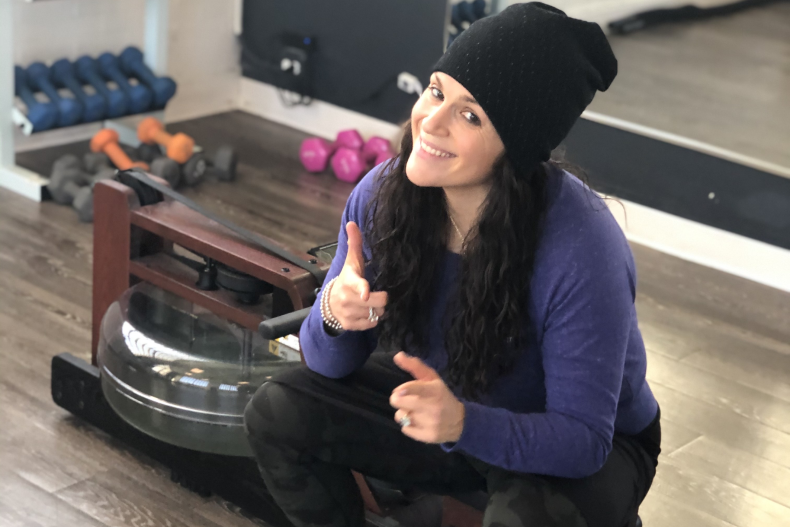
Tziporah Gelman is a familiar figure in the Chicago Jewish community: a mom of five, she helps provide spiritual leadership as the rebbetzin of Kehilat Chovevei Tzion in Skokie, where her husband, Shaanan Gelman, is Senior Rabbi.
Gelman, a 36 Under 36 honoree from 2013, is also a tireless advocate for women to make time for self-care and exercise, through Frumba Chicago, which she founded and directs.
The name “Frumba” is a combination of the popular dance exercise Zumba with frum , the Yiddish word for Orthodox. Frumba Chicago classes differ slightly from other exercise offerings–they are for women only and Gelman sticks to music with cleaner lyrics–and bring joy and movement to women both in the frum and general population.
“It really became a big phenomenon in the city for women who wanted a women-only facility where they could come and work out and socialize and get stronger and just feel fabulous,” Gelman noted.
One reason Gelman is able to connect deeply to women over fitness is that she knows what it’s like to struggle with health and weight herself. A decade ago, “I needed to lose weight to get my life back,” she recalled. She began to exercise and acquired a new perspective on health and fitness, which she’s been teaching other women ever since: “You can get through whatever challenges you are navigating,” and by taking care of ourselves, we also can take better care of all the people who rely on us, too.
In 2017, Gelman opened a Skokie studio, giving Frumba Chicago a permanent home. “It’s a safe space” for women to exercise and come together; “there’s no judgement, just acceptance, meeting people where they’re at–we embrace everyone.”
While Frumba Chicago offered daily classes, Gelman continued to offer Frumba programs in other settings too, including bat mitzvah parties: “They’re so much fun,” she explains. “The kids get really into it.”
When the coronavirus pandemic hit and Gelman was forced to temporarily close Frumba Chicago’s physical space, she started teaching remotely. With so many people locked down and sheltering in place, she realized that women needed to get moving and exercise more than ever.
“The model changed, but the goal is always the same,” she explained, helping “women and girls be strong–physically strong, mentally strong, spiritually strong–so that they can navigate life’s challenges–like a global pandemic!”
Gelman’s reputation spread and women across the country and the globe started tuning in to her daily exercise classes and booking personal training sessions. In some cases, family members who found themselves unable to visit each other because of the pandemic were able to connect during Frumba Chicago classes remotely. One local Chicago woman took Frumba Chicago classes along with her sister in Israel. When health guidelines allowed, Gelman also offered classes outside, physically distanced and with masks.
With the exception of Jewish holidays, Frumba Chicago never missed a day of classes: “it allowed people to keep working out during the madness” of COVID, she explained proudly.
Gelman plans to expand Frumba Chicago, reaching more women. Noting that many Orthodox Jewish women “have very big families and tend to put themselves last,” she has a special message to members of the Jewish community: “I want to see them getting stronger and healthier and crushing their goals.”
As they do, Frumba Chicago–and Tziporah Gelman–will be right alongside them, teaching women across Chicagoland and around the world to get moving.
For information about Frumba Chicago, see https://www.instagram.com/frumbachicago/ or email [email protected]
Yvette Alt Miller, Ph.D. lives with her family in the northern suburbs of Chicago.
Other stories
-
Two local teens win national recognition
Recipients of the annual Diller Teen Tikkun Olam Awards
Read more -
Celebrating six young award winners cultivating the community
Introducing young adult award winners
Read more -
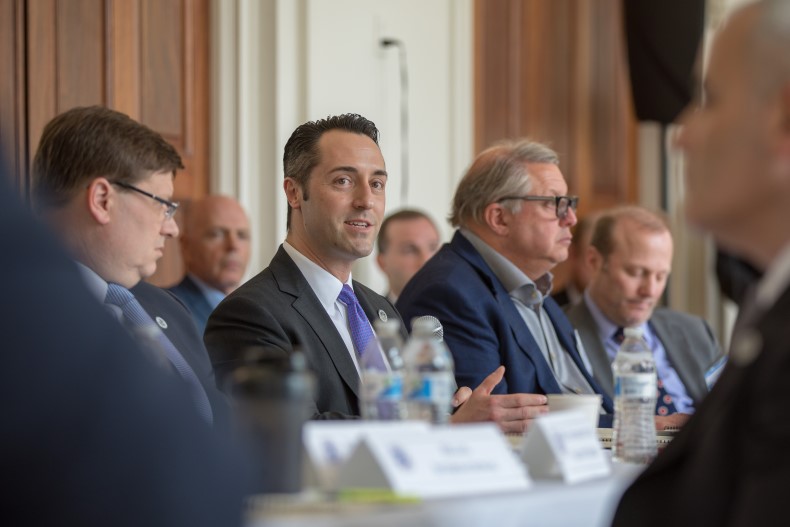
When Michael G. Masters was featured in 36 Under 36 in 2012, he was a public employee, having served as the Executive Director of the Department of Homeland Security and Emergency Management for Cook County, Chief of Staff for the Chicago Police Department, and as an assistant to former Mayor Richard M. Daley.
Over the past decade, a few facts have changed. Masters is no longer a thirtysomething. He is 42. He no longer works in the public sphere. Since 2017, he has been the National Director and Chief Executive Officer of the Secure Community Network, a nonprofit established in 2004 by North American Jewish federations and other Jewish groups to serve, in SCN’s words, as “the official safety and security organization of the Jewish community.” He is no longer the dad to an only child. He now has two daughters, “a 12-year-old going on 40 and a 5-year-old going on 20,” he said. And he is no longer an officer in the United States Marine Corps, where he retired with the rank of Captain.
But the Masters profiled nine years ago is essentially the Masters of today. He remains “dedicated,” “passionate,” and “committed”–words he used to describe himself in 2012–particularly vis-à-vis the Jewish community, which, he said, is experiencing the most “complex and dynamic threat environment” from antisemitic forces around this country. As head of the SCN, he frequently liaises with officials from the U.S. Department of Homeland Security and FBI to curb and counteract acts of hate against Jews and other minorities.
When not on the job, Masters–who also was a Senior Vice President of The Soufan Group, a strategic advisory firm that counsels clients on emergent threats–continues to give back to the Jewish community. He serves on the Board of Trustees of the Bernard Zell Anshe Emet Day School, his alma mater.
“Service to the community” is Master’s mantra; it always has been, and always will be.
Masters grew up in a family which instilled in him the values of educational achievement and public service. His mother was a Chicago public school teacher. His father, Allan Masters, an attorney, worked as a special agent in the FBI before becoming a judge in the Circuit Court of Cook County’s domestic relations division.
Masters took his family’s values to heart. While an undergraduate at the University of Michigan, he served on the advance team for Al Gore’s 2000 presidential run. Following graduation, he quickly followed up with a master’s degree in international relations at the University of Cambridge and a law degree at Harvard University, where he was managing editor of the Harvard International Law Journal .
While much of his work is focused on the Jewish community, Masters has devoted considerable energy to other causes that advance his values. They include issues facing Native Americans, with whom he feels a special connection, since both Jews and tribal nations in North America were both subjected to “forced exodus,” he said.
“It troubles me to go to places in this country where conditions are undeveloped,” Masters added, and has been particularly troubled by “the impact of COVID-19 on the indigenous people.”
Another cause close to Masters’ heart is the Harry S. Truman Scholarship Foundation, on whose council he sits. A recipient of a prestigious Truman fellowship–bestowed upon those college students with a demonstrable commitment to public service–Masters feels strongly about inspiring young people to become their generations’ next leaders. They couldn’t do better than by looking at President Truman as an example to follow, he suggested.
“Truman was a humble leader dedicated to the country,” observed Masters. “He was more interested in solving problems and fixing issues than getting credit.”
Robert Nagler Miller is a journalist and editor who writes frequently about arts- and Jewish-related topics from his home in Chicago.
Other stories
-
Two local teens win national recognition
Recipients of the annual Diller Teen Tikkun Olam Awards
Read more -
Celebrating six young award winners cultivating the community
Introducing young adult award winners
Read more -
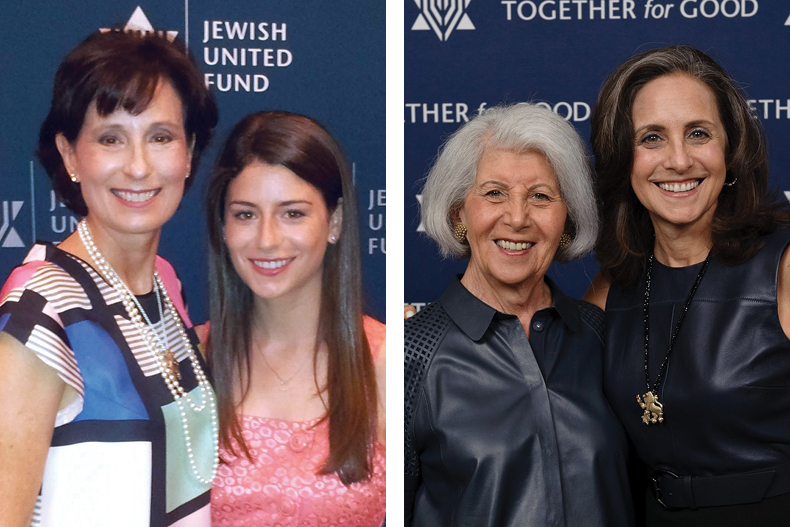
JUF’s “Women’s Division” has a new name: “Women’s Philanthropy.”
“We have grown to feel more empowered, to have a bigger presence,” said Hilary Greenberg, president of JUF’s Women’s Board. “We really feel the name reflects women’s new position and place– at the forefront.
“Women are now in three of the top leadership positions in JUF,” she noted, referring to JUF 2021 General Campaign Chair Kim Shwachman, JUF Board Chair Pam Friend Szokol, and JUF Overall Planning and Allocations Committee Chair Wendy Abrams, who also is a former National Women’s Philanthropy Chair of the Jewish Federations of North America (JFNA).
Part of the impetus of the local name change was to bring it into alignment with JFNA’s nomenclature at the national level.
When JFNA started using the term ‘Women’s Philanthropy,’ Greenberg said, the new name “changed the culture, and helped raise funds nationally. Confidence grew–strength grew– with the new name.”
The change also aligns with the women’s departments of federations across the country. “Many communities have switched the name of their women’s cohort to Women’s Philanthropy, or established it with that name at the outset,” said Abrams. A past president and campaign vice president of JUF’s Women’s Board, she is now an honorary director.
A survey of other cities’ Federations found, Greenberg said, that “some 90 percent of other Federations across the country call their women’s departments ‘Women’s Philanthropy.'”
“The name ‘Women’s Division’ has served us very well,” Greenberg said, “but ‘philanthropy’ means ‘love of humankind.'”
She added that one more factor that influenced the timing of the change: “Coming out of COVID is the right time for fresh beginnings,” Greenberg said.
Overall, the new name “better describes what we do, and who we are,” Abrams concluded. “It’s a better way to present ourselves, and a better explanation of what our purpose is.”
Other stories
-
Two local teens win national recognition
Recipients of the annual Diller Teen Tikkun Olam Awards
Read more -
Celebrating six young award winners cultivating the community
Introducing young adult award winners
Read more -
I grew up in a small town, distant from Jewish life. I come from an interfaith family; my dad is Irish Methodist and my mother is Ashkenazi Jewish. The only taste of religious observance I got, beyond Christmas and Chanukah, was visiting my cousins in Boca Raton and celebrating Shabbat and the High Holidays.
When I left for college, I knew that I wanted to connect with my Jewish identity and gain a sense of belonging. Every moment at Hillel brought me new friends and new experiences. I have learned so much about myself and my Judaism. Since my first Shabbat dinner at Silverstein Base Hillel, I have been to Israel three times, become the President of Hillel at Loyola, and grown into a confident Jewish adult.
The final step in my journey to Jewish adulthood was my bat mitzvah. It was something I knew I wanted to do for a long time, but I had no idea where to begin. I first approached Rabbi Megan GoldMarche about having my bat mitzvah four years ago.
When COVID hit, I was unsure if I still wanted to have my bat mitzvah this year. Would it still be a meaningful experience even if it were virtual? Ultimately, I decided what was most important was that I was able to share this experience with the community that had been my Jewish home for the past four years. And I am infinitely grateful that I decided to go through with it.
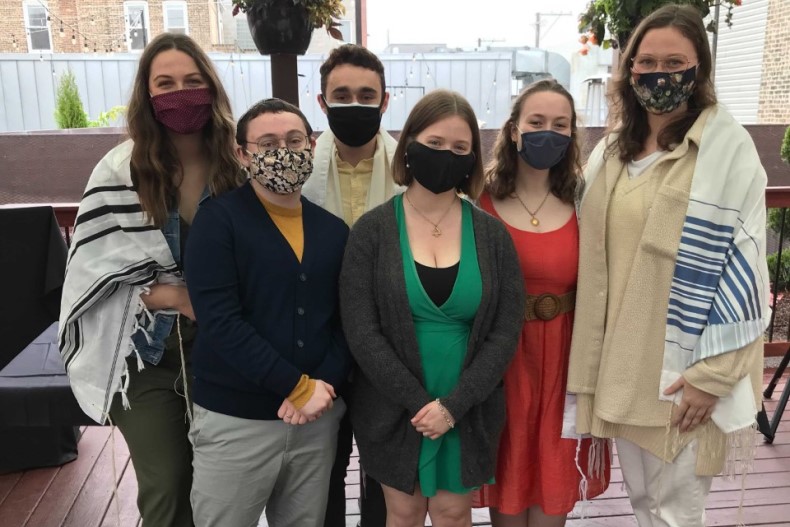
Our class of six met on Zoom to study Torah with Rabbi Megan and Rabbi Nicole Berne, and learned to read Torah and chant trope from Rabbi Ezra Balzer. Our biweekly classes felt like a refuge from the chaos of the current world. We got to spend an hour every two weeks learning together and from one another. The joy these classes brought cemented in my mind the importance of Judaism in my everyday life.
Four years ago, I did not know the aleph-bet, but in May, I read from the Torah in front of my friends and family. The ceremony was a culmination of everything I’ve learned in the past four years, and a beautiful conclusion to my college experience and my time with Hillel. Even more amazing, we were able to have an in-person ceremony-which felt extra special, as I was not able to have an in-person graduation.
Our portion was Bamidbar, which begins with the Israelites wandering in the desert. I felt that this portion was fitting as, for many of us, this past year has felt a bit like wandering in the Sinai. We are aware of what the hoped-for outcome is-the promised land of a COVID-free future-but not one of us has any idea how long it will take to get there. We often say that the Israelites were lost in the wilderness, but this is not exactly true. The Israelites were never truly lost because God was with them, guiding them, the entire time.
Just as the Israelites were never alone, neither are we, so long as we have a strong Jewish community. Metro Chicago Hillel serves as a guiding force for Jewish undergraduate students on their journeys into adulthood and Jewish life. Even in the midst of a pandemic, we were able to foster love and community.
At the end of August, I will embark on the next stage of my journey, leaving for Israel to teach English for ten months on the Masa Israel Teaching Fellowship. No matter how far I wander, Hillel will always feel like home, and will always be in my heart.
Katherine O’Neill is a 2021 graduate of Loyola University-Chicago and will be a MASA Israel Teaching Fellow this year.
Other stories
-
Two local teens win national recognition
Recipients of the annual Diller Teen Tikkun Olam Awards
Read more -
Celebrating six young award winners cultivating the community
Introducing young adult award winners
Read more -

We were seated on a terrace, sipping a flight of wine and gazing out at the Sonoma Valley, which unfurled beneath us like an elaborate quilt, golden hills stitched together with perfect rows of grapevines. It was our first day of vacation, the sky was impossibly blue, and I had just lifted a flute to my lips when I overheard a man at the next table say: “I don’t know if I should look at the Federation, or just go with Fidelity.”
My husband raised his eyebrows: You wouldn’t. But I couldn’t stop myself.
I rose and faced the table of four, still holding my wine glass, and said: “Of COURSE you should open your Donor Advised Fund at the Federation,” and ticked off the reasons why. The gentleman laughed and told me I was absolutely right, and that he was involved with his Federation on the East Coast. As we chatted, we found: He and I had colleagues in common; his wife, who is from Louisville, knew my husband’s Uncle Irv and Aunt Zera; and the other couple once lived in Chicago, where we have mutual friends.
We toasted one another and parted ways.
This sense of community–of being part of an extended Jewish family that transcends geography and generations–is what I love most about working for JUF.
Another thing I love? Anticipation of what comes next.
The life-changing power of this community’s generosity never ceases to inspire me. Time and time again, JUF and our partner agencies pioneer new and better ways to extend compassion to people in need, instill a sense of purpose in people who are searching, and warmly welcome people who have felt overlooked.
Led by the unique lay-professional partnership that distinguishes this Federation, our community is trail-blazing and inventive as well as strong and resilient. Each generation of leaders brings fresh vision and passion to make Jewish Chicago more vital, innovative and inclusive.
This year marks the tenth anniversary of JUF’s Double Chai in the Chi: 36 Under 36 list, an annual roundup that spotlights young adults making a powerful impact on our community. We are celebrating this milestone with a “Where Are They Now” look-back at some of the past honorees, Generation Xers and Millennials who continue to blaze trails in many directions to make the world a better place.
As for today’s 20- and 30-somethings? They do not disappoint.
Perhaps it was those infamous participation trophies that taught Millennials and Generation Z that everyone matters, has something unique to offer, and deserves to be heard. What is certain is that this year’s 36 Under 36 honorees live their Jewish values, beginning with championing diversity, equity, and inclusion.
These extraordinary young Jews are fighting antisemitism and racism and advocating for refugees, Jews of color, and people with disabilities. They are working to prevent child abuse and to promote voter registration. They are cooking meals for first responders and baking challah for the homeless; running minyans in their backyards and Shabbat services at senior residences; delivering groceries to people in need and free dental care to Holocaust survivors.
They are changing the world through their work and their example, and it’s a pleasure and a privilege to partner with them across the generations.
The Jewish future is in good hands–and I can’t wait to see what comes next.
Linda S. Haase is Senior Associate Vice President of Marketing Communications for the Jewish United Fund.
Other stories
-
Two local teens win national recognition
Recipients of the annual Diller Teen Tikkun Olam Awards
Read more -
Celebrating six young award winners cultivating the community
Introducing young adult award winners
Read more -
Before we leave a house of mourning, tradition teaches that we speak the following words: “May the Omnipresent comfort you among the other mourners of Zion and Jerusalem.”
When we leave a house of mourning, we reassure mourners, and offer them comfort. We remind them that they are connected to Jewish mourners across millennia and around the world.
This is our work, as we honor the memories of the University of Chicago Jewish student leaders who were lost in July. The work of JUF is to ensure that the families of Max Lewis and Ilan Naibryf feel surrounded and supported by the strength of our community. When I read the stories in the papers, the tragic realities still send shockwaves through me.
Max was killed by a stray bullet while commuting home from a summer internship. Ilan lost his life in the collapse of the Surfside building. Neither event seems possible. And yet, even in death, both were surrounded by the commitment of the Jewish community in Chicago and worldwide to do good in the world.
The development of UChicago’s level 1 trauma center was a priority of Chicago’s Jewish community–and Max was able to be surrounded by family and the love of friends in his final days because of that commitment. And while the skilled doctors were not able to save Max’s life, they gave him the chance to say goodbye, and his mother the chance to cradle his face in her hands one last time. And an IDF rescue team–part of Israel’s National Rescue Unit–was present at Surfside, Miami. Max and Ilan were surrounded by the values and commitments of the Jewish community in life and at the time of their tragic deaths.
Max and Ilan had so much in common. They were athletes with remarkable intelligence and a drive to achieve. And they were known for their generosity of time and spirit, and their commitment to friends and family. Max and Ilan were both leaders–stepping up to build the Jewish community on campus through their leadership in Chabad. Both were ready to stand up for Israel. Ilan was active in pro-Israel work on campus and Max’s relationship with Israel was blooming–sparked by a Birthright trip through the Chicago community with Metro Chicago Hillel staff.
Max’s friend and fraternity brother, Zach Cogan, wrote, “He was the best of us. He was so caring and selfless.” One of Ilan’s campus friends wrote, “Ilan was a proud Jew and an incredibly special friend-every conversation and interaction with him left you a better person.” And friends from Chicago have been there, supporting the families of the friends that they loved.
As both Max and Ilan were committed leaders within Chabad at UChicago, Rabbi Yossi and Baila Brackman have carried our community with sanctity and commitment, supporting the community in mourning with strength even during a moment of their own profound loss. While hosting Friday night dinner for Max’s friends and family, Baila Brackman so thoughtfully created an environment infused with the beauty of Shabbat traditions while also making space to honor Max’s life.
At Max’s funeral in Denver, Rabbi Yossi invited the community to remember Max each year on his birthday and to reflect on how each of us could learn to embody the commitment and dedication that was at the core of Max’s personality. When sharing with me the profundity of the loss of Ilan and Max on her family, Baila offered wisdom from the heart of Jewish tradition; we cannot take our time on earth for granted. From that place of loss, she reminded us that when we begin our day with morning prayers of gratitude, we are reminded that each day is a sacred gift.
Supported by my friends and colleagues through JUF and Hillel, I have been proud to serve as a representative of the work we do. As I’ve travelled to be present for mourners, both to Denver and then to Miami, the words of Tefilat Haderech have strengthened me. In this prayer, we ask that all the work of our hands be blessed as we travel. I’m grateful that the work of my hands as I travel has been the sacred work of supporting our community–the sacred work which is always at the core of everything we do.
Anna Levin Rosen is the Executive Director and Rabbi of the University of Chicago Hillel.
Other stories
-
Two local teens win national recognition
Recipients of the annual Diller Teen Tikkun Olam Awards
Read more -
Celebrating six young award winners cultivating the community
Introducing young adult award winners
Read more -

While submarines are generally named for states and cities, the US Navy has named a few for people. One of these remarkable individuals was Admiral Hyman G. Rickover, a Jewish Chicagoan who has had two submarines named in his honor. The first was in use from 1984 to 2006. Now, a second one has just been completed in Connecticut. It will be christened there on July 31, and commissioned-transferred from its contractors to the Navy- in early 2022.
Because of Rickover’s Chicago roots, the Union League Club of Chicago has partnered with the Navy to run the commissioning ceremony, under the auspices of its USS Hyman G. Rickover Commissioning Committee.
“Admiral Rickover’s establishing the Navy’s nuclear power program, and his leadership of the program, continue to have a positive impact on our national defense,” said the Committee’s chair, William Nissen, a retired partner at Sidley Austin LLP and a Navy veteran who served on destroyers during the Vietnam War. “The members of our Committee are working to enhance public awareness of Admiral Rickover’s significance, to give the USS Rickover a proper send-off as it takes its place in the active fleet, and to provide support to its crew.”
It was Rickover who first envisioned a submarine run on atomic energy; he has been hailed as “The Father of the Nuclear Navy.” Overcoming the anti-Semitism prevalent during his time within the Navy, Rickover’s extraordinary competence and political acumen allowed him to design and build the U.S. Navy’s nuclear propulsion program- and create the first nuclear power plant for civilian use.
Rickover was born in Poland in 1900, immigrating with his family at age 6, and settling in Chicago’s North Lawndale area. He attended John Marshall High School, where in 1917 he was one of the first to enroll in the new Junior ROTC program. (Today, Chicago is the home of the Hyman G. Rickover Naval Academy High School.)
Rickover then secured a Congressional appointment to the U.S. Naval Academy in Annapolis from U.S. Representative Adolph Sabath, and graduated in 1922.
Rickover went on to have an unprecedented 63 years on active duty. In just three years, starting in 1951, Rickover’s handpicked team designed and built the Nautilus , the world’s first nuclear-powered submarine- also the world’s first use of any controlled nuclear reactor. The Nautilus not only transformed submarine warfare, but laid the groundwork for a fleet of nuclear aircraft carriers and cruisers, and shaped both military and civilian use of nuclear energy.
“Jews like me who were eight in 1954 will remember the launching of the Nautilis . But little did we know that a Jew… was the father of this accomplishment,” said Michael Traison, Partner at Cullen and Dykman LLP, and chair of the Committee’s external relations subcommittee. “Today, I am excited at the opportunity to commemorate Admiral Rickover, part of the story of the Jewish people’s acceptance in American history.”
The Committee is comprised of individuals from the Union League Club of Chicago, the Pritzker Military Museum & Library, local Navy League Councils, and the Chicago Navy Memorial Foundation, along with prominent civic and business leaders. Its members include: former submarine Capt. Leonard Wass (USN, Ret.), who chaired the commissioning committee for an earlier submarine; Vice Admiral John Donnelly (USN, Ret.), president of the Naval Submarine League; Amihai Ayalon, former Commander in Chief of the Israeli Navy and former Head of the Shin Bet, and Tadeusz Ciak, Mayor of Maków Mazowiecki, Poland- Rickover’s birthplace.
Founded in 1879, the Union League Club of Chicago is a descendant of the Civil War-era “Union Leagues of America” movement that arose to help President Lincoln defend the Union. It is the nation’s only private club dedicated to honoring those who serve. To learn more about Admiral Rickover, the new submarine, and the Commissioning Committee, please visit ussrickover.org.
Jeffrey S. Gray is Senior Project Director, Chicago Navy Memorial at Navy Pier, and chair of the public relations subcommittee of the U SS Hyman G. Rickover Commissioning Committee.
Other stories
-
Two local teens win national recognition
Recipients of the annual Diller Teen Tikkun Olam Awards
Read more -
Celebrating six young award winners cultivating the community
Introducing young adult award winners
Read more -