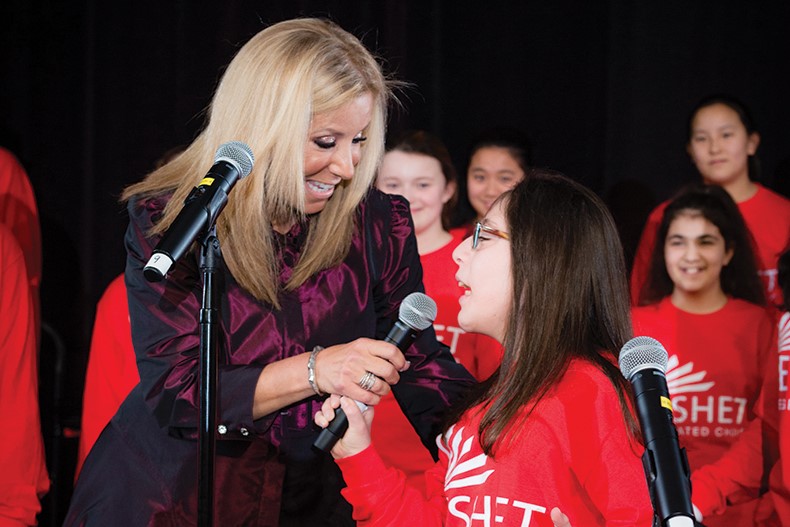
Abbie Weisberg was the first to say that she spent her life doing what she loved, what she believed in. To Abbie, her job wasn’t work. It was so much more. Anyone who knew Abbie, worked with Abbie or loved Abbie, knew this to be true.
Abbie was the longtime Executive Director of Keshet. She died on Monday, April 26 with her family by her side.
She was a teacher at Keshet, then Director of the Recreation programs and rose through the ranks to become Keshet’s Executive Director/CEO for 15 years from 2005-2020.
Driven by her commitment to bring the abilities of those with disabilities to the forefront, Abbie transformed Keshet into an internationally recognized organization with a reputation as the “go-to” place for inclusion programs.
“A steadfast champion for people of all abilities, Abbie made sure that every person was seen, heard and had the opportunity to live a full and productive life,” said Michelle Lawner, Associate Vice President, Planning and Allocations, JUF. ”I had the opportunity to tour Keshet’s programs with Abbie. When she entered the room the faces of her Keshet students and teachers would light up and shine so brightly.”
Abbie Weisberg was beloved wife of Dr. Mitchell Weisberg, and the loving mother of Zoie (Josh) Berman, Shayna Weisberg and Sophia (Elan) Yudkowsky. She also was the proud grandmother of Archie Jasper Berman, and a dear sister to Michael (Susan) Hoffman, Laurie (Lonnie) Ungerhoff and Debbie (Randall) Gelb. Memorials may be made to MRW Leadership Board at the NorthShore University Health System Foundation. Arrangements were made by Chicago Jewish Funerals.
Other stories
-
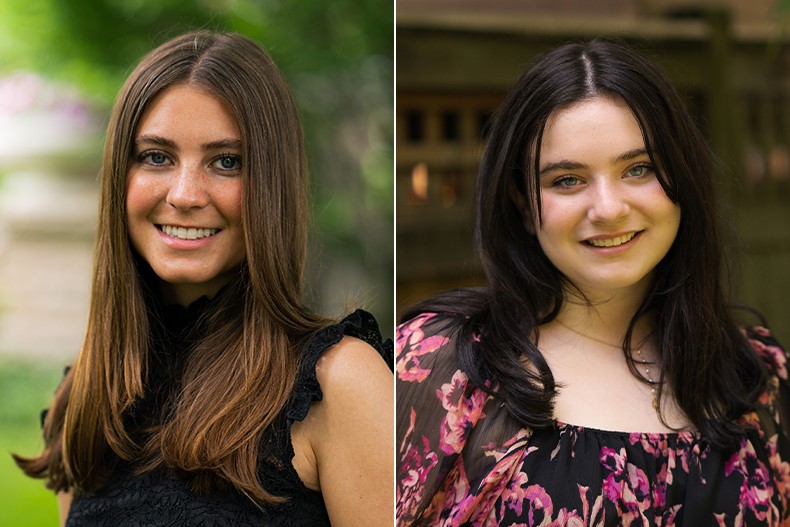
Two local teens win national recognition
Recipients of the annual Diller Teen Tikkun Olam Awards
Read more -

Celebrating six young award winners cultivating the community
Introducing young adult award winners
Read more -

If you are looking for outdoor activities as warmer weather approaches, here are a few staples that I’ve done with my kids, friends and bootcamp clients throughout the years.
Water Balloons
My kids are enthusiastic about the sport of water balloons-they don’t even wait for an appropriate temperature. Water balloon technology has improved over the years. You no longer have to do one balloon at a time, you can do 20-30 at once! I usually buy the 400 pack and it disappears quickly. We fill up a few buckets each time with balloons, which are hurled at each other with laughter and modest rage.
Dodgeball
While some schools have banned dodgeball, the sport is alive at my house. With a quick glance online, you can buy eight balls for around $20-$60. The more expensive ones are generally softer and are also great for playing catch, teaching kids to squeeze the ball as they catch, which helps with other sports. Our house has rules: head shots don’t count, and each player gets three outs before they are officially out of the game. One recommendation, don’t play this near a hill, or you might get more exercise than you really wanted.
Kickball
Whenever I attend a kid’s camp day, we always play kickball, and everyone loves it. It’s fun and has similar rules to baseball. You can even use one of the dodgeballs you just bought. We often just take turns, hitting and pitching when there’s just two of us home.
Tennis Baseball
My oldest loves this game! He and his friends grab a tennis racket and a few tennis balls and it’s hours of fun. The pitcher tosses the ball to someone at home plate, who uses a racket to hit the ball. I think kids like it because the ball really soars. When we play it as a family, one person gets three hits, another person pitches, and the other two run and get the ball.
Park Hide and Go Seek
Whenever we visit a park on a warm day, there’s someone playing hide and go seek, since there are slides, treehouse, and other places to hide. When my youngest was 3, he liked to pretend someone was looking for us, and we would just find a place to hide, wait a few seconds and run to another remote location. It was fun and a wonderful way to get exercise.
Frisbee Golf
Some people love to golf; I am not one of them. I do love frisbee golf, though. Some people have different types of frisbees, like a driver or putter, but you can make do with a simple store-bought one. You can buy a set for $12-$25 and then Google, “frisbee golf near me” and there’s bound to be a park in your area with the set up. My only tip: Watch out for parks with a lot of trees. I lost two frisbees at Danny Cunniff park. If you have children 7 and under, it will take them several throws to get close to the goal/hole. We also love to just play catch with an Aerobie Superdisc, which is easy to catch because there’s soft rubber around the outside.
Tag
Tag is probably the simplest game to play. Best part, it requires no equipment. Before COVID I would have my younger clients play a version where you freeze when you are tagged, but if someone crawls under you, you are back in the game.
Take advantage of the warmer weather and get some vitamin D (don’t forget sunscreen). Whether it’s biking, hiking, or one of my games, get moving and enjoy the outdoors!
Other stories
-
Two local teens win national recognition
Recipients of the annual Diller Teen Tikkun Olam Awards
Read more -
Celebrating six young award winners cultivating the community
Introducing young adult award winners
Read more -
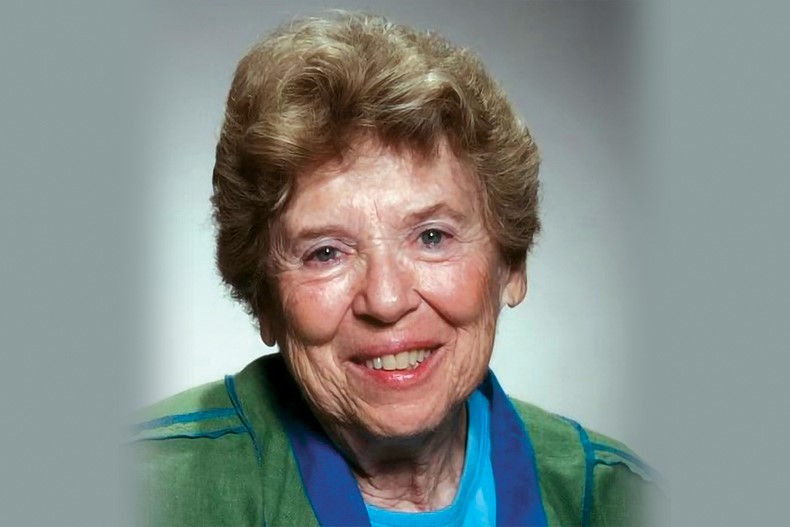
Marilyn “Toddy” Richman, founding director of the Institute for Therapy through the Arts, died April 24. She was 94.
A graduate of Wellesley College, she was a stage and TV actress who quickly recognized the therapeutic value of drama and other creative arts to express and process emotions, and turned her passion into a pioneering career.
In 1975, Richman was approached by the director of what is now the Music Institute of Chicago and asked to start a music therapy program. The program-which launched with 27 children from the Irene Josselyn Clinic, Cove School, and the Music Institute-became the Institute for Therapy through the Arts (ITA). By the 1980s, ITA offered four creative arts therapy modalities: Music, Art, Drama, and Dance/Movement Therapy. Richman provided drama therapy to people of all ages and continued her association with ITA throughout her life, working as a clinical consultant to ITA staff and ultimately serving as chairman emeritus of its board.
With her Masters of Education from the National College of Education and having completed the Teacher Education Program at the Chicago Institute for Psychoanalysis, Richman also was one of the founders of the National Association of Drama Therapy and taught drama therapy courses at Columbia College and National-Louis University.
It was a special joy for her to teach creative dramatics to children at Congregation Makom Solel Lakeside in Highland Park, where she was a member and attended weekly Torah study religiously.
Passionate about the importance of Jewish education, Richman was a longtime member of the Board of Jewish Education of Metropolitan Chicago, which honored her in 2009 with their Rambam Award for her service to the community.
Loving daughter of the late Charles and the late Selma Melvoin, and sister of the late Hugo (Loie) Melvoin. Beloved wife of the late William S. Richman. Devoted partner of the late Dr. Alex Hilkevitch. Loving mother of Daniel Richman, Elizabeth (Mitch Dayan) Richman, and Ruth Richman. Adored grandmother of Sam (Jayme) Besser, Ariel (Yaakov) Sugarman, Wiley Kornbluh, and Rachel Kornbluh. Doting great-grandmother of six. Loved by step-grandchildren Isaac (Talia) Dayan, Max (Mariya) Dayan, and Stanley (Sara) Dayan, and their 10 children. Beloved aunt and cousin to many. JUF Golden Giver. Memorials to the Institute for Therapy through the Arts, Makom Solel Lakeside, or the Board of Jewish Education of Metropolitan Chicago. Arrangements were made by Chicago Jewish Funerals-Skokie Chapel.
Other stories
-
Two local teens win national recognition
Recipients of the annual Diller Teen Tikkun Olam Awards
Read more -
Celebrating six young award winners cultivating the community
Introducing young adult award winners
Read more -
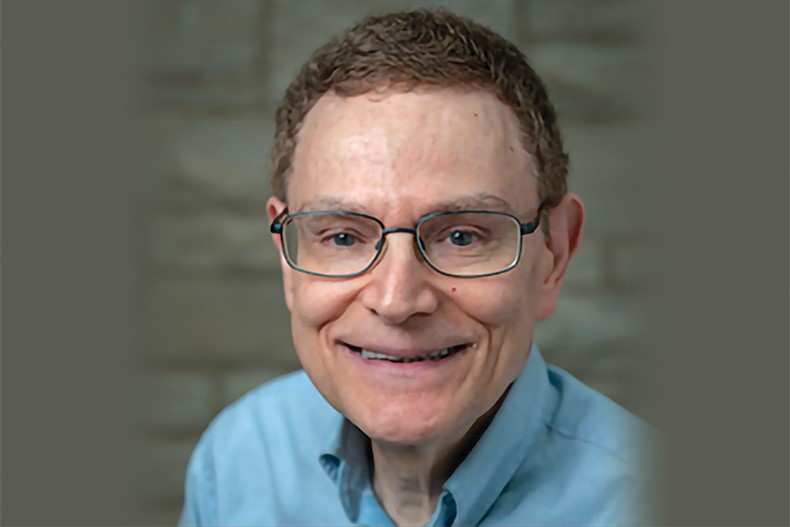
Allen Taflove, PhD, was a professor of electrical and computer engineering at Northwestern University who conducted pioneering work in the finite-difference time-domain (FDTD) method; he died on April 25 at age 71.
Taflove’s book, Computational Electrodynamics: The Finite-Difference Time-Domain Method , ranks as the seventh most-cited book in the field of physics, with close to 21,000 citations.
He was one of the only faculty to win the Northwestern University McCormick School of Engineering’s advising award twice-and in 2006, he won both the teaching and advising awards.
Known as a consummate mentor, Taflove served as adviser or co-adviser of 24 PhD recipients and five postdoctoral fellows, along with a host of undergraduate students.
“Allen’s pioneering contributions to time-domain computational electromagnetics were revolutionary. He was a true giant in the field,” said Susan Hagness, PhD, Philip D. Reed Professor and chair of the electrical and computer engineering department at University of Wisconsin-Madison; Taflove was her undergraduate research adviser and PhD adviser. “But even more profound is the educational impact he had on countless students over his 37-year career as a professor. He was always there for his students, exuding boundless enthusiasm and support of their learning.”
The beloved husband of Sylvia (nee Friedman), he was the loving father of Michael and Nathan (Alisha) and the grandfather of Aden. He was the dear brother of the late Doris Perlman and Belle Smith, and a loving uncle of many. Allen and Sylvia Taflove were members of JUF’s Silver Circle. Memorials may be made to Fight Lynch. Arrangements were made by Shalom Memorial Funeral Home.
Other stories
-
Two local teens win national recognition
Recipients of the annual Diller Teen Tikkun Olam Awards
Read more -
Celebrating six young award winners cultivating the community
Introducing young adult award winners
Read more -
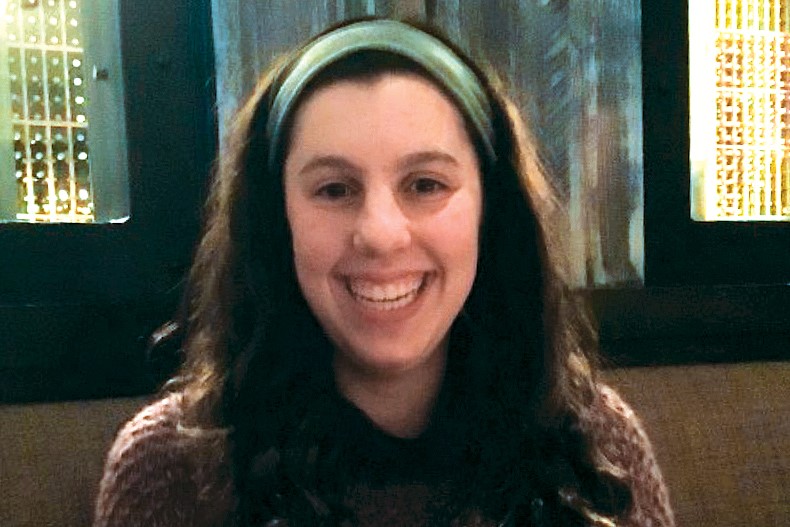
Life transitions in general can be difficult, and the transition to college can be especially daunting. Starting college amidst the COVID-19 pandemic has been one of the most challenging experiences of my life-but also one of the most rewarding.
Up until this point in my life, my home was my physical house in the northern suburbs of Chicago. Little did I know that I was about to discover where my home really is.
I didn’t understand how special Hillel truly is until I attended an event in person. I should quickly note that Illini Hillel has done an absolutely amazing job of upholding COVID-19 guidelines and keeping everyone safe. So, I knew that I was going to a place where everyone would have had a recent negative COVID test and would be wearing masks correctly while also upholding social distancing guidelines. Anyways, the first student-led activity that I attended was a socially distanced cookie decorating event put together by Hillel’s freshmen engagement interns. It served as my first experience of feeling at home away from home. Upon the conclusion of that event, I knew that I wanted to also work with Hillel to engage Jewish students, and specifically let other students know that Hillel is there to support them. Hillel became my home on campus because it’s where my community is.
At the beginning of 2021, I became a freshmen engagement intern at Illini Hillel. This year-long internship has allowed me to make personal connections with new students by planning programs, taking students for coffee, and reaching out about upcoming events. I had worked at my temple as a madricha (teaching assistant) for many years (and currently work as a camp counselor at the Chicago Botanic Gardens’ Camp CBG in the summer), so I already had some leadership experience, but I never could have envisioned just how strong and supportive the Illini Hillel community is. Everyone at Hillel is always excited to engage, creating a space where I can truly relax and try to let go of academic stressors.
For me, the most important aspect of being Jewish is being able to deeply connect with others through practicing the traditions of our ancestors. Jewish rituals have always been at the center of my Jewish identity, and Passover has always been at the heart of those empowering and meaningful traditions. As an engagement intern, I led the planning for a model Passover Seder as a way of introducing Passover to students who hadn’t before celebrated the holiday. We held our chocolate Seder outside (complying with COVID safety guidelines) and ate different types of chocolate desserts to symbolize specific aspects of a traditional Seder.
I am so deeply grateful that I can say that I have the opportunity to connect with others in the University of Illinois Jewish community and look forward to continuing to have those priceless opportunities in the future.
So, when I’ve had a bad day or I’m feeling anxious, I take a short walk to Hillel-and the second I cross the threshold into the building, I am home.
Rachel Wiengart is an undergraduate student at the University of Illinois at Urbana-Champaign.
Other stories
-
Two local teens win national recognition
Recipients of the annual Diller Teen Tikkun Olam Awards
Read more -
Celebrating six young award winners cultivating the community
Introducing young adult award winners
Read more -
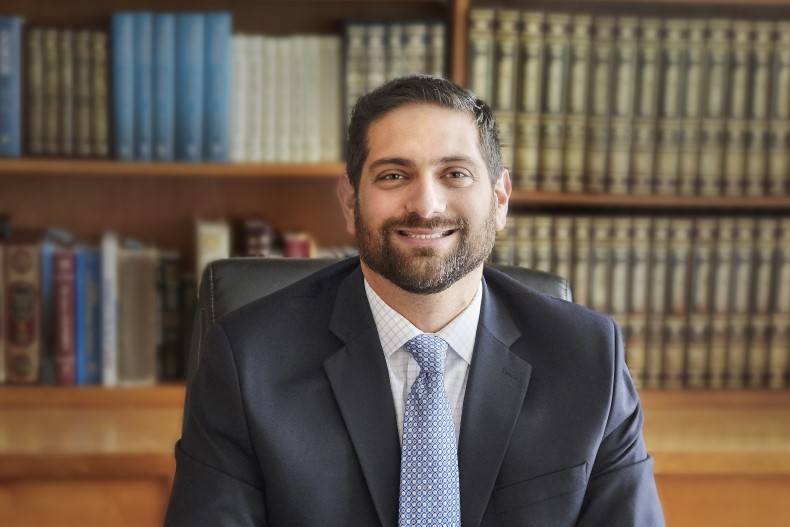
When Rabbi Jeremy Fine was growing up in Deerfield, his dream was to become a rabbi and serve the Chicago Jewish community.
Now, his dream is coming true.
After nine years as the senior rabbi at the Temple of Aaron in St. Paul, MN, Fine will return to the Chicago area in July to serve as the rabbi of Congregation B’nai Tikvah in Deerfield.
“I’m very proud of Chicago Jewry and the Judaism it presented to me, and I always wanted to be a part of giving back to the next generations,” said Fine. Growing up, he attended Solomon Schechter day school, Camp Ramah, Camp Chi, and Ida Crown Jewish Academy, and participated in the JCC Maccabi Games. “All of these experiences allowed me to see a depth and breadth of Jewish life. It was vast and connected and meaningful.”
B’nai Tikvah is not the synagogue Fine grew up attending — which is an opportunity to “come home, but serve a new community,” Fine said. It’s also a chance for him to “be seen as a rabbi, not a kid” after years of synagogue involvement.
Fine sees being a pulpit rabbi as “one of the last true renaissance jobs” where a single day can include a baby naming, mourning the loss of a congregant, raising funds, and hosting an event. This diversity of experience inspired Fine to change his focus from becoming a head of school at a Jewish institution to serving as a pulpit rabbi.
“I get to [share experiences] from birth to death, and I can have generations of a family in my synagogue. Working with people throughout their entire life excites me,” said Fine, who is also eager to reconnect with rabbinical mentors like Rabbi Michael Siegel at Anshe Emet Synagogue and Senior Rabbi Michael Schwab at North Suburban Synagogue Beth El.
As the pandemic wanes, he hopes to be able to connect with his old mentors and his new congregation in person.
His first challenge will be figuring out what synagogue life will look like after over a year of staying apart. In the past, he has used innovative programming to involve young families in securing a Jewish future and draw in new congregants, strategies he hopes to continue along with his wife Jessica and two daughters.
“It’s yet to be seen exactly how the pandemic will restrict not only my ability but also the community’s ability to learn about each other and collaborate together,” he said, “but I’m very hopeful that because people are getting vaccines, the science is winning, and I’ll be able to be with people sooner rather than later.”
In his last role, Fine spent a great deal of time “revitalizing a wonderful and historic Conservative synagogue,” and he has similar ambitious goals for B’nai Tikvah. He focused on the “balance beam” of navigating a Conservative synagogue’s place between tradition and change and helping both established synagogue members and newcomers to feel welcome.
Fine, who previously served a year as the rabbi of Beth El Synagogue Center in New Rochelle, NY, also studied in Israel and earned his rabbinical degree and a master’s in Jewish education from the Jewish Theological Seminary. He earned his bachelor’s degree at the University of Illinois, where he was Hillel president for three years and a member of a Jewish fraternity.
“I hope to reinvigorate synagogue life as we know it through presentation, programming, social networking, and collaboration,” he said. “I’m really excited that there’s an opportunity to do that in Deerfield and be part of the larger Jewish network of Chicago.”
Other stories
-
Two local teens win national recognition
Recipients of the annual Diller Teen Tikkun Olam Awards
Read more -
Celebrating six young award winners cultivating the community
Introducing young adult award winners
Read more -
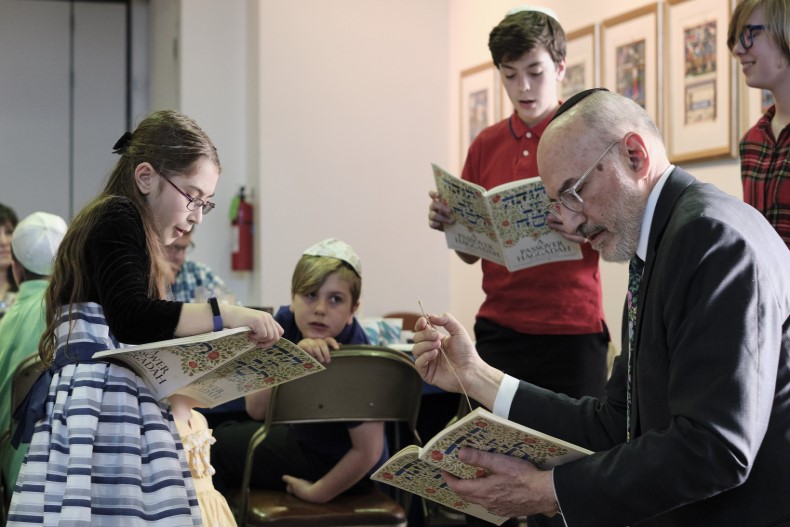
When a stranger asks Rabbi Michael Weinberg what his denomination is, he has a ready response. “I’m Jewish,” he says. “Ever since ancient times, Jews have understood they are inextricably connected and responsible for one another.”
Nurturing Jewish unity has marked Rabbi Weinberg’s more than 40-year career, which will enter a new phase in June with his retirement as the spiritual leader of Temple Beth Israel in Skokie.
“It has been a blessing, honor and privilege to serve this congregation,” Rabbi Weinberg said. “It’s been a great run, but I’ll have an opportunity to stay connected as the Rabbi Emeritus.”
The next chapter, he said, will include traveling. “We would like to go in the fall to Israel,” he said. “We have a daughter in Tel Aviv. We also have a son in New York and another son in Skokie.”
Rabbi Weinberg came to Temple Beth Israel in 1987 as only the fourth rabbi in the congregation’s more than a century-long history. He had previously served at Sinai Temple in Michigan City, Indiana. “When you’re a rabbi, it’s good to be where the Jews are,” he joked. “There are a lot more Jews in Skokie than there are in Michigan City, Indiana.”
From the beginning, Temple Beth Israel was a good fit. “I came to a community that was well established,” he said. “The congregation is warm, welcoming and inclusive; serious about worship and study and also serious about having fun. Temple Beth Israel had a record of being involved in things that were important to me: social justice, Zionism and devotion to education.”
Rabbi Weinberg has been married for 47 years to Jody Weinberg, a learning disabilities specialist. Theirs is a mixed marriage– He is from the South Side of Chicago, she from the North Side. They knew each other in high school and later were both senior counselors-in-training at Olin-Sang-Ruby Union Institute (OSRUI) summer camp.
“Our community needs leaders like Rabbi and Mrs. Weinberg,” observed Rabbi Leonard Matanky of Congregation K.I.N.S of West Rogers Park. “We need leaders like them who work tirelessly on behalf of others, bring their joy of life into the lives of others, and who have represented our community with distinction and grace. Together, the Rabbi and Jody have created a wonderful family of next-generation leaders.”
Since announcing his retirement, Rabbi Weinberg has reflected on peak moments during his tenure at Temple Beth Israel. But what remains most important to him, he said, “is the day-in, day-out, week-in, week-out continual devotion to learning, to active Jewish living and the opportunity to be involved in the lives of our members at the most poignant moments of their lives, either happy or sad.”
A longtime staff member at OSRUI, Rabbi Weinberg will remain active in the camp’s intensive Hebrew immersion program for high schoolers.
“Jewish summer camp is an opportunity to touch people’s lives in a profound way,” he said. “You create, at camp, an environment where the entire camp community is living and breathing Jewish life every day.”
But perhaps his most enduring legacy, Jody said, is “He was a very hands-on rabbi. At the end of a program, he would help put chairs away and fold up tables. He was a mentor and a well-rounded person who people could relate to as one of them. Yet he had this exceptional ability to lead, as early as when he was leading the Chicago Federation of Temple Youth. That’s what I saw in him in high school.
“One thing that will be hard to replace,” she said, “is that he is a man of many talents. He’s a carpenter and Mr. Fix-It. He could fix the wooden rollers on Torah scrolls.”
Other stories
-
Two local teens win national recognition
Recipients of the annual Diller Teen Tikkun Olam Awards
Read more -
Celebrating six young award winners cultivating the community
Introducing young adult award winners
Read more -
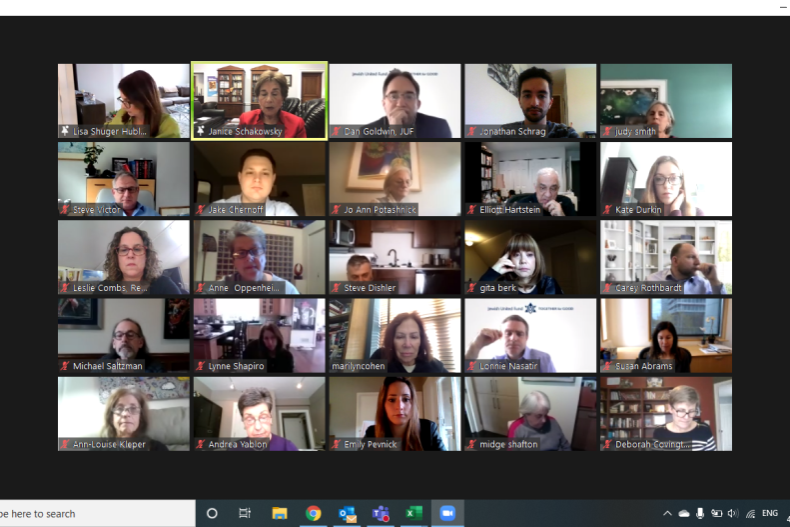
JUF makes real impact during its first virtual advocacy mission
Jonathan Schrag
More than 120 JUF and agency professionals and volunteer leaders participated in the first-ever virtual Washington, DC/Springfield Government Affairs Agency Advocacy Mission from April 12-16 and 19. Traditionally two separate, in-person advocacy trips to the national and state capitals, this year’s virtual format allowed more professionals and volunteer leaders to join JUF’s advocacy efforts.
Mission delegates for this year’s advocacy experience came together online for 90 minutes each day. These sessions included briefings from policy experts in both Washington, DC and Springfield, as well as meetings with elected officials and their staffs.
The group heard from key JUF legislative allies, such as U.S. Representatives Robin Kelly (D-2), Jan Schakowsky (D-9), Brad Schneider (D-10), and Darin LaHood (R-18), as well as all four Illinois General Assembly leaders: Speaker Emanuel Chris Welch (D-7), House Minority Leader Jim Durkin (R-82), Senate President Don Harmon (D-39), and Senate Minority Leader Dan McConchie (R-26). The group also watched recorded messages from Governor JB Pritzker (D), and Illinois Senators Richard Durbin (D) and Tammy Duckworth (D).
Mission participants advocated for a variety of policies and programs impacting the work of JUF’s family of agencies throughout the Chicago area. These direct conversations with elected officials are more important than ever during the COVID-19 health and economic crises.
At the federal level, the group advocated for the continued expansion of telehealth services, the ABLE Age Adjustment (which would expand access to tax-advantaged savings accounts for individuals with disabilities), and some of JUF’s key federal funding priorities: the Nonprofit Security Grant Program, the Holocaust Survivor Assistance Program, and the Emergency Food and Shelter Program.
At the state level, the group advocated for permanent adoption of telehealth services, including payment parity, continuation of telehealth as service delivery option in the Early Intervention program. We promoted strengthening common-sense gun laws and allowing individuals with disabilities to remain in school until the end of the school year after their 22 nd birthday. And we advocated the implementation of the state’s Guidehouse Rate Study to best support agencies, workers, and individuals eligible for and/or receiving Home and Community based services.
Led by Government Affairs Committee Chair Judy Smith and Vice Chairs Susan Silver (Federal), Steven Victor (State), and Emily Pevnick (Local), the mission included participants from the JUF Board of Directors, the JUF Government Affairs Committee, JCRC, CJE SeniorLife, JCFS Chicago, Sinai, Keshet, The ARK, JCC, and the EZRA Multi-Service Center.
“The virtual Mission allowed many first-timers to learn both about issues critical to our community and the basics of advocacy,” Smith said. “I am thrilled that we now have an entire cadre of energized, educated advocates who are eager to take their place beside our longstanding Government Affairs committee members.”
After learning about the issues from nationally recognized experts, the mission delegates lobbied ten congressional offices and eleven Springfield legislative members. This opportunity to speak directly with so many key decision-makers was critical. In fact, shortly after the meetings several members signed on to support JUF priorities in both Springfield and Washington, D.C.
Speaking about the Biden administration’s proposed American Jobs Plan, Congressman Schneider highlighted JUF’s work in the community: “We need to invest in people and that is what Federation does so well… I wouldn’t be who I am without Federation, and I wouldn’t be able to do what I do without Federation’s support.”
Speaker Welch directly addressed the importance of working across the aisle, emphasizing that “[p]eople may doubt what you say, but they believe what you do.” He highlighted areas for partnership, including ethics reform and allocation of federal relief funds.
“While we missed advocating for these issues with our agency professionals and volunteer leaders in person, we look forward to building on the momentum gained from involving many new delegates–and communication options–in our federal and state advocacy efforts,” said Dan Goldwin, JUF Executive Director of Public Affairs.
Other stories
-
Two local teens win national recognition
Recipients of the annual Diller Teen Tikkun Olam Awards
Read more -
Celebrating six young award winners cultivating the community
Introducing young adult award winners
Read more -
Jewish day schools across Chicagoland play a critical role in our community, infusing our future leaders with a love of Jewish life and learning. JUF proudly serves as their partner, providing these vital institutions with multi-faceted support, year in and year out.
The pandemic took that partnership to new heights. In addition to the $14 million that JUF brings to the school system annually, JUF’s COVID Relief Initiative provided the schools $1.6 million in extra funding for health and safety upgrades, additional scholarships and emergency operating support.
Throughout these many months, the day schools have adapted seamlessly to every scenario as it unfolded, with a dedicated corps of teachers at the heart of their success.
In May, JUF and our schools came together to spread messages of appreciation and gratitude to these teachers-extraordinary individuals who have worked tirelessly this past year-plus to ensure that students received whatever support they needed to thrive academically, socially and emotionally.
Parents and students were offered the opportunity to write virtual notes to their teachers, administrators or school thanking them for all their work. The response was overwhelming:
- “It is clear that our children are not merely masked faces in your classrooms-you know them, appreciate their strengths and help them grow. You embody Akiba’s dedication to children as individual learners who are part of a larger community. We know this balance of needs cannot be easy to maintain; it is clearly a choice you make each day to show up for your students and that effort is not lost on us.” – Elli and Dan, Parents
- “As we reflect on what we are most thankful for this year, it is what you have all accomplished to have our children in school, together with all of you and their friends. Thank you for educating and supporting our children in this incredibly confusing and challenging year and committing to doing it safely in person.” – Yelena and Vlad, Parents
- “Keshet High School has an amazing staff. The team goes above and beyond this past year. This has made a very difficult situation very manageable. My son is not just maintaining but thriving. This is due to the staff’s collaboration, commitment, and creativity”. – Jill, Parent
- “You did an outstanding job adapting to the rapidly-changing learning environment by quickly providing students with the resources to help them achieve their IEP goals. Thank you!” Matt, Parent
- “I just love SSDS. What else can I say? The teachers are respectful, kind and amazing.” Jonah, Student
- “I love all the teachers at Schechter, they make learning so much fun and make me want to be at school! This year they worked extra hard so we can be in-person and I just want to say thank you so much to them.” Emerson, Student
- “Hillel Torah has been a constant source of support to our family during this uncertain time. The teachers and staff have worked tirelessly to keep our children safe and in-person this year! We can see our children’s smiles even behind their masks.” Aviva, Parent
- “From the teachers and staff through the administration and other parents, the Hillel Torah community provides much more than just a great education, allowing us to grow together and watch our children develop beyond our expectations.” Tanya and Chaim, Parents
- “We are grateful for the inspiring commitment of HT’s staff and teachers, who have gone above and beyond during this unprecedented year.” Allan, Parent
- “Thank you to all the CJDS teachers and staff, who have done such an incredible job making this year as normal as possible in the most abnormal circumstances. Kindergarten has been an amazing experience, and we are so grateful to everyone who has made this year possible. Thank you!” – Rebecca, Parent
- “Thank you to the entire staff and leadership at HANNA SACKS BAIS YAAKOV for their dedication this year!! You continuously take education to the next level and show that you truly want your students to succeed on all levels.” – Joanie and Neil, Parents
- “Bernard Zell Anshe Emet teachers, you guys are the best. Thank you for being there for our children, showing them and us the way.” – Shira and Guy, Parents
- “Our teachers are the heart and soul of our community. They provide our children with an amazing education. We cannot thank them enough for their extraordinary work in a year like no other. Beth, Parent
- “We are grateful for the RZJHS staff. The faculty and staff go above and beyond all of my expectations. Their creativity, commitment and passion for education is exceptional. We are thankful for the relationships they build with not just the students but the parents and grandparents as well. Thank you for teaching us!” Jodi, Parent
Want to show your appreciation to a teacher? Send them a Chai Five. Make an $18 contribution and we’ll send a virtual card to your honoree notifying them of your appreciation. Learn more at juf.org/chaifive .
Other stories
-
Two local teens win national recognition
Recipients of the annual Diller Teen Tikkun Olam Awards
Read more -
Celebrating six young award winners cultivating the community
Introducing young adult award winners
Read more -
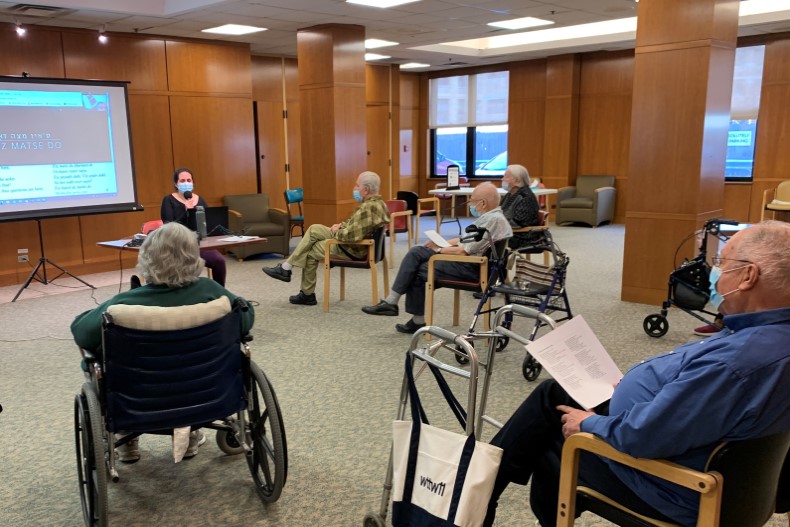
Yiddish music conveys more than just words; it conveys a vibrant and colorful culture. So when residents of The Selfhelp Home wanted to start Yiddish group, it naturally transitioned into a Yiddish music class.
Residents gather every Friday morning to listen to Yiddish music, read lyrics in Yiddish and English, and discuss thoughts on the songs.
“People really seem to feel connected to the music, so it morphed into a Yiddish music group,” said Benna Kessler, director of resident engagement at The Selfhelp Home. “This way, anybody can participate, not just people who speak Yiddish.”
Kessler grew up speaking Yiddish at home with her mother, Sheva Zucker, a well-known Yiddish teacher who wrote two widely used Yiddish textbooks. Kessler runs the Selfhelp class and also teaches a Yiddish class at the Chicago YIVO Society and the Chicago Workers Circle.
Kessler shares the lyrics of the songs in Yiddish and English, so everyone can follow along. She discusses background about the performers, the songs, and the culture. Now held socially distanced in person in Selfhelp’s social hall, the class took place over Zoom during the pandemic–and members of the community are still welcome to attend via zoom.
“People know a few really famous songs, like ‘Afn Pripetchik’ or ‘ Tumbalalaika .’ But people are often surprised to learn how many songs there are,” Kessler said. “There are songs that are funny, there are songs that are sad — just as in any other language. But somehow with Yiddish, things often get minimized to jokes, so I’m enjoying getting to share a broader aspect with people.”
Through music, the program keeps residents connected to the Yiddish language and to each other.
For information about the Yiddish music class and other programming at The Selfhelp Home, check out the calendar of upcoming events at selfhelphome.org/calendar .
Eve Becker is a freelance writer in Chicago.
Other stories
-
Two local teens win national recognition
Recipients of the annual Diller Teen Tikkun Olam Awards
Read more -
Celebrating six young award winners cultivating the community
Introducing young adult award winners
Read more -