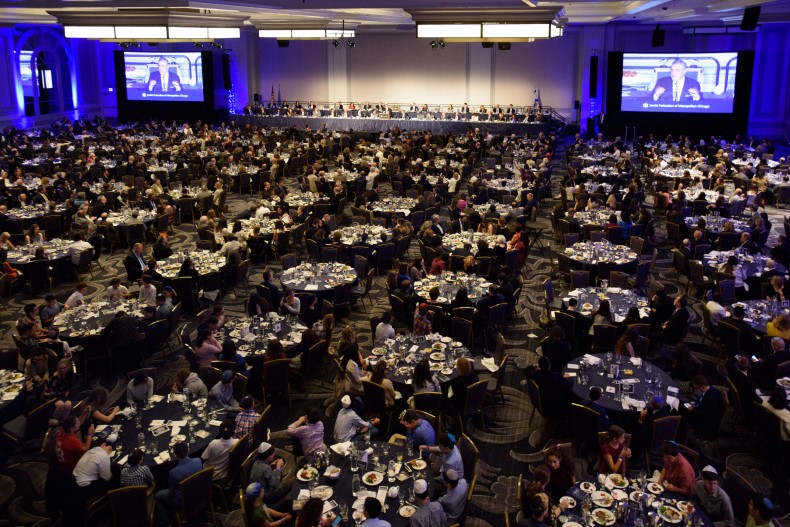
The 118th Annual Meeting of the Jewish Federation of Metropolitan Chicago was held Thursday, Sept. 13, at the Hilton Chicago. Highlights included:
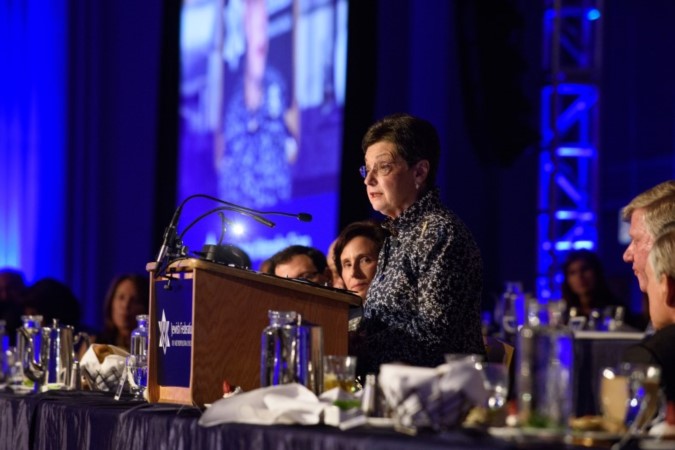
Civic leader, businesswoman, and philanthropist Andrea R. Yablon received the 55 th Annual Julius Rosenwald Memorial Award, the Federation’s highest honor, presented each year to an individual who has demonstrated a lifetime of outstanding dedication and service to the Federation and the entire Jewish community.
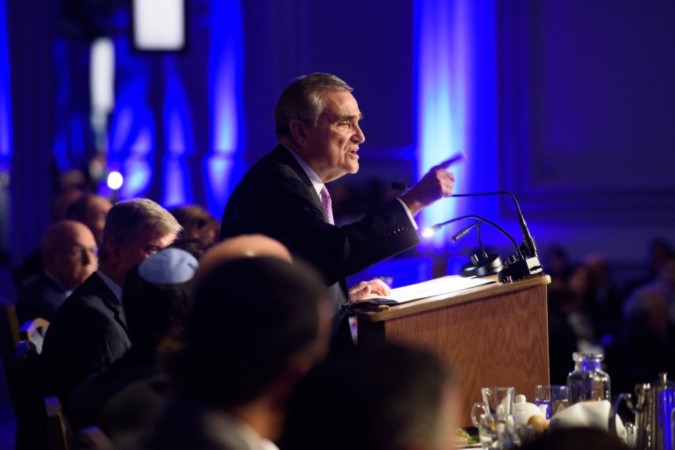
In his final Annual Meeting as President, President Dr. Steven B. Nasatir delivered his popular State of the Federation report, reflecting on the accomplishments and challenges of the past year and going forward
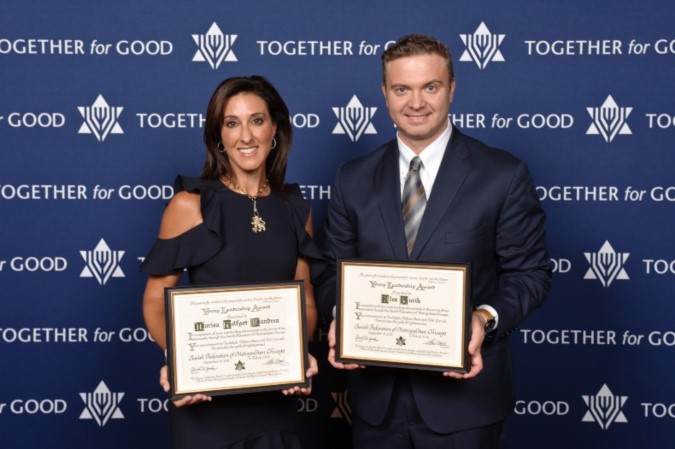
Marisa Helfgot Mandrea and Alex Turik received the Davis, Gidwitz & Glasser Young Leadership Award, presented to volunteers age 40 and under who have demonstrated exemplary dedication and have made significant contributions to Chicago’s Jewish community.
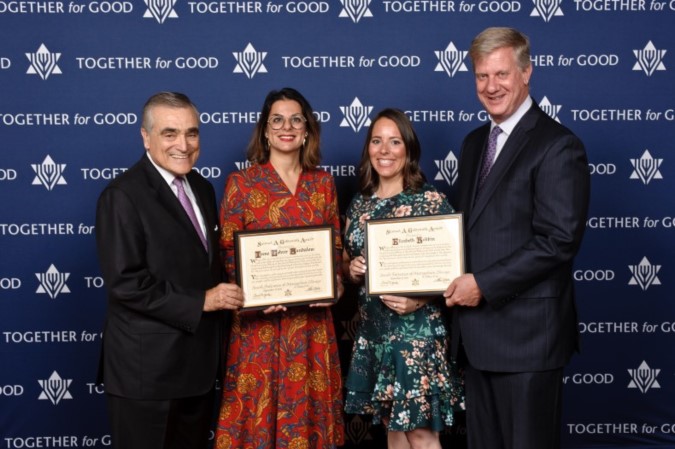
Elizabeth Robbin and Irene Lehrer Sandalow received the 31st annual Samuel A. Goldsmith Young Professional Award, honoring Jewish professionals whose exemplary performance in their work at a Jewish agency in the Chicago area has benefited the entire Jewish community.
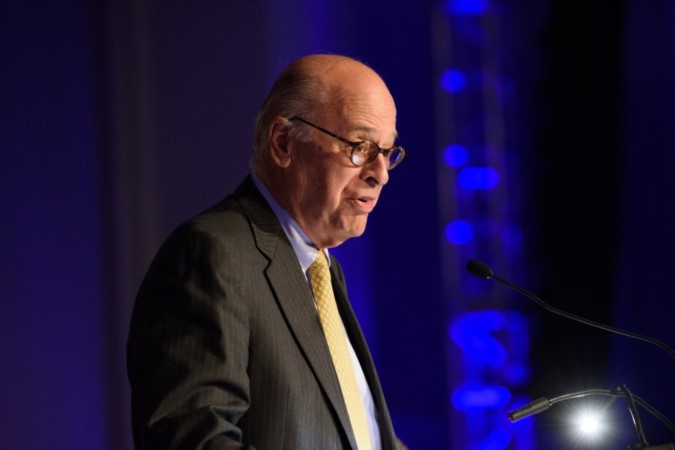
The Shofar Award was presented with gratitude to 2018 JUF Annual Campaign Chair King W. Harris.
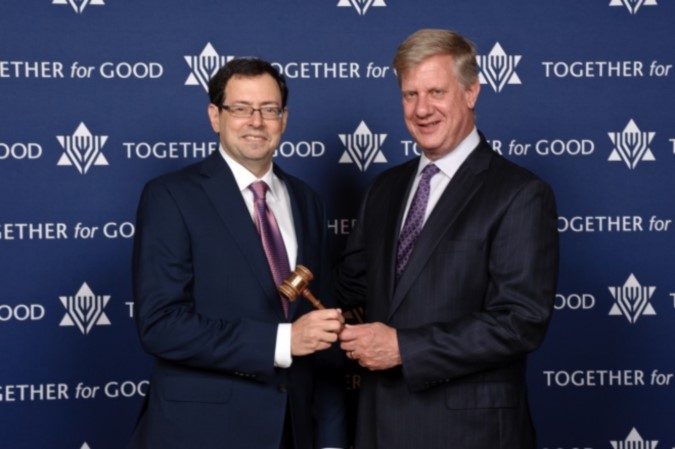
The Federation’s annual Business Meeting and Members’ Forum included the election of directors, and at the afternoon luncheon there was a formal passing of the chairman of the board’s gavel from Michael H. Zaransky to Andrew S. Hochberg.
Other stories
-
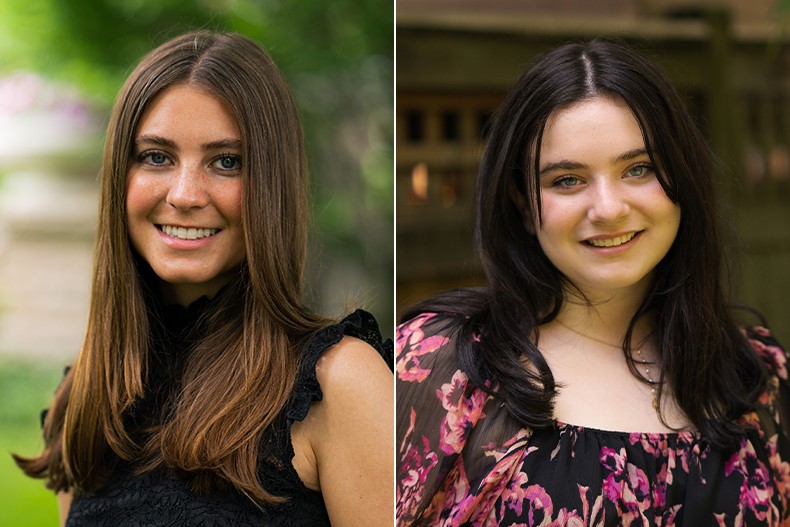
Two local teens win national recognition
Recipients of the annual Diller Teen Tikkun Olam Awards
Read more -

Celebrating six young award winners cultivating the community
Introducing young adult award winners
Read more -
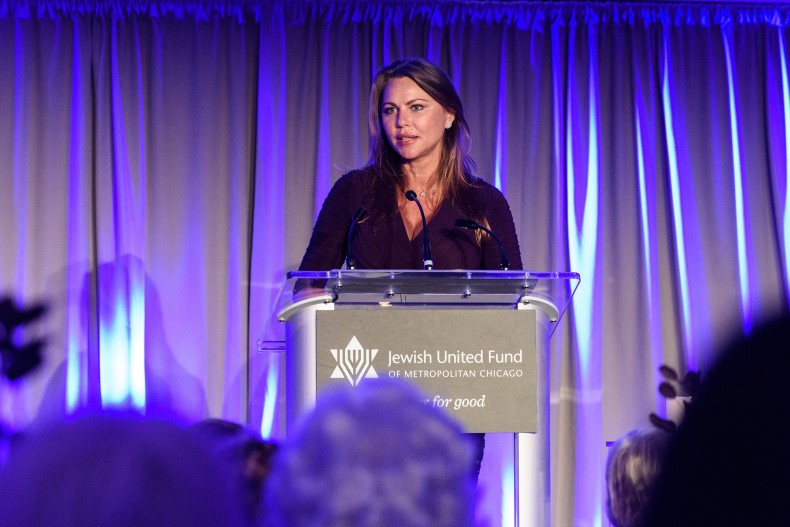
Four hundred women who gathered for Wednesday’s 2018 JUF Lion Luncheon heard from two other powerful women — this year’s Kipnis-Wilson/Friedland Award honoree Merle Cohen, and “60 Minutes” and CBS News Chief Foreign Affairs Correspondent Lara Logan.
Held this year at Chicago’s Standard Club, the luncheon — which raised a record $3.5 million — honors philanthropic women who contribute to JUF at the “Lion of Judah Level” of $5,000-plus. The event featured the presentation of the Kipnis-Wilson/Friedland Award , given biannually to women who demonstrate exceptional commitment to the Jewish community.
“Merle Cohen calls her Lion of Judah pin the most important piece of jewelry she has ever owned,” Kriezelman said. “That summarizes everything you need to know about Merle. She is a community treasure.”
Cohen, who received a rousing standing ovation, said: “I’m honored to receive this award for doing something I have loved so much, that has given purpose to my life.”
Deborah Schrayer Karmin, JUF Women’s Board Vice President-Campaign, gave the event’s moving fundraising pitch.
Karmin told the women that when she was a little girl, she modeled in JUF’s Jewish Children’s Bureau Fashion Show. When she complained that her shoes hurt, her mother explained how the fashion show helped children in need-and suddenly, young Karmin understood. “The black patent leather shoes stopped hurting that day, and with each step from that day forward the power of community and generosity has filled my life with extraordinary meaning,” she said. “Somehow, even as little girls, we can begin to learn to walk in someone else’s shoes.”
Event Chair Sharon Koltin was one of several women who gave moving testimonials about why JUF and its agencies have been essential to their lives.
“My parents are both Holocaust survivors,” Koltin said. “JUF has touched my life for as long as I can remember. My parents have credited JUF with bringing them from a place of despair to a place of new opportunity.”
Susan Insoft shared her thoughts as the mother of a young man with autism: “I have worried about what happens after graduation, and more so, after I am gone.” She thanked JUF for helping to support Keshet, which provides services to persons with disabilities. “My family and I thank you for helping to change my son’s life.”
This year marks the 25 th anniversary of the Lion of Judah Endowment program. “I am proud to be among the 174 women in Chicago who have chosen to leave a lasting legacy for our community’s future,” said Wendy Abrams, chair of National Women’s Philanthropy for the Jewish Federations of North America, who lit a candle in memory of those who had endowed their Lion gifts as a lasting legacy.
The room fell silent as award-winning journalist Logan bravely recounted the horrific events leading up to her brutal rape in Cairo’s Tahrir Square during the Arab Spring in 2011.
The week before the uprising, Logan and her CBS crew were arrested and detained by the Egyptian Army. The crew was blindfolded and handcuffed at gunpoint and their driver was beaten. They were advised to leave the country, which they did.
However, they returned the following week. “Ten minutes after we landed in Cairo, Hosni Mubarak stepped down,” Logan said. “All I could think about was getting to Tahrir Square.”
She had been reporting on the celebrations for about an hour when her cameraman’s battery went out. “One of the Egyptian crew members heard something, and his face went white. He said we have to get out of there, so we decided to run, but we got too far from the crowd,” she said. “He told me later was that what he heard them say was ‘let’s take off her clothes.'”
Moments later, hundreds of men were pulling her body in different directions.
“I thought about my children and I thought, ‘how can you give up on them?” she said. “I literally thought in my head, ‘I’m going to die fighting — so they’ll know they didn’t get all of me.'”
Ultimately, Logan’s bodyguard brought in soldiers who beat the mob away.
Logan said that one reasons she has spoken out is to be a voice for anyone who needs it. “They took a lot from me that night, but they don’t get to have the rest of me and the rest of my life. I am not a victim lying in Tahrir Square,” Logan said. “If I can be a path for people to find their own healing, I consider that a gift.”
Rochelle Newman Rubinoff is a freelance writer living in the northern suburbs of Chicago.
Other stories
-
Two local teens win national recognition
Recipients of the annual Diller Teen Tikkun Olam Awards
Read more -
Celebrating six young award winners cultivating the community
Introducing young adult award winners
Read more -
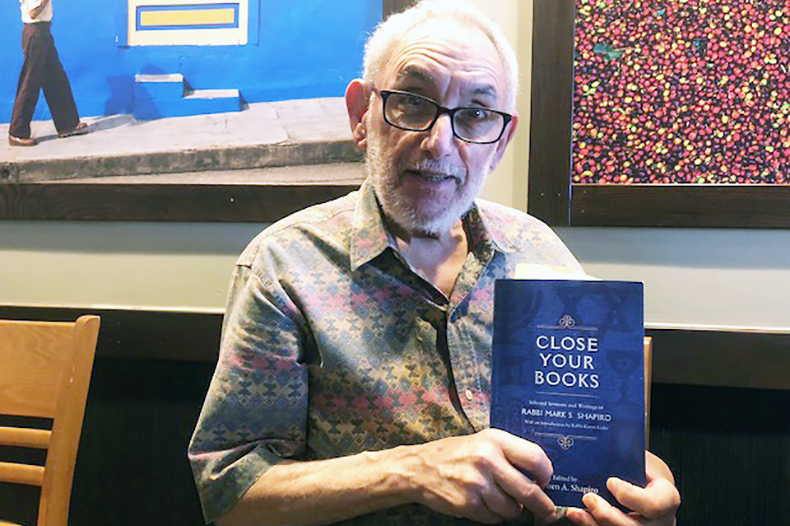
Rabbi Mark S. Shapiro closes a book on a half century of sermons
GRETCHEN RACHEL HAMMOND
On Rosh Hashanah in 1986, Rabbi Mark S. Shapiro delivered a sermon to his congregants at Congregation B’nai Jehoshua Beth Elohim (BJBE), then in Glenview.
“The world is out of our control,” he said. “Bad things can happen. Our everyday lives contain serious risks; with no immunity granted for those we love and none for us either. We’ve got to live with all the uncontrollable dangers in life. I’m not sure when life makes something all right, and when we have to intervene to try to make it right. But I know that life’s inherent wisdom is often wiser than mine.”
When Shapiro retired in 2000 from BJBE, which later moved to Deerfield, he did so having forged an indelible, familial bond with his congregants over the course of nearly four decades.
Shapiro was born and raised on Chicago’s South Side where he and his family attended South Shore Temple.
“I would go up to summer camp [Olin Sang Ruby Union Institute] in Wisconsin,” Shapiro recalled. “There would be young rabbis on the staff who were teaching, leading services, and playing ball with us. Being a big baseball fan, suddenly the idea struck me that I could do that too. My father wanted my brother and I to become attorneys or accountants. He got an attorney in my brother, but he didn’t expect to get a rabbi from me.”
Shapiro’s profession was not the only part of his life crystallized by the camp.
“I met my wife Hanna there,” he said. “She was in charge of the waterfront. I was a song leader with a guitar. Our middle child eventually got married to a counselor from that camp. It was a very significant place in our lives.”
Ordained in 1960, when Shapiro joined BJBE, it was still a relatively young Reform congregation.
A collection of the sermons and columns Shapiro wrote and delivered not only there but throughout a career spanning over a half century have been captured in a new volume called Close Your Books — a title derived from Shapiro’s request that his congregants set aside their prayer books in order to give him their full attention.
“If I didn’t get them with the first paragraph of my sermon, I realized I would lose my customers,” Shapiro explained.
He never did.
Shapiro’s lessons were replete with pop culture, sports, literature, historical, and current events references. He established an immediate and relaxed familiarity, drawing analogies to Judaism through subjects that included Alice in Wonderland, Watergate, Vietnam, Jimmy Stewart, Woody Allen, and even the M*A*S*H character Hawkeye Pierce.
Then, of course, there were the ever-present baseball references.
In one High Holy Day sermon in 1989, Shapiro illustrated the concept of awe through his experience watching the Kevin Costner film Field of Dreams in a movie theater surrounded by an audience of sobbing men.
“And what was the ‘awe’ that brought tears?” Shapiro asked in his lesson. “We cried, imagining a game of catch with our fathers. We sensed that moment of connection between parent and child to be a moment of awe, a holy moment.”
Shapiro recalled the honesty in speaking to people in a language they could understand.
“If baseball was what they are interested in, it could be used as a metaphor,” he said. “Once, someone in the congregation said to me ‘you sound like the same person when you’re doing the service as you do in real life.’ It was important; a sense of ‘we know who you are and you are just like us.'”
It was that kind of approachability through which Shapiro turned a synagogue into a home merging his own family into the one he built at BJBE — congregants he looks back upon in the manner of a proud father.
“I am very lucky,” he said. “I have had 30-odd, maybe more, young people who have gone into Jewish professional life.”
In fact, there are more than 100 members of the Facebook group, “I am a Jewish Leader and Mark S. Shapiro was my Rabbi!”
Laced into Shapiro’s lessons was the concept of social justice. He marched with Dr. Martin Luther King Jr. in Selma and returned to his congregation to vividly describe the experience and the importance of the work.
“Ever since then, social action has been a very significant part of the synagogue,” Shapiro said.
It was a diagnosis of Parkinson’s disease which led to his retirement.
“Retiring wasn’t as hard as Hanna expected it would be for me,” acknowledged Shapiro, now BJBE’s rabbi emeritus. “People would come up to me and say, ‘I remember what you said to me in a sermon.’ For the life of me, I couldn’t remember saying it.”
It was Shapiro’s son Stephen who gathered and curated the inherent wisdom in Shapiro’s sermons in order to create Close Your Books .
“He told me ‘people really want to read this,'” Shapiro said. “And you know what? He was right.”
“When you touch your Jewish self, you touch a whole civilization, a whole way of life,” he wrote. “And there is always more.”
Close Your Books is available for purchase at Congregation B’nai Jehoshua Beth Elohim and on Amazon.com.
Gretchen Rachel Hammond is a freelance writer living in Chicago.
Other stories
-
Two local teens win national recognition
Recipients of the annual Diller Teen Tikkun Olam Awards
Read more -
Celebrating six young award winners cultivating the community
Introducing young adult award winners
Read more -
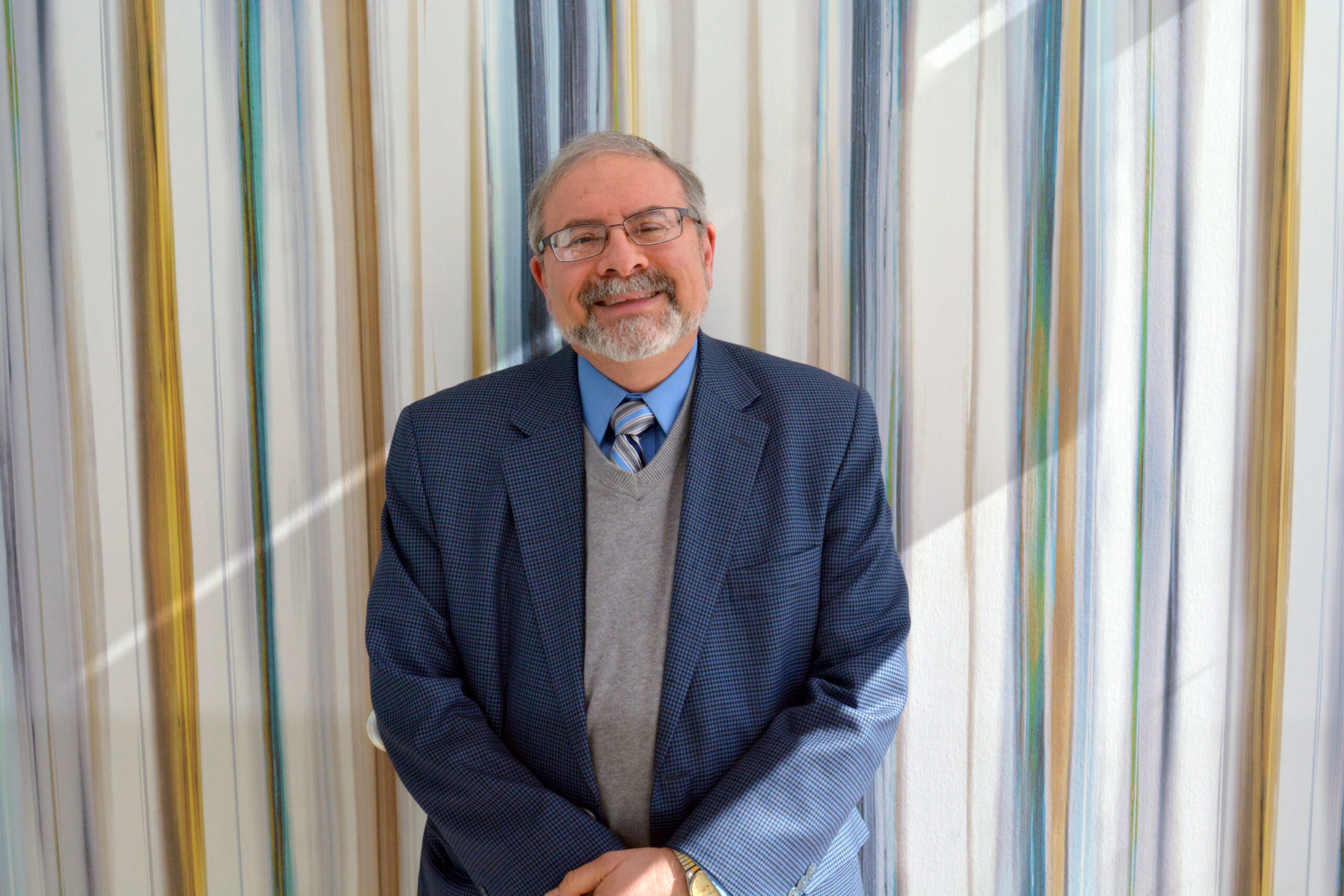
The word “chaplain” evokes spiritual leaders working in armies, hospitals, and prisons. And, through its Chicago Board of Rabbis, the Jewish United Fund of Metropolitan Chicago does support a chaplaincy program that helps many in such institutions.
But JUF’s Jewish Child & Family Services (JCFS) views chaplains as an opportunity reach out beyond the structures of these facilities. Through Tikvah: Jewish Chaplaincy Community Initiative, rabbis and cantors professionally trained in chaplaincy offer comfort to Chicago Jewish community members who need support in times of grief, stress, and challenge.
While they do visit medical facilities, the flexibility of Tikvah’s structure allows their chaplain “to go wherever you are, wherever the need is,” said Tikvah rabbinical counselor and chaplain Rabbi Joseph Ozarowski.
“Chaplains are spiritual care specialists,” he continued. “Using the tools of Jewish tradition, Jewish chaplaincy offers emotional support within a spiritual framework. We work with people who suffer, or who have questions-‘Why me? What is the purpose in my life?'”
Ozarowski has served as a pulpit rabbi, educator, and chaplain for more than 40 years; he also serves as a national officer of Neshama: The Association of Jewish Chaplains. The immediate past president of the Chicago Board of Rabbis, he has worked at JCFS since 2005. His first book, To Walk in God’s Ways: Jewish Pastoral Perspectives on Illness and Bereavement , is required reading in the field.
Becoming a chaplain requires a rigorous training program, Ozarowski said, that includes 1,600 hours in a healthcare facility. “We hone our skills of listening and empathy,” he explained. “We learn how to work with multidisciplinary teams in a healthcare setting.”
Ozarowski is eager to dispel myths about the concept of chaplaincy: “While many chaplains are Christian, Jewish chaplaincy is rooted in Jewish texts, faith and observance, culture, and community.”
Another myth is that chaplains are deployed primarily for those nearing the end of their lives. “Everyone will experience illness, grief, and sadness in their lives,” noted Elana Boiskin, Tikvah’s coordinator. Its chaplains have helped those with chronic illness, addiction, and family issues. Visiting with a chaplain “is appropriate for all stages of life, not just end-of-life,” she said.
Tikvah spiritual-care specialists can visit clients in a private home, hospital, senior home, skilled nursing facility, or other residences, both in Jewish and non-Jewish facilities. Tikvah also helps caregivers and other care professionals, who carry a heavy burden in their roles. In addition, the Jewish Healing Network-which runs Tikvah and is a collaboration between JCFS, CJE SeniorLife, the Chicago Board of Rabbis, and JUF-also trains lay people through their synagogues in bikur cholim, the mitzvah of visiting the ill and injured.
“Judaism affirms that God is with each of us in everyday life, especially in sickness and in sorrow,” Ozarowski said. “But both clergy and loved ones can, in their ways, help those in need of spiritual guidance.”
Cantors, not only rabbis, serve as chaplains; indeed, music often reaches people with memory loss in a way spoken words cannot. Ozarowski recalled a visit to a woman suffering from dementia. The client “perked up and sang along to ‘ Hatikva ,’ ‘ Ein Keiloheinu’- and ‘ Take Me Out to the Ballgame ,'” he said.
Tikvah has four chaplains-Ozarowski; Rabbi Paul Saiger, former executive director of The Hillels of Illinois; Cantor Fortunée Belilos; and Rabbi Eliezer Dimarsky, one of the first Russian-speaking Jewish chaplains, recently brought on to Tikvah to reach the large Russian-speaking Jewish community in Chicago.
While holidays can be a time of sadness for some, who long for those no longer there, holidays can also spark a note of hope. At a visit to a distraught Holocaust survivor over Thanksgiving weekend, a chaplain asked the survivor what he was thankful for. “My family and my life,” he responded. “I never knew if I would even have either one when I was in the camps. I am just grateful to be alive in this country.”
Ozarowski believes that community is also a source of spirituality, and the community is here for those who need it through Tikvah,” he said. “When the need is there, we offer the ability to be a friend to you.”
Tikvah is supported by the JUF Breakthrough Fund, the JF/JUF Fund for Innovation in Health (funded by The Michael Reese Health Trust), and The Albert and Lucille Delighter and Marcella Winston Foundation, a supporting foundation of the Jewish Federation of Metropolitan Chicago.For more information about Tikvah, contact (847) 745-5405, [email protected], or visit jcfs.org.JCFS is a partner with JUF in serving our community.
Other stories
-
Two local teens win national recognition
Recipients of the annual Diller Teen Tikkun Olam Awards
Read more -
Celebrating six young award winners cultivating the community
Introducing young adult award winners
Read more -
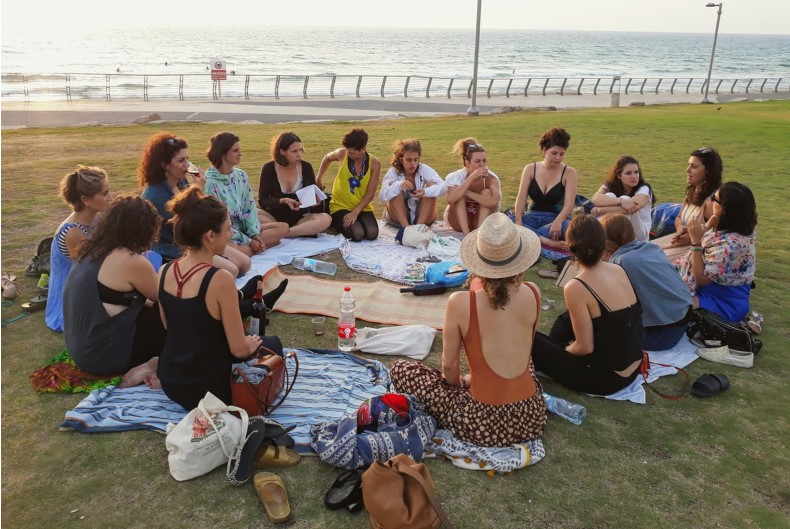
Sarah Waxman was feeling disconnected from her body and Jewish life. But once she learned about the Jewish ritual of Rosh Chodesh , Judaism quickly became central to her life.
“For me, it’s been an incredible wellness practice,” Waxman said.
Rosh Chodesh is the celebration of the beginning of a new Jewish month. The biblical ritual began after the Israelites were freed from bondage in Egypt. In the Book of Exodus, the Israelites were commanded to mark the months of the year to show they were now the masters of their own time.
There are differing views about how Rosh Chodesh became a women’s holiday. One belief is mentioned in the Midrash (ancient commentary on Hebrew scripture). The Midrash says women were rewarded Rosh Chodesh because they refused to participate in the sin of idolizing the Golden Calf during the exodus.
Her initial inspiration was seeking out resources “to support a ritual that I think has major mental health implications for secular world,” Waxman said.
So Waxman dreamed up At The Well, connecting women to body, soul, and community through wellness education and Jewish spirituality. What began as a newsletter on women’s health and Jewish wisdom, At The Well has evolved to include monthly meet-ups, retreats, workshops, and online resources.
At The Well publishes a book titled Wrestling With Menstruation, which teaches women how to track their menstrual cycle for mental health and spiritual connectivity. In addition, the organization creates “Moon Manuals,” which reference ancient Jewish texts, like the Torah, Kabbalah, and Talmud. Included are inspiring tales, creative activities, poems, meditations, recipes, and articles written by female leaders from around the world.
Facilitators across the world organize Rosh Chodesh gatherings, or Well Circles, a group ranging from six to 12 women. Facilitators are coached using guidebooks that can be purchased on At The Well’s website. According to Waxman, Rosh Chodesh is a time for women to come together, using the Hebrew calendar to guide their conversations.
Well Circles are taking place all over the world, like Paris, Boston, and Tel Aviv, according to Waxman.
Here in Chicago, there are two known Well Circles.
One Well Circle facilitator, Rachel Goldberg, hosts a gathering at Maggie’s Place, Mishkan Chicago’s wellness center. According to Goldberg, “The Moon Manuals that At The Well have created are actually a really deep well of resources and tools for reflection.”
Nasya Miller is another Chicago-based Well Circle facilitator, who co-facilitates with Mati Engel. “What’s possible in this experience is for every single person to think about what they want or need or what they feel would be valuable in resetting their month,” Miller said.
Currently, the Moon Manuel for the month of Tishrei , which is the month that Rosh Hashanah and Yom Kippur fall in, is available online for anyone to utilize. Rosh Hashanah, according to Waxman, is a great time to honor Rosh Chodesh because the holiday is celebrated on the new moon.
According to Waxman, “If people paid attention to the new moon from one Rosh Hashanah to the next Rosh Hashanah, they would be different people. I invite them to do that with me in the next year.”
For more information, visit www.atthewellproject.com or on Facebook & Instagram: @atthewellproject.
Carly Gerber is a freelance writer who writes about Jewish life, fashion, art, and culture in Chicago.
Other stories
-
Two local teens win national recognition
Recipients of the annual Diller Teen Tikkun Olam Awards
Read more -
Celebrating six young award winners cultivating the community
Introducing young adult award winners
Read more -
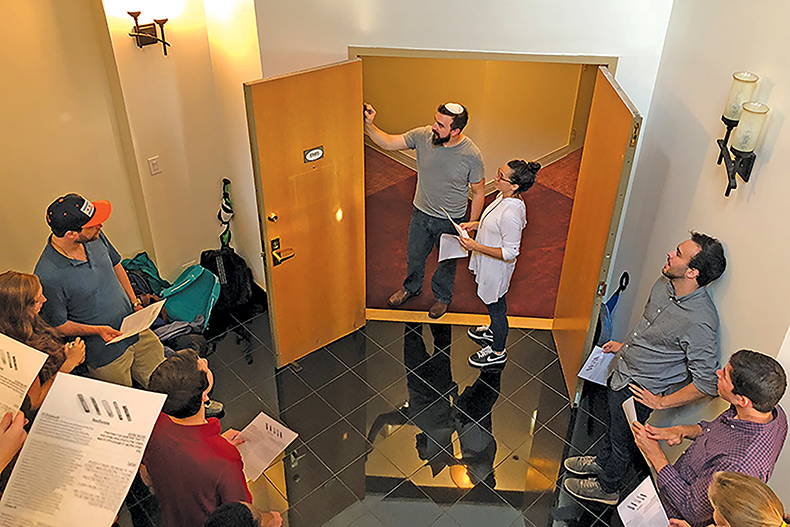
On any given night, dozens of students and young adults can be found at Silverstein Base Hillel in Lincoln Park engaging in discussions about Judaism and the environment, celebrating Shabbat, or exploring the weekly parsha (Torah portion) over tacos.
Since Silverstein Base Hillel: Lincoln Park-an initiative of JUF’s Metro Chicago Hillel-opened in 2016, Rabbi Megan and Paige GoldMarche have engaged more than 1,000 young adults in Jewish life.
“We thought we had a great concept, but were blown away by the numbers of individuals reached and the qualitative outcomes,” said Charles Cohen, executive director of Metro Chicago Hillel. “We thought we’d reach a certain amount of people-we exceeded that by 50 percent. Immediately, the question was, ‘How can we expand?’ We began asking, ‘How can we open a second one?'”
A second Base Hillel just opened in the South Loop. It will follow the same model: a young rabbinic couple hosts events out of their own home. Rabbi Ezra Balser and his wife, Laura, were selected to lead the new Base Loop Hillel, generously underwritten by the brothers, Bill, Ted, and Tom Silverstein. Base Loop Hillel is positioned to serve undergraduate students from UIC, Columbia College, The Art Institute of Chicago, IIT, and Roosevelt University. It will also serve the more than 1,000 Jewish graduate students in the Loop as well as the growing population of young Jews in the area.
“We want to foster an enduring Jewish life by modeling a Jewish home,” Ezra said. “If we can build a warm and welcoming space for people to interact with us as Jewish leaders, and if they can feel comfortable growing in their Judaism in our home and taking that with them beyond our home, that’s the dream.”
In addition to being a Jewish educator at Base Loop Hillel, Laura works as an attorney. Ezra was previously the rabbi of a congregation on Boston’s South Shore. Before entering rabbinical school, he taught at Bernard Zell Anshe Emet Day School, worked at Camp Ramah in Wisconsin and New England, and was a youth director at Northfield’s Am Yisrael Conservative Congregation.
“Working with young adults is my passion,” Ezra said. “When I saw this job, it was really a lot of our interests in one place. It’s intentional, it’s immersive in that part of the experience is being in our apartment. You’re coming into a Jewish world that we are intentionally curating for the people who come into it.”
In his previous positions, Ezra found meaning in offering guidance and mentorship to young adults during a “pivotal moment in their lives.”
“Young adults have an intelligence about them that allows them to ask meaningful questions about the world around them, but there are still a lot of pieces missing from their lives and they don’t necessarily know what that is or how to put them in place,” Ezra said. “There’s a creative energy that comes with working with this population that is exciting and limitless.”
Students, young adults, and community members gathered in August to dedicate Ezra and Laura’s new home by affixing mezuzahs to the home’s doorposts.
“If the first event was any indication of the upcoming year,” Cohen said, “the new Base is going to be great.”
Other stories
-
Two local teens win national recognition
Recipients of the annual Diller Teen Tikkun Olam Awards
Read more -
Celebrating six young award winners cultivating the community
Introducing young adult award winners
Read more -
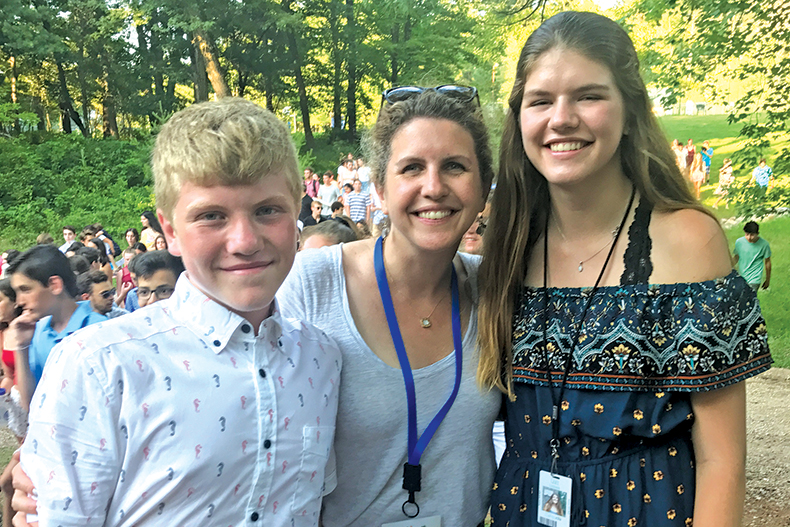
JCC Chicago names Addie Goodman as its first female president, CEO
CINDY SHER
Addie Goodman’s ties to JCC Chicago date back to her college years, when she taught swimming classes at Bernard Horwich JCC, where a man working at the registration desk caught her eye-a man who later would become her husband.
“It was one of those JCC love stories you hear about,” said Goodman, of Evanston, who has four children with that former desk clerk.
Her early years at JCC came full circle as Goodman, on Sept. 1, became the President and Chief Executive Officer of JCC Chicago. Goodman will serve as JCC Chicago’s 12th CEO, and as the first woman to lead the agency in its 115-year history.
Goodman first came to JCC Chicago in 2014, serving first as Chief Advancement Officer and then as Chief Operating Officer for the organization.
During her stewardship, JCC Chicago has expanded programs in the areas of monthly teen and family events, inclusive programs for children and teens of all abilities, and health and wellness experiences. Most notably, she has helped grow the annual JCC Chicago Jewish Film Festival, with attendance jumping from 1,000 five years ago, when Goodman started, to 12,000 this past year.
In her new role at JCC Chicago, she will oversee day and overnight camp, early childhood, recreation, cultural arts and community engagement, and fundraising efforts for the agency.
JCC Chicago is a partner with the Jewish United Fund in serving the community. “We look forward to partnering with Addie and her board as we strive together to strengthen JCC’s good work,” said JUF President Steven B. Nasatir.
Goodman acknowledges that as the first woman in this role, there are many eyes on her and many people committed to her success. Goodman talks with her daughter and three sons-all teenagers who have served as JCC campers and/or counselors-about her new role too. “They see that their mom has really persevered and worked hard to achieve something substantive,” she said.
At the same time, she says, this is so much bigger than her. “There’s a lot of support,” she said. “It’s not a one-woman show, but really a collective effort to have the greatest impact on the community.”
Looking ahead, Goodman would like to see JCC Chicago as a place for people of all ages and lifecycles in the Jewish community. “All of us Jewish community professionals share a goal of Jewish continuity,” she said. “We all do it a bit differently depending on our resources and areas of focus, but that’s the meta goal.”
Other stories
-
Two local teens win national recognition
Recipients of the annual Diller Teen Tikkun Olam Awards
Read more -
Celebrating six young award winners cultivating the community
Introducing young adult award winners
Read more -
A bill creating a pilot Medicaid-funded program to treat adolescents and young adults in the early stages of serious mental illness or addiction was signed Aug. 21 by Gov. Bruce Rauner.
SB 2951, sponsored by Sen. Melinda Bush and Rep. Sara Feigenholtz, was one of two Federation priorities aimed at curbing sources of gun-related violence: untreated mental illness in young adults and access to firearms by people viewed as capable of lethal violence.
The sponsors worked with the Healthy Minds/Healthy Lives Coalition to draft a team-based treatment model targeting youth with mental health or substance abuse problems. It would provide in-home and in-community clinic treatment to help them deal with everyday life triggers that may cause re-use.
Since the treatment would be funded by Medicaid, federal approval is required before implementation.
This spring, in response to the alarming rise in gun-related community violence in Chicago and in schools, community centers, and other public spaces across the country, a Federation mission travelled to Springfield to advocate for the legislation, and for a second anti-violence measure that later passed and was signed.
HB2354, the Lethal Violence Order of Protection, created a process for family members and local law enforcement to petition to have firearms temporarily taken away from people who pose a threat to themselves or others. It was sponsored by Sen. Julie Morrison and Rep. Kathleen Willis and, like SB 2951, passed with bi-partisan support.
Other stories
-
Two local teens win national recognition
Recipients of the annual Diller Teen Tikkun Olam Awards
Read more -
Celebrating six young award winners cultivating the community
Introducing young adult award winners
Read more -
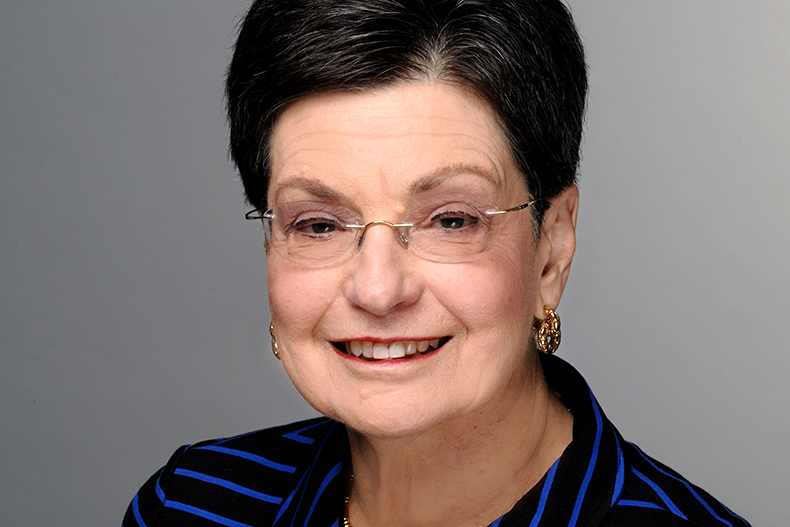
Andrea Yablon to receive Federation's highest honor at Annual Meeting Sept. 13
The 118 th Annual Meeting of the Jewish Federation of Metropolitan Chicago will be held Thursday, Sept. 13, at the Hilton Chicago, 720 S. Michigan Ave.
It will include a 10 a.m. business meeting and members’ forum and a noon luncheon.
At the luncheon, civic leader, businesswoman, and philanthropist Andrea R. Yablon will receive the 55 th annual Julius Rosenwald Memorial Award, the Federation’s highest honor. It is presented each year to an individual who has demonstrated a lifetime of outstanding dedication and service to the Federation and the entire Jewish community. The award is named for Julius Rosenwald, the iconic Chicago business leader and philanthropist of the early 1900s.
Having begun her involvement more than 50 years ago with the Young People’s Division (now YLD), Yablon is a vice-chair of JUF/Federation, serves on the Board of Directors, and has chaired numerous committees. She has endowed her Lion of Judah and is a lifetime member of the Jewish Women’s Foundation. She is a former member of the Board of Trustees of the Jewish Federations of North America, of which she has chaired emergency committees that aided Israel and Ukraine. She is also a longtime board member of the Michael Reese Health Trust and the Weiss Memorial Hospital Foundation and has served on the board of the Norton & Elaine Sarnoff Center for Jewish Genetics.
In addition to her work with the Jewish community, Yablon has been president of Diversified Health Resources, Inc., a health care consulting firm specializing in planning and marketing, since she and her late husband, Marshall, founded the firm nearly 40 years ago.
This year’s meeting also marks a great milestone and the beginning of a transition to a new era. Federation President Dr. Steven B. Nasatir, who soon will celebrate his 40 th year as chief executive, has announced he will step down from the President’s role next June, and become Executive Vice Chairman. He is the longest-serving chief executive of any Jewish Federation in North America, and just the fourth person to hold the Chicago Federation’s top post in its 118-year history.
In his final Annual Meeting as President, during the luncheon Nasatir will deliver his popular State of the Federation report, reflecting on the accomplishments and challenges of the past year and going forward.
The Federation’s annual Business Meeting and Members’ Forum, focusing this year on Jewish teens, begins at 10 a.m. and features the election of directors; awards to outgoing board members; presentation of the Samuel A. Goldsmith Award and the David, Gidwitz & Glasser Young Leadership Award; and an opportunity to explore critical community issues with Federation and agency leadership. There is no charge for the morning session.
The lunch session will feature Nasatir’s Report of the President; the presentation of the Shofar Award to 2018 JUF Annual Campaign Chair King W. Harris; the presentation of the Julius Rosenwald Memorial Award to Yablon; the passing of the chairman of the board’s gavel from Michael H. Zaransky to Andrew S. Hochberg; and special reports. Luncheon charge is $45 per person; $25 for senior citizens, clergy, Jewish communal professionals, and students.
For information, call (312) 444-2095 or email [email protected]. Register online: juf.org/AnnualMeeting. Kosher dietary laws will be observed, and no funds will be solicited.
Other stories
-
Two local teens win national recognition
Recipients of the annual Diller Teen Tikkun Olam Awards
Read more -
Celebrating six young award winners cultivating the community
Introducing young adult award winners
Read more -
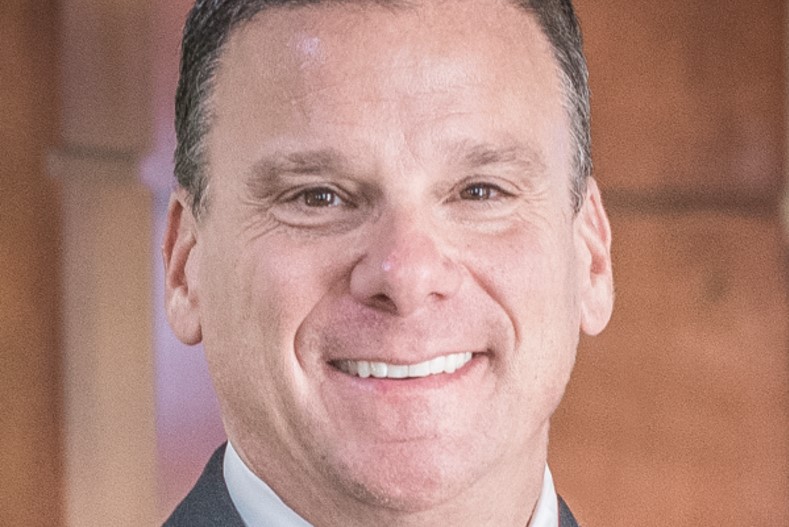
Dan Fagin, the new president and CEO of CJE SeniorLife, had already been working in the healthcare field for many years when his parents grew ill. His father was stricken with Parkinson’s disease and his mother with Alzheimer’s, and both ultimately spent time in assisted living and skilled nursing facilities.
Fagin’s personal experience of caring for his ailing parents taught him the needs, concerns, and stresses of being the adult child of aging parents and motivated him to focus his professional life on caring for seniors, too. “Having [personally] lived it, I find myself able to put myself in the shoes of the children of my residents, which has helped me to better meet their needs as caregivers,” he said.
Before focusing on eldercare, Fagin gained wide-ranging experience in the healthcare field, working for hospitals as well as a global business consulting firm. Most recently, he comes to CJE after serving for three years as CEO of a retirement community outside his hometown of Cincinnati, Ohio. In addition to his many years of healthcare experience, he has served in the Jewish community as COO of the Jewish Federation of Cincinnati.
In his new role, he hope to marry his healthcare and management experience with his desire to serve the Jewish community. “CJE has been a highly respected in the Jewish community for over 45 years, with a great history of enhancing the lives of older adults- thanks, in part, to the tremendous support from JUF,” Fagin said. “The diversity and breadth of what CJE does and the broad scope of its services are exciting. It’s different from what I have seen in other cities, which is sometimes handled by as many as three different agencies.”
He affirmed the dedication of his CJE colleagues. “I’m inspired by the morale and commitment of the CJE staff and board, some of whom have been involved for 30 years,” he said. “It’s very demanding, but also a privilege, to work with older adults. For the staff, it’s a true calling.”
Looking toward the future, Fagin hopes to adapt CJE’s strengths to the evolution in ways and places people want to be cared for today- with more choice and flexibility, as well as in-home care for as long as possible. Use of skilled nursing homes is declining, he said, and people are choosing retirement communities only when they are no longer able to remain safely in their own homes.
Caring for the last remaining Holocaust survivors also drives him. “Due to the post-traumatic stress they have endured, they prefer the safety and comfort of familiar surroundings,” he noted. “They deserve to receive the benefits of our community- we have to identify and meet their social, medical, and spiritual needs, and find ways to engage them.”
Fagin feels that it is everyone’s duty to care for our community’s seniors. “Chicago’s Jewish community has a great service infrastructure, so help people who need it connect to it,” he said. “And know that CJE is here for your loved ones and their children.”
To learn more, visit www.cje.net. CJE SeniorLife is a partner with JUF in serving our community.
Other stories
-
Two local teens win national recognition
Recipients of the annual Diller Teen Tikkun Olam Awards
Read more -
Celebrating six young award winners cultivating the community
Introducing young adult award winners
Read more -