From sundown on March 9 to sundown on March 10, more than 50,000 people will shut their phones off and slip them into “sleeping bags” to celebrate the National Day of Unplugging.
The National Day of Unplugging encourages people to power down for 24 hours as a respite from modern technology. The day is an initiative of Reboot, a startup that reaffirms Jewish traditions and rituals while helping people carve their own Jewish paths, according to Tanya Schevitz, Reboot’s national communications manager.
At events, Reboot distributes cell phone “sleeping bags” to encourage participants to put their phones away.
“The National Day of Unplugging has roots in the Jewish tradition of the Sabbath,” Schevitz said. “The practice of taking a break is familiar to Jews, but this modern day of rest was developed for people of all backgrounds as a way to bring balance to the increasingly fast-paced way of life and reclaim time to connect with family, friends, and our communities.”
While the National Day of Unplugging originates in Jewish ritual, people of all backgrounds and religions participate. The initiative has been embraced by a range of celebrities including Arianna Huffington, Orange is the New Black creator Jenji Kohan, and Paul Reubens, according to Schevitz.
Reboot encourages participants to abide by its 10 principles: avoid technology, connect with loved ones, nurture your health, get outside, avoid commerce, light candles, drink wine, eat bread, find silence, and give back.
“The idea is to slow down life enough to regularly observe each of the 10 principles,” Schevitz said. “The day promotes not just one day of unplugging a year, but a lifestyle change.”
Nearly 1,000 events are held across the country leading up to and to celebrate the National Day of Unplugging, including nearly a dozen in Chicago.
“I have seen the Chicago community truly embrace and welcome the concept through so many exciting partnerships and events,” said Becky Adelberg, Reboot’s Chicago program coordinator. “In today’s world with so much technology to keep us distracted, it is a welcome break for so many.”
For more information, visit www.nationaldayofunplugging.com.
Other stories
-
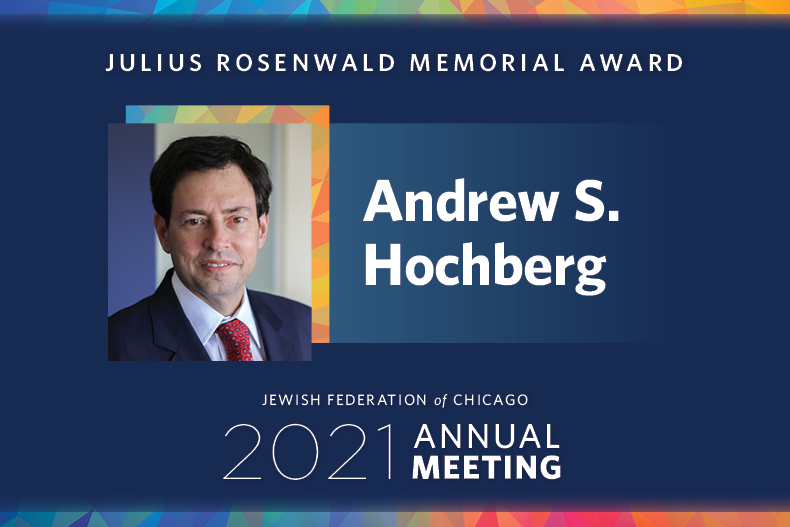
Meet Andrew S. Hochberg, 2021 Julius Rosenwald Memorial Award recipient
Celebrate Andy Hochberg at the virtual Annual Meeting on Sept. 14
Read more -
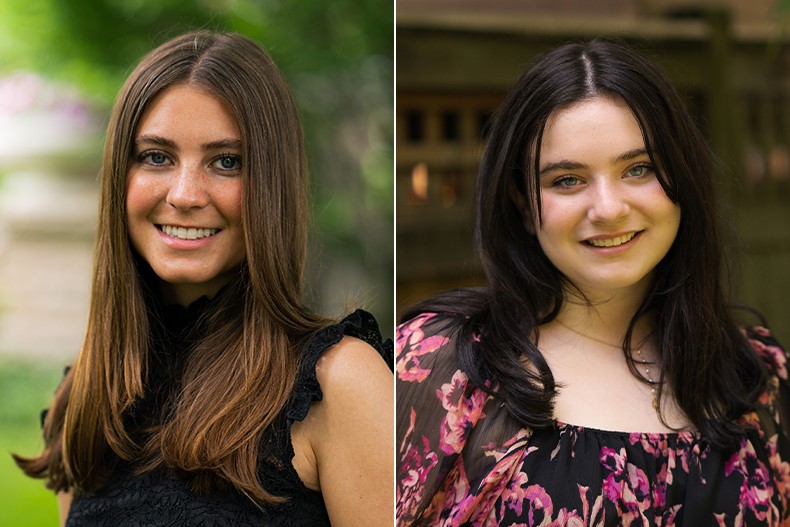
Two local teens win national recognition
Recipients of the annual Diller Teen Tikkun Olam Awards
Read more -

Celebrating six young award winners cultivating the community
Introducing young adult award winners
Read more
Spertus installation focuses on refugees’ timeless challenges
Robert Nagler Miller
As of today, more than half a million Rohingya of Myanmar have crossed the border into Bangladesh to escape persecution and death.
Back in 1979, several million Iranians fled their country following the advent of the Islamic Revolution.
And in the 1930s in Germany and Poland, and during the 15 th century in Spain and Portugal, and in England in the 1200s, in Egypt during Exodus-as well as in many other places and times in history-countless Jews left their homelands, often with little advance warning, to escape anti-Semitism, targeted violence, and worse.
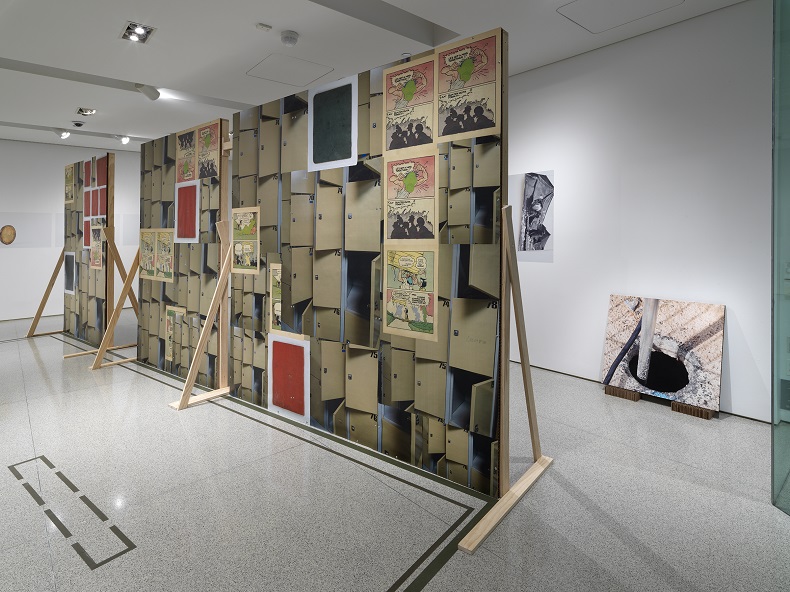
The plight of refugees, including today’s Syrians and Iraqis, is not mentioned specifically in Chicago artist Ellen Rothenberg’s installation “ISO 6346: ineluctable immigrant,” which can be seen at the Spertus Institute for Jewish Learning and Leadership’s gallery through April 24. That’s because, said Rothenberg, in a published interview with Ionit Behar, the Spertus Institute’s Curator of Collections and Exhibitions, who organized “ineluctable,” there is something eerily timeless and repetitive about the hardships that all refugees have faced throughout time.
“The installation and the images in it suggest a more generalized reading of historical continuities and recurring patterns that we are witnessing again today,” said Rothenberg, who teaches at the School of the Art Institute of Chicago and has created many politically and socially conscious installations site-specific projects since the 1970s .
Anti-immigrant sentiment, xenophobia, and human rights violations are nothing new, Rothenberg said, in an interview with JUF News . “I’m focusing on systems, not individual histories,” she said. “Unfortunately, we are in a period of history” with an unprecedented global refugee crisis and responses that often seem to fall wide of the mark.
To force the issue, Rothenberg, for “ineluctable,” culled through Spertus archives to find objects and documents relating to immigration. Included in the installation are a photograph of one of the discovered materials, the Mexican passport of a Russian Jewish seamstress, and copies of cartoonist Al Capp’s Li’l Abner , which addressed issues of community tolerance.
“The biggest surprise for me was to revisit the multiple histories in the Spertus collection and [see] how resonant they were with the present [time],” said Rothenberg.
The Spertus materials are commingled “ineluctable” with recent images that Rothenberg took at Tempelhof, a decommissioned airfield in Berlin and the site of the newly constructed Tempohome, a series of shipping container settlements for some of the tens of thousands of refugees who come to that city each year.
Rothenberg, who has spent several months each year in Berlin since the 1990s, and Bettina Klein, Berlin-based curator who wrote an essay accompanying “ineluctable,” both acknowledge there is a chilling quality to the creation of Tempohome on a site so closely associated with Nazi oppression.
“It’s complicated because of its multiple histories,” said Rothenberg, citing Tempelhof’s close proximity to one of the Berlin’s first concentration camps, KZ Columbia.
Among its most notable detainees were Rabbi Leo Baeck, a leader in the Liberal Judaism movement, and Robert Kempner, who became deputy chief counsel during the postwar Nuremburg trials.
“All of the historic echoes” are still present at Tempelhof, said Rothenberg.
But perhaps a more visible, bitterly ironic reminder, though, is a fence surrounding Tempohome. It was erected, wrote Klein, to protect today’s refugees from “xenophobic aggression,” since “accommodations for asylum seekers in Germany are attacked almost every day.”
The “ISO 6346” of the installation’s title is a reference to the “standard for identification and marking of shipping containers, such as those being used to house refugees at Tempelhof,” noted Spertus’ Behar in her published interview with Rothenberg.
She also observed that the latter half of the title, “ineluctable,” meaning “inescapable” or “unavoidable” was initially “used in print in 1623, notably at the same time as the words ‘immigrate’ and ‘migration.'”
Robert Nagler Miller is a journalist and editor who writes frequently about arts- and Jewish-related topics from his home in Chicago.
For more information, visit spertus.edu.
Other stories
-
Two local teens win national recognition
Recipients of the annual Diller Teen Tikkun Olam Awards
Read more -
Celebrating six young award winners cultivating the community
Introducing young adult award winners
Read more -
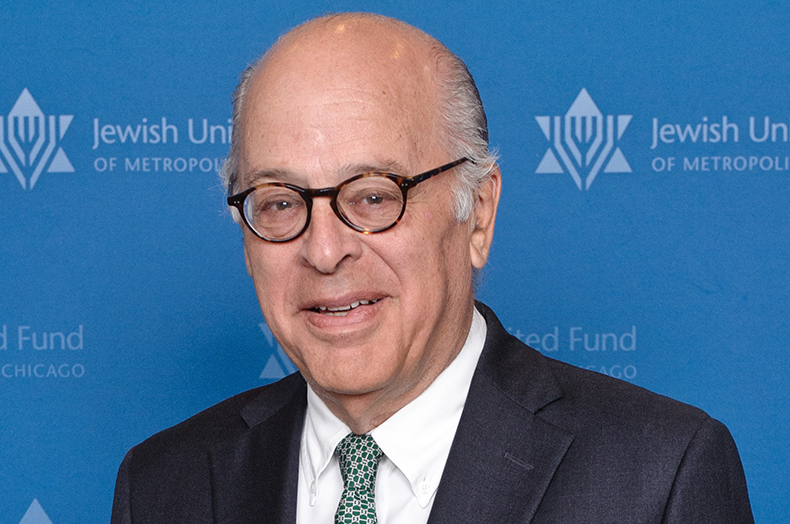
Nearly 90 years ago, before King Harris’ family moved to Chicago, before there was an Israel, before Harris was even born-the Jewish Federation was deeply rooted in his family’s identity.
Harris, who has been named the Jewish United Fund’s 2018 General Campaign Chairman, tells the tale of his grandfather, a self-made man who sold peacock feathers for women’s hats when he was 13 and eventually started what became a prosperous woolen goods business in Minneapolis-St. Paul.
“But he never bragged about any of his accomplishments,” Harris said, recalling what his own father, Neison, told him. “That is, until one night when he came home and told his sons and daughter that he now was the largest contributor to the Jewish Federation in the Twin Cities. That really meant something to him.
“I would like to think that my father and grandfather would both be proud to see me standing here, taking responsibility for our Jewish community” by leading the JUF Annual Campaign in Chicago.
The Annual Campaign is the largest source of funds supporting JUF’s network of more than 70 vital programs and agencies that meet basic human needs, create Jewish experiences, and strengthen Jewish community connections locally and around the globe.
“King Harris has shaped and strengthened Chicago in immeasurable ways,” said JUF President Steven B. Nasatir. “In business, philanthropy, and certainly in our own Jewish community, he has been a major force for good in this city and in the lives of countless residents-just as his family has done for generations.”
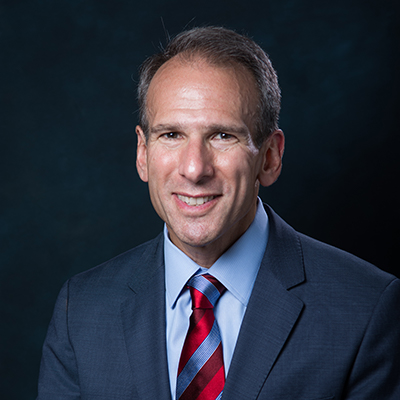
Harris long has been one of Chicago’s preeminent business and civic leaders. He worked at Pittway Corporation for 29 years, serving as President and CEO from 1987-2000. He also served as Board Chair of two Pittway spin-offs, AptarGroup, Inc., and Penton Media, and continues to be Chairman of Harris Holdings. In the not-for-profit world, he has served on the boards of the University of Chicago, the Rehabilitation Institute, the Museum of Contemporary Art, the Metropolitan Planning Council, Chicago Community Trust, the Francis Parker School, and World
Sport Chicago.
A self-described community organizer and affordable housing advocate, Harris currently is a Senior Fellow at the Metropolitan Planning Council and Board Chair of the Illinois Housing Development Authority. Much earlier in his career, he was a neighborhood center director for the Office of Economic Opportunity in Massachusetts and, before that, spent two years in the Peace Corps as a community development worker in Chile.
Even among those many endeavors, JUF holds a special space for him.
“JUF serves over 500,000 people of all faiths in Chicago, and millions of Jews in Israel and worldwide,” he said. “The scope and force of our impact is the most powerful example of collective action I have ever been fortunate to participate in. Every day, we help transform the lives of thousands of people at defining points in their lives.
“I have never seen an organization with the firepower, the commitment, that JUF has. JUF gets the job done.”
Other stories
-
Two local teens win national recognition
Recipients of the annual Diller Teen Tikkun Olam Awards
Read more -
Celebrating six young award winners cultivating the community
Introducing young adult award winners
Read more -
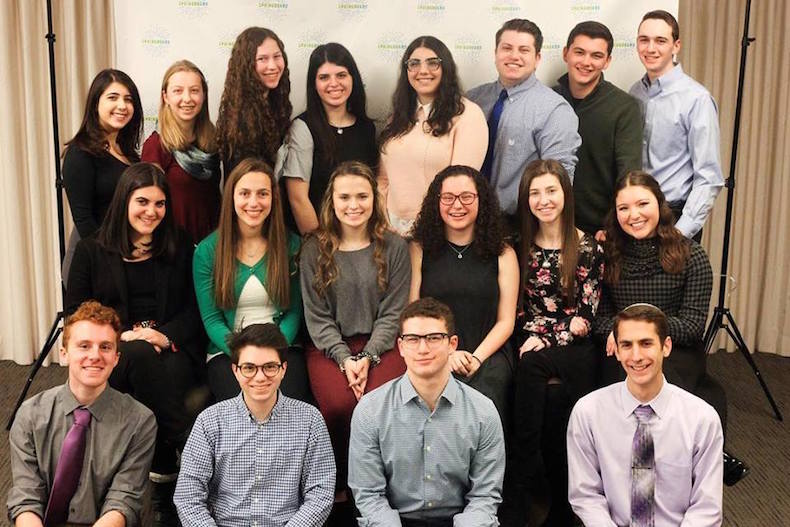
Teens and adults are invited to “18 Under 18: A Celebration of Jewish Teens” at 7 p.m. Monday, April 16, at the Chicago Botanic Garden in Glencoe to celebrate the honorees, as well as all the other outstanding teens in our community. Register at juf.org/18under18
Springboard is made possible by generous grants from JUF, The Jim Joseph Foundation, The Crown Family, and other local funders.
Other stories
-
Two local teens win national recognition
Recipients of the annual Diller Teen Tikkun Olam Awards
Read more -
Celebrating six young award winners cultivating the community
Introducing young adult award winners
Read more -
Chicago rabbis join multifaith effort to stand up for Dreamers
Jane Charney
On a frigid Chicago morning, nearly 200 people of faith — many of them clergy — gathered at Federal Plaza to stand up for Dreamers. Rabbis from across Chicagoland joined the multifaith coalition to support a legislative solution for these young adults brought to the United States as children without official immigration documents.
Brought together by Protected by Faith, the attendees urged Congress to facilitate a path to citizenship for the more than 800,000 people who had benefited from the Deferred Action for Childhood Arrivals (DACA) program until its cancellation in September when President Trump called for legislators to take action rather than continue the program originally created through executive order.
“Holy Blessed One, assist and encourage us as we ensure that justice washes over and cleanses this land. May it embrace the native born and the immigrant, the poor, and the wealthy. May the unprotected stranger feel your protection, and may he know justice,” Rabbi David Wolkenfeld of Anshe Sholom B’nai Israel Congregation in Lakeview offered in prayer near the beginning of the event. “May our voices and our warning be heard from Chicago to Washington.”
As DACA recipients shared their stories and religious leaders offered prayers, other attendees held up signs saying “Let My People Stay,” “We Were Strangers Once,” “800,000 Dreamers Waiting.” Clergy from the Jewish, Christian and Muslim communities also offered ways to act, including personal advocacy, supporting DACA application funds for those without resources, and creating opportunities for congregations to learn more.
“I am here today standing with immigrants and Dreamers because it is my duty, our duty, to create a world for all of our young people which is safe and secure,” said Rabbi Megan GoldMarche of Silverstein Base Hillel, which serves young adults and college students. “I will stand-will you stand?”
Participants responded with loud chants of “I will stand” as Korean drummers banged traditional instruments.
The plight of the DACAmented has inspired a series of advocacy actions throughout the Jewish community.
JUF’s Jewish Community Relations Council has been part of the Protected by Faith coalition since its inception in 2016. When news broke of DACA ending, the Jewish Community Relations Council issued a statement in support of Dreamers. In his speech at JUF’s Annual Meeting, JUF President Steven B. Nasatir said that “providing permanent protections for [Dreamers] should in no way be a partisan issue.”
“We urge our elected officials from both sides of the aisle to act quickly to make permanent the protections included under DACA,” said David T. Brown, then-chair of the Jewish Community Relations Council when JUF released its policy position on Dreamers last fall. “As Jews, we are deeply attuned to those who have come to these shores as ‘strangers’ as we ourselves have done. It is our moral obligation to ensure America continues be the welcoming beacon for both refugees fleeing persecution and immigrants in search of a better life.”
In addition, the Jewish Council on Urban Affairs has created a new immigration-related group of involved volunteers. And Reform Illinois, a project of the Religious Action Center of Reform Judaism with the goals of building a more compassionate and just Illinois, has recruited rabbis to advocate on behalf of Dreamers.
“This is a compelling issue for us because it connects so authentically with our own story of immigration and being a stranger,” said Julie Webb, lead organizer of Reform Illinois. “We are passionate and deeply concerned because we can identify with the people who are experiencing special vulnerability of this moment.”
Other stories
-
Two local teens win national recognition
Recipients of the annual Diller Teen Tikkun Olam Awards
Read more -
Celebrating six young award winners cultivating the community
Introducing young adult award winners
Read more -
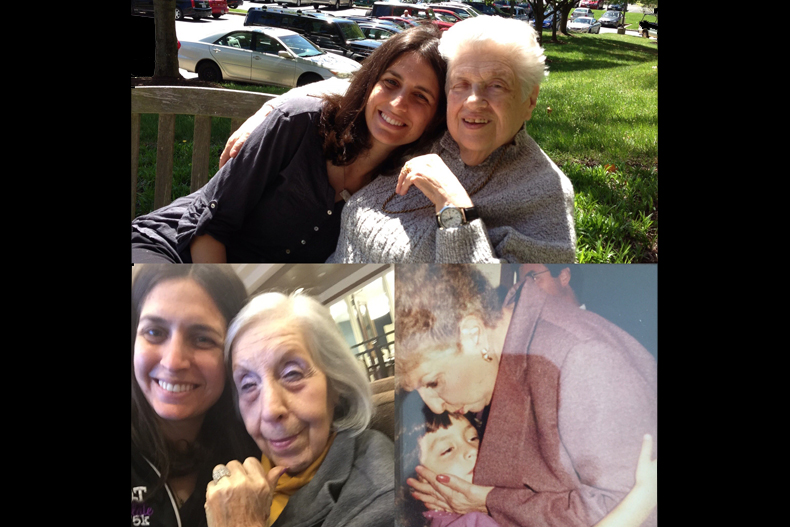
Not too long ago, I saw what is now my favorite Disney movie. The guiding light in the movie, Moana, is her grandmother, and that is one of the main reasons I loved the movie. As someone who was fortunate enough to grow up with wonderful grandmothers, this twist in the story spoke to me.
Growing up, I had a bubbe who was tall and hilarious, and when she hugged you, it felt like everything in the world was going to be great. My other grandmother, who we call Row-Row, is short and more serious, and holds your hands the whole time you are with her because she hates it when they are cold.
I was also fortunate, even if it was for too short of a time, to inherit another bubbe from my husband, who in every perfect way embodied everything a bubbe should be. She wanted your stomach to be full and for you to be blissfully happy.
The thing about grandmothers is, no matter what form they come in, they are always healthy for you to be around. A grandmother views your potential as limitless, compared to our parents who give us boundaries in order to help us succeed. According to Prof. Ann Buchanan, in a study done by the University of Oxford, grandmothers play a big part in nurturing young children to grow up feeling safe.
Growing up in a Jewish household, grandparents often play a major role in the upbringing of children. They help instill traditions, and Shabbat dinners and holiday meals are made better with our grandparents telling us fun stories.
There are also many health benefits to a grandparent-grandchild relationship. A study done by Boston College in June 2016 found that grandparents and grandchildren that spend more time together are less likely to be depressed.
Moana needed her grandmother’s help in order to get over her fear of the water so she could reach her destiny. Moana’s own parents were scared of letting her go too far deep into the water, but her grandmother knew that Moana had the ability to overcome this fear and would succeed.
Our grandparents can help us face some of our greatest fears. For many of us in our 30s, our grandparents started off with very little. Their dreams were to make a better life for their children, so they can they provide a wonderful life for their grandchildren and so on and so forth. They worked hard, faced their fears, and conquered adversity. Their successes, as well as failures, made them ready to face many challenges and those lessons were passed on to next generation.
According to Michelle Borba, EdD, a Campbell, California-based educational psychologist and author of Building Moral Intelligence, grandparents provide unconditional love, which helps children face their fears.
Nowadays, it is so nice to see so many grandparents with their grandchildren. A study done by the University of Oxford said that grandchildren who spend time with their grandparents often have better social skills and behave better.
Spending time with grandchildren can help keep grandparents young and active. Another study done by The Women’s Health Aging Project of Australia, suggests that grandmothers (the study was only done on grandmothers) who babysit one day a week are less likely to get Alzheimer’s disease later in life. Grandparents and grandchildren keep each other mentally and physically healthy.
As our grandparents age, it gets emotionally harder to be around them. They sometimes look sick, they forget, they repeat, and some of them are even shells of what we remember. However, as grandchildren we cannot forget that they were our original guiding lights.
Dr. Karl Pillemer, professor of human development at Cornell University and professor of gerontology in medicine at Weill Cornell Medical college, wrote, “Research shows that as many as 9 out of 10 adult grandchildren feel their grandparents influenced their values and behaviors. Grandparents transmit to their grandchildren the values and norms of social order.”
So, as they get older it is our job to make them feel safe and limitless. We need to make them realize that their walker, or wheelchair, can be a cool accessory. Tell them that they look beautiful in their new sweat outfit and that you love the art project they had been working on all week.
I am very grateful to have two grandparents who are still living and have been married for 69 years. I often ask them for their advice and sometimes just sit with them for an hour or so just to talk about food. I also feel blessed to have had time with two other grandparents (bubbes), who still guide me throughout life. Even though I lost one of them when I was quite young, like Moana, I can still hear her when I need her the most.
Dana Fine, of Highland Park, is a board-certified acupuncturist and herbal medicine practitioner.
Other stories
-
Two local teens win national recognition
Recipients of the annual Diller Teen Tikkun Olam Awards
Read more -
Celebrating six young award winners cultivating the community
Introducing young adult award winners
Read more -

Two years ago, I made the decision to change out of my pajamas, pause Netflix, and attend a Shabbat dinner. This was not an unusual occurrence for me, at the time a 26-year-old singleton living in Lakeview hoping for love.
As I walked through the doors of a beloved rabbi and rebbetzin’s home in West Rogers Park, a half circle of eligible Jewish bachelors ranging from two to five inches shorter than me greeted the three women who walked in at the same time. I said hi to a David, an Adam, two Bens, and a Joshua, until, between the Bens, I saw a figure.
He was playing clapping games with the Rabbi’s children and did not even notice the swarm of attractive women walk through the front door. ‘That one,’ I told myself, for as a woman who had repeatedly fallen into the traps of dating, I was attracted to men who ignored me.
We then enter into the Shabbat chair tango. It goes like this: I stand behind a chair, and the cute guy stands behind a chair not directly across from me. I shift one chair right, and he shifts right. Now we are even further apart. The dance goes on for five minutes where, in my mind, I perform graceful turns and side steps until we are sitting directly across from each other.
The dinner conversation started as any would: ‘What is your name? What do you do? How do you know the rabbi?’ ‘He is definitely not into me,’ I continued to tell myself.
Once again, my mind made up the narrative where I played the sidekick to my life and the downward spiral of self-doubt begins: ‘He is too cute for you. Did you forget deodorant? You are a mess.’ My inner voice, Dolores, was relentless.
“I just started taking a mindfulness class and realized how amazing each person is due to their soul,” he said. My thoughts stopped. Did I just hear that come out of the cute guy’s mouth? He cares about what is under the frizzy hair and half worn-off lipstick?
The rest of the conversation flowed seamlessly. We spoke about our life passions, spirituality, family, and what keeps us going each day. I was no longer the awkward best friend watching myself attempt to talk to the cute Jewish boy — I was just me.
“Hakarat hatov,” he said as he was giving me a ride home after dinner.
“What do you mean?” I asked.
“It means awaken to the good; that is why I was so intrigued when I learned your name,” he explained. “I was told to awaken to good and a few days later I meet Goodness (Tovah) Goodman.”
The next day I left for Israel to staff a trip with over 100 eighth graders. Despite the unfortunate timing, he said he would text me when I returned, and we would meet up.
To my surprise, as I landed in Chicago, I received a text asking when I was free. We settled on a tea date two days later, but with huge risk involved. On my flight back from Israel, I came down with a horrible stomach flu. Not willing to wait any longer, I showed up to the date with my puffy eyes, stuffy nose, and oversized sweatshirt.
Even though throughout our first dates I felt like a hideous mess, he continued to coordinate another date. A year later I asked him, “What made you continue to ask me out?”
“I saw something so beautiful in you and wanted to make sure, no matter how much time it took, that you saw it in yourself,” he told me.
With that, I say this to my remarkable fiancé: Thank you for giving me the guidance and mostly the inspiration and push I needed to be who I am today. You persevered through self-doubt, many tears, and extreme stubbornness to bring out the woman who is genuinely happy every day. I am grateful for each new day we are together and each step we take together to make an impact in the world.
Tovah Goodman, who lives in Chicago, is a musician, yogi, and youth educator.
Other stories
-
Two local teens win national recognition
Recipients of the annual Diller Teen Tikkun Olam Awards
Read more -
Celebrating six young award winners cultivating the community
Introducing young adult award winners
Read more -
It has become fashionable to suggest that the last few years in America have witnessed unprecedented levels of divisiveness among political partisans. In Jewish circles, we observe a similar dynamic, with many of our leading thinkers bemoaning historic levels of fractiousness and dysfunction within and between our communities.
While there is no shortage of evidence to support these views, I am not sure that such divisiveness is as unprecedented as depicted. Nor am I convinced that the problem we face stems from a lack of unanimity. One need not be an American historian to acknowledge our country’s long history of rupture and partisanship, extending all the way back to the earliest years of nationhood. The same can be said about the historic precedents of deep divisions across millennia of Jewish life — well into our own day.
Indeed, in Jewish tradition deep disagreement is de rigueur. Consider the quip, “Two Jews, three opinions,” which bespeaks the value Judaism places on robust debate. Likewise, every page of the Talmud is testimony to a tradition of impassioned argumentation, recording and preserving both majority and minority perspectives, giving credence to both.
As important as the content of passionate divisions, in Judaism it is the means by which people engage and respond that matter most. To this end, Jewish tradition offers its own “master class” on how to argue.
One of the Talmud’s most famous accounts describes a particularly complex disagreement over a point of Jewish law between two major schools of rabbinic thought-the schools of Hillel and Shammai (named for fervid interlocutors who rarely shied away from arguments).
In summarizing the episode, the narrative notes that each argument was sufficiently meritorious as to be considered “the word of the living God.” Yet, the text concludes, the law (i.e. the resolution of the disagreement) follows the school of Hillel. The rabbinic sages demand clarification. The answer, the text instructs is, “Because they (the House of Hillel) were kindly and modest, they studied their own rulings and those of the House of Shammai” (Eruvin 13b).
By all accounts, these are remarkable insights, beginning with the assertion that both interpretations, although radically different, represented God’s will. Consider how unusual such a functionally equivalent concession would be in our own day. Moreover, in explaining why the law follows the opinion of Hillel’s disciples, the Talmud stresses that it was not the brilliance of their argument but the humility and willingness to explore another point of view that made the difference. Scholars sometimes refer to this unusual trait as “epistemological modesty,” that is, the ability to say, “I think I am right! But I might be wrong.”
Jewish tradition is replete with other examples of passionate argumentation framed in the context of both civil discourse and respectful engagement. This is the background against which Spertus Institute for Jewish Learning and Leadership will be launching our Critical Conversations series on March 18. Generously funded by the late Eric Joss, the series will bring to the Spertus stage partisans who represent strongly divergent perspectives on issues ranging from gun control to immigration, who are, nonetheless, committed to civility and respect while affirming their individual viewpoints.
Some have asked what is Jewish about this series. I proudly respond that Judaism’s insights into civil conversation are exactly what this country needs, now more than ever. Others have objected to one speaker or another, based on polices, perspectives, or worldviews. (Indeed, we have received some pretty snarky comments on social media.) To them I say, thank you, thank you so much for proving our point about the need to embrace passionate dialogue and civility at the same time.
The goal of Critical Conversations is most certainly not to change your mind or to convince you that your viewpoint is wrong. Not at all! Instead, the goal of Critical Conversations is to teach us all how to listen better, how to hear a point of view that may, indeed, be anathema to our own value systems. If it turns out that we can disagree without being disagreeable, or that we can consider the merits of the other side, even if we reject their conclusions, then perhaps we — like the disciples of Hillel — will be able to bring a tiny bit more peace and respect to our fractured world.
The Hebrew word shalom (peace) shares a linguistic root with the word shleimut — wholeness. We who speak of tikkun olam — repairing the universe — as a religious imperative have much to learn about bringing wholeness and peace to the world by listening to those with whom we disagree the most.
More about Critical Conversations can be found at spertus.edu/conversations.
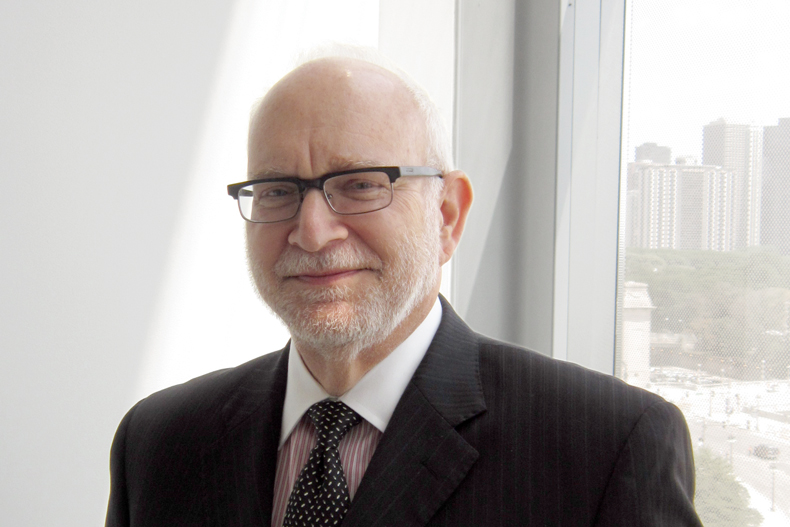
Dr. Hal M. Lewis is the president and CEO of Spertus Institute for Jewish Learning and Leadership.
Other stories
-

Mother’s Day, Father’s Day, and the Jewish way
Let us pause and consider what it means for us to truly honor our parents
Read more -
Each time we study Torah, we experience the revelation
The mystical tradition of Judaism that lifts up the number 600,000 from the Exodus
Read more -
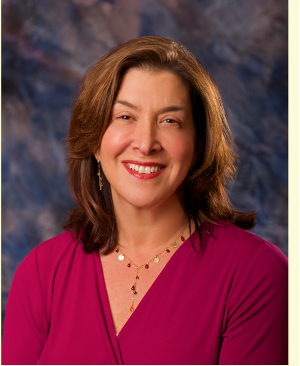
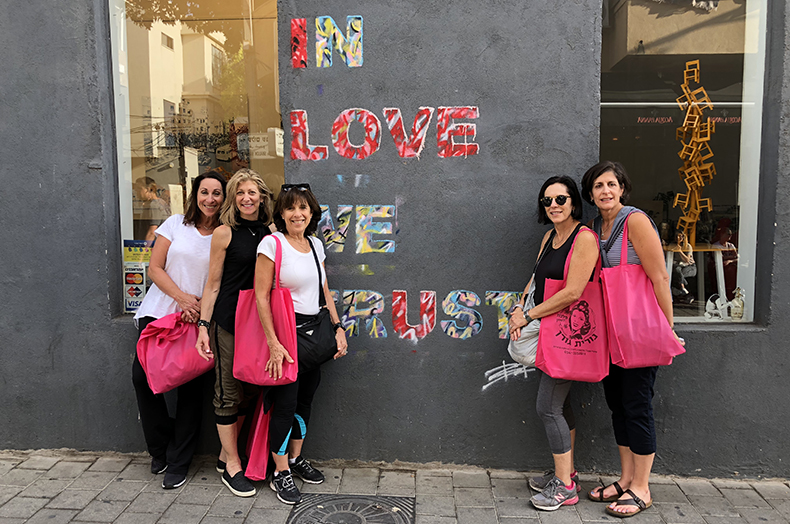
My last steps up the side of Masada were the hardest. Out of breath and slowing down, I looked up at the summit and in the heat and blazing sun of the Judean Desert, saw all my friends at the top who made it ahead of me, cheering me on. It was a remarkable moment for me — an intersection of friendship, faith and health in a fitting coda to a challenging chapter of my life.
That story began a year-and-a-half earlier on a paddle tennis court in Highland Park. I quit early from my game because I was short of breath. Most who were there that day said I should drink water and take a rest, but my friend Robin insisted I see a doctor. It was wise advice, as two days later I was diagnosed with late-stage endometrial cancer. The shortness of breath was due to a large cancer-related blood clot in my lungs. I was hospitalized immediately, and a far too common medical journey began.
Most people reading this know firsthand that nobody can prepare you for that kind of news, but a lifetime of enduring friendships and faith made the journey life-changing. My friends have always been a vital part of my life, and I cherish long-term relationships with them. From the first diagnosis, they showed me a breathtaking amount of love and support, and I embraced all of it. Shortly after my treatment began, a number of doctor acquaintances mentioned, unprompted, that the very best outcomes usually are the result of a strong support system and a great attitude. My goodness I thought, if that was the case, I’m gonna be fine.
The outpouring of love and support from my family and friends was overwhelming. The meals prepared, the companionship, drop-ins for coffee, flowers, texts, emails, calls-I loved it and surrounded myself with all of it. Importantly, I had faith, and others did too. Several friends said Mi Shebeirach (a Jewish prayer for healing) for me weekly. All were working their healing prayers including my non-Jewish friends, some of whom formed prayer chains at church.
The course of treatment was extensive. Nine weeks of chemo, followed by surgery, a week in the hospital, followed by another nine weeks of chemo. Being in good health played an important role, but friends and continuing faith got me through the worst of it. Most importantly, I am in the care of a gifted oncologist-who is also a man of faith. He has healing hands and judgment, but typically credits the results to a higher power. We are on the same page.
Months after my last treatment, as health and normalcy returned to my life, my friend Robin and her husband organized a trip to Israel. My husband and I had always wanted to go to Israel; we had heard that JUF missions were an exquisite way to do it, and this trip would be with so many of our good friends who had contributed so much to my recent recovery.
For me personally, the intersection of faith, friendship, and the blessing of good health came together on the ascent of Masada. While I had exercised during my treatment, I had not exerted myself in an extended way like a mountain hike can demand. About a dozen of us chose to walk up rather than take the trolley.
While I was always bringing up the rear, my fellow Masada-climbing friends were with me every step — listening, sharing, and empowering me. When they reached the summit, they were there cheering me on, just as they were there through the course of my treatment, encouraging me, having faith that I had the strength to climb.
Lynne Reisner, who lives in Highland Park and is a co-owner of a jewelry business, joined the JUF Couples Mission to Israel this winter. For more information about JUF Missions, contact Samantha Wolf at [email protected] or (312) 357-4692.
Other stories
-
Two local teens win national recognition
Recipients of the annual Diller Teen Tikkun Olam Awards
Read more -
Celebrating six young award winners cultivating the community
Introducing young adult award winners
Read more -
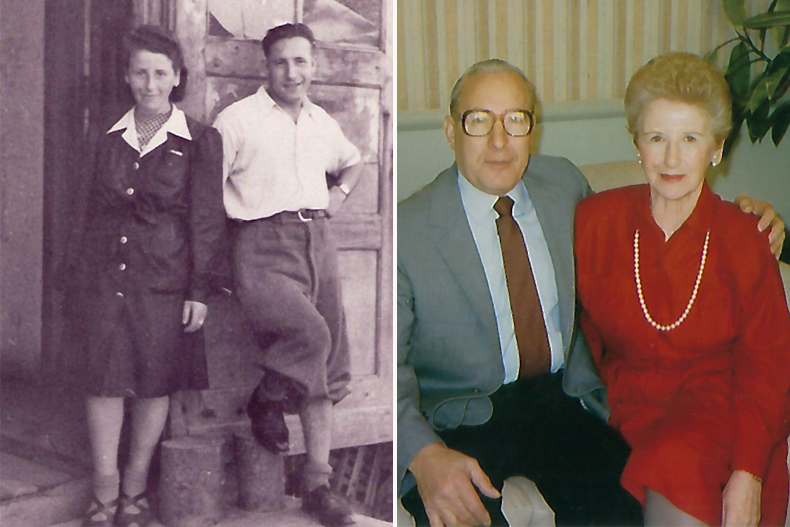
When Tema met Moishe. The son of two survivors shares their transcontinental love story
Michael Bauer
My Mom, Temcia Posalska, and dad, Moishe Bauer, first met in 1938 in Lodz, Poland when one of her first cousins married Moishe’s oldest brother. Moishe was instantly smitten with Temcia; however, from Temcia’s perspective, Moishe was a bit “rough around the edges.”
The following year, the Nazis invaded Poland, and within six months both Temcia and Moishe found themselves living in Lodz Ghetto. As winter approached in her fourth year living in the ghetto, Temcia realized that she needed new boots to replace her torn and leaking boots if she was going to survive the winter.
She heard that Moishe was making boots and shoes on the black market. She went to his apartment on the other side of the ghetto and he measured her for the boots. She gave him a down payment of half the cost of the boots (monies she had saved by selling her food rations) and was to return weeks later to pay the remaining cost and to retrieve her finished new boots. However, before she was able to do so, she was deported in December of 1943 to the first of two slave labor camps in which she was imprisoned.
In early 1945, the Allies bombed the second camp. Temcia was badly injured from the bombing and two Jewish doctors in the camp amputated her right arm at the elbow, doing the amputation without antibiotics and without anesthesia. Amazingly, she survived the amputation and her wound never became infected.
Two months later, as the Russian army approached from the east, the camp was liquidated. After the war, Temcia made her way to Lodz to seek survivors from her family-but she was the only one from her immediate family of 38 to have survived.
One day, Temcia was walking down a street in Lodz and she ran into Moishe-who had been liberated from a sub-camp of Neuengamme by American soldiers. Moishe was shocked to see Temcia as he had mistakenly understood that the transport she was on from Lodz was headed not to a slave labor camp, but directly to Auschwitz. Moishe had been smitten with Temcia from when they first met in 1938 at Moishe’s oldest brother’s wedding. He saw that she was missing her right arm and told her that she need not worry about the future because he would always take care of her.
Temcia and Moishe married in Lodz in1945. Moishe was skilled as a shoe and boot maker and started to make a living in Lodz for him and Temcia. After they got wind of a pogrom in another Poland town, Temcia immediately told Moishe that they were not safe in Poland. Within a week, Temcia and Moishe and several other couples paid to have themselves smuggled back across the border into a displaced person’s camp in Germany.
There, they applied to emigrate to Palestine in 1947, but because of Temcia’s amputation, she couldn’t secure a visa. Moishe refused to go without Temcia and they then applied to go to the United States, Canada, or Australia-anywhere that wasn’t in Europe.
Temcia was determined to prove that she would do with one hand what any other wife could do with two hands. She was especially proud when she received an award one month for having the cleanest home in the DP camp.
Temcia and Moishe wanted to start a family while waiting for visas and Temcia gave birth to a baby boy, Cheal, in 1948. Temcia, Moishe and Cheal eventually received visas to emigrate to the U.S. and arrived at Ellis Island in 1949. Moishe became Morris, Temcia became Tema, and Cheal became Jerry. The Hebrew Immigrant Aid Society (HIAS) gave them train tickets to Chicago to where they were settled.
With a loan from the Jewish Agency for Israel, Morris rented a store on Devon Avenue in Chicago and bought shoe repair machinery to set up his own business.
Then, in 1952, Tema and Morris had their second son born, Michael (me), named after Morris’ father, Manelah.
Jerry married in 1971 and Tema and Morris, with indescribable joy, eventually became grandparents to three grandchildren, and later seven great-grandchildren. After each of them had suffered so much loss, they together rejoiced at their growing family.
Two decades later, Morris was diagnosed with Alzheimer’s disease. Tema first handled the situation by herself, but after the disease had progressed, she contemplated putting him in a nursing home. Standing in the parking lot of the last nursing home that my mom and I had visited, Tema looked straight at me and told me that Morris had saved her life and she wasn’t going to put him away anyplace. Morris stayed at home and Tema luckily found a live-in aide to help care for him. Just a few months short of their 50th anniversary, in 1995, Morris passed away in his home surrounded by his family.
Today, Tema remains in the condo she and my dad shared, and she remains mentally sharp with a keen memory of people and events going way back.
Our family celebrated Tema’s 100th birthday on May 5, 2016-the same day as Holocaust Remembrance Day.
Michael Bauer, son of Tema and Morris, has long been active in the Jewish, LGBTQ, and women’s communities.
Other stories
-
Two local teens win national recognition
Recipients of the annual Diller Teen Tikkun Olam Awards
Read more -
Celebrating six young award winners cultivating the community
Introducing young adult award winners
Read more -