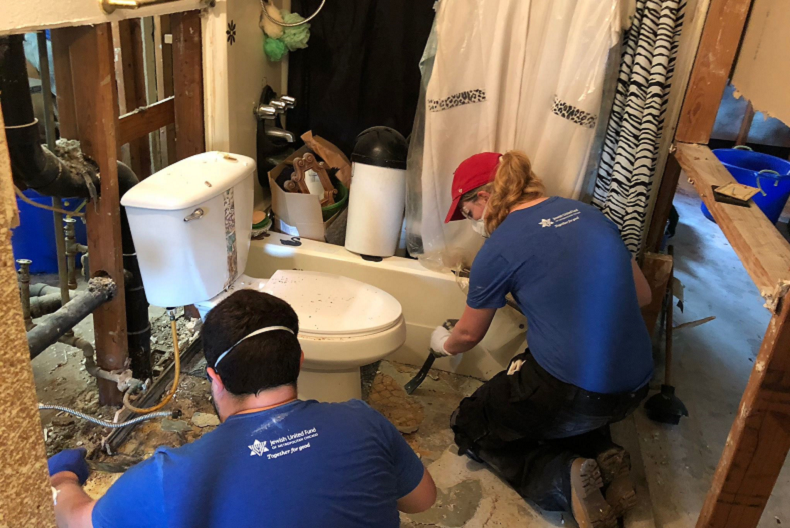
Chicago Jewish young adults travel to Houston to aid in rebuilding efforts
Adam Rowe
Hurricane Harvey ravaged the homes and hearts of so many Houstonians.
Picture driving through a suburban neighborhood where the streets are lined with four feet high debris and boarded up homes. We are talking toilets, mattresses, and yes even kitchen sinks. Stray dogs roam the streets still looking for their familiar territory.
My fellow participants and I worked in 80-degree temperatures removing drywall, floor tiles, nails, and much more to remove the growing mold from damaged homes. Each removed nail helped to set the foundation for a new beginning for the homeowners. The amazing aspect that remains with me is that this tragic event did not break the people of Houston. They are a resilient bunch-Houston strong. The neighbor of one home came over to introduce himself and personally thank each of us for helping out. At the NECHAMA shelter, area residents prepared and served us meals. It certainly didn’t hurt that the Houston Astros won the World Series on the last night of our trip!
Like most participants, this was my first time repairing homes after a natural disaster. I chose to act instead of making a financial contribution because no amount of money can help restore people’s hopes and feelings of loneliness.
Adam Rowe serves as the YLD Pride Committee as Social Media Chair.
Other stories
-
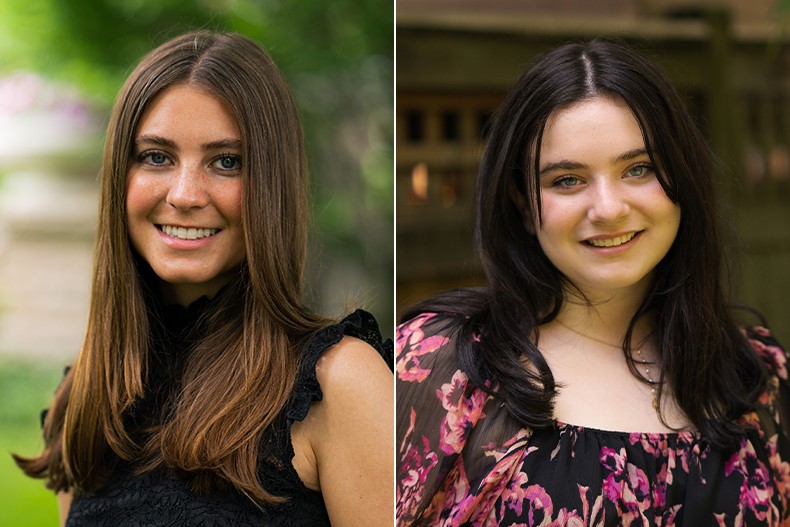
Two local teens win national recognition
Recipients of the annual Diller Teen Tikkun Olam Awards
Read more -
Celebrating six young award winners cultivating the community
Introducing young adult award winners
Read more -
Here are some strategies to reduce your 2017 tax liability and help the Jewish community. We can help you meet both goals through financial planning and charitable giving.
Financial Planning
1. Lifetime Gifts
Reduce your estate by making lifetime gifts of up to $14,000 (or $28,000 if husband and wife) to children, grandchildren or any family members or friends.
2. Take Losses and Defer Income
Sell investments which have suffered losses to offset taxable gains from profitable investments. Unused capital losses can offset ordinary income up to $3,000 and can be carried forward to later years.
Postpone salary or bonuses to next year if you will be in a lower tax bracket next year. If that is not possible, open a Donor Advised Fund (DAF) at the Jewish Federation (see below). A DAF is also a good idea if you think you may not be itemizing deductions next year due to the proposed tax bill which is doubling itemized deductions.
Accelerate income to this year if you think you will be in a higher tax bracket next year.
3. Fund Your Retirement Account
Fund your retirement accounts. If you are under 50, you can contribute a maximum of $18,000 to your 401(k) and if you are over 50, you can contribute $24,000.
4. ROTH IRA
Consider converting a Traditional IRA to a Roth. You will have to pay taxes up front but the fund will grow tax free so distributions in the future will not be taxed. Even if your contributions to an IRA are not deductible (because your income is in excess of $100,000), you can still make non-deductible contributions of up to $5,500 to a Traditional IRA ($6,500 if you are 50 or over) and then convert it to a Roth.
5. Fund A 529 Plan
Establish a 529 plan for your children or grandchildren to fund their education.
The account will grow tax-free and will not be subject to taxes when distributed to pay for higher education.
Charitable Giving
1. Make Charitable gifts with appreciated assets
Use appreciated stocks (held for more than 1 year) to make a charitable gift. This will allow you to bypass capital gains tax and still receive a deduction for the full fair market value of the stock donated.
2. Establish A Donor-Advised Fund at the Jewish Federation
Establishing a DAF allows you to have a fund to make charitable distributions to the charity of your choice in the future but get an immediate deduction this year. You can open a DAF with as little as $1000 in cash or appreciated stock. As discussed above, using appreciated securities will give you a double benefit since it will allow you to bypass capital gains taxes on the appreciation but you will still get a charitable deduction. It is easy to establish such a fund at the Federation, where your gift will be professionally managed and the fund grows tax-free, allowing you to leverage your charitable giving.
A DAF is also a great way to get a charitable deduction this year if you want to lower your tax bill but are not yet sure which charities you want to benefit. It is also a great time to establish a DAF if you think you may not be itemizing deductions next year because of the increased amount under the new tax proposals. It is also a great alternative to a private foundation.
3. Make a Tax Free Charitable Gift From Your IRA
If you are over 70½, you may make a distribution from your IRA to qualified charities, such as JUF Annual Campaign or The Centennial Campaign, without incurring any taxes. The gift must go directly to the charity and may not go to a donor-advised fund, supporting organization or private foundation. The maximum distribution allowed is $100,000 annually. The contribution is not tax deductible but it does count toward your required minimum distribution requirements.
Ordinarily, distributions from IRAs are subject to double taxation upon death. First they are subject to income tax and then they are subject to estate tax. As much as 70% of your IRA may end up going to the IRS. By making your charitable gift from your IRA now, the distribution is tax free and you are removing the asset from your estate. Consider paying off outstanding pledges, making a multi-year gift or supporting a capital project.
For more information, please contact a Jewish Federation professional at (312) 357-4853 or [email protected].
This is for information purposes only and is not meant to be a substitute for legal or financial advice. Please consult your professional adviser regarding your individual situation.
Other stories
-

Mother’s Day, Father’s Day, and the Jewish way
Let us pause and consider what it means for us to truly honor our parents
Read more -
Each time we study Torah, we experience the revelation
The mystical tradition of Judaism that lifts up the number 600,000 from the Exodus
Read more -
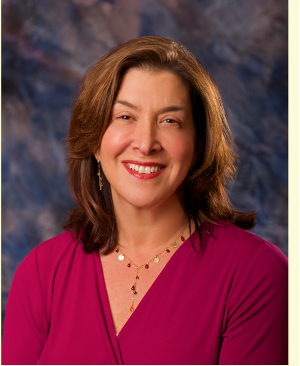
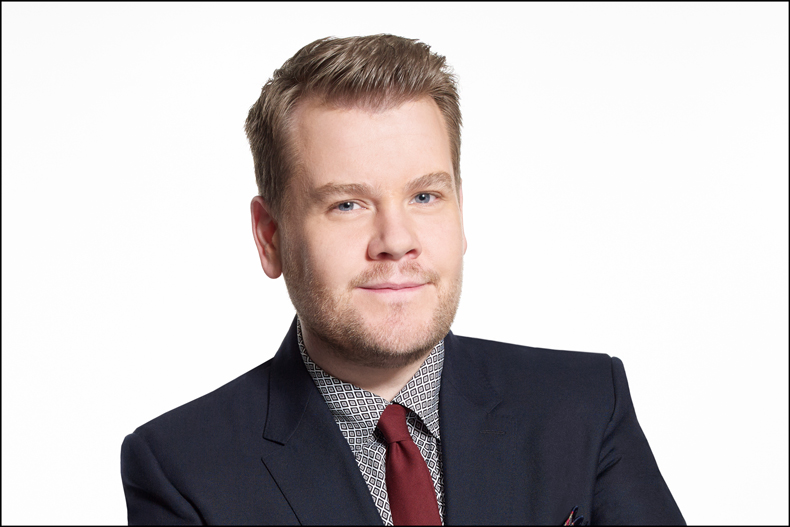
YLD's Big Event Fundraiser, celebrating 10 years, to feature performer James Corden Dec. 9
Dreaming big…
Ten years ago, a few of JUF’s Young Leadership Division board members and professionals dreamed big: They envisioned packing a downtown hotel with young Chicago Jews to celebrate and support the JUF community and the work it does.
And when YLD’s Big Event Fundraiser first launched a decade ago, it was indeed a big event–for its time. In fact, that inaugural event at Chanukah time in 2008 was the largest gathering of young Jews that Chicago had ever seen. That year, 700 people gathered and heard the music of Jewish reggae artist Matisyahu.
Since that time, YLD’s Big Event Fundraiser–and Matisyahu for that matter–have changed a lot. Over the past 10 years, the event has tripled in size, drawing upwards of 2,000 young people each year.
“It’s unbelievable to think about all of the progress YLD has made over the last 10 years and what this event has become,” said Courtney Cohen, 2018 YLD Campaign Chair. “Having 2,000-plus Jewish young adults in the room is extremely powerful and inspiring. We are so proud of the success and growth of the event over the last 10 years and want to thank our donors for their continued support.”
The event is bigger today with bigger laughs–top comedians including Jimmy Fallon, Sarah Silverman, Amy Schumer, Aziz Ansari, Seth Meyers, and Key & Peele have headlined the event over the last decade-but what hasn’t changed is that YLD’s Big Event Fundraiser is the place to be each year for young Chicago Jews to demonstrate their commitment to the community.
“It’s clear that we have a strong and vibrant young professional Jewish community in Chicago who cares about giving back to the community,” said Lisa Tarshis, 2017-2018 YLD President. “We are thrilled to have a night we can celebrate this dedication and commitment to community.”
The king of ‘Carpool Karaoke’…
This year’s event-which kicks off the 2018 JUF Annual Campaign-once again, expects to be huge. James Corden–the uber talented British comedian, talk show host, Broadway, TV, and film star, and the guy in the driver’s seat of Carpool Karaoke –will headline the 10th annual YLD Big Event Fundraiser on Saturday night, Dec. 9, at the Sheraton Chicago Hotel followed by after-party at the Loews Chicago Hotel. After a short standup set, Corden will be in conversation with Pat McGann, a Chicago comedian who has appeared on several late night talk shows including Stephen Colbert’s earlier in the fall.
Corden burst onto the British entertainment scene in the early 2000s, appearing in the hit British play and film, The History Boys; the play One Man, Two Guvnors ; and in his own TV sitcom Gavin & Stacey .
In the past decade, he has become a huge star on this side of the pond as well. Two years ago, he took over as host of CBS’ The Late Late Show With James Corden . He distinguishes his show from the other late night funny men, by providing a glimpse of his celebrity guests in the green room before their interviews, and he hosts more than one star at a time on his couch to create a fresh dynamic between the celebrities and himself.
In his short time on the air, Corden has generated tons of viral videos for his hugely popular Carpool Karaoke segments in which he drives his celebrity guests–Miley Cyrus, the Foo Fighters, Katy Perry, and Harry Styles, among others–through the streets of Hollywood, belting out hit songs in harmony. Corden’s karaoke alongside pop singer Adele last year became the biggest YouTube viral video of 2016.
He and wife, Julia Carey, parents to a young son and daughter, are expecting their third child in December.
For event information and to register, visit juf.org/BigEvent or contact the YLD office at (312) 357-4880 or [email protected] .
Other stories
-
Two local teens win national recognition
Recipients of the annual Diller Teen Tikkun Olam Awards
Read more -
Celebrating six young award winners cultivating the community
Introducing young adult award winners
Read more -
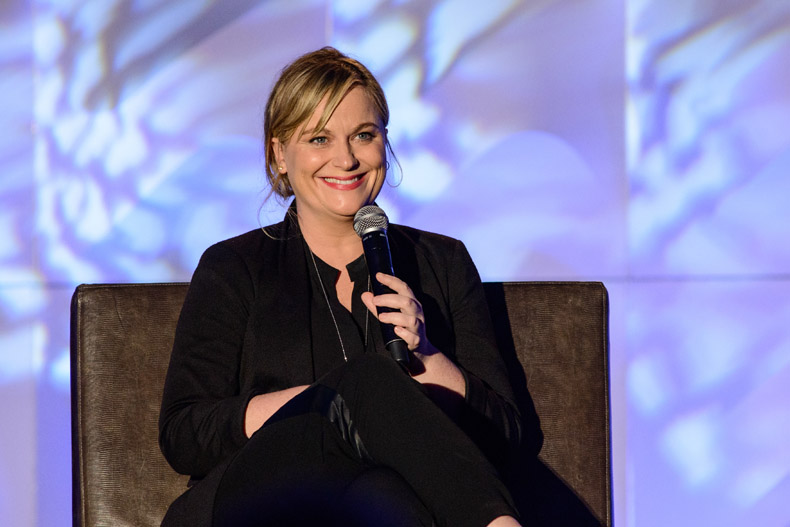
Comedian Amy Poehler brings 'joy' to nearly 1,000 at JUF's 2018 Vanguard Dinner
Amy Poehler’s visit to Chicago this week was a return home for the star, who launched her career in the Windy City two decades ago.
To make it in Chicago, she said, “all you need is a good attitude and a good winter coat.” Poehler–the Emmy-winning actor, comedian, producer, author–headlined the Jewish United Fund of Metropolitan Chicago’s Vanguard Dinner on behalf of the 2018 Jewish United Fund Annual Campaign on Tuesday evening, Nov. 7, at the Sheraton Grand Chicago.
‘The people of miracles’
The Vanguard dinner, attended by nearly 1,000 people, kicked off the 2018 JUF Annual Campaign, which is being chaired by King Harris. Vanguard is JUF’s giving society for those making a minimum gift of $5,000 to the JUF Annual Campaign. To inspire future generations, attendees were invited to bring their young adult children as guests. Any young adult who made their first JUF gift at the event will be matched in full, dollar for dollar, under JUF’s 2018 Match program.
Husband and wife Jim and Linda Ginsburg–who first met on a JUF Young Leadership Division singles mission to Israel decades ago–co-chaired the Vanguard dinner. “We have come together tonight to engage in collective action and to harness the power of our community’s generosity,” Jim said.
Michael H. Zaransky, Chairman of the JUF Board of Directors, spoke about the resilience of the Jewish people. How impressed his 94-year-old father-in-law, Jack–a Holocaust survivor–will be, Zaransky said, to hear about this gathering of 1,000 dedicated, committed, and successful Jewish people. “We are a vibrant, wonderful community,” Zaransky said. “We are the people of miracles.”
Vanguard guests also paused to remember the 79th anniversary of Kristallnacht, the night of broken glass when the Holocaust began in November of 1938.
Then, with the Jewish future in mind, Sasha Becker, Nathan Moncrieff, and Julia Siegel, students representing the Hillels of Northwestern University, University of Illinois at Chicago, and University of Chicago, led the blessing over the challah.
‘Laughter extends your life’
Then it was on to the laughter-and a profound conversation between two funny people.
Peter Sagal–the host of the popular radio show, National Public Radio’s Wait Wait…Don’t Tell Me !–interviewed Poehler on stage. A Boston native, Poehler started her comedy career in Chicago in 1993 in improv and sketch comedy theaters at Second City, ImprovOlympics, and Upright Citizens Brigade, of which she was a founding member.
Her Chicago sketch comedy roots eventually led her to Saturday Night Live , in which she debuted on the first episode after 9/11 when Americans were questioning whether it was still okay to laugh. Comedy is the best medicine, according to Poehler. “I believe in the very simple thing that laughter extends your life,” she said.
Then, Sagal and Poehler discussed some of Poehler’s most lovable–and Pollyana-like–characters. As Leslie Knope in the sitcom Parks and Recreation , Poehler played deputy director of the Parks and Rec department in a fictional Indiana town. What resonated for viewers, Poehler said, was Leslie’s boundless idealism. “It was a workplace comedy that talked about people with big dreams with a small amount of power,” she said. “…Cynicism will only get you so far.”
Later, Poehler took on the tall order of playing “Joy”–the character and the emotion–in the 2015 Pixar film Inside Out . The film, beloved by children and adults alike, explores the range of human emotions. Joy and sadness so often intermingle, Poehler said, an important lesson to teach children. “Happiness and sadness live right next to each other …So many kids are constantly being asked if they’re happy and they’re rarely being asked if they’re sad. Parents want desperately to get them out of that stage,” she said. “[But] sitting in it, being okay and not being afraid, showing your kid that they can be in it too, is powerful.”
Lately, Poehler is relishing in her role as producer–on the other side of the camera. Wearing her producer hat landed her in Israel for the first time this past summer, where she is adapting-alongside Jewish Orange is the New Black star Natasha Lyonne–an Israeli film about female soldiers in the Israel army into a TV series. Poehler said she loves that the project is “a way in” for people who know little about Israel, a country she said she is enamored by. “I was entranced by the intersection of culture and religion. I was blown away by the people,” she said. “…For the incredible history that’s in Israel, there is this intense alive vibe.”
Poehler said she learned during her time on the Chicago comedy scene about collaboration-a concept she likened to the work that the Chicago Jewish community does. “You become better by playing with better people. It was basically the idea of succeeding and failing together,” she said. “…It’s exactly what you guys [at JUF] are doing too. It’s the idea that you can’t do it alone and you must take care and look out for each other, and that good ideas come from connections with other people-so we’re exactly the same,” she added with a smile.
The Vanguard Dinner is supported by several generous corporate partners, including GCM Grosvenor and Kirkland & Ellis. The Vanguard Dinner is also sponsored in part by a grant from the Manfred & Fern Steinfeld Campaign Events Fund.
Other stories
-
Two local teens win national recognition
Recipients of the annual Diller Teen Tikkun Olam Awards
Read more -
Celebrating six young award winners cultivating the community
Introducing young adult award winners
Read more -
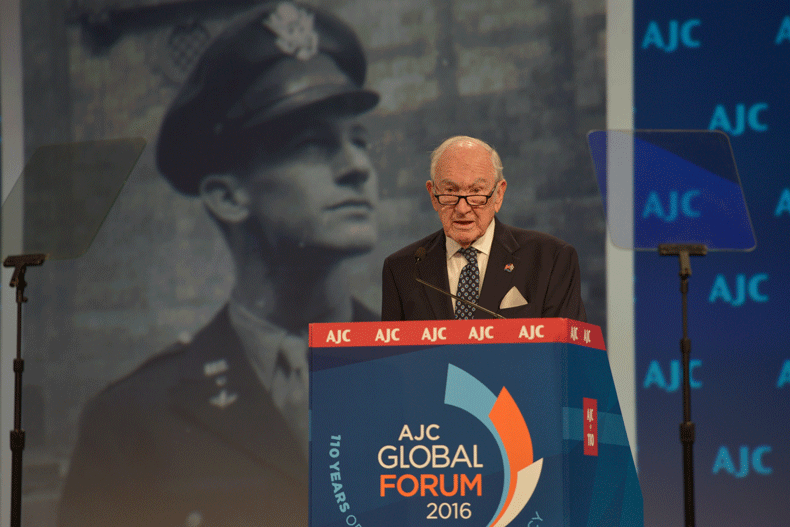
Howard Gilbert, former JUF-JF Board member (1971-1980) and past owner/director of Camp Agawak in Minocqua, Wisconsin, passed away in late October. He and his late wife, Barbara, served on JUF’s Legacies and Endowments Committee and its Silver Circle Committee. His earliest recorded gift to the Jewish Federation came in 1952. Gilbert was a past president of the American Jewish Committee and several other philanthropic organizations.
He was also a decorated World War II Air Force officer, who had been shot down in Europe. JUF President Steven B. Nasatir recalls once praising Gilbert for his valor during the war. Gilbert replied humbly to Nasatir that what he had done was a small matter in comparison to the thousands and thousands of American servicemen who had experienced more pain and sacrifice. “Clearly, Howard did not consider himself a hero though I did and still do,” Nasatir said. “He was a humble man-a very good Jew-and a great American. I will remember him with fondness.”
Gilbert’s late wife, Barbara (nee Rosenstone), was the first female board chair of CJE SeniorLife; they were married for 64 years until her passing in December, 2016. Together, they supported many causes, from cultural institutions to hospitals. Gilbert is survived by: his children, Peggy (David) Kubert, James (Gail) Gilbert, and Andrew (Maureen) Gilbert; his grandchildren Joseph, Kate, and Jonathan Kubert, and Nathan, Alexander, Jacob, Jean-Paul, Loie, and Max Gilbert; and many nieces and nephews. He was predeceased by his sister, Risia Mendelson, and his brother, Arthur Gilbert. Services were held at Weinstein & Piser Funeral Home, with interment at Memorial Park. Memorials may be made to the American Jewish Committee.
Other stories
-
Two local teens win national recognition
Recipients of the annual Diller Teen Tikkun Olam Awards
Read more -
Celebrating six young award winners cultivating the community
Introducing young adult award winners
Read more -
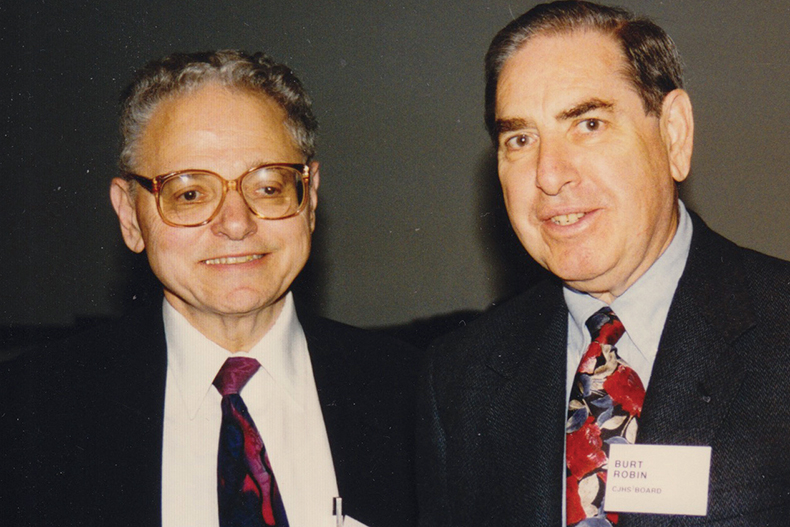
Chicago Jewish Historical Society celebrates 40th anniversary with gala event
ABIGAIL PICKUS
In 1976, as the country celebrated its bicentennial, the Chicago Jewish community had its own celebration: a Jewish exhibit at the Museum of Science and Industry titled, “My Brother’s Keeper,” sponsored by the American Jewish Congress and the Jewish Federation of Metropolitan Chicago.
The exhibit was a popular draw and in the last hour of the final day on January 2, 1977, its chairman Muriel Robin joined a group of volunteers standing before a case in which a Torah from the World Parliament of Religions at the World’s Fair of 1893 was on display.
Joining hands in front of the Torah with Moshe Samber, Marcia Josephy, Burt Robin, Moselle Mintz, and Norman Schwartz, the six decided right then and there to continue the legacy of the exhibit through the “discovery, preservation, and dissemination of information concerning the Jewish experience in the Chicago area.”
And so the Chicago Jewish Historical Society (CJHS) was born.
This year is the 40th anniversary of CJHS. They are marking it with a gala celebration on Sunday afternoon, Dec. 3, at Congregation Adas Yeshurun in Chicago, featuring the preview of a new video documentary by award-winning Chicago filmmaker Beverly Siegel, Driving West Rogers Park: Chicago’s Once and Future Jewish Neighborhood , exhibits, speakers, and kosher treats. General admission is $10, and admittance is free for CJHS and Adas Yeshurun members.
“Jews have played an important role in the history of Chicago and we want to collect, preserve, and share that history with our community so future generations will have access to it. We are very proud of that history and we want people to know about it because without our work, that history disappears with each generation,” said CJHS Co-President Rachelle Gold, who serves alongside Jerry Levin.
With administrative offices at the Spertus Institute for Jewish Learning and Leadership, which oversees the society’s Chicago Jewish archive (available by appointment only), they also administer an oral history archive containing hundreds of histories of local Jewish Chicagoans that have been transcribed and maintained. The most recent interview for the oral history archive was one of Dr. Irving Cutler, a founding member of CJHS and author of the seminal The Jews of Chicago: From Shtetl to Suburb , (Until recently, Cutler regularly led tours of Chicago neighborhoods). The archives contains an interview of attorney and President Emeritus of CJHS Walter Roth, whose books include Everyday Heroic Lives: Portraits from Chicago’s Jewish Past .
CJHS also offers robust programming four times a year, in addition to popular guided tours during the summer. Past tours include Chicago’s South and West Sides and the group has even ventured outside Chicago to Michigan, Wisconsin, Indiana, and Springfield, where they saw the “Lincoln and the Jews” exhibit.
The Society publishes the award-winning quarterly journal Chicago Jewish History, whose entirety dating back to 1977 is available online. “This is an important vehicle for sharing history and involving the public. A subscription is included in membership. Leading libraries, including the National Library of Israel, subscribe to the journal,” said Gold.
In addition to the quarterly, CJHS has published a facsimile reprinting of the 1924 Hyman Meites “History of the Jews of Chicago,” several historical monographs, and “A Walk to Shul: Chicago Synagogues of Lawndale and Stops on the Way,” by Bea Kraus and Norman D. Schwartz, whose second edition will be coming out within the next year, according to Gold. CJHS also produced Siegel’s 1997 documentary, Romance of a People: The First Hundred Years of Jewish Life in Chicago, 1833-1933 .
Currently, CJHS has over 500 members, and a board consisting of 20 members meets monthly-but like many organizations, they are concerned about bringing in the next generation. “Our average age is 60 and older. Many of our founders have died or can no longer be active and we are trying to bring younger people into the Society,” said Gold.
One way they are reaching young people is through an award CJHS bestows to local high school students at the Chicago Metro History Fair whose projects have a Jewish topic. Recipients receive an honorarium and they are featured in the quarterly journal. This past summer, CJHS also hired a graduate student in history at Loyola University to do research for an article in the journal on Jews who immigrated to Chicago in the 1870s. He was given access to a cache of materials including letters and pictures that were donated to the Society, according to Gold.
Perhaps most significant are the recent addition of three younger board members to CJHS. Alissa Zeffren, 32, a history teacher at Ida Crown Jewish Academy, is one of those members. “I love the people and the passion that they have and the knowledge they have is so amazing,” she said.
Zeffren was drawn to CJHS to learn more about the neighborhoods and lives of people like her grandparents who lived on Chicago’s West Side. “Becoming involved in CJHS is a nice way to recapture some of those personal stories of Chicago Jews that have these very rich histories,” she said.
Other young members include Jacob M. Kaplan, co-founder of the Forgotten Chicago website, and Rabbi Dr. Zev Eleff, a scholar of American Jewish history and Chief Academic Officer of Hebrew Theological College in Skokie.
“I don’t think we’ll be able to recreate the core community of the founding membership and of the first generation born in America, but people like me and Jacob and Zev will continue to gravitate towards the society because we want CJHS to continue,” said Zeffren.
For information on the gala, visit www.chicagojewishhistory.org or (312) 663-5634.
Abigail Pickus is a writer and editor living in Skokie.
Other stories
-
Two local teens win national recognition
Recipients of the annual Diller Teen Tikkun Olam Awards
Read more -
Celebrating six young award winners cultivating the community
Introducing young adult award winners
Read more -
PJ Library links a growing number of Jewish families—through the pages of children’s books—to Jewish life
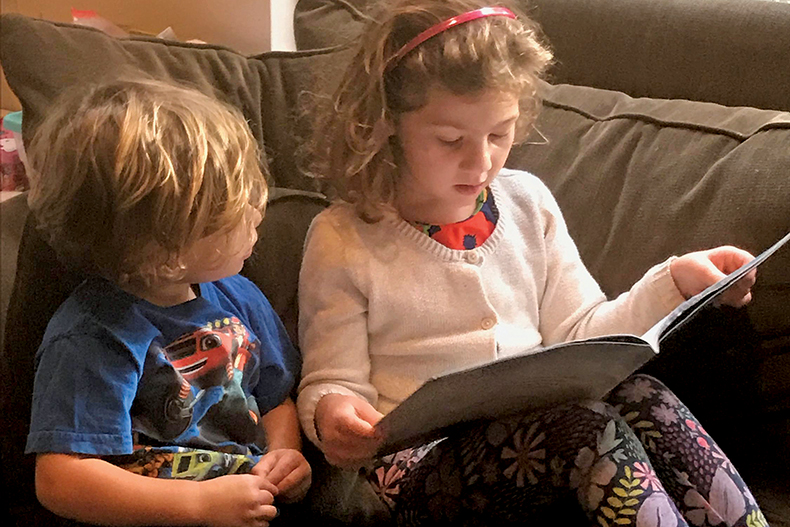
When story time arrives at their Bucktown home, 4-year-old Micah and her 2-year-old brother, Levi, usually head straight to their PJ Library collection of books. The Jewish-themed children’s books delivered monthly to their home are in the constant book rotation like in so many other Jewish homes with young children around the country.
PJ Library, created 12 years ago by the Harold Grinspoon Foundation, has delivered more than 10 million books to families–of all backgrounds, family makeup, and observance levels–raising Jewish children around the world.
Here in Chicago, PJ Library launched back in 2008 through funding from JUF and generous local donors, and has provided age-appropriate books and music to almost 19,000 children–and counting. PJ Library serves children ages 6 months to 8 years, and when children age out of PJ Library, they move onto a PJ Library offshoot called PJ Our Way for older children.
PJ Library consistently reports that its program has an influence in connecting families to Jewish life. “In our 10 years of PJ Library in Chicago, families continue to share how reading the books have inspired them to become more connected in Jewish life-from attending our PJ Library holiday celebrations and volunteering with JUF TOV to enrolling their children in Jewish preschools, summer camp, and day schools,” said Rachel Rapoport, PJ Library’s Program Director at JUF.
And PJ Library families are connecting to Jewish life in increasing numbers. Families who were surveyed in national PJ Library surveys in both 2013 and 2016 reported higher levels of influence from PJ Library in 2016 in questions about Jewish connection. Nearly every family–99 percent–reported in the most recent survey that PJ Library has somehow added value to how their family thinks about or practices Judaism.
Even for PJ Library households with parents who didn’t grow up with strong Jewish backgrounds, the survey found that the program is influencing their children Jewishly. In fact, the survey reported that PJ Library is more likely to influence intermarried families than in-married families. For instance, 83 percent of survey respondents said that PJ library has increased their confidence in engaging their kids on Jewish topics. That number spikes to 94 percent when looking exclusively at intermarried families.
Back at Micah and Levi’s home, lately the kids have been reading, re-reading, and re-reading again Flying High , New England Patriots star Julian Edelman’s semi-autobiographical book about a charming squirrel who wants to play football. Micah and Levi also gravitate toward the book Bim and Bom,
Their home, children’s books and all, feels very Jewish, and that’s just the way Micah and Levi’s mom and dad, Cortney Lederer and Stefan Teodosic, intended it to be. But Jewish life is much more a centerpiece of their children’s lives than it was for Lederer and Teodosic when they were kids.
Lederer grew up in Barrington, Ill., a suburb with a small Jewish population. She came from a culturally Jewish, but not observant family, and never had a bat mitzvah. She hadn’t dated Jewish guys, either, until she met her future husband.
Teodosic was born and raised in the Detroit suburbs by a Jewish mother and non-Jewish father. His family celebrated some of the Jewish holidays, but weren’t particularly active in the Jewish community.
Then, as a young adult living in New York, working in the World Trade Center on 9/11 prompted Teodosic to take stock of his priorities, switching careers from the for-profit sector to his dream of being a director of a Jewish camp. Today, he is the executive director of Beber Camp in Wisconsin and Perlman Camp in Pennsylvania, and active in the JUF community here in Chicago.
During their courtship, Lederer and Teodosic started contemplating more seriously what type of Jewish life they would want to pursue together. When they had their first baby, they wanted to make more intentional Jewish choices for their burgeoning family.
PJ Library books and their events have been a big part of that Jewish journey. “Cortney and I had never lit Shabbat candles when we were married before we had kids,” Teodosic said. “We have now chosen Jewish preschool, we light candles, we get challah from our schools, the holidays have become super meaningful…Really having resources, a support structure, and a cohort of other families has been amazing for us.”
Lederer, an arts consultant, says their children aren’t the only ones who learn Jewishly from the PJ Library books–which include information on the inside flaps about Jewish holidays and concepts. “I used the books as a way for me to gain knowledge about the various holidays, traditions, Hebrew and Yiddish phrases,” she said. “I’m also learning a lot along with my kids.”
To learn more about PJ Library, visit www.juf.org/pjlibrary .
PJ Library is a program of the Harold Grinspoon Foundation, funded in Chicago by JUF and generous local donors.
The Lederer/Teodosic family are now group leaders in Chicago PJ Library’s Gathering for Good, a social club for PJ Library families to volunteer, learn, share, and connect monthly through age-appropriate service projects and holiday celebrations. For more information, email Rachel Rapoport at [email protected] .
Other stories
-
Two local teens win national recognition
Recipients of the annual Diller Teen Tikkun Olam Awards
Read more -
Celebrating six young award winners cultivating the community
Introducing young adult award winners
Read more -
Lack of mental health services in Chicago highlighted by panel of local elected officials
Mara Ruff
Cook County Commissioner John Fritchey, Alderman Brendan Reilly, and Alderman James Cappleman briefed 45 JUF Government Affairs Committee members on Oct. 16 about the pressing issues impacting their respective districts. Common in all presentations was how the lack of mental health services directly affected the complex needs in their communities.
Fritchey explained that the County is paying $150.00 per day for every detainee at Cook County Jail, 80 percent of whom are on trial for non-violent offensives. He added that most of the current 8,300 people in custody are in need of mental health and drug counseling, and had they had access to such services earlier, many might not have committed the crimes leading to their arrest.
“The practical solution would be to decentralize the health clinics to the neighborhoods and consolidate efforts at the city and state levels,” Fritchey explained. “However the Commissioner was not optimistic about the different levels of government coming together to build a better system because of long history of competition.”
Representing the heart of Chicago’s downtown business district, Reilly talked about the increase of homelessness in his ward as one of the most pressing challenges, and linked this growing trend to a lack of mental health services.
“People are falling out of the system and we need better partnerships between Cook County and the City of Chicago,” he said. In an attempt to understand the needs of the homeless, Reilly walks the alleys twice a week with skilled caseworkers trying to bring a wraparound approach to solving the problem. With over half of the city mental health clinic closed, nearly 10 years ago, the alderman is encouraging the city to implement a new approach to address the mental health needs of the city’s homeless community.
The 46th ward, in Uptown, is geographically the smallest of the 50 wards but yields the highest rate of people living with chronic mental illness. The seven homeless shelters, which serve the area, are usually at capacity and not equipped to respond to the host of issues — poverty, unemployment, and lack of access to housing and medication- that contribute to the increase in the homeless population.
“We need to first address the homeless population and then create interventions to reduce prison recidivism rates,” said Cappleman, who is hoping to introduce the Housing First Model, used in other cities such as Seattle, Boston, and San Francisco, which provides permanent housing first and then addresses other needs like mental illness and substance abuse, through community support service.
“We must make effective interventions a priority in order to get the outcomes we need,” he said.
JUF’s network of health and human service have a physical footprint in 10 out of 17 Cook County districts, and are located in 26 (out of 50) Chicago wards.
“Advocating for a much stronger state and local response to the increased demand for mental health services may also be on our policy agenda this year in Springfield,” said David Golder, chair of JUF’s Government Affairs Committee.
Other stories
-
Two local teens win national recognition
Recipients of the annual Diller Teen Tikkun Olam Awards
Read more -
Celebrating six young award winners cultivating the community
Introducing young adult award winners
Read more -
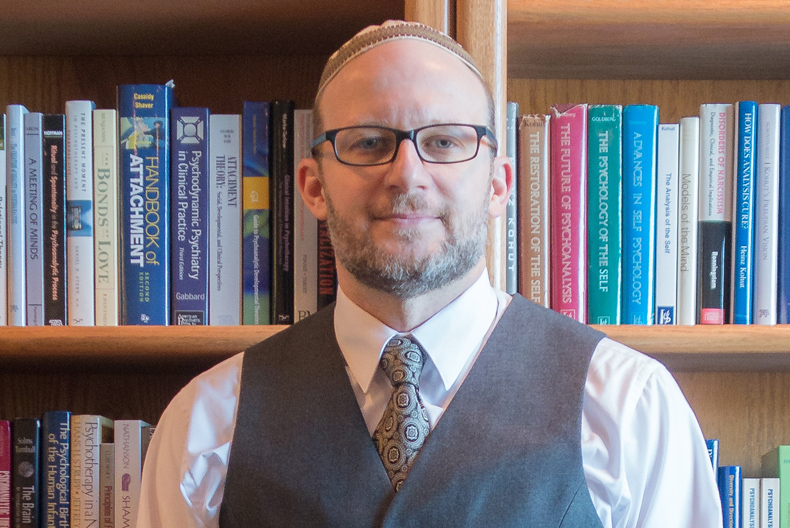
Nefesh Chicago supports Orthodox mental health professionals heal hearts and minds
Paul Wieder
Illness does not discriminate, and that includes mental illness. Still, treating illnesses includes treating different patients in ways they can accept.
For more than 20 years, Nefesh Chicago has served Orthodox Jewish mental health workers, and therapists serving Jewish clients, with professional support and training, networking, peer consultation, resource development, and community education. Nefesh also educates the public on personal, family, and community mental health issues.
“Orthodox Jewish mental health professionals trust Nefesh Chicago to deliver leading-edge clinical training relevant to the work they do in the community,” said Dr. Paul Cantz, Psy.D and vice president of Nefesh Chicago’s board. “Non-Nefesh Chicago members have also benefited from these trainings, since they promote the cultural knowledge and sensitivities required to treat Orthodox clientele.” A clinical assistant professor at the University of Illinois at Chicago, Cantz is also a supervising psychologist with Hartgrove Hospital’s inpatient unit.
Nefesh tailors its professional training to the needs of Orthodox Jewish mental health professionals, and others who face such issues in their line of work. The organization’s members are Torah-observant psychiatrists, psychologists, social workers, therapists, counselors, nurses, clergy, and others in the mental health field. Through Nefesh, they network, collaborate, and learn, addressing issues based on widely accepted mental health principles, within the framework of Torah and halacha (Jewish law).
“Nefesh provides education to clinicians, educators, rabbis, and rebbetzins (rabbis’ wives), and community members, and connects the mental health needs of Chicagoland with the resources of professionals worldwide,” said Nefesh Chicago board member Dr. Malka Miller, Clinical Psychologist at Barnes & Klatt and Yehi Ohr-Jewish Institute for Psychological Advancement .
Bringing in experts is one way Nefesh fortifies its local training. On Sunday, Oct. 29, Nefesh welcomes board member Dr. Nachum Klafter, director of the Advanced Psychodynamic Psychotherapy Training Program at the Cincinnati Psychoanalytic Institute and director of Psychotherapy Training at the University of Cincinnati’s Psychiatry Residency Training Program. This visit is the first of his two-part series, “The Damaged Core: Understanding and Treating Personality Disorders;” Part II will be presented in January.
Klafter’s own education embodies Nefesh’s two-prong approach. He studied at Hebrew University of Jerusalem and New York’s Yeshivat Darchei Noam. He also completed his psychiatry residency at the Thomas Jefferson University Hospital, where he served as chief resident.
Nefesh Chicago was established in 1996 as a local, then regional, branch of Nefesh International. The Chicago branch’s president is Rabbi Dr. Dovid Montrose. Its rabbinic advisory committee is led by Rabbi Dovid Cohen, Moreh D’Asrah, Rabbi Abraham Twerski, M.D., and Rabbi Tzvi Hersh Weinreb, Ph.D. liaison. Renee Lepp, on Nefesh Chicago Board of Directors for 20 years, had served as the director of The Ark for 13 years.
The Chicago branch brings in leaders such as Klafter and Mona Fishbane, the American Psychological Association’s 2017 Family Therapist of the Year. In the spring of 2018, Nefesh Chicago will hear from Dr. Jeremy Lazarus, the first psychiatrist to serve as president of the AMA.
Past seminars include: “Healing Intergenerational Wounds,” “A Neuropsychological Overview of Trauma,” and the issues of anxiety, transference, and even confidentiality. For the general community, Nefesh held a networking barbecue for graduate students, an orientation for those going to seminaries, and a talk on halachic issues for attorneys.
At this year’s Annual Nefesh Chicago Conference, speakers from Harav Hadayan Shmuel Feurst to DCFS representatives spoke on issues such as infidelity and child abuse, from the perspectives of halacha , the legal system, and mental health. Participating professionals earned continuing-education hours through a partnership with Adler University.
Nefesh Chicago also holds an annual event for rebbetzins , community leaders in their own rights. The topic of their most recent event was prenuptial agreements.
Much of the mission of Nefesh is to communicate with the clergy; rabbis and their wives are often the first to be informed of a crisis. Clergy can link congregants with Nefesh’s referral service for psychological and social services within the Jewish community.
The organization also raises awareness of mental health issues community-wide, teaching educators, parents, and teens, and connecting with originations like the JUF-supported Jewish Child and Family Services and Associated Talmud Torahs.
Nefesh Chicago prides itself on providing education, friendship, support, collegiality and inspiration to its membership. Dr. Rachelle Gold, a Chicago-based psychologist, said that “Nefesh offers outstanding academic exposure in an intimate setting, speaks to a wider Jewish audience, and regularly surpasses expectations.”
Dr. Klafter’s presentation to Chicago-area clinicians will be Sunday, Oct. 29, at The WiFi Building, 8170 N. McCormick, in Skokie. More information, including event registration, is available at nefeshchicago.org.
Other stories
-
Two local teens win national recognition
Recipients of the annual Diller Teen Tikkun Olam Awards
Read more -
Celebrating six young award winners cultivating the community
Introducing young adult award winners
Read more -
Survivors live on in perpetuity, thanks to cutting-edge technology
ROBERT NAGLER MILLER
“Never again,” we tell our children and grandchildren, students, and other younger generations, in relation to the Shoah -the Holocaust.
But what happens when those who personally experienced “Never again”-the dwindling number of Holocaust survivors-are no longer here to share their stories? Countless books, articles, and films, of course, will be available to teach the critical moral lessons that come out of one of the darkest times in human history. And the extensive audio and video collection at the USC Shoah Foundation-which holds the largest archive of first-person survivor testimonies-ensures that accounts of the Holocaust will live on in perpetuity.
But survivors themselves will not. It is only a matter of time before their in-person narratives of courage and resilience, which they have brought to classrooms, high school auditoriums, and stages across the world, will be but a flicker of a memory.
It is this inevitability that has moved Holocaust historians and educators to consider how in, say 2050, a middle school student learning about the Shoah for the first time will be able to access the power and immediacy of survivor testimony. An innovative result of their thinking will be on permanent display come October, when the Illinois Holocaust Museum & Education Center in Skokie launches its Take a Stand Center.
The new center, funded as part of the museum’s ongoing $30 million capital campaign, will take students and other audiences through a 90-minute journey whose aim is to move them beyond a depth of knowledge of the Shoah to action to prevent future atrocities. Vital to this objective is an “upstander” gallery, which provides examples of individual acts of heroism in the face of condemnation and mortal danger. Accounts of those who stood up and had the moral courage to say “no” to anti-Semitism, racism, homophobia, xenophobia, misogyny, economic injustice, and other forms of discrimination and persecution are featured. They include the famous and not-so-famous. “We didn’t want people to feel that they need to be a Nobel Prize winner to be an upstander,” said Susan Abrams, who, as chief executive officer, has led the museum since April 2014.
Learning about those who have resisted the Nazis, the KKK, and other bigots, bullies, and haters, and taking the initiative to speak out against injustice are two entirely different matters, said Abrams. That is why the Take a Stand Center includes a lab that proposes museumgoers ways they can make a positive difference in their communities-whether by contacting their legislators on a particular concern, writing a letter to the editor of their local paper, or raising funds and awareness about an issue important to them.
But what Abrams calls the “pièce de résistance” of the Take a Stand Center is the museum’s novel partnership with the USC Shoah Foundation: the Abe & Ida Cooper Survivor Stories Experience and the accompanying 60-seat holographic theater, where young people can listen to a five- to eight-minute high-definition video of one of seven Chicago-area Holocaust survivors.
Following the screening, audience members, with the aid of sophisticated voice-recognition technology, can ask the survivor featured on the screen before them additional questions about their experiences before, during and after World War II: Did your family see the Holocaust coming? How many members of your family survived? What was it like to return to your hometown in Poland after surviving Auschwitz? How and when did you get to the United States? Do you have bad dreams?
While these are just a handful of questions, the survivors are capable of responding to approximately 10,000 queries, noted Abrams. This is possible, explained Dr. Stephen Smith, executive director of the USC Shoah Foundation, because the seven Chicago survivors-along with six additional survivors from across the country-were flown to the foundation’s Los Angeles headquarters for a week’s worth of studio interviews conducted by foundation professionals.
The short video profiles that were produced by the Illinois Holocaust Museum are an outgrowth of these 18-to 20-hour interviews, which were far more sweeping in scope than the tens of thousands of original survivor testimonies that the foundation has collected over the past several decades. On average, those testimonies are two-to two and-a-half hours in length.
“Serendipitous” is how Smith characterizes this collaboration between the Illinois Holocaust Museum and the USC Shoah Foundation. He and museum board member Jim Goodman were seated together at a professional event when discussion turned to the use of holographic technology in communicating survivor stories. “We didn’t have a specific museum in mind,” said Smith, when he mentioned the possibility of beta testing the concept with a partner.
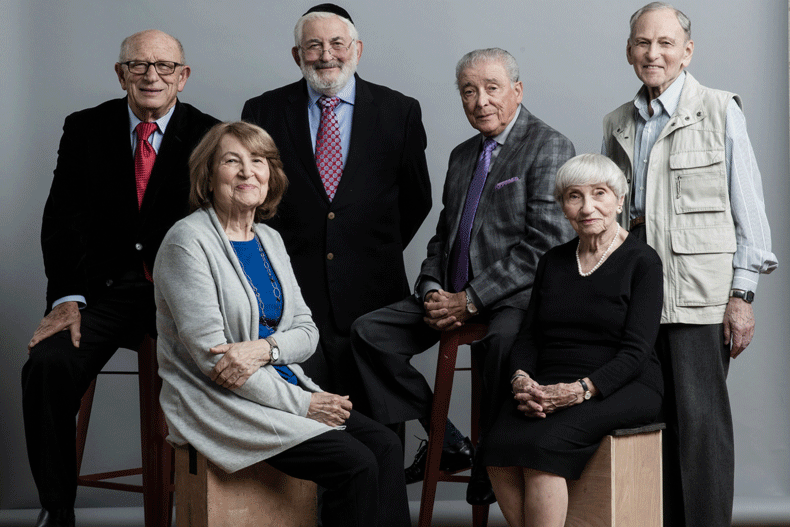
But Goodman did. He followed up immediately with Abrams, who had recently joined the museum, and she ran with the idea. The seven Chicago-area Holocaust survivors who participated in the Survivor Stories Experience-Aaron Elster, Fritzie Fritzshall, Samuel Harris, Janine Oberrotman, Adina Sella, Israel Starck, and Matus Stolov-have been involved in Holocaust education for many years, as members of the museum’s Speakers’ Bureau, as board members, and in other capacities. They were selected, said Abrams, based on the variety of ordeals they experienced during World War II. Some survived camps, while others were in hiding and had assumed false identities.
Elster, of Lincolnshire, who is now in his mid-80s, was concealed for almost two years in the attic of a Polish couple his parents had known professionally. During this time, he recounts in his video, he was forced to remain completely silent-except during a downpour, when sheets of rain hitting the roof would deafen his crying and screaming and all other sounds of despair and fright he had bottled up. At the end of the war, when he emerged from hiding, he was covered with lice. He and his older sister, who had been hidden in another part of the Polish couple’s house, learned that their parents, younger sister, and almost all of Jews in their town had perished.
“There were only 23 survivors out of 6,000 Jews in the town,” said Elster, the first vice president of the museum’s Board of Directors, during a recent interview. For many years, he said, he, like many other survivors, did not want to talk about the Holocaust. Dredging up memories was too painful and traumatic. But now, he observed, “most of us are old…In a very short time, grass will be growing on top of us.”
Elster said that he answered approximately 2,000 questions during his interview sessions at the USC Shoah Foundation. “I enjoyed the whole process,” he said. Foundation officials “couldn’t do enough for us.”
The continued recognition that survivors receive for sharing their stories and the holographic technology that will, in effect, immortalize those who participated in the project have led to a number of significant gifts to the museum, including one from the Abe & Ida Cooper Foundation, after whom the Survivor Stories Experience is named. “As soon as we heard about this, it became obvious to us that it was the perfect” platform for Holocaust education, said Arthur Callistein, the Cooper Foundation’s president.
“Hatred, bullying and discrimination continue because some people need scapegoats,” added Cooper Foundation director Fern Callistein. “This will counteract it.”
Smith said that since the USC Shoah Foundation embarked on this initiative with the Illinois Holocaust Museum, he has been approached by a number of other Holocaust museums in the United States, including those in Cleveland and Houston, that would like to develop similar programs with holographic technology. He and Abrams said the foundation and museum have entered into a joint licensing agreement that will allow them to share the tools they have developed with other institutions.
Other stories
-
Two local teens win national recognition
Recipients of the annual Diller Teen Tikkun Olam Awards
Read more -
Celebrating six young award winners cultivating the community
Introducing young adult award winners
Read more -