Three local students entering their senior year of high school have been selected to the Bronfman Fellowship’s 31st cohort.
Meitav Aaron and Gabi Wallk of Chicago and Sydney Bakal of South Barrington are among the 26 Fellows chosen from 252 applicants across North America that will participate in a transformative five-week program of study and travel in Israel, followed by a rigorous year of programming centered around pluralism, social responsibility and Jewish texts.
Meitav Aaron is a rising senior at Nicholas Senn High School in Chicago. He is a student in the Senn Arts magnet program majoring in Visual Arts and has won a number of regional and national art awards for his work including several pieces that explored Jewish identity and the Holocaust. Aaron’s work has been exhibited in state and local galleries, and he has curated two galleries comprised of teen artists from his school and community. Aaron was also a past board member of Voices: The Chicago Jewish Teen Foundation, and is currently on the Young Adult Council of the Steppenwolf Theater Company. He is also a member of Senn’s Louder Than A Bomb slam poetry team.
Gabriella (Gabi) Wallk is a rising senior at Walter Payton College Prep in Chicago, and an alumna of the Bernard Zell Anshe Emet Day School in Chicago (class of 2014). She is a graduate of JUF’s second Research Training Internship (RTI) cohort. Wallk also serves as a leader for Walter Payton’s Jewish Student Connection club and co-leads the Women’s Interfaith Seminar at Payton. She is currently building a virtual tutoring mobile application to serve disadvantaged Chicago. She co-founded and co-leads Walter Payton’s computer science club, “Get Coding,” aimed at empowering students in innovative technology. She also serves in the Model United Nations team and volunteers as a math tutor, and has participated in the national student SEED (Seeking Educational Equity and Diversity) program.
Sydney Bakal is a rising senior at Barrington High School in Barrington. Bakal founded and is the president of BHS’s Gender and Sexuality Alliance, and is part of the Illinois Safe Schools Alliance youth committee, which advocates for LGBTQ rights, plans youth events, and creates and teaches curriculum for inclusivity at schools. Bakal attends Beth Tikvah Congregation and is the Social Action Vice President on the temple youth board. Recently selected for Springboard’s 18 Under 18 as one of 18 Jewish teens in the Chicago area, Bakal is devoted to social justice and community organizing.
The Bronfman Fellowship year functions as a Jewish identity incubator, with serious text study, lessons taught by some of the leading Jewish educators, and sustained discourse about pluralism, social justice, and the future of Jewish peoplehood.
The program was founded by Edgar M. Bronfman, z”l, formerly CEO of the Seagram Company Ltd. and a visionary Jewish philanthropist who passed away in December 2013.
For more information about The Bronfman Fellowship, including how to apply, please visit www.bronfman.org .
Other stories
-
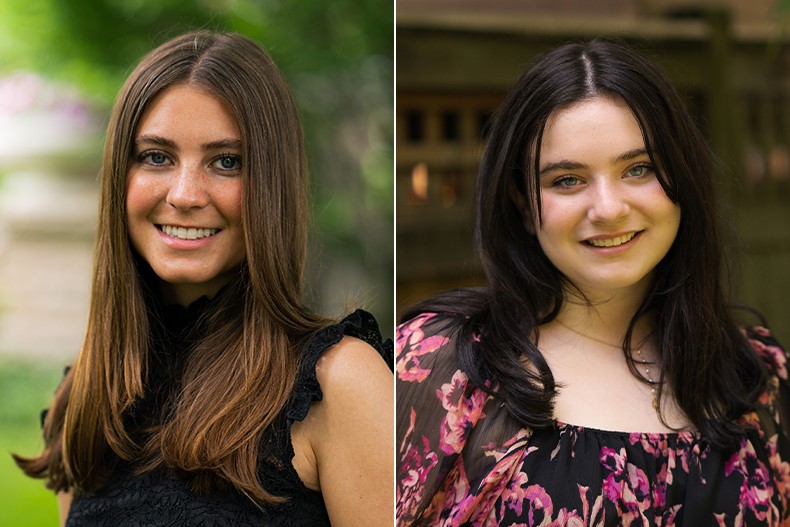
Two local teens win national recognition
Recipients of the annual Diller Teen Tikkun Olam Awards
Read more -
Celebrating six young award winners cultivating the community
Introducing young adult award winners
Read more -
Israeli journalist Avi Issacharoff offers analysis on changing Middle East
Abby Seitz
Recent developments in the Middle East — President Donald Trump’s visit, Arab nations cutting ties with Qatar, Gaza’s escalating electricity crisis, Secretary of State Rex Tillerson’s claim the Palestinian Authority will stop paying families of convicted terrorists — have left both Israel and the international community wondering what’s next in the region.
Israeli journalist Avi Issacharoff offered his analysis of recent events and the future of Middle East leadership to over 40 Jewish community and organization leaders during JUF’s Jewish Community Relations Council meeting on June 14. Issacharoff is the Middle East analyst for Walla and The Times of Israel , as well as the co-author of popular Israel TV drama “Fauda.” Issacharoff previously worked as the Palestinian and Arab affairs correspondent for Haaretz and covered the Second Intifada for Israel Radio.
“Every time I think I know so much about the Middle East and every time I expect something to happen, immediately after that, something completely unexpected happens,” Issacharoff said. “But there are reasons to be optimistic about what’s happening around us. Arab states, Hezbollah, ISIS — they’re focusing less on us and more on each other. They have less energy and will to go to war with Israel.”
Escalating conflict between Shia and Sunni Muslims has come to define Middle East conflict, rather than the Israeli-Arab conflict, according to Issacharoff.
“Today, the existential threat against Israel has been removed for now,” he said. “60 years ago, 50 years ago — we were dealing with all kinds of existential threats. Today, we have peace with Egypt — they are our partner in fighting jihad; we have a peace agreement and security coordination with Jordan — the best ever; Syria is completely occupied in fighting against ISIS and Al-Qaeda-affiliated groups.
“Meanwhile, Iran is sponsoring every Shia group, but the good news is the nuclear threat has been delayed. It hasn’t been removed. The nuclear deal is a very bad agreement, but it could’ve been worse, and for the next 10 to 15 years, the threat has been delayed.”
In addition to diminishing regional threats, Issacharoff said the Palestinian Authority has created more stability in the West Bank.
“The situation in the West Bank is much better today than when I was working there as a journalist between 2000 and 2006,” he said. “It was chaos. People wandered around with AK-47s doing whatever they felt like — shooting in the air, shooting each other, shooting Israelis. Since Hamas came to power, Fatah has created more law and order in the West Bank. There aren’t militants wandering around anymore.”
While he doesn’t consider the Palestinian Authority or Hamas to be capable of creating an existential threat against the Jewish state, Issacharoff fears the electricity crisis and ongoing poverty in Gaza will provoke Hamas. Forty-one percent of Palestinians in Gaza are unemployed, and two-thirds live below the poverty line.
“My feeling is that we are at the eve of another war with Gaza,” Issacharoff said. “Hamas might try to launch a war just to get out of this economic dead-end situation. This is what they did in 2014, so they could do it again in the next couple of weeks.
“Hamas has the ability to pay right now for Gaza’s electricity — they collect 100 million shekels a month in taxes from their people a month. They won’t pay the electricity, because they spend 130 million dollars a year on their military wing.”
Despite increasing tensions, Issacharoff remains optimistic that the peace process can be renewed.
“The security coordination between Israel and the Palestinian Authority is the best today that it ever has been, and current Palestinian president [Mahmoud Abbas] is our best partner for peace,” Issacharoff said. “Time is running against us. The other alternative is much worse for Israel. If there’s no peace process, no negotiations — then what? There is an urgency for the Israelis to reach a peace agreement.”
Other stories
-
Two local teens win national recognition
Recipients of the annual Diller Teen Tikkun Olam Awards
Read more -
Celebrating six young award winners cultivating the community
Introducing young adult award winners
Read more -
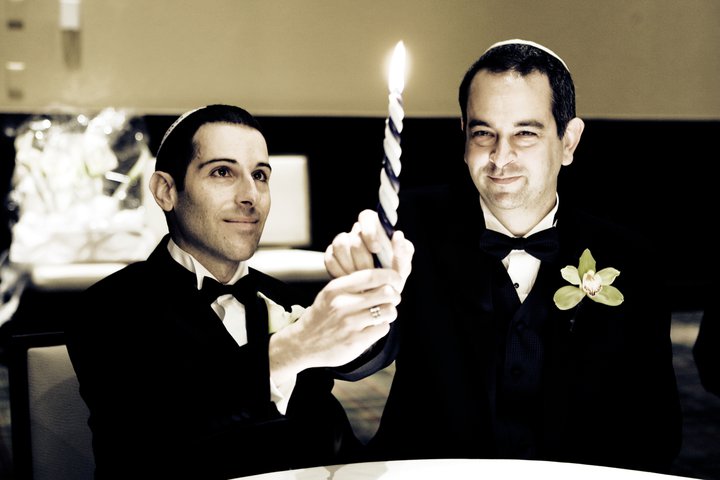
Everything is a choice. The shoes you put on this morning, the route you took to work, where you’re eating lunch, your trip to the gym tonight. We’re selecting and making decisions every minute of our lives. We accept these small and somewhat trivial decisions as choice, but what about the bigger, more solid pieces of our lives? Where does that fit?
Around seven years ago I made one of the biggest choices of my life. I decided to become Jewish.
I was very worried when I first converted that I wouldn’t be Jewish enough. Do I have all the answers? Do I know all the words? Will they know I’m taking this on, becoming something I wasn’t before? Will I do it correctly? Will I pass? As if some sort of Jewish perfection is reached by any of us. So many questions, so much worry. It was all very Jewish.
There’s still a little of that old insecurity stuck in the back of the mind, but for the most part I feel confident and secure. I’m not sure why I was expecting to be confronted and questioned. That’s not a thing that actually happens, and for as long as I can remember people have looked at me and assumed that I am Jewish. I think it’s my frizzy, curly mop of hair, but it might have a thing or two to do with my looking a little like Ira Glass. Whatever the reason, real or imagined, I have felt safe and under the radar.
I think my anxiety has had more to do with my motives. How would I deal with someone calling me a fraud, a fake, or a phony? I married into a beautiful Jewish family (truly the best). My interest in Judaism predates my marriage, but what if someone thinks I converted because of marriage. It’s enough of a reason to make the choice, but it definitely comes with a bit of judgment. “You know he’s just doing this because they wouldn’t let them be married otherwise.”
That’s simply not true, though I suspect some think that is the reason. I haven’t talked about my decision at all, and haven’t been asked. We converts aren’t encouraged to talk about converting. Once it’s done, it’s complete and speaking of the conversion is seen as a way to diminish the act. While I agree that once you’re Jewish you are Jewish, the silence keeps other Jews from discovering why a person would make such a huge choice.
I’ve waited for a very long time ready and afraid to be asked why I became Jewish. I’m not a big fan of silence, or keeping quiet when you’re supposed to, so here it is.
I became a Jew because you let me have God.
That might sound dramatic and heavy-handed. I’m not even sure how I feel about God. The great thing about that is you let me have those doubts. It’s a work in progress. I get to wrestle, worry, and question. I get to figure it out each and every day. I get to ask. I get to not have some of my questions answered definitively. I get to be frustrated. I get to do the work, and I love it.
I am a gay man who grew up in the south. I was led to believe if I wanted God, I’d have to be someone else, someone who isn’t gay. The Jews I know and have known throughout my life have been loving, and accepting of me, even when I didn’t understand that I could also love and accept myself. Sometimes I think that kind of love is God. Who wouldn’t choose to be a part of that?
It feels weird to call something that most people are born with “a choice,” but I think it’s nice to remember that so much in our lives is chosen. I like to look at the big decisions in my life, all of those overlooked and taken for granted bits and ask WHY. What are you choosing? How could you choose better?
Jeremy Owens is a writer for Oy!Chicago and is the creator and host of the storytelling show known as “You’re Being Ridiculous.”
Other stories
-
Two local teens win national recognition
Recipients of the annual Diller Teen Tikkun Olam Awards
Read more -
Celebrating six young award winners cultivating the community
Introducing young adult award winners
Read more -
Chicago-area high schoolers allocate over 60K to change lives through Voices
In its 13th year, Voices: Chicago Jewish Teen Foundation did what it has done from the start: Helped countless people in need in Chicago and Israel by empowering teens to make a difference in their world.
For 2016-17, the teens of Voices awarded $61,916 in grants to 11 Jewish and non-Jewish endeavors, while learning first-hand the joys and challenges of raising funds and deciding how best to allocate them.
“I am beyond proud of our teen board members, who demonstrate what Jewish teen engagement can look like when given the right support and resources to do the work they care about most,” said Stephanie Goldfarb, JUF Program Director for Youth Philanthropy and Leadership. “This accomplishment is not only remarkable for a group of Jewish philanthropists at any age, but it also signifies our community’s increasing commitment to pluralistic teen engagement, and investment in our future leaders.”
Each year, a new group of Chicago-area high school students, representing a diverse spectrum of Jewish life and engagement, joins Voices 101, creates an actual foundation, assesses community needs, raises funds, requests and reviews proposals from Chicago and Israel-based charities, makes site visits and passionately debates its allocations.
In recent years, many graduates of the program have participated in a Voices Alumni Foundation, creating their own campaign and focusing on more specialized philanthropy.
JUF provides professional guidance to both groups, and an anonymous donor provides seed money or matching funds.
This year’s group of 24 students in the 101 program allocated $33,121 to seven initiatives. The 12 students in the Alumni program raised and distributed $28,795 to five efforts.
Voices 101 Grants
HIAS Chicago, Refugee Resettlement Program , $8,000
For over a century, Hebrew Immigrant Aid Society of Chicago (HIAS Chicago) has proudly provided critical aid to individuals and families seeking comprehensive immigration and citizenship services in the city of Chicago and surrounding suburbs. This Voices grant will purchase 10-15 3-month CTA transit passes for new arrivals, and provide 5-8 families with three months of rental assistance.
EZRA, JUF Uptown Café and Food Pantry Programs , $7,000
EZRA strives to alleviate homelessness, hunger, unemployment and other self-sufficiency barriers, and also offers social activities and holiday celebrations to ensure that Jews who live in poverty remain actively connected to their heritage. The JUF Uptown Café and Food Pantry programs help to feed hundreds of community members each year. This Voices grant will provide 500 hot meals and many, many bags of groceries from the food pantry.
American Friends of Hand in Hand Co-Existence Schools of Israel, $3,841
Hand in Hand creates a strong, inclusive, shared society in Israel through a network of Jewish-Arab integrated bilingual schools and organized communities. It currently operates integrated schools and communities in six locations, with 1,578 Jewish and Arab students and more than 8,000 community members.
After School Matters, $4,000
After School Matters provides Chicago public high school teens opportunities to explore and develop their talents, while gaining critical skills for work, college and beyond. After School Matters designs and delivers high quality, hands-on, project-based apprenticeship programs in a variety of content areas, including the arts, communications, science, sports and technology. This Voices grant will support apprenticeships for four teens who wouldn’t otherwise be able to participate due to financial hardships.
Soccer for Peace, $5,000
Soccer for Peace is a non-profit organization aiming to unite children of war-torn nations in their shared love of soccer. This Voices grant will support Arab and Jewish students living in Israel in co-existence with learning and play designed to build bridges between communities.
Growing Home, Farm Stand Project, $4,280
Growing Home is Chicago’s leading expert in farm-based training for people with employment barriers. By providing 25 hours per week of paid on-the-job experience and job-readiness training at its farms, plus the support to conquer issues such as criminal records, medical needs, child care and housing, Growing Home has impacted the lives of hundreds of workers, and thousands of their family members. This Voices grant will support the community good access and nutrition initiatives in the Lawndale neighborhood of Chicago, delivering thousands of pounds of organic produce to communities that typically struggle to access fresh, healthy food.
JUF, Annual Campaign , $1,000
Voices 101 is thrilled to support the JUF Annual Campaign in solidarity with the community that made our work possible!
Voices Alumni Grants
Keshet, Camp Keshet , $9,000
Keshet is the premier provider of educational, recreational, vocational and social programs for individuals with intellectual disabilities operating according to traditional Jewish values in Chicago. This grant from Voices will provide nine $1,000 scholarships to families that need financial help sending their kids to summer camp this year.
JCUA, Or Tzedek Teen Institute for Social Justice, $8,000
Or Tzedek: Jewish Teen Institute for Social Justice is a unique, Chicago-based program that provides opportunities for teens from across the country to learn about and take action on current social justice campaigns. Or Tzedek gives teens a Jewish framework to explore their social justice identities and gives them the tools and inspiration to build a better world. This grant from Voices will help offset the cost of attendance for some participants, as well as strengthen the summer’s operating budget.
ITWorks, Israel, $8,000
ITWorks is a non-profit organization established in 2006 to promote diversity in employment and enable underserved and underprivileged adults living on Israel’s social and geographic periphery to realize their professional potential and obtain financial self-sufficiency.
UIUC Hillel, Creative Soles Program, $2,795
The mission of Creative Soles is to empower people with disabilities to make an income while gaining an amazing learning experience where they can feel included and show their unique personalities through the artwork they create. This Voices grant will purchase supplies needed to significantly increase the number of artists engaged in the project.
JUF, Annual Campaign , $1,000
Voices Alumni are thrilled to support the JUF Annual Campaign in solidarity with the community that made our work possible!
Online registration is now open for the 2017-18 Voices 101 program. Here is a link .
Other stories
-
Two local teens win national recognition
Recipients of the annual Diller Teen Tikkun Olam Awards
Read more -
Celebrating six young award winners cultivating the community
Introducing young adult award winners
Read more -
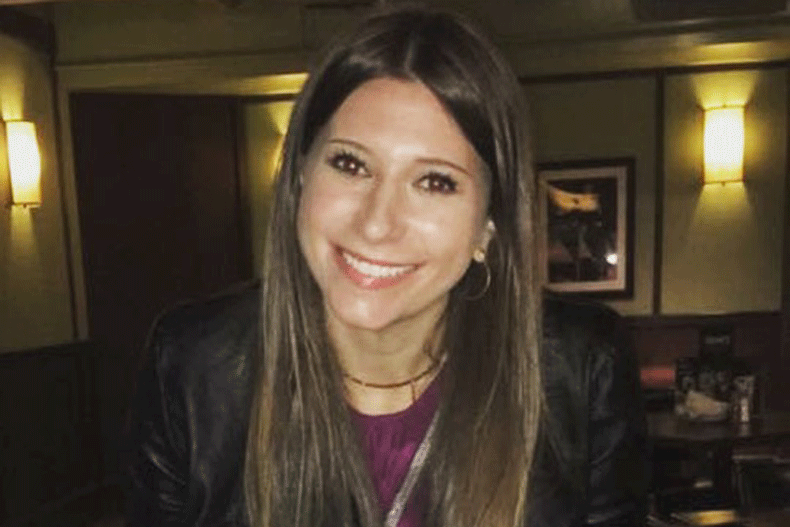
One young Jewish woman goes public with her positive outlook—on testing positive for BRCA
JORDYN HARRIS
Back in 2011, my father got tested for the BRCA gene mutation as a result of his family history with breast, ovarian, and prostate cancer. Unfortunately, he was BRCA positive. At the time I was 20 years old and knew I would need to be tested in the near future.
I met with a geneticist in November 2016. He explained to me what my options would be if I were positive or negative. Because I had known for almost six years that I needed to get tested, I was already prepared for that conversation. My mind was already made up that I would have a double mastectomy if the results came back positive.
When the geneticist called to tell me I was BRCA positive, the tone in her voice was disheartening, while I didn’t think much of the news. Confused, she asked me if I was alright. I was perfectly fine. Sure, it was a bummer to hear, but the thing is while my dad’s side is BRCA positive, my mom’s side is BRCA negative, and throughout the past few years I watched my maternal aunt, grandma, and cousin get diagnosed with breast cancer, indicating that there is some sort of genetic mutation on my mom’s side of the family that is causing breast cancer, leaving me at a high risk from both sides, with or without BRCA.
I began to educate myself on BRCA and made any necessary appointments to get my ovaries and breasts checked. I already had my mind made up that I would get a double mastectomy, but initially assumed this wouldn’t happen until my 30s. My OBGYN and I agreed that now would realistically be the best time to do it because I am still on my parents’ excellent health insurance, I do not have a family to care for yet, and I have a job that is incredibly supportive and allows me to take any needed time off.
My thought was I would be getting tested twice a year until the day the doctor would tell me that I had cancer. Considering all of the information I had, it seemed silly not to have surgery-and to never have to worry again. To me, going through a few weeks of recovering from surgery easily beat out the idea of eventually going through chemo or radiation, not to mention everything else that comes along with a cancer diagnosis.
I didn’t know how to tell people because I didn’t want anyone to worry about me. Once some friends of mine started to find out, I began getting frantic, worried calls. I assured my friends that I’m totally fine, and I’m not scared so they shouldn’t be either!
Eventually I shared the news on Facebook, thinking this was a good way to break the ice to friends and family. Although I was so grateful to receive so much love and support from friends and family, people were very sad for me, while I felt great about my decision. I know it came from only the most loving place in their hearts, but it upset me to see everyone hurt for me, when I genuinely felt that this was an amazing opportunity that I am lucky enough to take advantage of in this day and age.
I thought people were talking about breast cancer, but started to realize after sharing my news, that maybe they weren’t really talking about it. I decided to start an Instagram blog called “2ndBaseWithJMH.” The purpose of my blog is to educate and inspire people to consider getting genetically tested, think about taking necessary actions, and feel great about it!
BRCA mutations occur more than 10 times as frequently among Ashkenazi Jews than in the general population, and can substantially increase lifetime risk for breast and ovarian cancers in women, male breast cancer and prostate cancer in men, and pancreatic cancer among both women and men. For more information, visit JewishGenetics.org.
Jordyn Harris is a Missions Associate in JUF’s Missions Department.
Other stories
-
Two local teens win national recognition
Recipients of the annual Diller Teen Tikkun Olam Awards
Read more -
Celebrating six young award winners cultivating the community
Introducing young adult award winners
Read more -
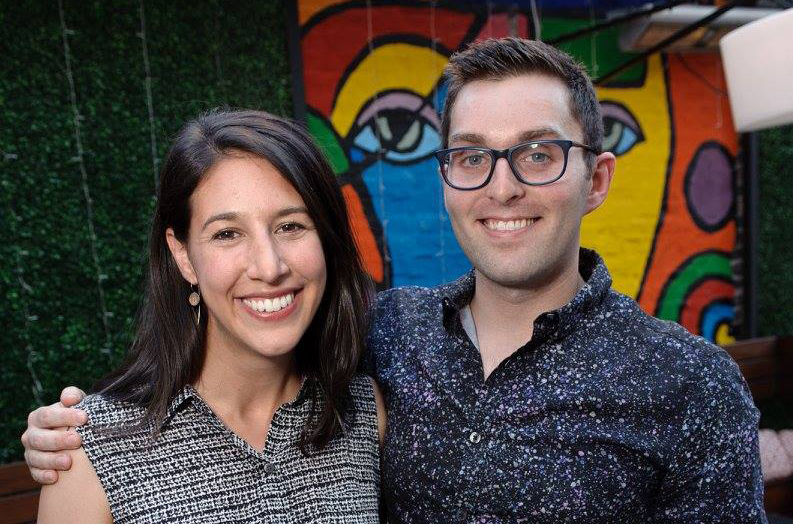
I’ve been honored to serve as president of JUF’s Young Leadership Division board this year. During my tenure as president, we at YLD have focused on two areas: First, engaging more young Jewish people and, second, keeping Jewish issues front and center in the minds of our target audience.
Chicago YLD is the envy of every Jewish federation across the country for its dedicated board members, innovative programming, and broad appeal. I know this because I heard it expressed firsthand, many times, at the Jewish Federations of North America General Assembly this past November. The YLD Board, a 40-member juggernaut, has worked hard over the past few years to extend its reach to underserved populations, including the LGBTQ community, Blue Line Jews, and the 30+ crowd. This year we continued those initiatives.
But we didn’t stop there. As big as our YLD community is, we know that there are more people to engage. We are constantly trying to engage those who want to be an active part of YLD, but for some reason, are not. We reach out to those who have been Jewishly involved all their lives- day school, overnight camp, youth groups- and to those who are just dipping a toe into the water for the first time now.
We reach out to those who are just out of college, new to the city, beginning their professional lives-and to those who are cruising through their 30s, established in their careers, and maybe even have families of their own. All of these people and more are YLD constituents; we want to bring them into the fold and keep them there.
This year we broadened our appeal by piloting several new programs, including an outdoor group workout class, a guided tour of the Art Institute, and a Jewish book club. We continue to enhance membership in the Ben-Gurion Society by offering a special set of benefits and additional programming, culminating in a trip to Cuba earlier this year.
More generally, we recommitted to enhancing the experience for attendees at our events, in big and small ways: fully embodying our role as hosts to make everyone feel welcome and included; offering substantive information about the work of JUF and how monies are allocated; and following up with new opportunities to get involved. Our hard work has not gone unnoticed.
Still, we wrestle with the significant challenge of competing for limited resources- time, attention, and, yes, money- of the young Jewish community. Young people are very engaged now in standing up for issues and causes they believe in. Personally, I am thrilled to see it. But, knowing that, it means that we have to redouble our efforts to make clear the crucial work of JUF: building community and providing human services to those in need.
Though there are so many things to stand up for these days, the critical needs of our community, many of which are only met by JUF, have not abated. Indeed, there is now a particular urgency, as many aspects of the social safety net are in jeopardy. We must ensure that the important work of the JUF comes through in everything we do. Every happy hour, networking event, and sports league is about more than socializing. It’s about strengthening the Jewish community and showing our commitment to its success.
Orly Henry is the president of JUF’s Young Leadership Division
Other stories
-
Two local teens win national recognition
Recipients of the annual Diller Teen Tikkun Olam Awards
Read more -
Celebrating six young award winners cultivating the community
Introducing young adult award winners
Read more -
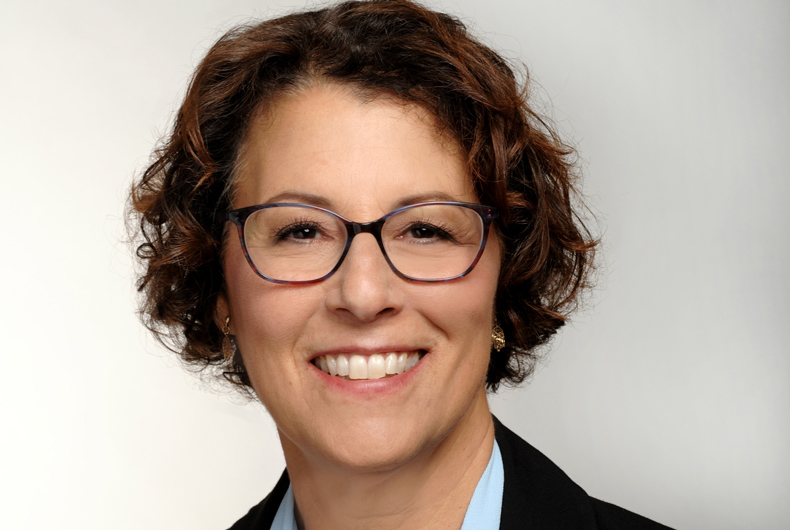
Dr. Jane Shapiro, co-founder of Orot: Center for New Jewish Learning in Skokie, is one of three outstanding Jewish educators to receive this year’s Covenant Award.
Shapiro is joined by Rabbi Tully Harcsztark, founding principal of SAR High School in Riverdale, New York, and Meredith Englander Polsky, national director of institutes and training at Matan in New York and developmental support coordinator at Temple Beth Ami Nursery School in Rockville, Maryland as 2017 recipients of the award, which is among the highest honors in the field of Jewish education.
“These Jewish educators exemplify inspired, courageous and visionary leadership,” said Cheryl Finkel, chair of the Board of Directors of The Covenant Foundation and a former Covenant Award recipient. “Across the spectrum of educational venues, they are stimulating their students, communities and the field to think and practice in innovative and pioneering ways. Their achievements challenge all of us in Jewish education to make our own work bolder, more ambitious, and more impactful.”
Along with the recognition that accompanies this award, each recipient will receive $36,000, and each of their institutions will receive $5,000.
As co-founder of Orot: Center for New Jewish Learning, Shapiro is building a new model for engaging Jewish adults in the Chicago area and beyond — a holistic approach to Jewish education that is an emerging paradigm for personal and community growth.
The founding of Orot in 2014 reflects Shapiro’s entrepreneurial, risk-taking spirit and unique pedagogy. It is a milestone on her trajectory as a change-making educator within her community and the field of Jewish education more broadly.
Orot offers Jews of all backgrounds and levels of knowledge new entry points into Jewish knowledge and practice to fuel and empower individual and communal engagement.
Programming at Orot integrates Jewish wisdom and text with meditation, yoga, music, art and writing — opening up new pathways to Jewish learning. And it is this integration of serious text study with alternative creative expression that brings to daily practice Shapiro’s belief that adult learners who crave in-depth Torah study can find it through a variety of pedagogical methods.
“I am energized by the chance to develop this new pedagogic practice and help students cultivate this type of learning so they can explore what the Torah has to offer them in this totally new way,” Shapiro said. “In these days of intractable conflict and anxiety about the world, I believe that this type of Torah learning is desperately needed.”
“The rational, mind-centered drive to take in more data is not sufficient when people are looking for wisdom that springs from the heart and from a sensitive moral tradition they can use for guidance,” she added.
Orot’s popularity and growth in the Chicago area is dramatic. When it began in 2014, 70 people attended a half-day of learning to prepare for the High Holidays. It has since grown to serve over 500 students each year through weekly classes and meditation sessions, yoga workshops, immersive learning experiences, weekend retreats and trainings of Jewish educators, social service workers, and communal professionals.
“Jane’s unceasing passion, energy and creativity have pumped essential fuel into the fire of this new startup,” said Rebecca Minkus-Lieberman, Orot’s Co-Founder and executive director. “She has dedicated her entire professional life to reflective, innovative Jewish teaching, continues to imagine new, progressive models of Jewish learning and brings her whole self to their realization.”
As a Jewish educator, Shapiro is an architect, driver and practitioner of visionary and impactful teaching. Prior to starting Orot, Shapiro was associate director of the Florence Melton School of Adult Jewish Learning in Northbrook, and coordinator of mentoring for students in the Masters of Arts in Professional Jewish Studies program at Spertus Institute for Jewish Learning and Leadership in Chicago. As a professional coach, she has trained Jewish educators and created curricula for dozens of synagogues and Jewish organizations around the country.
“To Jane, it is all about the students,” said Sandy Starkman, a student of Shapiro’s in an Artists Beit Midrash, who nominated Shapiro for the Covenant Award. “The learning truly radiates from her. Jane views her work as a true calling.”
Upon learning that she is a 2017 Covenant Award recipient, Shapiro reflected on her students, and how teaching has sustained her.
“I share this honor with all the wonderful students whom I have had the privilege to serve for many years,” she said. “The chance to bring them into a deeper relationship with the vitality of the Torah and to explore ways to engage them even more through artistic expression and embodied practices means an experience of personal transformation for us all.
“Covenant has given me the chance to follow the advice of Rabbi Abraham Joshua Heschel and continue to grow my practice as an educator by being ‘tremendously surprised’ by ideas and by developing new skills to create conditions for the inner light of Jewish wisdom to shine out into the world.”
The Covenant Foundation and the Jewish community will honor the 2017 award recipients on Nov. 12 in Los Angeles, at an annual awards dinner during the General Assembly of The Jewish Federations of North America.
Other stories
-
Two local teens win national recognition
Recipients of the annual Diller Teen Tikkun Olam Awards
Read more -
Celebrating six young award winners cultivating the community
Introducing young adult award winners
Read more -
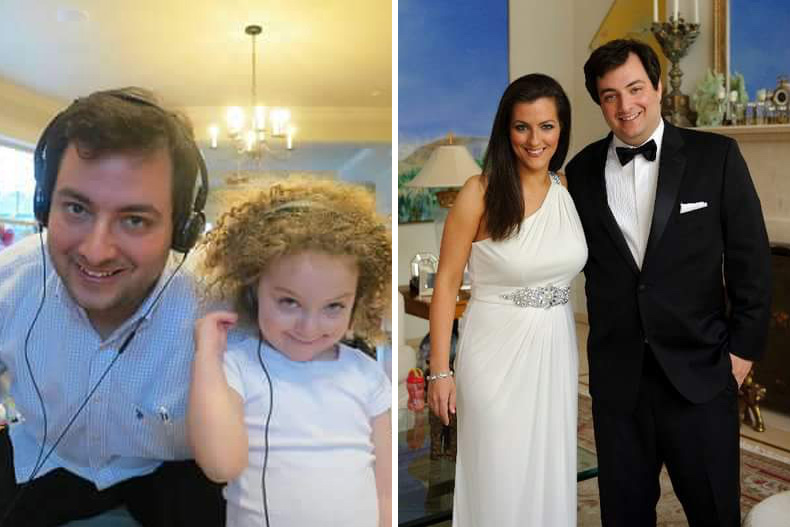
Sequels can be a hit or miss, can’t they? You can end up with Speed 2 or The Godfather Part II .
You can either have a masterpiece, you can have a disaster, or you can have something in the middle. Seconds acts in life aren’t much different. I am currently entering my second act. After years in the medical products industry, I’m launching a new tech company, trying to find a good relationship so I can settle down, and I’m unsure of what all these new challenges will bring.
While I want this second act to be a success, there’s always a thread of uncertainty that runs through your mind. Even when it comes to dating, I’m well aware that dating someone who is starting a new company is a gamble. The smart women I gravitate to know that “startup” is a much nicer way of saying, “doesn’t have any customers” or “unstable future.” Stability is at a premium in the 30s dating scene. Will I find a romantic partner who embraces the uncertainties of that life?
My new company, Trylancer, is similar to online matchmaking. The premise is to hire top creative talent with small, custom work samples, giving businesses a realistic feel for what the freelancer can do. Scouring through resumes and profiles in search of a freelancer is a lot like using a dating app. Online profiles can be misleading, and you have to ask the same boring questions over and over. Actually, interviews are even harder because you can’t enjoy a drink if the interview isn’t going well.
Few things are scarier than starting all over again. This venture will show me what I am truly capable of achieving, and could also illuminate where I fall short. Will I be able to adapt fast enough to propel the company forward at the right pace? Will I be able to keep up with the technical lingo of the younger designers and developers who counsel me?
Sometimes I say a silent prayer for strength and insight. I’m scared my friends and family will laugh at me for building a company that is too dreamy. Right now, we plan to pay freelancers for their work, even if they don’t win the project. I’ve yet to find a single business adviser who thinks this is a good idea. I find comfort, however, in my favorite prayer in the High Holiday book Mahzor Hadash : “There is holiness when we are willing to be laughed at for what we believe in.” Even though my friends and advisers laugh at my idealism, deep down I hope they are on my side. I don’t want to fail when so many people are counting on me. Most of all, I’m afraid my sisters will lose faith in me because this concept is such a wacky one. I would never want to disappoint them.
There are always a lot of reasons not to do something, but I know it only takes one compelling reason to overcome your fears. If I don’t launch this company, I know I’ll regret it for the rest of my life. Just like many of our decisions that we are constantly faced with: at some point, we must decide to dive into our fears.
I’m choosing to gather up my courage and plunge in, knowing that, as Rabbi Zelig Pliskin said, “A person who takes a walk of 100 feet and a person who walks 2,000 miles have one major thing in common. They both need to take a first step before they take a second step.”
Falan Austin is the founder of Trylancer.com and lives in Chicago. He likes chatting with other entrepreneurs-drop him a line at [email protected] . He also tweets frequently say hello to @faustin.
Other stories
-
Two local teens win national recognition
Recipients of the annual Diller Teen Tikkun Olam Awards
Read more -
Celebrating six young award winners cultivating the community
Introducing young adult award winners
Read more -
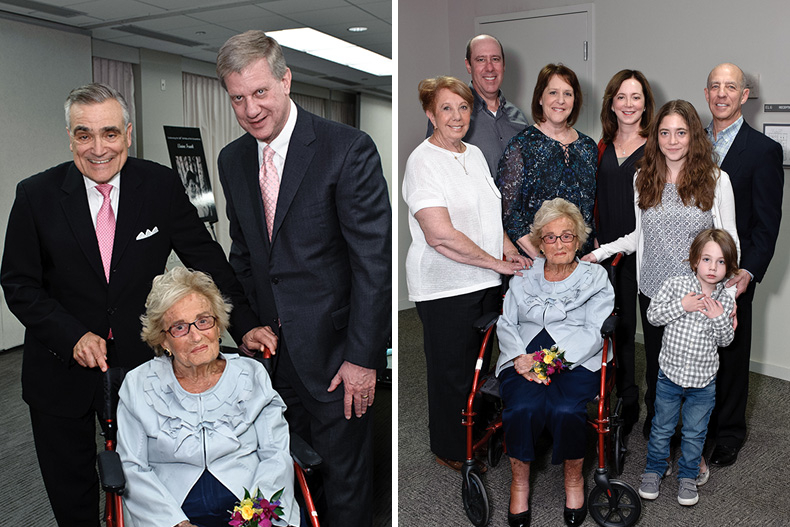
Community and business leader Elaine Frank was honored on her 100th birthday at the April meeting of the JUF Board of Directors. She was given a plaque “in recognition of a lifetime of generosity and service to the Jewish community.”
At the event, JUF President Dr. Steven B. Nasatir called Frank “a truly beloved matriarch,” thanking her for her “vision, passion, caring and commitment” and wishing her “‘Mazel Tov’ on this wonderful milestone.” Twenty-two members of the Frank family, and past and present JCC leaders, also took this special opportunity to honor her.
In 1992, Frank received the Julius Rosenwald award, the Chicago Jewish community’s highest honor. Her lifetime of community service included serving as a vice president of Chicago’s Federation from 1975 to 1981 . Serving on its inaugural Legacies and Endowments committee, she helped launch Federation’s endowment program.
Frank became the first woman president of any local Federation agency when she became the president of JCC. “Elaine and her family have made JCC an important beneficiary of their dedication and service for nearly 70 years,” Nasatir said. “She ensured that Jewish camping experiences would be a part of every child’s life.”
Frank graduated from the University of Chicago Business School, one of only three women in a class of 1,000. “She wasn’t making a point,” Nasatir noted. “Elaine just loved business.” She went on to serve as president and chair of Frank Enterprises, which included: Z Frank Chevrolet; National Car Rental; Wheels, Inc.; Business Travel International; and even Leaf Candy.
“Regardless what was asked of Elaine, nothing was ever too big, too hard, or too much for her. She always says ‘Yes,'” recalled Nasatir. “Elaine has inherited- and extended- a most extraordinary family legacy.”
Other stories
-
Two local teens win national recognition
Recipients of the annual Diller Teen Tikkun Olam Awards
Read more -
Celebrating six young award winners cultivating the community
Introducing young adult award winners
Read more -
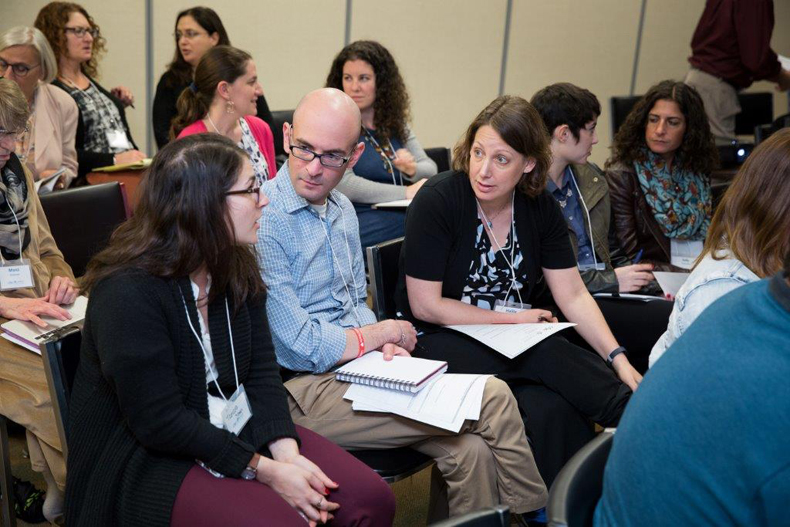
“Thinking together” is a core value and practice of JUF’s Community Foundation for Jewish Education, whose mission is to advance imaginative, compelling, collaborative, and experiential Jewish education.
On May 23, CFJE convened more than 150 educators, clergy, and other Jewish community professionals and lay participants from around the Chicago area, as well as attendees from Pittsburgh and Milwaukee, to think together in “Community Conversations on Israel Education.”
“What is Israel education? Where and how do we start? How do we get students to form a relationship to this complicated place? How do we teach a love of a land that is part of our DNA — that sometimes makes us proud and sometimes is incredibly difficult?” said Rich Moline, CFJE Director of Israel Education, in introductory remarks.
Rabbi Dr. Scott Aaron, CFJE Executive Director, put the need for Israel education in stark terms: “How many of our teens can’t tell us what part of the world Israel is in, and what it’s like for it to be in that part of the world? What are its hopes and aspirations? That is our challenge as educators.”
To preview and stimulate ensuing group discussions, Dr. Alex Sinclair of the Jewish Theological Seminary of America presented “driving narratives” that engage students at the deepest level. He cited as examples stories that might foster identification, including the Israeli “experiment” (the story of Zionism), Israeli diversity (who and what constitute modern Israel), and Jewish “world makers” (figures who are change-makers).
Sinclair juxtaposed his driving narratives against what he termed “false gods” in Israel education, including Hasbara (dissemination of pro-Israel PR rather than providing the full, complex picture); Israel as “Startup Nation” (focusing on technology rather than on people and culture); Israel as safe haven (seeing Israel as a life raft rather than a vibrant society); and pro- or anti-occupation frame (reducing Israel to a political argument).
To identify and address specific elements within the broad context of the challenges Moline and Aaron outlined, participants divided into a variety of interest areas, with conversations facilitated by prominent educators, including Sinclair; Dr. Lesley Litman of Hebrew Union College-Jewish Institute of Religion; Zion Ozeri of the Jewish Lens Project; and Robbie Gringrass of Makom Israel. Moline and CFJE colleague, Ariel Lapson, Ta’am Yisrael Program Manager, also made presentations (Israel education as distinguished from Israel PR, and a refresher on 1967).
Its title — “How to do complexity in four easy questions” — notwithstanding, the session this writer attended exemplified the sophistication of approaches to Israel education participants learned about and discussed. In this presentation Gringrass explained a paradigm for addressing vibrant, complex, and sometimes disturbing dynamics both in Israel and in the American Jewish world.
The model’s purpose is to help educators connect students in simple ways to the complexity of Israel, and to grasp the complexity of Israeli society at a time when attention spans and bandwidth are shrinking. He showed participants ways to address politics, without “fetishizing” them; be open to all the facts, even contradictions; and to speak to both universal human and specific Jewish values. His model addresses a gamut of concerns, which he translated into Israel education four categories, covering security, identity, freedom and democracy, and territory.
“The Israel narrative is the ongoing story of the Jewish people trying to get better answers to these questions,” Gringrass said.
In remarks introducing the recipient of the CFJE award named in her honor (see accompanying story), Sue Pinsky reflected on the enormity of the job of educators in propelling that ongoing Jewish story.
“Learning is the development of character. For educators it isn’t a career choice; it’s the essence of their being,” Pinsky said.
Margie Pines, early childhood educator at JCC “Z” Frank Apachi in Northbrook, in receiving the third annual Sue Pinsky Award for Excellence in Jewish Education, responded: “What type of people do we want to see in our world? People who have the skills necessary to live in a democracy? Then we want to prepare children with the tools.”
In receiving the CFJEC Grinspoon Foundation Award for Excellence in Jewish Congregational Education, Andrea Raskin from Temple Jeremiah further reflected on the challenge: “Our task is to educate and inspire…. [Students must develop the] knowledge that their life matters and that they can and indeed must make a difference in this world.”
Other stories
-
Two local teens win national recognition
Recipients of the annual Diller Teen Tikkun Olam Awards
Read more -
Celebrating six young award winners cultivating the community
Introducing young adult award winners
Read more -