In a significant move to enhance the security of local Jewish institutions, the Jewish United Fund of Metropolitan Chicago has made matching grants to area summer camps, community centers, congregations, social service agencies and day schools.
The one-year grants, which range from $7,000 to more than $36,000 per facility, will support projects at 21 locations. Reflecting a total project cost of approximately $920,000, the JUF program enables security enhancements ranging from surveillance systems, to facility access control, to security personnel, to other site improvements and measures.
Thus far this spring, the inaugural JUF Security Grant Program has allocated more than $422,000, and will continue to accept proposals through the end of June.
“JUF is committed to ensuring that every member of our Jewish family can fully, securely participate in Jewish life — from Jewish preschools to Jewish day camps and overnight camps, from Jewish day schools to attending synagogues and community gatherings. We have the entire Jewish community’s back,” said JUF President Dr. Steven B. Nasatir.
In March, more than 180 participants from over 70 area Jewish organizations participated in a day-long JUF Security Summit, which featured presentations about security issues and available services from the FBI, Department of Homeland Security, Chicago Police Department and JUF staff. Participants completed a security survey, which helped inform the design of the JUF Security Grant Program and dissemination of the request for proposals.
The program is the latest initiative in JUF’s wide-ranging and longstanding security-related roster of services to area institutions. It came in response to rising threats to Jews and Jewish institutions, which, according to FBI reports, are the single largest targets for religion-based hate crimes in the United States.
To deal with the threat, JUF, together with partner agencies, invests significantly in meeting security training and other needs and provides synagogues, agencies and day schools with extensive expertise and assistance in securing federal and state grants to make security improvements. In the past 10 cycles of the U.S. Department of Homeland Security’s Nonprofit Security Grant Program, with JUF’s assistance, Chicago Jewish organizations have received nearly $10 million for security improvements.
Jewish organizations and facilities that meet the criteria of JUF’s Security Grant Program may submit a proposal online no later than June 30. The maximum available per site is $50,000. To inquire about the JUF Security Grant Program and the full range of JUF security services contact [email protected] .
Other stories
-
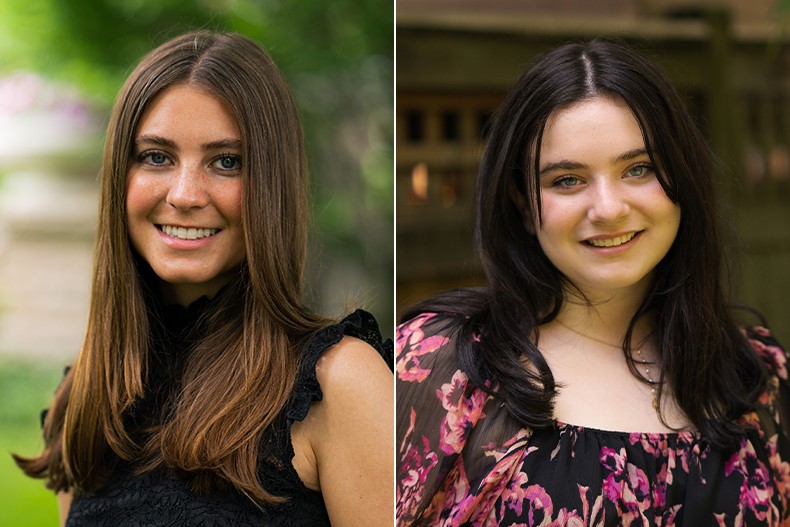
Two local teens win national recognition
Recipients of the annual Diller Teen Tikkun Olam Awards
Read more -
Celebrating six young award winners cultivating the community
Introducing young adult award winners
Read more -

We are in the desert. We have just begun reading the fourth book of the Torah, Bamidbar, The Book of the Desert. The Book of the Desert covers the 39 years of Israel’s wandering in the desert on the way to the Promised Land. There are a lot of difficult moments along the way. One of them is the rebellion against God and Moses, which took place after the spies went to check out the Promised Land. They brought back a less than optimistic report. The Jewish people said, “Well if that’s the case, let’s return to Egypt!” The generation that left Egypt then died out in the desert.
This summer, there is an anniversary that lends understanding to what happens when a few Jews or a Jewish community decides to sever their link to the Land of Israel. At the very same time that Theodor Herzl gave birth to Zionism-the utterly remarkable and successful Jewish national liberation movement-there emerged a sect, another group of Jews, who did the exact opposite.
This summer, we are living through the 100 th anniversary of that period between the abdication of the Czar in February 1917 and the Bolshevik Revolution in October 1917. One hundred years ago this summer, the Bolsheviks spent their time undermining the moderate, but woefully incompetent, Kerensky regime. In that group of Bolsheviks were some brilliant, active, and accomplished Jews. When they came to power they set about the destruction of Jewish life in a way unprecedented in Jewish history.
It was the Jewish Communists who led the assault on the synagogue, the yeshiva, and all of traditional Jewish life. This was still not enough to satisfy them. They also assaulted a whole variety of proud and remarkable expressions of Jewish secular national identity. They assaulted the Zionist movement, not just its right wing or center, but especially its left wing. They went after Socialist Zionists with zeal. They saw them as particularly dangerous because they were in fact socialists, who nevertheless asserted the national aspirations of the Jewish people. Indeed, when the Communists came to power they established central bureaus in order to bring the revolution to the national and ethnic groups within the Soviet Union.
Thus, Shimon Dimanshten, a traditional Jew who converted to Communism, became head of this bureau. His assault on traditional Jewish life, Zionism, and the secular Yiddishist Socialist Movement, the Bund, was vicious-and enormously successful. He was one of the great leaders of the dismantling of Jewish civilization in the Soviet Union.
The Jewish Bolsheviks abhorred Zionism because they were universalists. They believed that what united all people was their economic status and place as members of the proletariat. They saw all religious or national identities as serving capitalism. They denied the very national nature of the Jewish people as expressed in Zionism. They produced such grotesque works as the Red Haggadah, which instead of opening with the famous line, “We were slaves to Pharaoh in Egypt and God came and redeemed us…” They substituted, “We were slaves to capital and the October Revolution came along and redeemed us…” Communism provided a means by which some Russian Jews who wanted to assimilate could do so without converting to Christianity.
One of the most prominent and brilliant of these Jewish Communists was Rosa Luxemburg, who best articulated their credo in a letter that she wrote to a friend:
“I have no room in my heart for Jewish suffering. Why do you pester me with Jewish troubles? I feel closer to the wretched victims of the rubber plantations of Putumayo or the Negroes in Africa… I have no separate corner in my heart for the ghetto.
“ Here then is a roster of some of these Jewish Bolsheviks who are now utterly lost to Jewish history and to the Jewish people: Trotsky, the founder of the Red Army; Sverdlov, the first President of the Soviet Union; Znovyiev and Kamenev, members of the Polit Buro; Yuri Larin (originally Luria), architect of Communist economics; Kaganovich, Stalin’s longest serving henchman. They, and others like them, enabled one of the single greatest upheavals in Western history, the Communist Revolution that resulted in the Soviet Union, which endured for 74 horrific years and for which the Jewish people paid dearly.
The lesson of their universalism should not be lost on us today. Those who do not see their very being and self-understanding as Jews bound up with the Land of Israel, and the exercise of Jewish sovereignty in the ancestral homeland, are severing a connection which is almost, but not quite impossible, to reconnect. After all, Trotsky’s great-grandson does live in Israel today.
Rabbi Yehiel E. Poupko is the Rabbinic Scholar of the Jewish United Fund of Metropolitan Chicago.
Other stories
-

Mother’s Day, Father’s Day, and the Jewish way
Let us pause and consider what it means for us to truly honor our parents
Read more -
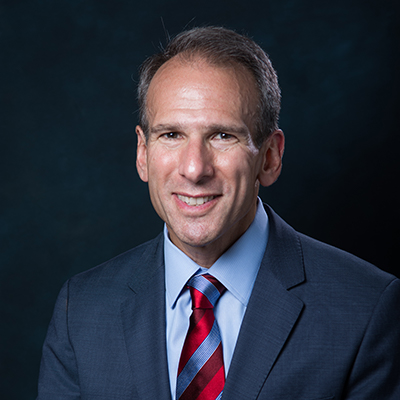
Each time we study Torah, we experience the revelation
The mystical tradition of Judaism that lifts up the number 600,000 from the Exodus
Read more -
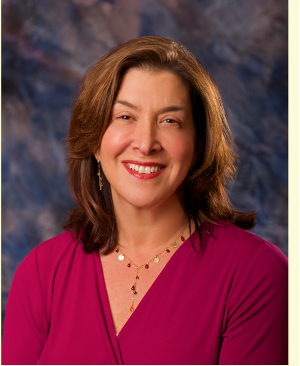
JUF’s Community Foundation for Jewish Education grants build upon best that congregational, early childhood education programs offer
Nurturing and spreading the best of the Chicago area’s Jewish learning, and welcoming the families of students with special needs, are two of the major themes of the latest round of grants to congregational schools and early childhood centers by the Jewish United Fund’s Community Foundation for Jewish Education.
More than $307,000 is being awarded to 25 synagogues, schools and programs to foster best practices, break down barriers to access, and broaden innovative efforts to connect with families with young children. That includes support from the Harvey L. Miller Supporting Foundation, which allows CFJE and its partner, JUF Right Start, to provide additional funds to help Jewish early childhood schools attract more families to Jewish early childhood education.
“With passion and ingenuity, this year’s grantees demonstrated that grant funding would enable them to dream, plan and innovate their way toward the highest-quality experiences for children and families,” said Anna Hartman, CFJE’s director of early childhood excellence. “The grantees distinguish themselves, as well, in their determination to invest in educators and to throw open the doors to welcome new families.”
“It’s remarkable and inspiring to see that more than 30 percent of the congregation education grants this year will support disabilities inclusion,” said Tracy More, JUF’s associate vice president for community outreach and engagement. “Our continuing efforts to encourage synagogues and schools to proactively welcome individuals and families with disabilities clearly are drawing a strong, positive response.”
This year’s grants were awarded to the following congregational education programs:
- Beth Emet the Free Synagogue’s B.E. Inclusive program, to expand inclusion training for staff and faculty (Evanston);
- Congregation Beth Judea, to implement a 21 st century Values-Based Judaic curriculum (Long Grove);
- Congregation BJBE’s effort to expand the reach of its Inclusion Specialist (Deerfield);
- The Board of Jewish Education’s KickStart North 5778 and KickStart Chicago 5778 professional development and networking programs for area educators;
- Congregation Beth Am’s “Breaking Out: Using New Methodologies to Teach Traditional Subjects,” to create new teaching resources for educators throughout the Chicago area (Buffalo Grove):
- Congregation Knesseth Israel’s “Experiencing Jewish Education Fox Valley Style,” to improve educator training and expand connections among Jewish families at five small Fox Valley area congregational schools;
- Congregation Etz Chaim, to broaden its Individualized Education Inclusion Program (Lombard);
- Jewish Enrichment Center of Hyde Park’s JEC Professional Development Redesign;
- Jewish Family Experience, to enhance its Jewish Holiday Workshops for pre-teens (Deerfield);
- Jewish Reconstructionist Congregation, to develop parent engagement efforts that reinforce students’ classroom learning (Evanston);
- Keshet, for professional development that expands its religious programming for teens and adults with disabilities;
- Mishkan Chicago, for professional training that will enable staff and students to develop a new, responsive curriculum;
- North Shore Congregation Israel and Lakeside Congregation for Reform Judaism, to introduce the Dvash Hebrew reading program (Glencoe/Highland Park);
- Oak Park Temple Religious School, to professionalize its existing informal inclusion program;
- Congregation Or Shalom, to reframe its post-b’nai mitzvah education program for teens (Vernon Hills); and
- Temple Jeremiah, to expand its experiential learning experiences for families (Northfield).
Early childhood education grants were awarded to:
- Akiba-Schechter Day School, to designate a veteran teacher as a guide for the faculty to promote innovative visual arts practices as part of the Reggio approach (Hyde Park);
- Board of Jewish Education at Beth Hillel Congregation Bnai Emunah, to form a cohort of educators who will study together toward lead teacher certification (Wilmette);
- Board of Jewish Education at Bnai Tikvah, for a Shabbat Chavura program to encourage families to discover the joy of celebrating Shabbat in their homes and to strengthen relationships among families (Deerfield);
- Congregation B’nai Jehoshua Beth Elohim’s Early Childhood Program at the Chava Center, for evaluating the feasibility of and identifying steps toward greater inclusion of children with special needs in its early childhood program (Deerfield);
- Dr. Chaim Cember Shaarei Chinuch Day School, to enhance its effort to double enrollment in a new facility by creating a welcoming environment for families (Skokie);
- Emanuel Congregation, to explore new options for serving families with young children (Edgewater);
- Hillel Torah North Suburban Day School, to expand its offerings to include a two-year-old class (Skokie);
- JCC Chicago, to develop a system for professional development that will serve educators across its early childhood programs; and
- Moriah Early Childhood Center, to plan and pilot an initiative to create a leadership pipeline in Jewish early childhood education (Deerfield)
Other stories
-
Two local teens win national recognition
Recipients of the annual Diller Teen Tikkun Olam Awards
Read more -
Celebrating six young award winners cultivating the community
Introducing young adult award winners
Read more -
JUF's Breakthrough Fund awards more than $1.1 million to encourage smart growth and innovation
For the fourth straight year, JUF’s Breakthrough Fund is funding leading-edge local programs and initiatives that meet local human needs, engage Chicagoans Jewishly, and strengthen Jewish communities in Israel.
This summer, a total of $1.12 million will be awarded to programs that focus on a range of themes, including erasing barriers to employment and economic achievement for historically under-employed Israelis; providing opportunities for the Jewish LGBTQ community, teens and young couples to connect with Israel; using technology to improve mental health; creating non-traditional communities of Jewish learning, and more.
Some $863,000 will fund 13 new initiatives, with awards ranging from one-year grants of $10,000 to multi-year grants totaling $100,000; an additional $256,000 will support five programs in their second year of multi-year grants awarded in 2016.
Encouraging smart growth and innovation in the Jewish nonprofit sector are the goals of the Breakthrough Fund, which launched in Fall 2013 and has awarded a total of more than $4.4 million in grants to more than 70 local and Israeli initiatives.
“This year’s Breakthrough Fund grantees are truly on the cutting edge,” said Steve Miller, chairman of the Breakthrough Fund review committee. “We are funding programs with groundbreaking technology, innovative approaches to mental health, opportunities for learning and engagement in our Jewish community and in Israel — it’s awe-inspiring and I can’t wait to see what happens next.”
New Grants
A Wider Bridge will pilot a campus leadership program,“A Wider Bridge University,” adapting the organization’s core strategy of building personal LGBTQ connections with Israel to Chicago-area campuses, cultivating LGBTQ student leaders (including Jews, non-Jews, and allies) to become pro-Israel LGBTQ influencers on campus.
Be-Atzmi will offer an innovative, holistic, family-oriented workforce integration and economic empowerment program to 60 underprivileged Haredi families in Migdal Haemek and Ashdod each year. The program improves both spouses’ employment outcomes, provides household management skills and social support, and inculcates the value of employment as a means to alleviate poverty.
Center for Initiatives in Jewish Education will introduce the engineering-based Tech program in six Chicago Jewish day high schools. A Chicago-based Engineer/Educator will train and provide on-site supervision for teachers; mentor 120 participating students; network teachers with colleagues around the country; and organize a culminating Capstone event showcasing student projects.
Enosh: The Israeli Mental Health Association will launch an innovative Social Technological Initiative that prepares individuals with psychiatric disabilities for long-term, normative employment. The program offers a virtual environment to practice different situations similar to the real world, such as job interviews and coworker or customer interactions, which allows participants to acquire work experience and reinforce their sense of capability in a mediated reality.
Hillel — The Right to Choose will receive bridge funding for its HaBayit shel Hillel Emergency Shelter until the Israeli Ministry of Social Services assumes full funding responsibility in 2018. A current Breakthrough Fund grantee, HaBayit shel Hillel employs a 24/7 Emergency Hotline; houses up to 12 clients for 4 months at a time; and provides a full range of around-the-clock intake, counseling, treatment, risk-management and referral services for ex-Haredi young adults in Israel. The Shelter also helps advance education, employment and housing opportunities.
Illinois Holocaust Museum and Education Center will launch “Stories of Survival,” a new, multi-faceted initiative examining the shared experiences of Survivors of the Holocaust and genocides in Armenia, Bosnia, Cambodia, Darfur, Iraq, South Sudan and Syria. The initiative includes a new museum exhibition and smaller travelling version, companion educational materials, school and public programming, and online resources to bring diverse Jewish and non-Jewish communities together.
Honeymoon Israel Foundation will hire its inaugural Chicago Director of Community Engagement. The Director will engage with Honeymoon Israel trip participants and interested interfaith couples who want to explore and deepen their relationship to Judaism in a supportive environment. HMI will build and strengthen relationships with local Jewish community partners who will provide resources and support (both spiritual and financial) to couples wishing to explore a range of topics in a Jewish framework, such as family planning, raising children, holidays, forming a Jewish community, and more.
Jewish Council on Urban Affairs will pilot a new social justice program for college students. The JCUA Organizing Fellowship gives local undergraduate students hands-on community organizing experience with local Chicago issues through a Jewish lens. Fellows will engage with social justice to express and strengthen their Jewish identities, while building the skills they need to combat the root causes of inequality in our city and create real systemic change.
JUF: Community Foundation for Jewish Education expands its Ta’am Yisrael program from one trip per year to two. The second trip, offered in March to coincide with local public school spring breaks, allows approximately 70 more eighth graders to participate in this fast-paced eight-day introduction to Israel through museums, historical sites, social action projects, cultural exploration, Shabbat and more.
Natal: Israel Trauma and Resiliency Center will develop a mobile application for Israeli smart-phone users impacted by trauma, who may not have been formally diagnosed with PTSD. This treatment tool, used during times of routine and emergency, will be an interactive platform for self-help, psychological support and referral to further treatment during crisis. The app will serve as a complimentary aspect to therapeutic interventions, not a replacement for therapy.
Orot: Center for New Jewish Learning will receive a two-year grant to develop and launch the Orot Compassion Project. The project supports 50 service providers at Chicago Jewish social service agencies to practice self-care and build their capacity to deliver more effective clinical interventions by training them in evidence-based mindfulness practices in a Jewish framework.
Sinai Health System’s Non-Fatal Violent Injury Research Project will allow Sinai to understand healthcare experiences and outcomes of Sinai patients treated for non-fatal violent injuries, and challenges transitioning to home and community. It will fill a gap in existing research around violent trauma, and help eliminate barriers to creating successful violence prevention programs.
Svara will receive a two-year grant to develop and grow bet midrash learning communities in Chicago and its suburbs. This program is an outgrowth of the success of the S&M Bet Midrash, which has appealed to large numbers of the formerly unengaged and unaffiliated, across a wide range of religious practice, age, and geographies throughout the Chicago. This grant will expand SVARA batei midrash to create communities of Jewish learning in living rooms and in nontraditional spaces, in partnerships with diverse Jewish organizations.
Renewed Grants
Jewish Child & Family Services, together with CJE SeniorLife, the Chicago Board of Rabbis, and other partners, will pilot Tikvah: The Jewish Chaplaincy Community Initiative in the Chicago City North region, offering pastoral support to individuals and institutions across denominations (including the unaffiliated), across geographies, across the lifespan, and across language, culture and traditions.
JUF Metro Chicago Hillel: Base Hillel empowers a young and dynamic rabbinic couple to use their home as a convening point for pluralistic Jewish life. Launched last summer in Lincoln Park, the couple is building individual relationships with young adults through hospitality, service and learning.
Ma’ase Center Organization will launch a pilot of the Bedouin Leadership in the Galilee program, which will develop self-efficacy and leadership skills of young Bedouin men before, during and after their IDF service, and provide them with an opportunity to develop and fulfill their innate potential through long-term academic, employment and social support.
Moving Traditions, in tandem with local congregations, will pilot Coming of Age, a new program to deepen the meaning of b’nai mitzvah preparation and to halt post-b’nai mitzvah dropout for tweens and their parents. Coming of Age focuses not on the ritual of the b’nai mitzvah, but rather on Jewish character education and exploring what it means to grow into a Jewish adult
Poetry Pals uses creative expression and poetry to promote understanding, cooperation and peace in our multi-faith society. The program brings together elementary school children at faith-based schools and creates a safe and fun environment for them to learn about each other and become friends. This funding will allow the program to revise its curriculum for teens as well.
For more information about the Breakthrough Fund or to learn how you can apply to be a future recipient of a Breakthrough Fund grant, contact Sarah Follmer, Director of Grants, at (312) 357-4547, email [email protected] or visit www.juf.org/grants/breakthrough.aspx.
Other stories
-
Two local teens win national recognition
Recipients of the annual Diller Teen Tikkun Olam Awards
Read more -
Celebrating six young award winners cultivating the community
Introducing young adult award winners
Read more -
jBaby Chicago named one of America's top 50 innovative projects in Jewish life
jBaby Chicago, an initiative of the Jewish United Fund of Metropolitan Chicago, has been named one of North America’s top 50 innovative Jewish organizations in the 12th annual Slingshot Guide — released today.
The Guide has become a go-to resource for volunteers, activists and donors looking for new opportunities and projects that, through their innovative nature, will ensure the Jewish community remains relevant and thriving.
According to Slingshot, jBaby Chicago was selected for this year’s guide for its, “high-quality experiences and mom-ambassador-built relationships working to reweave the social fabric between new Jewish parents and create a strong community among them.”
Since its launch in Spring 2014, jBaby Chicago has connected with over 1,700 new families, providing them opportunities to experience Jewish life through classes, playgroups, holiday events and one-on-one meetings with parent ambassadors. The majority of jBaby Chicago parents — 71 percent — say jBaby is the only Jewish organization they are participating in right now.
“We are honored to be included in the Slingshot Guide and proud that jBaby Chicago was incubated here at JUF, said Steven B. Nasatir, JUF President. “jBaby revolutionizes the way that new parents connect to Judaism and local Jewish life and has strengthened the capacity of our local partners to better meet the needs of modern Jewish families. This program represents the best of what JUF does — it builds community in every sense.”
JUF’s long-standing commitment to engaging young families, combined with its openness to experimentation and innovation, was instrumental in developing this groundbreaking initiative. jBaby Chicago is part of JUF’s Community Outreach and Engagement department whose programs are designed to make Jewish life in Chicago more engaging, meaningful, relevant and accessible.
“jBaby Chicago is a great example of finding an intersection between what new parents are looking for at this critical life stage and all that Judaism has to offer — community, wisdom, values, meaning and tradition,” said jBaby’s founder, Debbi S. Cooper, Associate Vice President, Community Outreach & Engagement at JUF. “Nothing is more gratifying for us than to see friendships made, communities formed or parents trying a new Jewish ritual. We are grateful to our generous funders who share our passion for this work and who have supported the growth and development of jBaby Chicago.”
About the Slingshot Guide
The Slingshot Guide, now in its twelfth year, was created by a team of young funders as a guidebook to help funders of all ages diversify their giving portfolios to include the most innovative and effective organizations, programs and projects in North America. The Guide contains information about each organization’s origin, mission, strategy, impact and budget, as well as details about its unique character. The Slingshot Guide has proven to be a catalyst for next generation funding and offers a telling snapshot of shifting trends in North America’s Jewish community — and how nonprofits are meeting new needs and reaching new audiences. The book, published annually, is available in hard copy and as a free download at www.slingshotfund.org .
About jBaby Chicago
jBaby Chicago,an initiative of the Jewish United Fund of Metropolitan Chicago. was created in 2014 to connect expectant and new parents to Jewish life in Chicago. Families can learn more about jBaby Chicago by visiting juf.org/jbabychicago.
Other stories
-
Two local teens win national recognition
Recipients of the annual Diller Teen Tikkun Olam Awards
Read more -
Celebrating six young award winners cultivating the community
Introducing young adult award winners
Read more -
A new initiative supporting the individual career growth of local Jewish professionals and the collective growth of Chicago’s Jewish community will launch in Chicago next month.
JPRO Chicago will serve as a central resource for professional development by connecting Jewish communal professionals, providing training and leadership development opportunities, inspiring and strengthening individuals and their organizations and empowering professionals to make a difference in the community.
Those who work for or with Jewish organizations are encouraged to attend the launch of JPRO Chicago at 5:30 p.m. Thursday, June 15 at Moadon Kol Chadash, 2464 N. Clybourn Ave.
The event speaker will be Mats Lederhausen, founder of BE-CAUSE, who will talk about how to inspire others to connect with the Jewish community in a world where people are increasingly looking for ways to contribute to something larger than themselves.
Light food and drinks will be served. There is no cost to attend, but registration is required at www.jprochicago.org/launch .
JPRO Chicago is supported in part by the Jewish United Fund of Metropolitan Chicago.
Other stories
-
Two local teens win national recognition
Recipients of the annual Diller Teen Tikkun Olam Awards
Read more -
Celebrating six young award winners cultivating the community
Introducing young adult award winners
Read more -
Nationwide opioid addiction and overdose epidemic impacts Chicago Jewish communities
Mimi Sager Yoskowitz
Opioid addiction and overdose is affecting communities across the country, including Chicago’s Jewish community. The Jewish Women’s Foundation is learning more about how this sweeping epidemic is affecting the Jewish community, and specifically women and older adults.
At a recent meeting, JWF’s Advocacy Committee trustees heard from Beth Fishman, manager of the Jewish Center for Addiction, a program of Jewish Child and Family Services. Fishman’s presentation was entitled, “The Monster in the Medicine Cabinet: Opiates Among Us.”
“Why the Monster? I wish I could say it’s hyperbole, but it’s truly not,” Fishman said. “I could go on for hours with horrible scary statistics about opioids and the epidemic we are experiencing.”
Since 2000, according to Fishman, the number of opioid deaths has quadrupled. Between 2013 and 2014, overdose deaths involving prescription opioids increased by 80 percent.
Opioids are more commonly known as prescription pain pills such as Norco, OxyContin, Percocet, and Vicodin. Another more potent opioid, Fentanyl, recently made headlines when Prince died from an overdose of it.
“Fentanyl is 100 times more powerful than heroin.” Fishman said. “What’s important to know about Fentanyl is that it’s being cut into heroin more and more often at higher and higher concentrations these days.”
Heroin, like Morphine and Codeine, is an opiate. They are nearly the same chemically as opioids, but they are naturally derived from the opium poppy, as opposed to being synthetic.
“Sometimes we think, well heroin is the illegal drug and Codeine is a legal drug so there must be something really different about them,” explained Fishman, ” But there’s really not.”
Because heroin provides a similar type of high as prescription pills, people who become addicted to opioids sometimes turn to the illicit drug because of access and price.
“One pill can be $25 or more. It’s very expensive,” Fishman said. ” Someone who needs to be taking an opioid several times a day probably can’t afford a pill habit, but they can afford a heroin habit because it can cost as little as $2 a bag. ”
According to statistics provided by Fishman, from 2010 to 2013 heroin overdose deaths among women tripled, and from 1999 to 2010 prescription overdose deaths among women rose 400 percent.
Because women are more likely than men to suffer from chronic pain, they are also more likely to be prescribed opioid pain medication and to be given higher doses for longer periods of time. These conditions can lead to dependence and addiction.
For older women, opioid addiction can affect other health issues as well. For instance, it can cause an inability to control diet and exercise in a patient who is diabetic. For other older women who may be taking additional medication, the interaction with opioids can cause dizziness that leads to falling, which can cause a debilitating injury and loss of independent living. Fishman says the strong desire to remain in their homes serves as a motivating factor for older adults who seek treatment, and they tend to be successful there.
But Fishman said education of older adults can provide them with the necessary tools to avoid becoming dependent on substances in the first place, especially since so many are what she calls “unintentional addicts.”
“Older adults really need more education about the medication they are being prescribed, about the risk factors, how to notice if they are becoming physically dependent on the medication, and then what to do about it. “
Fishman and her colleagues at the Jewish Center for Addiction: Prevention, Help and Hope (JCA) — made possible by a generous grant support from JUF and funded by the Michael Reese Health Trust) — have created a program specifically on this education for older adults.
As for the Jewish factor when it comes to opioid addiction, Fishman said this community is affected in a similar way as the general population.
“In the United States, about 10 percent of the population is addicted to some kind of drug. And we know from the best data we have that the Jewish community is really no different than the American community as a whole,” she explained. “About 10 percent of Jews are also struggling with drug addiction.”
The populations being hit the hardest by the opioid epidemic are white, older adolescents and young adults living in rural and suburban areas.
“We are losing young Jewish individuals to opioid overdose on a regular basis on the North Shore and in the Northwest suburbs,” Fishman said. “It’s just devastating.”
The Jewish Women’s Foundation Advocacy Committee is currently working on next steps for what they can do to help inform the Jewish community about this devastating crisis.
“Members of JWF’s Advocacy Committee found the presentation most informative and agreed that we need to do all we can to raise awareness about the opioid epidemic,” said JWF Advocacy Chair Susan Rifas. “This starts with educating the Jewish community about the seriousness of opioids and the impact on our friends and families.”
Mimi Sager Yoskowitz is a Chicago-area freelance writer, mother of four, and former CNN producer. Her work has been featured on various sites including Kveller, Brain, Child Magazine, and in the anthology, “So Glad They Told Me.”
Other stories
-
Two local teens win national recognition
Recipients of the annual Diller Teen Tikkun Olam Awards
Read more -
Celebrating six young award winners cultivating the community
Introducing young adult award winners
Read more -
Federation community, agency leaders ask Springfield for budget compromise, support hate crime legislation
In the past year, CJE SeniorLife and Jewish Child and Family Services made painful decisions to close highly successful, long-standing state-funded programs because the reimbursement rates — frozen since 2009 — were too low. Human service agencies across the state are also exiting programs because they can’t cover the costs of delivering the services.
Hoping to push Illinois lawmakers toward a bipartisan budget compromise that protects reimbursement rates for human services, 45 Jewish Federation community and agency leaders traveled to Springfield with the Jewish Federation’s Government Affairs Committee on May 9 and 10.
Also on the agenda for Springfield mission was support for two pieces of hate crime legislation. Government Affairs Committee members were brought up to speed on the alarming increase in acts of anti-Semitism in a recent ADL report, which was the focus of conversation at a meeting at the Jewish Federation on April 24 .
One key piece of hate crime legislation is H.B. 3711, which expands the definition of a hate crime to address the modern reality that harmful conduct fueled by hate occurs everywhere, including online. In response to the spike in hate crimes nationwide, the bill was drafted by the office of Illinois Attorney General Lisa Madigan with Rep. Litesa Wallace as the chief sponsor in the House and Sen. Omar Aquino as chief sponsor in the Senate. This bill has passed the House (89-22) and the Senate Criminal Law Committee (7-2-1) and will now be debated on the Senate floor.
Also on the list is H.B. 4011, which would provide emergency funding for security grants and is sponsored by Rep. Lou Lang in the House and Sen. Ira Silverstein in the Senate. Both bills can be read at www.ilga.gov
During the trip, the delegation met privately in small groups with the governor, the speaker, the comptroller, the Senate president, the Senate Republican leader, the House Republican leader, and more than 34 legislators.
“The leaders listened closely as we outlined the critical challenges facing Federation agencies,” said David Golder, chair of the Government Affiairs Committee. “Everyone wants a solution and we urged them not to give up, but to keep talking.”
Other stories
-
Two local teens win national recognition
Recipients of the annual Diller Teen Tikkun Olam Awards
Read more -
Celebrating six young award winners cultivating the community
Introducing young adult award winners
Read more -

Questions of genetic health loom large for Jewish and interfaith families because of higher risks for some genetic disorders and hereditary cancers. When couples plan to have children, carrier screening provides an assessment of their risk of conceiving a child with a genetic disorder. With this knowledge, couples have the information they need to address the needs of a child who has a disorder, or to avoid the possibility of passing on the disorder in the first place.
For individuals of Jewish descent who may carry a mutation for one or more hereditary cancers, screening offers a way to understand and possibly reduce risk.
Because results have the potential to shape future medical and reproductive decisions, genetic counseling is an essential part of screening. Genetic counselors provide personalized risk assessment and education, and help individuals and couples think through what they will do with the results of a test prior to receiving them. Genetic counselors can also help you understand what results mean for other members of your family.
The Norton & Elaine Sarnoff Center for Jewish Genetics is your resource in our community for education, access to expertise, and a comprehensive carrier screening program.
Visit JewishGenetics.org to get the facts about genetic health and to learn more about the Center’s programs and services.
Sarah Goldberg is senior associate for Community Engagement at the Norton & Elaine Sarnoff Center for Jewish Genetics, a supporting foundation of JUF.
Other stories
-
Two local teens win national recognition
Recipients of the annual Diller Teen Tikkun Olam Awards
Read more -
Celebrating six young award winners cultivating the community
Introducing young adult award winners
Read more -
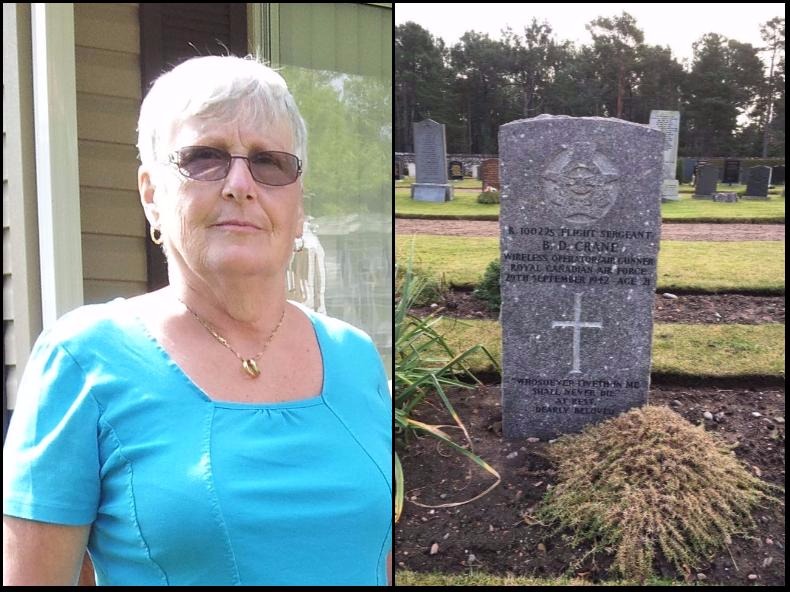
After paths cross in Holocaust's aftermath, a Canadian family seeks answers
Hillel Kuttler
The letter sent by Veterans Affairs Canada remains lodged in the memories of Patricia Traill and her son Robert.
Patricia’s father, Marwyn Crane, a retired railway worker who had fought for Canada in World War II, opened the envelope at his Toronto-area apartment in 2001. Handwritten in English and sent from Israel, the letter inside-which the VAC had received and forwarded-mentioned Crane’s having assisted a Holocaust survivor at war’s end by giving the young man his army beret. The person writing the letter was one of the survivor’s children or grandchildren, since the survivor had since died. The family wanted to thank Crane for his kindness and to return the beret. The beret itself was not sent.
“I was in shock,” Patricia Traill said of reading the letter.
Not long afterward, Crane passed away at age 84, on Oct. 27, 2001. In his eulogy, Robert Traill evinced pride in an incident his grandfather never mentioned, just as he’d long avoided speaking about his military service. Patricia knew from her uncle, George Farrow, that Crane had fought in the Battle of Montecassino, in Sicily. Crane’s younger brother, Beverley, was an Air Force gunner killed in battle at 21 on Sept. 29, 1942, and buried in a commonwealth military cemetery in Lossiemouth, Scotland.
Patricia remembers being about eight years old and taking a drive with her father when a bird struck the windshield. Crane, “out of respect for the bird,” buried it, she said.
“We were quite touched,” she continued. “He was more comfortable with animals and kids.”
In seeking the Israeli family, Patricia wrote to The Times of Israel newspaper, which contacted me. The Traills are bursting with questions about the episode: Who was the young survivor? In what concentration camp did Crane, a private, encounter him-and was it in a concentration camp after its liberation or near one-or was it somewhere else? What did Crane do that was so crucial? What did the survivor tell his family about Crane’s role? Did Crane and the survivor even learn each other’s names?
If the correspondence survived, of course, the Traills likely would have gotten answers long ago. But when Patricia returned to Crane’s apartment the next day, the letter and envelope she’d read hours earlier were gone. Crane threw it out, she figures. While she and her son don’t remember the most crucial information, they did read in the letter that Crane’s proffered beret helped the man search for relatives who’d survived the Holocaust.
Crane’s eagerness to forget the war extended to military honors he earned. But in a visit Robert Traill and his then-wife made in the late 1990s, Crane opened up somewhat. He acknowledged fighting in Italy and then being dispatched to northern Europe.
That conversation indirectly led to the Israeli letter finding him in 2001.
“He mentioned that he was entitled to medals for his service, but didn’t receive them. I said, ‘You should get them, because it helps everybody to remember the past. To forget is a big mistake,’ ” Robert, who works in computer systems, told him.
Thus cajoled, Crane applied for his medals and soon received them. According to Crane’s VAC records, filled out upon his discharge on Dec. 14, 1945, and stamped with a bar code on Jan. 26, 1999 (perhaps the date the VAC mailed the records and medals to Crane), he earned six awards: the 1939-45 Star, the Italy Star, the France and Germany Star, the Defence Medal, the Canadian Volunteer Service Medal and the Clasp War Medal 1939-45. Patricia’s brother Bob now has them.
Crane “just left them sitting in an envelope when they came in. They were probably a reminder of what he went through,” Patricia said, adding that she “was very proud” of her father’s medals.
The Traills think that the medals didn’t arrive decades earlier because Crane didn’t provide the VAC with a current address. Born in 1917 in Raymore, Saskatchewan, Crane, a Baptist, worked as a truck driver and a miner in Flin Flon, Manitoba, when he began part-time training with the Queen’s Own Cameron Highlanders, a military reserve unit, on Nov. 22, 1940. He entered full-time service in Winnipeg on May 20, 1941, as a truck driver. From November 1941 to December 1943, by then with the Royal Canadian Army Service Corps, he was posted to England, then transferred to Allied command in Italy. He served there through Feb. 17, 1945; from then until about March 31, Crane participated in the WTO – the Western theater of operations.
Roger Sarty, a history professor at Western Laurier University, in Waterloo, Ontario, explained that Canada’s I Corps – to which Crane’s transportation unit belonged – advanced from northern Italy to France, then moved further north to join the rest of the First Canadian Army in the Netherlands.
The records “strongly suggest” that Crane “was indeed in the Netherlands and Germany in April-May 1945, and possibly some months longer,” Sarty told me by telephone.
Crane’s encounter with the Holocaust survivor, then, might have occurred at the Amersfoort concentration camp ,
which the First Canadian Army officially liberated on May 7, 1945, several weeks after the International Red Cross took responsibility for it when German soldiers fled.With Crane applying for his medals in 1999, the VAC had an address to forward the letter from the survivor’s family; it’s unknown when the VAC had received it. From what the Traills remember, the VAC matched the letter to Crane because the Israeli family provided the digits stitched or written inside the beret: H65083, Crane’s regimental ID number with the RCASC’s 10th District Depot.
A Yad Vashem spokesman told me that no one had donated the beret to the Israeli museum that commemorates the Holocaust.
Patricia called her father’s assisting the survivor “wonderful and very humane.”
“That’s my typical dad: He helped a young man who’d gone through hell.”
Hillel Kuttler is an award-winning editor/writer for companies, non-profit organizations, and many of America’s leading publications. His feature articles on history’s role in contemporary people’s lives have appeared in The New York Times, The Washington Post and The Wall Street Journal.
Other stories
-
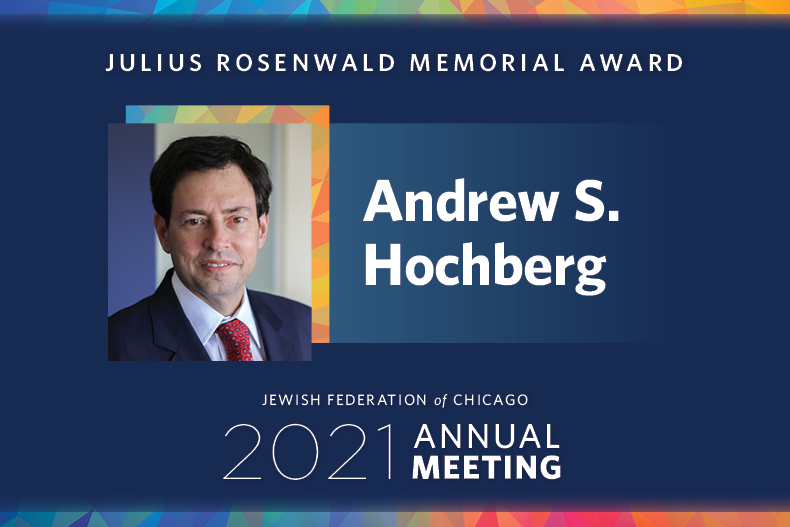
Meet Andrew S. Hochberg, 2021 Julius Rosenwald Memorial Award recipient
Celebrate Andy Hochberg at the virtual Annual Meeting on Sept. 14
Read more -
Two local teens win national recognition
Recipients of the annual Diller Teen Tikkun Olam Awards
Read more -
Celebrating six young award winners cultivating the community
Introducing young adult award winners
Read more