Just weeks into this new year, I find myself terribly worried about a new friend. We have only known each other a few months, yet the brave battle against cancer I’ve been watching her wage is something I feel right in the pit of my gut.
I first walked into Shari’s pilates class in the early fall. I told her I was looking to get serious about working out after a lapse and some renewed physical pain. At that moment, I had no idea that’s she’d been diagnosed with Stage 3 Ovarian 18 months ago.
As we began working, the easiest of connections formed between us. We didn’t really need to ask one another whether we were Jewish. There was that unmistakable familiarity: Jokes. Expressions. Values.
Shari worked me hard right from the start, while at the same time being so understanding of the pain that was testing my limits. She made me feel enthused in a whole new way about making strides to strengthen my condition.
Shari and I would talk about politics, movies, and our families. We shared a keen interest in what was going on in the world around us, and she made me promise to send her any new articles I’d written about politics. I complied.
It didn’t take long for Shari to tell me about her cancer diagnosis and what she’d been through over the last 18 months. Her scans had been good of late, but the weekly chemotherapy was taking a terrible toll. I marveled that she still had the energy to teach classes and run her business. Always positive, Shari shrugged it off. Her family needed the income. And besides, it made her feel good to channel her time into helping people. She did. And never complained once.
Over the holidays, I made a point of telling Shari not only of my admiration for her, but also how much it meant that she genuinely cared about pushing me to get better myself. I told her that it made a difference. A big one. She loved hearing it.
Just after New Year’s, Shari had to cancel our Monday session. She told me that she had to have fluid drained from her abdomen. Naturally, all I cared about was her health, and she expected that the procedure would alleviate some of the bloating and pain she’d been experiencing.
After several unanswered texts over the weekend where I asked how she was feeling, I became extremely nervous. And then the awful news landed on my screen. Two messages, from her husband Mickey:
“Unfortunately, my bright, beautiful star is not doing well. The disease has suddenly progressed at lightning speed and Shari may have as little as only a couple of weeks to share her beautiful soul with. Her chemo doctor who is considered in the top one percent in the country and we feel he has done everything he could possibly do, said to me tonight, ‘The best thing you could do is to tell her it’s okay to let go’… This all went south in two weeks. I’m telling you this, which is more than other clients or even her instructor knows, because I know Shari really liked you on multiple levels.”
I froze. When I unfroze, I asked Mickey if I could visit. Half an hour later, I was sitting in Shari’s hospital room. My teacher didn’t look so bad. I told her to get up, get dressed and let’s go workout! I could still see the strong, professionally trained New York dancer right in front of me. But I knew better. I’d been in this room before.
I held my friend’s hand. We talked. We joked. Then Shari explained the brutal decision she was confronting: How much treatment to continue to undergo, versus how much quality time she might still have to enjoy with her family. As is so often the case with the demon cancer, there were no good answers.
And then Shari asked me the real question. What did I think happens-“after?” She had been thinking about it, and as a no-B.S. New Yorker, she didn’t want to hear any B.S. answer. I shared my thoughts, the specifics of which will stay in that room. But I added that humility prevented me from any sense of certainty-and that this is what makes the answer truly unknowable. She agreed with all of it.
More importantly, I think, was the last thing I told her before leaving. I shared with Shari my belief that when any of us physically leave this world, it’s the impact we’ve had on others that lives on-without question. And that speaking for myself, in just three short months, I am a better person for our friendship.
Shari is still fighting. Every day. And I am worried. Every day. But in a strange way, I am grateful for this worry. For I am grateful for having met this new and dear friend. The strangers we meet every day have an incredible power to touch our lives, when we let them. Shari has touched mine. Nothing can change that fact.
Michael Golden is the author of “Unlock Congress: Reform the Rules -Restore the System” and cofounder of the One Million Degrees scholarship program in Chicago.
Names have been changed to protect privacy.
Other stories
-
Mother’s Day, Father’s Day, and the Jewish way
Let us pause and consider what it means for us to truly honor our parents
Read more -
Each time we study Torah, we experience the revelation
The mystical tradition of Judaism that lifts up the number 600,000 from the Exodus
Read more -
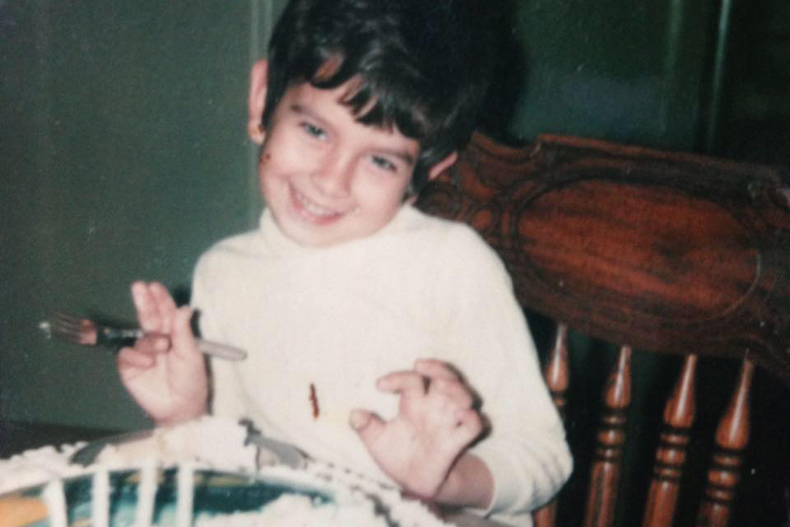
My story, the narrative that I hold tightly at the center of who I am, the origin of all of my clinging and everything else that makes me a person, is about my mother. Like it or not, the whole world begins and ends with moms; they are the heart of who we are. Through them we learn the best and worst, and my mom was no different-except that she actually was the best.
Laura Morgan.
Writing her name and saying it aloud is strangely therapeutic. I never say her name. It feels dangerous, as if calling it would bring her into the room. The act reminds me that she was an actual person with an actual life. Laura Morgan. My memories of her are my most vivid. I don’t have many, so I must repeat them like you might a favorite movie and then gently place them back on the shelf. I’ve always done this. I’m afraid to stop, so I practice and repeat.
The best are the moments of pure love, where she saw me without judgment. I was obsessed with Wonder Woman, so she crafted bulletproof bracelets and a crown out of a Twinkie box. She glued aluminum foil around the cardboard and painted red stars on them so that I could spin around our house pretending to be Linda Carter. The year I wanted to be the Wicked Witch of the West for Halloween, she made me a black dress and did my make-up. I could do and be whatever I wanted. Wear her favorite black heels? Yes. Sleep in her sheer nightgown? Of course.
All I have of her are these and other fragments from my childhood, because I was 9 years old when she died. How can the person who understands you so completely just die? How could I not have her around to see me through to adulthood? She had been sick for a few days, and then one Saturday morning during cartoons she had my father take her to the hospital.
“It’s OK.
“Everything is all right.
I’ll be home soon.”
I never saw her again.
I wasn’t allowed to visit her in the hospital because I was too young and wouldn’t understand . I didn’t get to say goodbye because it would be too much for me . I actually remember my dad saying that at the funeral: “No, he can’t see the body to say goodbye, it’ll be too much.”
So she vanished into thin air. Within days her life was packed up and given away. High heels and nightgowns aren’t things a little boy gets to ask about, and so I accepted their disappearance along with everything else. My nine-month-old sister got to keep our mother’s purse, and I was given a picture.
I took that picture everywhere. It came with me to school, I held it while I slept; it was always at my side. It was the one thing I got to keep, and I was determined to never let it out of my sight.
Nobody wants to watch you grieve. Tears make people uncomfortable, so my dad took the picture and put it on a shelf that I couldn’t reach. I could have my mom, but quietly, from a distance. What I wanted was for my dad to help me carry a torch for my mother, to wear a path into the ground, to beat the drums and shake our fists at the sky. I didn’t get that pause. Instead my father was remarried, and I had a whole new family, one year later.
“Aren’t you lucky? You must feel so lucky. Your mom died and just like that you got a new one.” As if my mom were a set of tires that could easily be replaced. Everyone else was moving on, so I did too. I didn’t ask questions, because I was afraid. There was no sign of my mom in our house. She was gone, and it was clear that I was supposed to move on along with everyone else. I couldn’t ask questions because that would mean acknowledging that I didn’t know everything. I didn’t ask all of things you’d want to know about your favorite person. I still haven’t. I’m a grown man, and I’m still scared to ask my father to talk about my mother, so I clutch what I have.
Forgiveness means giving up all hope that the past could have been any different. It means believing that everyone did the best they knew how to do. It means knowing that clinging to what wasn’t perfect robs me of the joy of the good parts. That loving my family is more important than how we chose to navigate my mother’s death. I know, and understand, all of this. But sometimes, even now, it’s hard to not hold on-to be brave, breathe, and to just let it all be.
There’s a memory that I return to a lot. My mom often took me running with her. I would try to run along beside her, but I couldn’t keep up with her pace. She’d pass me, and I’d be left in the dust. I’d stand there watching her slowly move far ahead of me and into the distance. It was unknown to me then, how life would play out, that I would only have a moment at her side. A rabbi once said to me, “zeicher tzadik livracha” (the memory of a good person is a blessing). I try to remember that. Maybe that’s enough, and all I need to hold on to is her love for me. Maybe it’s time to let everything else go, and know how beautiful it is to be loved, and how lucky I am that I ever got to see her run.
Jeremy Owens is a writer for Oy!Chicago and is the creator and host of the storytelling show known as “You’re Being Ridiculous.”
Other stories
-
Mother’s Day, Father’s Day, and the Jewish way
Let us pause and consider what it means for us to truly honor our parents
Read more -
Each time we study Torah, we experience the revelation
The mystical tradition of Judaism that lifts up the number 600,000 from the Exodus
Read more -
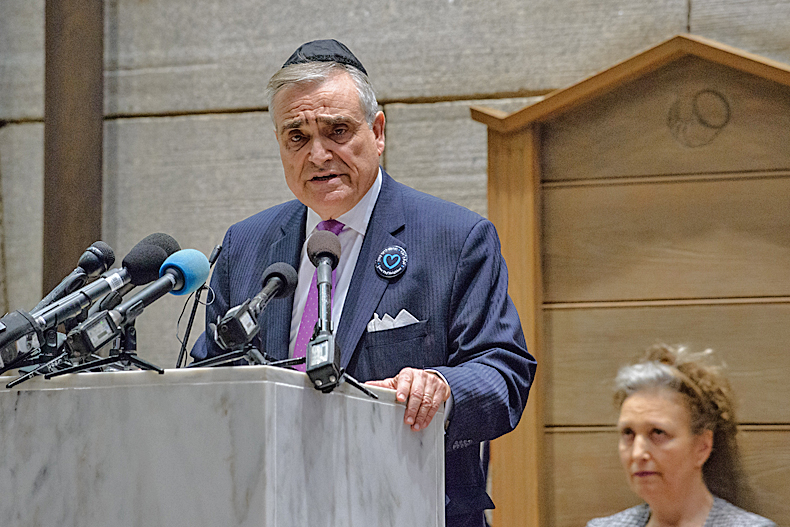
Nasatir: 'We stand together to say 'no' to all forms of hate'
Dr. Steven B. Nasatir
JUF President Dr. Steven B. Nasatir delivered the following remarks at “Love Thy Neighbor: An Interfaith Gathering Against Hate” on February 8, 2017 at Chicago Loop Synagogue.
Thank you all for being here today. The support, love, and understanding we have received from our Muslim and Christian brothers and sisters has been wonderful to behold.
How sad and ironic that we are here at the Loop Synagogue today.
So many times over the years we have gathered in this sanctuary in solidarity, in protest, and in prayer — when the Jewish community in Chicago has been threatened, and when terror attacks have struck down Israelis and Jews elsewhere overseas.
How sad and ironic that we gather today because this synagogue, symbolizing all synagogues, has itself been assaulted.
But we aren’t here simply to decry the disgusting vandalism that took place here last Shabbat, or to recoil at bomb threats at dozens of JCCs around the country, including ours, which caused the evacuation of toddlers out of fear for their safety. We aren’t here just to condemn a swastika carved into a bench at the Illinois Holocaust Museum, or to denounce anti-Semitic assaults on college campuses.
It is not just these assaults upon the Jewish people, which happened this past week, that bring us together. Our gathering today is about something larger than any one hate crime against any one group. We join together to cry out with one voice because something very precious and fundamental is at risk.
The injury caused by any act of hate committed against any person or any institution in our city and our country tears at the fabric of our entire nation. We are here to affirm that we will not surrender to fear. We will not surrender to hate. We will not surrender to destructive divisiveness. When it comes to preserving our shared principles, Americans of all ethnicities, races, and religions must stand together. Standing together is the response to the hatred we have experienced.
Look at the words of support this synagogue and our Jewish community received from Muslims, Christians, and so many others. Look at the action our Jewish community has undertaken on behalf of Muslims to raise funds for victims in Aleppo and assist its refugees. Witness the Jewish Federation’s 40-plus years leading the Illinois Refugee Social Service Consortium. Together with our partners we have helped rescue and resettle here in our Chicago community over 125,000 victims of war and persecution of all faiths and nationalities.
Tragically, attacks on houses of worship, on people of color, on LGBTQ people, and on other groups, are nothing new. Hating the other is an all too common sin. What is new and alarming, is that hate crimes are increasing. The FBI reported 5,818 hate crimes in 2015, up about 6 percent over the previous year. Anti-Muslim hate crimes rose by 67 percent — that’s outrageous. Jews, who are just 1.7 percent of the population, are the target of more than 50 percent of all religious hate crimes — that’s staggering.
When Jewish institutions are desecrated with swastikas, when Jewish students are demonized and marginalized on college campuses and called racists because they support Israel’s right to exist, we say, this evil hatred must be stopped.
When African-American churches are attacked and burned, and worshippers are murdered because of who they are, we are horrified. We will not tolerate racism in America.
When Muslim worshippers are murdered, when mosques are burned, or when policies are promoted that would harm certain groups solely because of their religion, we testify that there is no place in America for bigotry against Islam.
When 100,000 Christians are murdered in a single year in North Africa, Asia, and the Middle East, we bear witness and say, this slaughter must be stopped.
In the great tradition of the three monotheistic faiths, we continue to teach that all are created in God’s image. We live the Torah’s teaching, “You shall not hate your fellow in your heart,” but shall “love thy neighbor as thyself.” (Leviticus: 19)
We the Jewish people brought to the world the verse from the Torah engraved on the Liberty Bell: Proclaim liberty throughout all the land unto all the inhabitants thereof. We the Jewish people brought to the world the absolute dignity and sanctity of every person. It is for this freedom and for this dignity that we have come together today.
And let the word go out from this assembly that we stand together to say “no” to all forms of hate.
Let us be clear that an assault on any one group is an assault on all.
Let there be no light between us, save the light of liberty.
At a time of great divisions in our country, let unity be our clarion call.
Other stories
-
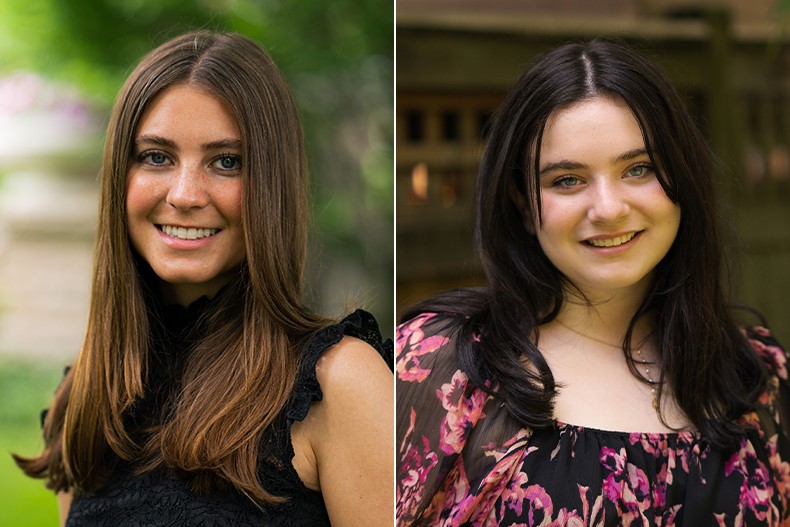
Two local teens win national recognition
Recipients of the annual Diller Teen Tikkun Olam Awards
Read more -
Celebrating six young award winners cultivating the community
Introducing young adult award winners
Read more -
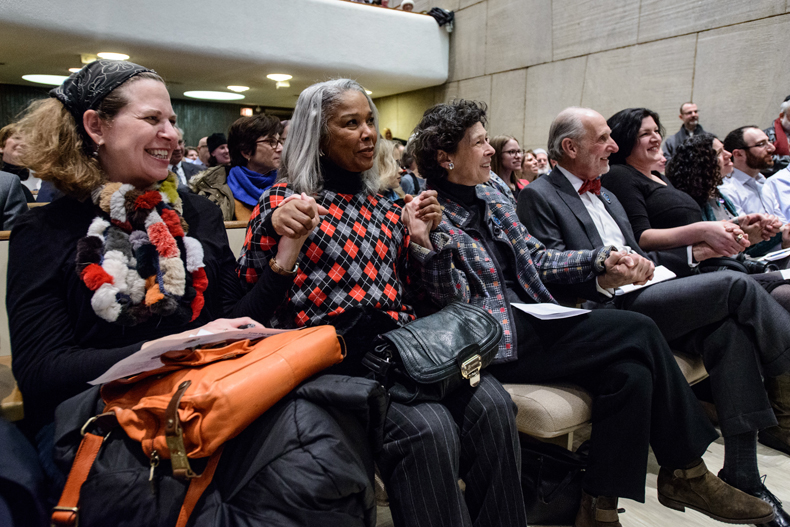
Some 1,000 Chicagoans of all faiths gathered Wednesday afternoon for an event titled “Love Thy Neighbor: An Interfaith Gathering Against Hate” at Chicago Loop Synagogue.
Sponsored by the Jewish Community Relations Council of the Jewish United Fund, the event featured stirring words against intolerance and for unity from Jewish, Muslim, and Christian faith and community leaders.
The synagogue was the target of vandalism early Saturday morning, Feb. 4, when an attacker smashed a front window and placed swastika stickers on the building. It was the first such attack on the synagogue, which opened in 1959. A hate crime investigation led to the Tuesday morning arrest of Stuart Wright, 31.
Also last week, the Lake County JCC received a bomb threat and anti-Semitic vandalism was reported at the Illinois Holocaust Museum & Education Center.
Concerned citizens and organizations from many faiths offered support to the Loop Synagogue, including Muslim women and children who sent notes and flowers.
“By coming together, we are reaffirming the best of what our country and our city is about,” said Emily Sweet, executive director of JCRC, who welcomed attendees at the interfaith gathering. She called on Chicagoans to “stand together, not just in response to one crime, but during all the days to come, reaffirming our commitment to the tenet that unites all of our faiths: Love thy neighbor.”
Chicago Loop Synagogue President Lee Zoldan recalled the 1 a.m. phone call she received regarding the vandalism. As she stood in the winter night with her husband, looking at the damage, she said, “We felt very alone. But we were not alone.” She explained that, from that day to this, her job has consisted mostly of saying “thank you” to hundreds of cards, calls, and donations. “One single act of hate led to hundreds of acts of love,” she said.
JUF/Jewish Federation President Dr. Steven B. Nasatir noted that the support from Christians and Muslims at the event mirrored JUF’s commitment to helping others, from the victims in Aleppo to the Federation’s leadership of the Illinois Refugee Social Service Consortium, which over the course of 40 years has “rescued over 125,000 victims of war and persecution of all faiths and nationalities.” He said these efforts emerged from the Jewish belief in “the absolute dignity and sanctity of every person.”
While religious hatred is old, Nasatir said, the level of hate crimes now occurring is “new and alarming. An FBI report released in November 2016 showed 5,818 hate crimes occurred in 2015, up about 6 percent over the previous year. Anti-Muslim hate crimes rose by 67 percent; Jews, just 1.7 percent of the population, are the target of more than 50 percent of all religious hate crimes.” His response: “Let the word go out from this assembly that we stand together to say ‘No!’ to all forms of hate. Let there be no light between us, save the light of liberty.” ( Read Nasatir’s complete remarks during the program. )
Bishop Sally Dyck of the United Methodist Church warned against the “temptation to go numb” felt by many due to “the outrages that erupt on a daily basis.” She spoke of the community as a unified “body” or “fabric” of neighbors. She said that she came to the gathering “to speak, to pray, and to stand with” the Jewish community in the “hope for shalom.” Dyck read a brief poem about the world — “Where does it hurt? Everywhere” — and said people must unite for “Shalom, everywhere.”
Jenan Mohajir, Curriculum Consultant of the Interfaith Youth Core, told her Muslim parents’ immigration story. She said that she, too, raises her children with positive messages, even as one child asked about the synagogue vandal, “Will he break our window, too?”
To help her children cope, Mohajir had her children write messages of solidarity and buy flowers, then brought them to the synagogue on Sunday morning. “We have to be both vulnerable and vigilant,” she said. “My Islam is filled with love and hope. We leave no room for despair.”
Pastor Chris Harris of Bronzeville’s Bright Star Church recalled the Civil Rights movement, and urged the crowd to “say nothing about violence and hatred until we do something about them.” He recalled a recent news story about New Yorkers using hand sanitizer to scrub swastikas off the subway, responding, “What we need is heart sanitizer, to wipe away hatred and bigotry.”
Harris gave three instructions for dealing with challenges to community solidarity: Show up, step up, and speak up; he concluded with three more guidelines: Be connected, be concerned, and be compassionate. These actions engage the head, hand, and heart, he said.
Rev. Dr. Otis Moss III of Trinity United Church of Christ also spoke of the Civil Rights movement, saying that his father had marched with Dr. Martin Luther King, Jr. and Rabbi Abraham Joshua Heschel and like them, “prayed with his feet.” He explained how jazz music was an amalgam of sounds and instruments from many places that still harmonized, while ensuring that “every instrument has a right to solo.” In this way, he said, “jazz taught America democracy.” He encouraged the attendees to “write, on the blank pages of history … a new song.”
Rabbi Michael Siegel, senior rabbi at Anshe Emet Synagogue, then led the assembly in prayer. He praised God for “believing in the power of holiness in us — despite our flaws.” He said that the light to dispel darkness comes from “acts of kindness … the power of love.” Explaining that the directive, “Love thy neighbor,” the event’s theme, was from the Torah, he asked God’s help to “meet hatred with love and unity” and “to find peace in the midst of upheaval.” Siegel concluded by leading participants in the singing of ” Oseh Shalom” (Establish Peace).”
JCRC Chairman David T. Brown closed the gathering. “I grew up in a world of ‘Never Again,’ in which the depravity of the 1930s and 1940s could never be replicated,” he said, “But our work is not done. We must continue to stand up for what is right.”
Brown said the day’s turnout gave him hope: “Look at this outpouring of community. We must continue to build bridges. This is only the beginning.”
Letters of support from Illinois Gov. Bruce Rauner and Chicago Mayor Rahm Emanuel, both out of town, were in the event’s program, as was a poem written by Chicago-area Jewish, Muslim, and Catholic fourth-graders participating in Poetry Pals, an organization that uses creative expression to promote understanding and peace in a multi-faith society. Poetry Pals received a two-year JUF Breakthrough Fund grant that will help the program expand its reach to middle and high schools, and create a curriculum that can be replicated in other cities.
Illinois First Lady Diana Rauner was in attendance at the event, as were Illinois Congressman Mike Quigley, Aldermen Michelle Smith, Debra Silverstein, and Ameya Pawar, as well as others representing the City of Chicago and Cook County. Also present were: Holocaust survivor Fritzie Fritzshall, president of the Illinois Holocaust Museum & Education Center; Consul General of Israel to the Midwest Aviv Ezra; Michael H. Zaransky, chairman of the JUF Board of Directors; and representatives of other groups.
Attendees received buttons with the event’s theme, “Love Thy Neighbor,” in English, Hebrew, and Arabic. As Brown explained, “This is our clarion call. This is what our Chicago community believes in. And this is the sentiment we want to share far and wide.”
For video clips of all speakers, visit www.juf.org/videos .
Other stories
-
Two local teens win national recognition
Recipients of the annual Diller Teen Tikkun Olam Awards
Read more -
Celebrating six young award winners cultivating the community
Introducing young adult award winners
Read more -
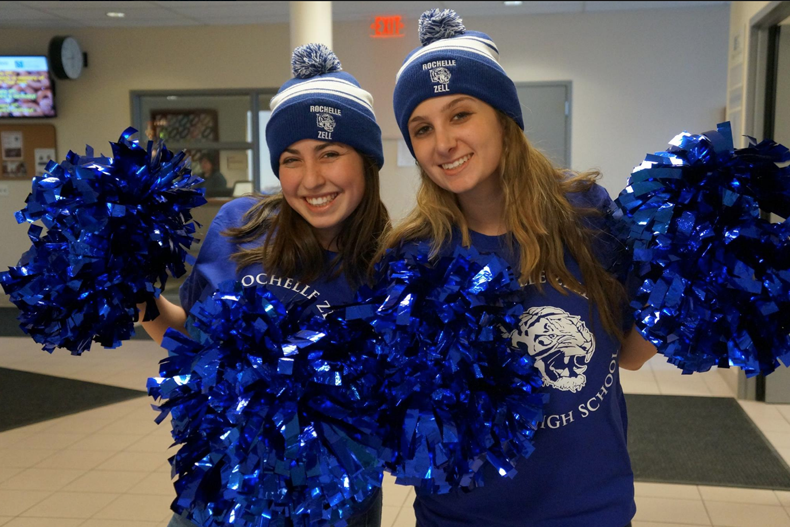
Rochelle Zell nurtures students’ passions, purpose, and potential
Jennifer Brody
“Students tell me all the time that they love to come to school,” my tour guide says.
As I walk through the hallways, I can understand why.
We pass a few students sporting pajamas, and I soon learn that this week-just before winter break and Chanukah-is spirit week at Rochelle Zell Jewish High School in Deerfield. One junior is wearing jammies with menorahs, while his friend is outfitted in pink ones. Suddenly, high school looks a lot more fun than I remember.
And that’s how my tour begins. I learn of the existence of a hallway for seniors and that students don’t need locks on their lockers. “There’s a great deal of trust and a sense of safety,” explains my guide, Head of School Tony Frank, as we head to the cafeteria.
Unlike large public schools, Rochelle Zell students aren’t required to report here during their lunch periods. The small school-of 168 students -has the same lunch period for convenience. It’s easier for students to seek extra help from teachers or for student groups to meet. More than 75 percent of the student body participates in after-school sports, and if a few students feel like shooting hoops during their free period, they can, I’m told as we pass a window overlooking the gym.
When it comes to navigating college, RZJHS grads are way ahead of the game and may bypass the shock and disorientation many college freshman experience. “They know how to advocate for themselves and will seek out professors during office hours and find a community or create one,” said Frank.
This is no ordinary high school. It’s number one among America’s Best Jewish High Schools, according to 2016-2017 school rankings on Niche, a national school and neighborhood rating site. For the second year in a row, RZJHS (formerly known as Chicagoland Jewish High School) was also ranked the sixth Best Private High School in Illinois. The school earned high marks for college readiness and its 100 percent college enrollment, teaching quality and its low student-teacher ratio (it’s 7:1), and standardized test scores (the school’s composite SAT score is 1510; ACT is 31).
Beyond the numbers, student voices take center stage here.
Mornings start early with students leading tefillah (prayer), and services end with the mantra, “Let’s go learn a lot today.” Some fearless students take on a Herculean load of nine classes, which might include Spanish foreign language on top of Hebrew, and are involved in as many as five co-curriculars. Students assume leadership roles in everything from the Model UN team to the Social Justice Club, where they volunteer at homeless shelters and soup kitchens.
I catch up with senior Bobbi Hochberg, current school president and yearbook editor , in the school’s resource center. As a freshman, Hochberg never thought she’d be a leader but credits caring teachers for inspiring her. “They really want you to succeed,” she said. “I’ve said to my mom that if I went to public school, I’d be just a number. Here, I know that my voice means something.”
Lasting connections between students and teachers and a unique learning environment set Rochelle Zell apart in a competitive field of distinguished college prep high schools in Illinois. RZJHS promotes creativity and critical thinking in both Jewish studies and general studies classes, according to Roger Stein, dean of faculty. “With small classes, there’s nowhere to hide,” he joked. “Students get called on all the time.”
Bruce Scher, academic dean, said it’s also important to nurture a student’s creative side and help them find their passion. “Our students have such strong Jewish identities and, as individuals, they can go out and change the world,” he said.
Students like senior Zev Mishell of Northbrook, co-president of the school’s Model UN team of 28 students, has already discovered a passion for debate and social justice. Rochelle Zell’s team has won first place two years in a row at the national Model UN High School competition — in 2015 and again in 2016.
“We really embody the Jewish values we learned at school and what it means to be a mensch ,” he said.
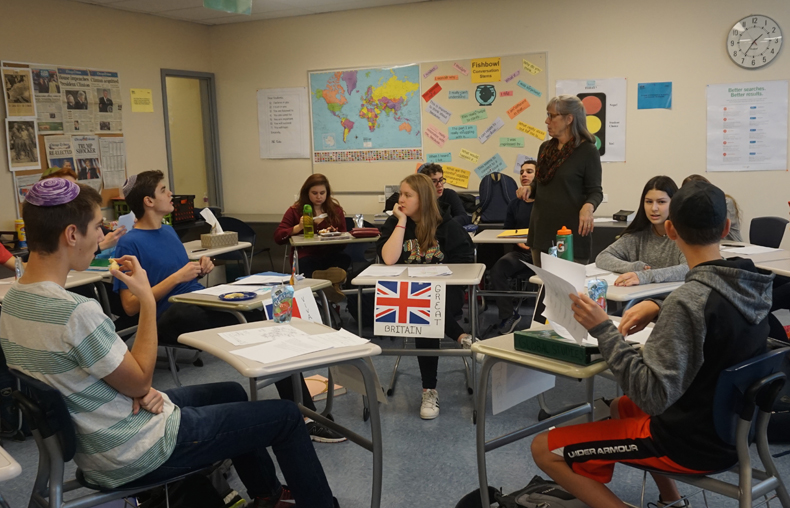
Dr. Rebecca Schorsch, director of Jewish Studies, said the school’s emphasis on prayer and studying the Bible, Rabbinic texts and Jewish philosophers, supports students’ personal, spiritual journeys but, also, challenges them to “to think about community, to think about meaning, to hear each other’s sadness.”
Most RZJHS students are from nearby suburbs of Buffalo Grove, Deerfield, Highland Park, and Skokie or Chicago, but senior Dafna Stofenmacher traveled all the way from Spain for an education only RZJHS can provide.
An avid volleyball player, she created friendships with students on and off the court and gradually learned what it’s like to be Jewish in America.
“I got to talk to my teachers about different perspectives about Judaism. That provided me with knowledge that I never would have gained in Spain,” said Stofenmacher, whose father is a rabbi at Comunidad Judía Masorti Bet-Ela in Madrid.
Adds Alumnus Jonah Martin Glick-Unterman, “The connections I developed with my teachers will follow me throughout life.” The Stanford University freshman said teachers at Rochelle Zell supported his decision to spend a gap year in Israel, and he still meets with them whenever he’s in town.
Whether it’s a passion for prayer, Jewish philosophy, social justice, or sports, RZJHS helps students find their niche.
Rochelle Zell Jewish High School was named in November 2015 in honor of a naming gift from the Zell Family Foundation, in memory of Rochelle Zell. The Zell gift is one of three transformative gifts that also includes significant gifts from the Crown Family and from the Harvey L. Miller Supporting Foundation. The Jewish United Fund/Jewish Federation of Metropolitan Chicago partnered with the school to obtain these gifts through JUF/Federation’s Centennial Campaign.
Jennifer Brody is a former associate editor at JUF News and a freelance writer living in Chicago.
Other stories
-
Two local teens win national recognition
Recipients of the annual Diller Teen Tikkun Olam Awards
Read more -
Celebrating six young award winners cultivating the community
Introducing young adult award winners
Read more -
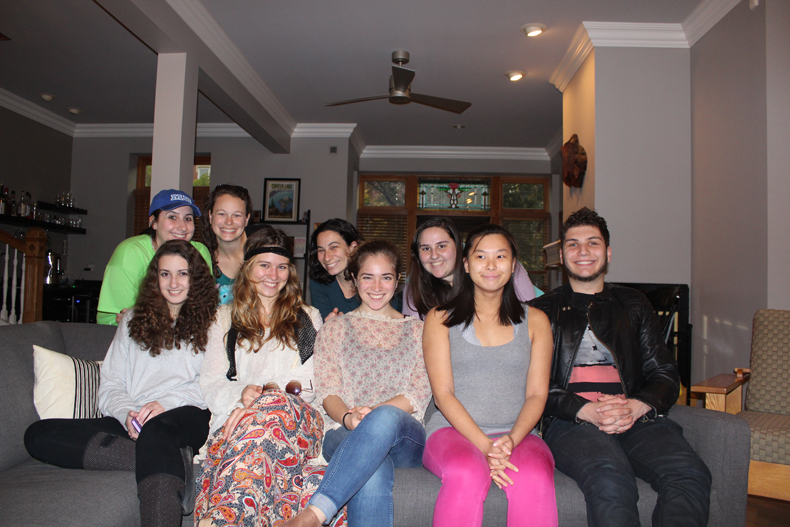
When Silverstein Base Hillel launched last summer, the program’s goals were: 1) Bring an innovative model for engaging urban Jewish students and young adults to Chicago and 2) Get it off the ground.
One semester into the academic year, JUF’s Metro Chicago Hillel’s trailblazing project has already blown past engagement goals, helped Metro Chicago Hillel win an award from Hillel International, and most importantly, forged powerful relationships with young Jews throughout Chicago.
“It’s game-changing,” said Lisa Jericho, Metro Chicago Hillel board chair. “To see such successes early on is outstanding. We’re very excited by what’s possible.”
Silverstein Base Hillel is a Lincoln Park home that welcomes young adults into a diverse, warm and hospitable Jewish family. The home-and it is truly the full-time home of the rabbinic couple that lives there, Rabbi Megan GoldMarche and her wife, Paige-brings Jewish students from campuses across Chicago into a cozy, welcoming, pluralistic space created specifically to meet the needs of underserved, often unaffiliated urban young adults.
“Our goal is really to give students a sense of home,” Rabbi Megan said. “We want to provide adult mentors and a group of peers to help students feel less of that social isolation that can be part of the urban commuter experience. And of course, we also want to enhance their Jewish life, and help them build a Jewish community-which we do through programming focused around the pillars of hospitality, service and learning.”
Clearly, this approach is working. In one semester, more than 400 unique guests have already walked through Silverstein Base Hillel’s doors, with six area campuses represented at the very first welcome event-and those numbers don’t tell the story of the many repeat visitors who say they already feel like part of a family.
“You automatically feel comfortable,” said Ellen Geis, a third-year student at DePaul. “I love coming to Base because it’s just Jewish. We’re Jewish because we’re helping people, or having a conversation about something that matters… I don’t feel like I really connected with my Judaism until I met Megan and Paige.”
“There was this one moment I remember, I was having a really hard week and work was stressing me out,” recalled Aimee Casden, 22, a senior at Columbia College of Chicago. “I was trying to make it to a Shabbat dinner at Base but I got on the wrong train and had to turn around. I didn’t think I would make it, but I did. When I arrived, I was greeted with big hugs. I felt like I belonged there, and that they were really happy to see me. It was a really nice feeling.”
“I think the big thing about Base is it’s not a campus,” added Andrew Tamarkin, 19, a Loyola junior. “You get a nice community outside of your campus. It also feels a little freer than a college campus. You make a relationship with the rabbi.”
Post-college adults say Silverstein Base Hillel has filled an important void for them, too, and that they are glad to have one more option on the increasingly dynamic menu of offerings for young Jews in Chicago.
“Hillel was always something that I cherished throughout and beyond college,” said Natalie Mogul, 22. “Regardless of age, everyone is happy to be at Base and grateful to have somewhere to build a Jewish community in this large city. Just because I have graduated does not mean that my time at Hillel is done.”
“I think my favorite experience was the first young professional Shabbat dinner I went to,” added Katherine Linzer, 30. “It was just a single table that unified everyone. It was a little different than other dinners I’ve been to… It felt like being with family. [Rabbi Megan and Paige] have done a really nice job bringing different groups of people together.”
“We’ve found that it helps to see young adults as holistic people,” Rabbi Megan explained. “Ultimately, we’re here to support people through the broad stage of life after high school, but before getting married or starting a family. We don’t want to serve students but then drop them the second they graduate. When you take care of someone, it’s not about their age.”
Administered by JUF’s Metro Chicago Hillel, which serves thousands of Jewish students on campuses throughout the Chicago area, Silverstein Base Hillel represents a true community partnership. Donors Bill, Ted, and Tom Silverstein selected and generously purchased the real estate for the house, and various community funders such as the Crown Family, an anonymous donor, and JUF’s Breakthrough Fund have also provided backing. Joshua Rinkov, Metro Chicago Hillel’s immediate past chair, and other community members were also a major force behind launching the project.
“When JUF approached us, we knew immediately that this was a project we wanted to support,” said Ted Silverstein. “Watching the staff turn a promising concept into an impactful and functioning program has been amazing and gratifying. I think my brothers and I all agree it may be the best investment that we have ever made.”
In part due to Silverstein Base Hillel’s success, Metro Chicago Hillel recently received the Phillip H. and Susan Rudd Cohen Outstanding Campus Award from Hillel International. The highest honor given to an individual Hillel, the award recognizes Metro Chicago Hillel’s success in adopting new ways of connecting with students.
Together the GoldMarches have years of experience on campus. Rabbi Megan has worked at the Hillel at Yale University and served as the Senior Jewish Educator at Columbia/Barnard Hillel. Paige served as director of Student Activities at Harvard Hillel. In addition to her work at Silverstein Base Hillel, Paige is assistant director at the Newberger Hillel at the University of Chicago.
“People keep asking how it’s going,” said Paige. “It’s fun! It’s fun having people in our home. It feels special. We’re creating a home, where people feel comfortable. It’s wonderful.”
For more information, visit www.metrochicagohillel.org/base/.Other stories
-
Two local teens win national recognition
Recipients of the annual Diller Teen Tikkun Olam Awards
Read more -
Celebrating six young award winners cultivating the community
Introducing young adult award winners
Read more -
Rabbi Herman E. Schaalman’s leadership extended far beyond his sanctuary
JENNIFER BRODY and PAUL WIEDER
The late Rabbi Herman E. Schaalman was born and raised in Germany, ordained in Ohio, and had his first pulpit in Iowa. But the most time he spent in any one place was in Chicago. In fact, he was dubbed “Edgewater’s living treasure.”
Schaalman was a longtime leader in the Chicago Jewish community, including serving as a past president of JUF’s Chicago Board of Rabbis as well as a member of the JUF Board of Directors. He passed away on Jan. 31, only two weeks after the death of his beloved Lotte, his wife of 75 years.
“The worldwide Jewish community has lost a great rabbinic thought leader,” said JUF President Dr. Steven B. Nasatir. “Rabbi Herman Schaalman was my friend and colleague whose leadership and work in the pulpit, Jewish camping, interfaith dialogues, and civic leadership was spectacular to watch. In addition, he was a strong supporter of JUF/Federation and a member of its board, who, in 1999, received the well-deserved and coveted Federation Rosenwald Award.”
Schaalman was the oldest living Reform rabbi. He originally moved to the United States from Germany in 1935. An Orthodox 20-something who didn’t speak English, he was thrust into a Reform seminary-Hebrew Union College-Jewish Institute of Religion-in Cincinnati. “What enabled me to be adaptable, I don’t know. That I had to do it, I did know,” he later recalled. “That it wasn’t easy, I remember well.”
Schaalman came to Chicago in 1949 to serve as the Midwest Director of the Union of American Hebrew Congregations-now called the Union for Reform Judaism. In 1956, he became the Senior Rabbi at Emanuel Congregation, where he served for 30 years, until 1986.
After his retirement from Emanuel Congregation in 1986, he turned his prodigious energy to fight for social justice, to help the homeless, people in need, and to alleviate injustice. As president of the Jewish Council on Urban Affairs, he pushed its social action agenda for the benefit of Chicago’s underprivileged. At the same time, he was president of the JUF’s Chicago Board of Rabbis, president of the Council of Religious Leaders of Metropolitan Chicago, and a trustee of the Council of the Parliament of the World’s Religions.
He was the founding director of the Union for Reform Judaism’s Olin-Sang-Ruby Union Institute (OSRUI), a summer camp, and continued to teach there until he was in his late 90s.
He also played a role in establishing OSRUI’s first camp for Jewish youth. Supported by JUF, OSRUI opened in Wisconsin in 1952. “I want the children to have the fullness of Jewish experience,” he said. OSRUI’s camps have has since expanded into 18 camp programs across the U.S. and Canada.
Jerry Kaye, OSRUI’s current and longtime director, said Schaalman “really devoted himself to the programs and the focus of what camp is and what it does. He was one of those people who was dependably teaching every summer, and the kids loved him.”
Schaalman also served as president of JUF’s Chicago Board of Rabbis; in 2012, he was honored by his colleagues with the Rabbi Mordecai Simon Memorial Award, named for the Board’s first president.
In explaining why he pursued the rabbinate, he said it was the influence of Jewish philosopher Martin Buber, with whom he had studied as a teen in Germany. From Buber, the young Schaalman learned, “I had to be something for God, even if it was less than what God could be for me.”
But Schaalman reached far beyond his own religious community, well known for his involvement with interdenominational efforts in Chicago, Schaalman was invited to speak at area churches, and in turn had their leaders address his congregation
Additionally, Schaalman co-founded Council of Religious Leaders of Chicago with Joseph Cardinal Bernardin and served as its president; the Council later awarded him its first Interreligious Leadership Award. He also served as president of the Jewish Council on Urban Affairs, and as a trustee of the Council for a Parliament of the World’s Religions.
In Chicago’s Cardinal Joseph Bernardin, Schaalman found a friend and kindred spirit devoted to interfaith dialogue. “In Germany, when my father and I would go on walks, he would never even pass by the door of a Catholic Church,” he recalled. “Here, I became the best friend of the Roman Catholic leader of one of the most important Catholic communities in the world.”
For a series of videos on Chicago’s Jewish history, Schaalman was interviewed by Aaron B. Cohen, JUF Vice President of Communications. Asked why he entered the world of interfaith dialogue, the rabbi responded, “Interfaith relations are a key to Jewish survival. Had there been interfaith life in Germany, maybe the German people would not have been ready to accept Hitler and be seduced by him.”
Schaalman often recalled the pre-Shoah (pre-Holocaust) world he knew that was lost. He spoke of it at a JUF-sponsored event commemorating the 75 th anniversary of Kristallnacht; he was officiating a wedding in Germany, he remembered, when he got a note saying his father had been taken to the Dachau concentration camp.
Over the years, Schaalman received many honors for his contributions to the Jewish community. The Spertus Institute for Jewish Learning and Leadership, which is supported by JUF, awarded him a Doctorate of Hebrew Letters, honoris causa, for his contributions in fostering strong Jewish participation in interfaith dialogue. In 1991, JCC Chicago inducted him to their Hall of Fame.
And in 1999, Schaalman was honored with the Julius Rosenwald Memorial Award, Federation’s highest honor. In receiving the award, he noted that he stood at the end of a millennium, but mostly spoke of the future: “We Jews are, in particular, future-oriented. We know this reality is incomplete, and we know ourselves to be charged to help fix it. We are the people of tomorrow. We are poised for the flight into to the not-yet.”
Schaalman was predeceased by Lotte, his wife of 75 years, by two weeks, and also predeceased by his brothers Ernst and Manfred and his sister-in-law Ilse. Schaalman was survived by his children, Susan (Charles Shulkin) Youdovin and Michael (Roberta) Schaalman. He also was survived by his grandchildren, Julie (Justin Shriver) Youdovin, Joshua (Sheri) Youdovin, Johanna (Adam Goodman) Schaalman, Keren (Dan Jackson) Schaalman, and Jeremy (Giulia) Schaalman. He was the great-grandfather of Annie Rose, Michael, Ilse, Elijah, and Miriam. Contributions in his memory may be made to Emanuel Congregation or Olin Sang Ruby Union Institute. Services were by Chicago Jewish Funerals, with internment at Rosehill Cemetery.
Jennifer Brody is a former associate editor at JUF News and a freelance writer living in Chicago.
Paul Wieder is associate editor of JUF News.
Other stories
-
Two local teens win national recognition
Recipients of the annual Diller Teen Tikkun Olam Awards
Read more -
Celebrating six young award winners cultivating the community
Introducing young adult award winners
Read more -
HIAS Chicago, local congregations join forces to welcome a stranger
Jennifer Brody
Last December, HIAS Chicago, working with Mishkan Chicago, welcomed its first refugee family of four through the agency’s Congregational Co-Sponsorship Program. HIAS Chicago is a program of Jewish Child & Family Services and a partner with the Jewish United Fund of Metropolitan Chicago in serving our community.
In 2012, Jaafar and Fatema, along with their two young sons, fled war-torn Aleppo and lived as refugees in Jordan. The family’s arrival marks the first time HIAS Chicago has resettled refugees from one of three countries currently with the highest number of refugees (Syria, Iraq, and Congo), according to Jessica Schaffer, director of HIAS Chicago. Admission to the United States as a refugee is determined by the federal government through the State Department and is based on an individual being unable to return to their country of origin because of a well-founded fear of persecution.
From the 1970s through the 1990s, HIAS Chicago focused primarily on resettling some 30,000 Jews and others from the former Soviet Union. Now, HIAS Chicago has been contracted by the federal government to resettle 60 individuals during this fiscal year and hopes to find four or five more congregations to sponsor them.
Under the new Congregation Co-Sponsorship Program, synagogues and spiritual communities find volunteers for welcome and mentor teams, complete a three-hour training session on refugee resettlement, and commit to raising $5,000-the minimum required to resettle one family.
“Our work with HIAS has been an incredible way to translate the inspiration people feel through the learning and services, into action,” said Rabbi Lizzi Heydemann, of Mishkan Chicago.
After quickly exceeding the $5,000 minimum, Mishkan helped resettle a second family from Iraq last month.
Also last December, Temple Sholom of Chicago’s board decided to participate in the program and raised nearly half of its $5,000 goal. Members of the congregation gathered at Target in Uptown for an education program about refugees, and purchased items for the family’s anticipated arrival this spring.
“There’s a lot of buzz building around the project. Here we are helping this one family, and that feels really good,” said Rabbi Shoshana Conover, of Temple Sholom.
Members of Highland Park’s Lakeside Congregation have been motivated by Jews’ collective history of persecution, according to HIAS volunteer and congregant Jackie Cohen, who is co-leading the project with Susan Gottlieb.
“So many of our grandparents left their home countries because of persecution. That’s a terrible way to live. Anything we can do in small measure to help-I feel that’s the right thing to do,” said Cohen.
Lakeside Congregation also plans for a refugee family’s arrival this spring. Other congregations in the planning stages include Anshe Emet Synagogue in Chicago, KAM Isaiah Israel in Hyde Park, Kol Sasson Congregation in Skokie, and Temple Jeremiah in Northfield.
HIAS Chicago is a program of Jewish Child and Family Services, a partner with the Jewish United Fund in serving our community. For more information contact Director of HIAS Chicago, Jessica Schaffer, at [email protected] .
Jennifer Brody is a former associate editor at JUF News and is a freelance writer living in Chicago.
Other stories
-
Two local teens win national recognition
Recipients of the annual Diller Teen Tikkun Olam Awards
Read more -
Celebrating six young award winners cultivating the community
Introducing young adult award winners
Read more -
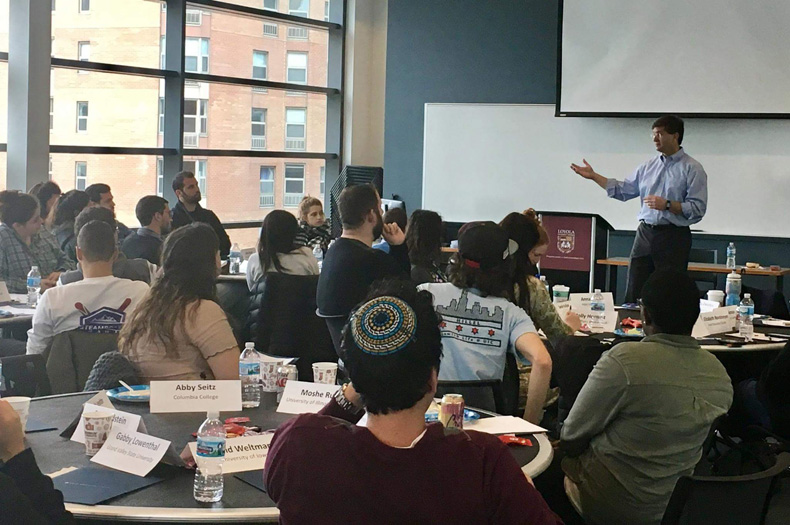
JUF’s Israel Education Center hosted its second Israel Intern training of the 2016-2017 school year on Jan. 28-29 for its 18 Israel interns at 15 different colleges and universities across the Midwest.
The first day of training provided a space for the interns to network and share tips on creating coalitions and educating others about Israel. Being pro-Israel in the current political climate, especially on campuses, is extremely difficult and can feel isolating at times, according to Emily Briskman, executive director of the IEC and assistant vice-president of campus affairs at JUF.
“By bringing students from across the Midwest together, the IEC is creating a network of students who can support each other throughout the year and beyond,” Briskman said.
Interns hailed from Illinois, Wisconsin, Missouri, Indiana, Ohio, and Michigan. Representatives from Hillel International also participated as part of their partnership with the IEC.
The students had opportunities to discuss what it means to be brave, how to be brave in the work that they do and empathize with each other and seek out ways to collaborate to advance Israel’s presence on college campuses.
On day two, the interns and their advisors heard from three speakers on Israeli current affairs and issues facing students. The speakers represented a range of perspectives on Israel and came from various professions where opportunities to advocate for Israel arise.
First was Carl Schrag , an educator and former editor of The Jerusalem Post , who discussed the implications of the 50th anniversary of the reunification of Jerusalem and provided a brief history of the Six Day War.
Schrag explained that the anniversary of the Six Day War is likely to be a large focus for anti-Israel groups who refer to it as the Naksa , the setback, or the start of the occupation. Understanding the facts about what happened in 1967, he added, will help the interns in addressing the one-sided perspective that will be espoused by anti-Israel groups.
Rep. Brad Schneider of Illinois’ 10th District then provided an update on Israel’s current standing in American politics and how to keep Israel as a bipartisan issue. The discussion then focused on what interns can do to reframe the discourse on Israel in a way that would engage students from a wide range of political views.
Finally, 25-year-old environmental activist Erin Schrode spoke about facing anti-Semitism when running for office as a California Congressional candidate and shared her experience of overcoming harassment during her campaign while also creating change in a diverse community.
Interns will bring this information and inspiration back to their campuses as they plan events, create coalitions, and educate others about Israel.
Other stories
-
Two local teens win national recognition
Recipients of the annual Diller Teen Tikkun Olam Awards
Read more -
Celebrating six young award winners cultivating the community
Introducing young adult award winners
Read more -
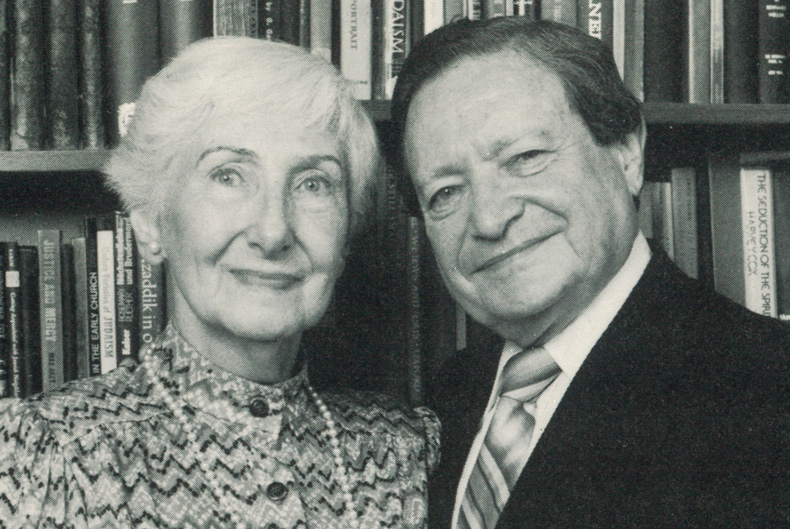
JUF Board Chair Michael H. Zaransky and President Steven B. Nasatir released the following statement on the passing of Rabbi Herman E. Schaalman to the JUF Board of Directors.
It is with great sadness that we inform you that Rabbi Herman E. Schaalman, former JUF Board member and past President of the Chicago Board of Rabbis, has passed away.
Read “Chicago Rabbi Herman Schaalman turns 100” from the May 2016 edition of JUF News.
Rabbi Schaalman was the oldest living Reform rabbi and his contributions to JUF, the Chicago Board of Rabbis, and the Jewish community are numerous. He came to Chicago in 1949 to serve as the Midwest Director of the Union of American Hebrew Congregations, and in 1956, he became the Senior Rabbi at Emanuel Congregation where he served for 30 years. One of his major contributions to Reform Judaism was his role in establishing the first summer camp for Jewish youth, Olin Sang Ruby Union Institute in Wisconsin.
Over the years, he has received many honors for his contributions to the Jewish community. Spertus Institute for Jewish Learning & Leadership (then known as Spertus Institute of Jewish Studies) awarded him the Doctor of Hebrew Letters degree, honoris causa, for his contributions in fostering strong Jewish participation in interfaith dialogue. In 1991, JCC Chicago named him an Honoree to their Hall of Fame. In 1999, Rabbi Schaalman was honored with the Julius Rosenwald Memorial Award, which is Federation’s highest honor.
Rabbi Schaalman’s contributions to the Chicago Board of Rabbis were evident in many areas. In 2012, he was honored by his colleagues with the Rabbi Mordecai Simon Memorial Award. He was also a devoted and active member of the Council of Religious Leaders of Metropolitan Chicago, and in 2014, he received its first Interreligious Leadership Award. Rabbi Herman was held with deep respect and genuine affection by all who knew him, both in the Jewish and broader religious communities.
Memorial contributions may be made to Emanuel Congregation or OSRUI.
May the memory of Rabbi Herman Schaalman always be a blessing.
Other stories
-
Two local teens win national recognition
Recipients of the annual Diller Teen Tikkun Olam Awards
Read more -
Celebrating six young award winners cultivating the community
Introducing young adult award winners
Read more -