
“The day is coming when a single carrot, freshly observed, will set off a revolution.” ~Paul Cezanne
While the original statement from the turn of the 20th century was referring to artistic styling rather than agricultural methodology, the quote has been adopted by modern food movements to represent where, how, and what we eat.
Affluent dining in the 1950s and 1960s usually meant eating Continental or French cuisine. The food concentrated on technique rather than ingredients. This type of dining was free from the constraints of seasonality and locality. The whole point of dining out was to enjoy what was not normally available to ordinary households. Exotic ingredients consumed in a restaurant were the hallmark of affluence and the modern world. Food from far away was desirable while more basic and homey ingredients were seasonal and thought to be mundane.
Then the modern world gave way to a movement of “Food on Demand.” Whatever you wanted and whenever you wanted it. Grocery stores bought in to the demand and stores swelled with produce from around the world and meats and fishes from exotic locations. People ate, and for the most part still do, what they want and whenever they want it.
The Farm-to-Table social movement is a complete reversal of affluent dining and eating expectations. The movement embraces the constraints of seasonality and locality. This is exactly the way most people have eaten throughout history. Food is harvested from small, local farms and eaten at the height of its freshness and seasonality.
Farm-to-Table has been gaining momentum in recent years. The very hopeful movement was founded by chefs, food writers, and environmentalists to bring local, fresh food to restaurants, schools, and kitchen tables across the country.
The revolution comes in the form of some very simple ideals: The only thing that matters is the farmer, the food, the cook (home or restaurant), and the plate. This is basic food alchemy and the essence of the Farm-to-Table food revolution. By simplifying our food expectations, we change the way we eat, the food we eat, and even where we eat it. We become mindful of our food.
Informed consumers are often concerned and wonder what they can do to eat healthier, seasonally, and locally. Thankfully, awareness has been made of the distinction between the “Dirty Dozen” and the “Clean Fifteen.” The first group are those 12 crops that farmers typically use the most pesticides on; the second describes the 15 fruits and vegetables that have the lowest amount of pesticide residue. With awareness, these distinctions could become a thing of the past–and all people, regardless of income and where they live, would have access to healthy and clean food grown without pesticides and herbicides.
Here are my farm-to-table tips for you:
Eat seasonally: Learning to enjoy the food that is seasonal – and how to preserve the foods you enjoy throughout the year by canning or freezing – reduces the need for mega-farms to produce food with the assistance of pesticides and herbicides.
Enjoy greater food safety: The food you eat is grown locally; you know exactly where it came from. Many state and countrywide recalls would become a problem of the past.
Shop farmers markets and CSAs: This is the easiest and most enjoyable way to take part in the Farm-to-Table movement. Many local farms also have Community Supported Agriculture models (CSAs). Home-cooks and restaurants can pre-purchase a share of the upcoming season’s crops. Farms can better predict how much to grow, how many people to hire, and can grow more diverse crops. Many CSAs have local pick-ups or even home delivery.
Shop with small family farms : By renewing the relationship between consumers and the land, we create local jobs and truly take stewardship of the land.
Traceability : Know your farmer, know their practices. By shortening the supply chain, consumers are more aware of where the food comes from and how it was grown.
At first glance, the Farm-to-Table revolution is defined by negative precepts. No food from outside a region, no food that is unhealthy, less meat on menus and plates, and no food that is out of season. Yet, these negatives create a positive simplicity: Cooking on the basis of taste and flavor, with no foods of exotic origins or novelty, is at the heart of healthy eating and a healthy planet.
Laura Frankel is a noted kosher chef, a cookbook author, and Culinary Director for a media company. Currently, she serves as Director of Catering at Circle of Life catering at North Suburban Synagogue Beth El.
Other stories
-
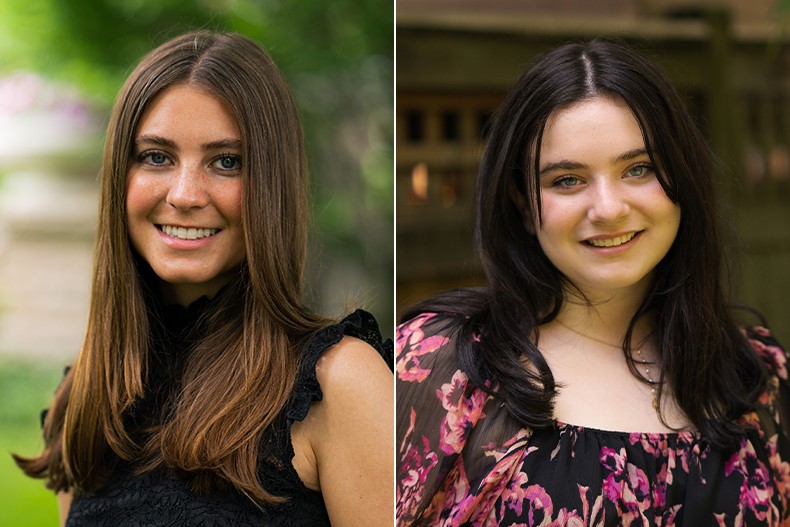
Two local teens win national recognition
Recipients of the annual Diller Teen Tikkun Olam Awards
Read more -

Celebrating six young award winners cultivating the community
Introducing young adult award winners
Read more -
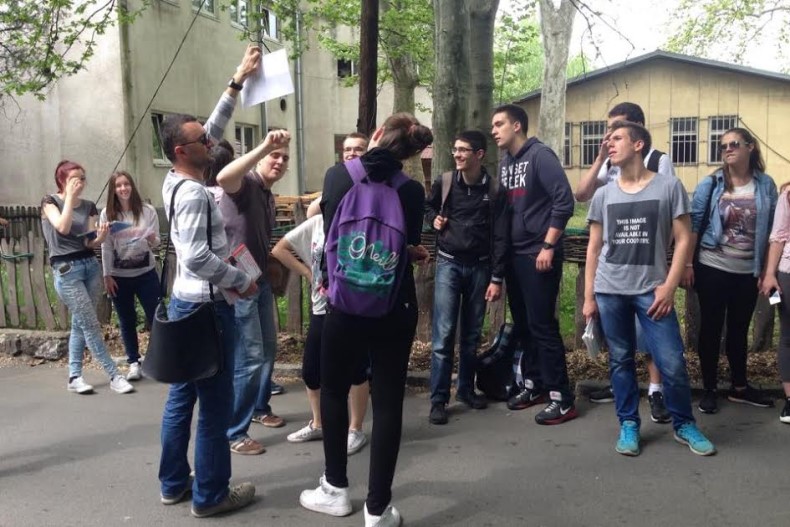
Surrounded by echoes of the past and a sense of urgency regarding the present, a small but mighty group of European educators teach about the Holocaust to ensure it will never happen again. They often work alone and face the challenge of fitting it into a mandated curriculum that might not include it. Yet, these teachers bring awareness to a part of history that many would rather forget.
Before COVID, Sinisa Vukadinovic took his students to the site of a concentration camp not far from their high school in Belgrade, Serbia. “There is now a fancy restaurant, right on the site where the morgue of the camp was,” Vukadinovic said. “Most people have no idea what happened at this location.”
He prepares his students in advance, having them analyze photos of the buildings before and during the war. Some buildings are still recognizable today. “I see my students’ faces when they realize that people are just eating, drinking, and enjoying themselves in that restaurant. One student told me, ‘I was sitting here once with my parents and I had no idea.'” The point is not to make students feel guilty about what happened before they were born, but to make them aware that this happened right here, “to people who were a part of us.”
These non-Jewish educators and students live in the places where the horrors occurred. As Marek Kraszewski, a teacher in Warsaw, Poland, noted, “You see that history everywhere, on plaques saying, ‘Here was the border of the Jewish ghetto.'” Kraszewski grew up in Bialystock, Poland, and learned only after high school that 40% of the population of his town was Jewish. “Poles and Russians were second in number to the Jews!”
Xara Stefani, a social studies teacher in Thessaloniki, Greece, takes her students on walking tours and points out the Jewish family names above the doorways of shops. She reminds them that the Jews had been there for hundreds of years, and the few survivors who returned found their homes had been taken.
As part of the concentration camp study, Vukadinovic’s students interview people to learn what Serbians think today. One man told a student, “We can’t be obsessed with history all the time. Life goes on.”
Back in the classroom, students discuss these opinions. “This genocide happened to people who were integrated into Serbian society,” Vukadinovic reminded them. “We did not lose foreigners in World War II-we lost part of our society.”
Seeking to learn more, these teachers find their way to Centropa, a non-profit that provides educators with a wealth of resources about the lives of Jews in communities across Europe before, during, and after the war. Originally created by journalist Edward Serotta as an archive to a lost world, Centropa documented interviews with survivors who shared photographs showing their cultural richness before the war.
As teachers contacted Serotta for materials, he realized Centropa would be impactful as an educational program, putting a human face on the statistics. Lauren Granite, Centropa’s US Education Director, said she believes that Centropa is effective by telling people’s stories. “Stories are universal and connect us all,” she said. “If you can tell a person’s whole story, that humanizes them. They are not just victims.”
Stefani put a face on this history when she arranged a visit to the home of a local survivor. “When the students returned to school saying, ‘We live in a civilized society and people were burned!?’ I was reminded of my purpose.” The Holocaust provides a framework for understanding society today. “There is verbal abuse between students, which is the beginning of how everything can get worse.”
Vukadinovic mentions attitudes towards refugees in Serbia. He worries that many of his students whose great-grandparents were killed in the war currently have xenophobic thoughts. “We can’t repeat the mistakes of our history,” he said. “This is why I teach this.”
Michele Gili Sherman teaches visual arts to middle schoolers at Bernard Zell Anshe Emet Day School in Chicago and works as a freelance writer on topics of education and Jewish culture.
Other stories
-

Chicago to Israel to Kenya
A family’s story of living Jewishly on three continents Michelle Cohen World May 28, 2021 Avital, Tzofia, and Netanel Kaszovitz outside their home in Nairobi on Yom HaAtzmaut. When Avital Kaszovitz prepared to be a Modern Orthodox shlicha (emissary) to the Jewish community in Ke
Read more -
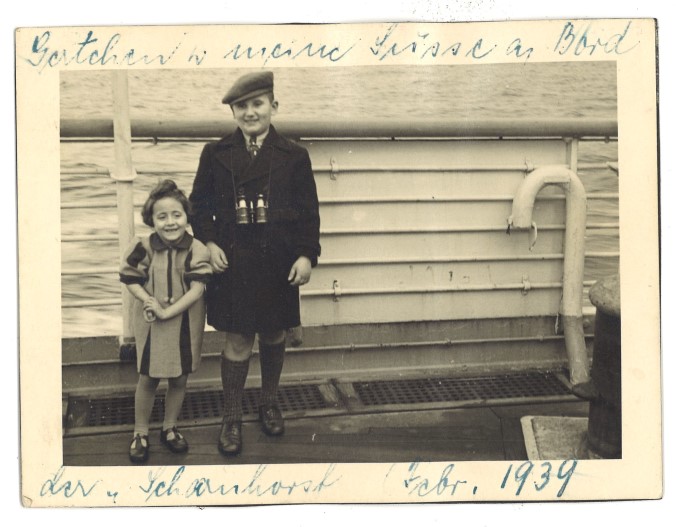
New exhibit spotlights the experience of ‘Shanghai Jews’
Explore a new Illinois Holocaust Museum and Education Center exhibit
Read more -

We’ll always have Paris… and Normandy:
This year remains special for tourists who cannot help but recognize two momentous celebrations: The 75th anniversaries of the D-Day and the liberation of Paris.
Read more
Organization is totally on trend right now. With books, TV shows, and online influencers (myself included) showcasing Pinterest-worthy spaces, you may feel the need to jump on board. By why are these neatly organized spaces making you feel a sense of calm whenever you see them? Why do we, as humans, crave order in our homes?
The positive mental effects of organizing
Clutter can be very stressful to our environment so when you have things that are organized effectively, you are going to have the opposite effect, which is calming! That is why you find yourself feeling such a high after you do a giant declutter and put everything away in an orderly fashion.
The art of organizing
How can you feel that calm all the time? Only keep items that bring you simcha , or joy! But how do you determine which items bring you joy? That is going to take some work.
I always tell my clients that they have to start by listening to their inner voice. That inner voice is what is going to tell you if you like something or not. If you use an item or are just holding onto it “just in case.”
That inner voice is going to be your guide to keeping only the things you love, cherish, or find useful. Everything else is considered clutter. And that clutter is weighing you down. Not physically, but mentally. Because that clutter is taking up space inside your head. Whether you know it or not. By removing the clutter, you are creating more order within your home. Which allows your brain to not feel stressed. It is a total win-win!
If you haven’t heard that inner voice or you are just too overwhelmed with all the stuff piling up, pick up an item. Any item. And ask yourself these questions:
Have you used or admired this item in the past year?
Would you purchase this exact item again?
Are you keeping this item out of guilt?
Do you want to handle this item again?
These questions are going to give you an honest answer about your things.
Once you have cleared the clutter, you can start organizing your items. Because it wouldn’t make much sense to organize clutter, right?!?!
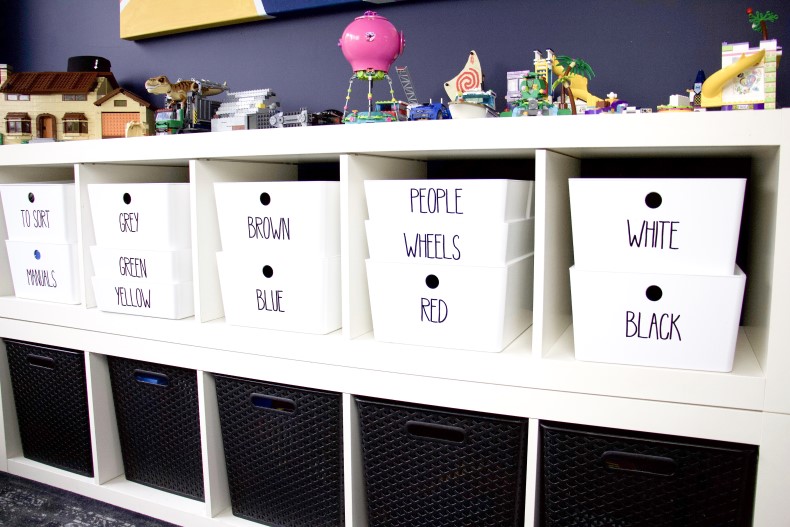
When you are organizing all the items you use, admire, enjoy, and cherish, make sure you group items with like items when storing. You don’t need fancy bins. Just store things like you would at a grocery store. That way you can find what you need in an orderly fashion. Plus, storing like items together helps you visually see what you have. Because you brain loves order and creating that helps it remember what you have and where.
So where can you start?
I get asked this question a lot, and I always suggest starting where you sleep. This means your nightstand, dressers, and closets. There is a lot of brain research that highlights how clutter can have a drastic effect on your sleep. Clearing that clutter can help you get a good night’s sleep, which will help with your decision-making, which will help you choose which items you want to keep in your home.
But don’t get discouraged if the decluttering process is taking you a while to get through. It is so important to truly focus on the items you want and not the other way around. Set a timer for 15 minutes every day to get through a pile. You will feel accomplished because you are taking small steps to tackle a large task!
Jessica Litman is the founder of The Organized Mama, a Chicago-based organizing and media company.
Other stories
-
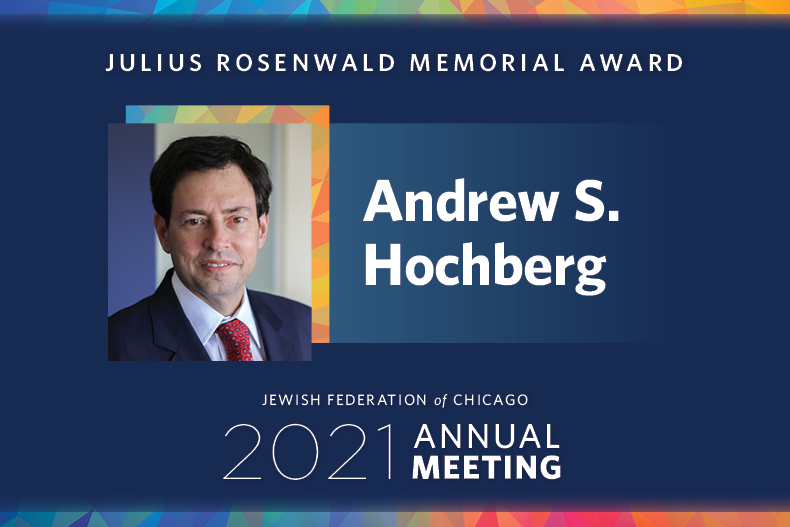
Meet Andrew S. Hochberg, 2021 Julius Rosenwald Memorial Award recipient
Celebrate Andy Hochberg at the virtual Annual Meeting on Sept. 14
Read more -
Two local teens win national recognition
Recipients of the annual Diller Teen Tikkun Olam Awards
Read more -
Celebrating six young award winners cultivating the community
Introducing young adult award winners
Read more
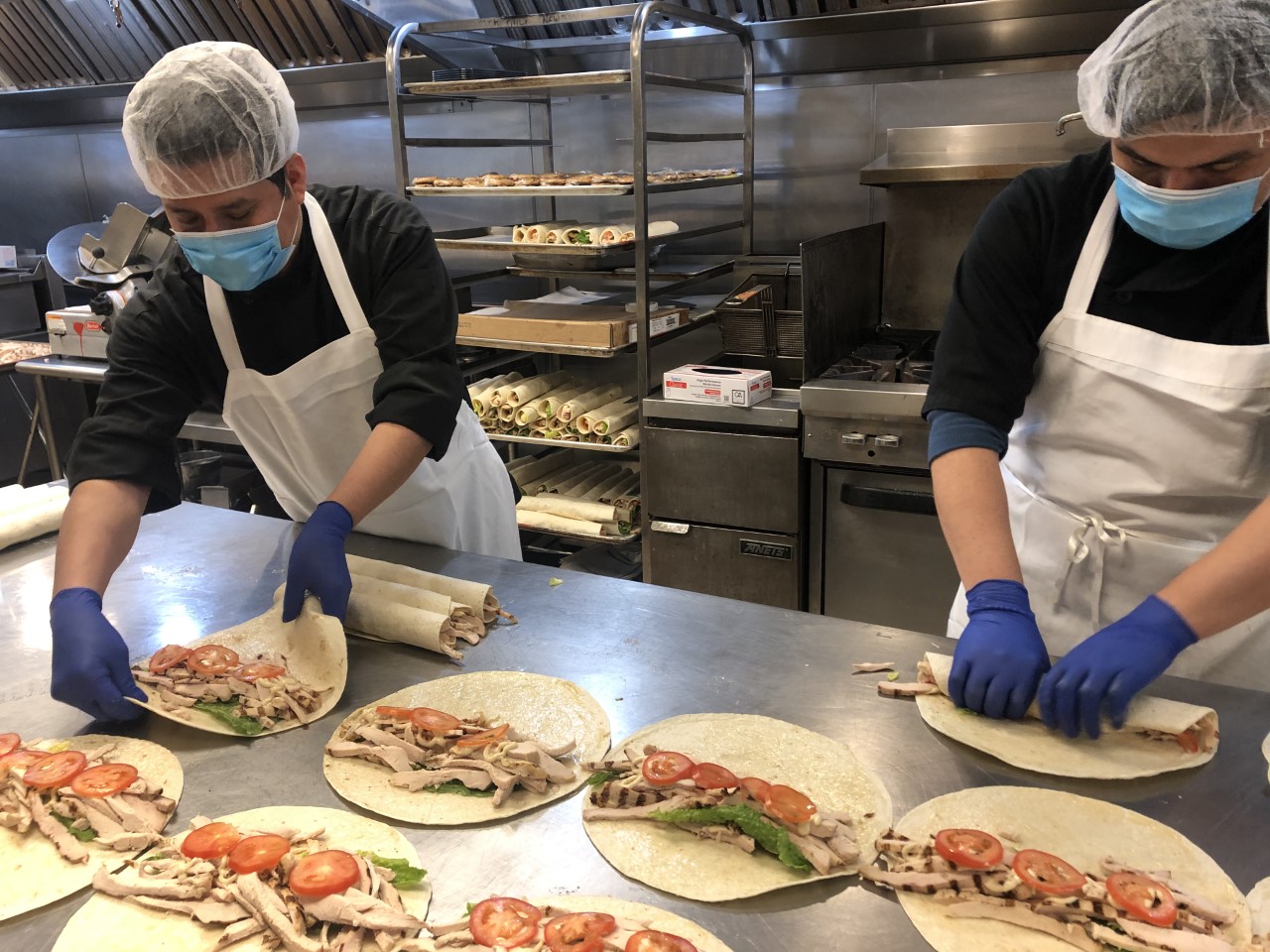
Kosher catering jobs for large gatherings are scarce when large gatherings themselves are not “kosher” during the pandemic. But the kosher caterers who serve Chicago have been resilient and creative.
“When event catering reached a standstill,” said Linda Neiman, president of Zelda’s Catering, “we had to act quickly and creatively,” to maintain their staff. “We also understood that people across the community were falling into sudden crises of their own.”
For years, Zelda’s has provided meals for the JUF Uptown Cafe, upwards of 18,000 annually. Since the pandemic prevented clients from visiting the Café, Zelda’s began packaging the clients’ meals to go. “We truly love the Cafe, and are proud of our partnership,” Neiman said.
Zelda’s has also provided holiday meals statewide through Chabad, participated in projects for synagogues, and launched two new anti-hunger partnerships. “Being able to multiply our charitable work during the pandemic, in ways that will persist after it, has been gratifying,” she said.
Zelda’s largest effort has been its introduction of At Your Table! restaurant-style take-out meals, “created by the same chefs, using the same proprietary recipes,” she said. At Your Table’s new website will allow for nationwide shipping.
Other kosher caterers have similarly retooled. “We have shifted to delivery and take-out,” noted Stephanie Harris, general manager of The Sandwich Club. “We have always done parties, weddings, and bar and bat mitzvahs. Now, we have made deliveries as far as Kenosha,” an hour away from its Skokie location.
“We have an updated menu. We added some new wraps, a new burger, and gluten-free items,” she said. “Plus, for the first time in 20 years, we built a patio. It adds 24 seats, at socially distant tables.”
In some cases, take-out menus became Shabbat-in-a-box options. Rabbi David Segal, of Goldman Segal Kosher Caterers, is proud of the variety of Shabbat boxes the company offers: “We started making Shabbat boxes, at first for 4, then for 2, now for 1. Some are bi-weekly, but we are working toward weekly. The cuisine changes every week; we have done Mexican, Chinese, and Southern Shabbat meals, for example.”
“We have about 250 people who we regularly deliver Shabbat boxes to,” he said. “This is a service to people who are shut in, both older people and younger families. We are trying to reinvent ourselves, but as we see more places opening up, we feel things are moving in a positive direction,” he added.
Michael Kirschner’s Starr Kosher Catering/Chicago Tailgators also provides Shabbat-in-a-box packages, often to those in need. They provide 100 deliveries twice a month, to clients of various organizations, he reported. “They can’t have them come in, to feed [their clients], so we deliver.” They provided similar meals for Purim, and will do the same for Passover.
Additionally, he said, “We have always done school lunches,” but now it’s one of the company’s few regular sources of income.
Yet another source is distribution of produce- specifically, that of lettuce. Because it can contain insects, lettuce must be meticulously checked to pass kosher certification. As this is a laborious process, Kirschner has-since the onset of the pandemic-had his mashgiach (kosher consultant) inspect lettuce for others. “We provide lettuce for a grocery store, three restaurants, and a wholesaler. And it’s a mitzvah we do for certain organizations.”
Kirschner is also sensitive to the impact the pandemic is having on his own customers: “The hardest part is when people have a simcha, and they just want to be with their friends and families.”
Still, he is hopeful about the impact of mass vaccinations. “Once they get the shots out, business will jump back,” he predicted, adding, “We need to get back to work.”
Chicago’s other kosher caterers are very much open for business and include Circle Chicago Catering, GR8 Event, Tables of Elegance, The Great Chicago Food & Beverage Company, and Shallots Bistro.
Other stories
-
Two local teens win national recognition
Recipients of the annual Diller Teen Tikkun Olam Awards
Read more -
Celebrating six young award winners cultivating the community
Introducing young adult award winners
Read more -
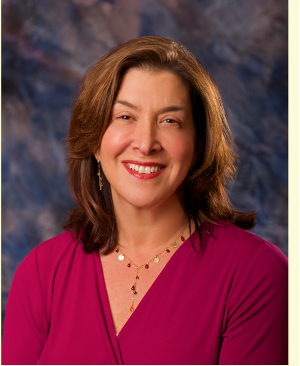
This Pesach none of us really need to ask, “Why is this night different from all other nights?'” In fact, if I focus on that, I feel heartbroken. “Let all who are hungry come and eat.” Not this year. Once again, we will not have the Seder we desire.
But if I only think about what is different these Seder nights, I will be miserable. So, this Pesach instead of speaking about why this night is different, I choose to focus on what is the same. What remains after so much has changed. And for me what remains, what has always remained for Jews, are the words. The words of our beloved Haggadah. The words that are so familiar, with many passages that we can recite by heart.
Our Haggadah is the ultimate book of hope. It is good to remember that almost all of it was composed during various periods in our history when Jews were certainly not free. Either they were under foreign rule in the Land of Israel or oppressed in the diaspora countries where they lived.
None of our ancestors lived with the freedom we have almost come to take for granted. We who are chafing from having our own freedom of movement curtailed for such a temporary amount of time could learn from the optimism of the Haggadah. The book is infused with such optimism. This year we are slaves, but certainly by this time next year we will be free.
This is what is the most inspirational message of the Haggadah: Bad times cannot, must not, will not last forever. Certainly, next year must be better than this year. And if it is not, well, there is always the year after. We will say “next year in Jerusalem” and say it over and over for 2,000 years until it becomes a reality. Jews are really good at playing the long game.
And what do we do while we wait? We tell the story of God’s greatness and God’s mercy. We remind ourselves that God is on the side of the lowly slave, not the most powerful ruler of the day. God is not on Pharaoh’s side. This is a revolutionary concept that changed the world.
Until the advent of modern history, rulers believed themselves to rule either by divine right or because they themselves were divine. Our Torah comes to revolutionize the world with the belief that God cares about the oppressed and will fight for them. And we are told if we want to be holy, we better do that too.
I will also try and remember this year that as we sing the popular Passover song “Dayenu,” that, indeed, it is enough. I have a lovely home. We have heat, hot water, and the ability to Zoom. While I will not be preparing a feast this year, we will have a lovely meal with plenty to eat. My husband and I will share the words of the Haggadah that are so deeply meaningful to both of us. We will probably shed a tear as we remember our deceased parents and what they did and said in Seder’s past just as we do every year. We will be grateful we have each other. We want so much more, but we have enough and for this we are grateful. Dayenu.
This year we will remember what is the same about this beloved holiday.
And I know we will sing.
Debra Newman Kamin is the rabbi of Am Yisrael, a Conservative Synagogue in Northfield.
Other stories
-

Mother’s Day, Father’s Day, and the Jewish way
Let us pause and consider what it means for us to truly honor our parents
Read more -
Each time we study Torah, we experience the revelation
The mystical tradition of Judaism that lifts up the number 600,000 from the Exodus
Read more -
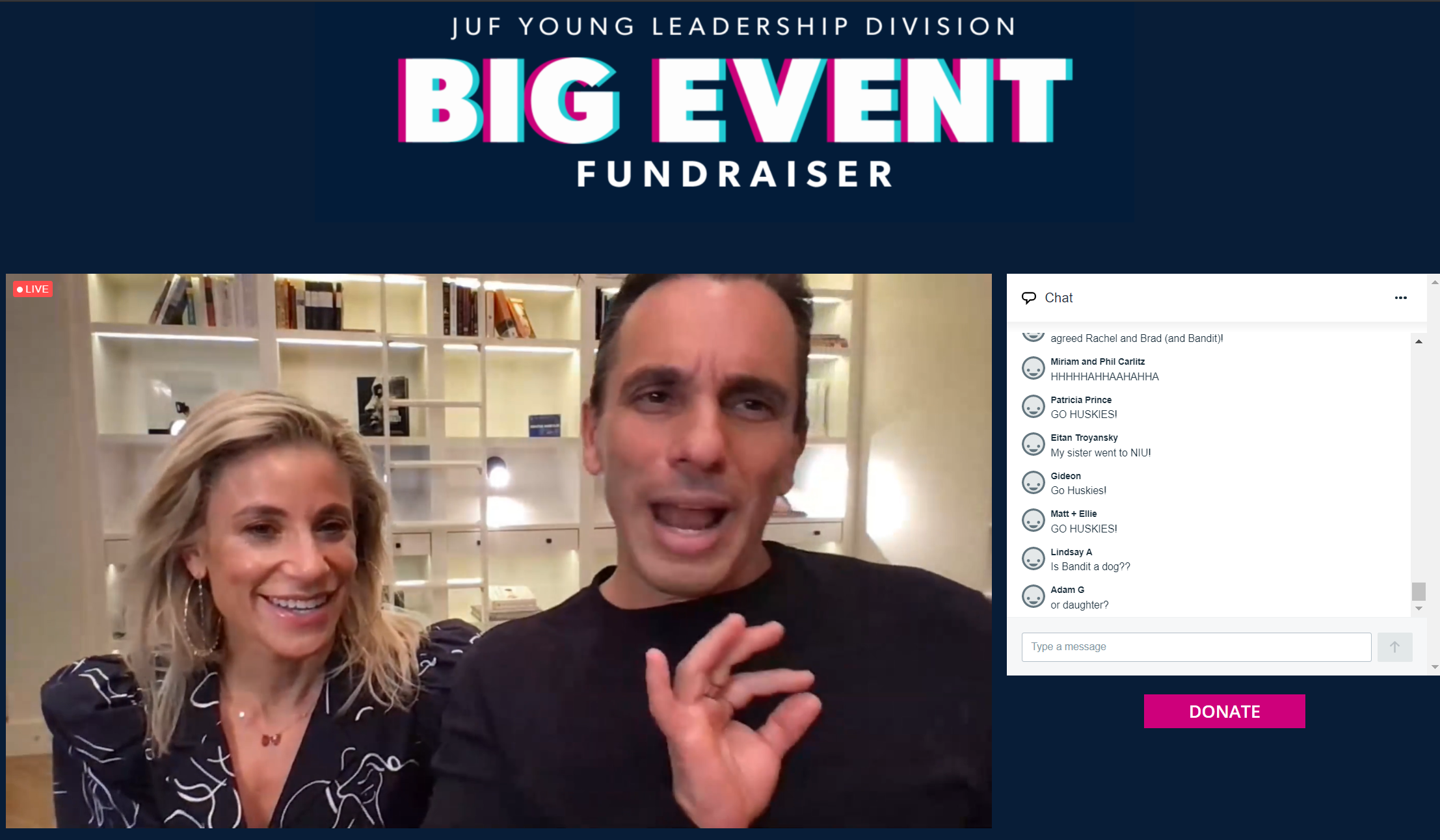
Comic Sebastian Maniscalco and wife, Lana Gomez, headline YLD Big Event Fundraiser
PAUL WIEDER
“Why Would You Do That?” “Aren’t You Embarrassed?” “You Bother Me.”
These aren’t insults– they are titles of comedy specials performed by Sebastian Maniscalco, who headlined this year’s JUF Young Leadership Division’s first-ever virtual Big Event Fundraiser in January. At the event, the Italian Catholic comedy star was interviewed by his Jewish wife, painter Lana Gomez.
Seven hundred accounts Zoomed into the show, but in many cases, small groups of friends and family watched together. Many participated from across the US- Maniscalco and his wife Zoomed from L.A. The evening-which garnered 950 donations-raised $130,000 for the 2021 JUF Annual Campaign, a sum enhanced by The Hineini Initiative, which matched every new gift and increase to the Annual Campaign.
DJ Matt Roan kicked off the evening. He was followed by a cocktail demo by mixologist Devin Kidner of The Hollow Leg- who taught viewers how make a “Sebast-GIN Martini” with the swag boxes the first 400 people to sign up received in the mail. Then came the wizardry of magician and mentalist Gary Ferrar. Maniscalco and Gomez headlined the show. After the main event, Maniscalco visited several Zoom break-out afterparties, some of which highlighted various community resources.
“We look forward to YLD’s Big Event Fundraiser- it’s the largest gathering of Jewish young adults in the country,” said Ali Karmin, 2021 YLD Campaign Chair. “It’s times like these- when we feel isolated and alone, when there are growing communal needs- that remind us of the very reasons JUF exists.”
“We missed the schmoozing, networking, learning, and hanging out-a lot,” YLD Board President Marc Karlinsky agreed. “But for JUF and YLD, the show has truly ‘gone on.’ We’ve moved programs and events online, created new programs, and kept people connected and engaged. The Big Event Fundraiser celebrates what this organization was designed to do. And we had an unforgettable time doing it!”
The pandemic has been very personal for Karmin. As a physician’s assistant in orthopedic surgery, she was assigned to cover a COVID unit. Seeing JUF offer meals to her and other front-line coworkers, she said, “I was blown away by the strength of the Jewish community. There are moments in every generation when the path we choose forges the way for generations to come. This is one of them.”
“Now that we’ve lived through a crisis, we know things can change at a moment’s notice,” Karlinsky added. “I’m so grateful to be a part of an organization that’s prepared, focused on providing for those in need, and here to bring us together for good- today and always. JUF has always been my community and an important part of who I am.”
Maniscalco showcased his usual wry mood. “I sold out Madison Square Garden [in the past] and now I’m doing comedy from my office-my career is really taking off,” he joked.
He also mentioned his career change “from comedian to principal” since his children began remote learning.
“Together, we’re running a B&B and a preschool,” Gomez said.
The comic couple reminisced about their 101-degree outdoor wedding and debated if an audiobook counts as “reading.” Arlington Heights native Maniscalco told of attending Career Day at Northern Illinois University in his silver formal suit, impressing no job recruiters, and so turning to comedy.
Maniscalco and Gomez spent much of the show interacting with the virtual crowd about their pets, fashion choices, room décor, and pandemic beards.
Maniscalco also talked about the prep work he put into the evening. “I have a degree in corporate communications, which translates right into Jewish fundraising,” he laughed. “I’ve been working my whole life for this night.”
To learn more about YLD and how to get involved, visit juf.org/yld.
Other stories
-
Two local teens win national recognition
Recipients of the annual Diller Teen Tikkun Olam Awards
Read more -
Celebrating six young award winners cultivating the community
Introducing young adult award winners
Read more -
Teens write, illustrate Holocaust book to connect past to future
Michelle Cohen
One Step Ahead of Danger: The Norman Salsitz Story is a tale of heroism, ingenuity, and survival during the Holocaust. It’s also written and illustrated by teenagers as part of the innovative A Book By Me program designed to teach tolerance and share the lessons of the Holocaust with a younger generation.
Deb Bowen, the Iowa-based founder of A Book By Me, started the project when she and her daughter went to listen to a survivor share their story in 2003. While at that event, three Holocaust survivors-all named Esther-lit candles, and “something just happened in my heart,” Bowen said. She formed a close bond with all three Esthers, who became like Jewish grandmas to her Christian family. When they shared their stories with her, Bowen-who worked in an impoverished school district- was inspired to get young people involved.
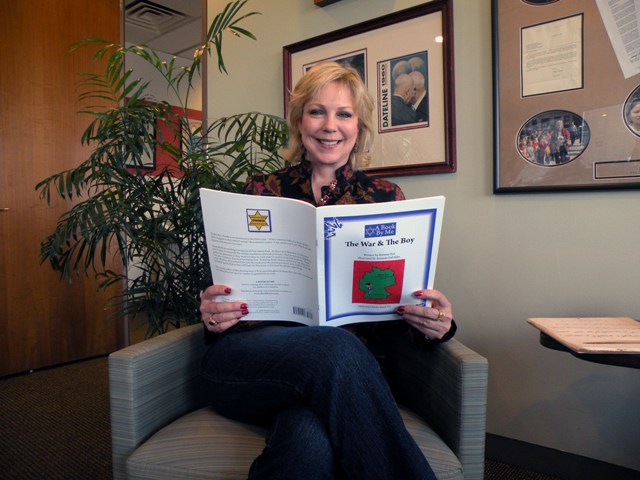
In addition to Holocaust stories, Bowen has expanded the A Book By Me program to include stories of other heroes and struggles for human rights. In addition to the newly-published One Step Ahead of Danger, two other A Book By Me books were created by Chicago-area students: Colours of Friendship in the Human Rights series, and The War and the Boy, another Holocaust story. In total, Bowen has facilitated the creation of over 90 books and connected students with a variety of modern heroes.
Norman Salsitz, the survivor and hero whose life story is the focus of One Step Ahead of Danger, grew up in a small town in Poland. He was forced into a Nazi labor camp at age 19 and met his wife, Amalie, while helping the Russian Engineer Corps prevent a bombing in Krakow. All of these moments are vividly described by teen author Natalie Ringel, Salsitz’s great-granddaughter who he never met.
Ringel, a Glenbrook native, interviewed Salsitz’ daughter and drafted the book over the course of two years. She also explored family records, Salsitz’ autobiography, and the more than 1,000 photographs he saved during the war.
The most challenging part of the writing process was to adapt “this huge, complex, dynamic story that does involve violence and racism and antisemitism, which are huge concepts for anyone to tackle,” into a children’s book,” Ringel said. Rather than trying to simplify the story, Ringel tried to plainly describe themes young readers could find in their own lives. For example, she describes Norman being ostracized in his hometown and hopes readers can connect this to times when they’ve felt left out.
Glencoe-based teen illustrator Jake Bloomberg, whose great-grandparents are also survivors, facilitated connections to the story through images. “It was really hard coming up with what to do to fit the scene,” he said, “but I liked being able to read the story and then illustrate what happened as I read it.” Using markers, reference photos, and his imagination, Bloomberg drew 10 pictures for the book, including Salsitz hiding in the forest and bargaining for his life with a Nazi officer.
At the time of creating the book, Ringel was a senior in high school and Bloomberg was in middle school. Both were connected to the project through Susan Ringel, an adult advisor on One Step Ahead of Danger.
“My father-in-law really had a connection with Norman, and I remember hearing a lot about him from my father-in-law, and hearing stories about what he endured,” she said. “I thought this is a story that should be shared with others. And I was very proud of what we accomplished with Jake and Natalie.”
To purchase the book, visit amzn.to/3clGUkW. For more information about A Book By Me, visit abookbyme.com.
Other stories
-
Two local teens win national recognition
Recipients of the annual Diller Teen Tikkun Olam Awards
Read more -
Celebrating six young award winners cultivating the community
Introducing young adult award winners
Read more -

Why is this Haggadah different than all other haggadot?
Because Mishkan HaSeder: A Passover Haggadah is a new exploration of the Exodus story punctuated by a diverse collection of poetry, by authors from Yehuda Amichai, Emma Lazarus, and Grace Paley to Seamus Heaney, Adrienne Rich, and Bertolt Brecht.
Published by the Central Conference of American Rabbis’ CCAR Press and dedicated in memory of Chicago’s Rabbi Herman Schaalman, Mishkan HaSeder is designed to become the Reform Movement’s new flagship Haggadah. The book, which is edited by Rabbi Hara E. Person and poet Jessica Greenbaum and illustrated by artist Tobi Kahn, combines age-old texts, fresh insights, and new translations by Rabbis Janet and Sheldon Marder.
Commentary by Rabbis Oren Hayon, Amy Scheinerman, and Chicago Sinai Congregation’s Rabbi Seth Limmer draws out the historic background of the Seder rituals and offers contemporary connections to the social justice issues of our day, building on the standard for inclusivity and diversity set by the previous CCAR Haggadah , The Open Door, in 2002.
The new Haggadah particularly shines a spotlight on the pivotal role of women in the Exodus story, including new readings–such as “The Four Daughters” and “A Contemporary Dayenu”–which bring to life the bittersweet experiences of Jewish women today.
Perhaps the most evocative feature of Mishkan HaSeder is its handling of The Four Questions, where participants are invited to select from a menu of questions, such as ” How can each of us actually work for the freedom of others? How can the company at this table work together for the freedom of others?”
Mishkan HaSeder follows the format of Mishkan T’filah and Mishkan HaNefesh, including transliteration, sublinear commentary, and poetic readings on facing pages. It will also be available as a digital ebook and a Visual T’filah presentation for screen-sharing or projection. Visit CCARPress.org .
Linda S. Haase is Senior Associate Vice President of Marketing Communications for the Jewish United Fund.
Other stories
-
Two local teens win national recognition
Recipients of the annual Diller Teen Tikkun Olam Awards
Read more -
Celebrating six young award winners cultivating the community
Introducing young adult award winners
Read more -
We make plans and God laughs. It looks like another Passover apart from family and friends in 2021. So, let us think with the benefit of hindsight about what we can do this year to make our seders meaningful for all our guests, both in-person and virtual.
The Seder has three basic objectives to consider. To have a successful one this year, a little advanced planning can make all the difference.
- Religious — The Seder is a theological exercise in memory. We are commanded to remember the Exodus from Egypt and God’s fulfillment of the promise to settle us in the land of Israel. We do that through an interactive storytelling experience using the same basic technology in the 21st century that we used in the 11th century: the Haggadah , the seder plate and accoutrements, special foods, and rituals.
- Communal — The Exodus from Egypt to Israel took 40 years to form a disparate catchment of slaves into a unified community. We gather around the Seder table as families and friends to reconnect with that community and recommit to each other every year.
- Social — The Seder celebrates and strengthens our social bonds as families and friends. It is an opportunity to mark the passing of time in a positive way by seeing the children grow and engage with the Seder each year, by family stories being retold every year, family recipes being set out again, and new customs and memories being formed as the family dynamic morphs over time.
The critical component to meeting all these objectives is active participation by everyone at the Seder. In our generation where our attention spans are short, it takes extra effort to engage everyone. Here are a few suggestions to keep in mind to help ensure a successful Seder this year in this time of plague.
- Reframe your perspective from being a Seder leader to a Seder host. Seder leaders often are tasked to “complete” the Seder in a valid way. A Seder host, though, can facilitate the Seder so that everyone contributes to the experience to make it a success rather than just an obligation. If this is your first time hosting a Seder because of the pandemic circumstances, ask an older family member or a friend who you know has experience doing it for advice on some dos and don’ts from their knowledge base.
- Recognize the changes in your Seder makeup this year and consider making a few changes to accommodate the differences. Because of the pandemic, many families are willing to pivot and experiment if their religious practice allows for it. If you are doing a Zoom Seder, you know most people have 60-90 minutes of attention before Zoom fatigue kicks in. There are excellent Haggadahs available that accommodate those attention spans and still cover all the religiously required steps.
- Remember that hosting a successful Seder is about the whole experience and not just the actual ceremony. Send family recipes around in advance for favorite foods so that those who are at different tables can still share common foods. If your usual guests are local but not able to join you, consider organizing a food swap for dinner items.
- Hosting a good event takes prep time. One of the pitfalls of Seders historically is that, because they are often led by the same people from year to year, they can become rote. If you want to make your Seder a success in a time when you cannot rely on old habits, be sure to carve out time in advance to think through the evening in detail.
God willing, this is the last year when we will have to intentionally separate at a time we long to gather. But for now, a little planning by the host — and some more active involvement by everyone attending –can turn last year’s one-off Seder experience into this year’s family memory. Happy Passover!
Rabbi Scott T. Aaron, Ph.D., is Associate Vice President for JUF Education.
Other stories
-
Two local teens win national recognition
Recipients of the annual Diller Teen Tikkun Olam Awards
Read more -
Celebrating six young award winners cultivating the community
Introducing young adult award winners
Read more -
One of five young adults in the Chicago area feels lonely and is having a tough time coping during the pandemic, according to a survey conducted in 2020 by the Brandeis Cohen Center for Modern Jewish Studies.
The 1,569 overall responses–of which 346 were young adults age 21-40–painted a picture of pandemic life. The survey confirmed what Jewish communal leaders have been hearing from national conversations: The young adult population is not coping as well as other age groups, is lonelier, and is less likely to feel part of a community, whether virtual or local. That was a call to action for the community.
The light in the darkness for many young adults was feeling connected to the Jewish community, both locally and worldwide. When the results showed that 75% of people felt more connected by having access to a virtual community, local organizations sprang into action to help keep their spirits afloat.
JUF’s Young Leadership Division started connecting people to resources, beginning with a JCFS Chicago support group for young adults who were furloughed. The group setting was helpful to the many people who expressed “concerns of loneliness, isolation, and not being able to be with family and friends,” said Lauren Silverman, YLD Senior Young Adult Engagement Associate. YLD has connected those seeking help with mental health, career counseling, and financial resources to the correct places.
“We’re trying to increase our community’s awareness of opportunities that exist and fill in the gaps in terms of programming,” Silverman said. “In the past, for young people who did need mental health support or career support, they weren’t turning to JUF or the Jewish community. Now that we’ve seen such increased numbers, we want to remind people that JUF and the Jewish community are supports that they can turn to.”
Other Jewish organizations like OneTable and Silverstein Base Hillel are stepping up to help young adults form social connections and take care of their mental health.
“Before COVID, we thought Shabbat dinner should include at least five people, and now we’ve lifted that restriction entirely,” said Al Rosenberg, OneTable’s Chief Strategy Officer. OneTable, which is designed to help young adults create a meaningful Shabbat practice, now offers options for hosting dinners with roommates, inviting people virtually, and attending socially distanced events. When asked, “How can I be part of the community while being alone?,” Rosenberg and others created materials for a Solo Shabbat.
“A lot of people are using the Solo Shabbat time to remind themselves that many other Jews use Friday night for Shabbat and they’re doing it in a community even when they’re alone,” Rosenberg said. In-between traditional prayers, participants are asked to brainstorm ideas for self-care, reflection, and plans to contact others. OneTable has also worked with the Blue Dove Foundation to create a broader mental health guide to “turn the Shabbat dinner table to a place of powerful conversation, cut the small talk, and create a community of mutual care.”
Rabbi Megan GoldMarche of Silverstein Base Hillel is also fostering a community of care. She has created cohort classes for individuals and couples and peer-facilitated chavurot (social groups) to “make a space where people feel like they have a community,” she said.
In addition to the social interaction and intellectual stimulation participants get from the meetings, GoldMarche checks in with people frequently, especially if they live alone. “I try to encourage people to be real and vulnerable if they’re having a hard day, to take time to talk to each other and look each other in the eye, and build human connections,” she said.
For these agencies and many more, YLD Director Elyse Saretsky offers a clear message: “The pandemic has taught us that we have a place in the mental health space. It’s important for us to reach young Jewish adults in our community not just for fun programs and educational opportunities, but also to help them when they need support.”
For more information, visitbrandeis.edu/cmjs/research/resilient-communities/index.html.
Other stories
-
Two local teens win national recognition
Recipients of the annual Diller Teen Tikkun Olam Awards
Read more -
Celebrating six young award winners cultivating the community
Introducing young adult award winners
Read more -