In just two days this past June, teens fixed up the garden at an agency for victims of domestic violence, sorted school supplies for needy kids, and bundled boxes of donated books.
These teens participated in JUF’s Mini Camp TOV, a two-day mini-version of the weeklong Camp TOV. These programs take Jewish teens around Chicagoland to several agencies so they can participate in a variety of hands-on volunteering projects.
“TOV” stands for “Tikkun Olam Volunteers”; “tov” is also the Hebrew word for “good.” And that’s what it’s all about: good teens doing good deeds for their community.
In Mini Camp TOV, the teens started each day with ice-breaker activities and discussed the Jewish ideal of tikkun olam- repairing the world through acts of kindness.
The teens went to Sarah’s Inn, an agency that provides services for victims of domestic violence. The teens planted, weeded, and painted the fences in their backyard area. “I really liked going to Sarah’s Inn and getting to paint the fence,” said Eve, a Camp TOV participant, “and getting to do something that we normally wouldn’t learn about or do in school.”
The following day, the campers went to The ARK, to sort school donations, and then to Bernie’s Book Bank, where they sorted book donations for at-risk youth in preschool through sixth grade.
Jared, another particapant, found this to be very gratifying work. “My favorite part about Camp TOV was helping people who are less fortunate than me,” he said. “It was really nice to pack up school supplies or books for kids. I would like to continue volunteering at Camp TOV by going to the ARK and Bernie’s Book Bank to keep packaging books and keep helping kids.”
Eve agreed, “Even what you might think to be a small thing that you are doing can really impact someone in a big way.”
Each day ended with campers talking about their projects and their significance, and how they reacted to it. And all day, every day, they interacted with each other, building new friendships while making the world a little brighter.
To learn more about Mini Camp TOV, visit juf.org/teens/TOV_MiniCamp.aspx .
Other stories
-
Meet Andrew S. Hochberg, 2021 Julius Rosenwald Memorial Award recipient
Celebrate Andy Hochberg at the virtual Annual Meeting on Sept. 14
Read more -
Two local teens win national recognition
Recipients of the annual Diller Teen Tikkun Olam Awards
Read more -
Celebrating six young award winners cultivating the community
Introducing young adult award winners
Read more
Diller Teen Fellows is a 15-month fellowship for high schoolers. Active in 22 communities worldwide, it partners with JUF in Chicago.
The Diller Teen Fellows program focuses on leadership, Jewish identity, Israel, and social justice. Through diverse activities and discussions, I have grown to appreciate my Jewish identity and understand its significance in every aspect of my life. But more than helping me grow as an individual, Diller is a program that creates a family from strangers.
My first Shabbaton -or weekend retreat-as a Diller Teen Fellow is an experience that I will never forget. My favorite memory was an activity we did involving glow sticks.
We all came to the Shabbaton from different backgrounds and we barely knew each other. In addition to learning about leadership and celebrating Shabbat, we also spent the weekend becoming a unified group.
To close this fantastic weekend, we summed up the experience with the perfect final activity. In completely darkness, each fellow was given two glow sticks. We were asked a simple question on a personal topic with the intention of letting us open our minds and share our hearts with each other in a safe space. When we were ready to respond, we each cracked our glow stick to share our answer.
As each person lit their glow stick, the room grew brighter and we became each other’s diaries. This allowed us to take our bonds to a deeper level and expand our friendships beyond expectations. I am forever grateful for this unique opportunity and am eager to explore Israel with my Diller family this summer!
Other stories
-
Meet Andrew S. Hochberg, 2021 Julius Rosenwald Memorial Award recipient
Celebrate Andy Hochberg at the virtual Annual Meeting on Sept. 14
Read more -
Two local teens win national recognition
Recipients of the annual Diller Teen Tikkun Olam Awards
Read more -
Celebrating six young award winners cultivating the community
Introducing young adult award winners
Read more
Advancing and enhancing innovative and effective Jewish educational programming is the goal of Best Practices in Jewish Education grants just announced by the Community Foundation for Jewish Education (CFJE). A support foundation of JUF, CFJE is distributing more than $166,000 among 13 institutions, including 10 congregations in 2015. The grants address the increased, and growing, desire for Jewish learning and knowledge in the Chicago area.
“I am heartened by the very range of our grant recipients,” said Debbie Berman, chair of the CJFE Board. “Their diversity is matched by the variety of the projects for which they are receiving grants, each one unique in its approach to convey fundamental Jewish knowledge and values.”
“These grants help congregational and Jewish early childhood education programs in our community build on what they are already doing well,” said Rabbi Scott Aaron, Ph.D., CFJE’s executive director. “These programs are working to provide good Jewish educational experiences to their students, but too often lack sufficient funds to make a good program better or ensure it reaches more people. While CFJE is committed to spurring innovation in Jewish education to meet the changing needs of our kids, part of CFJE’s mission is to help facilitate incremental enhancements in educational institutions that are looking to improve upon what they do well for their students rather than make major changes to how they do it.”
The grants serve to advance and expand existing educational offerings. Oak Park Temple is receiving $20,000 for their weekly sixth-grade family class. Akiba-Schechter Jewish Day School in Hyde Park is receiving $9,100 to deepen their staff competency in the Reggio Emilia approach for its preschool. Beth Shalom B’nai Zaken Ethiopian Hebrew Congregation in Chicago is receiving $15,000 to expand its religious school. Congregation B’nai Tikvah in Deerfield is receiving $5,250 for a program called “Badges of Jewish Living and Learning” to expand their early primary age educational offerings. And Congregation Or Shalom of Lake County, in Vernon Hills, is receiving $20,000 to expand their Family School through a program called “Beyond the Classroom.”
Some of grants focus on Hebrew-language courses. Temple Sholom of Chicago is receiving $2,500 for a Hebrew curriculum pilot project. Temple Jeremiah in Northfield is receiving $20,000 for a class called “Hebrew Through Movement” that will also serve three other congregations. And the JCC Chicago system is receiving $10,000 for a Hebrew-immersion weekend for teens.
Other grants focus on arts education. Shir Hadash Reconstructionist Synagogue in Wheeling is receiving $8,000 for a Jewish music-education project. Kol Hadash Humanistic Congregation in Lincolnshire is receiving $6,390 to further integrate Jewish art and artists in its efforts. And North Shore Congregation Israel in Glencoe is receiving $20,000 for the visual arts track of its school.
One of the grants serves to bolster the teachers; the Bureau of Jewish Education is receiving $20,000 for professional development programs, including the KickStart conference for all congregational school and early childhood teachers. And Congregation Beth Judea in Long Grove is receiving $10,000 to expand Shabbatonim, weekend youth retreats filled with learning, prayer, and socializing.
For more information, about CFJE and its Best Practices in Jewish Education grants, contact Scott Aaron at (312) 673-3267 or [email protected].
Other stories
-
Meet Andrew S. Hochberg, 2021 Julius Rosenwald Memorial Award recipient
Celebrate Andy Hochberg at the virtual Annual Meeting on Sept. 14
Read more -
Two local teens win national recognition
Recipients of the annual Diller Teen Tikkun Olam Awards
Read more -
Celebrating six young award winners cultivating the community
Introducing young adult award winners
Read more
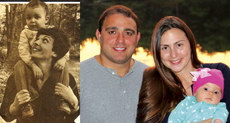
In June, 22 Russian-speaking Jewish families with children gathered at the JCC Perlstein Resort in Wisconsin for the third annual JUF Russian Jewish Division’s (RJD) Russian Family Retreat.
Led by Vicky Glikin, the Russian-speaking cantor of Congregation Solel of Highland Park, and Anna Gorbikoff, a Jewish educator and RJD board member, the retreat was a way for these families to get away from the daily hustle, relax, and connect with other families with a similar heritage and shared immigrant background and experiences. The families enjoyed collectively celebrating Shabbat, learning blessings and songs, a bonfire with s’mores, guitar, and Russian songs, Maccabia mini-games led by Camp Chi counselors, boat rides, and many
more activities.
For Gene Eydelman, a young father, it wasn’t the first time at Perlstein. Eydelman and his family participated at the first Russian Family Weekend in 1982, when Eydelman was just two years old. Organized by JCC and supported by JUF, the retreat in 1982 brought 108 new immigrants-Jewish men, women and children-to explore American Jewish culture. And now, 33 years later, Eydelman and his wife, Inessa, are bringing their 3-month old daughter to her first Russian Family Retreat to continue the tradition and celebrate Jewish life.
“It was a wonderful experience to be able to spend a beautiful weekend at the Perlstein resort this June,” Eydelman shared. “Although my daughter is only 3 months old, it is very important for Inessa and I to connect with other young Russian Jewish families. I want our child to understand the uniqueness of our heritage.” .
JUF’s Russian Jewish Division (RJD) is a community of young professionals and young families from the Former Soviet Union background. RJD’s main mission is to integrate Russian-speaking Jewish population into the greater Chicago Jewish community. RJD serves as a resource for this population and engages the community by providing tailored programs and events.
Russian Jewish Division is sponsored by the Genesis Philanthropy Group.
For more information visit www.juf.org/rjd .
Genia Kovelman is the Director of Russian Jewish Division at the Jewish United Fund of Metropolitan Chicago.
Other stories
-
Meet Andrew S. Hochberg, 2021 Julius Rosenwald Memorial Award recipient
Celebrate Andy Hochberg at the virtual Annual Meeting on Sept. 14
Read more -
Two local teens win national recognition
Recipients of the annual Diller Teen Tikkun Olam Awards
Read more -
Celebrating six young award winners cultivating the community
Introducing young adult award winners
Read more
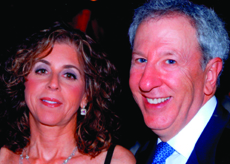
For first time, Chicago Volunteer Legal Services awards husband and wife team
JESSICA HOCHBERG
Ted Jadwin and Ellen Morris were honored for their outstanding service to the JUF Community Legal Services (JCLS) program. The couple received the Distinguished Service Award from Chicago Volunteer Legal Services in December, the first time a husband and wife received this distinction jointly.
“They are committed and passionate about providing pro bono legal services to the Chicago area’s underserved population,” said Sima Blue, JCLS clinic coordinator.
Jadwin and Morris first joined the clinic when it was under the auspices of the American Jewish Congress. In 2007, AJC faced budgetary hurdles following the Madoff scandal, and left the Chicago area. Jadwin and Morris realized that this was exactly when the services to the underserved were most critical. In 2008, they determined that the clinic should continue to serve the Jewish community, The Generations Fund-Morris’ family foundation of which both Jadwin and Morris are members-provided the seed funding for the clinic to be housed at JUF. Jadwin, together with Steven Baron, the clinic chair of the legal clinic, negotiated the terms and in 2009, the JUF Community Legal Services was born.
Jadwin worked in the corporate sector for 30 years as a real estate attorney, including 19 as a partner of the firm for D’Ancona and Pflaum. After leaving the firm in 2003, he became general counsel for Trizec Properties, a real estate investment trust (REIT). In 2006, Jadwin started his legal counseling practice and began his pro bono work with AJC, specializing in real estate cases. “Philanthropy is a principle that is woven into Ted’s family tapestry across several generations,” says Blue. Jadwin is the great grandson of Bernard Horwich, the first president of the Federated Jewish Charities, and the namesake of Bernard Horwich JCC.
Morris has a general practice and concentrates in juvenile law and real estate. Working for many years as a staunch and tenacious advocate for clients’ rights, she is a champion of the underdog. Through her own practice, she is accustomed to clients with financial struggles. It is this experience that makes her a sought after and valued attorney at JCLS. “We have a deep commitment to serving the Jewish community and taking care of our own. In our lives, we feel extraordinarily privileged and fortunate, and it’s important to us to assist the most vulnerable among us who would otherwise not receive legal representation,” Jadwin and Morris said when describing the importance of the legal clinic and helping others.
They have continued to provide crucial financial support to the clinic. Blue said, “Ted and Ellen have championed our program and remain among its greatest supporters both professionally and philanthropically.”
Attorneys who work for the clinic are volunteers with diverse legal backgrounds who supply pro bono legal assistance in civil matters. Cases include housing issues, employment problems, wills, public aid, predatory lending, family law, and landlord-tenant conflicts. The clinic currently has 121 active volunteer attorneys, representing a growth of more than 300 percent since JUF took over the clinic in 2009. n
JCLS is actively recruiting attorneys to take on the backlog of cases. If interested, contact (847) 568-1525 or email [email protected].
Other stories
-
Meet Andrew S. Hochberg, 2021 Julius Rosenwald Memorial Award recipient
Celebrate Andy Hochberg at the virtual Annual Meeting on Sept. 14
Read more -
Two local teens win national recognition
Recipients of the annual Diller Teen Tikkun Olam Awards
Read more -
Celebrating six young award winners cultivating the community
Introducing young adult award winners
Read more
Other stories
-
Local campus administrators convene on hate speech, bias
JUF and ADL brought together 17 student safety, diversity and inclusion and student affairs administrators and Hillel representatives from various Illinois campuses to discusses issues of hate speech and bias.
Read more -
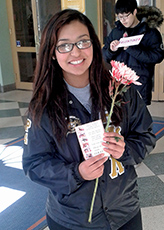
Engaging students about Israel on campus
Too often we hear about difficulties facing Jewish college students on Illinois campus, but to focus solely on the politics gives only one piece of the complex narrative that is Jewish life on campus.
Read more -
Hillel International launches fellowship initiative to train young Jewish professionals
The Springboard Fellowship will train cohorts of young Jewish professionals in highly-valued skillsets and place them at local Hillel campuses for two years.
Read more
It’s a great time to be a Jewish teen in Chicago. Vibrant programs, unique opportunities to engage and learn, and community collaboration mean that there is something for everyone. To help teens and families forge their own Jewish paths, JUF has redesigned its website for teens, making it mobile- and tablet-friendly, and turning it into an online hub for Jewish teen programs.
The mission of Teens @ JUF is to connect Chicagoland Jewish teens to meaningful experiences, new friendships, and exciting ways to make a difference in the community.
The new site has three main sections. The first is “Our Programs,” which has information about JUF’s unique, niche programs on a variety of topics to fit your interests. What do you like to do- are you a writer or a planner or a traveler-or do you like to get your hands dirty? Whether you’re interested in leadership development, volunteering, Israel advocacy, or philanthropy, there is a program for you. In this section, you can find out more about TOV Teens Volunteering, Diller Teen Fellows, Research Training Internship, Voices: the Chicago Jewish Teen Foundation, and Write On for Israel.
The “Israel, Camp & Travel” section connects teens to new worlds of Jewish values, culture, and traditions. Learn more about day and overnight camps, Jewish travel programs around the country, and of course Israel! This is also where parents can find information about the grants and scholarships that can help teens get there.
The “Community” section connects teens to youth movements, clubs, and other organizations that offer vibrant, exciting Jewish programs throughout the year. Here teens can “shop” for programs from across the religious spectrum that provide even more fun, exploration, and friends. This section also provides updates on JUF’s teen leadership board, the Jewish Teen Alliance of Chicago (JTAC). JTAC brings together teens from various youth groups and organizations to serve as community leaders and advisors. JTAC teens help to plan exciting, community-wide programs such as J-Serve and Israel Solidarity Day.
Teens @ JUF has updates on all upcoming programs in a blog called “The Latest.” Teens who want to showcase their projects or writing can also submit blog posts to [email protected].
The site also has a downloadable “Guide to Making Mitzvot Part of Your Bar or Bat Mitzvah.” It’s packed full of ways to put the “mitzvah” back into your bar or bat mitzvah- ideas for collection drives, volunteering, fundraising, socializing, and helping people who really need it. This guide is updated each year and specific projects will be highlighted in the coming months.
If you are a teen-or the parent or grandparent or relative or friend of a teen-discover the whole world of awesome Jewish experiences waiting for you at Teens @ JUF. Find us at juf.org/teens. See you there!
Other stories
-
Meet Andrew S. Hochberg, 2021 Julius Rosenwald Memorial Award recipient
Celebrate Andy Hochberg at the virtual Annual Meeting on Sept. 14
Read more -
Two local teens win national recognition
Recipients of the annual Diller Teen Tikkun Olam Awards
Read more -
Celebrating six young award winners cultivating the community
Introducing young adult award winners
Read more
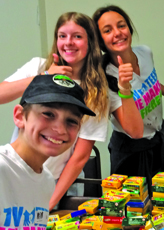
JUF has a number of resources for teens of Bar and Bat Mitzvah age! Most can be found on our website, www.juf.org/teens. A few highlights include:
• JUF helps make Israel Experiences affordable and there are several programs that correspond with Bar/Bat Mitzvah age, including Gift of Israel , a savings account for Israel experience trips, and the Bar/Bat Mitzvah Israel Experience Certificate . SKIP participants can still pay in this year as well!
• JUF provides campscholarships to 10 Midwestern Jewish overnight camps and first-time camper grants for Jewish overnight camps around North America for this age group.
• The JUF B’nai Mitzvah Tikkun Olam Manual (available on the JUF teen page) is a great first step in brainstorming mitzvah projects. Teens who want to volunteer in groups can do so through Camp TOV , Mini Camp TOV , and monthly teen volunteering programs.
• Ta’am Yisrael is a fantastic way for eigth graders to experience Israel for the first time with their peers. Seventh grade is the right time to start thinking about this phenomenal community trip!
• Most local youth movements, including BBYO , NCSY , NFTY and USY , offer special programming for sixth, sevent, and eigth graders. Links to each movement are on the Teens @ JUF website.
Other stories
-
Meet Andrew S. Hochberg, 2021 Julius Rosenwald Memorial Award recipient
Celebrate Andy Hochberg at the virtual Annual Meeting on Sept. 14
Read more -
Two local teens win national recognition
Recipients of the annual Diller Teen Tikkun Olam Awards
Read more -
Celebrating six young award winners cultivating the community
Introducing young adult award winners
Read more
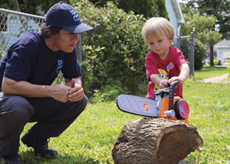
On June 22, a tornado destroyed homes and businesses in Coal City-population 5,500. Nearly 10 people were injured; however-miraculously-no lives were lost.
Since the tornado struck, thousands of volunteers have traveled to the area, donating time and materials to assist with cleaning up and rebuilding the community.
Among them has been a seven-member IsraAID team, traveling nearly 10,000 kilometers-about 6,200 miles-from Israel to help Coal City homeowners gut and fix their ruined homes.
The team arrived in Coal City on July 3 for a 15-day mission. They were housed and fed at Coal City High School, and equipment was provided so team members could focus on the job at hand.
At barely two weeks since the tornado hit the town, the devastation seemed overwhelming.
“Everything was messed up,” said team leader Jonathon Helmes. “Some houses don’t have a roof anymore. Some are completely destroyed.”
The team’s first efforts focused on a damaged home. The family had moved in just days before the tornado. Their son, who was turning 3, had lost most of his toys.
“We have pretty much been doing everything from cleaning up, taking trees down and cutting them up. Anything we can do to help the people who are here,” Helmes said.
The team also helped celebrate the little boy’s birthday. He received a toy chainsaw and immediately went to work “sawing” a log with one of his new Israeli friends.
“It was nice to see this little boy happy, celebrating his birthday,” Helmes said.
IsraAID is an Israeli non-profit, non-governmental organization that provides disaster relief around the world.
“We have a pool of several dozen volunteers for global professional deployment,” said Shachar Zahavi, IsraAID founding director. The organization has brought disaster relief to nearly 30 countries over the past decade. In the United States, IsraAID sent teams to provide assistance after Hurricane Katrina in 2005, Superstorm Sandy in 2012, and the Oklahoma tornadoes in 2013.
IsraAID’s volunteers include professional medics, search and rescue squads, post-trauma experts, and community mobilizers. Partner organizations like JUF provide crucial financial support.
In Coal City, the IsraAID team collaborated with volunteers from Team Rubicon, a similar organization of U.S. military veterans using their specialized skills and experiences to deploy emergency response teams for disaster relief.
It was Helmes’ first mission to the United States, and he said appreciated the spirit of cooperation.
“Staying in communities and working with the people is the best way to know a country,” he said. “It’s so nice to see people willing to help.” n
For more information, visit www.israAID.co.il .
JUF is a partner with IsraAID.
Other stories
-
Meet Andrew S. Hochberg, 2021 Julius Rosenwald Memorial Award recipient
Celebrate Andy Hochberg at the virtual Annual Meeting on Sept. 14
Read more -
Two local teens win national recognition
Recipients of the annual Diller Teen Tikkun Olam Awards
Read more -
Celebrating six young award winners cultivating the community
Introducing young adult award winners
Read more
Continued cuts to health and human services ultimately will cost the state more, not less, JUF leaders told Gov. Bruce Rauner during a private July 23 meeting.
The session continued a conversation begun last September, during the gubernatorial campaign. JUF President Steven Nasatir said he and those in the group told the governor that further funding reductions will lead to increased nursing home placements, emergency room visits, incarceration rates, special education services, and the like.
JUF supports one of the largest social service networks in the state, and has long partnered with the state in providing a wide range of services. Nasatir raised concerns about the potential costs and impact of further reductions on JUF’s partner agencies.
In April, JUF brought the same message to leaders of the General Assembly in meetings with House Speaker Michael Madigan, Senate President John Cullerton, Senate Republican leader Christine Radogno, and House Republican leader Jim Durkin.
The group that met with the governor also included JUF board and Government Affairs Committee leaders Bill Silverstein, David Golder, Peter Friedman and Steve Greenbaum. As the meeting concluded, Golder, who chairs the GAC, asked for opportunities for JUF to have candid dialogue with administration officials proposing policy changes.
Other stories
-
Meet Andrew S. Hochberg, 2021 Julius Rosenwald Memorial Award recipient
Celebrate Andy Hochberg at the virtual Annual Meeting on Sept. 14
Read more -
Two local teens win national recognition
Recipients of the annual Diller Teen Tikkun Olam Awards
Read more -
Celebrating six young award winners cultivating the community
Introducing young adult award winners
Read more