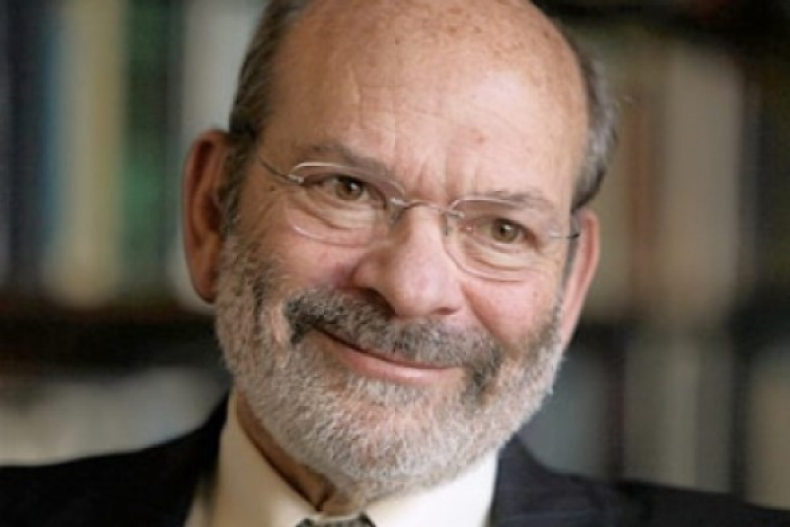
Rabbi Dr. Peter S. Knobel died Aug. 20 in Los Angeles, two weeks after suffering a massive heart attack. He was 76.
Rabbi Rick Jacobs, President of the Union for Reform Judaism, wrote this of his friend and colleague: “Who among us was not inspired by the way he combined serious Jewish learning with unbridled menschlichkeit –simultaneously speaking prophetic truth to power on critical issues facing the U.S., Israel, and the world?”
For much of his career, Knobel was the Senior Rabbi of Beth Emet The Free Synagogue in Evanston. More recently, he had served as rabbi emeritus at Beth Emet and as the Interim Senior Rabbi of Chicago’s Temple Sholom and Temple Judea in Coral Gables.
In addition to his congregational responsibilities, Rabbi Knobel served in leadership roles in the Reform movement in Chicago and on a national scale. He was a past president of the Central Conference of American Rabbis (CCAR), the Chicago Board of Rabbis, the Chicago Association of Reform Rabbis, and he served on the JUF Board of Directors.
He was a teacher to thousands. Knobel taught extensively at several colleges–including Hebrew Union College-Jewish Institute of Religion and Spertus Institute for Jewish Learning and Leadership .
Knobel authored and edited numerous articles and publications in the areas of Jewish Bioethics, Liturgy, and Zionist Thought and is the editor of Gates of the Seasons: A Guide for the Jewish New Year .
He was married to his wife, Elaine, for more than 50 years and they had two sons and six grandchildren. After the birth of each of his grandchildren, he wrote each one a letter, which he shared with his congregants on the High Holidays.
In one letter, he discusses mortality and using our limited time for good: “One of the quotations which rabbis repeat most often is repent on the day before your death. Since we do not know when we will die, each new day is the time for change. Most of us will not change radically, but if we can add each year at least one new mitzvah, the accumulated personal, family, and communal change will be significant.”
Other stories
-

Two local teens win national recognition
Recipients of the annual Diller Teen Tikkun Olam Awards
Read more -

Celebrating six young award winners cultivating the community
Introducing young adult award winners
Read more -