Sinai Health System provides life-saving genetic counseling to communities on Chicago’s West Side
Women with certain genetic mutations have up to a 78 percent increase in breast cancer risk.
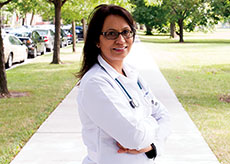
By the time Dr. Pam Khosla, chief of Hematology and Oncology at Mount Sinai Hospital, sees women with breast cancer, many have such advanced disease that their odds of survival are slim.
Chances are they’ve never have had a mammogram or regularly see a primary-care physician. The lack of preventative screening for breast cancer is especially worrisome in women of color. There is evidence that Latinas with a family history of breast cancer may have a higher prevalence of the genetic mutations that greatly increase the likelihood of developing breast and ovarian cancer. Other emerging research shows that black women may develop a more aggressive form of breast cancer, necessitating that the cancer is detected and treated very early.
If women are aware that they are at increased risk for breast and other cancers, however, they can do something about it, including preventing it from ever occurring. About 10 percent of breast cancer and 10 percent of ovarian cancer in the general population is hereditary, arising from a genetic mutation passed on by a parent. A woman who has one or more relatives with breast and ovarian cancer, or who is of Ashkenazi Jewish decent, has a much greater risk of carrying a harmful mutation, such as on the BRACA1 or BRACA2 gene. Khosla offers genetic testing to patients at high risk of cancer to determine if they will carry gene mutations that will predispose them to several forms of cancers.
After learning that the lump in her breast was cancerous, Guadalupe Buenrostro, 34, discovered from her mother that three family members also had breast or ovarian cancer. Since Buenrostro was so young and had a strong family history of cancer, Khosla urged her and her 37-year-old sister to have genetic testing. When the tests showed that both Buenrostro women carried a genetic mutation that increased their odds of getting cancer, Khosla helped them sort through their options. “At our comprehensive breast center, we spend a considerable amount of time educating patients about their test results and preparing them psychologically and emotionally so we can make decisions together about managing their risk of cancer,” Khosla said.
Buenrostro decided to have a double mastectomy, to eliminate the tumor in one breast, and to prevent cancer from striking the other breast, as well as removal of her ovaries. Her sister also had surgery to reduce her risk of cancer.
Genetic testing gives women more control over their lives and an opportunity to advocate for their health, said Khosla. Many begin seeing a primary care physician for the first time and getting regular preventative screenings, such as colonoscopies, while convincing their daughters and other relatives to do the same. “In many cases, we’re able to dramatically change women’s individual stories and we become partners for life with them, which is very gratifying,” Khosla said.
This article originally appeared in the Sinai Health System 2015 annual report.
Mount Sinai Hospital is a partner with the Jewish United Fund in serving our community.
Anita Slomski is a freelance medical writer who regularly contributes to journals such as “JAMA” and the biomedical magazine “Proto: Dispatches from the Frontiers of Medicine.”
Other stories
-

Meet Andrew S. Hochberg, 2021 Julius Rosenwald Memorial Award recipient
Celebrate Andy Hochberg at the virtual Annual Meeting on Sept. 14
Read more -

Two local teens win national recognition
Recipients of the annual Diller Teen Tikkun Olam Awards
Read more -

Celebrating six young award winners cultivating the community
Introducing young adult award winners
Read more