You can’t find anyone today who knows that they’re a child of ancient Athens. What a pity! Athens gave us democracy. We are about to begin Pesach. We will celebrate Pesach the way it was celebrated more than 3,000 years ago when our grandparents were about to leave slavery in Mitzrayim (Egypt). They sat down to a Seder meal of matzoh and maror (bitter vegetables).
The first supper ensured that more than 3,000 years later we, their grandchildren, would be doing the same thing on the same night. What guaranteed that? We celebrated the Seder despite having been exiled in 586 BCE by the Babylonians and by the Romans in 70 CE. The Jewish people were the only landless people–in the worlds of Christendom for 2,000 years and Islam for about 1,400 years–who thrived.
How did that happen? The first supper, the Seder in Egypt, established the family as the foundation of Jewish civilization. At the first supper, on the night of liberation from slavery, nobody marched through the streets of ancient Egypt celebrating victory over the slave masters. On that first night of freedom, everyone stayed home, sat down at the dinner table, and had a family meal. There was nothing public or communal that night for the Jewish people. At the first supper, the foundation of Jewish civilization became the family. The first supper continues today as the world’s oldest enduring religious ritual.
When the central institution in Jewish life, the Temple in Jerusalem, was destroyed, the first supper had already taught us how to continue. The ultimate custodian of Jewish life would be the family, not an institution. The variety of institutions that the Jewish people established, the Temple in Jerusalem, the synagogue, the house of study, the school, and the kehillah –central communal organization–and the variety of Jewish leaders–prophets, priests, kings, rabbis, scholars, teachers, and communal professionals–serve the family. The first supper established that Jewish life is led and lived in family.
Unconditional love made the family the single most successful institution in thousands of years of Jewish history. The vehicle for the transmission of all-that-is-Jewishness is the unconditional love of fathers and mothers for children, and of grandfathers and grandmothers for grandchildren. The packaging of all-that-is-the-Jewish-tradition in the unconditional love of a parent and a grandchild ensures that the greatest influence on a child’s Jewishness–the radiance of a loving parent’s smile, the soft caress of a grandparent– is what serves up the Torah and the Jewish tradition.
The first supper is the birthday meal of the Jewish people. It is the most enchanted evening in the year, and the single most important Jewish meal of the year. It is the meal that answers the questions “who am I?” and “from where did I come?” This ancient first supper, in our present-day Seder, is set upon the most sacred and beautiful piece of household furniture–the family dinner table. This is the place where the family gathers day in and day out. This is where parents teach and raise children by modeling love. The normalcy of unconditional love is the secret of the Passover Seder. It is time to celebrate this unconditional love.
Go out and buy a photograph album. Take a picture this year of the family around the Seder table. Do this year in and year out, first for a decade or two, and then for a generation or two. Deposit the album with the family’s Haggadot so from generation to generation two books will sit at your Seder table, the ancient Haggadah and the portrait of your family’s unconditional love.
Rabbi Yehiel E. Poupko is Rabbinic Scholar of the Jewish United Fund.
Other stories
-
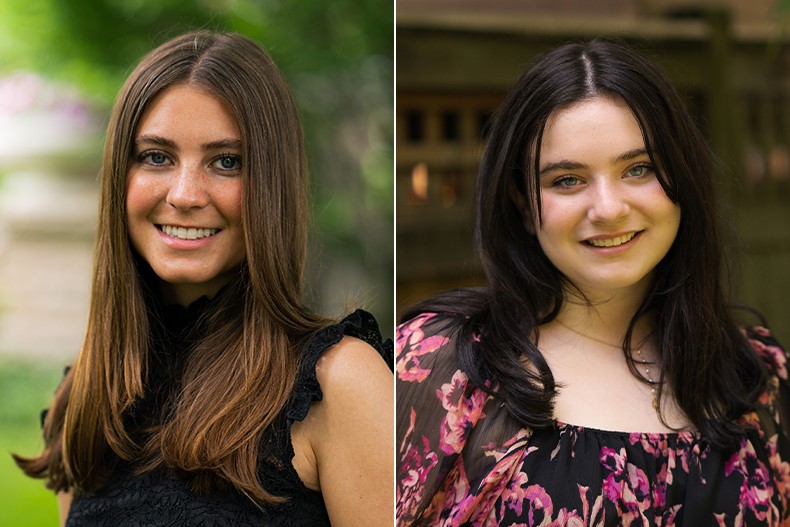
Two local teens win national recognition
Recipients of the annual Diller Teen Tikkun Olam Awards
Read more -

Celebrating six young award winners cultivating the community
Introducing young adult award winners
Read more -