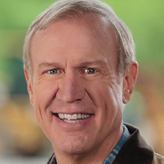
On Nov. 4, Bruce Rauner was elected governor, the first Republican governor Illinois has had in 12 years. He will be sworn into office on Jan. 12, 2015, bringing new ideas and new people to Springfield. Already he and his transition team are hard at work. How will the dynamic between a Republican Governor and a Democratic State legislature play out?
Prior to the election, members of the Jewish United Fund/Jewish Federation of Metropolitan Chicago Board of Directors and staff met with then-candidate Bruce Rauner. “During the discussion, Mr. Rauner expressed that he shares our desire for a State government that cares for the most vulnerable through innovative, effective health and human service programs provided in a cost efficient manner. We now look forward to developing a strong partnership with him, as we had with the Quinn administration,” said David Golder, Chair of JUF’s Government Affairs Committee, “and working to ensure that the important health and human services provided by our network continue to be priorities for State government.”
Competing demands and challenges will surely set the tone for Governor-elect Rauner’s first several months in office. To date, there has been much discussion around the fiscal problems of the State of Illinois, including pension issues and the return of the personal income tax rate to 3.75 percent on Jan. 1.
One of the first tasks for a governor is to recruit his Cabinet. Many people are interested including legislators from both parties who view Cabinet positions as a good step in their careers. The new Cabinet will begin by drafting the State’s FY 16 budget. They will be facing a budget in which most budget lines have been determined by a history of political favors, court orders, or federal matching dollars. As a result, the budget hasn’t changed much from year to year. Will this Governor take a new approach and carve out funding for innovative programming?
Realistically, there may not be time to dig into questions of impact and innovation in developing the Budget. It is usually presented the third Wednesday in February, quickly followed by the legislative committees’ cross-examination of the department heads. The State Legislature has the option of ignoring the Governor’s proposed budget and submitting their proposed budget at the end of May, but that rarely happens.
One of the most pressing issues facing the new Governor will be taxes. On Jan. 1, the personal income tax will be reduced from 5 percent to 3.75 percent. Will this be adequate to fund necessary State programs?
On another front, there is much concern among the Jewish Federation’s agencies about the State’s ambitious transformation of the healthcare and human service delivery system. Jewish Child and Family Services (JCFS), Sinai Health Systems, CJE Senior Life, and Government Affairs staff members have been appointed to statewide committees to help design the a unified new system. But, in spite of having input, there is worry that years of building up effective programs will be compromised by this effort. Another concern is the shift to Medicaid Managed Care.
Massive system changes such as the two described above, depend heavily on professional staff and technology. The State is short on both resources. Professional staff levels have been reduced, leading to some serious shortages. Technology is woefully outdated. Will the new governor slow down the implementation to get it right?
And finally, tensions remain about the closing of State facilities and how best to help frail older adults and people with disabilities live safely and engaged in the community. JCFS, CJE Senior Life, and members of the Jewish community are eager to help build a new system, stronger than the current system which traditionally has relied heavily on institutional care.
These are some of the healthcare and human service challenges facing the new governor. Leaders in other areas-education, economic development, and transportation-are closely watching their issues to see how Governor-elect Rauner approaches his first 90 days in office. There is a wave of curiosity and cautious optimism that a new Administration with fresh eyes and business skills can do wonders in solving some very difficult problems. We will be watching, influencing, and reporting back.
Suzanne Strassberger is associate vice president of Government and Community Partnerships, and director of the JUF Springfield Office.
Other stories
-
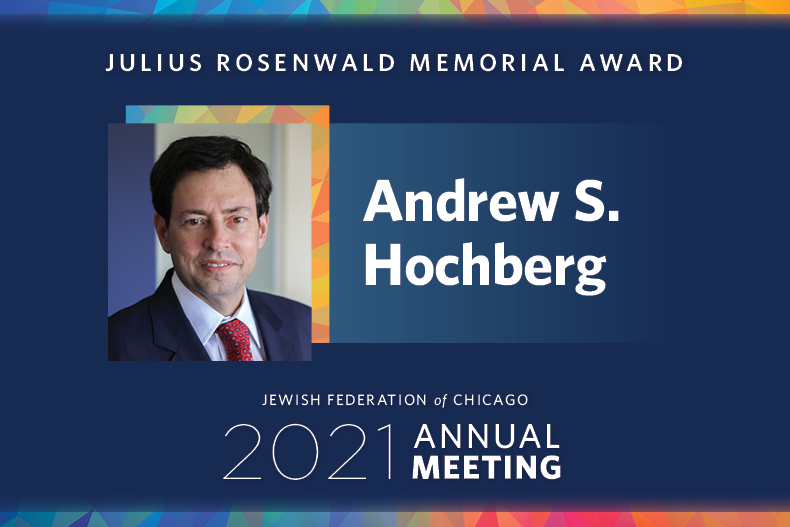
Meet Andrew S. Hochberg, 2021 Julius Rosenwald Memorial Award recipient
Celebrate Andy Hochberg at the virtual Annual Meeting on Sept. 14
Read more -

Two local teens win national recognition
Recipients of the annual Diller Teen Tikkun Olam Awards
Read more -

Celebrating six young award winners cultivating the community
Introducing young adult award winners
Read more