Turning ‘less’ into ‘more’
RABBI BENJY FORESTER
Several years ago, I began immersing in a mikvah leading up to the High Holidays, specifically before Yom Kippur.
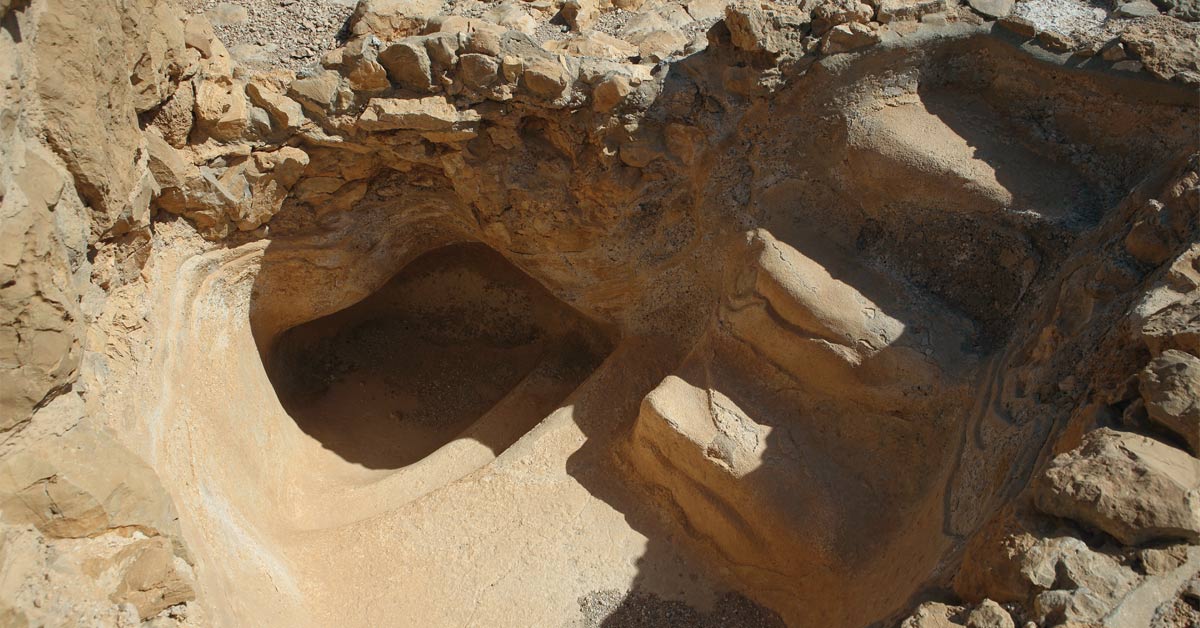
The mikvah is the Jewish ritual bath, perhaps best known for its use related to taharat hamishpacha (“family purity”) practices, and for the final ritual of a Jewish conversion.
But mikvah ‘s uses are manifold, and the ritual of immersing in a mikvah is one that I am personally fond of. I immersed in the mikvah to mark my engagement and my marriage–and also the beginning and end of rabbinical school. I find the ritual of entering the natural waters a powerful marker of new beginnings.
Because Yom Kippur represents our perennial new beginning, immersion in a mikvah is a most fitting ritual. Now, if you paused here to double check your calendar and make sure that Yom Kippur isn’t next week, let me assure you, you still have plenty of time! It falls on Oct. 12 this year, with the fast starting the previous evening.
So…why am I talking about Yom Kippur now? Our traditions hold that it is something to prepare for, well in advance.
I believe that Yom Kippur itself functions like a mikvah for the entire Jewish people, cleansing us of our iniquities, and releasing us pure and refreshed into our new year. And I believe that the process of preparing for the mikvah symbolizes preparing for the High Holidays. Starting now, as we near the month of Av.
You see, when somebody visits a mikvah , they don’t just walk right into the pool. First, they cleanse themselves and remove their clothing and jewelry. Next, they walk the seven steps down into the water. Finally, they are ready to immerse.
So, if Yom Kippur functions like our collective mikvah , what does our arrival at the month of Av represent?
Let’s work backwards. Before the High Holidays come the Seven Weeks of Comfort, during which we read special Haftarot , readings from the books of the Prophets. As these selections specifically focus on the love of G-d for the Jewish people and the possibility and power of repair, they help us reach the High Holidays feeling closer to G-d and inspired to mend our frayed relationships.
These seven weeks parallel the seven steps into the mikvah , the path that we walk to have the right headspace and heartspace for our new beginning.
Moving further back, before we reach the Seven Weeks of Comfort, we commemorate the saddest season on the Jewish calendar. That is where we now find ourselves, approaching the month of Av, about which our Rabbis say: ” Mi shenichnas Av mema’atim b’simcha – When Av arrives, we decrease in joy!” Or: less joy, more oy!
A clever Hasidic reading of this rabbinic dictum rereads ” b’simcha – in joy” as “while in [a state of] joy.” The line now reads: When Av arrives, we decrease joyfully!
What does that mean and how does it relate to the journey towards the mikvah ?
Remember, the first thing that someone does when they arrive at the mikvah is to prepare themselves by shedding their clothing and jewelry. They decrease joyfully–eliminate the “stuff” of everyday life. When we shed our external layers, what remains is our sacred selves.
During this month of Av, let’s take the opportunity to take stock of our hearts and our bodies–our beautiful selves, in need of no adornment–and begin our soulful march from despair to repair, and towards what I hope will be a healing new beginning for us all.
Rabbi Benjy Forester is a member of the clergy at Anshe Emet Synagogue in Chicago.