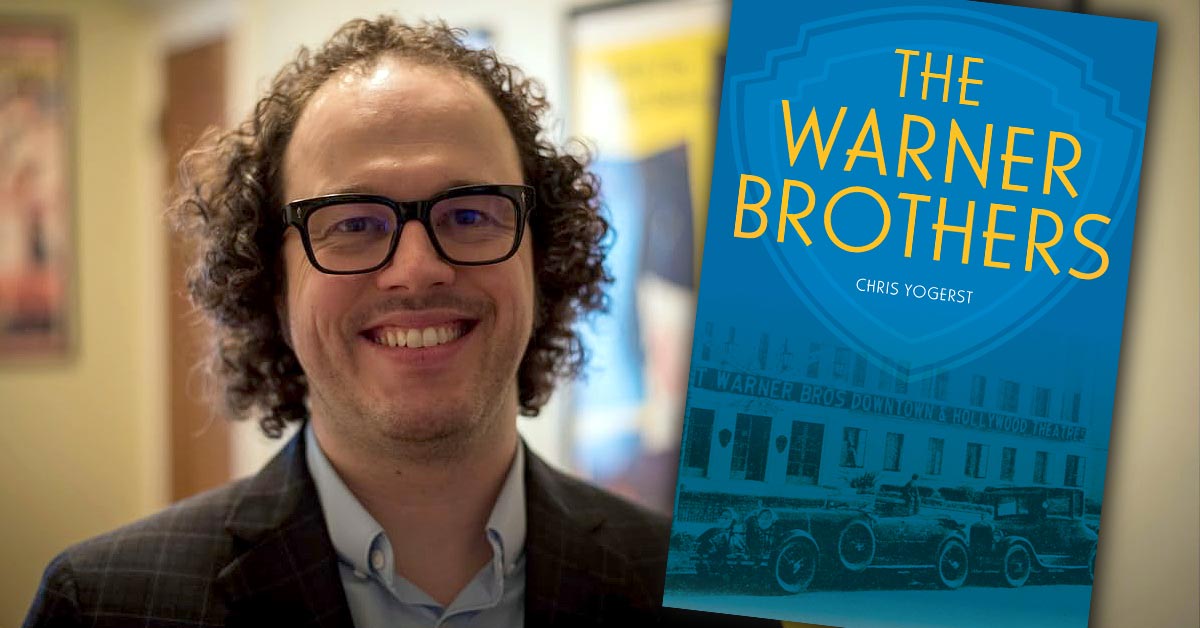
Warner Brothers bio explores how their faith shaped the studio
DONALD LIEBENSON
“Hollywood is run by Jews, it is owned by Jews.” So pronounced Marlon Brando on Larry King Live in 1996. This antisemitic trope has legs, as they say. Ye (formerly Kanye West) repeated it in a rant in 2022. But as Chris Yogerst writes in his new biography–The Warner Brothers (University Press of Kentucky)–it’s a tale as old as time. In 1921, auto manufacturer Henry Ford wrote columns for his Dearborn Independent newspaper warning about “Jew-controlled movies.’
Adolph Hitler’ rise to power and America Firsters such as Charles Lindberg and Father Charles Coughlin, heightened antisemitism in the 1930s. In this climate, four siblings–Harry, Albert, Sam, and Jack Warner–who ran the studio that bears their name took extraordinary action that set them apart from their brethren at other studios. They released films that attacked fascism and antisemitism head on. In 1945, Jack Warner accepted an Oscar for the short subject film, Hitler Lives, which attacked Nazis still living in Germany.
Yogerst writes of a Hollywood Anti-Nazi League party at Edward G. Robinson’s house, at which Groucho Marx, putting aside his caustic wit, toasted Warner Brothers as “the only studio with any guts.”
That courage was nurtured and fortified by their Old World parents, Benjamin and Pearl, who “lived in a world of anti-Jewish shtetls of Eastern Europe,” Yogerst writes. They “were constant pillars of resistance.”
Yogerst recently spoke by phone with Jewish Chicago.
Q. You refer to the Warner brothers as Hollywood’s most outspoken Jews. How did that manifest itself?
A: Other Jewish studio heads wanted to stop the Nazis, but they went about it quietly. Not the Warners. Along with other studios, they funded anti-Nazi espionage in LA in the 1930s, but they were the first studio to pull their product out of Germany, a lucrative market. The studio was also the first to go big with anti-Nazi movies.
When the U.S. Senate went after Hollywood for making anti-Nazi movies when we were still an isolationist country, Harry Warner traveled to Washington and took them to task. Sometime after FDR signed his controversial Lend-Lease bill in 1941, Harry encouraged his employees to listen to a talk former presidential candidate and popular interventionist Wendell Wilkie was giving at the Hollywood Bowl. When criticized for encouraging employees to go to this talk and not the rival event featuring isolationist and Nazi sympathizer Charles Lindbergh, Warner quipped, “We’d rather march to hear Willkie than get marched into a concentration camp.”
How else did this outspokenness cost them?
It wasn’t easy for Hollywood Jews to get funding. Sam Warner and his wife Lina, a Catholic, had a much easier time finding realtors to show them homes in the New York City area when they could see Lina’s crucifix. The Warners, making no secret of their faith, walked into banks knowing the prejudice would be a hurdle.
Fortunately, they found Motley Flint, a manager at the Security Bank of Los Angeles, who helped them fund much of their 1920s expansion that helped them stave off the effects of the Great Depression more effectively than many other studios.
What distinguished the Warners from the other Jewish moguls?
Courage. They weren’t afraid to talk about being Jewish and they were not afraid to take risks other studios would not. Thei [1930s films] aren’t afraid to hold a mirror up to the country and the world in a way that other studios weren’t.
You write about their differences and the lifelong rift between Jack and Harry.
The older brothers, Harry and Albert, were born overseas. They were Old World. Sam and Jack were very much New World and wanting to shake traditions and be their own people. One thing Harry took to heart forever [that Jack didn’t] was their father’s advice when they were struggling: He reminded the four sons that if they stuck together, they could weather every storm.
Donald Liebenson is a Chicago writer who writes for VanityFair.com, LA Times , Chicago Tribune , and other outlets.
In this issue
-

-

-

Catching up with Gold
Actor, writer, and comedian Judy Gold is known for her edgy wit and sharp timing
Read more