A place to remember all of the fallen heroes
OFER BAVLY
Even at 75, Israel is still a young nation, whose history is scarred by wars and terror attacks. Over 24,000 people have fallen in battle and at the hands of terrorists. Remembrance of the fallen of all religions has a unique role in Israeli society, creating a sense of solidarity. Our fallen heroes enabled the establishment–and survival–of the State of Israel. Their memory lives on in our shared destiny and our collective recognition of their sacrifice.
Over 3,000 monuments to our fallen are scattered throughout the country, some carrying the names of individuals and others memorializing entire units. Virtually every town and hilltop has a painful history.
The Ministry of Defense recently decided to commemorate, in a single site, all of those killed–in a National Memorial Hall for Fallen Soldiers. The Hall, housed at the central military cemetery at Mount Herzl in Jerusalem, is the only space that carries the names of every single fallen soldier and victim of terrorism–including pre-independence casualties–since 1860.
The Hall was built to express the respect, and commitment of Israel and the Jewish people to its fallen, both Jews and non-Jews alike. (I’m particularly inspired by the dedicated military service of members of the Druze community, an Israeli Arab minority.)
Outside the Hall stands an eternal flame. Entering the central hall, visitors see “In Their Footsteps,” a video display depicting soldiers going into battles from which they never returned. Nearby is a memorial room, recognizing–for the first official time–those who died due to physical injury or mental health issues sustained during military service.
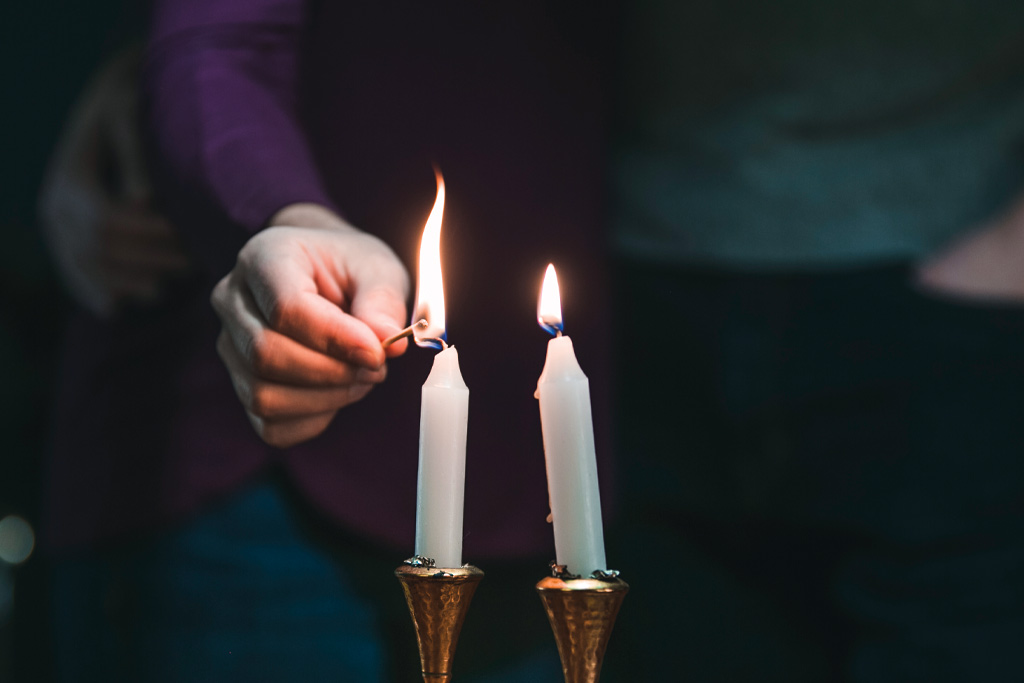
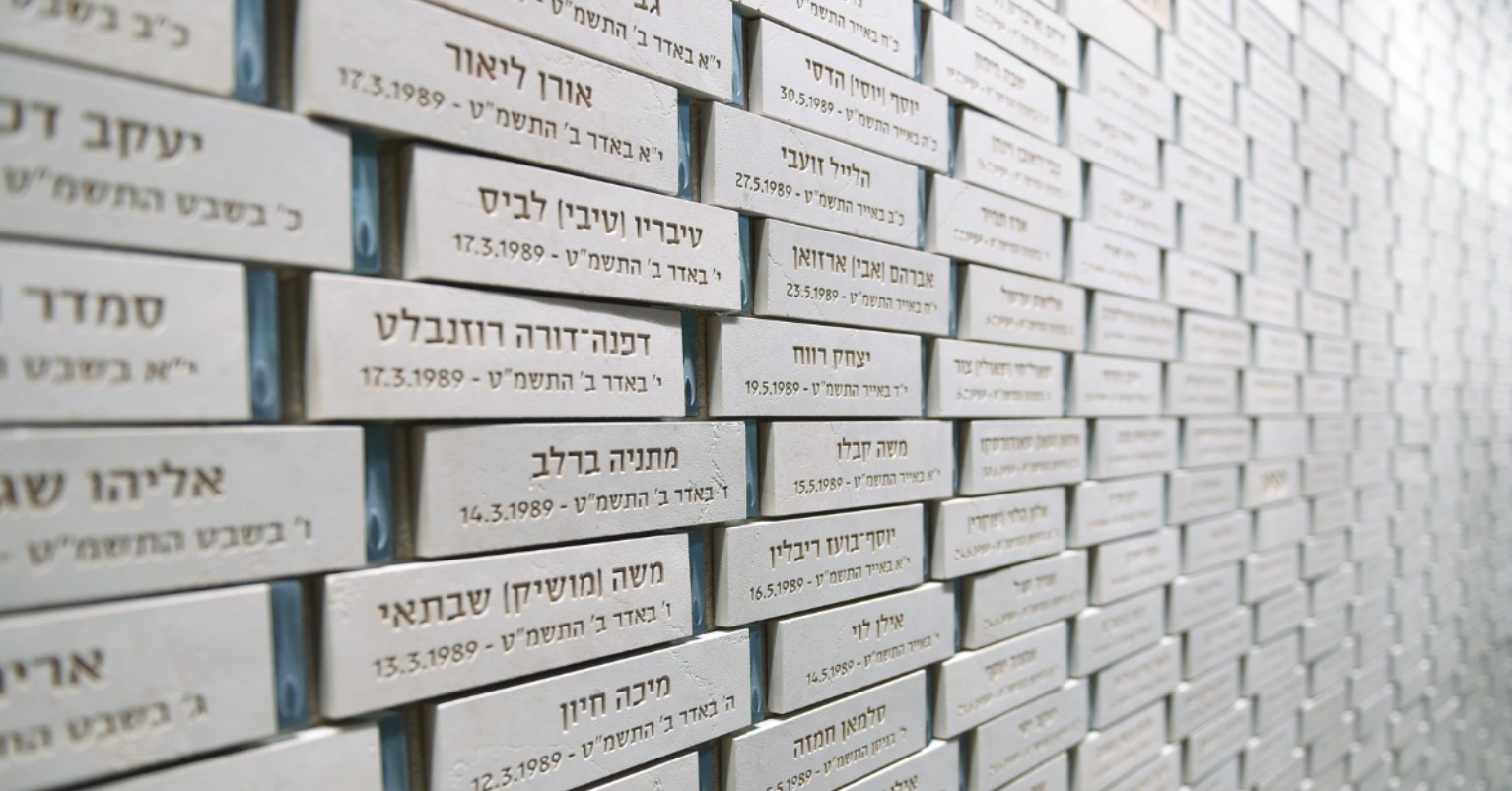
In the central hall, the walls wrap around a tall, torch-like structure. The bricks are identical, each engraved with the name of a soldier or terror victim and their date of passing. The bricks do not mention birth dates, military rank, profession, or any identifying information; the sacrifice of any soldier or civilian is a tragedy. Each stone is illuminated with a candle, lit on their date of passing.
Ascending the Hall’s spiral ramp, a system of touch screens enables visitors to access information, pictures, and brief biographies.
Toward the end of the journey, visitors are invited to write a few words in memory of the fallen and light a virtual candle that will be incorporated into a special three-dimensional display.
The new Hall serves as a place of pilgrimage for bereaved families, visiting heads of state, tourists, and the public. Each morning, at 11 a.m., a memorial service in the central hall honors those who fell on that specific date, making sure that no matter how much time has passed, or if there are still family and friends who remember, no soldier or terror victim will be forgotten.
The stunning Memorial Hall, austere but awe-inspiring, has won national and international prizes, the highest of which was first prize, in the 2018-19 “Dedalo Minosse,” a competition of the Italian Association of Architects.
For the first time, Israel has a central location where each and every one of our fallen soldiers and civilians can be remembered and honored, individually and collectively. Mount Herzl is also home to Yad Vashem–Israel’s Holocaust memorial and museum. Together, the two sites tell the story of a nation’s greatest tragedies-the price paid to enable its rebirth–and flourishing–in its historical homeland.
Ofer Bavly is a JUF Vice President and the Director General of the JUF Israel Office.