Celebrating 25 years
ROBERT NAGLER MILLER
It was 1997. Alona Anspach, a Chicago area-based certified financial planner and wealth management advisor, had philanthropy on her mind. She had recently read an article about telecommunications titan Ted Turner and his then-wife, actress Jane Fonda. They had just pledged more than $1 billion to the U.N. and were encouraging other wealthy individuals to step up to the plate with their giving.
“‘I’m not a billionaire,'”Anspach thought to herself at the time, “‘but they’re calling me to up my game.'”
Anspach initially considered starting a foundation. But then she received a brochure about a first-of-its-kind Jewish Federation project-the Jewish Women’s Foundation (JWF) of Metropolitan Chicago. JWF recruited participants, referred to as trustees, to pool their money and work collectively. Together, they would fund programs advocating on behalf of women and girls, Jewish and non-Jewish, both locally and abroad, particularly in Israel.
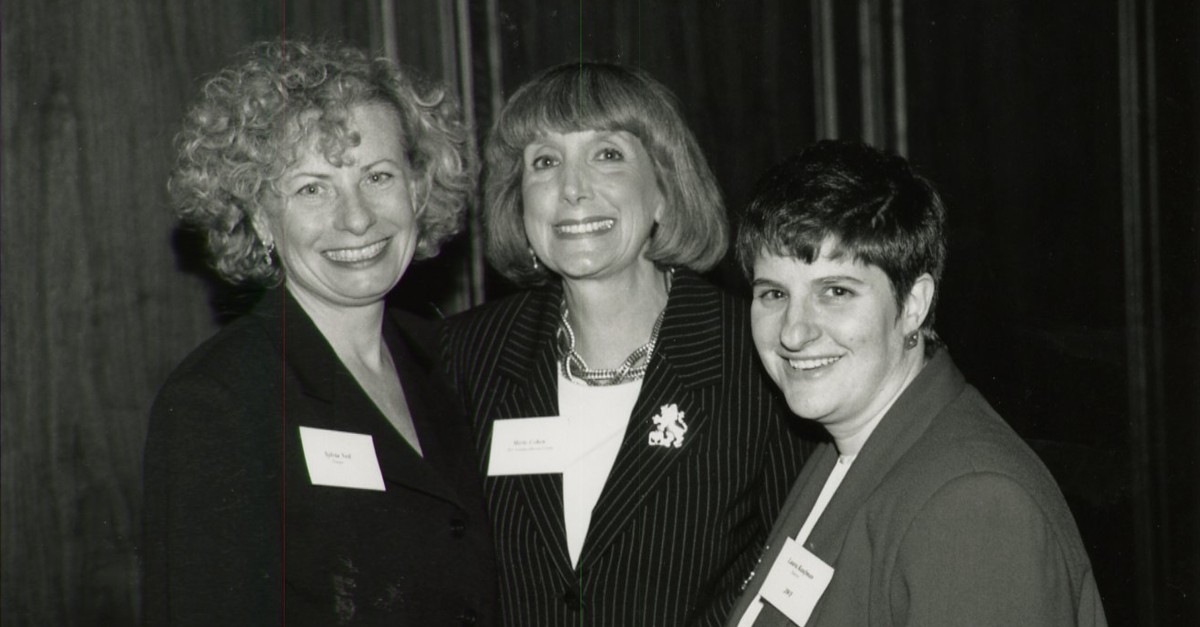
Considered ahead of its time, JWF was spearheaded by Sylvia Neil and Merle Cohen, with the blessing of then-JUF President Dr. Steven B. Nasatir. Its lifeblood was a small group of visionary Jewish women committed to going into the proverbial trenches, delving into some of the most salient issues that girls and women across the globe have faced since time immemorial: domestic abuse, reproductive freedom, the right to an education, and economic security, among others.
Anspach wanted in. She especially warmed to the concept of an “egalitarian society,” she said, whose members would work collaboratively to research and award grants to partnering organizations.
It didn’t take long for Anspach to immerse herself in JWF’s mission. She assumed leadership positions, becoming its first Chair, and continued to increase her financial support. Today, she remains on its Steering Committee, and contributes financially to JWF at the multigenerational-donor level, which entitles her daughters, daughter-in-law, and granddaughter to participate in grantmaking decisions as trustees.
“It has been an amazing adventure,” said Anspach of her 25 years of service to JWF.
As the Foundation celebrates its silver anniversary, said current Executive Director, Ellen Carmell, “we are reflecting on JWF’s amazing growth and consistent leadership in a changing philanthropic landscape.” It is now the longest running and largest giving circle of its kind, with more than 380 trustees. With an endowment of $15 million, JWF has awarded a total of $5.5 million to 210 projects over the past quarter century.
When JWF first started, said Carmell, individual grants ranged from $1,000 to $8,500. Today, the minimum is $10,000; the biggest grant on the current docket is $30,000.
What hasn’t changed, she added, is the focus of the grant dollars, which go “toward creating positive social change for Jewish women and girls.”
JWF’s transformational objectives appeal to younger trustees- such as Anspach’s daughter, Esther Sussman, who serves as JWF’s Innovation Grants Chair. Sussman appreciates that grantmaking compels her to tackle tough questions, such as those about the changing nature of Jewish and gender identities.
That type of out-of-the-box thinking has allowed JWF to develop a national reputation, inspiring other Jewish Federations to create their own women’s foundations and to look to Chicago’s as a mentor and role model. “They have been extremely smart and thoughtful about funding social change,” said Judy Greenwald Cohen, Executive Director of the Jewish Women’s Foundation of Greater Pittsburgh.
“They really take the time to dig in and care about the issue,” concurred Mary Thomas, Director of Institutional Giving at the ACLU of Illinois, which has been awarded multiple JWF grants over the years to support its Women’s and Reproductive Rights Project.
JWF’s work is having a monumental effect, said Andrea Pactor, who for many years was affiliated with Indiana University’s Women’s Philanthropy Institute. JWF and other contemporary women’s giving circles are “filling a huge gap in the funding stream,” she said, noting that less than 2% of charitable giving dollars worldwide go to programs that affect women and girls. “They’re stepping up and charting new territory.”
The Jewish Women’s Foundation is an independent project of the Jewish Federation of Chicago. To learn more, visit juf.org/jwf.
Robert Nagler Miller is a journalist and editor who writes frequently about arts- and Jewish-related topics from his home in Chicago.