Campus Corner
CLAIRE KATZ-MARIANI
At the start of JUF’s Lewis Summer Intern Program last summer, I wrote down three main objectives I wanted to help interns pursue:
- Develop and maintain critical, evolving perspectives on workplace diversity, equity, and inclusion practices;
- Consistently recognize and acknowledge the ways in which racism presents itself (no matter how discreetly) in the workplace on a daily basis; and
- Effectively and appropriately challenge discriminatory and prejudicial practices in professional settings.
Lofty goals, I realize. I identified two strategies to help us get there:
- Infuse every aspect of the program with discussions of, and opportunities to implement, social justice; and
- Incorporate specific programming that targets social justice topics and how they relate to our professional lives.
These strategies are not nearly as intimidating as they seem. The ways in which we tied in social justice to regular programming more often than not invoked themselves naturally. For instance, one seminar’s session on interviewing prompted a discussion about the implicit biases that play into first impressions, as well as how to handle uncomfortable questions from interviewers.
The second strategic arm acted as a sort of catalyst for the first; we wanted to incite lively, ongoing discussions about social justice by elevating its importance through topical programming. Along with several other more small-scale initiatives, I spearheaded the Lewis Summer Intern Program Multimedia Club with that mission in mind.
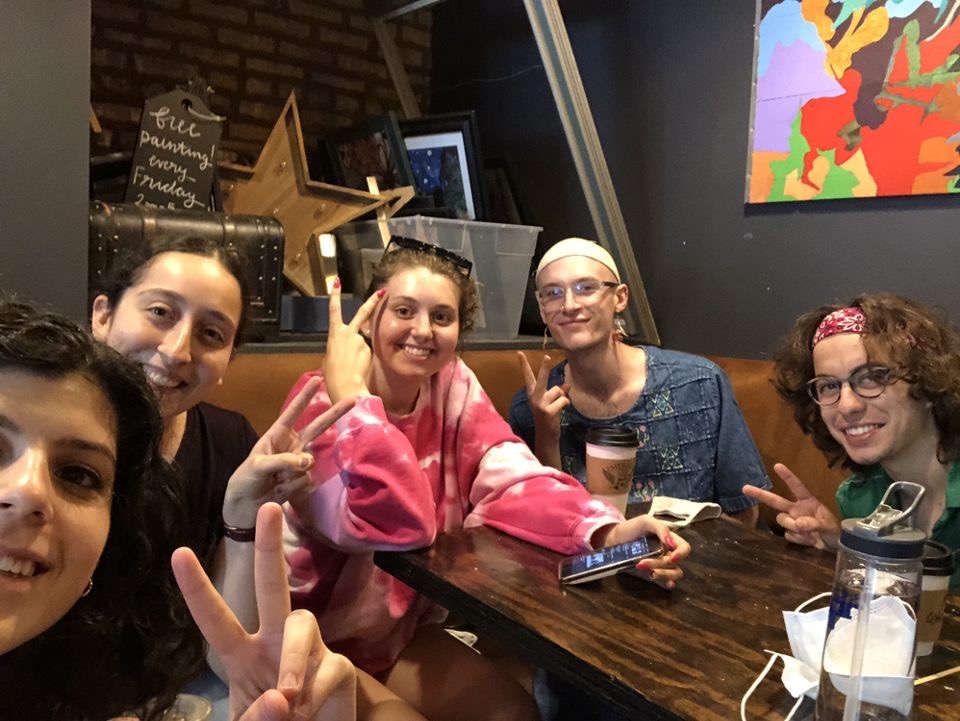
The Multimedia Club — developed at the onset of COVID — is an interactive tool used to bridge the virtual gap. My team and I split the intern cohort into five discussion groups, four of which were able to safely meet in person a couple of times. We were thankful for the connections that interns were able to forge with each other via a shared reading or listening experience — whether or not they got to see each other in real life.
Each discussion group got to choose a book or podcast from a list of options. Yours truly updated the list with the goal of eliminating subject headings. No longer can we have a selection of books and podcasts entitled “Professional Development” and a separate selection entitled “Racial Justice.” The two are inexorably tied together, a concept examined in several of the books and podcasts the interns chose to explore. Out of more than 20 options, the discussion groups ultimately chose the following:
- Uncomfortable Conversations with a Black Man, written by Emmanuel Acho;
- Nice White Parents , produced by Serial Productions & The New York Times ;
- How’s Work? With Esther Perel , produced by Esther Perel Global Media & Gimlet;
- Financial Feminist: Her First $100k , produced by Her First $100k; and
- Code Switch , produced by NPR.
One of the biggest rewards of my role in the program was watching these clubs spark conversation around topics that prompted interns to explore their own intersectional identities, the lived experiences of others, and how the Jewish value of tikun olam may present itself in their professional lives.
In fact, it was my biggest takeaway from my experience as a whole: We can spot roads to justice in every corner of life. Injustice lives everywhere; it lives in our homes, in our shuls, in our conversations amongst friends, and in our places of work. It lives where people find it uncomfortable to acknowledge.
Encouraging soon-to-be graduates to embrace the discomfort, to recognize the layers of privilege that infiltrate our daily lives, and to address the nuances of inequity in professional space — will ensure that intersectional justice in the workplace is just beginning.
Claire Katz-Mariani — a 2021 Program Assistant in the Lewis Summer Intern Program — was a Lewis Summer Intern in 2020 focused on developing internal LGBTQ+ diversity, equity, and inclusion initiatives. Katz-Mariani is currently pursuing a master’s degree in Public Health.