Fantastical journeys
Betsy Gomberg
Can fantastical stories tell real-world truths?
I’d been thinking about this question in relation to two Jewish books that weave history and fantasy into something captivating and new. I couldn’t quite put my finger on what made them so compelling, then I read this, by author Salman Rushdie, in an essay called Wonder Tales:
“For all their cargo of monsters and magic, [fantasy] stories are entirely truthful about human nature. All human life is here, brave and cowardly, honorable and dishonorable, straight-talking and conniving, and the stories ask the most enduring question of literature: How do ordinary people respond to the arrival in their lives of the extraordinary? And they answer: Sometimes we don’t do so well, but at other times we find resources within ourselves we did not know we possessed, and so we rise to the challenge, we overcome the monster, Beowulf kills Grendel and Grendel’s more fearsome mother…Beauty finds love within the beast and then he is beastly no more.”
That is exactly why these books resonate, in a year in which we all have fought monsters.
Spinning Silver by Naomi Novik
Rumors of Spinning Silver being optioned for a movie–with casting to include Charlie Murphy and Anya Taylor-Joy–got me reading this book, which was released in 2018 and has been generating buzz since.
The story unfolds in Lithva, in the Russian Pale of Settlement. Although the place is fictional, antisemitism and increasing brutal winters are real. To save her family from being trapped in poverty, Miryem Mandelstam takes over her father’s moneylending business.
She turns out to be quite good at it. News of her skill reaches beyond her village to the Staryk king, an elvish personification of winter drawn from folk tales, who believes she can turn silver coins into gold. With skill and agency, Miryem makes a bargain to save her world. Parts of the story are told in the unique voices of the characters who help her fulfill her tasks, and in the process, free themselves from their own entrapments.
Jewish names have strength, there is a tree with magical powers, mirrors can be passageways, and the Tsar is not what he appears to be. If that’s not enough, Spinning Silver was named a best book of the year by The New York Times Book Review, NPR, Library Journal, Time, Vox, and Vulture.
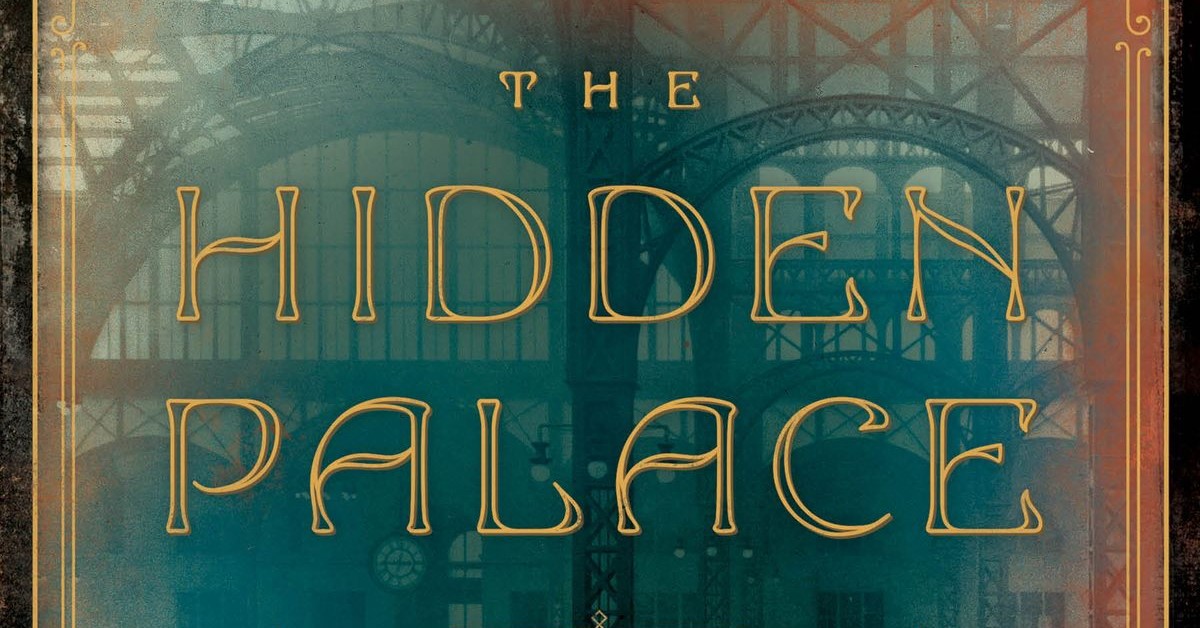
The Hidden Palace by Helene Wecker
Eight years after her New York Times bestselling novel The Golem and the Jinni, Helen Wecker brings back Chava and Ahmad for a saga that takes place in the years before World War I.
For those who didn’t read the first book, Chava is a golem, a piece of clay brought to life by incantations from an ancient book of Jewish mysticism. It is her in nature to help those around her. Ahmad is a jinni, a restless, centuries-old magical being who once flew across deserts but is now forced to live as a man. Their true selves hidden from almost everyone else around them, they live as working-class immigrants in a Manhattan that’s filled with wonderfully detailed historical elements and characters whose stories twist and intertwine. Despite their differences, Chava and Ahmad lean on each other to conceal their fantastical natures, even as their powers can’t help but alter the people and world around them.
You don’t need to have read The Golem and the Jinni to enjoy The Hidden Palace, and you don’t need to read them in order. But the earlier story is equally inventive. About The Golem and the Jinni , the Forward said, “The book is so good that I wonder if there was some other-worldly power involved in its creation.”
Betsy Gomberg reads (and sometimes writes about) Jewish books. She is Spertus Institute’s Director of Marketing and Communications.
In this issue
-
-
-

Catching up with Judy Gold
The actor, writer, and comedian is known for her edgy wit and sharp timing
Read more