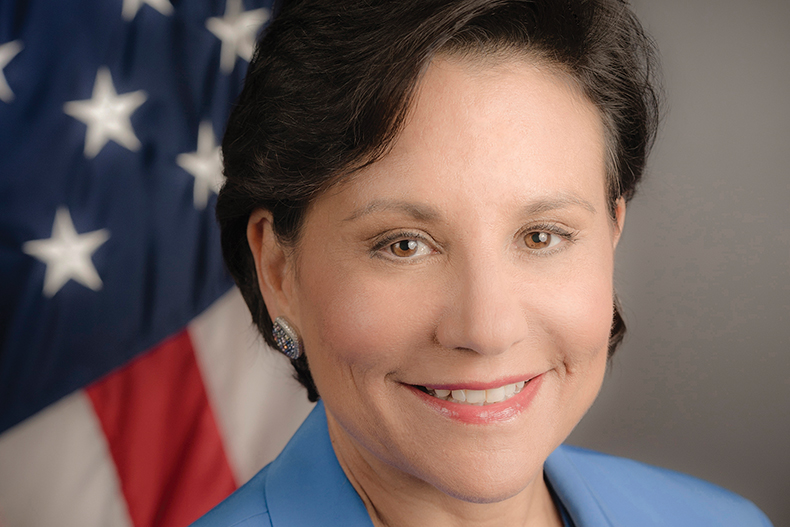
It was an “only in America” story when President Barack Obama appointed the Hon. Penny Pritzker to lead the Presidential Delegation to the 75 th anniversary memorial commemoration of the massacre at Babi Yar in Kyiv, Ukraine in the fall.
Pritzker, U.S. Secretary of Commerce and Chicago native, returned to the very city from which her great-grandfather had fled Czarist oppression.
Babi Yar is the largest mass urban murder site in Europe. On Sept. 28 and 29, 1941, coinciding with Yom Kippur, 33,771 Jews were shot to death by the Germans at the edge of a ravine, into which they fell and in which their bodies remained, until the Germans seeking to hide the evidence dug them up and burned them, heaping indignity upon indignity.
Included in the delegation were Rabbi Yehiel E. Poupko, JUF Rabbinic Scholar, the U.S. Ambassador to Ukraine, a member of the National Security Council, and the chair of the U.S. Holocaust Memorial Council.
Pritzker, a longtime, stalwart supporter of Chicago’s Jewish community has served on JUF’s Campaign Cabinet and has helped fund several Jewish-education and Israel initiatives through JUF. She will step down from her Cabinet post at the end of the Obama administration, and will join an esteemed group of other Jews who have served in the U.S. Cabinet, including Dan Glickman, Arthur J. Goldberg, Philip M. Klutznick, Edward Hirsch Levi, and Abraham A. Ribicoff.
Pritzker’s poignant and compelling remarks, reprinted here, reflect the saga of the Pritzker family as it fled Czarist Russia in 1882 and settled in Chicago, and embody a veritable epoch in Jewish history:
“On behalf of the President of the United States, it is my great honor to be here in Kyiv-a city that has been close to my heart literally since the day I was born.
One hundred thirty-five years ago, my family lived in Podil-less than an hour’s walk from here in an apartment above their grain store on the Zhitny Rynok. But six decades before the atrocities of Babi Yar, my family fled this magnificent city following the pogroms. Had they not fled, my family’s remains might be in this ravine.
We gather today to remember what happened here at Babi Yar.
How do you speak about the unspeakable? How do you imagine the unimaginable? As my then 10-year-old great-grandfather was preparing to flee Kyiv, he looked to the Torah for an explanation of why God would allow his people to suffer so much – and so I, too, look to the Torah for guidance.
We all know the story of Cain and Abel. Jealous that his brother was more favored by God, Cain killed Abel while they were working in the fields.
The Lord said to Cain, ‘Where is your brother Abel?’
‘I don’t know,’ he replied. ‘Am I my brother’s keeper?’
To which the Lord said, ‘What have you done? Listen! Your brother’s blood cries out to me from the earth.’
In this place, the blood of the victims of Babi Yar still cries out to us from the earth. Seventy-five years ago, a basic tenet of humanity was violated. We are all destined to return to the earth someday, but it is not for man to decide when we return. A person may not shed another’s blood.
And yet, over 100,000 Jews, Roma, political prisoners, and Soviet prisoners of war were murdered where we stand-each with a name, each with a face, each with a story.
Like Abel, their blood cries out to us from the earth. It cries out for us to be our brother’s keeper. It cries out for us not to be silent.
Although we can never bring back the souls that were taken, we cherish their memories by resolving that the past shall not repeat itself. A promise that is easily made but difficult to honor. Today, 75 years after Babi Yar, human beings continue to commit unspeakable and unimaginable acts against each other.
Across Europe, across the United States, and across the entire globe, we are seeing a rising hate and fear of the other-like the kind that once drove my family from Kyiv and that made the Holocaust possible.
In times like these, it is all too easy to retreat into narrow self-interest. To ignore the plight of the stranger. To say to ourselves, ‘I am not the victim. This does not concern me.’
But, as Elie Wiesel taught us, ‘Neutrality helps the oppressor, never the victim. Silence encourages the tormentor, never the tormented.’
In times like these-when millions of men, women, and children are driven from their homes by hate and fear-we cannot afford the cost of indifference. Indifference spreads the notion that the problems of your neighbor are not your problems. It absolves us of our responsibility to be our brother’s keeper. It betrays our promise of ‘never again.’
We owe our fellow human beings more than indifference.
If one of the lessons of the Holocaust is ‘thou shalt not be silent,’ then today, on this solemn anniversary, we must honor the memories of those who were murdered by taking action against hate.
We must not only speak out against hate, but fight every day for the ideals of inclusion and tolerance that form the root of our humanity. We must not only embrace the dignity of difference, but open our doors and our hearts to the victims who-in another life-might have been us.
May we never forget the basic tenet of our humanity: that it is not for man to decide when we return to earth. Even one life is too high a cost to pay for our indifference.
And we must always remember the sons and daughters silenced forever in this ravine, 75 years ago on Yom Kippur-a day devoted to the proposition that every human being can renew and become better.
In their memory, let us leave here today committed to do better and be better. Let us leave here today committed to be our brother’s keeper.”
Other stories
-
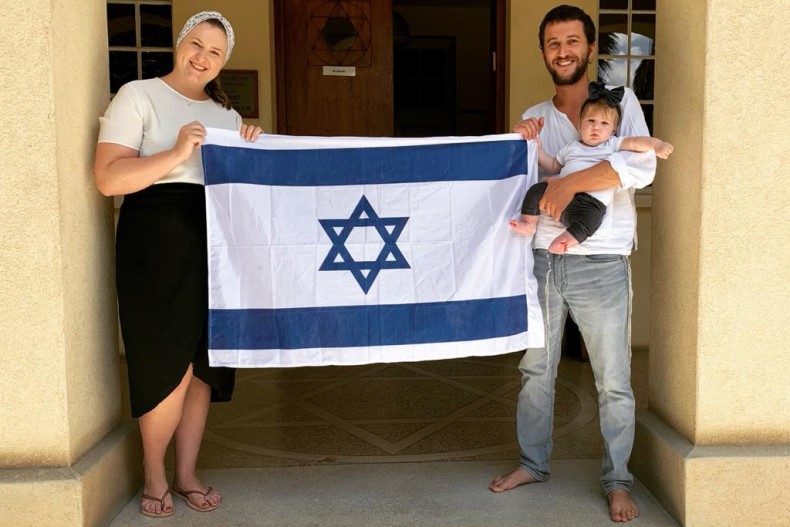
Chicago to Israel to Kenya
A family’s story of living Jewishly on three continents Michelle Cohen World May 28, 2021 Avital, Tzofia, and Netanel Kaszovitz outside their home in Nairobi on Yom HaAtzmaut. When Avital Kaszovitz prepared to be a Modern Orthodox shlicha (emissary) to the Jewish community in Ke
Read more -
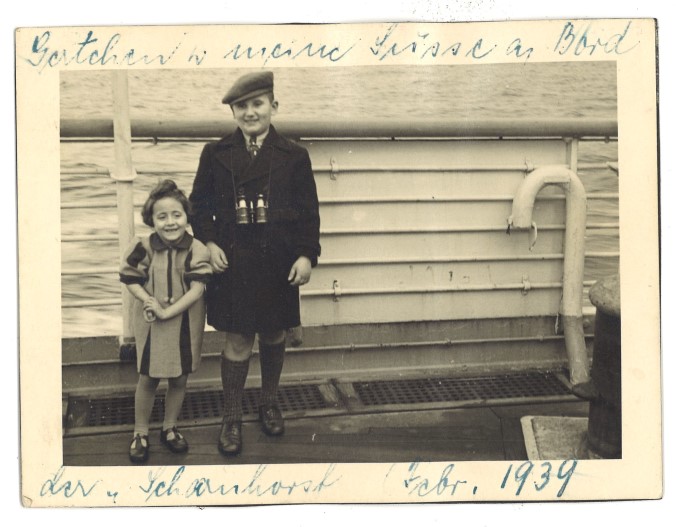
New exhibit spotlights the experience of ‘Shanghai Jews’
Explore a new Illinois Holocaust Museum and Education Center exhibit
Read more -
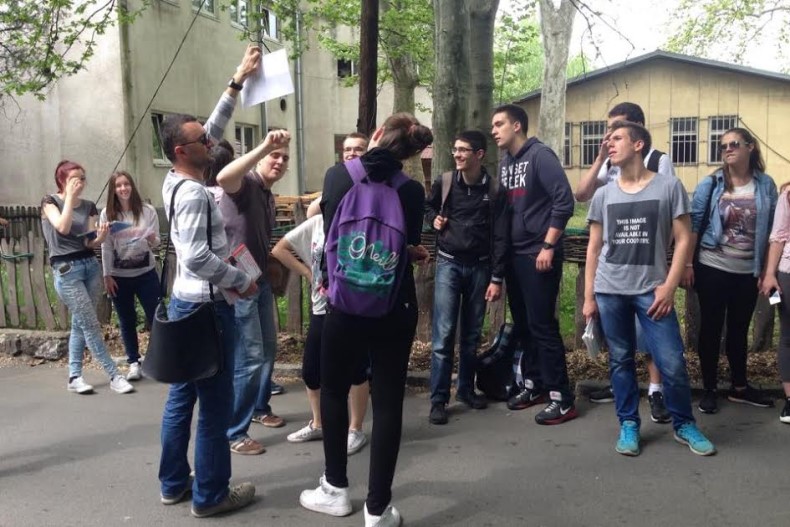
Europe’s brave new teachers of the Holocaust
Teaching the Holocaust in the modern era has its difficulties and rewards.
Read more