Genetics is always changing. It seems as if every day there is a new article about a new study, and trying to navigate all of this information can be quite confusing. This past month, a new study was published in the Proceedings of the National Academy of Science (PNAS) suggesting that all women be screened for BRCA gene mutations, which are associated with a significantly increased risk for cancer. This has become a debated topic in the medical community, as many would say that it is too soon to recommend broad population screening. As a leading resource for information on Jewish genetic disorders, including hereditary cancer predispositions, the Center for Jewish Genetics is here to help the community understand this new information.
While the medical professionals have not come to a consensus on universal BRCA testing, there are three important points to take away from this study:
1. About half of the Ashkenazi individuals who were positive for BRCA mutations had no suggestive family history of cancer.
2. Women carrying a BRCA gene mutation still have a very high likelihood of developing breast and ovarian cancer, even without a family history of cancer.
3. Even in Ashkenazi men without cancer, about 2 percent harbor BRCA mutations, and these mutations are likely the source of the inherited BRCA mutations in individuals with no family history of cancer.
But the question remains-what does this all mean? We know that those of Ashkenazi Jewish descent are at an increased risk for carrying mutations in the BRCA1 and BRCA2 genes. In fact, one in 40 individuals of Ashkenazi descent is a carrier of a BRCA mutation compared to one in 400 individuals in the general population. This means that individuals of Ashkenazi Jewish descent are much more likely to be carriers for a mutation that significantly increases the risk of developing certain types of cancers.
While the Center looks forward to follow-up research that may come as a result of this PNAS study, its position on screening remains the same. The Center suggests that Ashkenazi decent is enough to consider genetic counseling, which can help decide if screening is appropriate, but this is not the standard of care in 2014. The Center strongly encourages anyone considering BRCA testing (or any other genetic testing) to seek the appropriate genetic counseling and education before proceeding with the test. Genetic counseling, physicians, and health care providers involved with cancer prevention can help individuals navigate their options such as “What would we do it we test positive?” It is important to understand the implications of a positive test result before proceeding with the test.
Still have questions regarding BRCA mutations? Need help finding local resources? The Center’s on-staff genetic counselor from Ann & Robert H. Lurie Children’s Hospital of Chicago is always available! Visit the Center online at www.jewishgenetics.org for more information, or contact the Center’s staff at [email protected].
The Center for Jewish Genetics is a cooperative effort of the Jewish United Fund/Jewish Federation of Metropolitan Chicago and the Ann & Robert H. Lurie Children’s Hospital of Chicago. The Center is a support foundation of the Jewish Federation of Metropolitan Chicago and is funded in part by the Michael Reese Health Trust.
Alyssa Cohen is the former Strategic Communications Coordinator for the Center for Jewish Genetics.
Dr. Gershon Locker, M.D., is a board member for the Center for Jewish Genetics.
Other stories
-
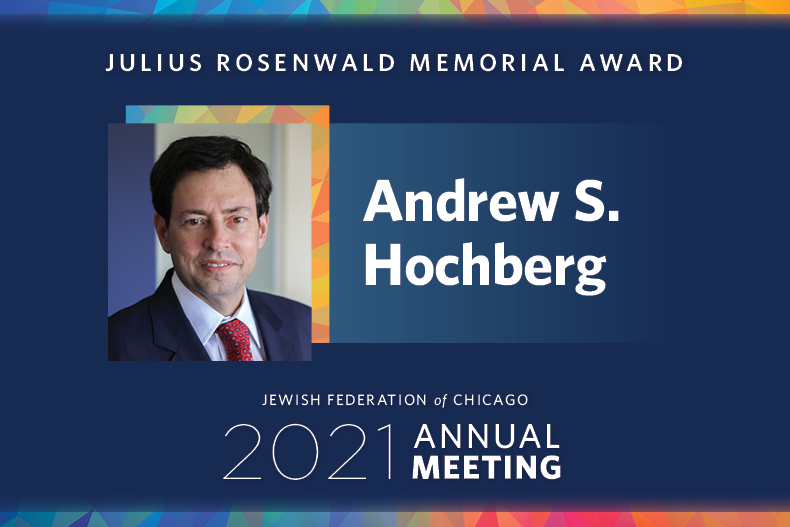
Meet Andrew S. Hochberg, 2021 Julius Rosenwald Memorial Award recipient
Celebrate Andy Hochberg at the virtual Annual Meeting on Sept. 14
Read more -

Two local teens win national recognition
Recipients of the annual Diller Teen Tikkun Olam Awards
Read more -

Celebrating six young award winners cultivating the community
Introducing young adult award winners
Read more