Nova Exhibition in Chicago brings healing and a lost hat
JULIE MANGURTEN WEINBERG
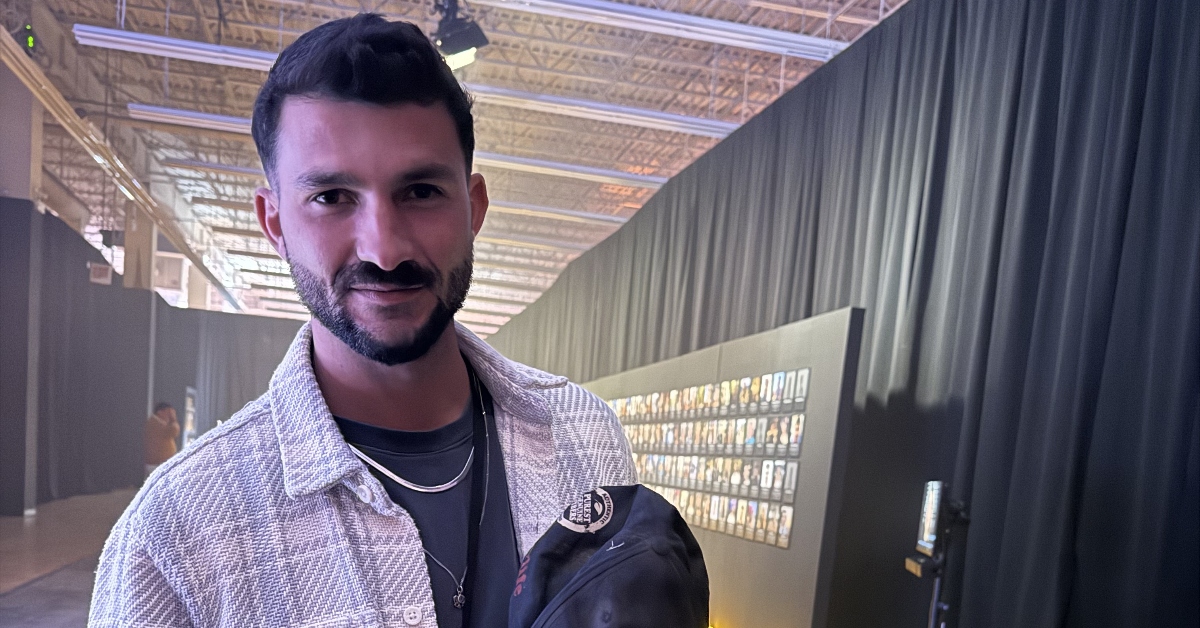
As Tal Elbaz viewed the personal possessions on display at the Nova Exhibition in Chicago, one item stood out.
A survivor of the Hamas attack at the Nova Music Festival on October 7, the 28-year-old Israeli came here to tell his story to visitors at this traveling exhibit, presented locally in partnership with JUF and with the help of generous donors.
“06:29am – The Moment Music Stood Still” previously stopped in Tel Aviv, New York, Los Angeles, Miami, Berlin, Buenos Aires, Toronto, Washington D.C., Boston, and Berlin.
In Chicago during the month of November, the exhibition took over an empty retail space in Lincoln Park transforming it into a tribute to the music, the lives lost, and the survivors.
“It starts with the light, then you go inside into the dark, and come back to the light and the healing process,” Elbaz said.
“We are here not only to present the tragic brutalism and the hate, we are here to show the values, the love, and the life before,” said Reut Feingold, Creator, Director, and Art Director of the exhibition.
Once past security screening at the entrance, visitors could watch a short film that captured the joy and beauty of the festival. Thousands of people danced through the night and enjoyed a magical sunrise.
But jubilation turned to terror when Hamas attacked, and the presentation captured the chaos and fear of that moment.
“We invite people to feel,” said Feingold.
Inside a darkened, hazy space with a sandy floor sat authentic items left behind at the festival-tents, chairs, blankets, clothes, sunglasses, headbands, and cell phones with evidence. Visitors were encouraged to pick up the phones and watch people running for their lives or hiding while gunshots rang out in the background.
Larger screens played the Go Pro video recorded by the terrorists as they stormed through the area. The exhibition also included burned out cars, portable toilets riddled with bullet holes, concrete shelters that became death traps, and details of the systematic sexual violence that took place.
“It’s most important to show the world what happened there that day and how bad are those people that came to do that,” said Elbaz. “They didn’t come to fight with the army. They came to kill as many people as they [could]. They didn’t care if it was a man or a woman. They didn’t care if it’s a baby or an adult.”
Elbaz had not planned to attend the event, but he made a last-minute change to celebrate his October 6th birthday with friends at the fest.
More than two years later, he stood in front of a candle-lit wall of pictures showing each of the 412 festival goers whom Hamas terrorists murdered, including six close friends. He escaped, but days later, received a draft notice and returned to the grounds as a soldier.
“It changed my mood from flight to fight, and allowed me to regain some control,” he said.
Since then, Elbaz has taken time for himself, discovered the mental health benefits of herbalism, started planning a retreat for survivors, and came to Chicago as part of the healing process. “When you speak and share it, you release [the pain],” he said.
He’d already participated in the exhibition in Tel Aviv and Toronto, but discovered something unexpected in Chicago.
Laying amidst the array of items abandoned at the festival sat the hat he’d worn to the celebration. “I could leave it because I know it’s important for people to see it or I could take it because it’s the only thing of mine that survived,” he said.
The exhibition ended with a comfortably lit space to sit, reflect, and remember. Feingold believes it delivers an everlasting message.
“The Nova story will always be relevant for everyone,” she said. “It’s the contrast between people choosing love and choosing hate.”
Julie Mangurten Weinberg is a Chicago-based freelance journalist with 25+ years of experience in broadcast, print, and digital media.
In this issue
-

Local physician creates a world of thinkers, soldiers, and spies in geopolitical thriller
Emmet Hirsch’s book lays out the hardships of a young Jewish man in the Mideast in the years before and after Israel’s founding
Read more -
From ‘just learning’ to leading: Growing into identity action by action
Growing into identity action by action
Read more -
JUF to house the Shinshinim program in Chicagoland
JUF to house the Shinshinim program in Chicagoland
Read more