The image Liat Algrissi paints of her community–Kibbutz Nir Oz–before October 7 is idyllic. “It was really one big family,” she described to a group of JUF staff during her October visit to Chicago. “It was a peaceful, calm life.”
On October 7, that peace was shattered. The kibbutz , just a mile from Gaza, was one of the hardest hit communities, with more than a quarter of its residents either murdered or taken hostage.
Now, survivors of Nir Oz–displaced since the massacre–have prevailed, showing their resilience as they rebuild Nir Oz, whose name fittingly translates to “Meadow of Strength.”
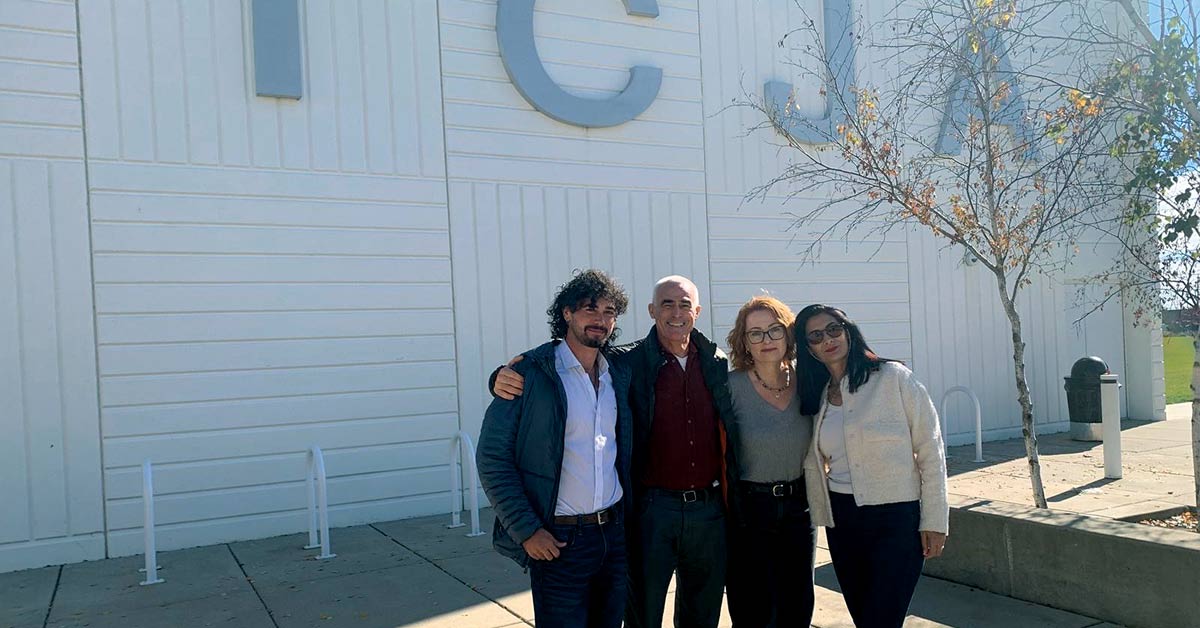
Algrissi was one of four Nir Oz residents who toured Chicago, JUF, and its agencies, to share their stories and their gratitude for JUF’s ongoing support of the kibbutz. The delegation–Algrissi, Ron Bahat, Yuval Bazer, and Olga Metzger–is part of the first wave of residents to return to the kibbutz, vowing to make their community bigger, safer, and stronger than before the war.
“We may argue about how to [accomplish it], but we all have the same mission,” said Metzger, who made aliyah 30 years ago from the former Soviet Union. On October 7, her in-laws were taken hostage–her mother-in-law survived, but her father-in-law was murdered in captivity. Still, for the majority of the Nir Oz survivors, returning is the only option. “Coming back home is really important,” she said.
Bazer, 24, grew up in Nir Oz. On October 7, he was residing in one of only six homes–out of more than 200–left untouched by Hamas. Hours after the massacre, he and a friend pitched in to help the devastated kibbutz clean up and tend to the deserted fields. Recently, Bazer stepped into the role of Vice Head of Security. “Facing the trauma is how I deal with it,” he said. “This is my therapy–what helps me is doing and helping.”
Bahat, a mechanical engineer, is directing the physical rebuilding of Nir Oz. Reconstruction started last year, with Bahat and his team hiring architects and landscapers who will balance preserving the memory of those who perished, with building a brighter future.
“We couldn’t move forward without figuring out how to remember all our loves that aren’t with us,” he said. “…But the kibbutz [must be] alive with children.”
In August, Nir Oz launched its reconstruction phase. The homes in the new Pioneer’s neighborhood are the first dwellings to be rebuilt. Longtime Nir Oz residents have been joined by newcomers flocking to help rebuild the kibbutz, including educators from the Hashomer Hatzair youth movement, and students on a gap year before serving in the IDF.
After October 7, JUF embraced the people of Nir Oz who had been relocated by the Israeli government to Kiryat Gat, part of JUF’s Partnership Together region. “Since then, we’ve been walking hand in hand with the community as it rebuilds,” said Ofer Bavly, a JUF Vice President and Director General of the JUF Israel Office, who accompanied the Nir Oz members to Chicago.
JUF’s Israel Emergency Fund has filled in funding gaps where Israeli state funds have fallen short, and has earmarked a five-year financial commitment to the kibbutz . Last summer, JUF helped bring Nir Oz teens to Camp Ramah in Wisconsin to connect with their peers and unplug from their troubles back home.
“Our new friends from Nir Oz are an inspiration,” said Elissa Polan, a JUF Associate Vice President, who planned their Chicago tour and joined them during their visit. “They and their fellow community members who are rebuilding Nir Oz embody the true meaning of Zionism, patriotism, strength, and resilience. I look forward to spending time together in Israel.”
Bahat, too, hopes to connect with Chicagoans in Israel, and to host the community at the kibbutz . “It’s amazing now to come to Nir Oz, and to feel the atmosphere,” he told JUF staff. “It’s amazing to see rebuilding finally moving forward, and all that we planned come true. See all of you in Nir Oz!”