Global connection
BRITTANY FARB GRUBER
Deerfield resident Ethan Bensinger’s family tree inspired a story of global connection.
When he was visiting Fulda, Germany, for a Kristallnacht commemoration, a newspaper reporter asked Bensinger about his connection to the city. He spoke about his roots as well as his mother and great uncle Hugo Sichel, who was deported in 1941 and subsequently murdered.
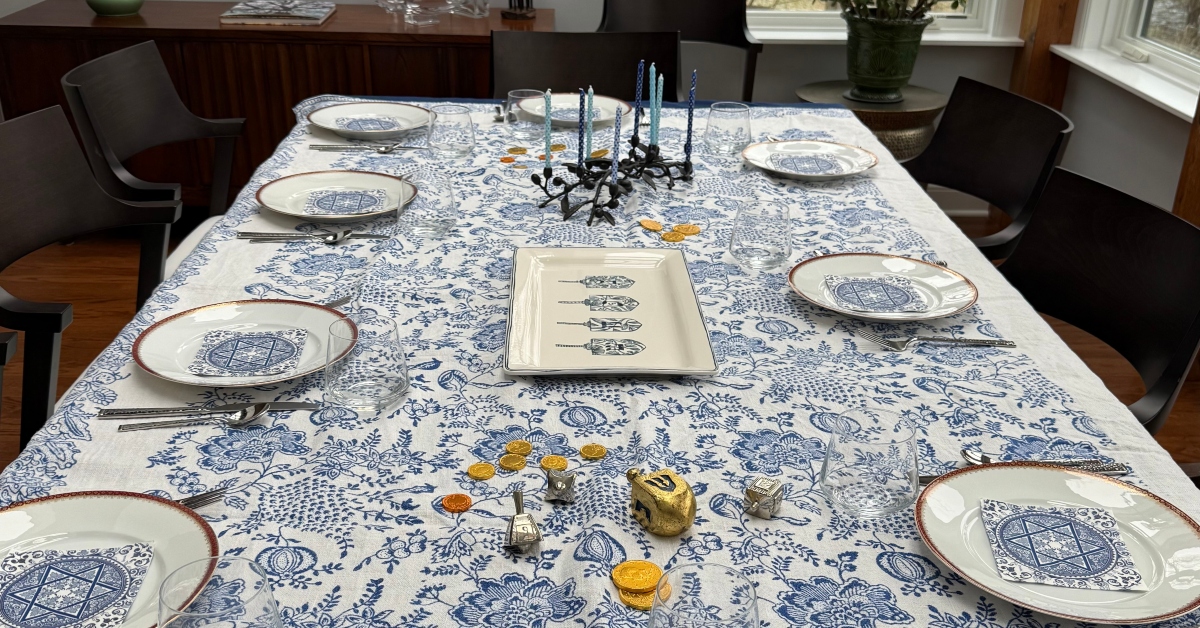
Fulda resident Hedi Römhild Schuhej recognized Sichel’s name while reading the article. She contacted Bensinger to tell him about two tablecloths that Sichel had given her father, Paul Römhild. She told Bensinger that when rations were kept from the Jews of Fulda, Römhild provided Sichel food and safety. Despite putting himself and his family in danger for associating with a Jew, Römhild was committed to helping his friend.
In honor of his friendship with Sichel, Römhild had never used the tablecloths in nearly 60 years. Bensinger returned to Fulda in 2019 to meet Schuhej and accept the tablecloths.
This experience inspired his latest documentary The Righteous Man from Fulda . Bensinger spoke with Jewish Chicago about the film as well as his inspiration as a documentarian.
Q. What is your connection to Fulda?
A. My mother left Fulda a few days before Kristallnacht in 1935 as a very young person. She met my father on the boat going over to Palestine. They made a home for themselves in Palestine, which became Israel, for more than 20 years.
My mother’s parents didn’t want to leave Fulda. They weren’t Zionists; they were true-blooded Germans first and Jews second.
What inspired you to make The Righteous Man from Fulda ?
When I went to Fulda, I brought along my two daughters, Karen and Jennifer, and my wife, Elizabeth. Although I hired a film crew, my intent was to just make a film for the girls and my grandchildren about this experience.
But after I came back to Chicago and I looked at the footage, I recognized that there were some important messages in this film that I thought would be useful to convey to young people in Fulda and other German cities. For the last decade, I’ve been going to Germany twice a year to tell my family’s stories at schools and to show my first documentary film, Refuge. And from those experiences, I recognized that there were important messages that came out of this experience in Fulda that may be useful to share. Hedi Schuhej followed an example of compassion set by her father; she opened her heart. And from that, we can all learn.
How did your previous career as a lawyer inform your work as a documentary filmmaker?
I was a lawyer for 30 years and specialized in corporate immigration law, working for multinationals in the U.S. and abroad that transferred personnel around the world. I sort of had immigration in my blood because I came to America as a refugee from Israel. It came naturally to me.
The two films that I have made speak to immigration. It’s all interwoven. I have focused on what personally speaks to me and has been my personal experience.
What advice do you have for aspiring documentary filmmakers?
I would offer the same advice that I gave to my 8-year-old granddaughter who just interviewed her 100-year-old great-grandmother, a Holocaust survivor, for a school project: Take a video. That’s also the message I tell young people when I speak to them at school.
If your grandparents are still alive, make a video. It’s there for perpetuity and it may inspire you to become a filmmaker. Start asking questions and work from a script. You never know where that leads. Young people should be inquisitive with their senior family members because there’s so much to learn from them.
You don’t need sophisticated equipment. You can use an iPhone, a tripod, and perhaps some additional lighting. Just go out into the world, explore, and be inspired by whatever interests you and put it on film.
To learn more about or view The Righteous Man of Fulda , visit righteousmanfromfulda.com .